四川射洪中学2025-2026学年高一下期强实班期中考试英语试题
2026-05-20
|
11页
|
79人阅读
|
0人下载
资源信息
| 学段 | 高中 |
|---|---|
| 学科 | 英语 |
| 教材版本 | - |
| 年级 | 高一 |
| 章节 | - |
| 类型 | 试卷 |
| 知识点 | - |
| 使用场景 | 同步教学-期中 |
| 学年 | 2026-2027 |
| 地区(省份) | 四川省 |
| 地区(市) | 遂宁市 |
| 地区(区县) | 射洪市 |
| 文件格式 | DOCX |
| 文件大小 | 55 KB |
| 发布时间 | 2026-05-20 |
| 更新时间 | 2026-05-20 |
| 作者 | 匿名 |
| 品牌系列 | - |
| 审核时间 | 2026-05-20 |
| 下载链接 | https://m.zxxk.com/soft/57947347.html |
| 价格 | 1.00储值(1储值=1元) |
| 来源 | 学科网 |
摘要:
**基本信息**
射洪中学高一强实班期中英语卷以真实情境为载体,融合科技前沿(AI伦理)、社会热点(儿童肥胖广告限制)、文化传承(苗族长桌宴)等素材,全面考查语言能力与思维品质,适配高一年级核心素养培养需求。
**题型特征**
|题型|题量/分值|知识覆盖|命题特色|
|----|-----------|----------|----------|
|听力|20题/30分|日常对话、人物经历|真实情境(工作安排、成长故事),考查信息抓取与推理|
|阅读理解|20题/50分|应用文(诗歌比赛)、记叙文(社区助人)、议论文(广告限制)、说明文(AI权利)|结合社会热点(儿童肥胖)、科技前沿(AI伦理),梯度设计细节理解与深度推理题|
|语言知识运用|30题/30分|词汇辨析、语法规则(时态、非谓语等)|完形填空以亲情故事渗透价值观,语法填空借“长桌宴”素材考查文化意识|
|任务型阅读|8题/20分|词汇运用、信息概括|环保主题(救助小鹿),综合考查学习能力(信息提取与表达)|
|书面表达|1题/20分|应用文写作|聚焦学习软件使用争议,引导批判性思考,提升语言表达与思维品质|
内容正文:
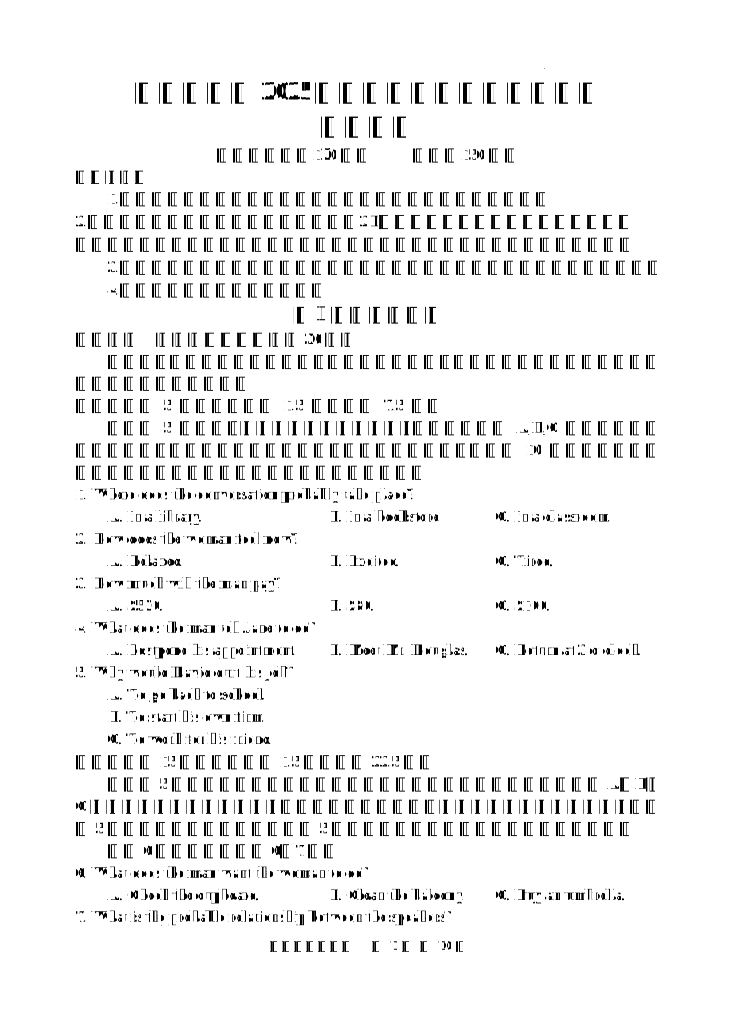
射洪中学高2025级高一下期强实班期中考试
英语试题
(考试时间:120分钟 满分:150分)
注意事项:
1.答卷前,考生务必将自己的姓名、准考证号填写在答题卡上。
2.回答选择题时,选出每小题答案后,用2B铅笔把答题卡上对应题目的答案标号
涂黑。如需改动,用橡皮擦干净后,再选涂其他答案标号。写在本试卷上无效。
3.回答非选择题时,将答案写在答题卡对应题号的位置上。写在本试卷上无效。
4.考试结束后,将答题卡交回。
第I卷(选择题)
第一部分 听力(共两节,满分30分)
做题时,先将答案标在试卷上。录音内容结束后,你将有两分钟的时间将试卷上的答案转涂到答题卡上。
第一节(共 5 小题;每小题 1.5 分,满分 7.5 分)
听下面 5 段对话,每段对话后有一个小题。从题中所给的 A,B,C 三个选项中选出最佳选项,并标在试卷的相应位置。听完每段对话后,你都有 10 秒钟的时间来回答有关小题和阅读下一小题。每段对话仅读一遍。
1. Where does the conversation probably take place?
A. In a library. B. In a bookstore. C. In a classroom.
2. How does the woman feel now?
A. Relaxed. B. Excited. C. Tired.
3. How much will the man pay?
A. $520. B. $80. C. $100.
4. What does the man tell Jane to do?
A. Postpone his appointment. B. Meet Mr. Douglas. C. Return at 3 o’clock.
5. Why would David quit his job?
A. To go back to school.
B. To start his own firm.
C. To work for his friend.
第二节(共15小题;每小题1.5分,满分22.5分)
听下面5段对话或独白。每段对话或独白后有几个小题,从题中所给的A、B、C三个选项中选出最佳选项。听每段对话或独白前,你将有时间阅读各个小题,每小题5秒钟;听完后,各小题将给出5秒钟的作答时间。每段对话或独白读两遍。
听第6段材料,回答第6、7题。
6. What does the man want the woman to do?
A. Check the cupboard. B. Clean the balcony. C. Buy an umbrella.
7. What is the probable relationship between the speakers?
A. Husband and wife.
B. Employer and employee.
C. Shop assistant and customer.
听第7段材料,回答第8至10题。
8. Where did the woman go at the weekend?
A. The city centre. B. The forest park. C. The man’s home.
9. How did the man spend his weekend?
A. Packing for a move.
B. Going out with Jenny.
C. Looking for a new house.
10. What will the woman do for the man?
A. Take Henry to hospital. B. Stay with his kid. C. Look after his pet.
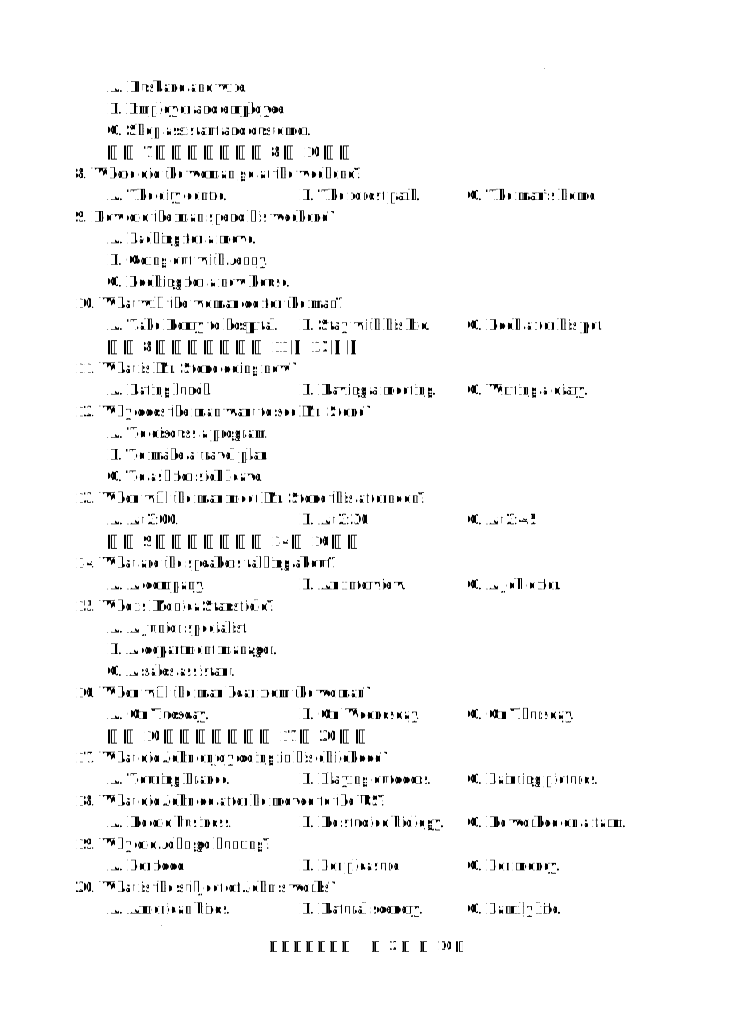
听第8段材料,回答第11至13题。
11. What is Mr. Stone doing now?
A. Eating lunch. B. Having a meeting. C. Writing a diary.
12. Why does the man want to see Mr. Stone?
A. To discuss a program.
B. To make a travel plan.
C. To ask for sick leave.
13. When will the man meet Mr. Stone this afternoon?
A. At 3:00. B. At 3:30. C. At 3:45.
听第9段材料,回答第14至16题。
14. What are the speakers talking about?
A. A company. B. An interview. C. A job offer.
15. Who is Monica Stansfield?
A. A junior specialist.
B. A department manager.
C. A sales assistant.
16. When will the man hear from the woman?
A. On Tuesday. B. On Wednesday. C. On Thursday.
听第10段材料,回答第17至20题。
17. What did John enjoy doing in his childhood?
A. Touring France. B. Playing outdoors. C. Painting pictures.
18. What did John do after he moved to the US?
A. He did business. B. He studied biology. C. He worked on a farm.
19. Why did John go hunting?
A. For food. B. For pleasure. C. For money.
20. What is the subject of John’s works?
A. American birds. B. Natural scenery. C. Family life.
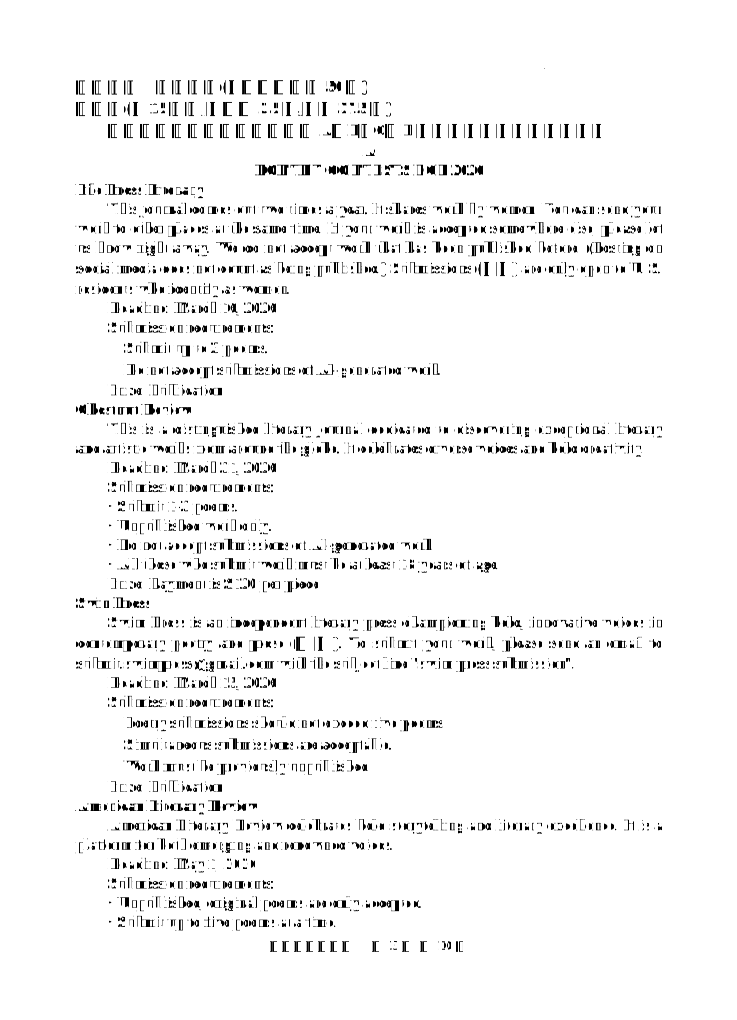
第二部分 阅读理解(共两节,满分50分)
第一节(共15小题;每小题2.5分,满分37.5分)
阅读下列短文,从每题所给的A、B、C、D四个选项中选出最佳选项。
A
POETRY CONTESTS FOR 2026
Pile Press Literary
This journal comes out two times a year. It shares work by women. You can send your work to other places at the same time. If your work is accepted somewhere else, please let us know right away. We do not accept work that has been published before. (Posting on social media does not count as being published.) Submissions (提交) are only open to U. S. residents who identify as women.
Deadline: March 16, 2026
Submission requirements:
・Submit up to 3 poems.
・Do not accept submissions of AI-generated work.
Prize: Publication
Chestnut Review
This is a distinguished literary journal dedicated to discovering exceptional literary and artistic works from around the globe. It celebrates diverse voices and bold creativity.
Deadline: March 31, 2026
Submission requirements:
· Submit 1-3 poems.
· Unpublished work only.
· Do not accept submissions of AI-generated work.
· All those who submit work must be at least 18 years of age.
Prize: Payment is $120 per piece
Swin Press
Swim Press is an independent literary press championing bold, innovative voices in contemporary poetry and prose (散文). To submit your work, please send an email to submit.swimpress@gmail.com with the subject line "swim press submission".
Deadline: March 15, 2026
Submission requirements:
・Poetry submissions should not exceed five poems.
・Simultaneous submissions are acceptable.
・Work must be previously unpublished.
Prize: Publication
American Literary Review
American Literary Review celebrates bold storytelling and literary excellence. It is a platform for both emerging and renowned voices.
Deadline: May 1, 2026
Submission requirements:
· Unpublished, original poems are only accepted.
· Submit up to five poems at a time.
· There is no word or page limit for poems.
Prize: Publication
21.What is the submission requirement for Pile Press Literary?
A. The poetry must contain three poems.
B. The poetry is related to AI generation.
C. The poetry appeared on social media platforms.
D. The poetry was created by a female American.
22.Which of the following has the earliest deadline?
A. Swim Press. B. Chestnut Review.
C. Pile Press Literary. D. American Literary Review.
23.What's the main purpose of this text?
A. To advertise four literary journals.
B. To provide tips on how to win a poetry contest.
C. To inform writers of 2026 submission opportunities.
D. To encourage people to participate in more poetry contests.
B
Holding the key to a car, 40-year-old Jessica Rader couldn't help but weep. "It's not just about the car," she whispered, her voice trembling with emotion. "It's about community."
The vehicle was more than a gift; it was a masterpiece of kindness crafted by students at Louisa County High School. For several months, these teenagers had labored in their automotive workshop to repair the car specifically for Rader, a single mother of three. "Kids who never met me cared enough to ensure my family's safety," Rader remarked, still breathless from the encounter.
This heartwarming scene was part of a partnership between the school and Giving Words, a local nonprofit founded by Eddie Brown. Having struggled as single parents themselves, Brown and his wife understood the stakes (利害关系). "A broken-down car can mean losing a job or missing vital appointments," Brown explained. Since 2018, they have donated over 60 cars to single mothers, with high schoolers renewing about half of them.
In the school's garage, the connection of education and real life becomes visible. Under the guidance of teacher Shane Robertson, about 20 students per car handle everything from brake repairs to battery testing. For 16-year-old Holden Pekary, the experience is deeply rewarding. He recalled a recent presentation where the class raised the garage doors and clapped as a mother with a baby received her keys. "I put the license plate on for her," Holden said proudly. "It was nice."
For Rader, the car was a conduit to a new life. Within three months of connecting with the program, her world shifted. "Because of this vehicle, I moved from a part-time job to a full-time career and started school," she said. Beyond the car, Giving Words also gave her free oil changes, as well as diapers (尿布) and clothing for her sons. A little mechanical help can drive a soul toward a brighter future.
24.What did Rader value most?
A. The car's excellent performance. B. The collective care of the community.
C. The car's extraordinary function. D. The academic credits students earned.
25.Why did Eddie Brown start the vehicle donation program?
A. To reduce the unemployment rate locally.
B. To provide technical training for teenagers.
C. To share his own successful parenting tips.
D. To assist single parents in hard times.
26.How did the car program change Rader's life?
A. It secured her a more stable living.
B. It improved her academic performance.
C. It encouraged her to become a repairman.
D. It helped her get rid of financial crisis.
27.Which word can replace the underlined word "conduit" in the last paragraph?
A. Position B. street C. bridge D. stone
C
From this week, the UK has introduced strict rules to protect children from junk food advertising. Ads for 13 categories of processed foods and drinks, such as sugary soft drinks, crisps, and chocolates, are banned online and can only air on TV after 9 p.m.
The reason is rising childhood obesity(肥胖). Our exclusive report last week highlighted doctors’ calls for routine blood pressure testing in children, emphasizing the dangers of obesity and the case for preventing it. The longer-term trend, both nationally and internationally, is widely recognised as alarming. Since the UK’s child measurement programme began 20 years ago, obesity rates among primary-age children in England have climbed from 17.5% to 22.1%.
Obesity deepens social inequality, with rates in poverty-stricken areas twice as likely to be obese as those in wealthy ones. The resulting health risks—type 2 diabetes, stroke, and cardiovascular diseases—add to the hardships of the disadvantaged. This concentration of harm is a key reason to welcome the advertising restrictions. Like gambling (赌博) or smoking, the uneven impact of unhealthy processed foods on already-struggling households is among their most damaging effects.
Children often lack the knowledge and maturity to make decisions about fat, sugar, and salt intake. For the UK government, narrowing the gaps that restrict the life chances of disadvantaged children must always be a priority.
Public debate on obesity has increasingly focused on new weight-loss drugs, yet in the UK, these are available only to a small group of severely obese children. This highlights the need to prioritize prevention and public health initiatives around food, as a healthy lifestyle involves exercise and nutrition, not just body weight.
Charities like Sustain have criticized the concessions(让步)made to industry giants, such as allowing brand advertising as long as specific junk foods are not displayed. Their caution is justified: last year saw record snack food sales, and billboard advertising—less controlled by rules—has rocketed. But while the new rules will not end childhood obesity and should have been in place sooner, as with other half measures, they are much better than none at all.
28. What is the main purpose of the new UK rules?
A. To protect children from obesity risks.
B. To encourage people to break bad habits.
C. To limit junk food sales to evenings.
D. To enforce blood pressure testing in schools
29. Why does the author mention gambling and smoking in paragraph 3?
A. To explain the causes of poverty.
B. To show they are addictive.
C. To stress junk foods’ harm to the poor.
D. To list common bad habits for children.
30. What is mainly talked about in paragraph 5?
A.Weight-loss drugs are too expensive for ordinary families.
B. A healthy lifestyle includes exercise and balanced nutrition.
C. Prevention is more important than medicine for obesity.
D. Public attention has been paid to new weight-loss drugs.
31. What is the best title for the passage?
A. Childhood Obesity: The Growing Crisis
B. Health Inequality: The Widening Divide
C. Stricter rules: The Call for Action
D. Handling Obesity: UK’s New Ad Rules
D
A major policy challenge with AI is just how skillful it's become at role-playing as humans. Users now regularly turn to AI chatbots for life advice, mental health support, and even guidance on relationship issues. Safety advocates (提倡者) in the US Federal Trade Commission (FTC) recently announced that it's launching a formal inquiry into seven major companies, focusing on whether their AI chatbots have enough safety preparations to prevent risks like misinformation or improper emotional control. Yet there's another way to see AI as a policy issue: Could AI one day be worthy of legal rights?
Some leading tech firms are taking this question seriously. Last year, AI company Anthropic hired its first "AI welfare researcher", tasked with studying whether advanced AI systems might deserve reasonable treatment, which includes preventing unnecessary "stress" from overwork so that they can function well or reducing harmful data inputs for overall safer use. Former Southern District of New York judge Katherine B. Forrest, who specializes in AI policy, notes that there may never be widespread agreement on exactly when AI qualifies for moral standing, but as public belief in AI's capacity grows, courts will eventually have to face this brand-new challenge.
Extending rights to AI also forces a fundamental rethink of what should count as the harm to AI. "If it has balanced emotions like humans, then suffering would certainly be counted," said Forrest. Traditional law, for instance, focuses on compensating (赔偿) humans for financial losses, physical injuries, or emotional pains. But if future AI has needs and desires entirely different from humans, legal systems must adapt.
Some scholars, like law professor Peter Salib from the University of Houston, argue for giving rights to advanced AI — specifically artificial general intelligence. Salib has written in his work of scholarship that giving AI rights to contracts, property and tort claims would allow it to participate in the economic system and could even benefit humans.
32.Why does the FTC launch the inquiry?
A.To identify AI firms' challenges. B.To check AI chatbots' functions.
C.To know AI firms' security measures. D.To advocate for AI chatbots' rights.
33.What can be the reasonable treatment of AI systems?
A.Upgrading human orders. B.Avoiding heavy workload.
C.Allowing data collection. D.Drafting privacy policies.
34.What encourages Peter Salib to advocate giving AI rights?
A.AI's participation in research. B.AI's potential in the economy.
C.AI's need for legal protection. D.AI's difficulty of advancement.
35.What's the author's attitude to AI rights?
A. Doubtful. B. Disapproving. C. Objective. D. Supportive.
第二节(共5 小题,每小题2.5分,满分12.5分)
根据短文内容,从短文后的选项中选出能填入空白处的最佳选项。选项中有两项为多余选项。
Marine mammals (海洋哺乳动物) are up against many dangers, many brought about by humans. 36 .
Reduce the use of plastic
Our oceans see increasing plastic trash which endangers marine mammals. 37 . They can become trapped in plastic, which can cause them to suffocate (闷死). Some marine mammals can mistake plastic for food, eat it, and die. Plastic trash in the ocean also causes lacerations (割伤) to these animals, leading to infection and death. So reduce using plastic to protect marine mammals.
Help clean up the beaches
38 . Do not leave trash or objects on the beach. Anything you leave on the beach can end up in the water, having the potential to impact or harm what’s living in the water. Many organizations help clean up the beaches and protect ocean life and marine mammals. If we live or visit a beach, look for one you can connect with to join their efforts.
Follow boating laws
Knowing and following the laws is essential whether you live near the ocean or only travel there occasionally. They are in place for a reason. 39 . Following these rules can help keep marine mammals like manatees safe. It’s also advised not to crowd marine mammals when we see them. If there have already been boats observing them, wait our time to give others a chance to watch them.
40
Learn more about the ocean and marine wildlife. When we truly learn about a topic, it helps us understand its importance. Devote time to learning about marine mammals and why we need to act to protect them and our oceans. Visit educational bases working on protecting these animals to learn what you can do to make a difference.
A. Educate ourselves
B. Encourage ourselves to act
C. There are many ways it is harming marine mammals
D. Thankfully, there are simple things we can do to help
E. Leave the beach like or better than we find it if we visit the beach
F. In addition, do our homework and buy seafood from those who follow fishing laws
G. For example, certain waterways are protected areas with speed limitations for boaters
第三部分 语言知识运用(共三节,满分30分)
第一节 完形填空(共15小题;每小题1分,满分15分)
阅读下面短文,从短文后各题所给的四个选项(A、B、C和D)中选出可以填入空白出的最佳选项,并在答题卡上将该项涂黑。
Ram received an automobile as a birthday present. One day, when Ram came out of his office, he saw a boy admiring it.
“Is this your car?” He asked. Ram nodded, “My brother 41 me with it on my birthday.” The boy was surprised. “You mean your brother gave it to you and it cost you nothing. Boy, I wish…”
Definitely, Ram knew he was going to wish he had a brother like his brother. But the boy 42 , “I wish I could be a brother like that.” Ram looked at the boy in astonishment, and then impulsively (冲动地) he 43 , “Would you like to take a 44 in my automobile?”
“Oh yes, I’d love that.” After a short ride, the boy turned and said, “Would you mind driving in front of my house?” Ram smiled a little. He thought he knew what the boy 45 . He wanted to show his 46 that he could ride home in a big automobile.
But Ram was 47 again. “Will you stop where those two steps are?” The boy asked. He ran up the steps. Then in a little while Ram heard him coming back, but he was not coming 48 . He was 49 his little disabled brother. He sat him down on the bottom step, and pointed to the 50 .
“There he is, brother. Like I told you 51 , his brother gave it to him and it didn’t cost him a penny. Someday I’m going to give you one just like it and then you can see for 52 all the pretty things that I’ve been 53 to tell you about.”
Ram 54 and lifted the disabled boy to the front seat of his car. The older brother climbed in beside him and they began a 55 ride.
41. A. presented B. offered C. gave D. showed
42. A. thought B. waited C. requested D. continued
43. A. replied B. asked C. shouted D. agreed
44. A. ride B. lift C. rest D. seat
45. A. cared about B. wanted C. said D. looked for
46. A. neighbors B. parents C. brothers D. friends
47. A. surprised B. moved C. wrong D. right
48. A. slowly B. alone C. up D. straight
49. A. following B. walking with C. carrying D. talking with
50. A. ground B. boy C. house D. car
51. A. there B. here C. just now D. long before
52. A. myself B. yourself C. ourselves D. themselves
53. A. trying B. planning C. hoping D. intending
54. A. went away B. ran away C. got out D. moved out
55. A. hard B. quick C. comfortable D. memorable
第II卷(非选择题)
第二节 语法填空(共15小题;每小题1.5分,满分15分)
阅读下面短文,在空白处填入1个适当的单词或括号内单词的正确形式。
The “Changzhuo Yan” is named for 56 (it) long tables (“changzhuo” means “long table” in Chinese). It is a traditional feast unique 57 the Miao and Dong ethnic minorities in Guizhou Province, China. This cultural event is often arranged in rows that stretch for hundreds of meters through village streets or courtyards, symbolizing unity and celebration.
The feast 58 (hold) during important festivals, weddings, or to honor guests. It is a vivid display of ethnic hospitality, where entire communities come together to share food, music, and dance. 59 (dress) in traditional costumes, villagers serve guests with local dishes.
One of the most memorable aspects of the “Changzhuo Yan” is the “block-the-way wine” tradition. As guests make their way down the long table, they are greeted by locals, 60 custom is to offer them cups of homemade rice wine. Guests are often expected to drink before continuing, which creates a joyful and interactive experience.
The feast also 61 (feature) traditional folk songs and Lusheng music, 62 (add) to the festive atmosphere. More than just a meal, the “Changzhuo Yan” is a living expression of Guizhou’s cultural richness, reflecting values of community, 63 (generous), and heritage.
64 you’re a local or a traveler, participating in the “Changzhuo Yan” is 65 unforgettable way to experience the warmth and traditions of ethnic life in Guizhou.
第四部分 任务型阅读(共两节,满分20分)
Last month, during my trip to a unique nature reserve in the deep mountains, I had an unforgettable experience that changed my view of wildlife. The sun was setting, casting long shadows across the valley. While I was walking slowly along a quiet, narrow path, a sudden, sharp sound from the thick, tall grass attracted my attention. Curiously, I approached the bushes quietly and was shocked to find a small deer trapped in a discarded plastic net. Its leg was bleeding, and it looked frightened, its eyes filled with terror.
The deer struggled in panic, trying to break free from the "plastic trap" but only making the net tighter. I knew I couldn’t just leave it there in such a dangerous situation, as night was falling and predators might be nearby. Driven by a strong sense of responsibility, I insisted on helping the poor creature, despite the risk of being kicked by its powerful legs. Without hesitation, I knelt down, took out a small knife from my pocket, and began to cut the net with great concentration.
My guide, Tashi, a knowledgeable ranger (护林员)who had worked in the forest for years, hurried over to help. He gently covered the deer’s eyes with his jacket and helped me hold its head to keep it calm. During the whole tiring process, I felt extremely concerned, fearing that the wound might be too deep for the deer to survive on its own.
Fortunately, after we carefully cleaned and tied the wound, the deer finally stood up, shaking its body. It looked at us for a second, then turned around and disappeared into the deep, green woods. I stood there for a long time, watching the empty path where it had just been. At that moment, the forest was quiet and peaceful again. I looked at the sunset and began to think about the relationship between humans and the wild…
根据文本内容从方框中选择恰当的词并用其正确形式填入文本图示中,每词限用一次,有两词为多余选项。
approach attract danger hesitate insist knowledgeable
panic protection sense survive traditional unique
I visited a 66 nature reserve in the deep mountains.
A strange sound 67 my attention, so I 68 the grass quietly.
A young deer was trapped and struggling in 69 .
The situation was clearly 70 .
A deep 71 of responsibility drove me to act.
I 72 on helping the deer without any 73 .
With the help of a 74 local ranger, we saved it.
I was worried about whether the deer could 75 on its own.
76. What happened to the small deer? (4分)
_________________________________________________________________
77. How did the author and the ranger help the deer? (4分)
_________________________________________________________________
78. What did the author realize after this experience? (3分)
_________________________________________________________________
第五部分 书面表达(共20分)
假定你是李华,最近收到好友Jason的来信,信中提到现在很多同学用学习软件(ChatGPT, Doubao)代做作业的事。请你写一封回信,内容包括:
(1) 对依赖学习软件完成作业的看法;
(2)你的建议。
注意:1.词数100左右;
2.可以适当增加细节,以使行文连贯;
3.开头结尾已给出,不计入词数。
Dear Jason,
I am looking forward to your reply!
高一强实班英语 第 1 页 共 11 页
学科网(北京)股份有限公司
$
资源预览图
1
2
3

相关资源
由于学科网是一个信息分享及获取的平台,不确保部分用户上传资料的 来源及知识产权归属。如您发现相关资料侵犯您的合法权益,请联系学科网,我们核实后将及时进行处理。