精品解析:辽宁省沈阳市沈北新区 2025-2026学年度下学期 八年级联合阶段性英语学科质量诊断
 切换试卷
切换试卷
2026-05-18
|
2份
|
28页
|
6人阅读
|
0人下载
资源信息
| 学段 | 初中 |
|---|---|
| 学科 | 英语 |
| 教材版本 | - |
| 年级 | 八年级 |
| 章节 | - |
| 类型 | 试卷 |
| 知识点 | - |
| 使用场景 | 同步教学-期中 |
| 学年 | 2026-2027 |
| 地区(省份) | 辽宁省 |
| 地区(市) | 沈阳市 |
| 地区(区县) | 沈北新区 |
| 文件格式 | ZIP |
| 文件大小 | 894 KB |
| 发布时间 | 2026-05-18 |
| 更新时间 | 2026-05-18 |
| 作者 | 匿名 |
| 品牌系列 | - |
| 审核时间 | 2026-05-18 |
| 下载链接 | https://m.zxxk.com/soft/57922460.html |
| 价格 | 5.00储值(1储值=1元) |
| 来源 | 学科网 |
内容正文:
2025—2026学年度下学期
八年级联合阶段性英语学科质量诊断
(考试时间110分钟,试卷满分120分)
学校
年班
姓名
考号
一、听力(共两节;满分30分)
第一节(共8小题;每小题1.5分,共12分)
听下面8段对话。每段对话后有一道小题,从每题所给的A、B、C三个选项中选出最佳选项。听完每段对话后,你将有10秒钟的时间来回答有关小题和阅读下一小题。每段对话仅读一遍。
1. How is the weather today?
A. Sunny. B. Cloudy. C. Rainy.
2. Who is the owner of the coffee shop?
A. Amy. B. Leo. C. Miss Black.
3. What traditional craft is Mr. Wang good at?
A. Making paper-cuts. B. Making kites. C. Making tea.
4. What will the woman do today?
A. Go to the art show. B. Do housework. C. Visit a friend.
5. What’s the relationship between the two speakers?
A. Mother and son. B. Teacher and student. C. Doctor and patient.
6. Where does the conversation probably take place?
A. In a bookstore. B. In a company. C. In a supermarket.
7. When will Anne’s group do the voluntary activity?
A. On Sunday, May 2nd. B. On Sunday, May 12th. C. On Saturday, May 20th.
8. What did the woman help the little boy do?
A. Write some stories for other kids.
B. Work as a volunteer in the library.
C. Find storybooks from the library.
第二节(共12小题;每小题1.5分,共18分)
听下面4段对话。每段对话后有三道小题,从每题所给的A、B、C三个选项中选出最佳选项。听完每段对话前,你将有时间阅读各个小题,每小题5秒钟;听完后,各小题将给出5秒钟的作答时间。每段对话读两遍。
听第9段材料,回答第9至11题。
9. Which season is the best for flying kites according to Cindy?
A. Spring. B. Autumn. C. Winter.
10. What does Cindy think of making kites?
A. It’s difficult. B. It’s easy. C. It’s boring.
11. Who is good at making kites?
A. Cindy’s father. B. Jim’s father. C. Both of theirs.
听第10段材料,回答第12至14题。
12. Where will Tom go on Saturday morning?
A. To the music club. B. To the City Library. C. To the bookstore.
13. How will they get there?
A. By car. B. By bus. C. By bike.
14. When will Judy go to the music club?
A. At 8:30. B. At 9:00. C. At 11:30.
听第11段材料,回答第15至17题。
15. What is the boy nervous about?
A. His Math test. B. His after-school class. C. His speech.
16. What can Mike use to make his points clear?
A. Proper gestures. B. Interesting pictures. C. Soft music.
17. How many pieces of advice does the girl give?
A. Two. B. Three. C. Four.
听第12段材料,回答第18至20题。
18. How was Jack’s last Saturday?
A. Wonderful. B. Boring. C. Terrible.
19. Why did Li Na stay at home last Saturday?
A. Because she had to do her homework.
B. Because she wanted to read a book.
C. Because it rained heavily all day.
20. Where did Li Na put the copied painting?
A. On her bedroom wall. B. On the living room wall. C. In the school library.
二、阅读理解(共两节;满分40分)
第一节(共16小题;每小题2分,共32分)
阅读下列四篇短文,从每小题所给的A、B、C、D四个选项中选出最佳选项
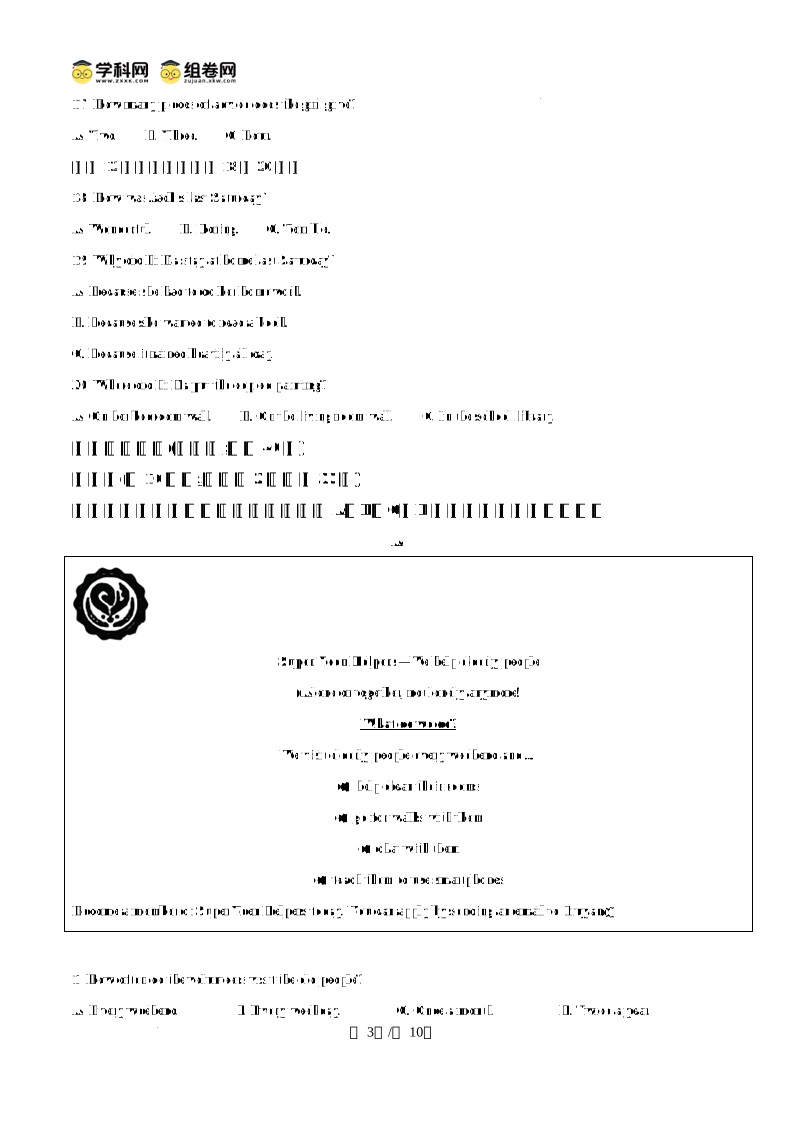
A
Super Teen Helpers—We help elderly people
(Alone or together, not lonely anymore!
What do we do?
We visit elderly people every weekend and …
● help clean their rooms
● go for walks with them
● chat with them
● teach them to use smartphones
Become a member of Super Teen Helpers today. You can apply by sending an email to Liuyan@.
1. How often do the volunteers visit the old people?
A. Every weekend. B. Every weekday. C. Once a month. D. Twice a year.
2. What activity can the volunteers do for the elderly?
A. Help them walk their dogs. B. Help them clean cars.
C. Teach them to use smartphones. D. Buy new clothes for them.
3. How can people join Super Teen Helpers?
A. By writing a letter. B. By sending an email.
C. By making a phone call. D. By visiting the school.
4. Who is this text probably written for?
A. Old lonely people. B. Busy working parents.
C. Famous club teachers. D. Students who want to volunteer.
B
① There is nothing worse than being cheated (欺骗). Luckily, body language expert Judi James shares some easy signs to help you find out if someone is telling a lie.
② Pay attention to the long stop before answering. Lying is hard for both the brain and body. When people lie, their brain first comes up with the truth, then they have to hide it and make up a lie. This usually makes them stop longer before speaking.
③ Watch eye movements. Looking up to the left often means recalling real memories, while looking up to the right may mean inventing new ideas. Also, liars (骗子) often feel guilty, so they avoid eye contact, looking down or away.
④ Notice physical stress. When people lie, most get nervous right away. Their mouth goes dry, they sweat more, their heart beats faster, and their breathing becomes short. These changes are easy to see.
⑤ Look out for special body movements. Some people use a “poker face” when lying, showing little movement or eye contact. Others try to hide their face, touching their nose or covering their mouth. Also, stressed liars may comfort themselves by moving side to side, touching their hair, or playing with rings.
⑥ These simple signs can help you find lies in daily life!
5. Why do people have a long stop before telling a lie?
A. Because they have much more stress. B. Because they are recalling memory.
C. Because they don’t want to say anything. D. Because they are thinking of a lie.
6. What does the underlined word “guilty” probably mean in Paragraph 3?
A. exciting B. sorry C. peaceful D. angry
7. What can we learn from the text?
A. People look up to their left when they are making up new ideas.
B. Liars’ breathing becomes longer and slower when they tell a lie.
C. Lying usually makes people answer questions more quickly than usual.
D. Some people touch their hair or play with rings when they feel stressed while lying.
8. How is the text organized? (① = Paragraph 1, ② =Paragraph 2, …)
A. B. C. D.
C
Chen Lei was a car designer before he became well-known as a famous cartoonist by accident. He has created a series of easy-to-understand comic books about history, science, and more since 2014. This is how he started his comic journey.
“It was a quiet Sunday afternoon. I was sitting in my small apartment in Shanghai, staring at my computer screen. I had a lot of free time that day, and I wanted to do something different. I had always loved history, but I also knew how boring it could be for some people. I thought, ‘Why not try to make it more fun?’
I decided to start with Confucius (孔子), an important and serious figure in history. I didn’t choose to write a boring article. I wanted something that people would actually enjoy reading. I picked up my pen and drew him as a funny little man with a pair of glasses. I told his story in a humorous (幽默的) and friendly way, like I was talking to a friend.
With great excitement, I spent hours working on the work, making sure every detail was just right. When I finally finished, I felt proud. I couldn’t help putting it online to share with my friends.
The next day, I checked my phone and found that hundreds of people had read my work. Some even left comments saying how much they enjoyed it. I was shocked and happy at the same time.
From that day on, I started my comic journey. I wanted to make learning fun for everyone.”
9. What do we know about Chen Lei from the first paragraph?
A. He has been a cartoonist since the year of 2014.
B. His comic books are only about history and science.
C. He used to work as a car designer before being famous.
D. He became a famous cartoonist through years of hard work.
10. Why did Chen Lei decide to draw Confucius as a funny little man with glasses?
A. To make the story interesting. B. To show his love for cartoons.
C. To make Confucius more serious. D. To follow his friend’s advice.
11. What is Chen Lei probably like?
A. Honest and confident. B. Creative and hard-working.
C. Traditional and pleasant. D. Humorous and brave.
12. What’s the best title (标题) for the text?
A. The Boring History of China
B. How to be a Famous Cartoonist
C. How to Draw Pictures of Confucius
D. Chen Lei’s Unexpected Comic Journey
D
A young woman called Jiang in Hunan is holding an ancient form of firework art, sending white-hot iron high into the sky. You might have seen firework displays, but you may not have seen this fascinating but dangerous show—fireworks made of molten (融化的) iron. It is an amazing traditional Chinese art called Da Tiehua.
Da Tiehua has a long history. It started in the Northern Song Dynasty and was developed and practised by craftsmen at first. Later, it spread to other places during the Ming and Qing Dynasties. In 2008, it was added to the National Intangible Cultural Heritage List.
During a Da Tiehua performance, a group of six or seven people stand in line, continuously spraying (飞溅) molten iron for nearly 20 minutes. It’s a hard task. After a few performances, Jiang discovered that she had injuries (伤痛). “Some sparks (火花) landed on my clothes, causing painful burns.” After returning home, she also realized that she had lost several handfuls of hair.
According to Jiang, even for experienced performers, such burns are quite common. But they never think much about them. They keep passing down this wonderful art from generation to generation. In their opinion, the most challenging part of Da Tiehua is overcoming fear.
13. When did Da Tiehua start according to the text?
A. In 2008. B. In the Ming Dynasty.
C. In the Qing Dynasty. D. In the Northern Song Dynasty.
14. Why does the author (作者) mention Jiang’s experience in Paragraph 3?
A. To share the performer’s funny stories.
B. To tell us the performer was not careful enough.
C. To show the difficulties behind the beautiful show.
D. To teach us how to stay safe while watching Da Tiehua.
15. What does the underlined word “them” refer to (指代) in Paragraph 4?
A. The burns. B. The clothes. C. The performers. D. The sparks.
16. What is the main idea of the text?
A. To show us the beauty of fireworks.
B. To tell us how dangerous Da Tiehua is.
C. To teach us how to perform Da Tiehua.
D. To introduce the history and beauty of Da Tiehua.
第二节(共4小题,每小题2分;满分8分)
阅读下面短文,从短文后的五个选项中选出可以填入空白处的最佳选项。选项中有一项为多余选项。
AI: Help or Distraction?
Nowadays, artificial intelligence (AI) is changing our daily life quickly. Some students use AI tools to study, such as searching for information, checking answers and practising English. ____17____
Some people think AI is a great helper. It can answer questions quickly and help students learn new things easily. ____18____ For example, some students just copy answers from AI instead of thinking by themselves. This makes them lazy and unable to solve problems on their own.
____19____ Teachers can use AI to make interesting lessons and help students with their weak points. Students can also use AI to review what they have learned after class.
In my opinion, AI is a useful tool, but we must use it in the right way. ____20____ Only in this way can we really improve our studies.
A. AI can help students with all their schoolwork.
B. AI is also helpful in both teaching and learning.
C. However, others worry that AI will bring problems.
D. It is important for us to learn to think independently.
E. Some students use AI to make videos or draw pictures.
三、完形填空(共10小题,每小题1分;满分10分)
阅读短文,掌握其大意,然后从A、B、C、D中选出空白处的最佳选项。
Summer holidays in Grade 8 turned out to be one of the most meaningful periods in my life. I worked as a volunteer at a local hospital, where I ____21____ a lot of time with an elderly man called Mr. Gillespie. He had no visitors, and it seemed that no one really ____22____ him.
Mr. Gillespie was in a coma (昏迷) and could hardly move, ____23____ I never left him alone. I sat beside his bed, held his hand, and read stories to him. Although he couldn’t answer, I saw him as a dear ____24____.
One week, I had to travel with my parents. When I ____25____ to the hospital, Mr. Gillespie was no longer there. I was too ____26____ to ask the nurses about his situation. Fear made me quiet, and I didn’t want to hear any bad news.
Several years later, I saw a man at a gas station whose face looked ____27____. “Are you Mr. Gillespie?” I asked with excitement. He looked ____28____ and slowly nodded.
I told him that I was the volunteer who had looked after him in the hospital. With tears in his eyes, he gave me a warm ____29____. He explained that during those unconscious (昏迷的) days, my voice had kept him alive He said, “Your voice was like a ____30____ in the dark.”
That experience taught me a simple but powerful lesson: small acts of kindness can brighten someone’s life in ways you never imagine.
21. A. saved B. spent C. wasted D. missed
22. A. cared about B. talked about C. read about D. heard about
23. A. though B. or C. but D. because
24. A. teacher B. classmate C. parent D. friend
25. A. waited B. left C. returned D. moved
26. A. angry B. excited C. proud D. afraid
27. A. strange B. familiar C. new D. serious
28. A. tired B. bored C. surprised D. sleepy
29. A. hug B. job C. prize D. lesson
30. A. noise B. dream C. risk D. light
四、阅读填空(共10小题,每小题1分;满分10分)
阅读下面短文,然后在空白处填入适当的词或括号内单词的正确形式。
Thangka (唐卡) is ____31____ special kind of painting. It ____32____ (find) only in Tibet, China now. Thangka paintings have a long history that started from the Tang Dynasty (唐朝). It shows Tibetan people’s lives. So far, Thangka paintings ____33____ (catch) the public’s attention. At the same time, the Chinese government has also done a lot ____34____ (protect) the art.
The color of Thangka paintings looks wonderful and special. It always makes people ____35____ (interest) in this art form. Because of the special environment of Tibet ____36____ the excellent skills of artists, the paints used in Thangka are different from other ones. They are made from minerals (矿物质) like gold and silver, as well as some plants. The paints were made ____37____ hand. However, with the development of technology, people now use much ____38____ (cheap) chemicals to make Thangka paints. The traditional paints took a lot of work and people always made ____39____ (they) in many secret ways.
Later people stopped making the paints and forgot about them. So the old skills were completely lost. It’s a pity that the traditional Thangka ____40____ (painting) are difficult to find now.
五、阅读问答(共4小题,61-63每小题2分;64题4分,满分10分)
阅读短文,并根据短文内容回答问题。
Meng Chen is a university student in Beijing. Almost every weekend, he works as a volunteer guide in the Forbidden City, sharing stories about ancient clocks in the Hall of Clocks with visitors.
Meng is one of around 300 volunteer tour guides at the Palace Museum, and one-third of these guides are university students. “Every brick here has a story to tell,” Meng often says. He loves walking through the buildings where 24 emperors once lived, feeling connected to the centuries of history held within the palace walls.
But being a volunteer guide takes more than just interest. Meng spent nearly three months studying to remember every detail of the clocks—from their design to their history. The work also comes with challenges: many tourists rush through sightseeing and turn down volunteer guides. Shi Hui, another student volunteer, once walked around for three hours on his first day before finding a man in his 50s who was happy to listen to his stories.
For these young volunteers, their work is about far more than giving tours. They are building a bridge between the past and the present, helping visitors feel the warmth and wonder of China’s cultural heritage. As Meng puts it, “History only comes alive when people share it.” By passing on the stories of the Forbidden City, they are not just protecting culture—they are also growing into more confident young people who care about their heritage.
41. Where does Meng Chen study now?
_______________________________________
42. How many volunteer tour guides are there at the Palace Museum?
_______________________________________
43. Why did Meng Chen spend three months studying the clocks?
_______________________________________
44. What can we do in our daily life to protect and spread Chinese culture? (write 30 words or more)
_______________________________________
六、书面表达(满分20分)
45. 假如你是李辉,你校下周将举办社团活动,你负责组织剪纸社团的活动。你的英国朋友Eric对中国传统艺术剪纸也十分感兴趣,请你写信邀请他参加。
内容包括:1.写信目的;2.具体活动安排;3.表达期待。
要求:1.词数80-100,短文的开头和结尾已给出,不计入总词数;
2.可以适当增加细节,以使行文连贯;
3.作文中不要出现考生的真实校名和姓名。
Dear Eric,
How is everything going? Our school will hold different club activities next week.
____________________________________________________________________________________________________________________________________________________________________________________________________________________________________________________________________________________________________________________________________________________________________________________________________________________________________________________________________________________________________________________________________________________________________________________________________________________________________________________________________________________________________________________________________________
Yours,
Li Hui
第1页/共1页
学科网(北京)股份有限公司
$
2025—2026学年度下学期
八年级联合阶段性英语学科质量诊断
(考试时间110分钟,试卷满分120分)
学校
年班
姓名
考号
一、听力(共两节;满分30分)
第一节(共8小题;每小题1.5分,共12分)
听下面8段对话。每段对话后有一道小题,从每题所给的A、B、C三个选项中选出最佳选项。听完每段对话后,你将有10秒钟的时间来回答有关小题和阅读下一小题。每段对话仅读一遍。
1. How is the weather today?
A. Sunny. B. Cloudy. C. Rainy.
2. Who is the owner of the coffee shop?
A. Amy. B. Leo. C. Miss Black.
3. What traditional craft is Mr. Wang good at?
A. Making paper-cuts. B. Making kites. C. Making tea.
4. What will the woman do today?
A. Go to the art show. B. Do housework. C. Visit a friend.
5. What’s the relationship between the two speakers?
A. Mother and son. B. Teacher and student. C. Doctor and patient.
6. Where does the conversation probably take place?
A. In a bookstore. B. In a company. C. In a supermarket.
7. When will Anne’s group do the voluntary activity?
A. On Sunday, May 2nd. B. On Sunday, May 12th. C. On Saturday, May 20th.
8. What did the woman help the little boy do?
A. Write some stories for other kids.
B. Work as a volunteer in the library.
C. Find storybooks from the library.
第二节(共12小题;每小题1.5分,共18分)
听下面4段对话。每段对话后有三道小题,从每题所给的A、B、C三个选项中选出最佳选项。听完每段对话前,你将有时间阅读各个小题,每小题5秒钟;听完后,各小题将给出5秒钟的作答时间。每段对话读两遍。
听第9段材料,回答第9至11题。
9. Which season is the best for flying kites according to Cindy?
A. Spring. B. Autumn. C. Winter.
10. What does Cindy think of making kites?
A. It’s difficult. B. It’s easy. C. It’s boring.
11. Who is good at making kites?
A. Cindy’s father. B. Jim’s father. C. Both of theirs.
听第10段材料,回答第12至14题。
12. Where will Tom go on Saturday morning?
A. To the music club. B. To the City Library. C. To the bookstore.
13. How will they get there?
A. By car. B. By bus. C. By bike.
14. When will Judy go to the music club?
A. At 8:30. B. At 9:00. C. At 11:30.
听第11段材料,回答第15至17题。
15. What is the boy nervous about?
A. His Math test. B. His after-school class. C. His speech.
16. What can Mike use to make his points clear?
A. Proper gestures. B. Interesting pictures. C. Soft music.
17. How many pieces of advice does the girl give?
A. Two. B. Three. C. Four.
听第12段材料,回答第18至20题。
18. How was Jack’s last Saturday?
A. Wonderful. B. Boring. C. Terrible.
19. Why did Li Na stay at home last Saturday?
A. Because she had to do her homework.
B. Because she wanted to read a book.
C. Because it rained heavily all day.
20. Where did Li Na put the copied painting?
A. On her bedroom wall. B. On the living room wall. C. In the school library.
二、阅读理解(共两节;满分40分)
第一节(共16小题;每小题2分,共32分)
阅读下列四篇短文,从每小题所给的A、B、C、D四个选项中选出最佳选项
A
Super Teen Helpers—We help elderly people
(Alone or together, not lonely anymore!
What do we do?
We visit elderly people every weekend and …
● help clean their rooms
● go for walks with them
● chat with them
● teach them to use smartphones
Become a member of Super Teen Helpers today. You can apply by sending an email to Liuyan@.
1. How often do the volunteers visit the old people?
A. Every weekend. B. Every weekday. C. Once a month. D. Twice a year.
2. What activity can the volunteers do for the elderly?
A. Help them walk their dogs. B. Help them clean cars.
C. Teach them to use smartphones. D. Buy new clothes for them.
3. How can people join Super Teen Helpers?
A. By writing a letter. B. By sending an email.
C. By making a phone call. D. By visiting the school.
4. Who is this text probably written for?
A. Old lonely people. B. Busy working parents.
C. Famous club teachers. D. Students who want to volunteer.
【答案】1. A 2. C 3. B 4. D
【解析】
【导语】本文主要介绍了“超级青少年助手”志愿组织帮助老人的具体内容以及加入该组织的申请方式。
【1题详解】
根据文中提到的频率“We visit elderly people every weekend”可知,志愿者们每周周末去看望老人。
【2题详解】
根据文中列举的活动要点“teach them to use smartphones”可知,志愿者可以教老人使用智能手机。
【3题详解】
根据文中最后一段提到的申请方式“You can apply by sending an email to Liuyan@…”可知,人们可以通过发送电子邮件加入该组织。
【4题详解】
根据标题“Super Teen Helpers”以及结尾的号召“Become a member…today.”可知,该文通过介绍志愿活动内容来招募成员,其受众群体应是想要参加志愿服务的学生。
B
① There is nothing worse than being cheated (欺骗). Luckily, body language expert Judi James shares some easy signs to help you find out if someone is telling a lie.
② Pay attention to the long stop before answering. Lying is hard for both the brain and body. When people lie, their brain first comes up with the truth, then they have to hide it and make up a lie. This usually makes them stop longer before speaking.
③ Watch eye movements. Looking up to the left often means recalling real memories, while looking up to the right may mean inventing new ideas. Also, liars (骗子) often feel guilty, so they avoid eye contact, looking down or away.
④ Notice physical stress. When people lie, most get nervous right away. Their mouth goes dry, they sweat more, their heart beats faster, and their breathing becomes short. These changes are easy to see.
⑤ Look out for special body movements. Some people use a “poker face” when lying, showing little movement or eye contact. Others try to hide their face, touching their nose or covering their mouth. Also, stressed liars may comfort themselves by moving side to side, touching their hair, or playing with rings.
⑥ These simple signs can help you find lies in daily life!
5. Why do people have a long stop before telling a lie?
A. Because they have much more stress. B. Because they are recalling memory.
C. Because they don’t want to say anything. D. Because they are thinking of a lie.
6. What does the underlined word “guilty” probably mean in Paragraph 3?
A. exciting B. sorry C. peaceful D. angry
7. What can we learn from the text?
A. People look up to their left when they are making up new ideas.
B. Liars’ breathing becomes longer and slower when they tell a lie.
C. Lying usually makes people answer questions more quickly than usual.
D. Some people touch their hair or play with rings when they feel stressed while lying.
8. How is the text organized? (① = Paragraph 1, ② =Paragraph 2, …)
A. B. C. D.
【答案】5. D 6. B 7. D 8. C
【解析】
【导语】本文讲述了识别谎言的几种方法,包括说谎前的停顿、眼神变化、身体压力反应和特殊肢体动作等,帮助我们判断他人是否在说谎。
【5题详解】
根据第二段“When people lie, their brain first comes up with the truth, then they have to hide it and make up a lie. This usually makes them stop longer before speaking.”,可知说谎前的停顿是因为人们需要思考、编造谎言,对应选项D。
【6题详解】
根据原文“Also, liars (骗子) often feel guilty, so they avoid eye contact, looking down or away.”,结合常识,说谎的人会因说谎产生负罪感、愧疚感,从而回避眼神接触。选项中“sorry(愧疚的、抱歉的)”与“guilty(有罪的、愧疚的)”语义最接近;exciting(兴奋的)、peaceful(平静的)、angry(生气的)均不符合语境。
【7题详解】
原文提到“Looking up to the left often means recalling real memories, while looking up to the right may mean inventing new ideas.”,可知编造想法时应是看向右上方,而非左上方,A错误;原文提到说谎时“their breathing becomes short”(呼吸变急促),而非“longer and slower(更长更慢)”,B错误;说谎需要编造内容,通常会导致回答前停顿、反应变慢,而非“answer questions more quickly(更快回答问题)”,C错误;原文提到“Also, stressed liars may comfort themselves by moving side to side, touching their hair, or playing with rings.”,可知处于压力中的说谎者会出现摸头发、玩戒指的自我安慰动作,D正确。
【8题详解】
通读全文可知,本文采用“总——分——总”结构:①段(总起,引出识别谎言的话题);②③④⑤段(分述识别谎言的具体方法);⑥段(总结,说明这些方法可帮助我们在生活中识别谎言)。对应选项C的结构(①为总起,②③④⑤为分述,⑥为总结)。
C
Chen Lei was a car designer before he became well-known as a famous cartoonist by accident. He has created a series of easy-to-understand comic books about history, science, and more since 2014. This is how he started his comic journey.
“It was a quiet Sunday afternoon. I was sitting in my small apartment in Shanghai, staring at my computer screen. I had a lot of free time that day, and I wanted to do something different. I had always loved history, but I also knew how boring it could be for some people. I thought, ‘Why not try to make it more fun?’
I decided to start with Confucius (孔子), an important and serious figure in history. I didn’t choose to write a boring article. I wanted something that people would actually enjoy reading. I picked up my pen and drew him as a funny little man with a pair of glasses. I told his story in a humorous (幽默的) and friendly way, like I was talking to a friend.
With great excitement, I spent hours working on the work, making sure every detail was just right. When I finally finished, I felt proud. I couldn’t help putting it online to share with my friends.
The next day, I checked my phone and found that hundreds of people had read my work. Some even left comments saying how much they enjoyed it. I was shocked and happy at the same time.
From that day on, I started my comic journey. I wanted to make learning fun for everyone.”
9. What do we know about Chen Lei from the first paragraph?
A. He has been a cartoonist since the year of 2014.
B. His comic books are only about history and science.
C. He used to work as a car designer before being famous.
D. He became a famous cartoonist through years of hard work.
10. Why did Chen Lei decide to draw Confucius as a funny little man with glasses?
A. To make the story interesting. B. To show his love for cartoons.
C. To make Confucius more serious. D. To follow his friend’s advice.
11. What is Chen Lei probably like?
A. Honest and confident. B. Creative and hard-working.
C. Traditional and pleasant. D. Humorous and brave.
12. What’s the best title (标题) for the text?
A. The Boring History of China
B. How to be a Famous Cartoonist
C. How to Draw Pictures of Confucius
D. Chen Lei’s Unexpected Comic Journey
【答案】9. C 10. A 11. B 12. D
【解析】
【导语】本文是一篇记叙文,主要介绍了漫画家陈磊从汽车设计师意外转型、开启漫画创作之旅并致力于让学习变得有趣的故事。
【9题详解】
根据第一段中“Chen Lei was a car designer before he became well-known as a famous cartoonist by accident.”可知,陈磊在成名成为漫画家之前是一名汽车设计师。C选项与此信息一致。A选项中“since the year of 2014”指的是创作系列漫画的时间,而非职业身份起始;B选项中“only”与原文“and more”不符;D选项与原文“by accident”不符。
【10题详解】
根据第二段中“but I also knew how boring it could be for some people. I thought,‘Why not try to make it more fun?’”以及第三段中“I wanted something that people would actually enjoy reading.”可知,他把孔子画成戴眼镜的有趣小人,是为了让原本严肃的历史故事变得有趣,让人们喜欢阅读。
【11题详解】
根据第二段中“wanted to do something different”以及将孔子画成戴眼镜的有趣形象,体现了他的创造力(Creative);根据第四段中“spent hours working on the work, making sure every detail was just right”可知,他花费数小时确保细节完美,体现了他的勤奋(Hard-working)。B选项符合文意。
【12题详解】
文章主要讲述了陈磊原本是汽车设计师,偶然间(by accident)开始漫画创作并获得成功的故事。标题应涵盖“陈磊”、“漫画之旅”以及“偶然/意外”这些关键要素。D选项“Chen Lei’s Unexpected Comic Journey”中“Unexpected”对应文中的“by accident”和“shocked”,最能概括全文主旨。
D
A young woman called Jiang in Hunan is holding an ancient form of firework art, sending white-hot iron high into the sky. You might have seen firework displays, but you may not have seen this fascinating but dangerous show—fireworks made of molten (融化的) iron. It is an amazing traditional Chinese art called Da Tiehua.
Da Tiehua has a long history. It started in the Northern Song Dynasty and was developed and practised by craftsmen at first. Later, it spread to other places during the Ming and Qing Dynasties. In 2008, it was added to the National Intangible Cultural Heritage List.
During a Da Tiehua performance, a group of six or seven people stand in line, continuously spraying (飞溅) molten iron for nearly 20 minutes. It’s a hard task. After a few performances, Jiang discovered that she had injuries (伤痛). “Some sparks (火花) landed on my clothes, causing painful burns.” After returning home, she also realized that she had lost several handfuls of hair.
According to Jiang, even for experienced performers, such burns are quite common. But they never think much about them. They keep passing down this wonderful art from generation to generation. In their opinion, the most challenging part of Da Tiehua is overcoming fear.
13. When did Da Tiehua start according to the text?
A. In 2008. B. In the Ming Dynasty.
C. In the Qing Dynasty. D. In the Northern Song Dynasty.
14. Why does the author (作者) mention Jiang’s experience in Paragraph 3?
A. To share the performer’s funny stories.
B. To tell us the performer was not careful enough.
C. To show the difficulties behind the beautiful show.
D. To teach us how to stay safe while watching Da Tiehua.
15. What does the underlined word “them” refer to (指代) in Paragraph 4?
A. The burns. B. The clothes. C. The performers. D. The sparks.
16. What is the main idea of the text?
A. To show us the beauty of fireworks.
B. To tell us how dangerous Da Tiehua is.
C. To teach us how to perform Da Tiehua.
D. To introduce the history and beauty of Da Tiehua.
【答案】13. D 14. C 15. A 16. D
【解析】
【导语】本文主要介绍了中国传统艺术“打铁花”的历史由来、表演过程中的艰辛与危险,以及这项技艺独特的艺术魅力和传承精神。
【13题详解】
根据第二段中“It started in the Northern Song Dynasty and was developed and practised by craftsmen at first.”可知,打铁花起源于北宋时期。
【14题详解】
根据第三段提到“It’s a hard task.”以及随后描述姜女士受伤的细节“…Jiang discovered that she had injuries…causing painful burns.”可知,作者提及这些个人经历是为了向读者展示美丽表演背后所付出的艰辛与困难。
【15题详解】
根据第四段中“According to Jiang, even for experienced performers, such burns are quite common. But they never think much about them.”可知,此处的代词them指代的是前一句中提到的burns(烫伤)。
【16题详解】
文章首段引出话题,第二段介绍历史背景,第三、四段介绍表演的难度及表演者的职业精神。纵观全文,文章旨在向读者全面介绍打铁花的历史与美感。
第二节(共4小题,每小题2分;满分8分)
阅读下面短文,从短文后的五个选项中选出可以填入空白处的最佳选项。选项中有一项为多余选项。
AI: Help or Distraction?
Nowadays, artificial intelligence (AI) is changing our daily life quickly. Some students use AI tools to study, such as searching for information, checking answers and practising English. ____17____
Some people think AI is a great helper. It can answer questions quickly and help students learn new things easily. ____18____ For example, some students just copy answers from AI instead of thinking by themselves. This makes them lazy and unable to solve problems on their own.
____19____ Teachers can use AI to make interesting lessons and help students with their weak points. Students can also use AI to review what they have learned after class.
In my opinion, AI is a useful tool, but we must use it in the right way. ____20____ Only in this way can we really improve our studies.
A. AI can help students with all their schoolwork.
B. AI is also helpful in both teaching and learning.
C. However, others worry that AI will bring problems.
D. It is important for us to learn to think independently.
E. Some students use AI to make videos or draw pictures.
【答案】17. E 18. C 19. B 20. D
【解析】
【导语】本文是一篇议论文,主要讲述了人工智能在学生日常生活中的应用,讨论了AI是帮手还是干扰的不同观点,并提出了正确使用AI的建议。
【17题详解】
根据文章第1段“Some students use AI tools to study, such as searching for information, checking answers and practising English.”,可知一些学生使用AI工具学习,如搜索信息、检查答案和练习英语,此处需要补充其他使用AI的具体例子,E项“有些学生用AI制作视频或画画”提到制作视频或画画,与上文列举的用法并列。
【18题详解】
根据文章第2段“For example, some students just copy answers from AI instead of thinking by themselves.”,可知一些学生只是从人工智能那里直接复制答案,而不是自己思考,此处应转折引出对有些学生用AI制作视频或画画带来问题的担忧,C项“然而,另一些人担心AI会带来问题”与后文的负面例子相呼应。
【19题详解】
根据文章第3段“Teachers can use AI to make interesting lessons and help students with their weak points.”,可知老师可以用AI制作有趣的课程并帮助学生解决弱点,本段主题是AI对教与学的帮助,B项“AI在教与学中也很有帮助”概括了这一点。
【20题详解】
根据文章第4段“Only in this way can we really improve our studies.”,可知只有这样我们才能真正提高学习,此处应指出具体的正确做法,即D项“学会独立思考对我们来说很重要”。
三、完形填空(共10小题,每小题1分;满分10分)
阅读短文,掌握其大意,然后从A、B、C、D中选出空白处的最佳选项。
Summer holidays in Grade 8 turned out to be one of the most meaningful periods in my life. I worked as a volunteer at a local hospital, where I ____21____ a lot of time with an elderly man called Mr. Gillespie. He had no visitors, and it seemed that no one really ____22____ him.
Mr. Gillespie was in a coma (昏迷) and could hardly move, ____23____ I never left him alone. I sat beside his bed, held his hand, and read stories to him. Although he couldn’t answer, I saw him as a dear ____24____.
One week, I had to travel with my parents. When I ____25____ to the hospital, Mr. Gillespie was no longer there. I was too ____26____ to ask the nurses about his situation. Fear made me quiet, and I didn’t want to hear any bad news.
Several years later, I saw a man at a gas station whose face looked ____27____. “Are you Mr. Gillespie?” I asked with excitement. He looked ____28____ and slowly nodded.
I told him that I was the volunteer who had looked after him in the hospital. With tears in his eyes, he gave me a warm ____29____. He explained that during those unconscious (昏迷的) days, my voice had kept him alive He said, “Your voice was like a ____30____ in the dark.”
That experience taught me a simple but powerful lesson: small acts of kindness can brighten someone’s life in ways you never imagine.
21. A. saved B. spent C. wasted D. missed
22. A. cared about B. talked about C. read about D. heard about
23. A. though B. or C. but D. because
24. A. teacher B. classmate C. parent D. friend
25. A. waited B. left C. returned D. moved
26. A. angry B. excited C. proud D. afraid
27. A. strange B. familiar C. new D. serious
28. A. tired B. bored C. surprised D. sleepy
29. A. hug B. job C. prize D. lesson
30. A. noise B. dream C. risk D. light
【答案】21. B 22. A 23. C 24. D 25. C 26. D 27. B 28. C 29. A 30. D
【解析】
【导语】本文讲述了作者八年级暑假在医院做志愿者照顾昏迷老人,多年后意外重逢,感悟到善良能点亮他人生活的故事。
【21题详解】
句意:我在当地一家医院做志愿者,在那里我花了很多时间陪一位叫Gillespie先生的老人。
根据“volunteer”和“a lot of time with...”可知,是花费时间陪伴老人,spend符合句意。其他选项语意不通。
【22题详解】
句意:他没有访客,似乎没有人真正关心他。
根据“He had no visitors”可知,老人很孤独,没人关心。care about 符合语境。talked about/read about/heard about均无法体现无人探望的孤独感。
【23题详解】
句意:Gillespie先生处于昏迷状态,几乎不能动,但我从未让他一个人待着。
根据前后文逻辑,前句描述老人病情严重无助,后句描述作者坚持陪伴,构成转折关系,体现作者的坚持与爱心。because表示因果,though通常引导让步状语从句置于句首或句中,结构不同。or表示“选择”,均与句意不符。应填but。
【24题详解】
句意:虽然他不能回答,但我把他视为亲爱的朋友。
根据语境,作者与老人非亲属或师生关系,但在情感上亲近,friend最符合志愿者与患者之间建立的深厚情谊。其他选项身份不符。
【25题详解】
句意:当我回到医院时,Gillespie先生已经不在了。
根据前文“I had to travel with my parents”可知,此处指旅行结束后“返回”医院。waited/left/moved均不符合行程逻辑。应填returned。
【26题详解】
句意:我太害怕而不敢向护士询问他的情况。
根据后文“Fear made me quiet”及“didn’t want to hear any bad news”可知,作者内心是恐惧的。应填afraid。
【27题详解】
句意:几年后,我在加油站看到一个男人,他的脸看起来很熟悉。
根据后文作者询问“Are you Mr. Gillespie?”可知,作者认出了他,说明面容是“熟悉”的。strange/new/serious无法引出后续的确认身份。应填familiar。
【28题详解】
句意:他看起来很惊讶,慢慢点了点头。
根据语境,多年后突然被曾经的志愿者认出,正常反应是感到“惊讶”。tired/bored/sleepy不符合重逢时的情感逻辑。
【29题详解】
句意:他眼里含着泪水,给了我一个温暖的拥抱。
根据“With tears in his eyes”及感激之情,warm hug是表达情感的最佳方式。job/prize/lesson不符合感人重逢的场景。
【30题详解】
句意:你的声音就像黑暗中的一束光。
根据“in the dark”及比喻义,声音在昏迷黑暗中给予希望,light是固定比喻搭配,代表希望和指引。noise/dream/risk 均无此寓意。
四、阅读填空(共10小题,每小题1分;满分10分)
阅读下面短文,然后在空白处填入适当的词或括号内单词的正确形式。
Thangka (唐卡) is ____31____ special kind of painting. It ____32____ (find) only in Tibet, China now. Thangka paintings have a long history that started from the Tang Dynasty (唐朝). It shows Tibetan people’s lives. So far, Thangka paintings ____33____ (catch) the public’s attention. At the same time, the Chinese government has also done a lot ____34____ (protect) the art.
The color of Thangka paintings looks wonderful and special. It always makes people ____35____ (interest) in this art form. Because of the special environment of Tibet ____36____ the excellent skills of artists, the paints used in Thangka are different from other ones. They are made from minerals (矿物质) like gold and silver, as well as some plants. The paints were made ____37____ hand. However, with the development of technology, people now use much ____38____ (cheap) chemicals to make Thangka paints. The traditional paints took a lot of work and people always made ____39____ (they) in many secret ways.
Later people stopped making the paints and forgot about them. So the old skills were completely lost. It’s a pity that the traditional Thangka ____40____ (painting) are difficult to find now.
【答案】31. a 32. is found
33. have caught
34. to protect
35. interested
36. and 37. by
38. cheaper
39. them 40. paintings
【解析】
【导语】本文介绍了唐卡这种藏族传统绘画的特点、颜料制作工艺及其面临的传承困境,展现了这一艺术形式的独特价值与保护现状。
【31题详解】
句意:唐卡是一种特殊的绘画。分析句子结构可知,此处泛指“一种”,且“special”发音以辅音音素开头,需用不定冠词a。
【32题详解】
句意:现在它只在中国西藏被发现。分析句子结构可知,主语“It”,指代唐卡,与动词“find”之间是被动关系,且根据时间状语“now”可知,需用一般现在时的被动语态。主语为第三人称单数,be动词用is,find的过去分词为found。
【33题详解】
句意:到目前为止,唐卡画已经引起了公众的注意。分析句子结构可知,根据时间状语“So far”可知,句子需用现在完成时。主语“Thangka paintings”为复数,助动词用have,catch的过去分词为caught。
【34题详解】
句意:同时,中国政府也做了很多来保护这门艺术。分析句子结构可知,此处需用动词不定式to protect作目的状语,表示做很多事情的目的是为了保护这门艺术。
【35题详解】
句意:它总是使人们对这种艺术形式感兴趣。分析句子结构可知,此处考查“make +宾语+形容词”结构,形容词作宾语补足语。修饰人感到感兴趣的,用形容词interested,且be interested in“对……感兴趣”为固定搭配。
【36题详解】
句意:因为西藏特殊的环境和艺术家们高超的技艺,唐卡中使用的颜料与其他颜料不同。分析句子结构可知,“the special environment of Tibet”与“the excellent skills of artists”为并列关系,需用并列连词and连接。
【37题详解】
句意:这些颜料是手工制作的。分析句子结构可知,此处填入固定搭配by hand,意为“手工”。
【38题详解】
句意:然而,随着科技的发展,人们现在使用便宜得多的化学物质来制作唐卡颜料。分析句子结构可知,空前有程度副词“much”修饰,需用形容词的比较级形式。cheap的比较级为cheaper。
【39题详解】
句意:传统的颜料需要大量的工作,人们总是用许多秘密的方法来制作它们。分析句子结构可知,设空处在动词“made”之后作宾语,需用代词的宾格形式。they的宾格为them,指代前文的“The traditional paints”。
【40题详解】
句意:很遗憾,现在很难找到传统的唐卡画了。分析句子结构可知,根据从句中的谓语动词“are”可知,主语需用名词复数形式。painting的复数形式为paintings。
五、阅读问答(共4小题,61-63每小题2分;64题4分,满分10分)
阅读短文,并根据短文内容回答问题。
Meng Chen is a university student in Beijing. Almost every weekend, he works as a volunteer guide in the Forbidden City, sharing stories about ancient clocks in the Hall of Clocks with visitors.
Meng is one of around 300 volunteer tour guides at the Palace Museum, and one-third of these guides are university students. “Every brick here has a story to tell,” Meng often says. He loves walking through the buildings where 24 emperors once lived, feeling connected to the centuries of history held within the palace walls.
But being a volunteer guide takes more than just interest. Meng spent nearly three months studying to remember every detail of the clocks—from their design to their history. The work also comes with challenges: many tourists rush through sightseeing and turn down volunteer guides. Shi Hui, another student volunteer, once walked around for three hours on his first day before finding a man in his 50s who was happy to listen to his stories.
For these young volunteers, their work is about far more than giving tours. They are building a bridge between the past and the present, helping visitors feel the warmth and wonder of China’s cultural heritage. As Meng puts it, “History only comes alive when people share it.” By passing on the stories of the Forbidden City, they are not just protecting culture—they are also growing into more confident young people who care about their heritage.
41. Where does Meng Chen study now?
_______________________________________
42. How many volunteer tour guides are there at the Palace Museum?
_______________________________________
43. Why did Meng Chen spend three months studying the clocks?
_______________________________________
44. What can we do in our daily life to protect and spread Chinese culture? (write 30 words or more)
_______________________________________
【答案】41.
In Beijing.
42.
Around 300.
43.
To remember every detail of the clocks.
44.
We can visit museums to learn about history. We should respect cultural relics and not touch them. Also, we can share stories about Chinese culture with friends or foreigners to help them understand China better.
【解析】
【导语】本文是一篇记叙文,主要讲述了北京大学生孟晨在故宫博物院做志愿导游的经历,包括他的准备工作、遇到的挑战以及这份工作的意义,展现了年轻一代对传承中国文化遗产的热情。
【41题详解】
根据第一段中“Meng Chen is a university student in Beijing.”可知,孟晨现在在北京学习。答案为原文具体地点信息,直接提取。
【42题详解】
根据第二段中“Meng is one of around 300 volunteer tour guides at the Palace Museum,”可知,故宫博物院大约有300名志愿导游。答案为原文具体数字信息,直接提取。
【43题详解】
根据第三段中“Meng spent nearly three months studying to remember every detail of the clocks...”可知,他花时间学习是为了记住钟表的细节。适当引述原文即可。
【44题详解】
本题是开放性试题,答案不唯一,但需基于文中部分内容,根据第四段中“By passing on the stories of the Forbidden City, they are not just protecting culture...”可知,我们可以通过参观博物馆、尊重文物和分享文化故事等来保护和传播中国文化,合理作答即可。
六、书面表达(满分20分)
45. 假如你是李辉,你校下周将举办社团活动,你负责组织剪纸社团的活动。你的英国朋友Eric对中国传统艺术剪纸也十分感兴趣,请你写信邀请他参加。
内容包括:1.写信目的;2.具体活动安排;3.表达期待。
要求:1.词数80-100,短文的开头和结尾已给出,不计入总词数;
2.可以适当增加细节,以使行文连贯;
3.作文中不要出现考生的真实校名和姓名。
Dear Eric,
How is everything going? Our school will hold different club activities next week.
____________________________________________________________________________________________________________________________________________________________________________________________________________________________________________________________________________________________________________________________________________________________________________________________________________________________________________________________________________________________________________________________________________________________________________________________________________________________________________________________________________________________________________________________________________
Yours,
Li Hui
【答案】
例文
Dear Eric,
How is everything going? Our school will hold different club activities next week.
I’m in charge of the paper-cutting club and know you’re interested in traditional Chinese art. So I’m writing to invite you to our wonderful activity. It will be held in the school hall next Friday afternoon. We’ll first learn basic skills like cutting beautiful patterns of flowers and animals. Then you can create your own work.
If you come, you’ll surely enjoy this meaningful experience. I’m looking forward to your joining us.
Yours,
Li Hui
【解析】
【详解】写作步骤
[第一步:审题立意]
确定文体:应用文-邀请信,时态以一般将来时为主,描述即将开展的社团活动
明确要点:①写信目的;②具体活动安排;③表达期待,可适当补充细节使行文连贯
确定人称:第一人称(I/my)
注意事项:词数80-100词,不计已给出的开头结尾;文中不得透露真实校名和姓名
[第二步:构思布局]
三段式结构:
开头段:承接已给开头,点明写信目的,发出活动邀请
主体段:介绍剪纸活动的时间、地点、具体流程,条理清晰
结尾段:说明活动意义,表达期待对方参加
[第三步:要点展开]
要点一:写信目的
身份说明:be in charge of the paper‑cutting club等
背景原因:be interested in traditional Chinese art/I’m writing to invite you to...等
要点二:具体活动安排
地点:school hall等
时间:next Friday afternoon等
活动流程:first learn basic skills→ then create your own work等
技能细节:cutting patterns of flowers and animals等
要点三:表达期待
活动意义:enjoy this meaningful experience等
结尾句型:I'm looking forward to your joining us.等
第1页/共1页
学科网(北京)股份有限公司
$
资源预览图
1
2
3
相关资源
由于学科网是一个信息分享及获取的平台,不确保部分用户上传资料的 来源及知识产权归属。如您发现相关资料侵犯您的合法权益,请联系学科网,我们核实后将及时进行处理。