Recycle Mike's happy days Day1 & Day2(课件)-2025-2026学年人教PEP版(2012)英语六年级下册
2026-05-18
|
46页
|
11人阅读
|
0人下载
精品
资源信息
| 学段 | 小学 |
|---|---|
| 学科 | 英语 |
| 教材版本 | 小学英语人教PEP版(2012)六年级下册 |
| 年级 | 六年级 |
| 章节 | Recycle Mike 's happy days |
| 类型 | 课件 |
| 知识点 | - |
| 使用场景 | 同步教学-新授课 |
| 学年 | 2026-2027 |
| 地区(省份) | 全国 |
| 地区(市) | - |
| 地区(区县) | - |
| 文件格式 | PPTX |
| 文件大小 | 47.58 MB |
| 发布时间 | 2026-05-18 |
| 更新时间 | 2026-05-18 |
| 作者 | xkw_081067692 |
| 品牌系列 | - |
| 审核时间 | 2026-05-18 |
| 下载链接 | https://m.zxxk.com/soft/57910173.html |
| 价格 | 3.00储值(1储值=1元) |
| 来源 | 学科网 |
摘要:
该小学英语课件围绕“Mike’s happy days”农场生活主题,核心涵盖名词分类、单复数规则、a/an/some用法及“4W1H”疑问词。通过农场情境提问、图片引入和歌曲导入,从农场活动自然过渡到名词学习,再到语法应用与交际表达,搭建连贯的学习支架。
其亮点在于以真实农场生活情境整合语言知识与技能,如通过快速阅读选择、日程匹配任务培养语言能力,名词分类活动促进思维品质,思维导图与小组合作提升学习能力。名词单复数规则结合具体例词讲解,疑问词用表格对比用法,帮助学生在情境中运用语言,也为教师提供系统的情境化教学资源。
内容正文:
Recycle Mike’s happy days
PEP·六年级下册
Day 1 A beautiful farm
Day 2 Farmers’ market
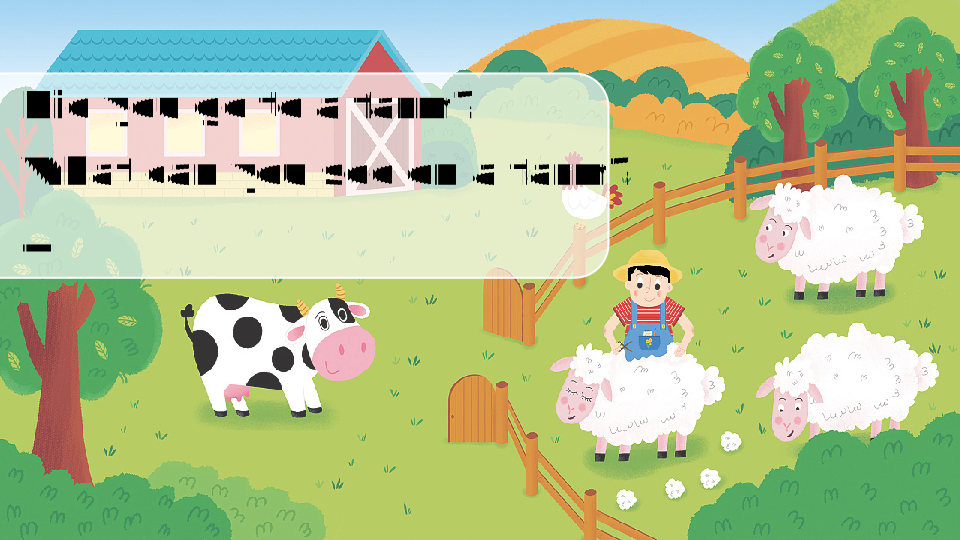
Did you go to a farm?
What can you see on a farm?
…
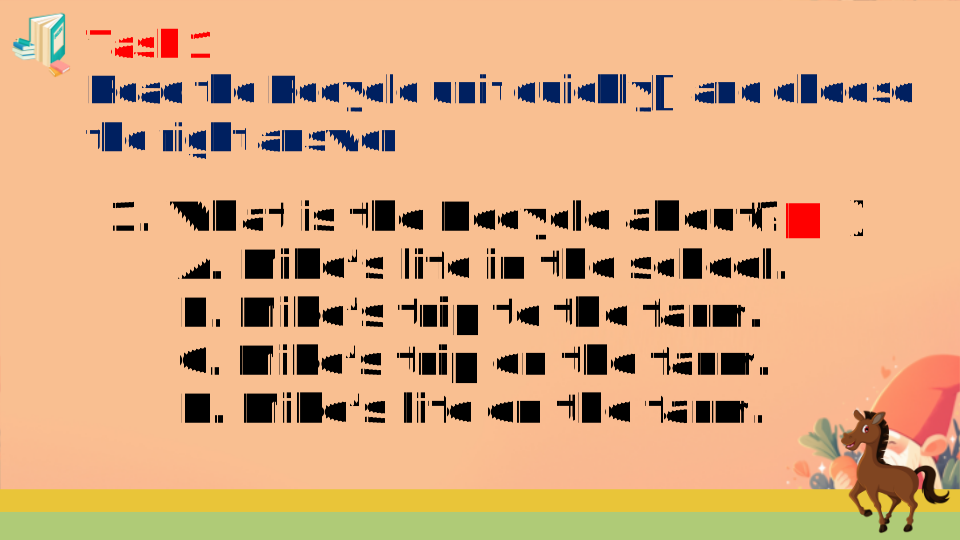
1. What is the Recycle about? ( )
A. Mike’s life in the school.
B. Mike’s trip to the farm.
C. Mike’s trip on the farm.
D. Mike’s life on the farm.
D
Read the Recycle unit quickly,and choose the right answer
Task 1
2. How many days did Mike spend on the farm? ( )
A. Four days.
B. Five days.
C. Seven days.
D. Eight days.
D
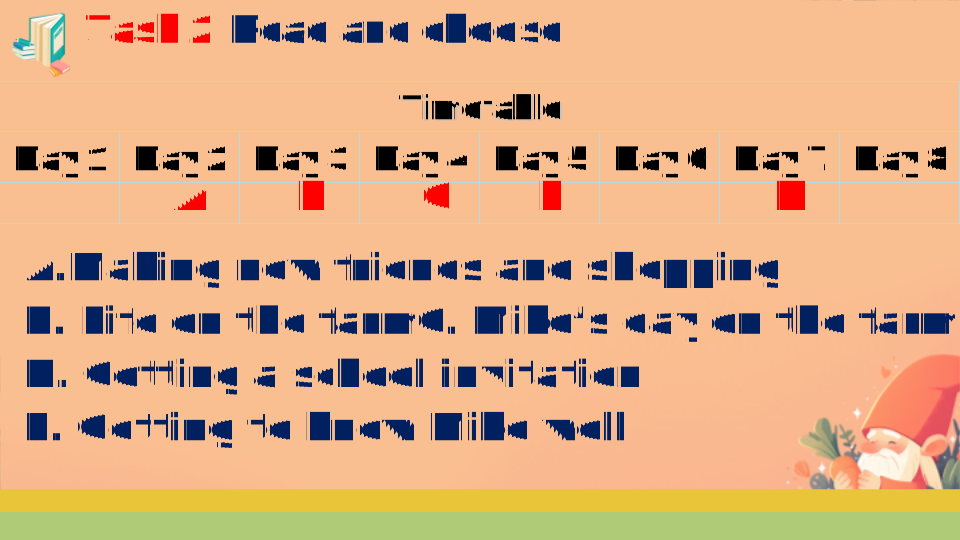
Timetable
Day 1 Day 2 Day 3 Day 4 Day 5 Day 6 Day 7 Day 8
A
B
C
E
D
Read and choose
Task 2
Making new friends and shopping
B. Life on the farm C. Mike’s day on the farm
D. Getting a school invitation
E. Getting to know Mike well
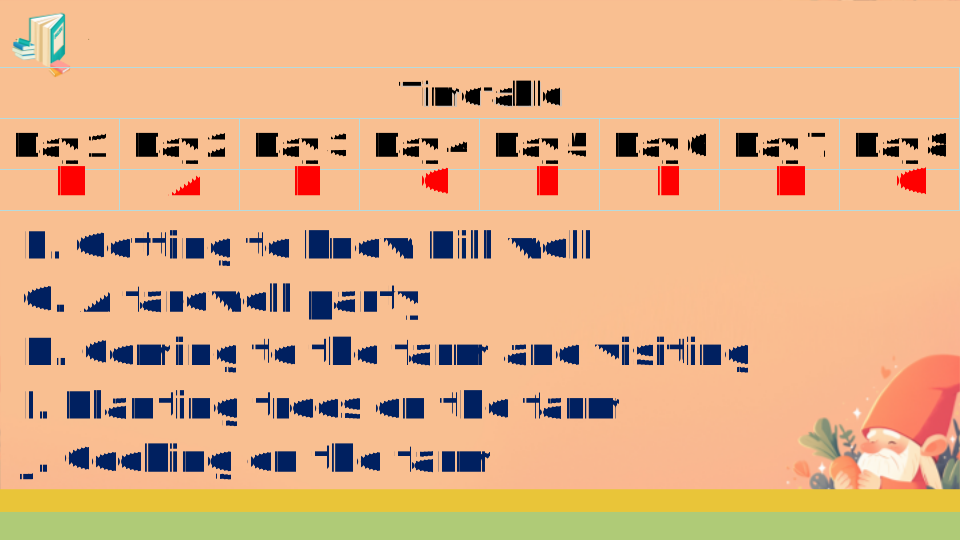
Timetable
Day 1 Day 2 Day 3 Day 4 Day 5 Day 6 Day 7 Day 8
A
B
C
E
D
F. Getting to know Bill well
G. A farewell party
H. Coming to the farm and visiting
I. Planting trees on the farm
J. Cooking on the farm
H
G
F
Introducing
Look at this picture. Who is he?
He is Mike.
Mike visited a farm.
There were lots of things on the farm.
What can you see on the farm?
some sheep
some horses
some cows
some tomatoes
an orange
a pear
some apples
an egg
a jacket
an umbrella
Let’s sing
A Noun is a...
person
girl
Tom
teacher
police officer
baby
place
school
home
library
shop
lake
Shanghai
thing
pencil
apple
car
book
dog
elephant
yesterday
Let’s judge
Is it a
noun?
run
Tom
library
tiger
good
slow
did
science
farmer
tomato
eleven
countryside
Monday
longer
知识讲解
a an some
可数名词的单数常用a /an修饰,
意为“一个”
(a 用于辅音开头的单词前,
an 用于元音开头的单词前)
意为“一些”
可数名词复数或不可数名词常用some修饰
_____pear ____jacket ____egg
_____orange _____umbrella _____apples
_____horses _____tomatoes
a an some
a
a
an
an
an
some
some
some
可数名词单数
可数名词复数
pear
pears
cow
cows
student
students
cup
cups
可数名词单数变复数规律
Rule 1: 直接在单词末尾+s
dress
dresses
box
boxes
watch
watches
brush
brushes
可数名词单数变复数规律
Rule 2: 以s/x/ch/sh结尾的词,
直接在词尾+es
potato
potatoes
tomato
tomatoes
piano
pianos
photo
photos
可数名词单数变复数规律
Rule 3: 以o结尾的词,有生命的在词尾+es,
无生命的在词尾+s
boy
boys
key
keys
country
countries
candy
candies
可数名词单数变复数规律
Rule 4: 以"元音+y"结尾的词直接+s,以"辅音+y"结尾的词,
把y变i再+es
knife
knives
wife
wives
leaf
leaves
thief
thieves
可数名词单数变复数规律
Rule 5: 以f或fe结尾的词,
把f或fe变v再+es
sheep
sheep
foot
feet
child
children
可数名词单数变复数的不规则变化
无规律,特殊记
Let’s learn
用法 例子
a a表示“一”,用在辅音音素开头的可数名词单数前。 a bed
a university
an an也表示“一”,但用于元音音素开头的可数名词前。 an apple
an umbrella
some some表示“一些”,既可以修饰可数名词复数,又可以修饰不可数名词。 some girls
some milk
Grammar
1.a,an和some的用法
apple
orange
Fruit
egg
cake
jacket
shoes
horse
tomato
Food
Clothes
Animal
Vegetable
Can you name the groups of words?
Can you think of one more word group? Can you add more words to the groups?
apple
orange
Fruit
egg
cake
Food
jacket
shoes
Clothes
horse
Animal
tomato
Vegetable
Drink
juice
milk
tea
…
grape
bread
shorts
panda
duck
carrot
onion
…
…
…
…
…
注意:以字母o结尾的可数名词复数一般在词尾加-s,除个别单词加-es,如potato – potatoes,tomato – tomatoes
情况 词尾变化 例词
一般名词 加-s cup—cups
car—cars
以“-s,-x,-ch,-sh”结尾的词 加-es bus—buses box—boxes
watch—watches
以“辅音字母+y”结尾的词 变y为i,再加-es story—stories
strawberry—strawberries
以“-f,-fe”结尾的名词 变f,fe为v,再加-es leaf—leaves
knife—knives
Grammar
2.可数名词复数构成的规则变化
注意:有些名词只有复数形式,如pants(裤子), shorts(短裤), sunglasses(太阳镜)等。
变化情况 例词
形式不变
(单复数同形) sheep—sheep
deer—deer(鹿)
内部元音
发生变化 man—men woman—women
foot—feet tooth—teeth
词尾发生变化 child—children
Grammar
3.可数名词复数构成的不规则变化
Yesterday Mike visited the farm and saw lots of animals and fruits. Today he came to the farmers’ market.
Day 2 Farmers’ market
Mike met new friends. Who are they?
Bill
Mrs Booth
Look and say. What’s he/she like?
He/She is/has …
Help him talk about them.
tall
young
long hair
a red bag
white shoes
short
thin
heavy
old
short hair
a green bag
black shoes
Bill is my new friend.
He’s tall and heavy.
Look, this is Bill. He has big eyes and ... hair. He is strong and thin. He is wearing a shirt and overalls(工装裤). The woman is Bill's mother. She is tall and beautiful.
T-shirt
Mrs Booth and Bill want to go shopping. Help them finish their mind map.
farmers’ market
Where?
When?
With who?
shopping list
How can we get there?
How much?
shopping
morning
farm
evening
by bus
vegetables
Mike
Friday
mother
milk
chicken
on foot
supermarket
father
by subway
Grammar
疑问词 用法 例句
what 询问内容 —What do you want to do?
—I want to go swimming.
where 询问地点 —Where are you?
—I'm in Beijing.
who 询问人 —Who is that man?
—He's my uncle.
when 询问时间 —When do you go to work?
—I go to work at 7:00.
how 询问方式 —How do you go to school?
—I usually go by bus.
4.特殊疑问词—“4W1H”
Now make a new word map with your partner.
For example:
Where?
When?
With who?
What?
How can we get there?
My trip
by bus
Grammar
体型 tall高的,short矮的,heavy重的,thin瘦的
long长的,big大的,small小的
头发 long hair长发,short hair短发,curly hair卷发
straight hair直发,black hair黑发,grey hair灰白的头发
鼻子 a big nose一个大鼻子,a small nose一个小鼻子
a flat nose一个扁鼻子
眼睛 big eyes大眼睛,small eyes小眼睛,blue eyes蓝眼睛
嘴巴 a big mouth一张大嘴巴,a small mouth一张小嘴巴
5.描述外貌的常用词组
I have a good friend.
He/She is tall/shy …
He/She has short hair/a red bag …
1. It’s beautiful flower.
2. I have egg and
apples for breakfast.
a
an
some
选词填空(a,an,some)
Exercise
3. She has pen in her bag.
4. —Do you want orange?
—Yes, I do.
5. I have rice for lunch.
a
an
some
1. There are two (study) in my house.
2. Many (child) like animals.
3. Spring is coming! The (leaf) become green.
studies
leaves
children
用所给词的适当形式填空
4. The two (man) under the tree are his uncles.
5. She likes (banana) so much.
men
bananas
I go to school in the morning.
2. I go to Shanghai on weekends.
3. It’s ten yuan.
When do you go to school?
Who goes to Shanghai on weekends?
How much is it?
对画线部分提问
4. We go to school by bike.
5. I want to go to the farmers’ market.
How do you go to school?
Where do you want to go?
Can you finish?
( )1. A.pen B.book C.yellow
( )2. A.jacket B.shoes C.Chinese
( )3. A.library B.school C.father
( )4. A.red B.China C.UK
( )5. A.apple B.pencil C.pear
C
C
C
A
B
找出下列不同类的单词
1. We learned the meaning of nouns.
2. We learned how to classify (分类)nouns.
Summary
1.Finish the exercise.
2.预习43-44页
Homework
Thank you !
Lavf58.29.100
Lavf58.29.100
$
资源预览图
1
2
3
4
5
6
相关资源
由于学科网是一个信息分享及获取的平台,不确保部分用户上传资料的 来源及知识产权归属。如您发现相关资料侵犯您的合法权益,请联系学科网,我们核实后将及时进行处理。