期末核心语法易错点分层闯关(专项训练)-2025-2026学年人教PEP版英语五年级下册
2026-05-17
|
16页
|
46人阅读
|
2人下载
资源信息
| 学段 | 小学 |
|---|---|
| 学科 | 英语 |
| 教材版本 | 小学英语人教PEP版五年级下册 |
| 年级 | 五年级 |
| 章节 | - |
| 类型 | 题集-专项训练 |
| 知识点 | 语法 |
| 使用场景 | 同步教学-期末 |
| 学年 | 2026-2027 |
| 地区(省份) | 全国 |
| 地区(市) | - |
| 地区(区县) | - |
| 文件格式 | DOCX |
| 文件大小 | 41 KB |
| 发布时间 | 2026-05-17 |
| 更新时间 | 2026-05-17 |
| 作者 | ai153877 |
| 品牌系列 | - |
| 审核时间 | 2026-05-17 |
| 下载链接 | https://m.zxxk.com/soft/57901159.html |
| 价格 | 1.50储值(1储值=1元) |
| 来源 | 学科网 |
摘要:
**基本信息**
分层闯关式语法专项训练,通过基础巩固、能力提升、实战挑战三阶递进,系统提炼情态动词、主谓一致等核心语法规则及解题技巧,助力语言能力与思维品质提升。
**专项设计**
|模块|题量/典例|方法提炼|知识逻辑|
|----|-----------|----------|----------|
|基础巩固|2题型(错误改正/单选)|情态动词后接原形、名词单复数规则|从单一语法规则(情态动词/主谓一致)到基础应用|
|能力提升|2题型(句型转换/填空)|There be就近原则、be going to结构|从规则记忆到句式转换与综合运用|
|实战挑战|2题型(病句诊断/补全对话)|祈使句否定式、选择疑问句结构|从易错点突破到真实情境语法综合输出|
内容正文:
2026人教版PEP五年级下册期末核心语法
易错点分层闯关训练
第一关:基础巩固(筑牢规则、社区与季节的语法根基)
一、火眼金睛:找出并改正句子中的语法错误(情态动词/主谓一致/名词单复数)。
1. You must to wait in line at the bus stop. (Unit 1)
→ ______________
2. We can goes swimming in summer. (Unit 3)
→ ______________
3. My hometown have many beautiful mountains. (Unit 4)
→ ______________
4. I’m going to buy some souvenir. (Unit 5)
→ ______________
二、单项选择(辨析情态动词语气、介词短语、名词搭配)。
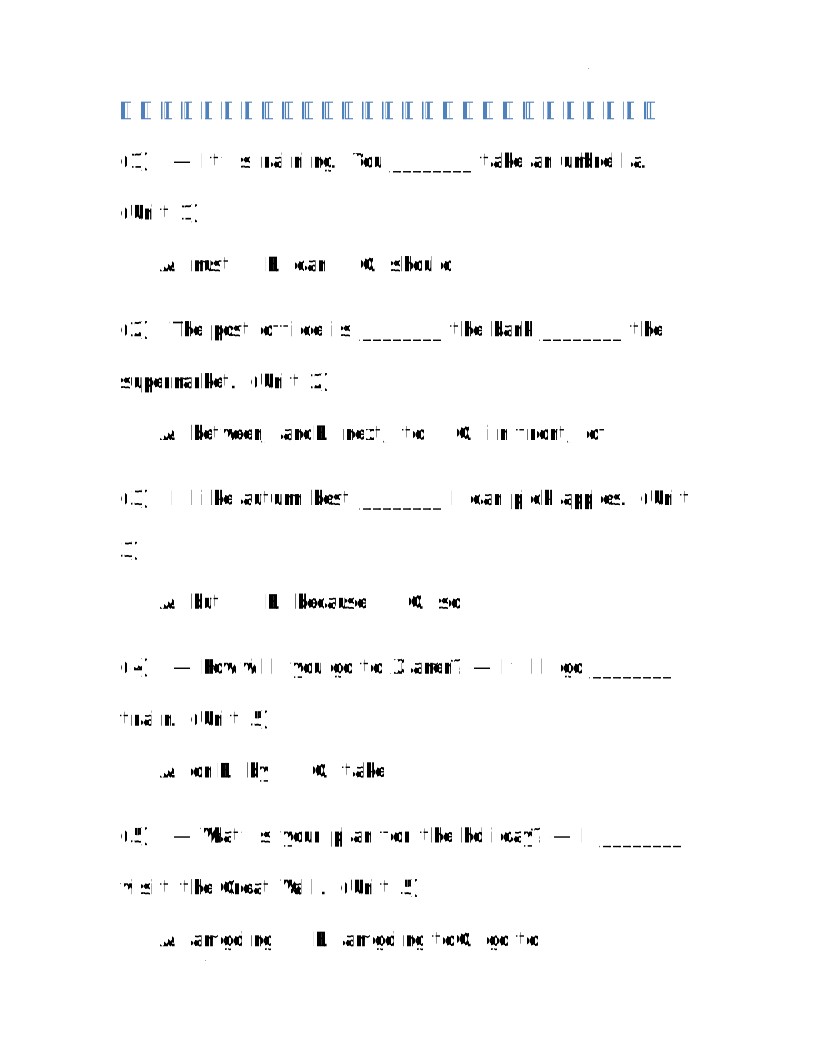
(1) — It’s raining. You ________ take an umbrella. (Unit 1)
A. must B. can C. should
(2) The post office is ________ the bank ________ the supermarket. (Unit 2)
A. between; and B. next; to C. in front; of
(3) I like autumn best ________ I can pick apples. (Unit 3)
A. but B. because C. so
(4) — How will you go to Xiamen? — I’ll go ________ train. (Unit 5)
A. on B. by C. take
(5) — What’s your plan for the holiday? — I ________ visit the Great Wall. (Unit 5)
A. am going B. am going to C. go to
第二关:能力提升(在计划与描述中灵活转换与综合运用)
三、句型转换(注意:时态、句式、疑问词的正确选用)。
1. You must talk loudly in the library. (改为否定句) (Unit 1)
→ ______________
2. They are going to travel by plane. (改为一般疑问句,并作肯定回答) (Unit 5)
________________________
________________________
3. This is a quiet village. (改为复数句) (Unit 4)
→ ______________
4. I am going to stay in Jinan for five days. (对划线部分`for five days`提问) (Unit 6)
→ ______________
5. We will visit the museum. (用`the science centre`改写为选择疑问句) (Unit 5)
→ ______________
四、用所给词的适当形式填空(综合运用,一空多考)。
1. Look! There ________ (be) a lot of people in the park. They ________ (fly) kites. (Unit 2/3)
2. Chen Wei ________ (be) from a small town. It ________ (have) a clean river. (Unit 4)
3. — ________ you often ________ (go) to the library? — Yes, to read books. (Unit 1/2)
4. My parents and I ________ (be) going to Wuhan next month. We ________ (visit) many places. (Unit 5)
5. How much ________ (be) the ________ (trousers)? They look cool. (Unit 4, 结合购物)
第三关:实战挑战(源于试卷与作业的经典“坑”)
五、病句诊断与修改(先判断对错`√/×`,再改正)。
1. ( ) Don’t running in the hallway. → ______________
2. ( ) There are a book and two pencils on the desk. → ______________
3. ( ) I’m going to by plane to Sanya. → ______________
4. ( ) She should saves water. → ______________
5. ( ) Where are you going to do? → ______________
六、补全对话(在制定旅行计划的真实情境中综合运用语法)。
A: Hi, Lily! What are you going to do this summer holiday?
B: I 1. ________ (visit) my grandparents in Qingdao.
A: That’s nice! 2. ________ will you get there?
B: 3. ________ train. It’s fast.
A: 4. ________ are you going to stay?
B: For about two weeks. Qingdao 5. ________ (be) by the sea. I 6. ________ (go) swimming every day!
A: Sounds great! 7. ________ you 8. ________ (take) many photos?
B: Of course!
解析与学生常见错误提醒
一、火眼金睛:找出并改正句子中的语法错误(情态动词/主谓一致/名词单复数)
1. 参考答案:You must wait in line at the bus stop.
解析:情态动词`must`后必须接动词原形`wait`,不能加`to`。
易错提醒:学生易将`must`与`have to`(后接to do)的用法混淆,或在情态动词后错误使用不定式。
2. 参考答案:We can go swimming in summer.
解析:情态动词`can`后必须接动词原形`go`。
易错提醒:受主语`We`或时态影响,错误地在`can`后的动词上加`s`或`-ing`。
3. 参考答案:My hometown has many beautiful mountains.
解析:主语`My hometown`是第三人称单数(它),谓语动词`have`应用三单形式`has`。
易错提醒:将家乡、学校等地点名词误认为是复数概念,动词忘加`s`。
4. 参考答案:I’m going to buy some souvenirs.
解析:`some`后接可数名词时,应用复数形式`souvenirs`。
易错提醒:`souvenir`是可数名词,学生易受`some`影响,忘记用复数,或错误认为`souvenir`不可数。
二、单项选择(辨析情态动词语气、介词短语、名词搭配)
1. 参考答案:C
解析:`should`表示建议“应该”,语气比`must`(必须)弱,比`can`(可以)更有劝告性,符合“下雨带伞”的建议语境。
易错提醒:混淆`must`(强制)和`should`(建议)的语气强弱。
2. 参考答案:A
解析:表示“在...两者之间”用固定短语`between...and...`。
易错提醒:`next to`(紧挨着)和`in front of`(在...前面)后不接`and`。
3. 参考答案:B
解析:`because`(因为)用于引导原因,回答“为什么最喜欢秋天”。
易错提醒:混淆连词`but`(但是)表转折,`so`(所以)表结果。
4. 参考答案:B
解析:表示交通方式用`by + 交通工具`(无冠词)。
易错提醒:混淆`by train`与`take a train`的结构,在`by`后误加冠词或用`on`。
5. 参考答案:B
解析:表示将来计划用`be going to`结构,`be`动词`am`与主语`I`一致,后接`going to`。
易错提醒:漏掉`going`,写成`I am to visit`;或漏掉`be`动词,写成`I going to visit`。
三、句型转换(注意:时态、句式、疑问词的正确选用)
1. 参考答案:You mustn’t talk loudly in the library. / You must not talk loudly in the library.
解析:含有情态动词`must`的肯定句变否定句,直接在`must`后加`not`,可缩写为`mustn’t`。
易错提醒:错误使用`don’t`,写成`You don’t must talk...`。
2. 参考答案:问句:Are they going to travel by plane? 肯定答:Yes, they are.
解析:含有`be going to`结构的句子变一般疑问句,将`be`动词`are`提到主语`they`前面。
易错提醒:用`Do`或`Will`开头;`be`动词提至句首后忘记保持原形`are`。
3. 参考答案:These are quiet villages.
解析:`This`变`These`,`is`变`are`,`a quiet village`变`quiet villages`。
易错提醒:`village`的复数直接加`s`,学生易漏掉。
4. 参考答案:How long are you going to stay in Jinan?
解析:对时间段`for five days`提问,用疑问词`How long`。
易错提醒:误用`When`(问时间点)或`How`(问方式)。
5. 参考答案:Will you visit the museum or the science centre?
解析:选择疑问句结构:`Will`开头的一般疑问句 + A or B?
易错提醒:漏掉`or`,或用`and`连接;`Will`后动词`visit`误加`s`。
四、用所给词的适当形式填空(综合运用,一空多考)
1. 参考答案:are, are flying
解析:`Look!`提示用现在进行时。`There be`句型中,主语`a lot of people`是复数,be动词用`are`。`fly`的现在分词是`flying`。
易错提醒:`people`单复数同形,但作为集合名词时是复数;现在进行时结构`be + doing`。
2. 参考答案:is, has
解析:主语`Chen Wei`是第三人称单数,`be`动词用`is`。`It`(指代hometown)是第三人称单数,动词`have`用`has`。
易错提醒:`hometown`作为地点,用`it`指代时是第三人称单数。
3. 参考答案:Do, go
解析:主语`you`,一般现在时疑问句用助动词`Do`,其后动词`go`用原形。
易错提醒:用`Does`;`Does`后动词`go`误加`s`。
4. 参考答案:are, are going to visit
解析:主语`My parents and I`是复数,`be`动词用`are`。表示将来计划用`be going to`结构。
易错提醒:主语是复数,`be`动词用`are`;`be going to`结构完整性。
5. 参考答案:are, trousers
解析:`trousers`是复数名词,be动词用`are`。`trousers`本身就是复数形式。
易错提醒:`trousers`、`shoes`等服装类名词本身就是复数,be动词用`are`。
五、病句诊断与修改(先判断对错`√/×`,再改正)
1. 参考答案:×, Don’t run in the hallway.
解析:祈使句的否定形式是`Don't + 动词原形`。
易错提醒:在`Don't`后错误使用动名词`running`。
2. 参考答案:×, There is a book and two pencils on the desk.
解析:`There be`句型遵循“就近原则”,be动词由最靠近的主语`a book`(单数)决定,用`is`。
易错提醒:被`two pencils`误导用`are`。
3. 参考答案:×, I’m going to go by plane to Sanya.
解析:`be going to`后应接动词原形`go`。也可以改为`I’m going by plane to Sanya.`
易错提醒:漏掉`go`,直接写`going to by`。
4. 参考答案:×, She should save water.
解析:情态动词`should`后必须接动词原形`save`。
易错提醒:受主语`She`影响,错误地在`should`后的动词上加`s`。
5. 参考答案:×, What are you going to do?
解析:对`do`这个动作提问,用疑问词`What`。
易错提醒:误用`Where`(问地点)。
六、补全对话(在制定旅行计划的真实情境中综合运用语法)
1. 参考答案:am going to visit
解析:表示将来计划用`be going to`结构。
2. 参考答案:How
解析:询问出行方式,用`How`。
3. 参考答案:By
解析:表示交通方式用`by + 交通工具`。
4. 参考答案:How long
解析:询问时间段,用`How long`。
5. 参考答案:is
解析:主语`Qingdao`是第三人称单数,`be`动词用`is`。
6. 参考答案:am going to go
解析:表示将来计划用`be going to`结构。
7. 参考答案:Will
解析:一般将来时疑问句用助动词`Will`。
8. 参考答案:take
解析:`Will`后接动词原形`take`。
学科网(北京)股份有限公司
$
资源预览图

1
2

3
相关资源
由于学科网是一个信息分享及获取的平台,不确保部分用户上传资料的 来源及知识产权归属。如您发现相关资料侵犯您的合法权益,请联系学科网,我们核实后将及时进行处理。