期末核心语法易错点分层闯关训练(综合训练)-2025-2026学年人教PEP版英语四年级下册
2026-05-17
|
12页
|
58人阅读
|
2人下载
资源信息
| 学段 | 小学 |
|---|---|
| 学科 | 英语 |
| 教材版本 | 小学英语人教PEP版四年级下册 |
| 年级 | 四年级 |
| 章节 | - |
| 类型 | 题集-综合训练 |
| 知识点 | 语法 |
| 使用场景 | 同步教学-期末 |
| 学年 | 2026-2027 |
| 地区(省份) | 全国 |
| 地区(市) | - |
| 地区(区县) | - |
| 文件格式 | DOCX |
| 文件大小 | 42 KB |
| 发布时间 | 2026-05-17 |
| 更新时间 | 2026-05-17 |
| 作者 | ai153877 |
| 品牌系列 | - |
| 审核时间 | 2026-05-17 |
| 下载链接 | https://m.zxxk.com/soft/57899842.html |
| 价格 | 1.00储值(1储值=1元) |
| 来源 | 学科网 |
摘要:
**基本信息**
分层闯关式语法训练,通过基础巩固、能力提升、实战挑战三级进阶,融合易错点解析与方法提炼,构建从规则到语境应用的逻辑链,提升语言能力与思维品质。
**综合设计**
|模块|题量/典例|方法提炼|知识逻辑|
|----|-----------|----------|----------|
|基础巩固|火眼金睛5题+单选5题|语法规则识别(主谓一致/动词形式/名词复数)|聚焦单一语法点,夯实情态动词、介词等基础规则|
|能力提升|句型转换5题+填空4题|句式转换联动(否定句/疑问句/复数句)|整合多规则应用,训练动词形式与人称、句式的联动变化|
|实战挑战|病句诊断5题+补全对话8空|真实语境纠错(情态动词用法/名词复数)|从错误辨析到语境运用,强化语法知识在沟通中的准确表达|
内容正文:
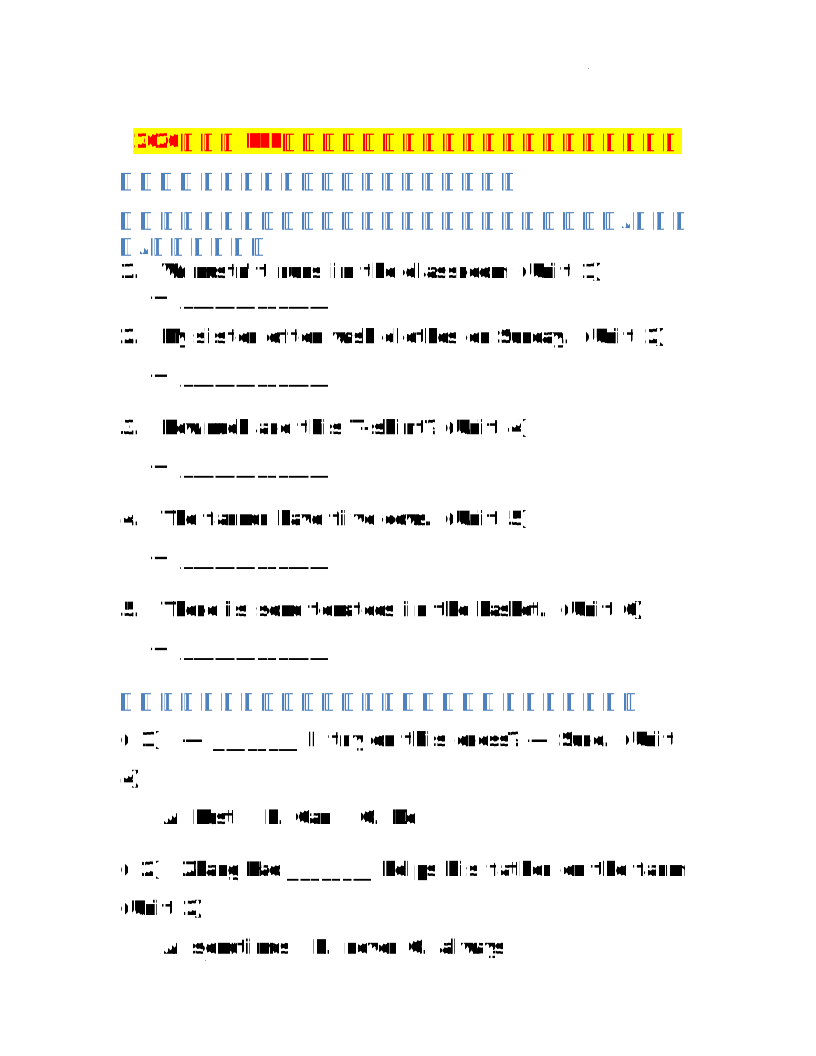
2026人教版PEP四年级下册期末核心语法易错点分层闯关训练
第一关:基础巩固(规则与习惯的语法基石)
一、火眼金睛:找出并改正句子中的语法错误(主谓一致/动词形式/名词复数)。
1. We mustn't runs in the classroom. (Unit 1)
→ ______________
2. My sister often wash clothes on Sunday. (Unit 2)
→ ______________
3. How much are this T-shirt? (Unit 4)
→ ______________
4. The farmer have five cows. (Unit 5)
→ ______________
5. There is some tomatoes in the basket. (Unit 6)
→ ______________
二、单项选择(辨析情态动词、频度副词、介词与代词)。
( 1) — ________ I try on this dress? — Sure. (Unit 4)
A. Must B. Can C. Do
( 2) Zhang Hao ________ helps his father on the farm. (Unit 2)
A. sometimes B. never C. always
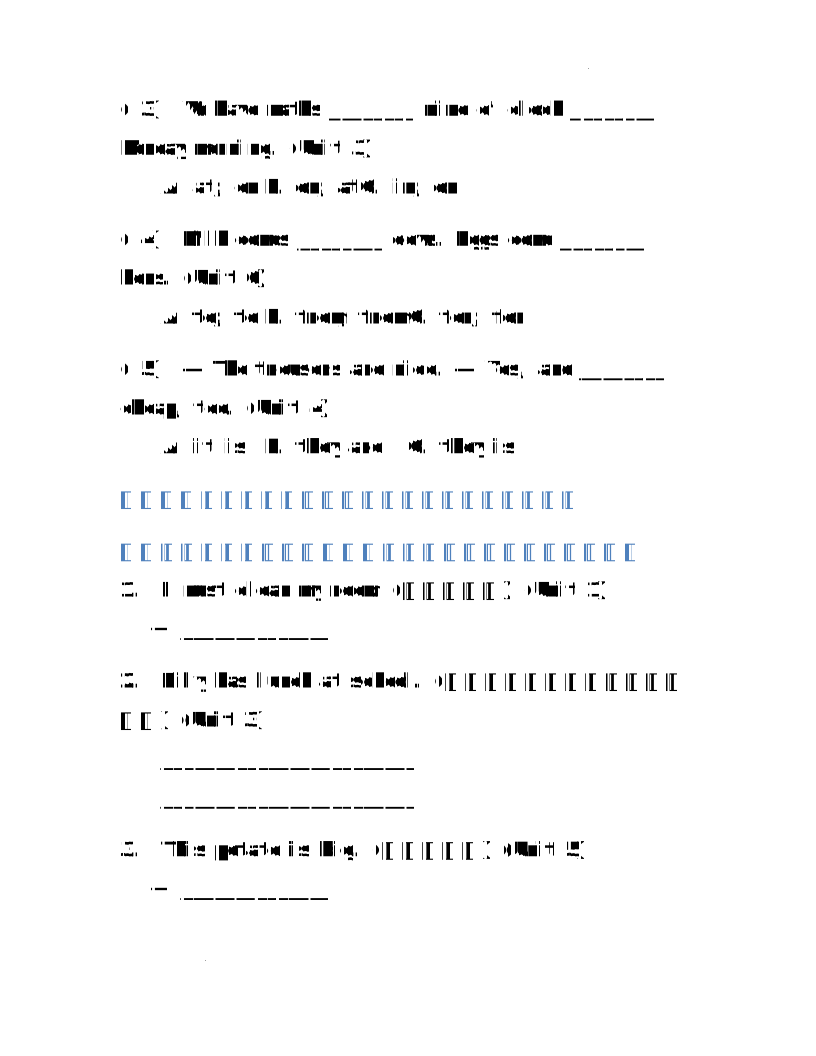
( 3) We have maths ________ nine o’clock ________ Monday morning. (Unit 3)
A. at; on B. on; at C. in; on
( 4) Milk comes ________ cows. Eggs come ________ hens. (Unit 6)
A. to; to B. from; from C. for; for
( 5) — The trousers are nice. — Yes, and ________ cheap, too. (Unit 4)
A. it is B. they are C. they is
第二关:能力提升(在综合情境中准确转换与运用)
三、句型转换(注意:句式、人称、动词形式联动变化)。
1. I must clean my room. (改为否定句) (Unit 1)
→ ______________
2. Lily has lunch at school. (改为一般疑问句,并作否定回答) (Unit 3)
________________________
________________________
3. This potato is big. (改为复数句) (Unit 5)
→ ______________
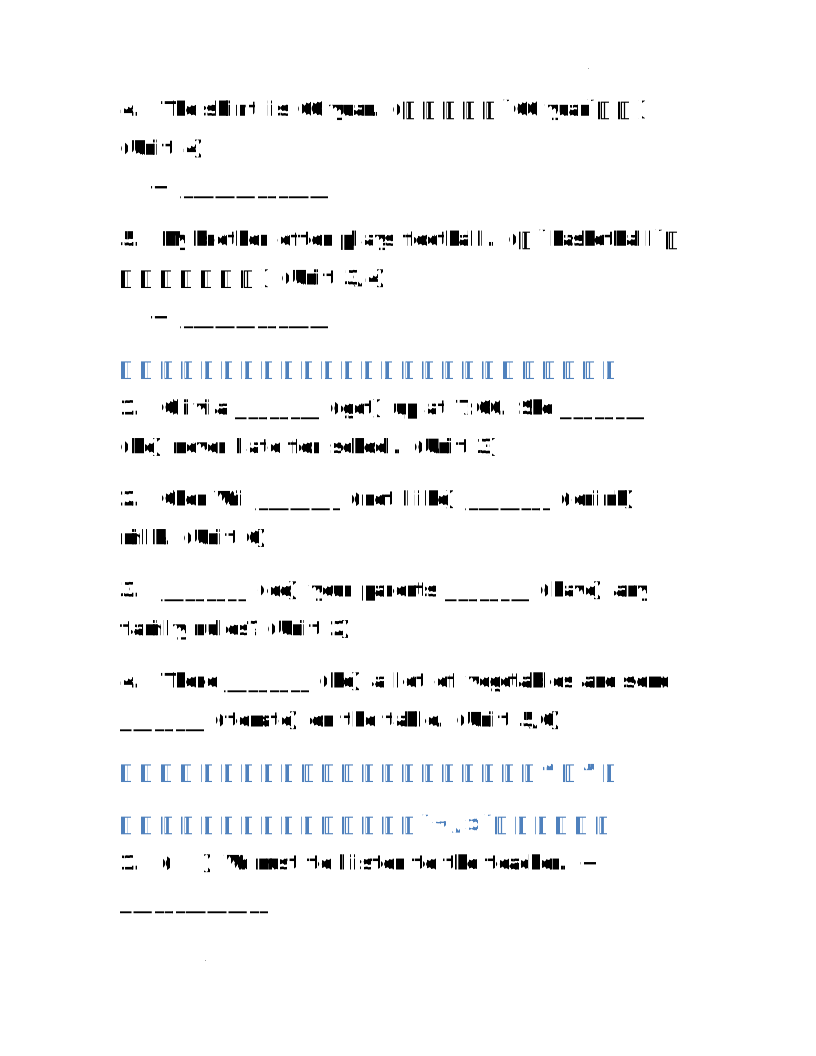
4. The skirt is 60 yuan. (对划线部分`60 yuan`提问) (Unit 4)
→ ______________
5. My brother often plays football. (用`basketball`改写为选择疑问句) (Unit 3/4)
→ ______________
四、用所给词的适当形式填空(综合运用,一空多考)。
1. Olivia ________ (get) up at 7:00. She ________ (be) never late for school. (Unit 3)
2. Chen Wei ________ (not like) ________ (drink) milk. (Unit 6)
3. ________ (do) your parents ________ (have) any family rules? (Unit 2)
4. There ________ (be) a lot of vegetables and some ________ (tomato) on the table. (Unit 5/6)
第三关:实战挑战(源于真实语料与作业的高频“坑”)
五、病句诊断与修改(先判断对错`√/×`,再改正)。
1. ( ) We must to listen to the teacher. → ______________
2. ( ) — How much is the shoes? — It’s 45 yuan. → ______________
3. ( ) — Where are eggs from? — They’re from chicken. → ______________
4. ( ) Does she often plays the piano? → ______________
5. ( ) I’m from the Kunming. It’s a beautiful city. → ______________
六、补全对话(在制定周末计划与购物的真实语境中运用语法)。
A: What’s your plan for the weekend, Bella?
B: I’m going to the supermarket with my mum.
A: Cool! 1. ________ are you going to buy?
B: Some vegetables. Carrots 2. ________ (be) healthy. 3. ________ you often 4. ________ (go) shopping?
A: Yes, I 5. ________. I 6. ________ (help) my mum.
B: Look at this skirt! 7. ________ ________ is it?
A: Let me see. It’s 88 yuan.
B: Oh, it’s 8. ________ (expensive). Let’s look at that one.
2026人教版PEP四年级下册期末核心语法易错点分层闯关训练解析
一、火眼金睛:找出并改正句子中的语法错误(主谓一致/动词形式/名词复数)
1. 参考答案:We mustn't run in the classroom.
解析:情态动词must(包括mustn't)后必须接动词原形run。
易错提醒:学生受主语we或句子时态影响,易在情态动词后的动词上错误加s或-ing。
2. 参考答案:My sister often washes clothes on Sunday.
解析:主语My sister是第三人称单数,频度副词often后,实义动词wash需用三单形式washes。
易错提醒:频度副词不影响动词形式,学生易忽略主语是三单,动词忘加-s。
3. 参考答案:How much is this T-shirt?
解析:主语this T-shirt是单数,be动词应用is。How much问价格时,be动词需与主语单复数保持一致。
易错提醒:被How much(多少)的结构迷惑,误以为后面必须用复数。
4. 参考答案:The farmer has five cows.
解析:主语The farmer是第三人称单数,谓语动词have应用三单形式has。
易错提醒:三单s漏加是四年级最顽固的语法错误之一,尤其在have变has时。
5. 参考答案:There are some tomatoes in the basket.
解析:There be句型遵循“就近原则”,some tomatoes是复数,be动词用are。tomato的复数要加-es。
易错提醒:1) 被some误导用is;2) tomato复数形式错误,写成tomatos。
二、单项选择(辨析情态动词、频度副词、介词与代词)
1. 参考答案:B
解析:请求许可用Can I...?。Must表强制,Do用于一般疑问句。
易错提醒:混淆情态动词的不同用法。
2. 参考答案:A
解析:sometimes(有时)符合语境,表示偶尔帮忙。never(从不)和always(总是)都太极端。
易错提醒:频度副词含义不清,选词不当。
3. 参考答案:A
解析:具体时间点用at;星期几的早上/下午用on。
易错提醒:介词用法混淆,特别是at和on。
4. 参考答案:B
解析:表示来源用介词from。
易错提醒:介词搭配错误,如用to或for。
5. 参考答案:B
解析:trousers是复数名词,be动词用are,代词用they。
易错提醒:忘记trousers等服装类名词本身就是复数。
三、句型转换(注意:句式、人称、动词形式联动变化)
1. 参考答案:I must not clean my room. / I mustn't clean my room.
解析:含有情态动词must的肯定句变否定句,直接在must后加not。
易错提醒:错误添加助动词do,写成I don't must clean...。
2. 参考答案:问句:Does Lily have lunch at school? 否定答:No, she doesn't.
解析:主语Lily是第三人称单数,实义动词has变疑问句需借助助动词Does,has恢复为have。否定回答用doesn't。
易错提醒:1) 用Is开头;2) Does后动词未还原;3) 答语用No, she don't.
3. 参考答案:These potatoes are big.
解析:This变These,potato变复数potatoes(以o结尾加es),is变are。
易错提醒:忘记potato的复数是potatoes;只变名词,忘了be动词。
4. 参考答案:How much is the skirt?
解析:对价格60 yuan提问,用How much。
易错提醒:误用What's the price...?或How much are...?(单数用is)。
5. 参考答案:Does your brother often play football or basketball?
解析:选择疑问句结构:Does开头的一般疑问句 + A or B?
易错提醒:漏掉or,或用and连接;Does后动词play误加s。
四、用所给词的适当形式填空(综合运用,一空多考)
1. 参考答案:gets, is
解析:主语Olivia是第三人称单数,get变gets;be动词用is。
易错提醒:get三单形式错误;be动词用are。
2. 参考答案:doesn't like, drinking
解析:主语Chen Wei是第三人称单数,否定句需借助助动词doesn't,动词like用原形。like后接动名词drinking。
易错提醒:漏掉助动词doesn't;或将drinking写成drink或drinks。
3. 参考答案:Do, have
解析:主语your parents是复数,疑问句用助动词Do,其后动词have用原形。
易错提醒:用Does;Does后动词have误加s。
4. 参考答案:are, tomatoes
解析:There be句型遵循就近原则,a lot of vegetables是复数概念,be动词用are。tomato的复数是tomatoes。
易错提醒:被a lot of迷惑用is;tomato复数形式错误。
五、病句诊断与修改(先判断对错√/×,再改正)
1. 参考答案:×, We must listen to the teacher.
解析:情态动词must后直接接动词原形,不能加to。
易错提醒:混淆情态动词与不定式的用法。
2. 参考答案:×, How much are the shoes? They're 45 yuan.
解析:shoes是复数,be动词用are。答语主语用They。
易错提醒:主谓不一致;答语用It's。
3. 参考答案:×, Where are eggs from? They're from chickens.
解析:eggs是复数,chicken(鸡)作为动物时也是可数名词,此处应用复数chickens。
易错提醒:将chicken(鸡)与chicken(鸡肉)混淆;chicken作动物时可数。
4. 参考答案:×, Does she often play the piano?
解析:主语she是第三人称单数,助动词用Does,其后动词plays应恢复为原形play。
易错提醒:在有助动词Does的情况下,后面动词仍保留三单形式。
5. 参考答案:×, I'm from Kunming. It's a beautiful city.
解析:城市名Kunming前不加定冠词the。
易错提醒:与the UK等国家缩写混淆。
六、补全对话(在制定周末计划与购物的真实语境中运用语法)
1. 参考答案:What
解析:询问购买的物品,用What。
2. 参考答案:are
解析:主语Carrots是复数,be动词用are。
3. 参考答案:Do
解析:一般疑问句,主语you,助动词用Do。
4. 参考答案:go
解析:实义动词go用原形。
5. 参考答案:do
解析:肯定回答,主语I。
6. 参考答案:help
解析:主语I,动词用原形help。
7. 参考答案:How much
解析:询问价格,用How much。
8. 参考答案:expensive
解析:根据语境(88元觉得贵),用形容词expensive。
学科网(北京)股份有限公司
$
资源预览图
1
2
3
相关资源
由于学科网是一个信息分享及获取的平台,不确保部分用户上传资料的 来源及知识产权归属。如您发现相关资料侵犯您的合法权益,请联系学科网,我们核实后将及时进行处理。