句型转换(专项训练)-2025-2026学年清华大学版英语三年级下册
2026-05-15
|
9页
|
13人阅读
|
1人下载
资源信息
| 学段 | 小学 |
|---|---|
| 学科 | 英语 |
| 教材版本 | 小学英语清华大学版三年级下册 |
| 年级 | 三年级 |
| 章节 | - |
| 类型 | 题集-专项训练 |
| 知识点 | - |
| 使用场景 | 同步教学-期末 |
| 学年 | 2026-2027 |
| 地区(省份) | 全国 |
| 地区(市) | - |
| 地区(区县) | - |
| 文件格式 | DOCX |
| 文件大小 | 40 KB |
| 发布时间 | 2026-05-15 |
| 更新时间 | 2026-05-15 |
| 作者 | ai153877 |
| 品牌系列 | - |
| 审核时间 | 2026-05-15 |
| 下载链接 | https://m.zxxk.com/soft/57887587.html |
| 价格 | 0.50储值(1储值=1元) |
| 来源 | 学科网 |
内容正文:
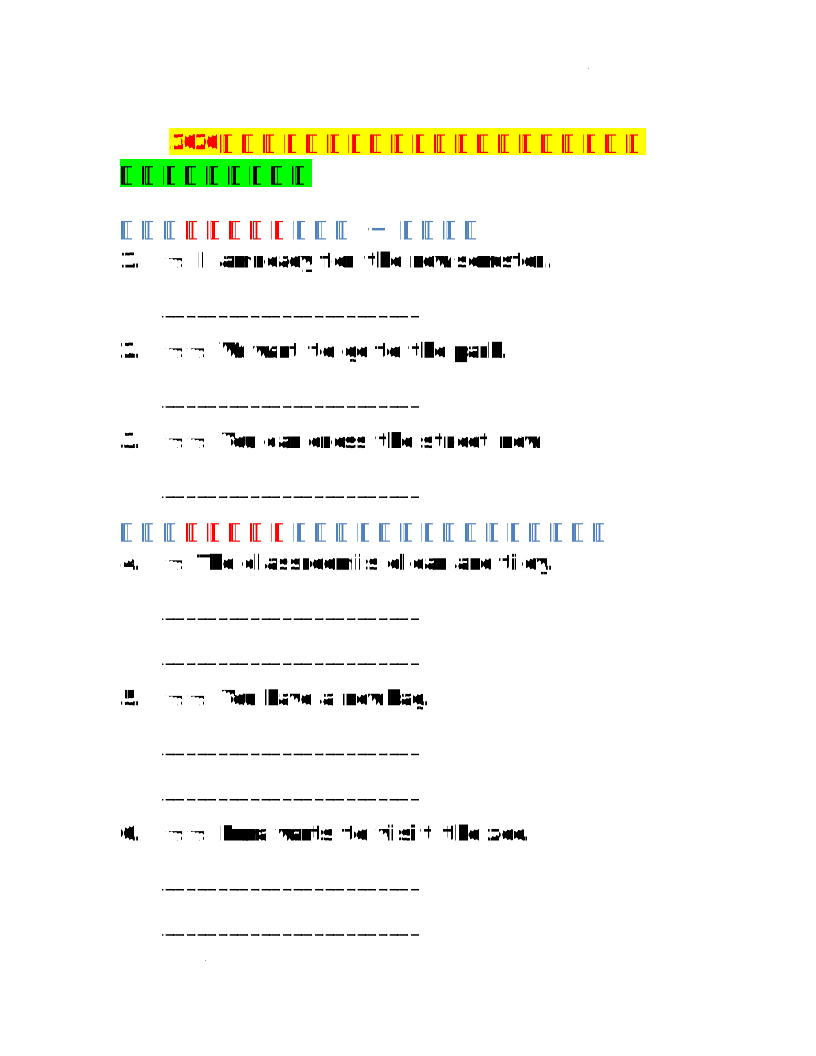
2026清华大学版三年级下册句型转换期末专项练习
第一部分:分层练习
一、(必考重点:肯定句 → 否定句)
1. ★ I am ready for the new semester.
________________________
2. ★★ We want to go to the park.
________________________
3. ★★ You can cross the street now.
________________________
二、(必考易错:改为一般疑问句,并作肯定回答)
4. ★ The classroom is clean and tidy.
________________________
________________________
5. ★★ You have a new bag.
________________________
________________________
6. ★★ Emma wants to visit the zoo.
________________________
________________________
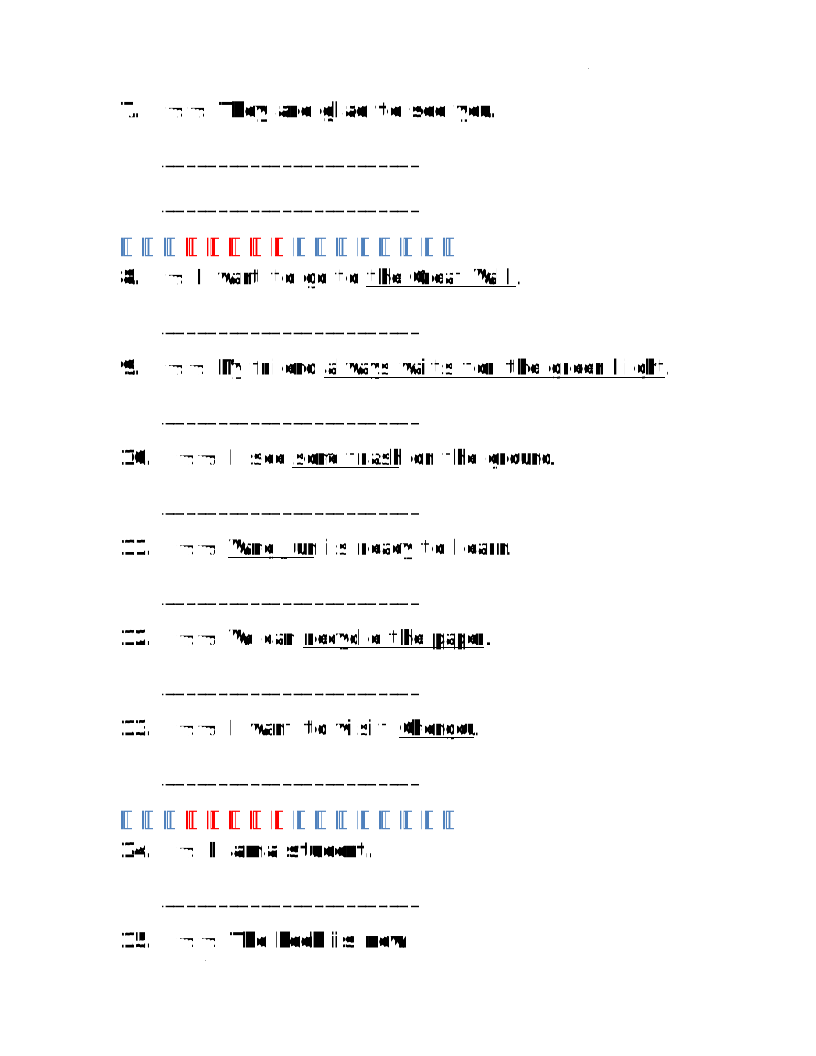
7. ★★ They are glad to see you.
________________________
________________________
三、(必考重点:对划线部分提问)
8. ★ I want to go to the Great Wall.
________________________
9. ★★ My friend always waits for the green light.
________________________
10. ★★ I see some trash on the ground.
________________________
11. ★★ Wang Jun is ready to learn.
________________________
12. ★★ We can recycle the paper.
________________________
13. ★★ I want to visit Chengdu.
________________________
四、(必考易错:单数句变复数句)
14. ★ I am a student.
________________________
15. ★★ The book is new.
________________________
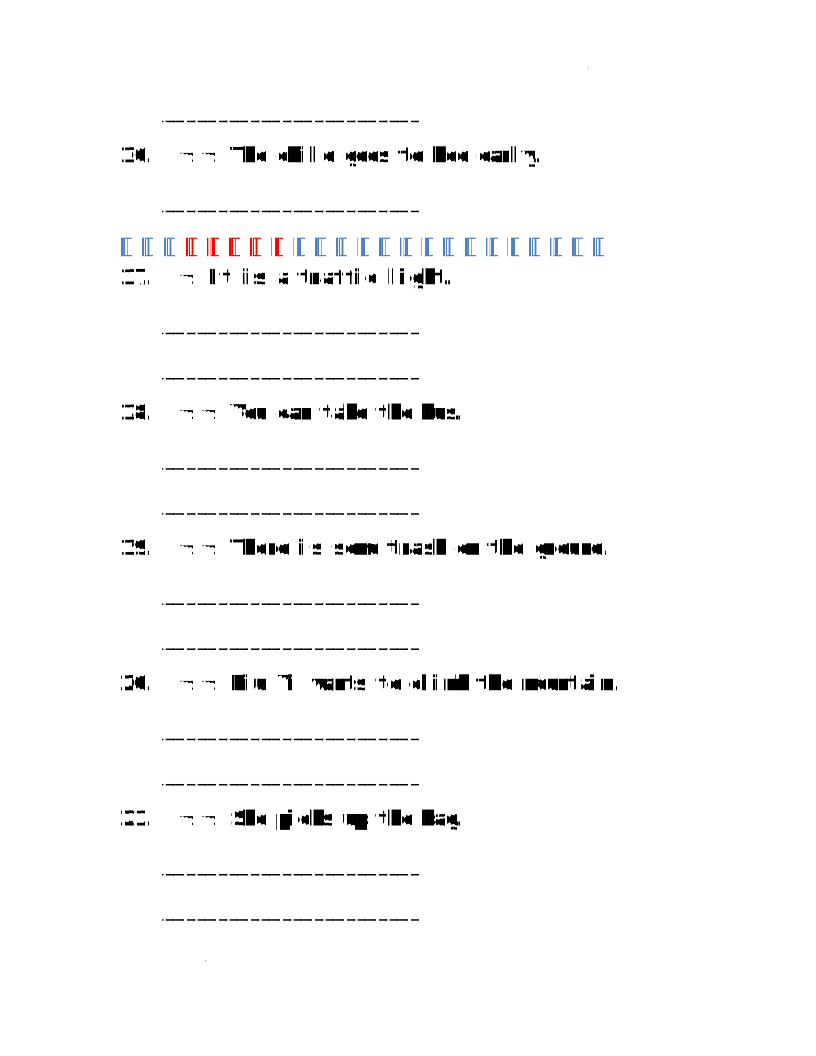
16. ★★ The child goes to bed early.
________________________
五、(必考重点:改为一般疑问句,并作否定回答)
17. ★ It is a traffic light.
________________________
________________________
18. ★★ You can take the bus.
________________________
________________________
19. ★★ There is some trash on the ground.
________________________
________________________
20. ★★ Liu Yi wants to climb the mountain.
________________________
________________________
21. ★★ She picks up the bag.
________________________
________________________
解析与学生常见错误提醒
1. 参考答案:I am not ready for the new semester.
解析:含有 be 动词`am`的肯定句变否定句,直接在`am`后面加`not`。`am not`没有缩写形式。
学生常见错误提醒:写成“I not am ready...” (语序错误) 或 “I don’t am ready...” (误用助动词`do`)。
2. 参考答案:We do not want to go to the park. / We don’t want to go to the park.
解析:含有实义动词`want`的肯定句变否定句,主语是`We`,需借助助动词`do`,在其后加`not`。`do not`可缩写为`don’t`。注意`want`后面的`to`不能省略。
学生常见错误提醒:写成“We not want to go...” (缺少助动词) 或 “We doesn’t want to go...” (助动词用错)。
3. 参考答案:You cannot cross the street now. / You can’t cross the street now.
解析:含有情态动词`can`的肯定句变否定句,直接在`can`后面加`not`。`cannot`必须写成一个单词,或缩写为`can’t`。
学生常见错误提醒:写成“You not can cross...” (语序错误) 或 “You don’t can cross...” (误用助动词`do`)。
4. 参考答案:问句:Is the classroom clean and tidy? 肯定答:Yes, it is.
解析:含有 be 动词`is`的肯定句变一般疑问句,将`is`提到主语`the classroom`前面。回答时主语`the classroom`用`it`代替。
学生常见错误提醒:写成“The classroom is clean and tidy?” (语序未变) 或 “Does the classroom clean and tidy?” (误用助动词`does`)。
5. 参考答案:问句:Do you have a new bag? 肯定答:Yes, I do.
解析:含有实义动词`have`的肯定句变一般疑问句,主语是`you`,需借助助动词`Do`放在句首。回答时主语`you`用`I`。
学生常见错误提醒:写成“Have you a new bag?” (不符合实义动词变疑问句规则) 或 “Are you have a new bag?” (误用`are`)。
6. 参考答案:问句:Does Emma want to visit the zoo? 肯定答:Yes, she does.
解析:含有实义动词`wants`(第三人称单数形式)的肯定句变一般疑问句,需借助助动词`Does`,并将`wants`恢复为原形`want`。`Emma`是女孩名,回答用`she`。
学生常见错误提醒:写成“Is Emma want to visit the zoo?” (误用`is`) 或 “Do Emma want to visit the zoo?” (主语是第三人称单数,不能用`Do`)。
7. 参考答案:问句:Are they glad to see you? 肯定答:Yes, they are.
解析:含有 be 动词`are`的肯定句变一般疑问句,将`are`提到主语`they`前面。回答时用`they`。
学生常见错误提醒:写成“They are glad to see you?” (语序未变) 或 “Do they glad to see you?” (误用助动词`do`)。
8. 参考答案:Where do you want to go?
解析:对地点`the Great Wall`提问,用疑问词`Where`。句子是一般现在时,主语`I`在问句中变成`you`,`want`是实义动词,需借助助动词`do`提问。
学生常见错误提醒:写成“What do you want to go?” (疑问词用错) 或 “Where you want to go?” (缺助动词)。
9. 参考答案:What does your friend always do?
解析:对行为`always waits for the green light`提问,用疑问词`What`。句子是一般现在时,主语`My friend`是第三人称单数,`wait`是实义动词,需借助助动词`Does`提问,并将`waits`恢复为原形`do`。`My`变成`your`。
学生常见错误提醒:写成“What your friend always do?” (语序错误) 或 “What does your friend always does?” (助动词后动词未恢复原形)。
10. 参考答案:What do you see on the ground?
解析:对事物`some trash`提问,用疑问词`What`。句子是一般现在时,主语`I`在问句中变成`you`,`see`是实义动词,需借助助动词`do`提问。
学生常见错误提醒:写成“What you see on the ground?” (缺助动词) 或 “What does you see on the ground?” (主谓不一致)。
11. 参考答案:Who is ready to learn?
解析:对人`Wang Jun`提问,用疑问词`Who`。`Who`作主语,`is`保持不变。
学生常见错误提醒:写成“What is ready to learn?” (疑问词用错) 或 “Who are ready to learn?” (`Who`作主语时,be动词用单数`is`)。
12. 参考答案:What can you do?
解析:对活动`recycle the paper`提问,用疑问词`What`。句子含有情态动词`can`,变疑问句将`can`提前。主语`We`变成`you`。
学生常见错误提醒:写成“What you can do?” (语序错误) 或 “Can you what do?” (结构混乱)。
13. 参考答案:Where do you want to visit?
解析:对地点`Chengdu`提问,用疑问词`Where`。句子是一般现在时,主语`I`在问句中变成`you`,`want`是实义动词,需借助助动词`do`提问。
学生常见错误提醒:写成“What do you want to visit?” (疑问词用错) 或 “Where you want to visit?” (缺助动词)。
14. 参考答案:We are students.
解析:单数变复数,`I`变`We`,`am`变`are`,`a student`变`students`。
学生常见错误提醒:写成“We is students.” (be动词用错) 或 “I are students.” (主语未变)。
15. 参考答案:The books are new.
解析:单数变复数,`The book`变`The books`,`is`变`are`。
学生常见错误提醒:写成“The book are new.” (主谓不一致) 或 “The books is new.” (主谓不一致)。
16. 参考答案:The children go to bed early.
解析:单数变复数,`The child`变`The children` (不规则变化),`goes`变`go` (第三人称单数动词变回原形)。
学生常见错误提醒:写成“The childs goes to bed early.” (`child`复数形式错误) 或 “The children goes to bed early.” (动词未变回原形)。
17. 参考答案:问句:Is it a traffic light? 否定答:No, it isn’t.
解析:含有 be 动词`is`的肯定句变一般疑问句,将`is`提到主语`it`前面。回答时用`it`。
学生常见错误提醒:写成“It is a traffic light?” (语序未变) 或 “Does it a traffic light?” (误用助动词)。
18. 参考答案:问句:Can you take the bus? 否定答:No, I can’t.
解析:含有情态动词`can`的肯定句变一般疑问句,将`can`提到主语`you`前面。回答时主语`you`用`I`。
学生常见错误提醒:写成“Do you can take the bus?” (情态动词`can`前无需助动词) 或 “Can you take the bus?” 回答“No, I am not.” (答语错误)。
19. 参考答案:问句:Is there any trash on the ground? 否定答:No, there isn’t.
解析:`There be`句型的肯定句变一般疑问句,将`is`提到`there`前面。
20. 参考答案:问句:Does Liu Yi want to climb the mountain? 否定答:No, he doesn’t.
解析:含有实义动词`wants`(第三人称单数形式)的肯定句变一般疑问句,需借助助动词`Does`,并将`wants`恢复为原形`want`。`Liu Yi`是男孩名,回答用`he`。
学生常见错误提醒:写成“Is Liu Yi want to climb the mountain?” (误用`is`) 或 “Do Liu Yi want to climb the mountain?” (主语是第三人称单数,不能用`Do`)。
21. 参考答案:问句:Does she pick up the bag? 否定答:No, she doesn’t.
解析:含有实义动词`picks`(第三人称单数形式)的肯定句变一般疑问句,需借助助动词`Does`,并将`picks`恢复为原形`pick`。主语`She`回答用`she`。
学生常见错误提醒:写成“Is she pick up the bag?” (误用`is`) 或 “Do she pick up the bag?” (主语是第三人称单数,不能用`Do`)。
学科网(北京)股份有限公司
$
资源预览图
1
2
3
相关资源
由于学科网是一个信息分享及获取的平台,不确保部分用户上传资料的 来源及知识产权归属。如您发现相关资料侵犯您的合法权益,请联系学科网,我们核实后将及时进行处理。