Unit 6 Section B(1a-1e)第五课时同步练习 2025-2026学年人教版八年级英语下册
2026-05-15
|
2页
|
202人阅读
|
21人下载
资源信息
| 学段 | 初中 |
|---|---|
| 学科 | 英语 |
| 教材版本 | 初中英语人教版八年级下册 |
| 年级 | 八年级 |
| 章节 | 1a-1e,Section B,Unit 6 Crossing Cultures |
| 类型 | 作业-同步练 |
| 知识点 | - |
| 使用场景 | 同步教学-新授课 |
| 学年 | 2026-2027 |
| 地区(省份) | 全国 |
| 地区(市) | - |
| 地区(区县) | - |
| 文件格式 | DOCX |
| 文件大小 | 31 KB |
| 发布时间 | 2026-05-15 |
| 更新时间 | 2026-05-15 |
| 作者 | 匿名 |
| 品牌系列 | - |
| 审核时间 | 2026-05-14 |
| 下载链接 | https://m.zxxk.com/soft/57871296.html |
| 价格 | 0.50储值(1储值=1元) |
| 来源 | 学科网 |
摘要:
**基本信息**
该同步练习以“词汇-句型-语篇”递进为路径,分层设计基础巩固、能力提升、综合应用三层次,兼顾语言能力培养与文化意识渗透,适配新授课知识内化需求。
**分层设计**
|层次|知识覆盖|设计特色|
|----|----------|----------|
|基础巩固|词汇变形(如arrival, cultures)、短语应用(如table manners)|以单句填空、中译英为主,直接对接课时核心词汇与基础句型|
|能力提升|It's+adj.+to do句型翻译与仿写|通过“翻译-仿写”双任务,实现从输入到输出的语言转化,培养表达能力|
|综合应用|跨文化礼仪语篇填空、七选五阅读|结合短文填词(不同国家礼仪)和语篇补全,渗透文化意识,提升语篇理解与逻辑思维|
内容正文:
Unit 6 section B(1a-1e)第五课时
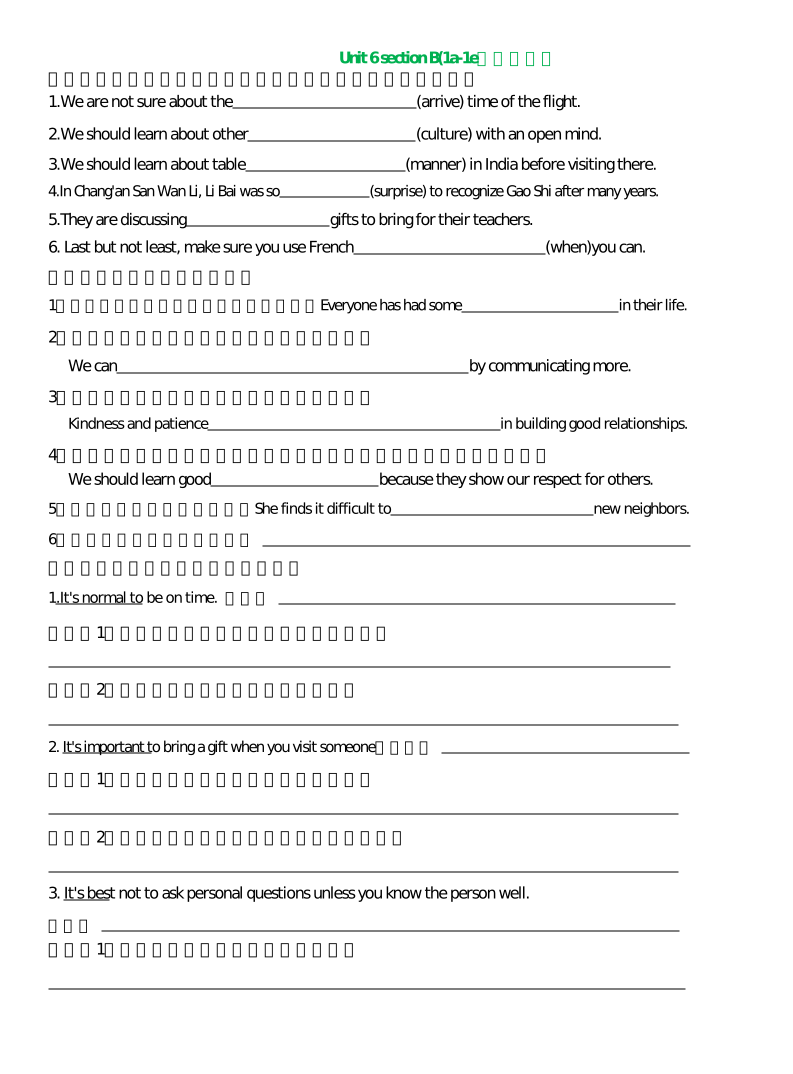
一、用所给单词的适当形式填空或根据上下文填入适当单词。
1.We are not sure about the (arrive) time of the flight.
2.We should learn about other (culture) with an open mind.
3.We should learn about table (manner) in India before visiting there.
4.In Chang'an San Wan Li, Li Bai was so (surprise) to recognize Gao Shi after many years.
5.They are discussing gifts to bring for their teachers.
6. Last but not least, make sure you use French (when)you can.
二、根据中文提示完成句子。
1.每个人一生中都有过一些尴尬的经历。Everyone has had some in their life.
2.我们可以通过多交流来建立更亲密的关系。
We can by communicating more.
3.善良和耐心在建立良好关系方面帮助很大。
Kindness and patience in building good relationships.
4.我们应该学习良好的餐桌礼仪,因为它们体现了我们对他人的尊重。
We should learn good because they show our respect for others.
5.她发现与新邻居相处困难。She finds it difficult to new neighbors.
6.你可以带一些水果和鲜花。
三、翻译下列句子并用所给句型造句
1.It's normal to be on time. 翻译:
仿写:1.在中国北方,春节吃饺子是很正常的。
仿写:2.在中国,用筷子吃饭是很正常的。
2. It's important to bring a gift when you visit someone.翻译:
仿写:1.在中国文化中,尊重长辈很重要的。
仿写:2.把盘子里的食物吃完以表示感谢很重要。
3. It's best not to ask personal questions unless you know the person well.
翻译:
仿写:1.最好不要把筷子竖着插在米饭里。
仿写:2.在中国,最好不要送钟作为礼物。
四、短文填词
Different countries have different manners. Well, how should you behave when you meet someone for the 1 (one) time?An American shakes your hand firmly while looking at you straight in the eye. In many2 (part) of Asia, there is no physical contact at all. In Japan,you should bow, and the 3 (much) respect you want to show, the deeper you should bow. In Thailand, people greet each other by 4 (press)both hands together at the chest. In both countries, eye contact is avoided as a sign of respect.
In Spain, lunch is often the (big) meal of the day, and can last two or three hours. For this reason, many people cat a light breakfast and a late dinner. In Mexico, lunch is a time to relax, and many people prefer not to discuss business as they eat. In Britain, it. (usual) to have a business meeting over breakfast.
In most countries, an exchange of business cards is necessary for all introductions. You should include your company name as well 7 -your position. If you are going to a country where your language is not (wide) spoken, you can get the back side of your card printed in the local language.In a word,when (travel) abroad,you should follow local habits. Just as the 1(say) goes,"When in Rome, do as the Romans do.”
五、从短文后的选项中选出能填入空白处的最佳选项。
Important Things to Know When Dining Out
Cultural dining etiquette(礼节)might surprise you with some rules. .Knowing some tips will help ensure that you have an enjoyable meal with friends or family no matter where you are in the world.
Chopstick Rules
The way you hold chopsticks is important to avoid making others uncomfortable. When you put them down between bitcs,always put them down together.?
Hands or Utensils(餐具)
In India and the Middle East, it's considered rude to eat with your left hand. People in France expect you to eat with a utensil in each hand. 3.Instead, they prefer to use their hands. In Chile,you may never touch any food with your fingers.
Mastering Requests
4 .In Portugal, this would be a serious mistake, because it shows the chef that you don't like their reasoning skills. Similarly, in Italy, never ask for extra cheese to add to your food.
Some of these cultural dining etiquette rules may seem strange, but they are important in various countries. 5
A. Mexicans consider it impolite to eat with utensils.
B. It may seem like a small thing to ask for salt and pepper at a meal.
C. Don't get caught making an embarrassing mistake when dining out.
D. Never stick them upright in your food or cross them as you put them on the table.
E. The more time you spend in a country, the more comfortable you will feel with its culture.
学科网(北京)股份有限公司
$
资源预览图
1
相关资源
由于学科网是一个信息分享及获取的平台,不确保部分用户上传资料的 来源及知识产权归属。如您发现相关资料侵犯您的合法权益,请联系学科网,我们核实后将及时进行处理。