应用文训练 课件-2026届高三英语三轮复习专项
2026-05-15
|
18页
|
451人阅读
|
2人下载
普通
资源信息
| 学段 | 高中 |
|---|---|
| 学科 | 英语 |
| 教材版本 | - |
| 年级 | 高三 |
| 章节 | - |
| 类型 | 课件 |
| 知识点 | - |
| 使用场景 | 高考复习-三轮冲刺 |
| 学年 | 2026-2027 |
| 地区(省份) | 全国 |
| 地区(市) | - |
| 地区(区县) | - |
| 文件格式 | PPTX |
| 文件大小 | 75 KB |
| 发布时间 | 2026-05-15 |
| 更新时间 | 2026-05-15 |
| 作者 | G.vv. |
| 品牌系列 | - |
| 审核时间 | 2026-05-14 |
| 下载链接 | https://m.zxxk.com/soft/57845154.html |
| 价格 | 0.50储值(1储值=1元) |
| 来源 | 学科网 |
内容正文:
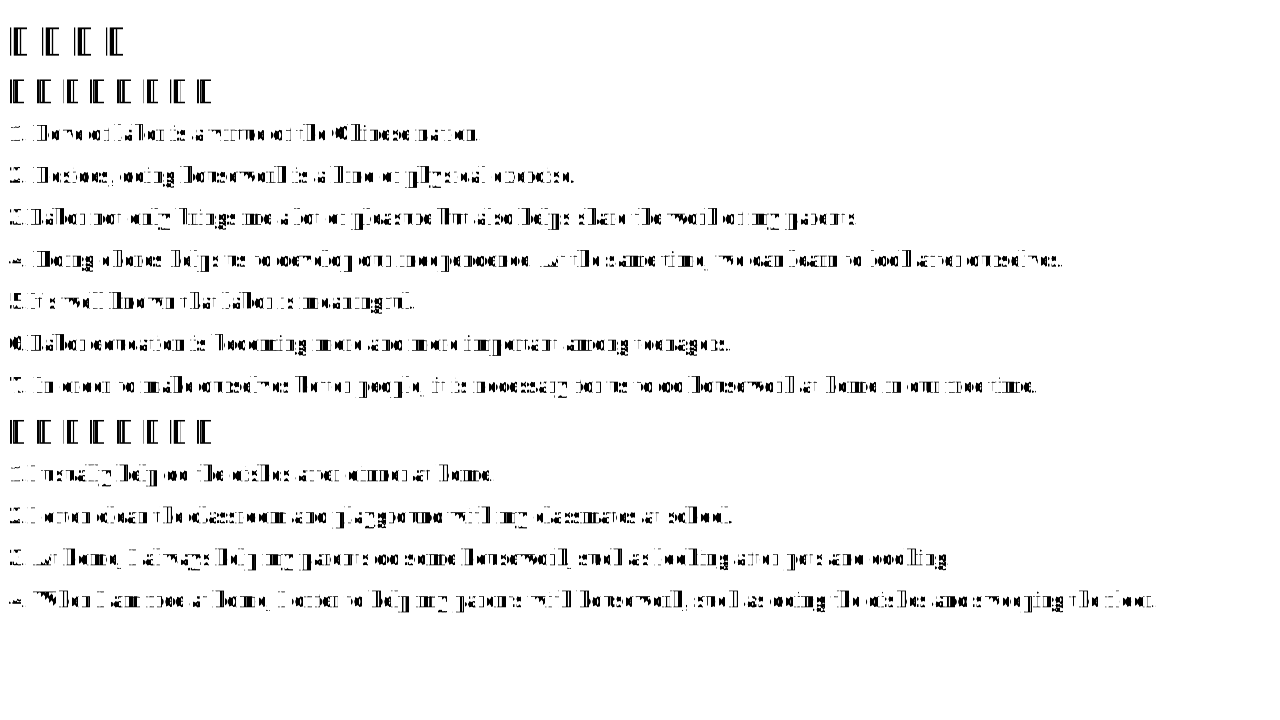
主题01劳动实践、劳动价值与工匠精神
佳句背诵
劳动的好处及意义
1. Love of labor is a virtue of the Chinese nation.
2. Besides, doing housework is a kind of physical exercise.
3.Labor not only brings me a lot of pleasure but also helps share the work of my parents.
4. Doing chores helps us to develop our independence. At the same time, we can learn to look after ourselves.
5.It's well known that labor is meaningful.
6.Labor education is becoming more and more important among teenagers.
7. In order to make ourselves better people, it is necessary for us to do housework at home in our free time.
劳动的经历及做法
1.I usually help do the dishes after dinner at home.
2.I often clean the classroom and playground with my classmates at school.
3. At home, I always help my parents do some housework, such as looking after pets and cooking.
4. When I am free at home, I offer to help my parents with housework, such as doing the dishes and sweeping the floor.
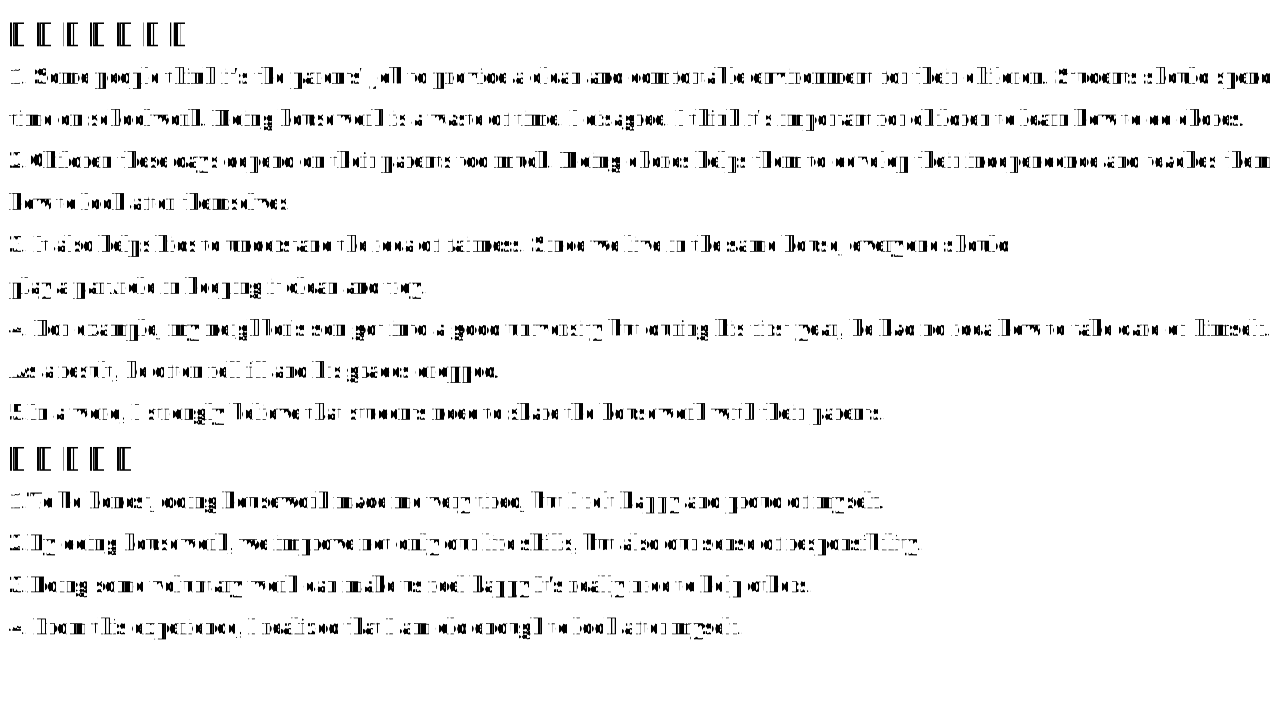
对做家务的看法
1. Some people think it's the parents' job to provide a clean and comfortable environment for their children. Students should spend time on schoolwork. Doing housework is a waste of time. I disagree. I think it's important for children to learn how to do chores.
2.Children these days depend on their parents too much. Doing chores helps them to develop their independence and teaches them how to look after themselves.
3. It also helps kids to understand the idea of fairness. Since we live in the same house, everyone should
play a part/role in keeping it clean and tidy.
4. For example, my neighbor's son got into a good university but during his first year, he had no idea how to take care of himself. As a result, he often fell ill and his grades dropped.
5.In a word, I strongly believe that students need to share the housework with their parents.
收获及感受
1.To be honest, doing housework made me very tired, but I felt happy and proud of myself.
2.By doing housework, we improve not only our life skills, but also our sense of responsibility.
3.Doing some voluntary work can make us feel happy It's really nice to help others.
4. From this experience, I realized that I am old enough to look after myself.
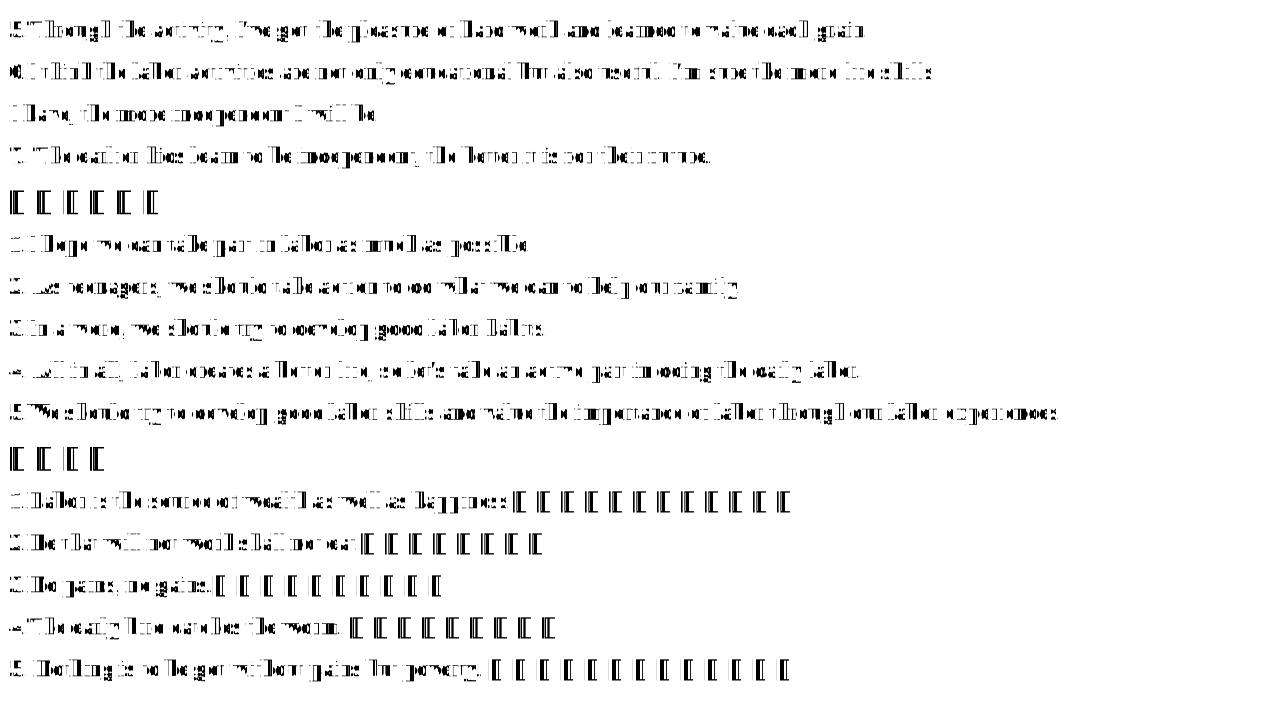
5.Through the activity, I've got the pleasure of hard work and learned to value each grain.
6.I think the labor activities are not only educational but also useful. I'm sure the more life skills
I have, the more independent I will be.
7. The earlier kids learn to be independent, the better it is for their future.
倡议参加劳动
1.I hope we can take part in labor as much as possible.
2. As teenagers, we should take action to do what we can to help our family.
3.In a word, we should try to develop good labor habits.
4. All in all, labor creates a better life, so let's take an active part in doing the daily labor.
5.We should try to develop good labor skills and value the importance of labor through our labor experiences.
俗语谚语
1.Labor is the source of wealth as well as happiness.劳动是财富和幸福的源泉。
2.He that will not work shall not eat.不劳动者不得食。
3.No pains, no gains.一分耕耘,一分收获。
4.The early bird catches the worm. 早起的鸟儿有虫吃。
5. Nothing is to be got without pains but poverty. 世上唯有贫困可以不劳而获。
假定你是李华,你校学生会将举办“共享菜园Shared Garden”劳动体验活动。请你给外教Chris写一封邮件,邀请他参加,内容包括:
1.活动目的;
2. 活动流程;
3.表达期待。
注意:
1.写作词数应为80个左右;
2.请按如下格式在答题卡的相应位置作答。
Dear Chris,
_______________________________________________________________________________________________________________________________________________________________________________________Yours,
Li Hua
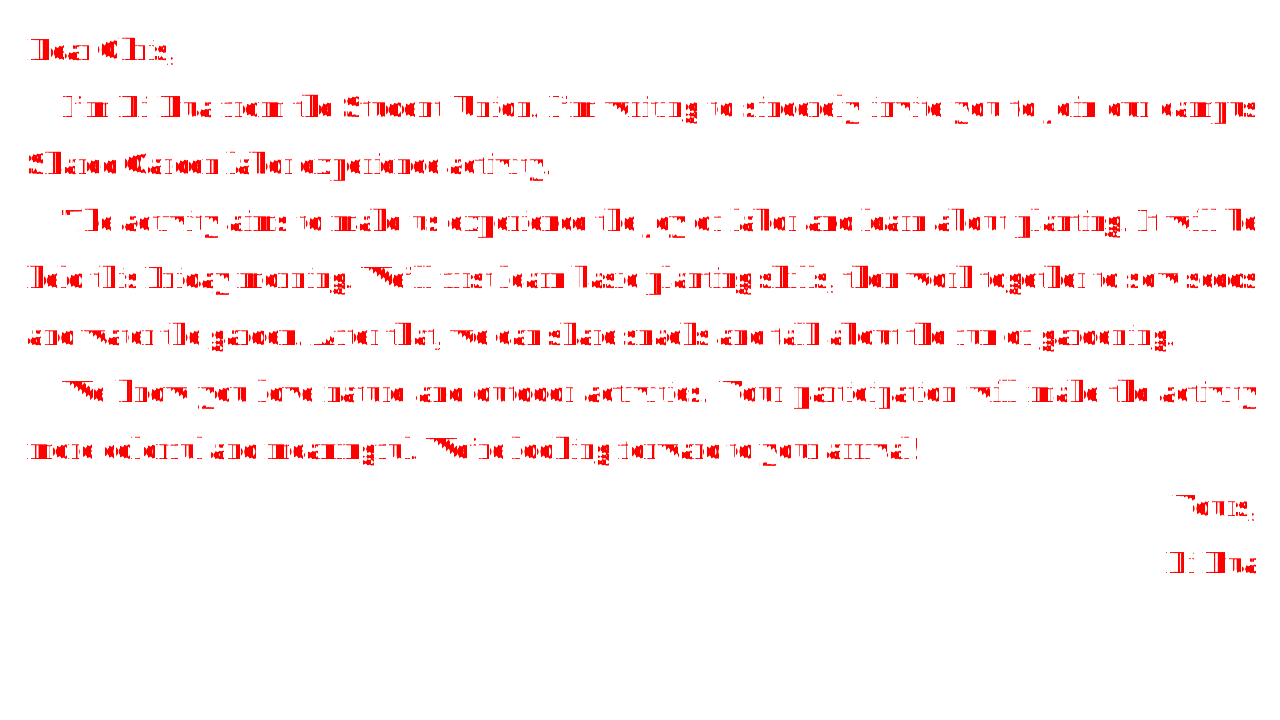
Dear Chris,
I’m Li Hua from the Student Union. I’m writing to sincerely invite you to join our campus Shared Garden labor experience activity.
The activity aims to make us experience the joy of labor and learn about planting. It will be held this Friday morning. We’ll first learn basic planting skills, then work together to sow seeds and water the garden. After that, we can share snacks and talk about the fun of gardening.
We know you love nature and outdoor activities. Your participation will make the activity more colorful and meaningful. We’re looking forward to your arrival!
Yours,
Li Hua
主题02 农业发展、乡村振兴
佳句背诵
1. Rural revitalization aims to build a beautiful, prosperous and harmonious new countryside.
乡村振兴旨在建设美丽、富裕、和谐的新农村。
2. Not only has rural infrastructure been improved, but people’s living standards have also risen greatly.
乡村基础设施不仅得到改善,人民生活水平也大幅提高。
3. Developing characteristic industries and rural tourism is an effective way to boost the rural economy.
发展特色产业与乡村旅游是振兴乡村经济的有效途径。
4. The integration of urban and rural areas contributes to the balanced development of society.
城乡融合助力社会均衡发展。
5. Preserving rural culture is of great importance in the process of rural revitalization.
传承乡村文化在乡村振兴进程中意义重大。
6. It is agricultural technology that greatly promotes the development of modern agriculture and ensures food security.
正是农业科技极大推动了现代农业发展,保障了粮食安全。
7. Only by developing green and ecological agriculture can we achieve sustainable agricultural development.
只有发展绿色生态农业,才能实现农业可持续发展。
8. Modern agriculture is characterized by high efficiency, mechanization and scientific management.
现代农业以高效、机械化、科学管理为特征。
9. Protecting farmland and improving crop yields are essential to national food security.
保护耕地、提高粮食产量对国家粮食安全至关重要。
10. The combination of technology and agriculture has brought new vitality to traditional farming.
科技与农业结合,为传统农耕注入了新活力。
假定你是李华,上周末你和同学们前往附近乡镇,拍摄并制作以乡村振兴为主题的短视频。请你给英国笔友Chris写一封邮件进行分享。
内容包括:(1)拍摄内容;(2)你的收获。
________________________________________________________________________________________________________________________________________________________________________________________________________________________________________________________________________________________________________________________________________________________________________________________________________________________________________________________________________________________________________________________________________________________________________
Dear Chris,
I'm writing to share with you my experience of shooting a short video on rural revitalization.
We arrived early in the morning and were amazed at the rural revitalization strategy-in depth. We filmed(录制) farmers sowing seeds in the spring and took many photos and videos of the clean village roads, beautiful farmlands and new houses.We also interviewed a young man who had returned to his hometown to start smart farming. He has applied advanced agricultural technology and the land yields(生产) abundant crops.
This experience taught me more than I expected. I realized that rural infrastructure(facility) has not only been improved, but people’s living standards have also risen greatly. I've attached a photo from the shoot. Hope you like it!
Yours sincerely,
Li Hua
主题3 国家安全、信息安全
佳句背诵
1. There is no doubt that the earth is becoming warmer and that it is human activities that have caused the global warming.
毫无疑问,地球正变得更加暖和,而且正是人类活动引起了全球变暖。
2. Having realized the great harm caused by the haze and the importance of protecting the environment, people all over the country are taking measures to reduce the hazy weather.
意识到雾霾造成的严重危害和保护环境的重要性,全国人民正采取措施减少雾霾天气。
3. Autumn is the tourist peak season in Yunnan Province; I can’t wait to enjoy its beautiful scenery.
秋天是云南省的旅游旺季,我迫不及待地去欣赏它美丽的风景。
4. To survive in this vast land on the ocean, the Aborigines had to be in close contact with nature.
为了在这片广阔的海洋陆地上生存,土著居民必须与大自然保持密切联系。
5. Personally speaking, what I like most about Australia is the people themselves.
就我个人而言,关于澳大利亚我最喜欢的是它的人民。
6. You can have food delivered to you using food delivery apps and sites.
通过外卖程序和网站,你可以让人送餐上门。
7. Gone are the days of searching shop after shop for the perfect pair of boots...
一家店一家店寻找那双最合适的靴子的日子一去不复返了……
8. There is no need to worry—you can pay for almost everything on your smartphone.
不用担心,几乎所有的费用你都可以通过智能手机来支付。
9. Only in this way can the Internet be a place of discovery,wonder and inspiration for everyone.
唯有如此,互联网才能成为每个人的发现之地、奇妙之所、灵感之源。
10. Just Dance is a website belonging to all dance lovers.
JustDance是一个属于所有舞蹈爱好者的网站。
11. Sometimes I had the uncomfortable feeling that this little machine had taken up too much of my time...
有时候,我有种不安的感觉,这台小的机器已经占用了我太多的时间……
The Map on Our Wall
Mr. Chen, our geography teacher, always said that maps tell stories. Last month, our map almost told a dangerous one.
It started as a simple assignment. We were marking our family homes on a large topographical(地形的) map of our province. My best friend Wei pinned his family’s farm near the mountainous border region. “My grandfather used to patrol(巡逻) there when he was young,” he mentioned casually. “He knows every hidden path like the back of his hand.” None of us thought much of it until the stranger appeared.
He showed up at our school gate during lunch break, well-dressed and friendly, claiming to be a university researcher studying border ecology. He showed particular interest in Wei’s grandfather, asking detailed questions about old patrol routes and whether any “unofficial paths” still existed. He offered money. Wei was excited at first, but something felt wrong. That evening, he called me, voice trembling. “He knew my grandfather’s name. He knew our village. How?”
The next morning, our class split. Some thought Wei was overreacting. “It’s just research,” they argued. “Imagine the money!” Others remembered the national security assembly(集会) we’d yawned through last term — suddenly, those warnings felt terrifyingly real. The tension peaked when the stranger returned, waiting near the gate as classes ended. Wei hid in the library, shaking. “What if he follows me home? What if he hurts my grandfather?”
That’s when our class monitor, Lin, stepped forward. She gathered us in a quiet circle and spoke firmly: “This isn’t just Wei’s problem. We’re his classmates. We’re his friends. And this involves our country too.” Within minutes, we formed a plan. Some of us walked Wei home in a group, ensuring he was never alone. Others reported the incident to our headteacher, and he immediately contacted the authorities, who took away the stranger for further investigation. For the first time, we weren’t just students — we were protectors.
What began as a frightening experience changed us.
Grandfather’s words redefined the meaning of the map.
What began as a frightening experience changed us. We no longer took those national security lessons for granted, which we used to think were boring and useless. We used to scroll through phones in class, never thinking those warnings would matter to us. A few days later, Wei’s grandfather came, bringing his worn old patrol badge, and shared his border stories with us. He told us those hidden paths once stopped bad people from entering our country, and we listened carefully, taking notes, realizing our small action mattered a lot.
Grandfather’s words redefined the meaning of the map. It was no longer just a paper for our geography assignment, but a record of the land our elders had protected for years. We finally understood that national security is not far from us students. It is not only soldiers’ job; as long as we stay alert, we can guard our home with our own small efforts too. From then on, we paid more attention to the things around us.
【导语】本文以人物为线索展开,讲述了作者和同学们在地理课上进行一项标记家庭住址的简单任务时,发现一名陌生人对边境地区表现出异常兴趣,同学们意识到这可能涉及国家安全问题,于是团结起来保护同学和家人,最终将陌生人交给相关部门调查的故事。
【详解】
1.段落续写:
①由第一段首句内容“这场始于恐惧的经历改变了我们”可知,第一段可描写这次经历如何改变了同学们,比如增强了国家安全意识,学会了团结协作等。
②由第二段首句内容“爷爷的话重新定义了地图的意义”可知,第二段可描写爷爷的话如何重新定义了地图的意义,比如地图不仅是地理信息的载体,还承载着国家安全和历史记忆等。
2.续写线索:增强国家安全意识——学会团结协作——爷爷讲述地图的故事——地图承载国家安全和历史记忆——感悟
$
资源预览图

1
2
3
4

5
6
相关资源
由于学科网是一个信息分享及获取的平台,不确保部分用户上传资料的 来源及知识产权归属。如您发现相关资料侵犯您的合法权益,请联系学科网,我们核实后将及时进行处理。