Unit 5 Nature’s Temper Section A 3a-3d 课件 2025-2026学年人教版英语八年级下册
2026-05-11
|
26页
|
478人阅读
|
6人下载
普通
资源信息
| 学段 | 初中 |
|---|---|
| 学科 | 英语 |
| 教材版本 | 初中英语人教版八年级下册 |
| 年级 | 八年级 |
| 章节 | Section A,3a-3d,Unit 5 Nature's Temper |
| 类型 | 课件 |
| 知识点 | - |
| 使用场景 | 同步教学-新授课 |
| 学年 | 2026-2027 |
| 地区(省份) | 全国 |
| 地区(市) | - |
| 地区(区县) | - |
| 文件格式 | PPTX |
| 文件大小 | 29.17 MB |
| 发布时间 | 2026-05-11 |
| 更新时间 | 2026-05-11 |
| 作者 | 匿名 |
| 品牌系列 | - |
| 审核时间 | 2026-05-11 |
| 下载链接 | https://m.zxxk.com/soft/57810696.html |
| 价格 | 2.00储值(1储值=1元) |
| 来源 | 学科网 |
内容正文:
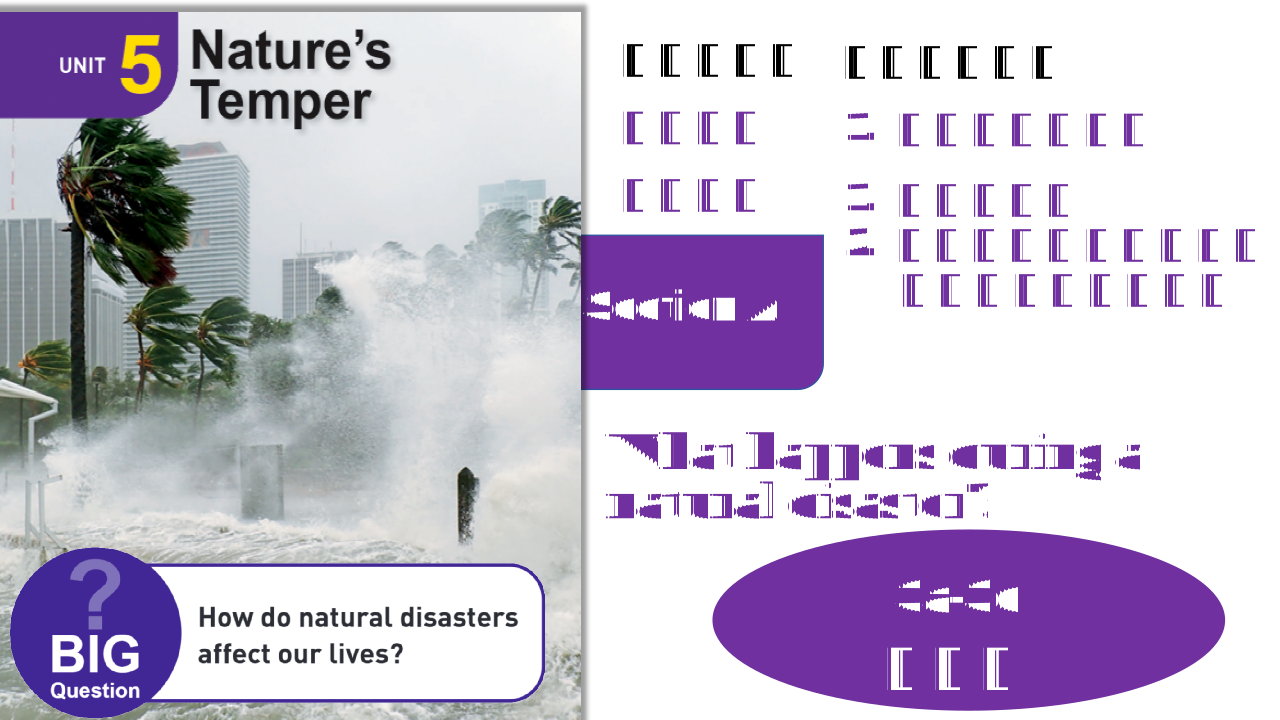
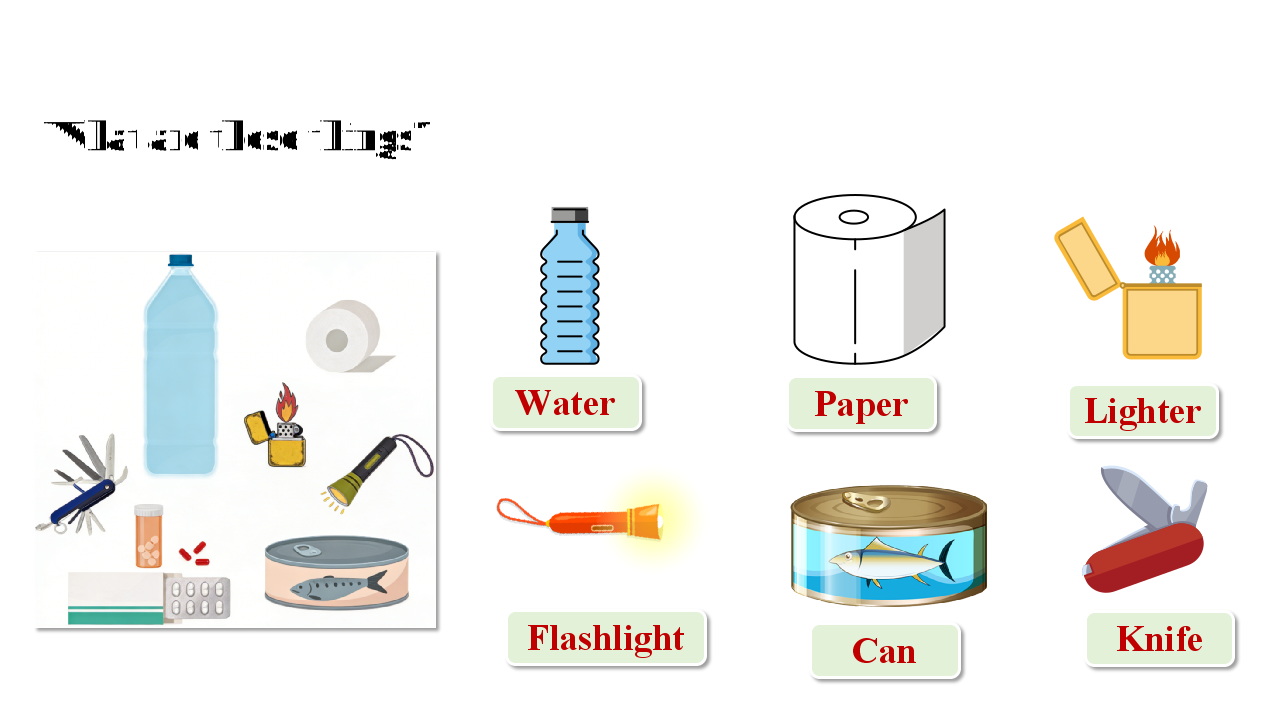
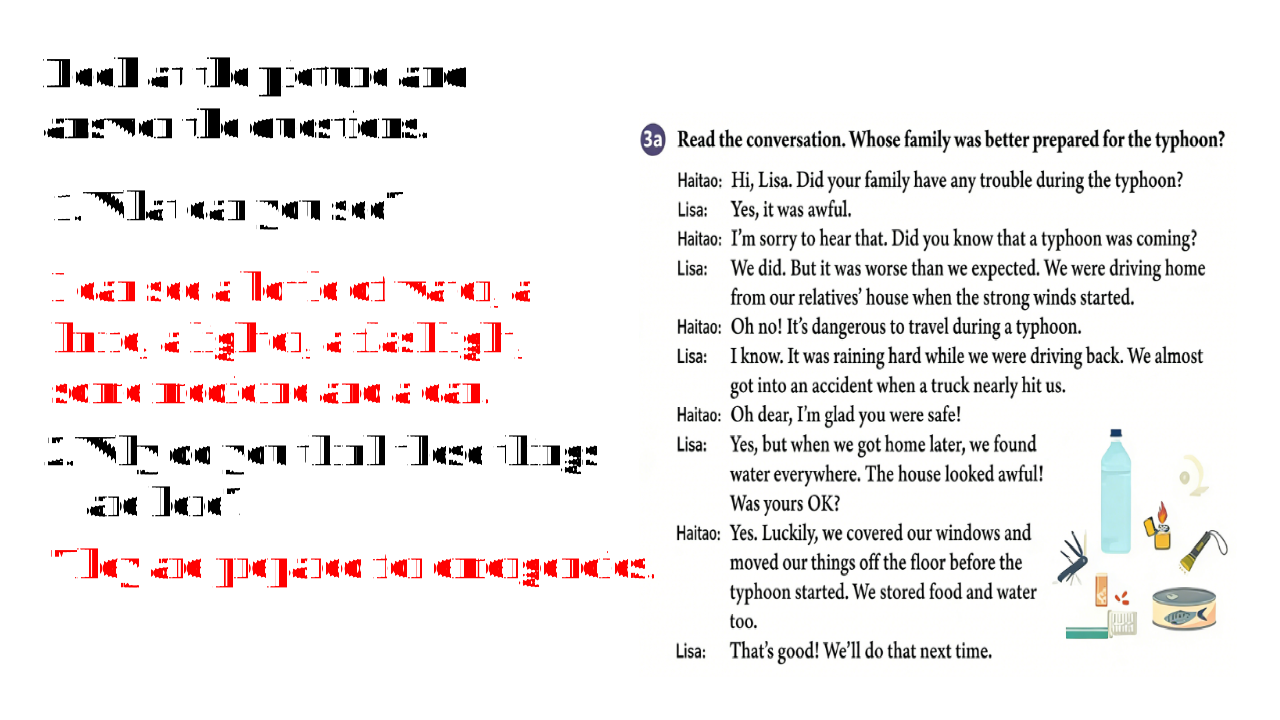
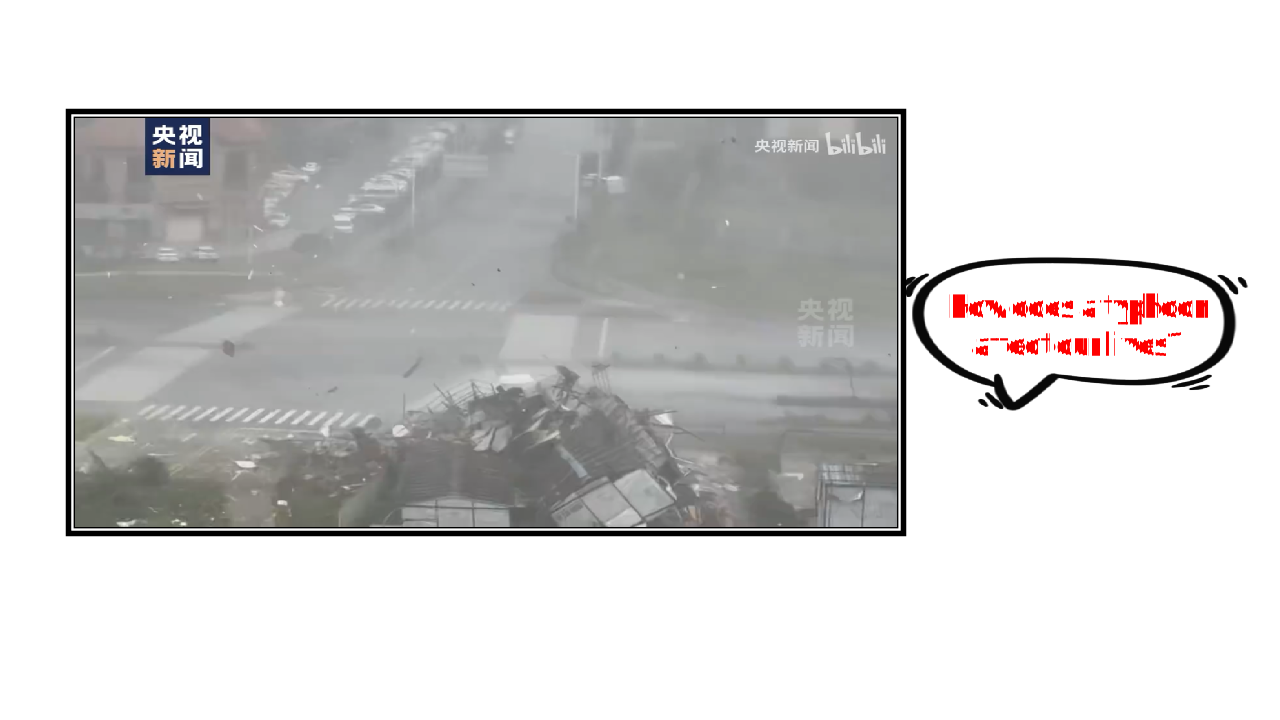
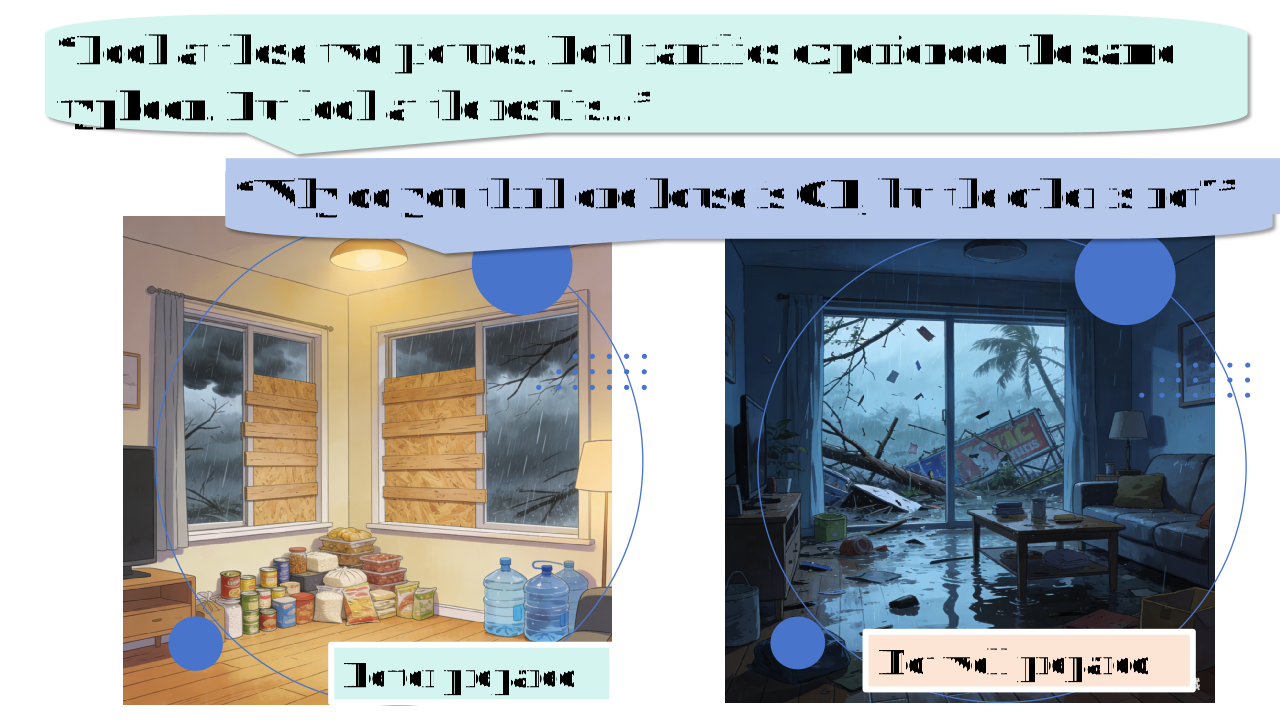
Section A What happens during a natural disaster? Section A 3a-3d 口语课 单元主题: 人与自我 人与自然 单元子主题: 珍爱生命的意识 敬畏自然; 自然灾害与防范措施, 人身安全与自我保护 学习目标 能够快速阅读对话,了解大意,基于人物的具体活动综合评判哪位主人公的家庭安全意识更强;能够精读对话,梳理两位主人公各自的家庭在台风发生前后所做的事情,并结合具体的事例评判相关行为。 能够体会对话中地道的口语表达,并在语境中理解when和while引导的时间状语从句以及过去进行时的表意功能。 能够结合对话和插图归纳应对台风侵袭的方法,包括应该准备什么物品等。 能够与同伴分角色表演对话,体会主人公的情感和语气,确保语音、语调正确,表达自然流畅。 能够与同伴就示范对话中某位主人公的经历开展对话,并对其行为做出合理的回应。 Water Paper Lighter Flashlight Can Knife What are these things? Look at the picture and answer the questions. I can see a bottle of water, a knife, a lighter, a flashlight, some medicine and a can. 2.Why do you think these things are here? They are prepared for emergencies. 1.What can you see? How does a typhoon affect our lives? “Look at these two pictures. Both families experienced the same typhoon. But look at the results...” “Why do you think one house is OK, but the other is not?” Better prepared Not well prepared Read the conversation. Haitao: Hi, Lisa. Did your family have any trouble during the typhoon? Lisa: Yes, it was awful. Haitao: I’m sorry to hear that. Did you know that a typhoon was coming? Lisa: We did. But it was worse than we expected. We were driving home from our relatives’ house when the strong winds started. Haitao: Oh no! It's dangerous to travel during a typhoon. Lisa: I know. It was raining hard while we were driving back. We almost got into an accident when a truck nearly hit us. Haitao: Oh dear, I’m glad you were safe! Lisa: Yes, but when we got home later, we found water everywhere. The house looked awful! Was yours OK? Haitao: Yes. Luckily, we covered our windows and moved our things off the floor before the typhoon started. We stored food and water too. Lisa: That's good! We'll do that next time. Whose family was better prepared for the typhoon? Haitao’s. 3a Family Cause (行为 / 原因) Effect (结果) Haitao’s family the windows the things off the floor food and water Lisa’s family in strong wind and heavy rain Almost . no preparation for house safety They found water . covered moved stored driving Read the conversation for details. got into an accident everywhere Read again. Who experienced or did these things? Tick the correct boxes. Experience Lisa Haitao A. almost got into an accident while they were driving home B. moved things off the floor before the typhoon C. went home and found water everywhere D. stored emergency supplies at home before the typhoon E. stayed inside during the typhoon 3b Haitao: Hi, Lisa. Did your family have any trouble during the typhoon? Lisa: Yes, it was awful. Haitao: I’m sorry to hear that. Did you know that a typhoon was coming? Lisa: We did. But it was worse than we expected. We were driving home from our relatives’ house when the strong winds started. Haitao: Oh no! It’s dangerous to travel during a typhoon. sorry,adj.难过;惋惜;同情。“听到这个消息我很难过。”用于回应负面信息,语气要真诚。 比预期糟糕 亲戚 It’s dangerous to do 做……是危险的 have trouble doing sth.在……方面有困难 Lisa: I know. It was raining hard while we were driving back. We almost got into an accident when a truck nearly hit us. Haitao: Oh dear, I’m glad you were safe! Lisa: Yes, but when we got home later, we found water everywhere. The house looked awful! Was yours OK? Haitao: Yes. Luckily, we covered our windows and moved our things off the floor before the typhoon started. We stored food and water too. Lisa: That’s good! We’ll do that next time. 雨下得很大 almost几乎,差不多 get into an accident 出事故 到处 nearly几乎,差不多 move things off the floor 把东西从地板上搬走 v. 遮盖;包含;n.封面 v.储存;n.商店 Haitao: Hi, Lisa. Did your family have any trouble during the typhoon? Lisa: Yes, it was awful. Haitao: I’m sorry to hear that. Did you know that a typhoon was coming? Lisa: We did. But it was worse than we expected. We were driving home from our relatives’ house when the strong winds started. Haitao: Oh no! It's dangerous to travel during a typhoon. Lisa: I know. It was raining hard while we were driving back. We almost got into an accident when a truck nearly hit us. Haitao: Oh dear, I’m glad you were safe! Lisa: Yes, but when we got home later, we found water everywhere. The house looked awful! Was yours OK? Haitao: Yes. Luckily, we covered our windows and moved our things off the floor before the typhoon started. We stored food and water too. Lisa: That's good! We'll do that next time. 3c Listen to the conversation. Then role-play it. Haitao: Hi, Lisa. Did your family have any trouble during the typhoon? Lisa: Yes, it was awful. Haitao: I’m sorry to hear that. Did you know that a typhoon was coming? Lisa: No, we didn’t know about it. We were driving home from our relatives’ house when the strong winds started. Haitao: Oh no! It’s dangerous to travel during a typhoon. Lisa: I know. It was raining hard while we were driving back. We almost got into an accident when a truck nearly hit us. Haitao: Oh dear, I’m glad you were safe! Lisa: Yes, but when we got home later, we found water everywhere. The house looked awful! Was yours OK? Haitao: Yes. Luckily, we covered our windows and moved our things off the floor before the typhoon started. We stored food and water too. Lisa: That’s good! We’ll do that next time. Summarize the words and expressions describing natural disasters. 表示关心 — Did your family have any trouble ...? — Did you know that ...? 表示共情 — I’m sorry to hear that. — Oh no! — Oh dear, I’m glad you were safe! 表示情况糟糕: — It was awful. — ... we found water everywhere. The house looked awful! — It was dangerous to .... 灾害中的状况 / 经历 灾害的影响 应对措施(预防 / 准备) 描述天气: strong wind, raining hard When and while are used to connect the times of the events together. 提醒Lisa要关注台风预警信息。 对听到Lisa家情况很糟时,表达出遗憾。 表达对朋友的关心 听到Lisa一家在台风中匆忙赶回家时的一种善意的劝告。 表达出在听到Lisa家在护甲路上险些出车祸时的惊讶并给予安慰。 分享自己家在台风发生前做的预防措施。 整个对话内容完整、结构清晰、自然流畅,体现了中国孩子Haitao具有较强的台风防范意识,懂得关心和共情他人。 整个对话主要采用了一般过去时和过去进行时叙述过去经历。When和while引导的时间状语从句,生动刻画了过去经历的细节。过去进行时有助于增强动作的画面感,表示瞬间动作的过去时可以增强叙事张力。 体现突发事件的瞬时性。 用于描述突发事件的背景,让读者仿佛亲眼看见了那个瞬间正在发生的事情。 Read the sentences from the conversation and pay attention to the tense of the main clauses. We were driving home from our relatives’ houses when the strong winds started. It was raining hard while we were driving back. We almost got into an accident when a truck nearly hit us. Yes, but when we got home later, we found water everywhere. 含有when或while引导的时间状语从句的主句是否需要用过去进行时? 用于过去进行时和一般过去时的动作分别有什么特点? when或while引导的状语从句,其主句可以是过去进行时,也可以是一般过去时,需要依照具体语境而定。 用于过去进行时的动词需要表达动作持续进行,所以多是延续性动词,如drive、rain等,而用于一般过去时的动词可以是表示短暂动作的动词,如start、get、hit、find等。 We were driving home from our relatives’ houses when the strong winds started. It was raining hard while we were driving back. We almost got into an accident when a truck nearly hit us. Yes, but when we got home later, we found water everywhere. From the conversation we know that the two families have very different experiences during the typhoon. What can you learn from their experiences when facing natural disasters? Preparing for natural disasters is very important for staying safe. ... Further Thinking A: Hi, Haitao / Lisa. I heard about the typhoon yesterday. Are you OK? B: Yes, I … / Not really. I … A: What were you doing when the typhoon hit? B: I was … A: Did your family make any preparations before the typhoon landed? B: Yes, we … / No, we … Imagine that Haitao or Lisa is your friend. Role-play a conversation about your friend’s experience with the typhoon. 3d Talking to Haitao A: Hi, Haitao. I heard about the typhoon. Are you OK? B: Yes, I'm fine. We were well prepared. A: What were you doing when the typhoon hit? B: I was at home with my family. A: Did your family make any preparations? B: Yes, we covered our windows and stored food and water. A: That's great! Was your house OK? B: Yes, everything was fine. No damage at all. A: I'm glad to hear that. You were smart to prepare. B: Thanks. It's important to be ready. Sample Talking to Lisa A: Hi, Lisa. I heard about the typhoon. Are you OK? B: Not really. It was really scary. A: What were you doing when the typhoon hit? B: I was driving home with my family. A: Did your family make any preparations? B: No, we didn't. We thought it wouldn't be that bad. A: Oh no! What happened? B: We almost got into an accident. And our house had water everywhere. A: That sounds terrible! I'm so glad you're safe. B: Thanks. Next time we'll be ready. strong winds, heavy rain may cause floods, waves eye of the typhoon is calm What is a typhoon? What were you doing when...? I was ... (having dinner, reading, etc.) Experiences (Past Continuous) cover windows move things off the floor store food and water prepare emergency supplies Preparations stay inside listen to weather reports help each other Safety Tips 课堂总结 1. We stored food and water before the typhoon _ (start). 2. We were driving home from our _ (relative) house. 3. Mom warned me not _ (touch) the stove. 4. This river _ (supply) water for three villages. 5. I _ (sleep) when the alarm clock went off this morning. 6. It was raining hard while we _ (drive) back. started 一、用单词的适当形式填空。 relatives’ to touch supplies was sleeping were driving 当堂检测 Lisa’s family _ (have) trouble during the typhoon. The typhoon _ (be) worse than they expected. They _ (drive) home from their relatives’ house when the strong winds started. It _ (rain) hard while they _ (drive) back. Haitao _ (cover) his windows and _ (move) his things off the floor before the typhoon started. had was were driving was raining were driving covered moved 1. My mother _ (cook) when I _ (arrive) home. 2. When I _ (play)computer games, my father _ (call) me. 3. Jack _ (make) a model plane while his sister _ (draw) a picture. 4. I _ (meet) Anna while I _ (walk) on the street last Sunday. 5. When Jack’s father _ (come) back home, Jack _ (sleep). was cooking arrived was playing called was making was drawing met was sleeping came was walking 1. 台风来袭时,Lisa和她的家人正在开车回家。 2. 我们在台风前做好了准备,储存了食物和水。 3. 海啸引发的巨浪摧毁了沿海的房屋。 4. 你的家人在台风登陆前做了什么准备吗? 二、翻译下面句子。 Did your family make any preparations before the typhoon landed? Lisa and her family were driving home when the typhoon hit. We made preparations before the typhoon and stored food and water. The huge waves caused by the tsunami destroyed the houses along the coast. When the typhoon hit, my family were having dinner at home. The reporter advised people to pay attention to the weather reports. We nearly got into an accident when a truck hit us. 台风来袭时,Lisa和她的家人正在开车回家。 我们在台风前做好了准备,储存了食物和水。 海啸引发的巨浪摧毁了沿海的房屋。 台风来袭时,我的家人正在家里吃晚饭。 记者建议人们注意天气预报。 当一辆卡车撞向我们时,我们差点出事故。 Lisa and her family were driving home when the typhoon hit. We made preparations before the typhoon and stored food and water. The huge waves caused by the tsunami destroyed the houses along the coast. Lavf59.27.100 Packed by Bilibili XCoder v2.0.2 $
资源预览图
1

2
3
4
5
6
相关资源
由于学科网是一个信息分享及获取的平台,不确保部分用户上传资料的 来源及知识产权归属。如您发现相关资料侵犯您的合法权益,请联系学科网,我们核实后将及时进行处理。