Unit 11 Chinese festivals(知识清单) 英语沪教牛津版(深圳用)五年级下册
2026-05-11
|
7页
|
34人阅读
|
0人下载
精品
资源信息
| 学段 | 小学 |
|---|---|
| 学科 | 英语 |
| 教材版本 | 小学英语沪教牛津版(深圳用)(2015)五年级下册 |
| 年级 | 五年级 |
| 章节 | Unit 11 Chinese festivals |
| 类型 | 学案-知识清单 |
| 知识点 | - |
| 使用场景 | 同步教学-单元练习 |
| 学年 | 2026-2027 |
| 地区(省份) | 全国 |
| 地区(市) | - |
| 地区(区县) | - |
| 文件格式 | DOCX |
| 文件大小 | 277 KB |
| 发布时间 | 2026-05-11 |
| 更新时间 | 2026-05-11 |
| 作者 | 英语老师gogogo! |
| 品牌系列 | 上好课·上好课 |
| 审核时间 | 2026-05-11 |
| 下载链接 | https://m.zxxk.com/soft/57799652.html |
| 价格 | 3.00储值(1储值=1元) |
| 来源 | 学科网 |
内容正文:
沪教牛津版(深圳用)五年级下册
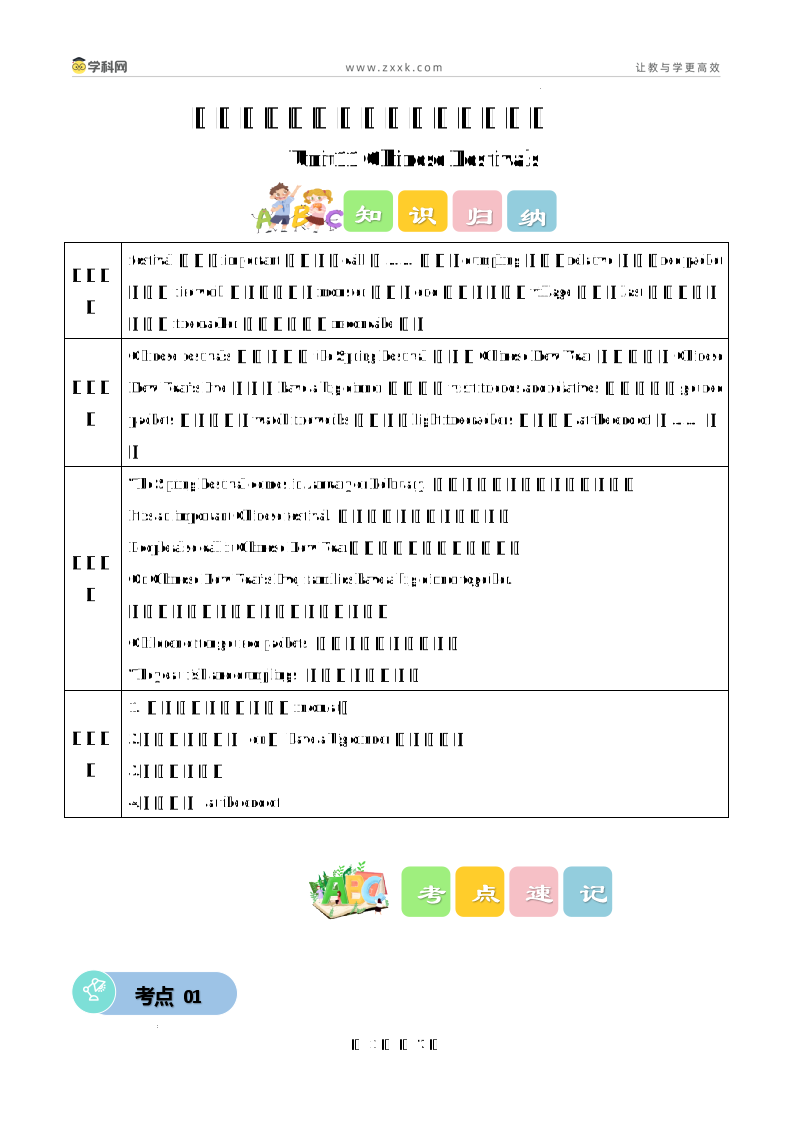
Unit11 Chinese Festivals知
识
归
纳
必记单词
festival 节日,important 重要的,call 把…… 叫做,dumpling 饺子,relative 亲戚,red packet 红包,firework 烟火;烟花,monster 怪物,end 结尾;结束,village 村庄,last 最后的;上一个,firecracker 鞭炮;爆竹,mooncake 月饼
常考短语
Chinese festivals 中国节日,the Spring Festival 春节,Chinese New Year 中国新年,Chinese New Year’s Eve 除夕,have a big dinner 吃大餐,visit friends and relatives 走亲访友,get red packets 收到红包,watch fireworks 看烟花,light firecrackers 放鞭炮,at the end of 在…… 最后
必会句型
The Spring Festival comes in January or February. 春节在每年的一月或二月到来。
It is an important Chinese festival. 它是一个重要的中国节日。
People also call it Chinese New Year.人们也把它叫做中国新年。
On Chinese New Year’s Eve, families have a big dinner together.
在除夕,家人们一起吃一顿丰盛的晚餐。
Children often get red packets. 孩子们经常收到红包。
They eat fish and dumplings. 他们吃鱼和饺子。
核心语法
1. 节日表达与介词用法(in/on/at)
2.具体日期前介词 on和have a big dinner 是固定搭配
3.节日习俗活动
4.固定短语 at the end of
考
点
速
记
考点 01
考点一:节日表达与介词搭配
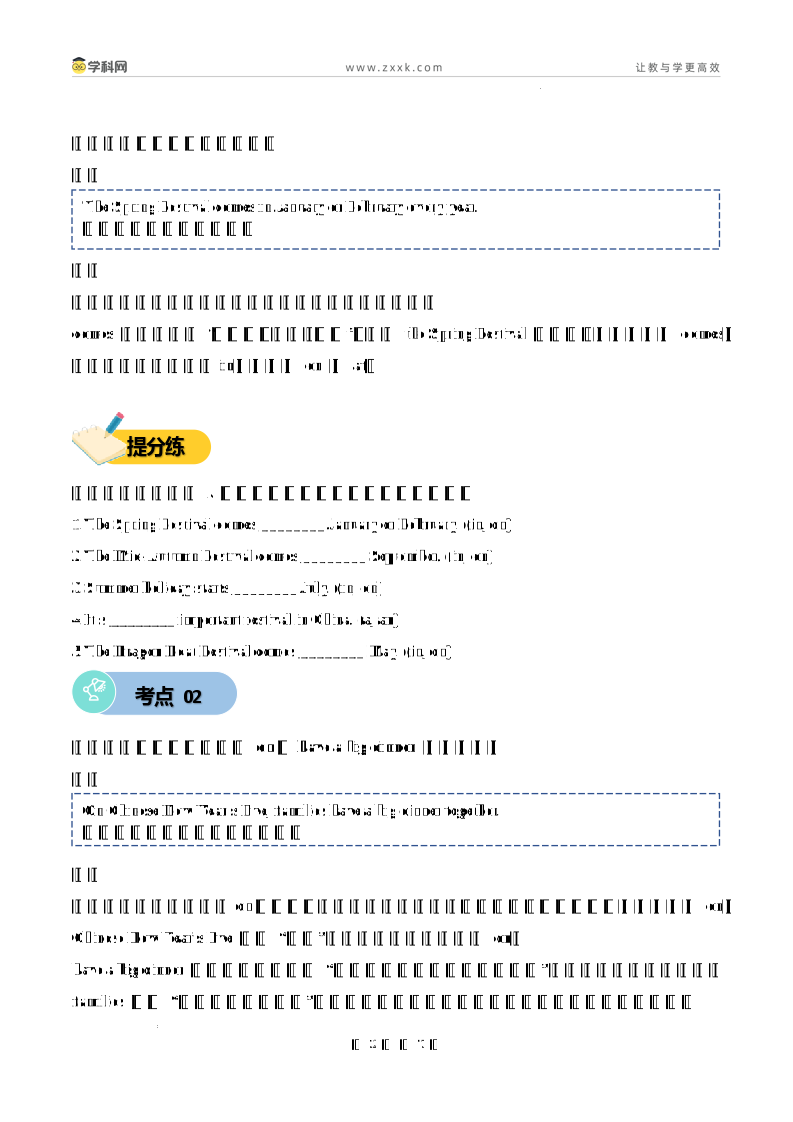
例句The Spring Festival comes in January or February every year.
春节在每年一月或二月。
解析
本句用于介绍节日的时间,是本单元最核心的句型。
comes 在这里表示 “(节日)到来、来临”,主语 the Spring Festival 是单数,所以动词用 comes。月份前面必须用介词in,不能用 on 或 at。
提分练
用括号内所给单词 / 介词填空,将正确答案写在横线上。
1.The Spring Festival comes ________ January or February. (in, on)
2.The Mid-Autumn Festival comes ________ September. (in, on)
3.Summer holiday starts ________ July. (in, on)
4.It’s ________ important festival in China. (a, an)
5.The Dragon Boat Festival comes ________ May. (in, on)考点 02
考点二:具体日期前介词 on和have a big dinner 是固定搭配
例句On Chinese New Year’s Eve, families have a big dinner together.
在除夕,家人们一起吃团圆饭。
解析
本句重点考查时间介词on的用法。只要是具体某一天、具体节日、具体前夕,前面一律用 on。Chinese New Year’s Eve 意为 “除夕”,是具体时间,所以用 on。
have a big dinner 是固定搭配,表示 “吃一顿丰盛的晚餐、吃团圆饭”,是春节最典型的习俗。families 表示 “家人们、家庭成员”,强调全家人团聚的场景,体现春节团圆的文化内涵。
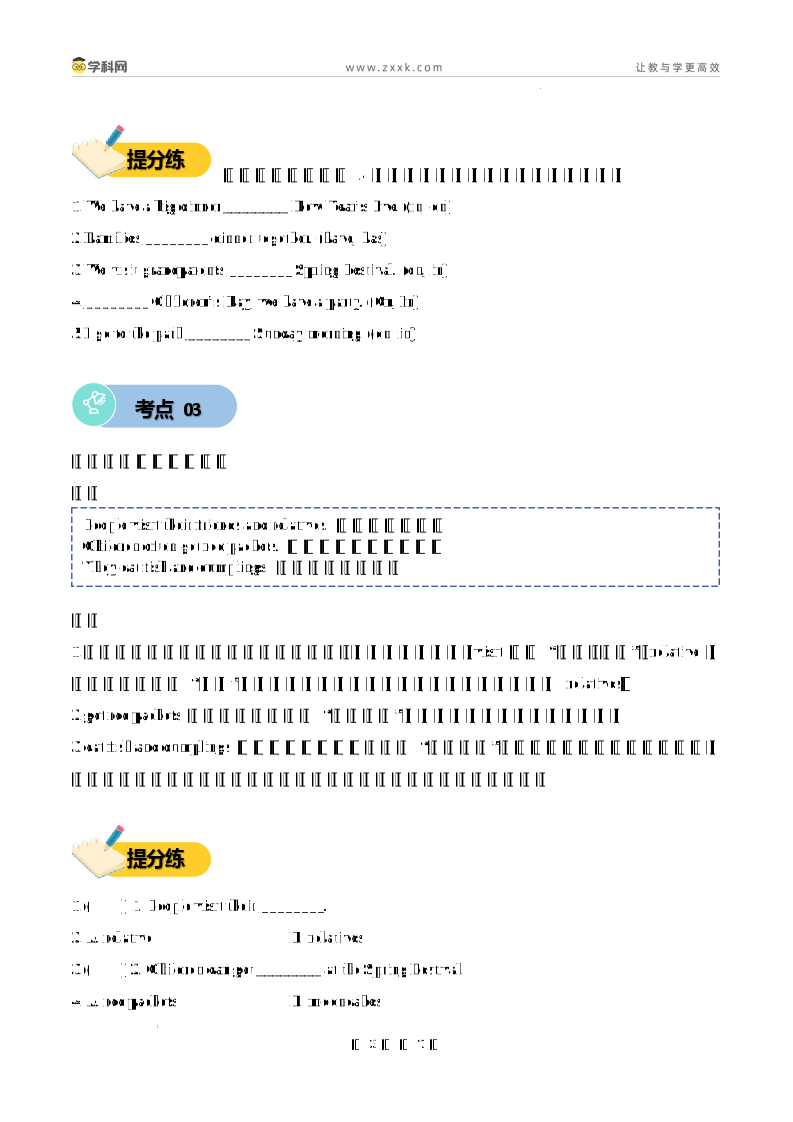
提分练
用括号内所给单词 / 介词填空,将正确答案写在横线上。
1.We have a big dinner ________ New Year’s Eve. (in, on)
2.Families ________ dinner together. (have, has)
3.We visit grandparents ________ Spring Festival. (on, in)
4.________ Children’s Day, we have a party. (On, In)
5.I go to the park ________ Sunday morning. (on, in)
考点 03
考点三:节日习俗活动
例句
People visit their friends and relatives. 人们走亲访友。
Children often get red packets. 孩子们经常收到红包。
They eat fish and dumplings. 他们吃鱼和饺子。
解析
1.这三句集中考查春节的三大核心习俗,是单元必考内容。visit 表示 “拜访、看望”,relative 是可数名词,意为 “亲戚”,因为拜访的亲戚不止一个,所以必须用复数 relatives。
2.get red packets 是固定短语,意为 “收到红包”,是春节孩子们最期待的活动。
3.eat fish and dumplings 是春节传统饮食,鱼寓意 “年年有余”,饺子是北方春节必备食物,是文化考点。句子都用一般现在时,客观描述习惯性、传统性的动作。
提分练
1.( ) 1. People visit their ________.
2.A. relative B. relatives
3.( ) 2. Children can get ________ at the Spring Festival.
4.A. red packets B. mooncakes
5.( ) 3. We eat ________ on Spring Festival.
6.A. dumpling B. dumplings
7.( ) 4. People like to watch ________ at night.
8.A. firework B. fireworks
9.( ) 5. We often ________ our friends in winter.
10.A. visit B. visits考点 04
考点四:固定短语 at the end of
例句
At the end of every year, he goes into the village. 在每年年末,他进入村庄。
解析
at the end of… 是高频介词短语,意为 “在…… 的末尾、在…… 的最后”,既可以指时间末尾,也可以指地点末尾。本句中指时间 “每年年末”,对应春节的时间节点。
它区别于短语 in the end(最后、终于),at the end of 后面必须接名词,而 in the end 单独使用,后面不接名词,这是考试最容易混淆的知识点。
提分练
单项选择
( ) 1. We have a party ________ the year.
A. at the end of B. in the end
( ) 2. ________, we go home happily.
A. At the end of B. In the end
( ) 3. There is a shop ________ the street.
A. at the end of B. in the end
( ) 4. ________ the day, we watch fireworks.
A. At the end of B. In the end
( ) 5. I finish my homework ________ the evening.
A. at the end of B. in the end
提分练答案及解析
考点一:节日表达与介词搭配
答案:in, in, in, an, in
解析:
月份前用介词 in。
September 是月份,前用 in。
July 是月份,前用 in。
important 元音音素开头,用不定冠词 an。
May 是月份,前用 in。
考点二:具体日期前介词 on 和固定搭配
答案:on, have, on, On, on
解析:
除夕是具体节日日期,具体日子前用 on。
Families 是复数主语,一般现在时动词用原形 have。
具体节日前用介词 on。
儿童节是具体节日,用 On,句首大写。
具体某天的早上,固定用介词 on。
考点三:节日习俗活动(单项选择)
答案:B, A, B, B, A
解析:
拜访很多亲戚,用复数 relatives。
春节收红包 red packets,mooncakes 是中秋月饼。
表达一类食物,常用复数 dumplings。
烟花固定常用复数 fireworks。
主语为复数,一般现在时用动词原形 visit。
考点四:固定短语 at the end of
答案:A, B, A, A, A
解析:
固定用法:at the end of + 名词(在…… 末尾 / 尽头);in the end 单独使用,后面不接名词。
后有名词 the year,选 A。
空后无名词,单独表最后,选 B。
后有地点 the street,选 A。
后有名词 the day,选 A。
后有名词 the evening,选 A。
第 1 页 共 7 页
学科网(北京)股份有限公司
学科网(北京)股份有限公司
$
资源预览图
1
2
3

相关资源
由于学科网是一个信息分享及获取的平台,不确保部分用户上传资料的 来源及知识产权归属。如您发现相关资料侵犯您的合法权益,请联系学科网,我们核实后将及时进行处理。