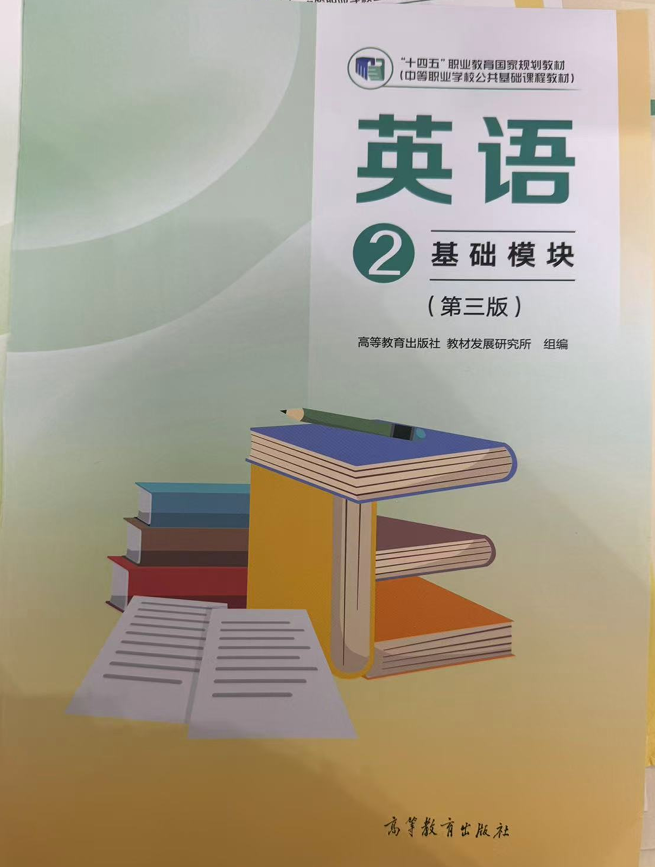
阶段测试卷(5-8单元)(A卷·基础巩固)《英语 基础模块2》(高教版第三版)单元过关卷(原卷版+解析版)
2026-04-28
|
2份
|
27页
|
117人阅读
|
2人下载
内容正文:
编写说明:本套试卷紧扣《英语 基础模块2》(高教版第三版)教材,以教材单元为基准精准覆盖核心考点。
每个单元设置AB卷,A卷为基础巩固卷,侧重基础考点训练,帮助学生扎实掌握知识要点;B卷为能力提升卷,注重知识整合与全面检测,引导学生构建知识网络。全书设计4份综合测试卷,模拟实战情境,聚焦解题能力突破,全面提升应试能力与知识应用水平。
《英语 基础模块2》(高教版第三版)《单元过关卷》
阶段测试卷(5-8单元)
A卷·基础巩固
考试时间:120分钟 满分:100分
班级 姓名 学号 成绩
Ⅰ.语音辨析。 (共5小题;每小题1分,满分5分)
读下列单词,从每题所给的 A、 B、 C 和 D 四个选项中,选出画线部分发音不同的一项。
1.A.salmon B.calm C.palm D.almost
2.A.whistle B.ten C.fasten D.hasten
3.A.answer B.word C.two D.write
4.A.leave B.breathe C.dream D.health
5.A.knee B.knight C.knit D.kite
【答案】1.D 2.B 3.B 4.D 5.D
【解析】1.考查辅音字母的发音。A. salmon/ˈsæmən/;B. calm/kɑːm/;C. palm/pɑːm/;D. almost/ˈɔːlməʊst/。结合单词音标可知,D项划线部分发音是/l/,其余各项划线部分不发音。故选D。
2.考查辅音字母的发音。A. whistle/ˈwɪsl/;B. ten/ten/;C. fasten/ˈfɑːsn/;D. hasten/ˈheɪsn/。结合单词音标可知,B项划线部分发音是/t/,其余各项划线部分不发音。故选B。
3.考查辅音字母的发音。A. answer/ˈɑːnsə(r)/;B. word/wɜːd/;C. two/tuː/;D. write/raɪt/。结合单词音标可知,B项划线部分发音是/w/,其余各项划线部分不发音。故选B。
4.考查元音字母组合的发音。A. leave/liːv/;B. breathe/briːð/;C. dream/driːm/;D. health/helθ/。结合单词音标可知,D项划线部分发音是/e/,其余各项划线部分发音都是/iː/。故选D。
5.考查辅音字母的发音。A. knee/niː/;B. knight/naɪt/;C. knit/nɪt/;D. kite/kaɪt/。结合单词音标可知,D项划线部分发音是/k/,其余各项划线部分不发音。故选D。
Ⅱ. 单项选择(共 15 小题;每小题 1 分,满分 15 分)
阅读下列句子,从每题所给的 A、B、C 和 D 四个选项中,选出最佳选项。
6.Trees are important ________ human beings and animals on the Earth.
A.for B.to C.at D.in
【答案】B
【详解】句意:树木对地球上的人类和动物很重要。
for为了;to对;at在;in在……里面。固定短语be important to“对……重要”,此处应填to。
7.It not only helps you know the rhythm of music, ________ teaches you to breathe.
A.or B.and C.but also D.so
【答案】C
【详解】句意:它不仅帮助你了解音乐的节奏,而且还教你们呼吸。
or或者;and和;but also而且;so所以。根据句中的“not only”可知,此处考查固定搭配“not only... but also...”,意为“不但……而且……”,表示递进关系。
8.My little sister likes pandas ________ they are very cute.
A.because B.so C.but D.or
【答案】A
【详解】句意:我的小妹妹喜欢熊猫,因为它们很可爱。
考查连词辨析。because因为;so所以;but但是;or否则。根据句意,喜欢熊猫的原因是它们可爱,后句是前句的原因,应用because引导原因状语从句。故选A。
9.Tom is good ________ running and he runs every day.
A.at B.in C.for D.with
【答案】A
【详解】句意:汤姆擅长跑步并且他每天都跑。
at在;in在……里面;for为了;with和。固定搭配be good at意为“擅长”,此处表示汤姆擅长跑步,符合语境。
10.There ________ a smart library in our school.
A.has B.have C.is D.are
【答案】C
【详解】句意:我们学校有一个智能图书馆。
has有,动词单数形式;have有,动词原形;is是,主语是单数;are是,主语为复数。该句为There be句型,表示“某地存在某物”,主语“a smart library”是单数,be动词应用is。
11.—Mom, can I play games on my iPad now?
—No, you ________ finish your homework first.
A.must B.can C.could D.may
【答案】A
【详解】句意:——妈妈,我现在可以在我的iPad上玩游戏吗? ——不,你必须先完成作业。
考查情态动词辨析。must必须;can能够;could可以(can的过去式);may可以。根据“No”可知,妈妈不允许孩子现在玩游戏,强调“必须先完成作业”,带有强制或规定的语气,因此用must表示“必须”。故选A。
12.Grandpa is teaching ________ how to grow vegetables in the garden.
A.we B.us C.our D.ours
【答案】B
【详解】句意:爷爷正在教我们在花园里如何种蔬菜。
we我们(主格);us我们(宾格);our我们的(形容词性物主代词);ours我们的(名词性物主代词)。根据“Grandpa is teaching...”可知,动词 teaching后接人称代词宾格作宾语。故选us。
13.We can’t change the weather, ________ we can prepare for it.
A.and B.so C.or D.but
【答案】D
【详解】句意:我们不能改变天气,但是我们可以为此做好准备。
and和,并且;so所以;or或者,否则;but但是。句中前后两个分句“We can’t change the weather”和“we can prepare for it”之间存在转折关系,故填but。
14.There is ________ useful book about green energy. ________ book is written by a famous scientist.
A.a; the B.an; the C.a; a D.an; an
【答案】A
【详解】句意:有一本关于绿色能源的有用的书。这本书是由一位著名科学家写的。
考查冠词。a一个,用于辅音音素前;the这/那,表示特指;an一个,用于元音音素前。根据“useful book”可知,第一空表示一本有用的书,useful以辅音音素开头,用不定冠词a;第二空特指前面提到的书,用定冠词the。故选A。
15.—What’s ________ matter with you?
—I have ________ bad cold.
A.a; the B.the; a C./; a D.the; /
【答案】B
【详解】句意:——你怎么了?——我得了重感冒。
a一个;the这个,那个;/不填。第一空考查“What’s the matter with sb.?”这一固定句型,表示“某人怎么了”,第二空考查“have a bad cold”这一固定搭配,表示“得了重感冒”,应填the;a。
16.—________ good movie NeZha 2 is!
—Yes. It’s so interesting that I have watched it three times.
A.How B.What C.How a D.What a
【答案】D
【详解】句意:——《哪吒 2》是一部多么好的电影啊!——是的。它太有趣了,我都看了三遍了。
感叹句的中心词是名词movie,应用What引导;movie为单数可数名词,且good以辅音音素开头,前面需加不定冠词a。符合结构:What+a+形容词+单数可数名词+主语+谓语!
17.The rest of us ________ left waiting for the bus yesterday.
A.is B.are C.was D.were
【答案】D
【详解】句意:我们其余的人被留下来等公共汽车。
考查主谓一致。is是,单数;are是,复数;was是,单数过去式;were是,复数过去式。根据“The rest of us…left waiting for the bus.”可知,主语“The rest of us”中“the rest of”后接复数名词“us”,指“我们中剩下的人”,表示复数概念;且根据“yesterday”可知,此处描述的是过去发生的动作,需用过去时态,故谓语动词用复数过去式were。故选D。
18.—What do you think of the colour of my bedroom?
—Sorry, but what did you say? I ________ about something else.
A.think B.thought C.am thinking D.was thinking
【答案】D
【详解】句意:——你觉得我卧室的颜色怎么样?——对不起,你说什么?我刚才在想别的事情。
考查动词时态。think想,一般现在时;thought想,一般过去时;am thinking想,现在进行时;was thinking想,过去进行时。根据“Sorry, but what did you say?”可知,说话者没有听清对方的话,原因是在对方说话的那一刻,说话者“正在思考”别的事情。此处表示过去某个时刻正在进行的动作,应用过去进行时,结构为“was/were doing”。主语是I,be动词用was。故选D。
19.—Could you please tell me ________?
—Sure. Go along this street and turn left.
A.where is the hospital B.where the hospital is
C.where was the hospital D.where the hospital was
【答案】B
【详解】句意:——你能告诉我医院在哪里吗?——当然。沿着这条街走然后左转。
宾语从句需用陈述语序,即“连接词 + 主语 + 谓语”,根据答语可知是询问现在的路线,应用一般现在时,选项B是宾语从句的一般现在时。
20.My sister together with my parents ________ shopping at the supermarket. I can call ________ of them to get me some ink.
A.is; any B.are; any C.is; either D.are; either
【答案】A
【详解】句意:我妹妹和我父母正在超市购物。我可以给他们中的任何一个打电话让给我带些墨水。
考查主谓一致和不定代词辨析。is是 (用于第三人称单数);any 任何一个 ;are 是 (用于第二人称及复数);either 两者中的任何一个;根据“My sister together with my parents…”,可知有“together with”,谓语动词的数要与前面的主语“My sister”保持一致,be动词要用“is”。而由“my sister”和“my parents”,可知这里表示从三个人当中任选一个,第二空应填“any”。故选A。
Ⅲ. 完形填空(共 10 小题;每小题 1 分,满分 10 分)
阅读下面短文,从短文后各题所给的 A、B、C 和 D 四个选项中,选出可以填入空白处的最佳选项。
In my village, the art of weaving (编织) is a living history. The patterns in our textiles are not random (随机的); they are stories ________ in thread. I remember watching my grandmother’s hands, ________ the shuttle back and forth with a rhythm that seemed to speak of centuries.
________ she wanted me to learn most was not just the technique, but the meaning behind each symbol. “This diamond pattern represents the mountains that protect us,” she would say. Her voice was gentle, ________ it carried the weight of generations. I knew I ________ pay attention; this was a precious gift.
________ amazing it is to hold a piece of cloth and feel connected to your ancestors! The loom itself is like a time machine. All ________ my grandmother creates is more than just a blanket; it is a map of our culture’s soul, ________ our identity for the future.
Now, my own hands are learning the movements. Wow! It is much ________ than it looks. But with each pass of the shuttle, I feel I am adding my own small thread to the vast and beautiful tapestry (挂毯) of our ________ history.
21.A.sung B.drawn C.painted D.written
22.A.moved B.moving C.to move D.move
23.A.What B.That C.Which D.Why
24.A.so B.but C.because D.or
25.A.can B.may C.must D.could
26.A.What B.How C.Why D.When
27.A.what B.that C.which D.why
28.A.preventing B.performing C.preserving D.preparing
29.A.hard B.easy C.harder D.easier
30.A.alive B.lived C.live D.living
【答案】
21.D 22.B 23.A 24.B 25.C 26.B 27.B 28.C 29.C 30.D
【导语】本文是记叙文,讲述作者村庄的编织技艺承载着文化故事,作者从祖母处学习编织,体会到技艺背后的文化传承,如今自己学习编织,延续文化脉络。
21.考查动词词义辨析。句意:纺织品上的图案不是随机的;它们是用线书写的故事。A. sung演唱;B. drawn绘画;C. painted涂色;D. written书写。根据“stories … in thread”可知,用线“书写”故事符合编织图案的意象。故选D。
22.考查非谓语动词。句意:我记得看着祖母的手,有节奏地来回移动梭子,那节奏仿佛诉说着数个世纪的故事。空处为非谓语动词,hands与move是主动关系,用现在分词作伴随状语。故选B。
23.考查主语从句引导词。句意:她最想让我学习的不仅是技艺,还有每个符号背后的意义。分析句子结构可知,“… she wanted me to learn most”,为主语从句,从句缺宾语,用What引导主语从句。故选A。
24.考查连词词义辨析。句意:她的声音很轻柔,但承载着几代人的分量。A. so所以;B. but但是;C. because因为;D. or或者。“gentle”与“weight of generations”是转折关系,用but。故选B。
25.考查情态动词词义辨析。句意:我知道我必须留意;这是一份珍贵的礼物。A. can能够;B. may可能;C. must必须;D. could能够(过去式)。根据“precious gift”可知,此处表“必须”重视,用must。故选C。
26.考查感叹句引导词。句意:拿着一块布,感觉与祖先相连,这多么令人惊叹啊!分析句子结构可知,此处是感叹句,amazing是形容词,用How引导感叹句。故选B。
27.考查定语从句引导词。句意:祖母所创造的一切不只是一条毯子;它是我们文化灵魂的地图,为未来保存着我们的身份。分析句子结构可知,“…my grandmother creates”为定语从句,先行词是不定代词All,定语从句缺宾语,此时关系词用that。故选B。
28.考查动词词义辨析。句意:祖母所创造的一切不只是一条毯子;它是我们文化灵魂的地图,为未来保存着我们的身份。A. preventing阻止;B. performing表演;C. preserving保存;D. preparing准备。根据“our identity for the future”可知,“保存文化身份”符合“传承文化”的语境。故选C。
29.考查形容词比较级。句意:哇!这比看起来要难得多。A. hard难的;B. easy容易的;C. harder更难的;D. easier更容易的。根据“than it looks”可知,用比较级;结合“Wow!”的语气和生活常识可知,做起来比看“更难”。故选C。
30.考查形容词词义辨析。句意:我感觉自己正在为我们鲜活的历史这张宏大美丽的挂毯添上自己的一缕细线。A. alive活着的(作表语);B. lived生活(过去式);C. live现场的;D. living鲜活的(作定语)。根据前文“In my village, the art of weaving (编织) is a living history.”可知,“living history”表示“鲜活的历史”,符合编织技艺承载文化的语境。故选D。
Ⅳ.补全对话(共5小题;每小题2分,满分10分)
根据对话内容,从对话后所给的七个选项中,选出能填入空白处的最佳选项。(选项中有两项是多余的)
A: Hi, Lisa! I heard our class has a waste problem with plastic bottles.____31____
B: I think we can put a recycling box for plastic bottles in the classroom.
A: ____32____ That’s a small change but it might help a lot.
B: Yes. ____33____ We can also tell other students to put bottles in the box instead of the trash can.
A: ____34____
B: We can ask the teacher to help us get the recycling box.
A: ____35____
B: Let’s do it together this afternoon!
A: Great!
A.How can we get the recycling box?
B.What small change can we make to solve it?
C.That’s a good idea!
D.Do you like recycling plastic bottles?
E.We can check the box every week and sell the bottles.
F.When can we put the box in the classroom?
G.Why do we need to recycle plastic bottles?
【答案】31.B 32.C 33.E 34.A 35.F
【导语】这是一段围绕班级塑料瓶回收问题展开的对话。
31.根据“I heard our class has a waste problem with plastic bottles. (我听说我们班有塑料瓶浪费的问题。)”和“I think we can put a recycling box for plastic bottles in the classroom. (我认为我们可以在教室里放一个塑料瓶回收箱。)”可知,此处应是询问解决塑料瓶浪费问题的小改变是什么,选项B“我们能做些什么小的改变来解决这个问题?”符合语境。故选B。
32.根据“I think we can put a recycling box for plastic bottles in the classroom. (我认为我们可以在教室里放一个塑料瓶回收箱。)”和“That’s a small change but it might help a lot. (这是一个很小的变化,但可能会有很大的帮助。)”可知,此处应是对对方提出建议的认可,选项C“好主意!”符合语境。故选C。
33.根据“We can also tell other students to put bottles in the box instead of the trash can. (我们也可以告诉其他学生把瓶子放在盒子里而不是垃圾桶里。)”可知,此处应是阐述回收塑料瓶的相关做法,选项E“我们可以每周检查一下箱子,然后把瓶子卖掉。”符合语境。故选E。
34.根据“We can ask the teacher to help us get the recycling box. (我们可以请老师帮我们拿回收箱。)”可知,此处应是询问如何得到回收箱,选项A“我们怎样才能得到回收箱?”符合语境。故选A。
35.根据“Let’s do it together this afternoon! (让我们今天下午一起做吧!)”可知,此处应是询问采取行动的时间,选项F“我们什么时候可以把盒子放在教室里?”符合语境。故选F。
Ⅴ.阅读理解(共15小题;每小题2分,满分30分)
阅读下面短文A,判断36~40小题是否正确。若正确,把选项T涂黑;若错误,把选项F涂黑。阅读短文B和C,从每小题所给的A、B、C和D四个选项中选出最佳选项。
A
Have you ever read The Million Pound Note before? It is a very well-known work of the American writer Mark Twain.
The story occurred in Britain in the early twentieth Century, when a poor American, Henry Adams, came to London. He came to England by working on the ship to mortgage his tickets. A pair of rich brothers bet on a one million-pound note to see if a man can live in London for a month on this bill.
Henry was found by two brothers while wandering on the sidewalk. They gave him an envelope (信封). It contains a million pound note issued by the bank. Henry accepted the envelope in a confusing way.
Because he was in poor clothes, no matter where he went, people treated him in a rude manner. When he took out the bill, the attitude of the people changed. They flattered him. As for the bill, they even allow him to have everything without paying the bill. After a period of time, Henry has become the focus of upper class society. Everyone was curious about him and wanted to know him.
Soon after, he was in trouble. He was in debt, and then the waitress joked with him to hide the bill. As a result, the stock market plunged. People think he is a cheat, and the hotel was packed with people asking for their money.
Fortunately, a month’s deadline is coming soon. Henry gave the bill back to the two brothers. After a big rise and fall, Henry is tired of pursue of (追求) money. He left with his beloved girl Portia.
36.The Million Pound Note is written by Mark Twain.
37.People treated Henry in a rude manner because of his poor clothes.
38.Henry Adams came from London.
39.Henry owned the bill at last.
40.Henry wanted to make more money after the thing.
【答案】36.T 37.T 38.F 39.F 40.F
【导语】本文主要讲述了《百万英镑的钞票》的故事梗概。
36.细节理解题。根据文章第一段中的“It is a very well-known work of the American writer Mark Twain”可知,《百万英镑的钞票》是马克·吐温写的,题干的说法是正确的,故填T。
37.细节理解题。根据文章第四段中的“Because he was in poor clothes, no matter where he went, people treated him in a rude manner”可知,因为Henry的穿得不好,人们对他很不礼貌,所以题干的说法是正确的,故填T。
38.细节理解题。根据文章第二段中的“when a poor American, Henry Adams”可知,Henry Adams是美国人,所以题干的说法是错误的,故填F。
39.细节理解题。根据文章最后一段中的“Henry gave the bill back to the two brothers”可知,Henry最后把账单还给了兄弟俩,所以题干的说法是错误的,故填F。
40.推理判断题。根据文章最后一段中的“After a big rise and fall, Henry is tired of pursue of (追求) money. He left with his beloved girl Portia”可知,Henry在那件事后,厌倦了追求金钱,所以题干的说法是错误的,故填F。
B
On January 20, 2025, a Chinese tech company named DeepSeek made a new AI called DeepSeek-R1. This smart program can solve maths problems, write code (代码), and answer questions like top models such as GPT-4o, but it costs much less to build. The team spent only $5.58 million and used 2,048 computer chips (芯片) for two months to make it. This shows that good ideas can beat big money.
DeepSeek-R1 learns by trying many times and getting better, like how students practice maths. Other AIs need lots of prepared examples, but R1 improves by itself. In a global maths test, it got 79.8% right, a little higher than OpenAI’s model. A simple version (版本) of R1 can even run on low-cost computers, helping schools and small companies.
DeepSeek-R1 is free to use and change. On its first day online, over 19,000 programmers worldwide started projects to study it. A German scientist said experiments with R1 cost $10 instead of $300 with other AIs. Even a famous U.S. tech company’s top scientist said, “This kind of free AI could change the world.”
The U.S. tech company is worried. They planned to spend $65 billion more on AI research. Experts said China was catching up fast. A report in Nature magazine called R1 a “big step forward”, confirming that smart ideas beat expensive tools.
As a DeepSeek engineer said, “We want AI to be a friend, not something only rich people can use.” With R1, China shows the world that great things come from new ideas and hard work, not just money.
41.How much did it cost to build DeepSeek-R1?
A.$65 billion. B.$5.58 million. C.$10. D.$300.
42.What can we learn about DeepSeek-R1 from Paragraph 2?
A.It needs programmers to fix mistakes. B.It becomes better through practice.
C.It copies answers from other AIs. D.It only works with expensive tools.
43.Why did the U.S. tech company plan to spend more money on AI research?
A.To help Chinese companies. B.To build more computer chips.
C.To hire German scientists. D.To compete with DeepSeek-R1.
44.What does the underlined word “confirming” mean in Paragraph 4?
A.Connecting. B.Exploring. C.Refusing. D.Proving.
45.Which of the following can be the best title for the text?
A.Competition Between GPT-4o and DeepSeek-R1 B.Comparison of Chinese and American AI Models
C.Appearance of Chinese AI Model DeepSeek-R1 D.Disadvantages of Chinese AI Model DeepSeek-R1
【答案】41.B 42.B 43.D 44.D 45.C
【导语】本文主要介绍了中国DeepSeek推出的低成本,功能强且免费的AI模型DeepSeek-R1,体现了中国AI领域靠创新和努力得到了快速发展。
41.细节理解题。根据第一段中“The team spent only $5.58 million and used 2,048 computer chips for two months to make it (该团队仅花费558万美元,使用2048块计算机芯片,耗时两个月完成了这项工作。)”可知,构建DeepSeek-R1的成本是558万美元。
42.细节理解题。根据第二段中“DeepSeek-R1 learns by trying many times and getting better, like how students practice maths. (DeepSeek-R1通过多次尝试并不断进步,就像学生练习数学一样。)”可知,它通过不断练习变得更好。
43.推理判断题。根据第四段中“The U.S. tech company is worried. They planned to spend $65 billion more on AI research. (这家美国科技公司感到担忧。他们原计划在人工智能研究上再投入650亿美元。)”可知,美国科技公司感到担忧,花费更多的钱在人工智能研究上,为了能够与DeepSeek-R1竞争。
44.词句猜测题。根据第一段中“The team spent only $5.58 million (该团队仅花费了558万美元)”,“This shows that good ideas can beat big money. (这表明好的想法可以战胜大笔资金。)”及第四段中“A report in Nature magazine called R1 a ‘big step forward’ (《自然》杂志的一篇报告称R1为“重大进步”)”可知,这个评价进一步证明了“聪明的想法胜过昂贵的工具”这个结论。confirming与Proving意思相同,意为“证明”。
45.主旨大意题。文章主要介绍了中国AI模型DeepSeek-R1的诞生,特点,影响等内容。选项C“中国AI模型DeepSeek-R1的出现”符合主旨。
C
What’s the first thing that appears in your mind when you think of wheat straw (麦秆)? Most people would probably just see it as a pile of waste in a farmer’s field. However, Wu Cui, an intangible cultural inheritor (非遗传人), can turn the straw into beautiful and eye-catching functional artworks.
The earliest straw-weaving (草编的) products were discovered at Hemudu Cultural Ruins, a Neolithic cultural site located in eastern China’s Zhejiang Province. The Book of Rites, one of the classical works of Confucianism, also records that there were already mats made of cattail grass and professional straw-weaving craftsmen during the Zhou Dynasty.
Wu explains the process of straw weaving: selection of materials is the first step of a complicated, time-consuming and labor-intensive process that can take weeks, or even months, to complete. You need to sketch (素描) the piece on paper, which requires drawing skills. Next comes weaving, shaping and preserving of the work. Even by finishing that process, it does not mean that you will always create a good piece of work, and the hardest part is to make it clear and detailed so that it seems real and natural.
In the past, woven straw items could be found almost in every household in the countryside, such as straw hats and straw shoes, because they were practical in everyday life. But due to the impact of industrialization, manufactured goods have replaced such low-profit products and there are only about 100 individuals doing the work across the country.” The world has changed, and craftsmen need to transcend practicality and push for the beauty and artistry of straw culture to help the craft survive and grow,” Wu says.
In her view, straw weaving should respond to people’s needs and preferences, while still drawing inspiration from traditional culture. “Craftspeople should make a great effort to grasp the trends and opportunities of the times,” she says. When asked about her plans, Wu says she wants to dig deeper into local traditional culture and innovate the craft by developing the straw-weaving technique.
46.What does Paragraph 2 mainly tell us about straw-weaving products?
A.Their major uses. B.Their cultural value.
C.Their historic origins. D.Their production process.
47.Which is the most difficult part for straw-weaving craftsmen according to Wu Cui?
A.Making the artworks lifelike. B.Drawing sketches on paper.
C.Selecting suitable materials. D.Protecting finished products.
48.What does the underlined word “transcend” in Paragraph 4 probably mean?
A.Rely on. B.Go beyond. C.Turn to. D.Give up.
49.Why have straw items disappeared in our daily life?
A.Because straw items are practical.
B.Because straw items have high profit.
C.Because manufactured goods have replaced straw items.
D.Because fewer people like weaving straw items.
50.What can we learn from Wu Cui’s opinion in the last paragraph?
A.Straw-weaving products are out of favor with customers.
B.Following fashion should be the only goal for craftspeople.
C.Local people benefit a lot from the straw-weaving techniques.
D.Craftsmen should create new products based on traditional culture.
【答案】46.C 47.A 48.B 49.C 50.D
【导语】主要讲述了草编艺术的历史、制作过程、现状以及非遗传承人吴翠对草编艺术的看法和未来规划。
46.细节理解题。根据第二段“The earliest straw-weaving (草编的) products were discovered at Hemudu Cultural Ruins, a Neolithic cultural site located in eastern China’s Zhejiang Province. The Book of Rites, one of the classical works of Confucianism, also records that there were already mats made of cattail grass and professional straw-weaving craftsmen during the Zhou Dynasty. (最早的草编产品是在河姆渡文化遗址发现的,河姆渡文化遗址是位于中国东部浙江省的新石器时代文化遗址。儒家经典著作《礼记》也记载,在周代已经有了香蒲草席和专业的草编工匠。)”可知,第二段主要介绍了草编产品的历史起源。
47.细节理解题。根据第三段“Even by finishing that process, it does not mean that you will always create a good piece of work, and the hardest part is to make it clear and detailed so that it seems real and natural. (即使完成了这个过程,也并不意味着你总是能创造出一件好的作品,最难的部分是让它清晰而详细,这样它看起来就真实而自然。)”可知,吴翠认为草编工艺品最困难的部分是让作品看起来逼真自然。
48.词句猜测题。根据第四段“The world has changed, and craftsmen need to transcend practicality and push for the beauty and artistry of straw culture to help the craft survive and grow (世界变了,匠人需要……实用性,推动秸秆文化的美与艺术性,才能帮助工艺生存与发展)”可知,世界已经发生了变化,工匠们需要“超越”实用性,追求草编文化的美感和艺术性,以帮助这门手艺生存和发展。由此可推测,transcend意为“超越”。
49.细节理解题。根据第四段“But due to the impact of industrialization, manufactured goods have replaced such low-profit products and there are only about 100 individuals doing the work across the country. (但由于工业化的影响,制成品已经取代了这种低利润的产品,全国只有大约100个人在做这项工作。)”可知,由于工业化的影响,制成品已经取代了这些低利润的产品,因此草编物品在我们的日常生活中消失了。
50.推理判断题。根据最后一段“In her view, straw weaving should respond to people’s needs and preferences, while still drawing inspiration from traditional culture. ‘Craftspeople should make a great effort to grasp the trends and opportunities of the times,’ she says. When asked about her plans, Wu says she wants to dig deeper into local traditional culture and innovate the craft by developing the straw-weaving technique. (在她看来,草编既要回应人们的需求和喜好,又要从传统文化中汲取灵感。她说,手工艺人应该努力把握时代的趋势和机遇。当被问及她的计划时,吴说她想深入挖掘当地的传统文化,通过发展稻草编织技术来创新工艺。)”可推知,工匠们应该在传统文化的基础上创造新产品。
VI.句子改错 (共10小题;每小题1分,满分10分)
每个句子只有一处错误,每处错误仅涉及一个单词的增加、删除或修改。不允许改变原句的意思。
增加:在缺词处加一个漏词符号 (∧),并在后面横线上写出该加的词。
删除:在多余的词下画一横线,并在后面横线上写出该词,用 ( ) 划掉。
修改:在错的词下画一横线,并在后面横线上写出修改后的词。
51.I don’t know what does this word means. (单句改错)
【答案】去掉does
【详解】考查宾语从句的语序。句意:我不知道这个单词是什么意思。分析句子可知,“don’t know”后是宾语从句,从句需用陈述语序(主语+谓语),原句中does是疑问语序的助动词,多余且破坏陈述语序,应去掉。故答案为:去掉 does。
52.What she passed the exam made her parents happy. (单句改错)
【答案】What→ That
【详解】考查名从连词。句意:她通过了考试这件事让她父母很高兴。主语从句“she passed the exam”是结构完整的陈述句,不缺少主语、宾语或表语等成分;而引导词What引导主语从句时,必须在从句中充当主语、宾语等成分,因此此处应将What替换为只起连接作用、不充当任何成分的That。故答案为What→ That。
53.She asked me that where I lived. (单句改错)
【答案】去掉that
【详解】考查宾语从句的引导词。句意:她问我住在哪里。分析句子可知,“asked me”后是宾语从句,where是引导宾语从句的连接词(表地点),不能与that同时使用(二者都是引导词,重复冗余),因此需去掉that。故答案为:去掉that。
54.He told me that he will come back next week. (单句改错)
【答案】will→ would
【详解】考查宾语从句的时态。句意:他告诉我他下周会回来。在宾语从句中,如果主句是一般过去时,从句要用相应的过去时态(客观真理等除外)。此句中主句“He told me”是一般过去时,从句“he will come back next week”应将一般将来时“will come”改为过去将来时“would come”。故答案为:will→ would。
55.She is absent because she was ill, so the teacher excused her. (单句改错)
【答案】is→ was
【详解】考查时态。句意:她因为生病缺席了,所以老师原谅了她。根据“was”以及“excused”可知,句子描述的是过去的事情,而She is absent用的是一般现在时,时态不一致,所以应将is改为was。 故答案为is→ was。
56.Unless you don’t study, you won’t pass. (单句改错)
【答案】unless→if
【详解】考查连词。句意:如果你不学习,你就不会通过考试。分析句子可知,unless本身包含否定含义,与don’t连用会造成逻辑矛盾,需改为表肯定条件的if,if ... not相当于“unless”。故答案为:unless→if。
57.They were discussing the plan while the manager entered the room. (单句改错)
【答案】while→ when
【详解】考查状从连词。句意:经理走进房间时,他们正在讨论这个计划。while和when都有“当……时候”的意思,但while引导的时间状语从句中,谓语动词必须是延续性动词,且强调主从句动作同时发生;enter是短暂性动词,不能用while引导,应将while改为when。故答案为while→ when。
58.Hurry up, and you will be late. (单句改错)
【答案】and→or
【详解】考查连词。句意:快点,否则你会迟到的。分析句子可知,此处表示快点否则会迟到,而原句用的and表示顺承,不符合逻辑,应使用or。故答案为:and→or。
59.Two third of the books are new. (单句改错)
【答案】third→ thirds
【详解】考查分数的表达。句意:三分之二的书是新书。英语中表达分数时,分子使用基数词,分母使用序数词,当分子大于1时,分母使用复数,因此“三分之二”应表达为two thirds,需要将third改为thirds。故答案为:third→ thirds。
60.Those are your boxes. Where are our? (单句改错)
【答案】our→ ours
【详解】考查名词性物主代词。句意:那些是你的盒子。我们的在哪里?结合前一句“Those are your boxes.”可知,此处询问我们的盒子在哪里,为了避免boxes重复出现,“我们的盒子”可用名词性物主代词ours,相当于our boxes。故答案为:our→ ours。
Ⅶ. 短语填空(共 10 小题;每小题 2 分,满分 20 分)
根据句子内容选择正确短语并用其适当形式填空。
on the other hand;set up;date back to;in danger;carry on;make contributions to;break down;by the time;as soon as;in history
61. The ancient Silk Road is one of the greatest trade routes _____ in China.
62. Smartphones are convenient, _____ they may cause distraction in daily life.
63. Many ancient buildings are _____ of being destroyed without proper protection.
64. _____ we arrived at the hotel, we called our parents to say we were safe.
65. _____ I got to the airport, the plane had already taken off yesterday.
66. The ancient palace _____ the Ming Dynasty and attracts many tourists today.
67. Ancient Chinese scientists _____ the development of world civilization greatly.
68. The ancient stone bridge _____ under the heavy traffic last year and needs repair.
69. A new volunteer center will be _____ in our community to help the elderly.
70. Although facing many difficulties, the traditional culture has _____ for centuries.
【答案】 61. in history 62. on the other hand 63. in danger 64. As soon as 65. By the time 66. dates back to 67. made contributions to 68. broke down 69. set up 70. carried on
学科网(北京)股份有限公司 (
1
)原创精品资源学科网独家享有版权,侵权必究!
学科网(北京)股份有限公司
$
编写说明:本套试卷紧扣《英语 基础模块2》(高教版第三版)教材,以教材单元为基准精准覆盖核心考点。
每个单元设置AB卷,A卷为基础巩固卷,侧重基础考点训练,帮助学生扎实掌握知识要点;B卷为能力提升卷,注重知识整合与全面检测,引导学生构建知识网络。全书设计4份综合测试卷,模拟实战情境,聚焦解题能力突破,全面提升应试能力与知识应用水平。
《英语 基础模块2》(高教版第三版)《单元过关卷》
阶段测试卷(5-8单元)
A卷·基础巩固
考试时间:120分钟 满分:100分
班级 姓名 学号 成绩
Ⅰ.语音辨析。 (共5小题;每小题1分,满分5分)
读下列单词,从每题所给的 A、 B、 C 和 D 四个选项中,选出画线部分发音不同的一项。
1.A.salmon B.calm C.palm D.almost
2.A.whistle B.ten C.fasten D.hasten
3.A.answer B.word C.two D.write
4.A.leave B.breathe C.dream D.health
5.A.knee B.knight C.knit D.kite
Ⅱ. 单项选择(共 15 小题;每小题 1 分,满分 15 分)
阅读下列句子,从每题所给的 A、B、C 和 D 四个选项中,选出最佳选项。
6.Trees are important ________ human beings and animals on the Earth.
A.for B.to C.at D.in
7.It not only helps you know the rhythm of music, ________ teaches you to breathe.
A.or B.and C.but also D.so
8.My little sister likes pandas ________ they are very cute.
A.because B.so C.but D.or
9.Tom is good ________ running and he runs every day.
A.at B.in C.for D.with
10.There ________ a smart library in our school.
A.has B.have C.is D.are
11.—Mom, can I play games on my iPad now?
—No, you ________ finish your homework first.
A.must B.can C.could D.may
12.Grandpa is teaching ________ how to grow vegetables in the garden.
A.we B.us C.our D.ours
13.We can’t change the weather, ________ we can prepare for it.
A.and B.so C.or D.but
14.There is ________ useful book about green energy. ________ book is written by a famous scientist.
A.a; the B.an; the C.a; a D.an; an
15.—What’s ________ matter with you?
—I have ________ bad cold.
A.a; the B.the; a C./; a D.the; /
16.—________ good movie NeZha 2 is!
—Yes. It’s so interesting that I have watched it three times.
A.How B.What C.How a D.What a
17.The rest of us ________ left waiting for the bus yesterday.
A.is B.are C.was D.were
18.—What do you think of the colour of my bedroom?
—Sorry, but what did you say? I ________ about something else.
A.think B.thought C.am thinking D.was thinking
19.—Could you please tell me ________?
—Sure. Go along this street and turn left.
A.where is the hospital B.where the hospital is
C.where was the hospital D.where the hospital was
20.My sister together with my parents ________ shopping at the supermarket. I can call ________ of them to get me some ink.
A.is; any B.are; any C.is; either D.are; either
Ⅲ. 完形填空(共 10 小题;每小题 1 分,满分 10 分)
阅读下面短文,从短文后各题所给的 A、B、C 和 D 四个选项中,选出可以填入空白处的最佳选项。
In my village, the art of weaving (编织) is a living history. The patterns in our textiles are not random (随机的); they are stories ________ in thread. I remember watching my grandmother’s hands, ________ the shuttle back and forth with a rhythm that seemed to speak of centuries.
________ she wanted me to learn most was not just the technique, but the meaning behind each symbol. “This diamond pattern represents the mountains that protect us,” she would say. Her voice was gentle, ________ it carried the weight of generations. I knew I ________ pay attention; this was a precious gift.
________ amazing it is to hold a piece of cloth and feel connected to your ancestors! The loom itself is like a time machine. All ________ my grandmother creates is more than just a blanket; it is a map of our culture’s soul, ________ our identity for the future.
Now, my own hands are learning the movements. Wow! It is much ________ than it looks. But with each pass of the shuttle, I feel I am adding my own small thread to the vast and beautiful tapestry (挂毯) of our ________ history.
21.A.sung B.drawn C.painted D.written
22.A.moved B.moving C.to move D.move
23.A.What B.That C.Which D.Why
24.A.so B.but C.because D.or
25.A.can B.may C.must D.could
26.A.What B.How C.Why D.When
27.A.what B.that C.which D.why
28.A.preventing B.performing C.preserving D.preparing
29.A.hard B.easy C.harder D.easier
30.A.alive B.lived C.live D.living
Ⅳ.补全对话(共5小题;每小题2分,满分10分)
根据对话内容,从对话后所给的七个选项中,选出能填入空白处的最佳选项。(选项中有两项是多余的)
A: Hi, Lisa! I heard our class has a waste problem with plastic bottles.____31____
B: I think we can put a recycling box for plastic bottles in the classroom.
A: ____32____ That’s a small change but it might help a lot.
B: Yes. ____33____ We can also tell other students to put bottles in the box instead of the trash can.
A: ____34____
B: We can ask the teacher to help us get the recycling box.
A: ____35____
B: Let’s do it together this afternoon!
A: Great!
A.How can we get the recycling box?
B.What small change can we make to solve it?
C.That’s a good idea!
D.Do you like recycling plastic bottles?
E.We can check the box every week and sell the bottles.
F.When can we put the box in the classroom?
G.Why do we need to recycle plastic bottles?
Ⅴ.阅读理解(共15小题;每小题2分,满分30分)
阅读下面短文A,判断36~40小题是否正确。若正确,把选项T涂黑;若错误,把选项F涂黑。阅读短文B和C,从每小题所给的A、B、C和D四个选项中选出最佳选项。
A
Have you ever read The Million Pound Note before? It is a very well-known work of the American writer Mark Twain.
The story occurred in Britain in the early twentieth Century, when a poor American, Henry Adams, came to London. He came to England by working on the ship to mortgage his tickets. A pair of rich brothers bet on a one million-pound note to see if a man can live in London for a month on this bill.
Henry was found by two brothers while wandering on the sidewalk. They gave him an envelope (信封). It contains a million pound note issued by the bank. Henry accepted the envelope in a confusing way.
Because he was in poor clothes, no matter where he went, people treated him in a rude manner. When he took out the bill, the attitude of the people changed. They flattered him. As for the bill, they even allow him to have everything without paying the bill. After a period of time, Henry has become the focus of upper class society. Everyone was curious about him and wanted to know him.
Soon after, he was in trouble. He was in debt, and then the waitress joked with him to hide the bill. As a result, the stock market plunged. People think he is a cheat, and the hotel was packed with people asking for their money.
Fortunately, a month’s deadline is coming soon. Henry gave the bill back to the two brothers. After a big rise and fall, Henry is tired of pursue of (追求) money. He left with his beloved girl Portia.
36.The Million Pound Note is written by Mark Twain.
37.People treated Henry in a rude manner because of his poor clothes.
38.Henry Adams came from London.
39.Henry owned the bill at last.
40.Henry wanted to make more money after the thing.
B
On January 20, 2025, a Chinese tech company named DeepSeek made a new AI called DeepSeek-R1. This smart program can solve maths problems, write code (代码), and answer questions like top models such as GPT-4o, but it costs much less to build. The team spent only $5.58 million and used 2,048 computer chips (芯片) for two months to make it. This shows that good ideas can beat big money.
DeepSeek-R1 learns by trying many times and getting better, like how students practice maths. Other AIs need lots of prepared examples, but R1 improves by itself. In a global maths test, it got 79.8% right, a little higher than OpenAI’s model. A simple version (版本) of R1 can even run on low-cost computers, helping schools and small companies.
DeepSeek-R1 is free to use and change. On its first day online, over 19,000 programmers worldwide started projects to study it. A German scientist said experiments with R1 cost $10 instead of $300 with other AIs. Even a famous U.S. tech company’s top scientist said, “This kind of free AI could change the world.”
The U.S. tech company is worried. They planned to spend $65 billion more on AI research. Experts said China was catching up fast. A report in Nature magazine called R1 a “big step forward”, confirming that smart ideas beat expensive tools.
As a DeepSeek engineer said, “We want AI to be a friend, not something only rich people can use.” With R1, China shows the world that great things come from new ideas and hard work, not just money.
41.How much did it cost to build DeepSeek-R1?
A.$65 billion. B.$5.58 million. C.$10. D.$300.
42.What can we learn about DeepSeek-R1 from Paragraph 2?
A.It needs programmers to fix mistakes. B.It becomes better through practice.
C.It copies answers from other AIs. D.It only works with expensive tools.
43.Why did the U.S. tech company plan to spend more money on AI research?
A.To help Chinese companies. B.To build more computer chips.
C.To hire German scientists. D.To compete with DeepSeek-R1.
44.What does the underlined word “confirming” mean in Paragraph 4?
A.Connecting. B.Exploring. C.Refusing. D.Proving.
45.Which of the following can be the best title for the text?
A.Competition Between GPT-4o and DeepSeek-R1 B.Comparison of Chinese and American AI Models
C.Appearance of Chinese AI Model DeepSeek-R1 D.Disadvantages of Chinese AI Model DeepSeek-R1
C
What’s the first thing that appears in your mind when you think of wheat straw (麦秆)? Most people would probably just see it as a pile of waste in a farmer’s field. However, Wu Cui, an intangible cultural inheritor (非遗传人), can turn the straw into beautiful and eye-catching functional artworks.
The earliest straw-weaving (草编的) products were discovered at Hemudu Cultural Ruins, a Neolithic cultural site located in eastern China’s Zhejiang Province. The Book of Rites, one of the classical works of Confucianism, also records that there were already mats made of cattail grass and professional straw-weaving craftsmen during the Zhou Dynasty.
Wu explains the process of straw weaving: selection of materials is the first step of a complicated, time-consuming and labor-intensive process that can take weeks, or even months, to complete. You need to sketch (素描) the piece on paper, which requires drawing skills. Next comes weaving, shaping and preserving of the work. Even by finishing that process, it does not mean that you will always create a good piece of work, and the hardest part is to make it clear and detailed so that it seems real and natural.
In the past, woven straw items could be found almost in every household in the countryside, such as straw hats and straw shoes, because they were practical in everyday life. But due to the impact of industrialization, manufactured goods have replaced such low-profit products and there are only about 100 individuals doing the work across the country.” The world has changed, and craftsmen need to transcend practicality and push for the beauty and artistry of straw culture to help the craft survive and grow,” Wu says.
In her view, straw weaving should respond to people’s needs and preferences, while still drawing inspiration from traditional culture. “Craftspeople should make a great effort to grasp the trends and opportunities of the times,” she says. When asked about her plans, Wu says she wants to dig deeper into local traditional culture and innovate the craft by developing the straw-weaving technique.
46.What does Paragraph 2 mainly tell us about straw-weaving products?
A.Their major uses. B.Their cultural value.
C.Their historic origins. D.Their production process.
47.Which is the most difficult part for straw-weaving craftsmen according to Wu Cui?
A.Making the artworks lifelike. B.Drawing sketches on paper.
C.Selecting suitable materials. D.Protecting finished products.
48.What does the underlined word “transcend” in Paragraph 4 probably mean?
A.Rely on. B.Go beyond. C.Turn to. D.Give up.
49.Why have straw items disappeared in our daily life?
A.Because straw items are practical.
B.Because straw items have high profit.
C.Because manufactured goods have replaced straw items.
D.Because fewer people like weaving straw items.
50.What can we learn from Wu Cui’s opinion in the last paragraph?
A.Straw-weaving products are out of favor with customers.
B.Following fashion should be the only goal for craftspeople.
C.Local people benefit a lot from the straw-weaving techniques.
D.Craftsmen should create new products based on traditional culture.
VI.句子改错 (共10小题;每小题1分,满分10分)
每个句子只有一处错误,每处错误仅涉及一个单词的增加、删除或修改。不允许改变原句的意思。
增加:在缺词处加一个漏词符号 (∧),并在后面横线上写出该加的词。
删除:在多余的词下画一横线,并在后面横线上写出该词,用 ( ) 划掉。
修改:在错的词下画一横线,并在后面横线上写出修改后的词。
51.I don’t know what does this word means. (单句改错)
52.What she passed the exam made her parents happy. (单句改错)
53.She asked me that where I lived. (单句改错)
54.He told me that he will come back next week. (单句改错)
55.She is absent because she was ill, so the teacher excused her. (单句改错)
56.Unless you don’t study, you won’t pass. (单句改错)
57.They were discussing the plan while the manager entered the room. (单句改错)
58.Hurry up, and you will be late. (单句改错)
59.Two third of the books are new. (单句改错)
60.Those are your boxes. Where are our? (单句改错)
Ⅶ. 短语填空(共 10 小题;每小题 2 分,满分 20 分)
根据句子内容选择正确短语并用其适当形式填空。
on the other hand;set up;date back to;in danger;carry on;make contributions to;break down;by the time;as soon as;in history
61. The ancient Silk Road is one of the greatest trade routes _____ in China.
62. Smartphones are convenient, _____ they may cause distraction in daily life.
63. Many ancient buildings are _____ of being destroyed without proper protection.
64. _____ we arrived at the hotel, we called our parents to say we were safe.
65. _____ I got to the airport, the plane had already taken off yesterday.
66. The ancient palace _____ the Ming Dynasty and attracts many tourists today.
67. Ancient Chinese scientists _____ the development of world civilization greatly.
68. The ancient stone bridge _____ under the heavy traffic last year and needs repair.
69. A new volunteer center will be _____ in our community to help the elderly.
70. Although facing many difficulties, the traditional culture has _____ for centuries.
学科网(北京)股份有限公司 (
1
)原创精品资源学科网独家享有版权,侵权必究!
学科网(北京)股份有限公司
$
资源预览图

1

2

3
由于学科网是一个信息分享及获取的平台,不确保部分用户上传资料的 来源及知识产权归属。如您发现相关资料侵犯您的合法权益,请联系学科网,我们核实后将及时进行处理。