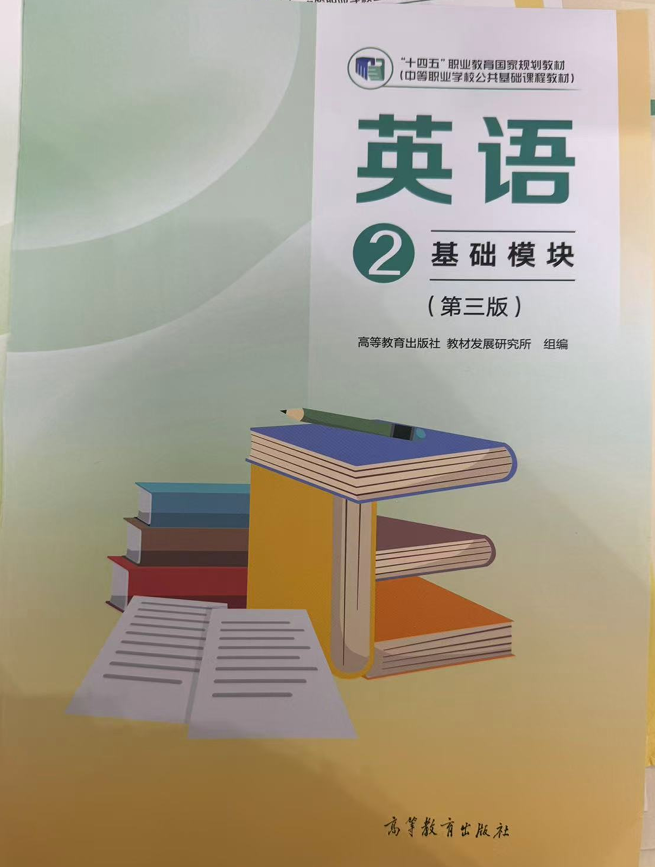
阶段测试卷(1-4单元)(A卷·基础巩固)《英语 基础模块2》(高教版第三版)单元过关卷(原卷版+解析版)
2026-04-28
|
2份
|
28页
|
137人阅读
|
1人下载
内容正文:
编写说明:本套试卷紧扣《英语 基础模块2》(高教版第三版)教材,以教材单元为基准精准覆盖核心考点。
每个单元设置AB卷,A卷为基础巩固卷,侧重基础考点训练,帮助学生扎实掌握知识要点;B卷为能力提升卷,注重知识整合与全面检测,引导学生构建知识网络。全书设计4份综合测试卷,模拟实战情境,聚焦解题能力突破,全面提升应试能力与知识应用水平。
《英语 基础模块2》(高教版第三版)《单元过关卷》
阶段测试卷(1-4单元)
A卷·基础巩固
考试时间:120分钟 满分:100分
班级 姓名 学号 成绩
Ⅰ.语音辨析。 (共5小题;每小题1分,满分5分)
读下列单词,从每题所给的 A、 B、 C 和 D 四个选项中,选出画线部分发音不同的一项。
1.A.face B.place C.have D.race
2.A.hour B.honest C.honor D.house
3.A.music B.busy C.use D.duty
4.A.wind B.kind C.mind D.find
5.A.said B.rain C.wait D.train
【答案】1.C 2.D 3.B 4.A 5.A
【解析】1.考查元音字母的发音。A. face/feɪs/;B. place/pleɪs/;C. have/hæv/;D. race/reɪs/。结合单词音标可知,C项划线部分发音是/æ/,其余各项划线部分发音都是/eɪ/。故选C。
2.考查辅音字母的发音。A. hour/aʊə(r)/;B. honest/ˈɒnɪst/;C. honor/ˈɒnə(r)/;D. house/haʊs/。结合单词音标可知,D项划线部分发音是/h/,其余各项划线部分均不发音。故选D。
3.考查元音字母的发音。A. music/ˈmjuːzɪk/;B. busy/ˈbɪzi/;C. use /juːz/;D. duty/ˈdjuːti/。结合单词音标可知,B项划线部分发音是 /ɪ/,其余各项划线部分发音都是/juː/。故选B。
4.考查元音字母的发音。A. wind/wɪnd/;B. kind/kaɪnd/;C. mind/maɪnd/;D. find/faɪnd/。结合单词音标可知,A项划线部分发音是 /ɪ/,其余各项划线部分发音都是/aɪ/。故选A。
5.考查元音字母组合的发音。A. said/sed/;B. rain/reɪn/;C. wait/weɪt/;D. train/treɪn/。结合单词音标可知,A 项划线部分发音是/e/,其余各项划线部分发音都是/eɪ/。故选A。
Ⅱ. 单项选择(共 15 小题;每小题 1 分,满分 15 分)
阅读下列句子,从每题所给的 A、B、C 和 D 四个选项中,选出最佳选项。
6.________ that he is the best student in our class.
A.There is no doubt B.It is no doubt
C.There are no doubts D.It has no doubt
【答案】A
【详解】句意:毫无疑问,他是我们班最好的学生。
考查存现句。There is no doubt毫无疑问;It is no doubt错误用法;There are no doubts错误用法;It has no doubt错误用法。英语中表达“毫无疑问”的固定句型是“There is no doubt+that从句”。故选A。
7.Sarah ________ kind to everyone.
A.is B.are C.has D.have
【答案】A
【详解】句意:莎拉对每个人都很友善。
is是,主语应是第三人称单数形式;are是,主语应是第二人称或复数形式;has有,主语应是第三人称单数;have有,主语应是第一、二人称或复数形式。主语Sarah是第三人称单数,且kind是形容词,前面应用系动词is。
8.—I haven’t seen you for a long time.
—Yes. I ________ as a volunteer teacher in Xizang for half a year. I came back two days ago.
A.work B.have worked C.will work D.worked
【答案】D
【详解】句意:——我好久没见到你了。——是的。我在西藏当了半年的志愿者教师。我两天前回来了。
根据“I came back two days ago.”可知,说话者已经从西藏回来了,说明在西藏当志愿者教师是过去发生的事情,且该动作已经结束,不强调对现在的影响,因此应该用一般过去时,动词work的过去式是worked。
9.When I was a child, I ________ swim in the river near my home.
A.used to B.was used to C.am used to D.use to
【答案】A
【详解】句意:当我还是一个孩子的时候,我常常在我家附近的小河游泳。
used to do something表示过去常常做某事,符合语境。
10.—Our local dance show A Dream of Red Mansions is so hot.
—Indeed. I ________ for tickets the whole morning. Luckily, I finally got one!
A.fights B.will fight
C.fight D.was fighting
【答案】D
【详解】句意:——我们当地的舞蹈表演《红楼梦》非常火爆。——确实,我整个上午都在为票而“斗争”。幸运的是,我终于弄到了一张!
考查动词时态。根据“the whole morning. Luckily, I finally got one!”可知,此处表示过去一段时间内一直在进行的动作,用过去进行时。故选D。
11.Bad luck! It ________ when we left the train station this morning.
A.is raining B.was raining C.rain D.rained
【答案】B
【详解】句意:真倒霉!今天早上我们离开火车站的时候正在下雨。
根据“when we left the train station this morning”可知,此处表示过去某一时刻正在发生的动作,用过去进行时,应填was raining。
12.It ________ heavily all day, so we had to stay inside.
A.rained B.was raining C.rains D.is raining
【答案】B
【详解】句意:雨下了一整天,所以我们不得不待在室内。
考查动词时态。rained下过雨(过去式);was raining过去一段时间一直在下雨/当时正在下雨(过去进行时);rains下雨(第三人称单数现在时);is raining现在正在下雨(现在进行时)。根据“It...heavily all day, so we had to stay inside.”可知,雨下了一整天,描述的是过去段时间一直持续的动作,应用过去进行时。故选B。
13.—________ beautiful the lake is! I want to take some photos here.
—Yes, the scenery is really amazing.
A.What B.What a C.How D.How a
【答案】C
【详解】句意:——这个湖多美啊!我想在这儿拍一些照片。——是的,这风景真的很令人惊叹。
What通常用于感叹句中修饰名词,其结构为“What+a/an+形容词+可数名词单数+主语+谓语!”或“What+形容词+可数名词复数/不可数名词+主语+谓语!”;How用于感叹句中修饰形容词、副词或动词,其结构为“How+形容词/副词+主语+谓语!” 。在“________ beautiful the lake is!”这个感叹句中,被修饰的是形容词“beautiful”,所以应该用“How”来引导感叹句,不需要加“a”。
14.---How did the accident happen?
---You know, it ________ difficult to see the road clearly because it _________.
A.was; was raining B.is; has rained
C.is; is raining D.will be; will rain
【答案】A
【详解】句意:事故是如何发生的?你知道的,因为正在下雨所以看清道路是比较困难的。
考查动词的时态。根据“How did ”及当时的语境,可知,看清道路这件事发生在过去,第一空用过去式was,第二空强调过去时刻正在下雨时发生了这种状况,用过去进行时,其构成是was/were doing,故选A。
15.The heavy rain ________ the delay of the flight.
A.led to B.leads to C.has led to D.will lead to
【答案】A
【详解】句意:大雨导致了航班的延误。
led to一般过去时;leads to一般现在时;has led to现在完成时;will lead to一般将来时。句中描述大雨造成航班延误是已经发生的具体事件,描述过去发生的动作应用一般过去时。应填led to。
16.We ________ leave when it started raining heavily. So we had to stay at home.
A.is about to B.are about to C.was about to D.were about to
【答案】D
【详解】句意:我们正要离开时,天开始下大雨了。所以我们不得不待在家里。
句中“started”和“had to”提示事情发生在过去,时态为一般过去时,主语We是复数,be动词用were。
17.Christian ________ with John and Anthony in London for about a year.
A.lived B.lives C.is living D.will live
【答案】A
【详解】句意:克里斯蒂安曾与约翰和安东尼在伦敦住了一年左右。
根据时间状语“for about a year”可知,此处描述的是过去持续了一段时间且已结束的动作,应用一般过去时。
18.He ________ in the library when I saw him.
A.reads B.read C.was reading D.is reading
【答案】C
【详解】句意:当我看见他的时候,他正在图书馆看书。
根据“when I saw him”可知,看见他是过去发生的动作,强调当时正在进行的动作,应用过去进行时。
19.— Why didn’t you go out yesterday?
— Because it ________ heavily all day.
A.rains B.rained C.is raining D.was raining
【答案】D
【详解】句意:——昨天你为什么没出去?——因为一整天都在下大雨。
考查时态。rains一般现在时;rained一般过去时;is raining现在进行时;was raining过去进行时。根据时间状语“yesterday”和“all day”可知,动作是过去持续发生的,应用过去进行时。故选D。
20.The students ________ on the playground when it began to rain.
A.run B.ran C.were running D.are running
【答案】C
【详解】句意:当开始下雨时,学生们正在操场上跑步。
根据“when it began to rain”可知,从句是一般过去时,主句表示过去某一时刻正在进行的动作,应用过去进行时,结构为was/were doing,应填were running。
Ⅲ. 完形填空(共 10 小题;每小题 1 分,满分 10 分)
阅读下面短文,从短文后各题所给的 A、B、C 和 D 四个选项中,选出可以填入空白处的最佳选项。
I have been so fortunate to receive kindness from everybody around, warmth from animals and Mother Nature. When I was ________, I was taught repeatedly to thank everything around with gratitude and regard everyone around with ________ and kindness, just as my grandparents and parents did.
A long, long time ago, earlier in my career, I was ________ for hiring a lot of people in key positions. One of my guiding principles was to always ________ interviewees with kindness and respect. But as many years went by, I was laid off (解雇) because of the reform of our company and the severe economic pressure ________ the country.
Like all the people I had interviewed, I became an interviewee. That was ________ for me. I went through a lot of interviews, all in vain. After one particular interview, the interviewer asked if I remembered him. “No,” I replied. “Well,” he said ________, “you interviewed me a few years ago and though I didn’t get the job, I still remember how you treated me with kindness and respect. And now I would like to hire you for this job.” As is known to all, living with kindness and respect will be finally ________.
As I shared my story with others on the Internet, I received many ________. Some thanked me for this awesome share and many agreed that kindness did spread. I believe that although we may not be able to change the world around us in an instant, our kindness will come back to us in one way or ________. This is life!
21.A.put up B.called up C.picked up D.brought up
22.A.surprise B.comfort C.respect D.relaxation
23.A.anxious B.hungry C.grateful D.responsible
24.A.treat B.adjust C.criticize D.persuade
25.A.sweep B.swept C.sweeping D.to sweep
26.A.natural B.strange C.obvious D.fortunate
27.A.seriously B.suddenly C.shyly D.sadly
28.A.set B.realized C.paid D.rewarded
29.A.gifts B.likes C.solutions D.letters
30.A.other B.the other C.another D.others
【答案】
21.D 22.C 23.D 24.A 25.C 26.B 27.A 28.D 29.B 30.C
【导语】本文主要介绍了作者受家人影响以感恩、尊重和善良待人,早期招聘时善待候选人,后因公司和经济原因失业,面试中因曾经的善举被录用,分享故事后获认同,体现善良会有回报。
21.考查动词短语辨析。句意:在我的成长过程中,我被反复教导要用感恩的心感谢周围的一切,像我的祖父母和父母一样,尊重和善良地对待周围的每一个人。
put up举起;called up打电话;picked up捡起;brought up抚养。根据后文“I was taught repeatedly to thank everything around with gratitude and regard everyone around with ... and kindness, just as my grandparents and parents did (我被反复教导要用感恩的心感谢周围的一切,像我的祖父母和父母一样,……和善良地对待周围的每一个人)”可知,正如祖父母、父母那样,我在成长过程中被教育要以善待人,be brought up指“被抚养成人”。
22.考查名词词义辨析。句意:在我的成长过程中,我被反复教导要用感恩的心感谢周围的一切,像我的祖父母和父母一样,尊重和善良地对待周围的每一个人。
surprise惊喜;comfort舒服;respect尊重;relaxation放松。根据后文“One of my guiding principles was to always ... interviewees with kindness and respect. (我的指导原则之一是始终用善良和尊重……参加面试的人。)”可知,此处指用善良和尊重对待周围的每一个人。
23.考查形容词词义辨析。句意:很久很久以前,在我职业生涯的早期,我负责在关键岗位上招聘很多人。
anxious焦虑的;hungry饿的;grateful感激的;responsible负责的。根据空后“for hiring a lot of people (招聘很多人)”可知,由我负责招聘人员。
24.考查动词词义辨析。句意:我的指导原则之一是始终用善良和尊重对待参加面试的人。
treat对待;adjust调整;criticize批评;persuade劝说。根据后文“I still remember how you treated me with kindness and respect (我仍然记得你对我的善意和尊重)”可知,我是用善良和尊重对待参加面试的人。
25.考查非谓语动词。句意:但是许多年过去了,由于公司的改革和席卷全国的严重经济压力,我被解雇了。
此处是句子的非谓语,“economic pressure”和动词sweep之间是主动关系,因此用现在分词sweeping作定语,表示“席卷全国的经济压力”。
26.考查形容词词义辨析。句意:这对我来说很陌生。
natural自然的;strange陌生的;obvious明显的;fortunate幸运的。根据上文“Like all the people I had interviewed, I became an interviewee. (就像我面试过的所有人一样,我成了被面试的人。)”可知,作者之前一直是面试官,被裁员后才变成应聘者,这种身份转变对他来说是陌生的。
27.考查副词词义辨析。句意:“好吧,”他严肃地说,“几年前你面试过我,虽然我没有得到那份工作,但我仍然记得你对我的善意和尊重。现在我想雇佣你来做这份工作。”。
seriously严肃地;suddenly突然地;shyly害羞地;sadly悲伤地。根据后文“you interviewed me a few years ago and though I didn’t get the job, I still remember how you treated me with kindness and respect (几年前你面试过我,虽然我没有得到那份工作,但我仍然记得你对我的善意和尊重)”可知,他在解释为什么认识我,语气应是严肃的。
28.考查动词词义辨析。句意:众所周知,善良和尊重的生活最终会得到回报。
set设置;realized意识到;paid支付;rewarded回报。根据后文“our kindness will come back to us in one way (我们的善良会以一种方式回报给我们)”可知,善良和尊重会以某种形式回报我们。
29.考查名词词义辨析。句意:当我在网上和别人分享我的故事时,我收到了很多赞。
gifts礼物;likes点赞;solutions解决办法;letters信。根据后文“Some thanked me for this awesome share and many agreed that kindness did spread. (有些人对我的精彩分享表示感谢,许多人认为善良确实在传播。)”可知,我的分享得到了别人的认可,因此获得很多人点赞切合语境。
30.考查代词词义辨析。句意:我相信,虽然我们可能无法在瞬间改变我们周围的世界,但我们的善良会以这样或那样的方式回到我们身边。
other其他的,后接名词复数;the other两者中的另一个;another三者及以上中的另一个;others其他人或物。“in one way or another”是固定短语,意为“以这样或那样的方式”。
Ⅳ.补全对话(共5小题;每小题2分,满分10分)
根据对话内容,从对话后所给的七个选项中,选出能填入空白处的最佳选项。(选项中有两项是多余的)
A: Hi, Li Ming! The summer holiday is coming. Where are you going?
B: ____31____
A: Wow! Beijing is a great city.____32____
B: I’m going to visit the Great Wall, the Summer Palace and other famous places.
A: That sounds interesting.____33____
B: By train.
A: ____34____
B: I’m going to leave on July 15th.
A: ____35____
B: Thank you!
A.What about you?
B.How are you going to get there?
C.I’m going to visit my grandparents.
D.When are you going to leave?
E.I’m going to Beijing.
F.What are you going to do there?
G.Have a good trip!
【答案】31.E 32.F 33.B 34.D 35.G
【导语】本文是一则关于暑假出行计划的对话。
31.根据上文“Where are you going?(你要去哪里?)”可知,此处应回答目的地,选项E“我要去北京。”符合语境。故选E。
32.根据答语“I’m going to visit the Great Wall...(我要去参观长城……)”可知,此处是询问在北京的计划,选项F“你在那里要做什么?”符合语境。故选F。
33.根据答语“By train.(乘火车。)”可知,此处是询问出行方式,选项B“你打算怎么去那里?”符合语境。故选B。
34.根据答语“I’m going to leave on July 15th.(我打算 7 月 15 日出发。)”可知,此处是询问出发时间,选项D“你打算什么时候出发?”符合语境。故选D。
35.根据答语“Thank you!(谢谢你!)”可知,此处是表达祝福,选项G“旅途愉快!”符合语境。故选G。
Ⅴ.阅读理解(共15小题;每小题2分,满分30分)
阅读下面短文A,判断36~40小题是否正确。若正确,把选项T涂黑;若错误,把选项F涂黑。阅读短文B和C,从每小题所给的A、B、C和D四个选项中选出最佳选项。
A
Clubs in Chinese vocational schools are an important part of students’ school life. They help students develop practical skills and hobbies outside of classes, making school life more colorful. Most vocational schools have different types of clubs, from skill-focused ones to interest-based ones, so every student can find something they like.
One popular club is the Auto Repair Skills Club. It meets every Wednesday afternoon in the school’s training workshop. There, students practice fixing car engines and changing tires with real training cars. Teachers from the auto repair department often come to guide them. Many students say this club helps them get ready for skill exams and future jobs.
Another common club is the English Corner. It is held every Thursday noon in the school library. Students don’t just memorize words—they play English games, have short dialogues about daily life (like ordering food or talking about hobbies), and watch 5-minute English short videos. The club helps students feel more confident when speaking English.
The Handcraft Club is also loved by many students. Every Friday afternoon, members make small things like keychains, cloth bags, or paper flowers. Sometimes, they sell their handmade works at the school’s weekend market, and the money goes to help poor children in nearby villages.
Now, more than 70% of vocational school students join at least one club. These clubs not only make students’ free time meaningful but also help them learn things that are useful for their future careers.
36.The Auto Repair Skills Club meets every Wednesday afternoon.
37.The English Corner is held every Friday noon in the school library.
38.Students in the Handcraft Club sell their works to help poor children.
39.The Auto Repair Skills Club has no real training cars for practice.
40.Few vocational school students join school clubs.
【答案】36.T 37.F 38.T 39.F 40.F
【导语】这是一篇说明文。主要介绍了中国中职学校中常见的三类俱乐部——汽修技能俱乐部、英语角和手工俱乐部的活动时间、内容及意义,展现俱乐部对学生技能发展和生活丰富的作用。
36.根据第二段“One popular club is the Auto Repair Skills Club. It meets every Wednesday afternoon in the school’s training workshop. (一个备受欢迎的俱乐部是汽车维修技能俱乐部。该俱乐部每周三下午在学校培训工作室举行会议。)”可知,汽修技能俱乐部每周三下午活动,所给表述“The Auto Repair Skills Club meets every Wednesday afternoon. (汽车维修技能俱乐部每周三下午举行会议。)”与文意相符。故填T。
37.根据第三段“Another common club is the English Corner. It is held every Thursday noon in the school library. (另一个常见的俱乐部是英语角。它每周四中午在学校图书馆举行。)”可知,英语角每周四中午举办,所给表述“The English Corner is held every Friday noon in the school library. (英语角每周五中午在学校图书馆举行。)”与文意不符。故填F。
38.根据第四段“Sometimes, they sell their handmade works at the school’s weekend market, and the money goes to help poor children in nearby villages. (有时,他们会在学校的周末集市上出售自己的手工艺品,所得收入将用于帮助附近村庄的贫困儿童。)”可知,手工俱乐部学生通过售卖作品帮助贫困儿童,所给表述“Students in the Handcraft Club sell their works to help poor children. (手工艺俱乐部的学生们出售他们的作品,以帮助贫困儿童。)”与文意相符。故填T。
39.根据第二段“There, students practice fixing car engines and changing tires with real training cars. (在那里,学生们使用真实的训练用车练习修理汽车引擎和更换轮胎。)”可知,汽修技能俱乐部有真实的实训车供练习,所给表述“The Auto Repair Skills Club has no real training cars for practice. (汽车维修技能俱乐部没有真正的实训用车供练习。)”与文意不符。故填F。
40.根据最后一段“Now, more than 70% of vocational school students join at least one club. (现在,超过70%的职业学校学生至少参加了一个俱乐部。)”可知,超过70%的中职学生加入俱乐部,所给表述“Few vocational school students join school clubs. (职业学校的学生很少参加学校俱乐部。)”与文意不符。故填F。
B
Up to 45 percent of teenagers in the UK bite their nails (指甲), according to the BBC. Some people bite their nails not because they’re too long, but because they are driving, feeling stressed out, or just have nothing else to do.
Nail biting is regarded as a symptom of OCD (强迫症). People with it may wash their hands more often than usual or have to line up their shoes in a certain way.
Although nail biting has some things in common with other symptoms of OCD, it is different from them in at least one way. People with OCD don’t want to wash their hands over and over again. There is no fun in it. They just fear that if they aren’t busy doing something, something bad might happen to them.
But nail biters enjoy this activity. “It’s interesting. When you get the right nail, it feels good,” said a nail biter. Therefore, some people argue that most nail biters do not have any kind of serious mental illness.
However, it’s still a bad habit. So what can we do to stop it? Since most people bite nails as a way of relieving (减轻) stress, finding another way to relieve that stress could be useful. For example, some people might play with a pen instead.
41.According to the BBC, ________ of UK teenagers bite their nails.
A.nearly a half B.two-thirds C.three-quarters D.four-fifths
42.Which of the following behaviors is a symptom of OCD?
A.Washing your hands before each meal. B.Cutting nails to make them short.
C.Lining things up in a certain way. D.Keeping your nails in good shape.
43.Some people bite nails in order to ________.
A.relieve stress B.make nails perfect C.make nails short D.make nails special
44.Which suggestion for how to stop nail-biting is mentioned in the story?
A.Bite your nails instead of playing with a pen. B.Give up nail-biting and work hard.
C.Keep your nails in good shape. D.Find another way to relieve your stress.
45.What does the writer try to tell us in the passage?
A.The common behaviors that people with OCD often show.
B.The difference between nail-biting and other OCD behaviors.
C.People with OCD enjoy doing things over and over again.
D.Nail-biters have any kind of serious mental illness.
【答案】41.A 42.C 43.A 44.D 45.B
【导语】本文是一篇说明文。文章主要讲述了英国青少年咬指甲现象、与强迫症的异同及解决办法。
41.细节理解题。根据第一段中“Up to 45 percent of teenagers in the UK bite their nails (指甲), according to the BBC. (据BBC报道,英国多达45%的青少年会咬指甲。)”可知,英国有高达45%的青少年咬指甲,45%接近一半,即nearly a half。故选A。
42.细节理解题。根据第二段中“People with it may wash their hands more often than usual or have to line up their shoes in a certain way. (患有这种疾病的人可能会比平时更频繁地洗手,或者不得不以某种方式排列鞋子。)”可知,强迫症的症状包括把东西按一定方式排列整齐。故选C。
43.细节理解题。根据第五段中“Since most people bite nails as a way of relieving (减轻) stress, finding another way to relieve that stress could be useful. (由于大多数人把咬指甲作为缓解压力的一种方式,所以找到另一种缓解压力的方法可能会很有用。)”可知,有些人咬指甲是为了缓解压力。故选A。
44.细节理解题。根据第五段中“Since most people bite nails as a way of relieving (减轻) stress, finding another way to relieve that stress could be useful. (由于大多数人把咬指甲作为缓解压力的一种方式,所以找到另一种缓解压力的方法可能会很有用。)”可知,文章提到的停止咬指甲的建议是找到另一种缓解压力的方式。故选D。
45.主旨大意题。文章主要讨论了咬指甲与强迫症之间的关系,指出虽然咬指甲是强迫症的一种症状,但与其他强迫症行为有所不同,并提供了停止咬指甲的建议。选项B“咬指甲与其他强迫症行为之间的区别”最符合文章主旨。故选B。
C
Once there was a large stone in a family’s vegetable garden. People would often trip (绊倒) over it and get hurt. The son asked, “Dad, why don’t we dig out that annoying stone?” The father replied, “That stone you mentioned? It has been there since your grandfather’s time. It’s so huge. I don’t know how long it will take to dig it out. Instead of digging it out for no reason, it’s better to be careful when walking and it can also train you to think better.”
A few years later, the son got married and became a father. One day, his daughter said angrily, “Dad, I really don’t like that big stone in the vegetable garden. Let’s hire someone to move it away someday.” The father replied, “Forget it! That big stone is very heavy. If it could be moved, it would have been moved when I was a child.”
The daughter was very unhappy. That big stone had caused her to fall many times. One morning, she took a hoe (锄头) and a bucket of water. She poured water around the stone and waited for 10 minutes. Then, she used the hoe to loosen the soil. She thought it might take all day to dig it out.
Unexpectedly, it took only a few minutes to dig up the stone. Looking at its size, this stone was not as big as they thought. They had all been tricked by how big it looked.
What prevents us from discovering and creating new things are the psychological obstacles (心理障碍) and stubborn stones in our minds.
46.Why did the father tell his daughter not to move the stone?
A.Because the stone was a gift from his grandfather.
B.Because he thought the stone was too heavy to be moved.
C.Because the stone could help train people to be careful.
D.Because the stone was useful for protecting the vegetable garden.
47.What does the word “hire” in the second paragraph mean?
A.Ask someone to do a job and pay them for it.
B.Ask friends to help for free.
C.Do a job by oneself.
D.Wait for others to offer help.
48.What can we infer from the daughter’s experience of moving the stone?
A.The daughter was stronger than her father and grandfather.
B.The stone became smaller over the years.
C.The family’s fear of moving the stone was based on a wrong impression.
D.The daughter used a special tool that her father didn’t have.
49.What did the daughter do first before digging up the stone?
A.She asked her father for help.
B.She poured water around the stone and waited.
C.She borrowed a new hoe from her neighbor.
D.She dug a small hole around the stone.
50.Which of the following is the best title for the passage?
A.A Family’s Vegetable Garden.
B.The Heavy Stone in the Garden.
C.The “Stubborn Stone” in Our Minds.
D.How to Dig Up a Big Stone
【答案】46.B 47.A 48.C 49.B 50.C
【导语】这是一篇记叙文。主要讲述了一家人菜园里有一块大石头,爷爷、父亲都因觉得石头太大太重而不愿挪动,直到女儿用简单方法轻易将其挖出,最终揭示“阻碍我们的往往是心中的心理障碍和顽固的‘石头’”这一道理的故事。
46.细节理解题。根据第二段“The father replied, ‘Forget it! That big stone is very heavy. If it could be moved, it would have been moved when I was a child.’ (父亲回答说:“别想了!那块大石头太重了。要是能挪走,我小时候就被挪走了。”)”可知,父亲告诉女儿不要挪石头,是因为他认为石头太重了,挪不动,该原因与选项B一致。故选B。
47.词义猜测题。根据第二段“One day, his daughter said angrily, ‘Dad, I really don’t like that big stone in the vegetable garden. Let’s hire someone to move it away someday.’ (一天,他的女儿生气地说:“爸爸,我真的很讨厌菜园里那块大石头。咱们哪天雇个人把它挪走吧。”)”可知,女儿想让别人来挪石头,结合生活常识,让别人做事通常需要付钱,由此可推测hire意为“雇人做事并付报酬”,即“Ask someone to do a job and pay them for it”。故选A。
48.推理判断题。根据第四段“Unexpectedly, it took only a few minutes to dig up the stone. Looking at its size, this stone was not as big as they thought. They had all been tricked by how big it looked. (出乎意料的是,挖起这块石头只花了几分钟。看它的大小,这块石头并没有他们想象的那么大。他们都被它看起来的大小骗了。)”可知,这家人害怕挪石头,是因为觉得石头又大又重,但实际上石头并没有那么大,这种害怕源于错误的印象,该推断与选项C一致。故选C。
49.细节理解题。根据第三段“One morning, she took a hoe and a bucket of water. She poured water around the stone and waited for 10 minutes. Then, she used the hoe to loosen the soil. (一天早上,她拿了一把锄头和一桶水。她把水浇在石头周围,等了钟。然后,她用锄头松土。)”可知,女儿在挖石头前,首先做的是往石头周围浇水并等待,该行为与选项B一致。故选B。
50.主旨大意题。文章前四段讲述“菜园里的石头”这一故事,最后一段点明主旨:“What prevents us from discovering and creating new things are the psychological obstacles and stubborn stones in our minds. (阻碍我们发现和创造新事物的,是我们心中的心理障碍和顽固的‘石头’。)”。可见文章核心是通过“菜园里的石头”引出“心中的‘顽固石头’”,因此最佳标题是“我们心中的‘顽固石头’”,与选项C一致。故选C。
VI.句子改错 (共10小题;每小题1分,满分10分)
每个句子只有一处错误,每处错误仅涉及一个单词的增加、删除或修改。不允许改变原句的意思。
增加:在缺词处加一个漏词符号 (∧),并在后面横线上写出该加的词。
删除:在多余的词下画一横线,并在后面横线上写出该词,用 ( ) 划掉。
修改:在错的词下画一横线,并在后面横线上写出修改后的词。
51.There are some water in the bottle. (单句改错)
【答案】are→ is
【详解】考查主谓一致。句意:瓶子里有一些水。分析句子可知,主语为“some water ”是不可数名词,根据主谓一致原则,对应be动词是is。故答案为:are→ is。
52.She spends too much money on clothes last year. (指出错误并改正)
【答案】spends→spent
【详解】考查动词的时态。句意:她去年在衣服上花了太多钱。根据时间状语“last year”可知,此句也可用一般过去时,谓语应使用动词spend的动词过去式spent。故答案为:spends→spent。
53.They were play football this time yesterday. (单句改错)
【答案】play→ playing
【详解】考查过去进行时。句意:昨天这个时候他们正在踢足球。句中“this time yesterday”是过去进行时的时间状语,故时态用过去进行时:was /were doing,原句中play是动词原形,应改为其现在分词形式playing。故答案为:play→ playing
54.The teacher always encourage her students to take part in environmental protection activities after class. (单句改错)
【答案】encourage→encourages
【详解】考查主谓一致性。句意:这位老师总是鼓励学生课后参加环保活动。主语“the teacher”是第三人称单数,句中always提示是一般现在时,谓语动词“encourage”需变单三,直接在词尾加“s”,即“encourages”。故答案为:encourage→encourages。
55.They not go to the cinema last night. (单句改错)
【答案】not前加did
【详解】考查否定句。句意:昨晚他们没有去电影院。根据“last night”可知,此句的时态为一般过去时,此句是含有实义动词go的否定句,所以借助助动词did构成否定句。故答案为:not前加did。
56.My mother bought a new bag for I yesterday. (单句改错)
【答案】I → me
【详解】考查人称代词的宾格。句意:我妈妈昨天给我买了一个新包。介词for后面需要接人称代词的宾格形式,I是主格,只能作主语;me是宾格,可作宾语或介词的宾语。故答案为:I → me。
57.We usually go to school by foot. (单句改错)
【答案】by → on
【详解】考查介词搭配。句意:我们通常步行去上学。“步行”的固定表达是on foot,而不是by foot。by通常用于搭配交通工具,如by bus、by bike。故答案为:by → on。
58.He made a lot of progresses in English. (单句改错)
【答案】progresses → progress
【详解】考查不可数名词。句意:他在英语方面取得了很大进步。progress是不可数名词,没有复数形式,不能加-es。故答案为:progresses → progress。
59.He speaks loudly than his brother. (改错)
【答案】loudly→ more loudly
【详解】考查副词比较级。句意:他说话比他兄弟声大。根据than可知,副词loudly需用比较级形式more loudly。故答案为:loudly→ more loudly。
60.I usually go to bed on 10 o’clock. (单句改错)
【答案】on→at
【详解】考查时间介词的用法。句意:我通常在 10 点上床睡觉。根据“10 o’clock”表示具体的时刻时,应使用介词“at”,而不是“on”。故答案为:on→ at。
Ⅶ. 短语填空(共 10 小题;每小题 2 分,满分 20 分)
根据句子内容选择正确短语并用其适当形式填空。
by air;because of;in general;take part in;instead of;fall ill;make progress;hand in;as a result;get along with
61. The fastest way to travel from Hangzhou to Beijing is _____; it only takes two hours.
62. _____ young people today prefer traveling to popular tourist attractions around China.
63. He didn't follow the doctor's advice; _____ he became even sicker last week.
64. The outdoor activity was cancelled _____ the heavy rain yesterday afternoon.
65. _____ taking a taxi to the airport, we decided to take the subway to save money.
66. It is important for interns to _____ their colleagues in the workplace.
67. All students are encouraged to _____ the charity sale organized by the school next month.
68. All interns are required to _____ their weekly work reports every Friday.
69. With the help of the teacher, the shy girl has _____ in English this term.
70. If you don't wear warm clothes in winter, you are likely to _____ easily.
【答案】 61. by air 62. In general 63. as a result 64. because of 65. Instead of 66. get along with 67. take part in 68. hand in 69. made progress 70. fall ill
学科网(北京)股份有限公司 (
1
)原创精品资源学科网独家享有版权,侵权必究!
学科网(北京)股份有限公司
$
编写说明:本套试卷紧扣《英语 基础模块2》(高教版第三版)教材,以教材单元为基准精准覆盖核心考点。
每个单元设置AB卷,A卷为基础巩固卷,侧重基础考点训练,帮助学生扎实掌握知识要点;B卷为能力提升卷,注重知识整合与全面检测,引导学生构建知识网络。全书设计4份综合测试卷,模拟实战情境,聚焦解题能力突破,全面提升应试能力与知识应用水平。
《英语 基础模块2》(高教版第三版)《单元过关卷》
阶段测试卷(1-4单元)
A卷·基础巩固
考试时间:120分钟 满分:100分
班级 姓名 学号 成绩
Ⅰ.语音辨析。 (共5小题;每小题1分,满分5分)
读下列单词,从每题所给的 A、 B、 C 和 D 四个选项中,选出画线部分发音不同的一项。
1.A.face B.place C.have D.race
2.A.hour B.honest C.honor D.house
3.A.music B.busy C.use D.duty
4.A.wind B.kind C.mind D.find
5.A.said B.rain C.wait D.train
Ⅱ. 单项选择(共 15 小题;每小题 1 分,满分 15 分)
阅读下列句子,从每题所给的 A、B、C 和 D 四个选项中,选出最佳选项。
6.________ that he is the best student in our class.
A.There is no doubt B.It is no doubt
C.There are no doubts D.It has no doubt
7.Sarah ________ kind to everyone.
A.is B.are C.has D.have
8.—I haven’t seen you for a long time.
—Yes. I ________ as a volunteer teacher in Xizang for half a year. I came back two days ago.
A.work B.have worked C.will work D.worked
9.When I was a child, I ________ swim in the river near my home.
A.used to B.was used to C.am used to D.use to
10.—Our local dance show A Dream of Red Mansions is so hot.
—Indeed. I ________ for tickets the whole morning. Luckily, I finally got one!
A.fights B.will fight
C.fight D.was fighting
11.Bad luck! It ________ when we left the train station this morning.
A.is raining B.was raining C.rain D.rained
12.It ________ heavily all day, so we had to stay inside.
A.rained B.was raining C.rains D.is raining
13.—________ beautiful the lake is! I want to take some photos here.
—Yes, the scenery is really amazing.
A.What B.What a C.How D.How a
14.---How did the accident happen?
---You know, it ________ difficult to see the road clearly because it _________.
A.was; was raining B.is; has rained
C.is; is raining D.will be; will rain
15.The heavy rain ________ the delay of the flight.
A.led to B.leads to C.has led to D.will lead to
16.We ________ leave when it started raining heavily. So we had to stay at home.
A.is about to B.are about to C.was about to D.were about to
17.Christian ________ with John and Anthony in London for about a year.
A.lived B.lives C.is living D.will live
18.He ________ in the library when I saw him.
A.reads B.read C.was reading D.is reading
19.— Why didn’t you go out yesterday?
— Because it ________ heavily all day.
A.rains B.rained C.is raining D.was raining
20.The students ________ on the playground when it began to rain.
A.run B.ran C.were running D.are running
Ⅲ. 完形填空(共 10 小题;每小题 1 分,满分 10 分)
阅读下面短文,从短文后各题所给的 A、B、C 和 D 四个选项中,选出可以填入空白处的最佳选项。
I have been so fortunate to receive kindness from everybody around, warmth from animals and Mother Nature. When I was ________, I was taught repeatedly to thank everything around with gratitude and regard everyone around with ________ and kindness, just as my grandparents and parents did.
A long, long time ago, earlier in my career, I was ________ for hiring a lot of people in key positions. One of my guiding principles was to always ________ interviewees with kindness and respect. But as many years went by, I was laid off (解雇) because of the reform of our company and the severe economic pressure ________ the country.
Like all the people I had interviewed, I became an interviewee. That was ________ for me. I went through a lot of interviews, all in vain. After one particular interview, the interviewer asked if I remembered him. “No,” I replied. “Well,” he said ________, “you interviewed me a few years ago and though I didn’t get the job, I still remember how you treated me with kindness and respect. And now I would like to hire you for this job.” As is known to all, living with kindness and respect will be finally ________.
As I shared my story with others on the Internet, I received many ________. Some thanked me for this awesome share and many agreed that kindness did spread. I believe that although we may not be able to change the world around us in an instant, our kindness will come back to us in one way or ________. This is life!
21.A.put up B.called up C.picked up D.brought up
22.A.surprise B.comfort C.respect D.relaxation
23.A.anxious B.hungry C.grateful D.responsible
24.A.treat B.adjust C.criticize D.persuade
25.A.sweep B.swept C.sweeping D.to sweep
26.A.natural B.strange C.obvious D.fortunate
27.A.seriously B.suddenly C.shyly D.sadly
28.A.set B.realized C.paid D.rewarded
29.A.gifts B.likes C.solutions D.letters
30.A.other B.the other C.another D.others
Ⅳ.补全对话(共5小题;每小题2分,满分10分)
根据对话内容,从对话后所给的七个选项中,选出能填入空白处的最佳选项。(选项中有两项是多余的)
A: Hi, Li Ming! The summer holiday is coming. Where are you going?
B: ____31____
A: Wow! Beijing is a great city.____32____
B: I’m going to visit the Great Wall, the Summer Palace and other famous places.
A: That sounds interesting.____33____
B: By train.
A: ____34____
B: I’m going to leave on July 15th.
A: ____35____
B: Thank you!
A.What about you?
B.How are you going to get there?
C.I’m going to visit my grandparents.
D.When are you going to leave?
E.I’m going to Beijing.
F.What are you going to do there?
G.Have a good trip!
Ⅴ.阅读理解(共15小题;每小题2分,满分30分)
阅读下面短文A,判断36~40小题是否正确。若正确,把选项T涂黑;若错误,把选项F涂黑。阅读短文B和C,从每小题所给的A、B、C和D四个选项中选出最佳选项。
A
Clubs in Chinese vocational schools are an important part of students’ school life. They help students develop practical skills and hobbies outside of classes, making school life more colorful. Most vocational schools have different types of clubs, from skill-focused ones to interest-based ones, so every student can find something they like.
One popular club is the Auto Repair Skills Club. It meets every Wednesday afternoon in the school’s training workshop. There, students practice fixing car engines and changing tires with real training cars. Teachers from the auto repair department often come to guide them. Many students say this club helps them get ready for skill exams and future jobs.
Another common club is the English Corner. It is held every Thursday noon in the school library. Students don’t just memorize words—they play English games, have short dialogues about daily life (like ordering food or talking about hobbies), and watch 5-minute English short videos. The club helps students feel more confident when speaking English.
The Handcraft Club is also loved by many students. Every Friday afternoon, members make small things like keychains, cloth bags, or paper flowers. Sometimes, they sell their handmade works at the school’s weekend market, and the money goes to help poor children in nearby villages.
Now, more than 70% of vocational school students join at least one club. These clubs not only make students’ free time meaningful but also help them learn things that are useful for their future careers.
36.The Auto Repair Skills Club meets every Wednesday afternoon.
37.The English Corner is held every Friday noon in the school library.
38.Students in the Handcraft Club sell their works to help poor children.
39.The Auto Repair Skills Club has no real training cars for practice.
40.Few vocational school students join school clubs.
B
Up to 45 percent of teenagers in the UK bite their nails (指甲), according to the BBC. Some people bite their nails not because they’re too long, but because they are driving, feeling stressed out, or just have nothing else to do.
Nail biting is regarded as a symptom of OCD (强迫症). People with it may wash their hands more often than usual or have to line up their shoes in a certain way.
Although nail biting has some things in common with other symptoms of OCD, it is different from them in at least one way. People with OCD don’t want to wash their hands over and over again. There is no fun in it. They just fear that if they aren’t busy doing something, something bad might happen to them.
But nail biters enjoy this activity. “It’s interesting. When you get the right nail, it feels good,” said a nail biter. Therefore, some people argue that most nail biters do not have any kind of serious mental illness.
However, it’s still a bad habit. So what can we do to stop it? Since most people bite nails as a way of relieving (减轻) stress, finding another way to relieve that stress could be useful. For example, some people might play with a pen instead.
41.According to the BBC, ________ of UK teenagers bite their nails.
A.nearly a half B.two-thirds C.three-quarters D.four-fifths
42.Which of the following behaviors is a symptom of OCD?
A.Washing your hands before each meal. B.Cutting nails to make them short.
C.Lining things up in a certain way. D.Keeping your nails in good shape.
43.Some people bite nails in order to ________.
A.relieve stress B.make nails perfect C.make nails short D.make nails special
44.Which suggestion for how to stop nail-biting is mentioned in the story?
A.Bite your nails instead of playing with a pen. B.Give up nail-biting and work hard.
C.Keep your nails in good shape. D.Find another way to relieve your stress.
45.What does the writer try to tell us in the passage?
A.The common behaviors that people with OCD often show.
B.The difference between nail-biting and other OCD behaviors.
C.People with OCD enjoy doing things over and over again.
D.Nail-biters have any kind of serious mental illness.
C
Once there was a large stone in a family’s vegetable garden. People would often trip (绊倒) over it and get hurt. The son asked, “Dad, why don’t we dig out that annoying stone?” The father replied, “That stone you mentioned? It has been there since your grandfather’s time. It’s so huge. I don’t know how long it will take to dig it out. Instead of digging it out for no reason, it’s better to be careful when walking and it can also train you to think better.”
A few years later, the son got married and became a father. One day, his daughter said angrily, “Dad, I really don’t like that big stone in the vegetable garden. Let’s hire someone to move it away someday.” The father replied, “Forget it! That big stone is very heavy. If it could be moved, it would have been moved when I was a child.”
The daughter was very unhappy. That big stone had caused her to fall many times. One morning, she took a hoe (锄头) and a bucket of water. She poured water around the stone and waited for 10 minutes. Then, she used the hoe to loosen the soil. She thought it might take all day to dig it out.
Unexpectedly, it took only a few minutes to dig up the stone. Looking at its size, this stone was not as big as they thought. They had all been tricked by how big it looked.
What prevents us from discovering and creating new things are the psychological obstacles (心理障碍) and stubborn stones in our minds.
46.Why did the father tell his daughter not to move the stone?
A.Because the stone was a gift from his grandfather.
B.Because he thought the stone was too heavy to be moved.
C.Because the stone could help train people to be careful.
D.Because the stone was useful for protecting the vegetable garden.
47.What does the word “hire” in the second paragraph mean?
A.Ask someone to do a job and pay them for it.
B.Ask friends to help for free.
C.Do a job by oneself.
D.Wait for others to offer help.
48.What can we infer from the daughter’s experience of moving the stone?
A.The daughter was stronger than her father and grandfather.
B.The stone became smaller over the years.
C.The family’s fear of moving the stone was based on a wrong impression.
D.The daughter used a special tool that her father didn’t have.
49.What did the daughter do first before digging up the stone?
A.She asked her father for help.
B.She poured water around the stone and waited.
C.She borrowed a new hoe from her neighbor.
D.She dug a small hole around the stone.
50.Which of the following is the best title for the passage?
A.A Family’s Vegetable Garden.
B.The Heavy Stone in the Garden.
C.The “Stubborn Stone” in Our Minds.
D.How to Dig Up a Big Stone
VI.句子改错 (共10小题;每小题1分,满分10分)
每个句子只有一处错误,每处错误仅涉及一个单词的增加、删除或修改。不允许改变原句的意思。
增加:在缺词处加一个漏词符号 (∧),并在后面横线上写出该加的词。
删除:在多余的词下画一横线,并在后面横线上写出该词,用 ( ) 划掉。
修改:在错的词下画一横线,并在后面横线上写出修改后的词。
51.There are some water in the bottle. (单句改错)
52.She spends too much money on clothes last year. (指出错误并改正)
53.They were play football this time yesterday. (单句改错)
54.The teacher always encourage her students to take part in environmental protection activities after class. (单句改错)
55.They not go to the cinema last night. (单句改错)
56.My mother bought a new bag for I yesterday. (单句改错)
57.We usually go to school by foot. (单句改错)
58.He made a lot of progresses in English. (单句改错)
59.He speaks loudly than his brother. (改错)
60.I usually go to bed on 10 o’clock. (单句改错)
Ⅶ. 短语填空(共 10 小题;每小题 2 分,满分 20 分)
根据句子内容选择正确短语并用其适当形式填空。
by air;because of;in general;take part in;instead of;fall ill;make progress;hand in;as a result;get along with
61. The fastest way to travel from Hangzhou to Beijing is _____; it only takes two hours.
62. _____ young people today prefer traveling to popular tourist attractions around China.
63. He didn't follow the doctor's advice; _____ he became even sicker last week.
64. The outdoor activity was cancelled _____ the heavy rain yesterday afternoon.
65. _____ taking a taxi to the airport, we decided to take the subway to save money.
66. It is important for interns to _____ their colleagues in the workplace.
67. All students are encouraged to _____ the charity sale organized by the school next month.
68. All interns are required to _____ their weekly work reports every Friday.
69. With the help of the teacher, the shy girl has _____ in English this term.
70. If you don't wear warm clothes in winter, you are likely to _____ easily.
学科网(北京)股份有限公司 (
1
)原创精品资源学科网独家享有版权,侵权必究!
学科网(北京)股份有限公司
$
资源预览图

1

2

3
由于学科网是一个信息分享及获取的平台,不确保部分用户上传资料的 来源及知识产权归属。如您发现相关资料侵犯您的合法权益,请联系学科网,我们核实后将及时进行处理。