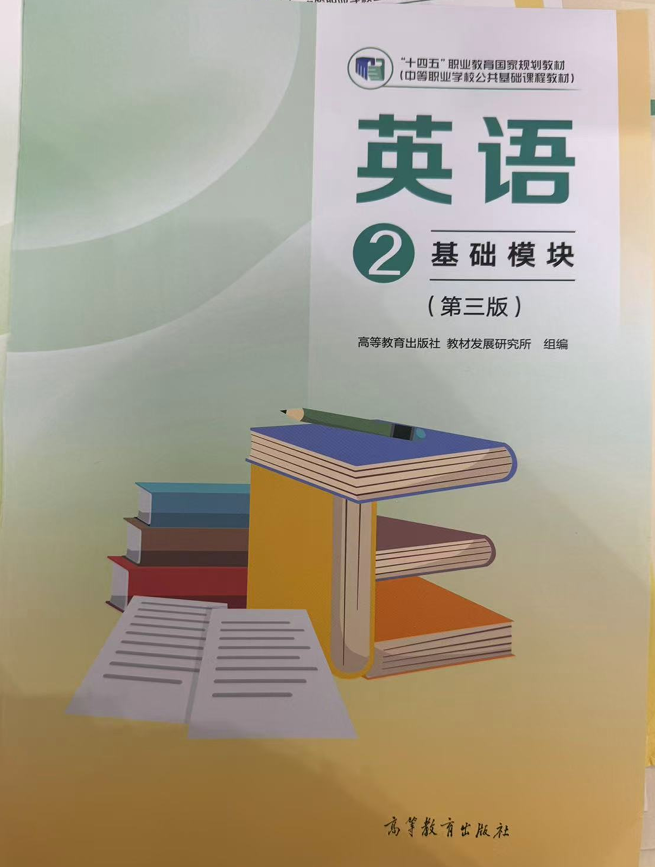
Unit 6 Craftsmanship(B卷·能力提升)《英语 基础模块2》(高教版第三版)单元过关卷(原卷版+解析版)
2026-04-28
|
2份
|
28页
|
109人阅读
|
0人下载
内容正文:
编写说明:本套试卷紧扣《英语 基础模块2》(高教版第三版)教材,以教材单元为基准精准覆盖核心考点。
每个单元设置AB卷,A卷为基础巩固卷,侧重基础考点训练,帮助学生扎实掌握知识要点;B卷为能力提升卷,注重知识整合与全面检测,引导学生构建知识网络。全书设计4份综合测试卷,模拟实战情境,聚焦解题能力突破,全面提升应试能力与知识应用水平。
《英语 基础模块2》(高教版第三版)《单元过关卷》
Unit 6 Craftsmanship
A卷·基础巩固
考试时间:120分钟 满分:100分
班级 姓名 学号 成绩
Ⅰ.语音辨析。 (共5小题;每小题1分,满分5分)
读下列单词,从每题所给的 A、 B、 C 和 D 四个选项中,选出画线部分发音不同的一项。
1.A.name B.cat C.map D.hat
2.A.see B.tea C.red D.he
3.A.blue B.cup C.bus D.sun
4.A.nice B.big C.pig D.fish
5.A.go B.no C.box D.so
【答案】1.A 2.C 3.A 4.A 5.C
【解析】1.考查元音字母的发音。A. name /neɪm/;B. cat /kæt/;C. map /mæp/;D. hat /hæt/。结合单词音标可知,A项划线部分发音是/eɪ/,其余各项划线部分发音都是/æ/。故选A。
2.考查元音字母及元音字母组合的发音。A. see /siː/;B. tea /tiː/;C. red /red/;D. he /hiː/。结合单词音标可知,C项划线部分发音是/e/,其余各项划线部分发音都是/iː/。故选C。
3.考查元音字母的发音。A. blue /bluː/;B. cup /kʌp/;C. bus /bʌs/;D. sun /sʌn/。结合单词音标可知,A项划线部分发音是/uː/,其余各项划线部分发音都是/ʌ/。故选A。
4.考查元音字母的发音。A. nice /naɪs/;B. big /bɪɡ/;C. pig /pɪɡ/;D. fish /fɪʃ/。结合单词音标可知,A项划线部分发音是/aɪ/,其余各项划线部分发音都是/ɪ/。故选A。
5.考查元音字母的发音。A. go /ɡəʊ/;B. no /nəʊ/;C. box /bɒks/;D. so /səʊ/。结合单词音标可知,C项划线部分发音是/ɒ/,其余各项划线部分发音都是/əʊ/。故选C。
Ⅱ. 单项选择(共 15 小题;每小题 1 分,满分 15 分)
阅读下列句子,从每题所给的 A、B、C 和 D 四个选项中,选出最佳选项。
6.Many tourists come here every year because the old town is worth _________.
A.visit B.visiting C.to visit D.visited
【答案】B
【详解】句意:许多游客每年都来这里,因为这个古镇值得参观。
固定短语be worth doing sth.意为“值得做某事”,worth后接动名词形式表示被动意义。应填visiting。
7.—What do you think of the book?
—Oh, excellent. It’s worth _______ a second time.
A.to read B.read C.reading D.to be reading
【答案】C
【详解】句意:——你觉得这本书怎么样?——哦,太棒了,值得再读一遍。
be worth doing sth.是固定搭配,表示“值得做某事”,此处主动形式表被动含义,应填reading。
8.—Jessica is not careful with her schoolwork. Could you help her?
—No problem! I think she _________ to think twice before starting.
A.should be told B.should tell C.can tell D.must tell
【答案】A
【详解】——杰西卡对她的功课不上心。你能帮帮她吗? ——没问题!我觉得应该告诉她在开始之前三思。
本句表达“她应该被告诉要三思”,主语she和tell之间是被动关系,表示“被告诉”,要用被动语态;should be told是“情态动词should+be+过去分词told”,意为“应该被告诉”,其他选项should tell/can tell/must tell均为主动形式,不符合语境。
9.Whoever smokes in the gas station must ________. It’s too dangerous.
A.punish B.punished C.be punishing D.be punished
【答案】D
【详解】句意:任何在加油站吸烟的人都必须被惩罚。太危险了。
主语“Whoever smokes in the gas station”是动作“punish”的承受者,需用被动语态,情态动词must后接be done结构。应填be punished。
10.A lot of new roads and public facilities _________ in our city in the past five years to make our life more convenient.
A.are built B.were built C.have been built D.built
【答案】C
【详解】句意:在过去五年里,为了使我们的生活更方便,我们城市建起了许多新的道路和公共设施。
根据时间状语“in the past five years”可知,句子应用现在完成时;主语“A lot of new roads and public facilities”是动作“build”的承受者,应用被动语态。现在完成时的被动语态结构为“have/has been + 过去分词”,主语是复数,助动词用have。故选C。
11.—Traditional Chinese medical books have been ________ into many languages over the past few years.
—It’s a good way to spread Chinese culture.
A.found B.translated C.hidden D.linked
【答案】B
【详解】句意:——在过去的几年里,传统中医书籍已经被翻译成多种语言。——这是传播中国文化的好方法。
found发现;translated翻译;hidden隐藏;linked连接。根据“into many languages”以及答语“spread Chinese culture”可知,书籍是被翻译成多种语言以便传播文化,应填translated。
12.The goods ________ when we arrived at the airport.
A.were just unloading B.had just unloaded
C.were just being unloaded D.were just been unloaded
【答案】C
【详解】句意:当我们到达机场时,货物正在卸货。
考查被动语态。主语The goods和谓语unload之间是被动关系,排除AB;根据“when we arrived at the airport”可知是到达机场时,货物正在被卸,用过去进行时的被动语态was/were being done。故选C。
13.-Mike, did you see Mr. Chapman in the office just now?
-Yes, he ________, and he looked a little bit nervous.
A.had interviewed B.was interviewed
C.was being interviewed D.is being interviewing
【答案】C
【详解】句意:——迈克,你刚才看到Mr. Chapman在办公室吗?——是的,他正在接受采访,他看起来有点紧张。
考查时态。根据“did you see Mr. Chapman in the office just now”可知,此处表示某人刚才正在做某事,因此用过去进行时,句中主语he和谓语interview之间是被动关系,所以此处用过去进行时的被动,故选C。
14.Because of the heavy rain, the performance on the playground would______.
A.be cancelled B.be held C.cancel D.hold
【答案】A
【详解】句意:因为大雨,操场上的演出将被取消。
本题考查动词及语态。A.cancel意为“取消”;B.hold意为“举行”。根据“Because of the heavy rain”可知应用cancel 一词。performance与cancel是被动关系,所以应该用被动语态,过去将来时的被动语态为would+be done,故答案为A。
15.—The young scientist’s research ______ by several universities last year.
—That’s why he won the national prize.
A.supports B.supported C.is supported D.was supported
【答案】D
【详解】句意:——这位年轻科学家的研究去年得到了好几所大学的支持。——这就是他获得国家奖项的原因。
主语The young scientist’s research和support之间是被动关系,即 “研究被支持”,因此需要使用被动语态,结构为be+过去分词。句中时间状语last year(去年)明确表示动作发生在过去,因此需要使用一般过去时的被动语态was supported。
16.In order to solve the problem quickly and efficiently, the students ________ into four groups just now.
A.divided B.are divided C.were divided D.divide
【答案】C
【详解】句意:为了快速高效地解决问题,学生们刚才被分成了四个小组。
divided(主动语态,过去式);are divided(被动语态,一般现在时);were divided(被动语态,一般过去时);divide(主动语态,一般现在时)。根据主语the students和动词divide的关系,学生是“被分组”,需要用被动语态;再根据时间状语just now,表示过去的时间,要用一般过去时的被动语态,主语students是复数,be动词用were,应填were divided。
17.Xinjiang is the largest cotton-producing area in China. About 90% of China’s cotton ________ there.
A.produces B.is producing C.is produced D.produced
【答案】C
【详解】句意:新疆是中国最大的棉花产区。中国约90%的棉花在那里生产。
根据语境可知,棉花是“被生产”,应用被动语态,且句子描述一般事实,用一般现在时,应填is produced。
18._______ the story _______ first?
A.Is; create B.Is; created C.Does; create D.Are; created
【答案】B
【详解】句意:这个故事是先创作出来的吗?
主语“the story”和动词“create”是被动关系,指“故事是被创作出来的”,用被动语态“be done”,主语是名词单数,第一空应是be动词“Is”,第二空应是过去分词created。应填Is; created。
19.We all know the Anti-Japanese War ________ in 1937, and ______ for eight years.
A.was broken out; was lasted B.was broken out; lasted
C.broke out; was lasted D.broke out; lasted
【答案】D
【详解】句意:我们都知道抗日战争于1937年爆发,并持续了八年。
考查动词的语态。was broken out表述错误;broke out爆发,不及物动词短语,无被动语态;was lasted表述错误;lasted持续,不及物动词短语,无被动语态。根据“in 1937”可知,该句为一般过去时,谓语用动词的过去式,且“break out”和“last”均为不及物动词短语,只能用主动语态,不能用被动语态。故选D。
20.It’s reported that another big shopping center ________ here next year.
A.will open B.opened C.opens D.is open
【答案】A
【详解】句意:报道,另一个大型购物中心明年将在这里开业。
考查时态和不及物动词。根据“next year”可知,空处指“大型购物中心将开业”,需一般将来时,其结构为will do,这里open为不及物动词,无宾语,不用被动语态;D项open为形容词,B、C项时态错误。故选A。
Ⅲ. 完形填空(共 10 小题;每小题 1 分,满分 10 分)
阅读下面短文,从短文后各题所给的 A、B、C 和 D 四个选项中,选出可以填入空白处的最佳选项。
On the streets of France, people can often see a pretty Chinese girl. She is playing the guzheng _________ and wearing traditional Chinese hanfu. Her music sounds beautiful. And her _________ are very popular with the people there. In their eyes, she is _________ symbol of China. Do you know who _________? Let me tell you. Her name is Peng Jingxuan.
Peng was born in 1995 in Huaihua, Hunan province. She started to learn the guzheng _________ the age of seven. In 2017, Peng graduated(毕业)from Wuhan Conservatory of Music. In 2018, she went to Bordeaux, France by _________ to go on studying music.
“When I first came to study in France, I _________ street performances were very common, but few people were playing Chinese musical instruments. That’s _________ I took my guzheng to the streets,” said Peng. Before each performance, she usually spends about two hours _________ on make-up.
Peng has decided to take her guzheng and travel around Europe. She wants __________ the traditional Chinese music to more foreigners.
21.A.happy B.happily C.happiness D.unhappy
22.A.performance B.perform C.performances D.performer
23.A.a B.an C.the D./
24.A.is she B.she was C.was she D.she is
25.A.at B.in C.for D.on
26.A.she B.her C.herself D.hers
27.A.will find B.found C.was finding D.finds
28.A.because B.when C.how D.why
29.A.putting B.puts C.put D.to put
30.A.showed B.shown C.to show D.showing
【答案】
21.B 22.C 23.C 24.D 25.A 26.C 27.B 28.D 29.A 30.C
【导语】本文讲述了中国女孩彭静轩,她在前往法国波尔多学习音乐期间,把中国古筝带到街头,向外国人展示中国传统音乐。
21.句意:她穿着中国传统的汉服,愉快地弹着古筝。
happy高兴的,形容词;happily高兴地,副词;happiness高兴,名词;unhappy不高兴的,形容词。空处应该用副词修饰动词。故选B。
22.句意:她的表演在那里很受欢迎。
performance表演,名词;perform表演,动词;performances表演,名词复数;performer演员。根据“And her…are very popular with the people there.”可知,此处是说她的表演受欢迎,结合空后“are”可知此处用名词复数形式。故选C。
23.句意:在他们眼里,她是中国的象征。
a不定冠词,用于以辅音音素开头的单词前,表泛指;an不定冠词,用于以元音音素开头的单词前;the定冠词,表特指;/不填。此处特指the symbol of China“中国的象征”,用定冠词the。故选C。
24.句意:你知道她是谁吗?
is she一般现在时,疑问语序;she was一般过去时,陈述语序;was she一般过去时,疑问语序;she is一般现在时,陈述语序。此处是宾语从句,应该用陈述语序,主句是一般现在时,从句表一般情况,也用一般现在时。故选D。
25.句意:她七岁开始学习古筝。
at 在;in在……里; for为了;on在……上。at the age of“在……岁时”,固定搭配。故选A。
26.句意:2018年,她独自前往法国波尔多继续学习音乐。
she她,人称代词主格;her她的,她,形容词性物主代词或人称代词宾格;herself她自己,反身代词;hers她的,名词性物主代词。do sth by oneself“独自做某事”,此处表达她独自前往法国波尔多继续学习音乐,用反身代词。故选C。
27.句意:我刚来法国留学时,发现街头表演很常见,但很少有人会演奏中国乐器。
will find一般将来时形式;found动词过去式;was finding过去进行时形式;finds一般现在时形式。根据“When I first came to study in France”可知,此处用一般过去时。故选B。
28.句意:这就是我把古筝带到街头的原因。
because因为;when何时;how如何,怎样;why为什么,……的原因。根据“When I first came to study in France, I…street performances were very common, but few people were playing Chinese musical instruments.”可知,这是在说我把古筝带到街头的原因。故选D。
29.句意:每次演出前,她通常要花两个小时化妆。
putting动名词形式;puts动词三单形式;put动词原形;to put动词不定式形式。spend…doing“花费……做某事”,固定搭配。故选A。
30.句意:她想向更多的外国人展示中国传统音乐。
showed动词过去式;shown动词过去分词;to show动词不定式形式;showing动名词形式。want to do sth“想要做某事”,固定搭配,动词不定式作宾语。故选C。
Ⅳ.补全对话(共5小题;每小题2分,满分10分)
根据对话内容,从对话后所给的七个选项中,选出能填入空白处的最佳选项。(选项中有两项是多余的)
A: Here we are! This is my grandpa’s kite shop,
B: Oh, all the kites are so beautiful.
A: Yeah. ____31____
B: A great kite maker! ____32____
A: Over there! ____33____
B: Wonderful! You are so clever!
A: Actually, ____34____
B: Wow. I see why you are so good at making kites! ____35____
A: Besides bamboo and paper, creativity and patience are also very important.
B: Here are the bamboo and paper, Shall we make a kite together?
A.I was taught to make kites when I was 5.
B.Is there a kite that was made by you, Xiao Yu?
C.The butterfly that is hung by the door.
D.What is needed to make a kite?
E.Most of them are made by my grandpa.
F.They are very beautiful.
G.Thank you.
【答案】31.E 32.B 33.C 34.A 35.D
【导语】本文是一段关于风筝的对话,其中一人向另一人介绍自己的爷爷是风筝制作大师,并讨论了制作风筝的相关内容。
31.根据上文“Oh, all the kites are so beautiful. (哦,所有的风筝都很漂亮。)”和下文“A great kite maker! (一个很棒的风筝制作人!)”可知,此句应是在表述这些风筝是谁做的,选项E“它们大多是我爷爷做的。”符合语境。故选E。
32.根据下文“Over there! (在那边!)”可知,此句是一个问句,选项B“小宇,这里有你做的风筝吗?”符合语境。故选B。
33.根据上文“Over there!(在那边!)”可知,此句是在说具体的位置,选项C“挂在门边的蝴蝶风筝。”符合语境。故选C。
34.根据上文“You are so clever. (你真聪明。)”和后面的“Actually (实际上)”可知,此句是在说明自己能做漂亮风筝的原因,选项A“我5岁的时候就被教做风筝了。”符合语境。故选A。
35.根据下文“Besides bamboo and paper, creativity and patience are also very important. (除了竹子和纸,创造力和耐心也很重要。)”可知,此句是在问制作风筝需要什么,选项D“制作一个风筝需要什么?”符合语境。故选D。
Ⅴ.阅读理解(共15小题;每小题2分,满分30分)
阅读下面短文A,判断36~40小题是否正确。若正确,把选项T涂黑;若错误,把选项F涂黑。阅读短文B和C,从每小题所给的A、B、C和D四个选项中选出最佳选项。
A
The “24 solar terms” (节气) originated and was firstly used in China. It was created thousands of years ago on the basis of practical needs of agriculture. Ancient Chinese people used it to guide agriculture production,special climate signs and even healthy living tips. Last year, the 24 solar terms was added to UNESCO’s world cultural heritage list. Now, it has been brought to life thanks to a creative designer from Southwest China’s Guizhou province.
On the eve of this year’s Qingming Festival, Shi Changhong released (发布) his version of re-produced and packaged characters for each solar term in the form of “moving art” of gifts. Since their first release on Zcool on March 29, the gifts have won great praise among the general public and quickly flooded social media with millions of hits during the festival period.
To maximize publicity, Shi released his work in three forms: video, animation and picture. The background sounds add to the brilliance (光彩).
“When I watch the short video, I can strongly feel the Chinese-style elements hidden in them. And it is really cool to liven up Chinese traditional culture in such a unique way.” WeChat user Xiao Feifei said.
“It is really a comfort to me to see so many people like my latest work. To be honest, it would really surprise me if the work does not arouse great interest among Chinese people. The 24 solar items is a deeply rooted concept that covers the essence of Chinese wisdom. However, only a small portion of people know all the names or the correct order of those terms. My intention is to increase Chinese people’s self-awareness to learn more about our traditional fine culture. Actually, the 24 solar items work is only a part of my whole design program ‘Charm China’, which I started over a year ago.” Shi told China Daily.
根据文章内容判断正 (T) 误 (F)
36.The text probably belongs to the agriculture part of the newspaper.
37.The underlined word “Zcool” refers to a radio broadcast.
38.The 24 solar items work designed by Shi Changhong was added to UNESCO’s heritage list.
39.The background sounds of the work make the video more attractive.
40.The purpose of the passage is to introduce the 24 solar items work.
【答案】36.F 37.F 38.F 39.T 40.T
【分析】本文是新闻报道,介绍了贵州设计师石昌鸿制作的24节气创意设计项目。
36.推理判断题。根据开头“The ‘24 solar terms’ originated and was firstly used in China. It was created thousands of years ago on the basis of practical needs of agriculture”,可知在报纸的文化栏目能够读到;题干说法错误,故选F。
37.词句猜测题。根据下文“and quickly flooded social media with millions of hits during the festival period”,可知是网站社交媒体;题干说法错误,故选F。
38.细节理解题。根据最后“Actually, the 24 solar items work is only a part of my whole design program ‘Charm China’, which I started over a year ago”,结合第一段“the 24 solar terms was added to UNESCO’s world cultural heritage list”,可知是24节气被列入联合国教科文组织世界文化遗产名录;题干说法错误,故选F。
39.推理判断题。根据第三段“To maximize publicity, Shi released his work in three forms: video, animation and picture. The background sounds add to the brilliance”,可知作品的背景声音设计使视频更具吸引力;题干说法正确,故选T。
40.主旨大意题。根据短文内容,结合第一段“Last year, the 24 solar terms was added to UNESCO’s world cultural heritage list. Now, it has been brought to life thanks to a creative designer from Southwest China’s Guizhou province”,可知短文主要介绍的是石昌鸿制作的24节气创意设计项目;题干说法正确,故选T。
B
Traditional culture is the root of a nation. In modern society, efforts are being made to preserve and inherit traditional culture.
Take traditional festivals for example. The Spring Festival, the most important traditional festival in China, is still celebrated with great enthusiasm. Families gather together, clean their houses, paste Spring Festival couplets, and have a big reunion dinner. These traditional customs not only strengthen family bonds but also pass on the values of harmony and unity.
Traditional handicrafts are also an important part of traditional culture. Crafts like pottery, embroidery, and wood carving are being revived. Many artisans are dedicated to passing on their skills to the younger generation. Some schools even offer courses on traditional handicrafts to raise students’ awareness of traditional culture.
Furthermore, traditional performing arts such as Peking Opera and shadow puppetry are being promoted. The government and cultural institutions organize performances and exhibitions to introduce these art forms to the public. This helps to keep traditional performing arts alive and popular.
41.Why is traditional culture important?
A.It has no significance in modern society. B.It is the root of a nation.
C.It only includes traditional festivals. D.It is easy to preserve.
42.What do people do during the Spring Festival?
A.Go traveling.
B.Stay alone.
C.Gather with family, clean houses, paste couplets, and have a reunion dinner.
D.Only watch TV.
43.How are traditional handicrafts being revived?
A.Artisans pass on their skills, and schools offer relevant courses.
B.The government bans modern handicrafts.
C.People stop buying modern products.
D.Traditional handicrafts are sold at high prices.
44.What are the government and cultural institutions doing to promote traditional performing arts?
A.Banning them. B.Ignoring them.
C.Organizing performances and exhibitions. D.Forcing people to learn them.
45.What is the main idea of the passage?
A.The importance of traditional festivals. B.The revival of traditional handicrafts.
C.The promotion of traditional performing arts. D.The preservation and inheritance of traditional culture.
【答案】41.B 42.C 43.A 44.C 45.D
【导语】本文是一篇说明文。文章主要讲述了传统文化是一个民族的根基,现代社会正努力保护和传承传统文化。
41.细节理解题。根据第一段“Traditional culture is the root of a nation. (传统文化是一个民族的根。)”可知,传统文化重要是因为它是一个民族的根。故选B。
42.细节理解题。根据第二段中“Families gather together, clean their houses, paste Spring Festival couplets, and have a big reunion dinner. (家人聚在一起,打扫房子,贴春联,吃团圆饭。)”可知,人们在春节期间会和家人团聚,打扫房子,贴春联,吃团圆饭。故选C。
43.细节理解题。根据第三段中“Many artisans are dedicated to passing on their skills to the younger generation. Some schools even offer courses on traditional handicrafts to raise students’ awareness of traditional culture. (许多工匠致力于将他们的技能传授给年轻一代。一些学校甚至开设了传统手工艺课程,以提高学生的传统文化意识。)”可知,传统手工艺通过工匠传承技能和学校开设相关课程得以复兴。故选A。
44.细节理解题。根据最后一段中“The government and cultural institutions organize performances and exhibitions to introduce these art forms to the public. (政府和文化机构组织表演和展览,向公众介绍这些艺术形式。)”可知,政府和文化机构通过组织表演和展览来推广传统表演艺术。故选C。
45.主旨大意题。根据第一段“Traditional culture is the root of a nation. In modern society, efforts are being made to preserve and inherit traditional culture. (传统文化是一个民族的根。在现代社会,人们正在努力保护和传承传统文化。)”结合全文内容可知,本文主要讲述了保护和传承传统文化的努力,包括传统节日、手工艺和表演艺术的复兴。故选D。
C
Many people may throw away the pits (核) inside fruits after eating them, but inheritors (传承人) of nut carving have turned them into artworks instead.
Weifang nut carving goes back to the Qing Dynasty. During that time, an old imperial (皇帝的) craftsman spread the skill to the local people in Shandong Province. Craftsmen at that time often used peach pits to show their artistic skills. Weifang nut carving was listed as a national intangible cultural heritage in 2008.
“One nut, from 0.8 to 6 centimeters long, can be made into earrings, buttons, seals (印章), and so on,” said Tan Wanhai, an inheritor of Weifang nut carving.
However, bringing this kind of artwork to life is not easy. “Unlike some pits like olive pits which have a flat surface, each peach pit has its own special texture (纹理) like human fingerprints,” Tan said, adding that craftsmen have to study each peach pit to carefully plan out their artwork.
Nut carving craftsmen also need to have knowledge in many areas. According to Tan, they have to master skills in painting, seal carving, and calligraphy from many traditional cultures.
Thanks to their creative design and fresh ideas, Weifang nut carving artworks have been more and more welcomed by people in China. More people are learning the art, and some even become inheritors to pass down the skill to young people.
“Now, the number of inheritors is about 1, 000. But I believe it could be bigger. More craftsmen now give up the tradition of passing down the skill only through the family and open up the skill to anyone who is interested in learning it,” said Tan.
46.What did craftsmen often use to show their artistic skills in the Qing Dynasty?
A.Olive pits. B.Apple pits. C.Peach pits. D.Pear pits.
47.What makes it difficult to turn a peach pit into an artwork?
A.It has a flat surface. B.It has its own special texture.
C.It has no texture. D.It is very small.
48.Why are Weifang nut carving artworks becoming more and more popular in China?
A.Because of their low price.
B.Because Weifang nut carving was listed as a national intangible cultural heritage.
C.Because they are easy to make.
D.Because of the creative design and fresh ideas.
49.What can we learn from the text?
A.Weifang nut carving goes back to the Tang Dynasty.
B.Nut carving craftsmen only need to master basic carving skills.
C.Tan Wanhai thinks there could be more inheritors of nut carving.
D.More craftsmen give up passing down the skill now.
50.What could be the best title for the text?
A.Weifang Nut Carving. B.Amazing Artworks in China.
C.Tan’s Nut Carving Achievements. D.The History of Nut Carving.
【答案】46.C 47.B 48.D 49.C 50.A
【导语】本文是一篇说明文,主要介绍潍坊核雕的历史、特点及传承现状。
46.细节理解题。根据第二段中“Craftsmen at that time often used peach pits to show their artistic skills. (当时的工匠们经常用桃核来展示他们的艺术技巧。)”可知,清朝的工匠常常用桃核来展示艺术技巧。故选C。
47.细节理解题。根据第四段中““Unlike some pits like olive pits which have a flat surface, each peach pit has its own special texture (纹理) like human fingerprints,” Tan said, adding that craftsmen have to study each peach pit to carefully plan out their artwork. (谭万海说:“不像橄榄核等一些果核有着平整的表面,每个桃核都有独特的纹理,就像人类的指纹一样。”他还补充道,工匠们必须仔细研究每一颗桃核,才能精心设计出作品。)”可知,桃核自身独特的纹理让它难以被制成艺术品。故选B。
48.细节理解题。根据第六段中“Thanks to their creative design and fresh ideas, Weifang nut carving artworks have been more and more welcomed by people in China. (凭借其创意设计和新颖理念,潍坊核雕艺术品越来越受到中国民众的欢迎。)”可知,创意设计和新颖理念让潍坊核雕艺术品在中国越来越受欢迎。故选D。
49.推理判断题。根据最后一段中“But I believe it could be bigger. (但我相信这个数字还会增加。)”可知,谭万海认为核雕的传承人可能会更多。故选C。
50.主旨大意题。根据全文内容,尤其是第二段中“Weifang nut carving goes back to the Qing Dynasty. (潍坊核雕可追溯至清朝。)”、第四段对潍坊核雕制作难度的介绍、第六段对其受欢迎程度的说明及最后一段对传承情况的描述,“Now, the number of inheritors is about 1,000. (现在,传承人大约有1000人。)”可知,文章围绕潍坊核雕展开,介绍了其相关情况。故选A。
VI.句子改错 (共10小题;每小题1分,满分10分)
每个句子只有一处错误,每处错误仅涉及一个单词的增加、删除或修改。不允许改变原句的意思。
增加:在缺词处加一个漏词符号 (∧),并在后面横线上写出该加的词。
删除:在多余的词下画一横线,并在后面横线上写出该词,用 ( ) 划掉。
修改:在错的词下画一横线,并在后面横线上写出修改后的词。
51.The book, that is written in English, is very useful. (单句改错)
【答案】that→ which
【详解】考查定语从句的关系词。句意:这本用英语写的书非常有用。在非限制性定语从句中(从句与主句用逗号隔开),不能用that引导,需用which来指代先行词“The book”在从句中作主语。故答案为:that→which。
52.We plan visiting our grandparents during the Spring Festival. (单句改错)
【答案】visiting→ to visit
【详解】考查动词不定式作宾语。句意:我们计划在春节期间拜访我们的外祖父母。分析句子可知,此处应用动词不定式作谓语动词plan的宾语。故答案为:visiting→ to visit。
53.The Chinese is fond of curiously shaped rocks. (单句改错)
【答案】is→ are
【详解】考查主谓一致。句意:中国人喜欢造型奇特的石头。分析句子和主谓一致原则可知,主语Chinese视为复数,此处be动词应用are,故答案为is→ are。
54.We must to finish our homework before 9 o’clock. (单句改错)
【答案】去掉to
【详解】考查情态动词。句意:我们必须在9点前完成作业。情态动词must后接动词原形,不需要加to。故答案为:去掉to。
55.He doesn’t jogs every morning. (单句改错)
________________________________
【答案】jogs→ jog
【详解】考查动词形式。句意:他不是每天早上都慢跑。分析句子可知,句中已有助动词doesn’t,其后的实义动词应使用原形,因此jogs需要改为jog。故答案为:jogs→ jog。
56.The little girl is afraid of stay alone at home in the evening. (单句改错)
__________________________________________________
【答案】stay→ staying
【详解】考查非谓语动词。句意:这个小女孩害怕晚上独自待在家里。分析句子结构可知,be afraid of为固定短语,表达“害怕……”,其中of是介词,后接动名词形式,作宾语。故答案为:stay→ staying。
57.She didn’t know that whether he would come to the party. (单句改错)
【答案】去掉that
【详解】考查名词性从句引导词。句意:她不知道他是否会来参加派对。根据主句谓语“didn’t know”可知,是对从句情况(... he would come to the party)有疑问句或不确定,需用whether可引导宾语从句,表“是否”,而that引导宾语从句时无实际意义,二者不能同时用于引导同一个宾语从句,故需去掉that。故答案为:去掉that。
58.It is not sure if the acid rain will continue or not at present. (单句改错)
【答案】if→whether
【详解】考查主语从句引导词。句意:目前还不确定酸雨是否会持续。在宾语从句中,当有“or not”时,常用whether而不用if来引导,所以要把if改为whether。故答案为:if→whether。
59.She asked me that where I lived. (单句改错)
【答案】去掉that
【详解】考查宾语从句的引导词。句意:她问我住在哪里。分析句子可知,“asked me”后是宾语从句,where是引导宾语从句的连接词(表地点),不能与that同时使用(二者都是引导词,重复冗余),因此需去掉that。故答案为:去掉that。
60.I have no idea that he will come. (单句改错)
【答案】that→ whether
【详解】考查同位语从句。句意:我不知道他会来。“have no idea”后接同位语从句时,若从句表“不确定的内容”,应用“whether”引导,表“是否”。故答案为:that→ whether。
Ⅶ. 短语填空(共 10 小题;每小题 2 分,满分 20 分)
根据句子内容选择正确短语并用其适当形式填空。
in trouble;all the time;come up with;make use of;deal with;instead of;in order to;put up with;on purpose;show off
61. The young apprentice was _____ because he couldn't master the difficult technique.
62. The craftsman has been working on this piece of art _____ for three months.
63. He practiced _____ improve his skills and eventually become a master craftsman.
64. _____ copying others' designs, young artists should develop their own style.
65. The craftsman made a special mistake _____ to test the quality inspector.
66. A true craftsman must _____ the difficulties and challenges in the learning process.
67. The creative artist _____ a unique design that impressed everyone at the exhibition.
68. Young craftspeople should _____ every opportunity to learn traditional techniques.
69. The workshop supervisor knows how to _____ all kinds of unexpected problems.
70. The new craftsman liked to _____ his skills in front of visitors at the workshop.
【答案】 61. in trouble 62. all the time 63. in order to 64. Instead of 65. on purpose 66. put up with 67. came up with 68. make use of 69. deal with 70. show off
学科网(北京)股份有限公司 (
1
)原创精品资源学科网独家享有版权,侵权必究!
学科网(北京)股份有限公司
$
编写说明:本套试卷紧扣《英语 基础模块2》(高教版第三版)教材,以教材单元为基准精准覆盖核心考点。
每个单元设置AB卷,A卷为基础巩固卷,侧重基础考点训练,帮助学生扎实掌握知识要点;B卷为能力提升卷,注重知识整合与全面检测,引导学生构建知识网络。全书设计4份综合测试卷,模拟实战情境,聚焦解题能力突破,全面提升应试能力与知识应用水平。
《英语 基础模块2》(高教版第三版)《单元过关卷》
Unit 6 Craftsmanship
A卷·基础巩固
考试时间:120分钟 满分:100分
班级 姓名 学号 成绩
Ⅰ.语音辨析。 (共5小题;每小题1分,满分5分)
读下列单词,从每题所给的 A、 B、 C 和 D 四个选项中,选出画线部分发音不同的一项。
1.A.name B.cat C.map D.hat
2.A.see B.tea C.red D.he
3.A.blue B.cup C.bus D.sun
4.A.nice B.big C.pig D.fish
5.A.go B.no C.box D.so
Ⅱ. 单项选择(共 15 小题;每小题 1 分,满分 15 分)
阅读下列句子,从每题所给的 A、B、C 和 D 四个选项中,选出最佳选项。
6.Many tourists come here every year because the old town is worth _________.
A.visit B.visiting C.to visit D.visited
7.—What do you think of the book?
—Oh, excellent. It’s worth _______ a second time.
A.to read B.read C.reading D.to be reading
8.—Jessica is not careful with her schoolwork. Could you help her?
—No problem! I think she _________ to think twice before starting.
A.should be told B.should tell C.can tell D.must tell
9.Whoever smokes in the gas station must ________. It’s too dangerous.
A.punish B.punished C.be punishing D.be punished
10.A lot of new roads and public facilities _________ in our city in the past five years to make our life more convenient.
A.are built B.were built C.have been built D.built
11.—Traditional Chinese medical books have been ________ into many languages over the past few years.
—It’s a good way to spread Chinese culture.
A.found B.translated C.hidden D.linked
12.The goods ________ when we arrived at the airport.
A.were just unloading B.had just unloaded
C.were just being unloaded D.were just been unloaded
13.-Mike, did you see Mr. Chapman in the office just now?
-Yes, he ________, and he looked a little bit nervous.
A.had interviewed B.was interviewed
C.was being interviewed D.is being interviewing
14.Because of the heavy rain, the performance on the playground would______.
A.be cancelled B.be held C.cancel D.hold
15.—The young scientist’s research ______ by several universities last year.
—That’s why he won the national prize.
A.supports B.supported C.is supported D.was supported
16.In order to solve the problem quickly and efficiently, the students ________ into four groups just now.
A.divided B.are divided C.were divided D.divide
17.Xinjiang is the largest cotton-producing area in China. About 90% of China’s cotton ________ there.
A.produces B.is producing C.is produced D.produced
18._______ the story _______ first?
A.Is; create B.Is; created C.Does; create D.Are; created
19.We all know the Anti-Japanese War ________ in 1937, and ______ for eight years.
A.was broken out; was lasted B.was broken out; lasted
C.broke out; was lasted D.broke out; lasted
20.It’s reported that another big shopping center ________ here next year.
A.will open B.opened C.opens D.is open
Ⅲ. 完形填空(共 10 小题;每小题 1 分,满分 10 分)
阅读下面短文,从短文后各题所给的 A、B、C 和 D 四个选项中,选出可以填入空白处的最佳选项。
On the streets of France, people can often see a pretty Chinese girl. She is playing the guzheng _________ and wearing traditional Chinese hanfu. Her music sounds beautiful. And her _________ are very popular with the people there. In their eyes, she is _________ symbol of China. Do you know who _________? Let me tell you. Her name is Peng Jingxuan.
Peng was born in 1995 in Huaihua, Hunan province. She started to learn the guzheng _________ the age of seven. In 2017, Peng graduated(毕业)from Wuhan Conservatory of Music. In 2018, she went to Bordeaux, France by _________ to go on studying music.
“When I first came to study in France, I _________ street performances were very common, but few people were playing Chinese musical instruments. That’s _________ I took my guzheng to the streets,” said Peng. Before each performance, she usually spends about two hours _________ on make-up.
Peng has decided to take her guzheng and travel around Europe. She wants __________ the traditional Chinese music to more foreigners.
21.A.happy B.happily C.happiness D.unhappy
22.A.performance B.perform C.performances D.performer
23.A.a B.an C.the D./
24.A.is she B.she was C.was she D.she is
25.A.at B.in C.for D.on
26.A.she B.her C.herself D.hers
27.A.will find B.found C.was finding D.finds
28.A.because B.when C.how D.why
29.A.putting B.puts C.put D.to put
30.A.showed B.shown C.to show D.showing
Ⅳ.补全对话(共5小题;每小题2分,满分10分)
根据对话内容,从对话后所给的七个选项中,选出能填入空白处的最佳选项。(选项中有两项是多余的)
A: Here we are! This is my grandpa’s kite shop,
B: Oh, all the kites are so beautiful.
A: Yeah. ____31____
B: A great kite maker! ____32____
A: Over there! ____33____
B: Wonderful! You are so clever!
A: Actually, ____34____
B: Wow. I see why you are so good at making kites! ____35____
A: Besides bamboo and paper, creativity and patience are also very important.
B: Here are the bamboo and paper, Shall we make a kite together?
A.I was taught to make kites when I was 5.
B.Is there a kite that was made by you, Xiao Yu?
C.The butterfly that is hung by the door.
D.What is needed to make a kite?
E.Most of them are made by my grandpa.
F.They are very beautiful.
G.Thank you.
Ⅴ.阅读理解(共15小题;每小题2分,满分30分)
阅读下面短文A,判断36~40小题是否正确。若正确,把选项T涂黑;若错误,把选项F涂黑。阅读短文B和C,从每小题所给的A、B、C和D四个选项中选出最佳选项。
A
The “24 solar terms” (节气) originated and was firstly used in China. It was created thousands of years ago on the basis of practical needs of agriculture. Ancient Chinese people used it to guide agriculture production,special climate signs and even healthy living tips. Last year, the 24 solar terms was added to UNESCO’s world cultural heritage list. Now, it has been brought to life thanks to a creative designer from Southwest China’s Guizhou province.
On the eve of this year’s Qingming Festival, Shi Changhong released (发布) his version of re-produced and packaged characters for each solar term in the form of “moving art” of gifts. Since their first release on Zcool on March 29, the gifts have won great praise among the general public and quickly flooded social media with millions of hits during the festival period.
To maximize publicity, Shi released his work in three forms: video, animation and picture. The background sounds add to the brilliance (光彩).
“When I watch the short video, I can strongly feel the Chinese-style elements hidden in them. And it is really cool to liven up Chinese traditional culture in such a unique way.” WeChat user Xiao Feifei said.
“It is really a comfort to me to see so many people like my latest work. To be honest, it would really surprise me if the work does not arouse great interest among Chinese people. The 24 solar items is a deeply rooted concept that covers the essence of Chinese wisdom. However, only a small portion of people know all the names or the correct order of those terms. My intention is to increase Chinese people’s self-awareness to learn more about our traditional fine culture. Actually, the 24 solar items work is only a part of my whole design program ‘Charm China’, which I started over a year ago.” Shi told China Daily.
根据文章内容判断正 (T) 误 (F)
36.The text probably belongs to the agriculture part of the newspaper.
37.The underlined word “Zcool” refers to a radio broadcast.
38.The 24 solar items work designed by Shi Changhong was added to UNESCO’s heritage list.
39.The background sounds of the work make the video more attractive.
40.The purpose of the passage is to introduce the 24 solar items work.
B
Traditional culture is the root of a nation. In modern society, efforts are being made to preserve and inherit traditional culture.
Take traditional festivals for example. The Spring Festival, the most important traditional festival in China, is still celebrated with great enthusiasm. Families gather together, clean their houses, paste Spring Festival couplets, and have a big reunion dinner. These traditional customs not only strengthen family bonds but also pass on the values of harmony and unity.
Traditional handicrafts are also an important part of traditional culture. Crafts like pottery, embroidery, and wood carving are being revived. Many artisans are dedicated to passing on their skills to the younger generation. Some schools even offer courses on traditional handicrafts to raise students’ awareness of traditional culture.
Furthermore, traditional performing arts such as Peking Opera and shadow puppetry are being promoted. The government and cultural institutions organize performances and exhibitions to introduce these art forms to the public. This helps to keep traditional performing arts alive and popular.
41.Why is traditional culture important?
A.It has no significance in modern society. B.It is the root of a nation.
C.It only includes traditional festivals. D.It is easy to preserve.
42.What do people do during the Spring Festival?
A.Go traveling.
B.Stay alone.
C.Gather with family, clean houses, paste couplets, and have a reunion dinner.
D.Only watch TV.
43.How are traditional handicrafts being revived?
A.Artisans pass on their skills, and schools offer relevant courses.
B.The government bans modern handicrafts.
C.People stop buying modern products.
D.Traditional handicrafts are sold at high prices.
44.What are the government and cultural institutions doing to promote traditional performing arts?
A.Banning them. B.Ignoring them.
C.Organizing performances and exhibitions. D.Forcing people to learn them.
45.What is the main idea of the passage?
A.The importance of traditional festivals. B.The revival of traditional handicrafts.
C.The promotion of traditional performing arts. D.The preservation and inheritance of traditional culture.
C
Many people may throw away the pits (核) inside fruits after eating them, but inheritors (传承人) of nut carving have turned them into artworks instead.
Weifang nut carving goes back to the Qing Dynasty. During that time, an old imperial (皇帝的) craftsman spread the skill to the local people in Shandong Province. Craftsmen at that time often used peach pits to show their artistic skills. Weifang nut carving was listed as a national intangible cultural heritage in 2008.
“One nut, from 0.8 to 6 centimeters long, can be made into earrings, buttons, seals (印章), and so on,” said Tan Wanhai, an inheritor of Weifang nut carving.
However, bringing this kind of artwork to life is not easy. “Unlike some pits like olive pits which have a flat surface, each peach pit has its own special texture (纹理) like human fingerprints,” Tan said, adding that craftsmen have to study each peach pit to carefully plan out their artwork.
Nut carving craftsmen also need to have knowledge in many areas. According to Tan, they have to master skills in painting, seal carving, and calligraphy from many traditional cultures.
Thanks to their creative design and fresh ideas, Weifang nut carving artworks have been more and more welcomed by people in China. More people are learning the art, and some even become inheritors to pass down the skill to young people.
“Now, the number of inheritors is about 1, 000. But I believe it could be bigger. More craftsmen now give up the tradition of passing down the skill only through the family and open up the skill to anyone who is interested in learning it,” said Tan.
46.What did craftsmen often use to show their artistic skills in the Qing Dynasty?
A.Olive pits. B.Apple pits. C.Peach pits. D.Pear pits.
47.What makes it difficult to turn a peach pit into an artwork?
A.It has a flat surface. B.It has its own special texture.
C.It has no texture. D.It is very small.
48.Why are Weifang nut carving artworks becoming more and more popular in China?
A.Because of their low price.
B.Because Weifang nut carving was listed as a national intangible cultural heritage.
C.Because they are easy to make.
D.Because of the creative design and fresh ideas.
49.What can we learn from the text?
A.Weifang nut carving goes back to the Tang Dynasty.
B.Nut carving craftsmen only need to master basic carving skills.
C.Tan Wanhai thinks there could be more inheritors of nut carving.
D.More craftsmen give up passing down the skill now.
50.What could be the best title for the text?
A.Weifang Nut Carving. B.Amazing Artworks in China.
C.Tan’s Nut Carving Achievements. D.The History of Nut Carving.
VI.句子改错 (共10小题;每小题1分,满分10分)
每个句子只有一处错误,每处错误仅涉及一个单词的增加、删除或修改。不允许改变原句的意思。
增加:在缺词处加一个漏词符号 (∧),并在后面横线上写出该加的词。
删除:在多余的词下画一横线,并在后面横线上写出该词,用 ( ) 划掉。
修改:在错的词下画一横线,并在后面横线上写出修改后的词。
51.The book, that is written in English, is very useful. (单句改错)
52.We plan visiting our grandparents during the Spring Festival. (单句改错)
53.The Chinese is fond of curiously shaped rocks. (单句改错)
54.We must to finish our homework before 9 o’clock. (单句改错)
55.He doesn’t jogs every morning. (单句改错)
________________________________
56.The little girl is afraid of stay alone at home in the evening. (单句改错)
__________________________________________________
57.She didn’t know that whether he would come to the party. (单句改错)
58.It is not sure if the acid rain will continue or not at present. (单句改错)
59.She asked me that where I lived. (单句改错)
60.I have no idea that he will come. (单句改错)
Ⅶ. 短语填空(共 10 小题;每小题 2 分,满分 20 分)
根据句子内容选择正确短语并用其适当形式填空。
in trouble;all the time;come up with;make use of;deal with;instead of;in order to;put up with;on purpose;show off
61. The young apprentice was _____ because he couldn't master the difficult technique.
62. The craftsman has been working on this piece of art _____ for three months.
63. He practiced _____ improve his skills and eventually become a master craftsman.
64. _____ copying others' designs, young artists should develop their own style.
65. The craftsman made a special mistake _____ to test the quality inspector.
66. A true craftsman must _____ the difficulties and challenges in the learning process.
67. The creative artist _____ a unique design that impressed everyone at the exhibition.
68. Young craftspeople should _____ every opportunity to learn traditional techniques.
69. The workshop supervisor knows how to _____ all kinds of unexpected problems.
70. The new craftsman liked to _____ his skills in front of visitors at the workshop.
学科网(北京)股份有限公司 (
1
)原创精品资源学科网独家享有版权,侵权必究!
学科网(北京)股份有限公司
$
资源预览图

1

2

3
由于学科网是一个信息分享及获取的平台,不确保部分用户上传资料的 来源及知识产权归属。如您发现相关资料侵犯您的合法权益,请联系学科网,我们核实后将及时进行处理。