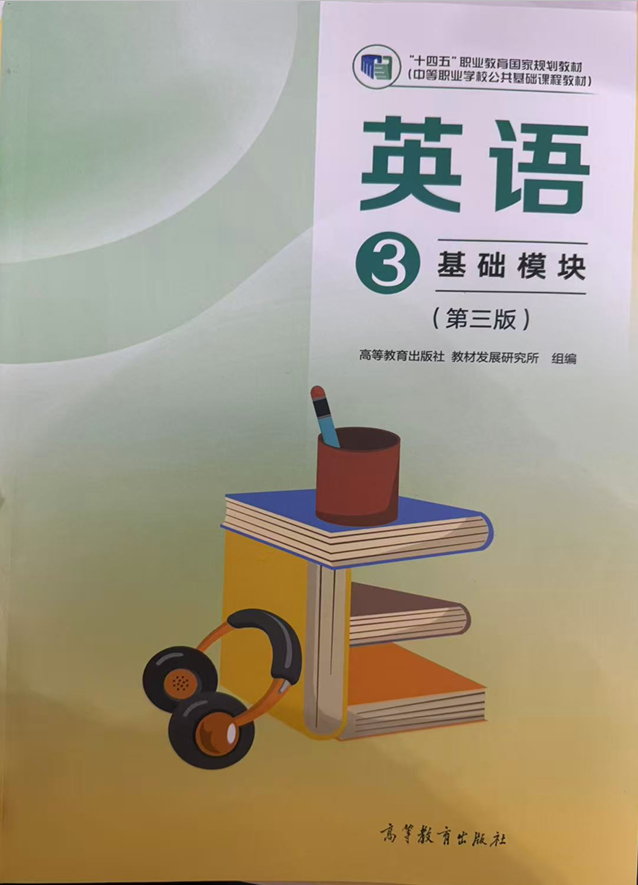
6.3 Living History of Culture(Reading and Writing)-《英语 基础模块3》(高教版第三版)《一课一练》(原卷版+解析版)
2026-04-27
|
2份
|
11页
|
48人阅读
|
0人下载
摘要:
**基本信息**
本练习针对中职《英语基础模块3》Unit6,以课前预习-课堂检测分层设计,通过词汇夯实-语法应用-语篇理解-写作输出路径巩固语言能力,融入传统文化素材,适配职教高考基础与提升需求。
**分层设计**
|层次|知识覆盖|设计特色|
|----|----------|----------|
|课前预习|核心词汇(14词)及短语(10个)|词形转换(如amaze→amazed)、短语匹配,聚焦语言能力基础积累|
|课堂检测|词汇应用(5题)、语法选择(4题)、语篇阅读(5题)、书面表达(1题)|从单句填空到语篇理解(泥塑张阅读)再到传统文化写作(传统节日活动),梯度衔接教学环节,渗透文化意识与思维品质培养|
内容正文:
编写说明:基于中职学生英语知识不牢固、学习内驱力不够的学情特点,为了更好地提高学生的学习效率,辅助教师们抓好课前、课中、课后三个教学环节,本专辑深度解读最新的《中等职业学校英语课程标准》,匠心打造了契合四川职教高考命题特色的【四川专用】《英语 基础模块3》(高教版第三版)《一课一练》专辑,专辑共40练。
本卷为《英语 基础模块3》(高教版第三版) Unit 6 Living History of Culture(Reading and Writing)的课前预习和课堂检测。
《英语 基础模块3》(高教版第三版) Unit 6 Living History of Culture
一课一练(28)
Reading and Writing
【课前预习】
一、重点单词
1.__________ adj. 惊人的, 了不起的→__________ adv. 令人震惊地
2.__________ adj. 与原物一样大小的
3.__________ n. (地面的)坑; 洼
4.__________ adj. 平方的 n. 广场
5.__________ n. 表达; 表情→__________ v. 表达; 表露
6.__________ adv. 精确地→__________ adj. 确切的; 精确的
7.__________ adj. 灰色的
8.__________ n. 金字塔
9.__________ adv. 起初; 原来→__________ adj. 起初的, 原先的
10.__________ v. 延伸; 绵延
11.__________ n. 石块
12.__________ v. 建造; 修建→__________ n. 建造; 建筑
13.__________ adj. 极好的
14.__________ adj. 成功的; 辉煌的
二、重点短语
15.________ 进入
16.________ 事实上, 实际上
17.________ 提醒; 使记起
18.________ 在……边缘
19.________ 由……制造
20.________ 在……边缘
21.________ 成千上万的
22.________ 为……准备
23.________ 穿着
24.________ 究竟, 到底; 在世界上
【课堂检测】
三、词汇拼写
1.She was ________ (amaze) how little he had changed.
2.The smell of the wine reminded him ________ the accident.
3.This machine is made ________ Sweden.
4.He liked to dress up ________ a sailor.
5.The ________ (表情) on his face never changed.
四、单项选择
6.I put my journal away and prepared ________ bed.
A.for B.to C.of D.with
7.She ________ a new skirt today.
A.dressed up B.dressed up as C.is dressed in D.dress down
8.At the foot of the mountain ________ my new house.
A.does lie B.lies C.do lie D.lying
9.It can’t find a quiet place here. Neither _______________!
A.do I B.I do C.will I D.can I
五、阅读理解
Clay Figurine Zhang (Ni Ren Zhang) is a famous folk art in north China’s Tianjin and has a history of nearly 200 years. It is a kind of painted figurine (小塑像) made of clay.
The figurines are loved both at home and abroad. But making one is difficult and requires a high level of skill. It sometimes takes months to complete a fine figurine. And because it places much stress on the use of materials, the figurines can still be lifelike after a long time.
Clay Figurine Zhang was created by Zhang Mingshan in the late Qing Dynasty. Zhang grew up in Tianjin. He started to learn how to make clay figurines from his father when he was a child and soon developed a great interest in it. He watched people who worked on different jobs in the society and put what he saw into his clay figurines. He also added Western skills to this traditional art. He became famous with these wonderful clay figurines.
Now, this great folk art has been passed down to Zhang Yu, the sixth generation clay figurine maker in this family. Zhang Yu works very hard to develop his skills and carry the art forward. And to introduce this art to the young, he also teaches in some universities.
“New generations should be allowed to learn the traditional Chinese culture. They are interested in and improve the culture with their own ideas,” Zhang Yu said.
10.According to the passage, Clay Figurine Zhang ________.
A.has a history of over 200 years
B.is a kind of figurine made out of clay
C.only gets popular in China
D.is well-known folk art in Nanjing
11.How can we describe the process of making a figurine?
A.Lovely. B.Stressful. C.Difficult. D.Popular.
12.Which of the following is TRUE about Zhang Mingshan?
A.He put what he saw in life into his clay figurines.
B.He disliked using Western skills in making clay figurines.
C.He created Clay Figurine Zhang in the early Qing Dynasty.
D.He became interested in making clay figurines when he was ten.
13.To make young people know the folk art, Zhang Yu ________.
A.tries to introduce this art to foreigners
B.works in some universities as a teacher
C.is the sixth generation clay figurine maker
D.studies the folk art hard from his father
14.The main purpose of writing the passage is to ________.
A.show how to make clay figurines
B.make Clay Figurine Zhang better
C.show how famous Clay Figurine Zhang is
D.introduce the folk art Clay Figurine Zhang
六、书面表达
15.假如你是李华,你们学校组织了一次传统文化进校园活动。这次活动主要是针对中国传统节日展开的。请根据以下内容,介绍本次活动。
要点:
1. 时间及地点:上周六早上九点在学校艺术楼举行。
2. 参加活动的人员:全体师生。
3活动:你和大家分享了有关中国传统节日的知识,比如春节、端午节、中秋节等节日, 也邀请同学们分享了自己了解的传统节日。
4. 谈谈你对传统节日的认识和想法。
注意:
1. 内容须包含上述要点,可适当发挥。
2. 80-120词左右,开头已给出,不计入总词数。
Last Saturday morning, our school had an activity called Traditional Culture Enters the Campus.
________________________________________________________________________________________________________________________________________________________________________________________________________________________________________________________________________________________________________________________________________________________________________________________________________________________________________________________________________
原创精品资源学科网独家享有版权,侵权必究!
学科网(北京)股份有限公司
学科网(北京)股份有限公司
$
编写说明:基于中职学生英语知识不牢固、学习内驱力不够的学情特点,为了更好地提高学生的学习效率,辅助教师们抓好课前、课中、课后三个教学环节,本专辑深度解读最新的《中等职业学校英语课程标准》,匠心打造了契合四川职教高考命题特色的【四川专用】《英语 基础模块3》(高教版第三版)《一课一练》专辑,专辑共40练。
本卷为《英语 基础模块3》(高教版第三版) Unit 6 Living History of Culture(Reading and Writing)的课前预习和课堂检测。
《英语 基础模块3》(高教版第三版) Unit 6 Living History of Culture
一课一练(28)
Reading and Writing
【课前预习】
一、重点单词
1.__________ adj. 惊人的, 了不起的→__________ adv. 令人震惊地
2.__________ adj. 与原物一样大小的
3.__________ n. (地面的)坑; 洼
4.__________ adj. 平方的 n. 广场
5.__________ n. 表达; 表情→__________ v. 表达; 表露
6.__________ adv. 精确地→__________ adj. 确切的; 精确的
7.__________ adj. 灰色的
8.__________ n. 金字塔
9.__________ adv. 起初; 原来→__________ adj. 起初的, 原先的
10.__________ v. 延伸; 绵延
11.__________ n. 石块
12.__________ v. 建造; 修建→__________ n. 建造; 建筑
13.__________ adj. 极好的
14.__________ adj. 成功的; 辉煌的
【答案】
1. amazing amazingly 2.life-sized 3.pit 4.square 5. expression express 6. exactly exact 7.grey 8.pyramid 9. originally original 10.stretch 11.block 12. construct construction 13.fantastic 14.brilliant
二、重点短语
15.________ 进入
16.________ 事实上, 实际上
17.________ 提醒; 使记起
18.________ 在……边缘
19.________ 由……制造
20.________ 在……边缘
21.________ 成千上万的
22.________ 为……准备
23.________ 穿着
24.________ 究竟, 到底; 在世界上
【答案】
15.step into 16.in fact 17.remind. . . of 18.on the edge of 19.be made of 20.on the edge of. . . 21.millions of 22.prepare for 23.be dressed in 24.on earth
【课堂检测】
三、词汇拼写
1.She was ________ (amaze) how little he had changed.
【答案】amazed
【详解】考查形容词。句意:他变化如此之小,这让她很吃惊。空处作表语,描述主语“She”的感受,应用amaze的形容词形式amazed,意为“感到惊奇的”,符合语法与语义,故填amazed。
2.The smell of the wine reminded him ________ the accident.
【答案】of
【详解】考查介词。句意:酒的气味让他想起了那场事故。“remind sb. of sth.”表示“使某人想起某事”,“气味”与“事故”之间存在联想关系,“of”能准确表达这种隐含的关联性。故填of。
3.This machine is made ________ Sweden.
【答案】in
【详解】考查动词短语。句意:这个机器在瑞典制造。“be made in+地点”是固定搭配,意为“在……(地点)制造”,此处Sweden是地点,应用介词in来表示制造的地点。故填in。
4.He liked to dress up ________ a sailor.
【答案】as
【详解】考查介词与短语搭配。句意:他喜欢装扮成一名水手。“dress up as...”是固定短语,意为“装扮成;打扮成”,符合语境。故填as。
5.The ________ (表情) on his face never changed.
【答案】expression
【详解】考查名词。句意:他脸上的表情从未改变。根据汉语提示可知,空处应用“expression”,此处指他脸上的某一种表情,用单数形式即可。故填expression。
四、单项选择
6.I put my journal away and prepared ________ bed.
A.for B.to C.of D.with
【答案】A
【详解】考查固定搭配。句意:我把日记本收起来,准备上床睡觉。“prepare for ...”是固定短语,意为“为……做准备”,“prepare for bed”是常用表达,指“准备上床睡觉 ”。故选A。
7.She ________ a new skirt today.
A.dressed up B.dressed up as C.is dressed in D.dress down
【答案】C
【详解】考查动词短语。句意:她今天穿着一条新裙子。A. dressed up打扮,装饰(加介词in才能带宾语);B. dressed up as装扮成……(后面一般跟表示身份或角色的名词);C. is dressed in穿着……(后面可以直接跟衣物名词);D. dress down穿着随意;训斥,责备(后面不接衣物名词)。根据“a new skirt”可知,直接接衣物名词,应用is dressed in。故选C。
8.At the foot of the mountain ________ my new house.
A.does lie B.lies C.do lie D.lying
【答案】B
【详解】考查倒装句。句意:我的新房子坐落在山脚下。表示地点的介词短语位于句首时,后面句子要用完全倒装,即将谓语动词放在主语之前,主语是my new house为单数名词,谓语动词lie应用第三人称单数形式是lies。故选B。
9.It can’t find a quiet place here. Neither _______________!
A.do I B.I do C.will I D.can I
【答案】D
【详解】考查倒装句。句意:这里找不到一个安静的地方。我也找不到!分析句子可知,此处应用了倒装句的结构“neither +助动词/情态动词/系动词+主语”,表示“……也不”,用于前面所述否定情况也适用于另一主语;前句中使用了情态动词“can”,因此此处应保持一致,用“can I”。故选D。
五、阅读理解
Clay Figurine Zhang (Ni Ren Zhang) is a famous folk art in north China’s Tianjin and has a history of nearly 200 years. It is a kind of painted figurine (小塑像) made of clay.
The figurines are loved both at home and abroad. But making one is difficult and requires a high level of skill. It sometimes takes months to complete a fine figurine. And because it places much stress on the use of materials, the figurines can still be lifelike after a long time.
Clay Figurine Zhang was created by Zhang Mingshan in the late Qing Dynasty. Zhang grew up in Tianjin. He started to learn how to make clay figurines from his father when he was a child and soon developed a great interest in it. He watched people who worked on different jobs in the society and put what he saw into his clay figurines. He also added Western skills to this traditional art. He became famous with these wonderful clay figurines.
Now, this great folk art has been passed down to Zhang Yu, the sixth generation clay figurine maker in this family. Zhang Yu works very hard to develop his skills and carry the art forward. And to introduce this art to the young, he also teaches in some universities.
“New generations should be allowed to learn the traditional Chinese culture. They are interested in and improve the culture with their own ideas,” Zhang Yu said.
10.According to the passage, Clay Figurine Zhang ________.
A.has a history of over 200 years
B.is a kind of figurine made out of clay
C.only gets popular in China
D.is well-known folk art in Nanjing
11.How can we describe the process of making a figurine?
A.Lovely. B.Stressful. C.Difficult. D.Popular.
12.Which of the following is TRUE about Zhang Mingshan?
A.He put what he saw in life into his clay figurines.
B.He disliked using Western skills in making clay figurines.
C.He created Clay Figurine Zhang in the early Qing Dynasty.
D.He became interested in making clay figurines when he was ten.
13.To make young people know the folk art, Zhang Yu ________.
A.tries to introduce this art to foreigners
B.works in some universities as a teacher
C.is the sixth generation clay figurine maker
D.studies the folk art hard from his father
14.The main purpose of writing the passage is to ________.
A.show how to make clay figurines
B.make Clay Figurine Zhang better
C.show how famous Clay Figurine Zhang is
D.introduce the folk art Clay Figurine Zhang
【答案】10.B 11.C 12.A 13.B 14.D
【导语】本文是一篇说明文。文章主要介绍了中国传统民间艺术“泥人张”的历史、特点、传承与发展。
10.细节理解题。根据第一段中“It is a kind of painted figurine (小塑像) made of clay. (它是一种用粘土制成的彩色小塑像。)”可知,泥人张是一种用粘土制成的彩色小塑像。故选B。
11.细节理解题。根据第二段中“But making one is difficult and requires a high level of skill. (但是制作一个很难,需要高水平的技能。)”可知,制作泥人张的过程是困难的。故选C。
12.细节理解题。根据第三段中“He watched people who worked on different jobs in the society and put what he saw into his clay figurines. (他观察社会上从事不同工作的人,并把他的所见所闻融入他的泥塑中。)”可知,张明山把生活中的所见所闻融入他的泥塑中。故选A。
13.细节理解题。根据第四段中“And to introduce this art to the young, he also teaches in some universities. (为了向年轻人介绍这门艺术,他还在一些大学教书。)”可知,为了让年轻人了解这门民间艺术,张宇在一些大学教书。故选B。
14.推理判断题。通读全文,尤其是第一段“Clay Figurine Zhang (Ni Ren Zhang) is a famous folk art in north China’s Tianjin and has a history of nearly 200 years. It is a kind of painted figurine (小塑像) made of clay. (泥人张是中国北方天津著名的民间艺术,已有近200年的历史。它是一种用粘土制成的彩色小塑像。)”可知,文章主要介绍了中国传统民间艺术“泥人张”的历史、特点、传承与发展,因此本文的写作目的是介绍民间艺术“泥人张”。故选D。
六、书面表达
15.假如你是李华,你们学校组织了一次传统文化进校园活动。这次活动主要是针对中国传统节日展开的。请根据以下内容,介绍本次活动。
要点:
1. 时间及地点:上周六早上九点在学校艺术楼举行。
2. 参加活动的人员:全体师生。
3活动:你和大家分享了有关中国传统节日的知识,比如春节、端午节、中秋节等节日, 也邀请同学们分享了自己了解的传统节日。
4. 谈谈你对传统节日的认识和想法。
注意:
1. 内容须包含上述要点,可适当发挥。
2. 80-120词左右,开头已给出,不计入总词数。
Last Saturday morning, our school had an activity called Traditional Culture Enters the Campus.
________________________________________________________________________________________________________________________________________________________________________________________________________________________________________________________________________________________________________________________________________________________________________________________________________________________________________________________________________
【答案】例文:
Last Saturday morning, our school had an activity called Traditional Culture Enters the Campus. All of the teachers and students took part in the activity.
During the activity, I shared my own ideas of some traditional festivals, such as the Spring Festival, the Dragon Boat Festival and the Mid-Autumn Festival. Some students were also invited to share their ideas about traditional festivals.
Through this activity, we learned a lot about the traditional culture. We should be proud of our country and try our best to protect the traditional Chinese culture.
【分析】本篇书面表达属于记叙文。李华学校组织了一次传统文化进校园的活动,于是李华写一篇短文介绍此次活动。
【详解】1.词汇积累
参加:take part in→ participate in
邀请:invite→ ask
为……感到自豪:be proud of→ take pride in
保护:protect→ preserve
2.句式拓展
简单句变复合句
原句:Last Saturday morning, our school had an activity called Traditional Culture Enters the Campus.
拓展句:Last Saturday morning, our school had an activity which was called Traditional Culture Enters the Campus.
【点睛】【高分句型1】Last Saturday morning, our school had an activity called Traditional Culture Enters the Campus. (运用了过去分词作后置定语)
【高分句型2】We should be proud of our country and try our best to protect the traditional Chinese culture. (运用了并列连词and连接两个简单句)
原创精品资源学科网独家享有版权,侵权必究!
学科网(北京)股份有限公司
学科网(北京)股份有限公司
$
资源预览图

1

2
由于学科网是一个信息分享及获取的平台,不确保部分用户上传资料的 来源及知识产权归属。如您发现相关资料侵犯您的合法权益,请联系学科网,我们核实后将及时进行处理。