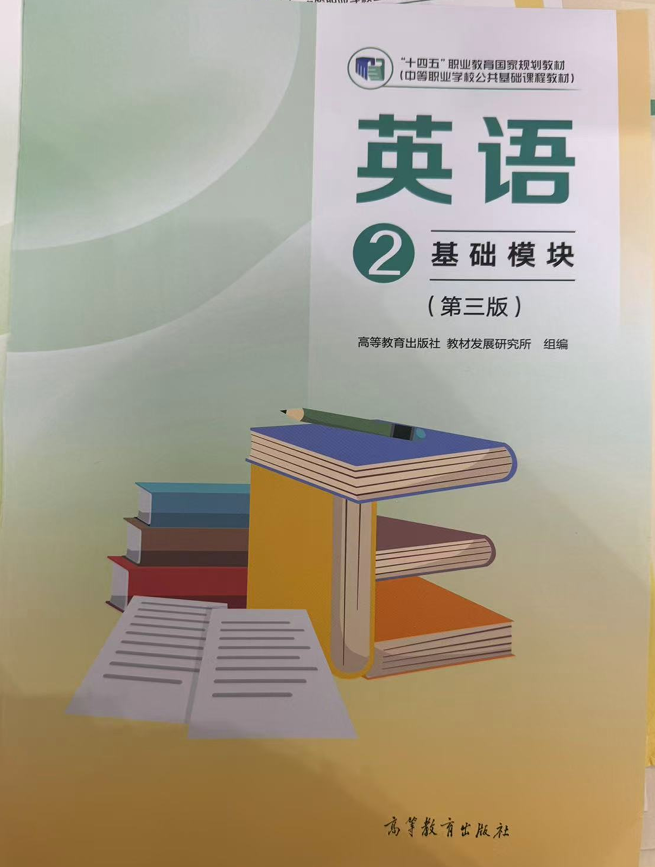
5.5 Ancient Civilization(Culture Understanding & Group Work)-《英语 基础模块2》(高教版第三版)《一课一练》(原卷版+解析版)
2026-04-27
|
2份
|
10页
|
49人阅读
|
0人下载
内容正文:
编写说明:基于中职学生英语知识不牢固、学习内驱力不够的学情特点,为了更好地提高学生的学习效率,辅助教师们抓好课前、课中、课后三个教学环节,本专辑深度解读最新的《中等职业学校英语课程标准》,匠心打造了契合广东职教高考命题特色的【广东专用】《英语 基础模块2》(高教版第三版)《一课一练》专辑,专辑共40练。
本卷为《英语 基础模块2》(高教版第三版)Unit 5 Ancient Civilian(Culture Understanding & Group Work)的课前预习和课堂检测。
《英语 基础模块2》(高教版第三版)
Unit 5 Ancient Civilian
一课一练(25) Culture Understanding & Group Work
【课前预习】
一、核心词汇检测
incredibly adv. ________
spread v. ________
merchant n. ________
stop n. ________
trade route ________
exchange goods ________
【课堂检测】
一、完形填空
Like many post-00s, 22-year-old Lin Yue grew up in a digital world filled with short videos and online games. For years, she never showed much 1 in the paper-cutting art her grandma had practiced as a national intangible cultural heritage inheritor for 40 years. She thought the traditional art was too 2 and out of date for young people like her.
That all 3 last winter holiday. Stuck at home, Lin accidentally filmed her grandma 4 a piece of red paper into a lively rabbit with a few simple cuts. She posted the 15-second video online 5 , not expecting it to get over 100,000 views overnight. Hundreds of young people left comments, saying they had 6 seen such amazing traditional art and wanted to learn it.
The unexpected 7 made Lin rethink the value of paper-cutting. She decided to 8 the art from her grandma seriously. She not only mastered the basic skills, but also 9 new elements popular with young people, such as cartoon characters and festival themes, into her works.
She kept posting videos and even started live streams to 10 paper-cutting skills. In just one year, she gained over 200,000 fans, and was 11 as the youngest inheritor of the local intangible cultural heritage. She also went to middle schools to give lessons, helping more teenagers fall in love with the 12 art.
“Traditional art doesn’t have to be 13 and far away from young people,” Lin said. “ 14 we give it a new form of expression, it can always attract the younger generation. It’s our 15 to pass down these treasures and make them alive in the modern world.”
1.A.joy B.respect C.interest D.attention
2.A.old B.dull C.boring D.complex
3.A.fell B.ended C.changed D.appeared
4.A.cut B.fold C.carve D.design
5.A.soon B.quickly C.casually D.carelessly
6.A.ever B.never C.rarely D.scarcely
7.A.win B.fame C.views D.feedback
8.A.try B.learn C.master D.practice
9.A.put B.added C.included D.introduced
10.A.show B.teach C.explain D.introduce
11.A.seen B.named C.honored D.recognized
12.A.old B.great C.wonderful D.traditional
13.A.blank B.old C.shallow D.distant
14.A.If B.When C.Though D.Because
15.A.job B.response C.mission D.responsibility
二、阅读理解(五选五)
The art of Chinese knotting, or Zhongguo Jie, has a long history in China. It is a unique form of traditional Chinese handicraft (手工艺).
16 These knots were used to record events and information in ancient times. As time went by, Chinese knotting developed into a decorative art.
The materials for making Chinese knots are usually colorful silk threads. 17 They can be made into different shapes like butterflies, flowers, and lucky symbols. Each knot has its own special meaning. For example, a double-coin knot represents wealth.
18 First, the crafter chooses the right silk threads according to the design. Then, different knotting techniques are used to create the basic shapes. Finally, the crafter combines these shapes to form a complete Chinese knot.
In the past, Chinese knots were often given as gifts during festivals. 19 Today, they are not only popular in China but also loved by people around the world. They can be seen in many places, such as homes, shops, and art galleries.
20 Many schools and communities hold Chinese knotting classes to teach this traditional art to young people. In this way, more people can learn about Chinese knotting and help keep this cultural heritage alive.
A.Making a Chinese knot involves several steps.
B.In ancient times, people made simple knots with ropes.
C.People believe that they can bring good luck and happiness.
D.These threads are easy to shape and can be knotted in different ways.
E.Chinese knotting has become a symbol of Chinese traditional culture.
原创精品资源学科网独家享有版权,侵权必究!
学科网(北京)股份有限公司
学科网(北京)股份有限公司
$
编写说明:基于中职学生英语知识不牢固、学习内驱力不够的学情特点,为了更好地提高学生的学习效率,辅助教师们抓好课前、课中、课后三个教学环节,本专辑深度解读最新的《中等职业学校英语课程标准》,匠心打造了契合广东职教高考命题特色的【广东专用】《英语 基础模块2》(高教版第三版)《一课一练》专辑,专辑共40练。
本卷为《英语 基础模块2》(高教版第三版)Unit 5 Ancient Civilian(Culture Understanding & Group Work)的课前预习和课堂检测。
《英语 基础模块2》(高教版第三版)
Unit 5 Ancient Civilian
一课一练(25) Culture Understanding & Group Work
【课前预习】
一、核心词汇检测
incredibly adv. 难以置信地;极其
spread v. 传播;扩散(过去式 / 过去分词同形)
merchant n. 商人
stop n. (旅途的)站点、驿站
trade route 贸易路线
exchange goods 交换货物
【课堂检测】
一、完形填空
Like many post-00s, 22-year-old Lin Yue grew up in a digital world filled with short videos and online games. For years, she never showed much 1 in the paper-cutting art her grandma had practiced as a national intangible cultural heritage inheritor for 40 years. She thought the traditional art was too 2 and out of date for young people like her.
That all 3 last winter holiday. Stuck at home, Lin accidentally filmed her grandma 4 a piece of red paper into a lively rabbit with a few simple cuts. She posted the 15-second video online 5 , not expecting it to get over 100,000 views overnight. Hundreds of young people left comments, saying they had 6 seen such amazing traditional art and wanted to learn it.
The unexpected 7 made Lin rethink the value of paper-cutting. She decided to 8 the art from her grandma seriously. She not only mastered the basic skills, but also 9 new elements popular with young people, such as cartoon characters and festival themes, into her works.
She kept posting videos and even started live streams to 10 paper-cutting skills. In just one year, she gained over 200,000 fans, and was 11 as the youngest inheritor of the local intangible cultural heritage. She also went to middle schools to give lessons, helping more teenagers fall in love with the 12 art.
“Traditional art doesn’t have to be 13 and far away from young people,” Lin said. “ 14 we give it a new form of expression, it can always attract the younger generation. It’s our 15 to pass down these treasures and make them alive in the modern world.”
1.A.joy B.respect C.interest D.attention
2.A.old B.dull C.boring D.complex
3.A.fell B.ended C.changed D.appeared
4.A.cut B.fold C.carve D.design
5.A.soon B.quickly C.casually D.carelessly
6.A.ever B.never C.rarely D.scarcely
7.A.win B.fame C.views D.feedback
8.A.try B.learn C.master D.practice
9.A.put B.added C.included D.introduced
10.A.show B.teach C.explain D.introduce
11.A.seen B.named C.honored D.recognized
12.A.old B.great C.wonderful D.traditional
13.A.blank B.old C.shallow D.distant
14.A.If B.When C.Though D.Because
15.A.job B.response C.mission D.responsibility
【答案】
1.C 2.A 3.C 4.A 5.C 6.B 7.D 8.B 9.D 10.A 11.D 12.D 13.B 14.A 15.D
【导语】本文是一篇记叙文。文章以00后女孩林悦的亲身经历为叙事主线,通过她从“排斥传统剪纸”到“主动传承创新”的转变,展现年轻一代与传统文化的双向奔赴。
1.考查名词词义辨析。句意:多年来,她对奶奶作为国家级非遗传承人练习了40年的剪纸艺术从未表现出太多兴趣。A. joy快乐;B. respect尊重;C. interest兴趣;D. attention 注意力。根据“She thought the traditional art was too _______ and out of date for young people like her (她认为传统艺术对像她这样的年轻人来说太陈旧过时了)”可知,她对剪纸艺术没有“兴趣”。故选C项。
2.考查形容词词义辨析。句意:她认为传统艺术对像她这样的年轻人来说太陈旧过时了。A. old陈旧的;B. dull乏味的;C. boring无聊的;D. complex复杂的。根据“out of date (过时的)”可知,她觉得传统艺术太“陈旧”。故选A项。
3.考查动词词义辨析。句意:去年寒假,一切都变了。A. fell落下;B. ended结束;C. changed改变;D. appeared出现。 根据后文林悦开始学习并推广剪纸艺术可知,她对剪纸的态度“改变”了。故选 C项。
4.考查动词词义辨析。句意:被困在家里的林悦偶然拍到奶奶用几刀简单的剪法把一张红纸剪成一只活泼的兔子。A. cut剪;B. fold折叠;C. carve雕刻;D. design 设计。根据“paper-cutting art (剪纸艺术)”可知,奶奶是在“剪”红纸。故选A项。
5.考查副词词义辨析。句意:她随意地把这段15秒的视频发到网上,没想到一夜之间就获得了超过10万的浏览量。A. soon很快;B. quickly迅速地;C. casually随意地;D. carelessly粗心地。根据“not expecting it to get over 100,000 views overnight (没想到一夜之间就获得了超过10万的浏览量)”可知,她是“随意地”发布视频。故选C项。
6.考查副词词义辨析。句意:数百名年轻人留言说,他们从未见过如此神奇的传统艺术,想要学习。A. ever曾经;B. never从未;C. rarely很少;D. scarcely几乎不。根据下文“wanted to learn it (想要学习)”可知,他们“从未”见过如此神奇的传统艺术。故选B项。
7.考查名词词义辨析。句意:意外的反馈让林悦重新思考剪纸的价值。A. win胜利;B. fame名声;C. views浏览量;D. feedback反馈。根据上文“Hundreds of young people left comments (数百名年轻人留言)”可知,这是来自网友的“反馈”。故选D项。
8.考查动词词义辨析。句意:她决定认真向奶奶学习这门艺术。A. try尝试;B. learn学习;C. master掌握;D. practice练习。根据下文“She not only mastered the basic skills”可知,她决定“学习”剪纸艺术。故选B项。
9.考查动词词义辨析。句意:她不仅掌握了基本技能,还将受年轻人欢迎的新元素,如卡通人物和节日主题,引入她的作品。A. put放置;B. added添加;C. included包括;D. introduced引入。根据“new elements popular with young people (受年轻人欢迎的新元素)”可知,她将这些元素“引入”作品中。故选D项。
10.考查动词词义辨析。句意:她不断发布视频,甚至开始直播展示剪纸技巧。A. show展示;B. teach教授;C. explain解释;D. introduce介绍。根据空前“live streams (直播)”可知,她通过直播“展示”剪纸技巧。故选A项。
11.考查动词词义辨析。句意:仅仅一年时间,她就收获了20多万粉丝,并被认可为当地最年轻的非遗传承人。A. seen看见;B. named命名;C. honored授予荣誉;D. recognized认可。根据“the youngest inheritor of the local intangible cultural heritage (当地最年轻的非遗传承人)”可知,她被官方“认可”这一身份。故选D项。
12.考查形容词词义辨析。句意:她还去中学授课,帮助更多青少年爱上这门传统艺术。A. old陈旧的;B. great伟大的;C. wonderful精彩的;D. traditional传统的。根据“paper-cutting art (剪纸艺术)”可知,这是一门“传统”艺术。故选D项。
13.考查形容词词义辨析。句意:林悦说:“传统艺术不一定必须陈旧,也不一定必须远离年轻人。” A. blank空白的;B. old陈旧的;C. shallow肤浅的;D. distant遥远的。根据空后“far away from young people (远离年轻人)”及前文“out of date (过时的)”可知,此处指传统艺术不必“陈旧”。故选B项。
14.考查连词词义辨析。句意:如果我们给它一种新的表现形式,它总能吸引年轻一代。A. If如果;B. When当……时;C. Though尽管;D. Because因为。根据“we give it a new form of expression (我们给它一种新的表现形式)”和“it can always attract the younger generation (它总能吸引年轻一代)”可知,此处是条件关系,用“如果”引导。故选A项。
15.考查名词词义辨析。句意:传承这些宝藏并让它们在现代世界中焕发生机是我们的责任。A. job工作;B. response回应;C. mission使命;D. responsibility责任。根据空后“pass down these treasures (传承这些宝藏)”可知,这是我们的“责任”。故选D项。
二、阅读理解(五选五)
The art of Chinese knotting, or Zhongguo Jie, has a long history in China. It is a unique form of traditional Chinese handicraft (手工艺).
16 These knots were used to record events and information in ancient times. As time went by, Chinese knotting developed into a decorative art.
The materials for making Chinese knots are usually colorful silk threads. 17 They can be made into different shapes like butterflies, flowers, and lucky symbols. Each knot has its own special meaning. For example, a double-coin knot represents wealth.
18 First, the crafter chooses the right silk threads according to the design. Then, different knotting techniques are used to create the basic shapes. Finally, the crafter combines these shapes to form a complete Chinese knot.
In the past, Chinese knots were often given as gifts during festivals. 19 Today, they are not only popular in China but also loved by people around the world. They can be seen in many places, such as homes, shops, and art galleries.
20 Many schools and communities hold Chinese knotting classes to teach this traditional art to young people. In this way, more people can learn about Chinese knotting and help keep this cultural heritage alive.
A.Making a Chinese knot involves several steps.
B.In ancient times, people made simple knots with ropes.
C.People believe that they can bring good luck and happiness.
D.These threads are easy to shape and can be knotted in different ways.
E.Chinese knotting has become a symbol of Chinese traditional culture.
【答案】16.B 17.D 18.A 19.C 20.E
【导语】本文是一篇说明文。文章主要讲述了中国结的历史、材料、制作步骤、文化意义及其在现代的传承。
16.由上文“The art of Chinese knotting, or Zhongguo Jie, has a long history in China. It is a unique form of traditional Chinese handicraft (手工艺).(中国结的艺术,或称“Zhongguo Jie”,在中国有着悠久的历史。它是中国传统手工艺的一种独特形式。)”及下文“These knots were used to record events and information in ancient times.(在古代,这些结被用来记录事件和信息。)”可知,此处需要提及中国结的起源或早期形态,为下文记录事件和信息做铺垫。B选项“In ancient times, people made simple knots with ropes.(在古代,人们用绳子打简单的结。)”能承上启下,符合语境。故选B。
17.由上文“The materials for making Chinese knots are usually colorful silk threads.(制作中国结的材料通常是五颜六色的丝线。)”及下文“They can be made into different shapes like butterflies, flowers, and lucky symbols.(它们可以做成不同的形状,如蝴蝶、花朵和幸运符号。)”可知,此处需要说明这些丝线易于塑形,为下文做成不同形状做铺垫。D选项“These threads are easy to shape and can be knotted in different ways.(这些线很容易塑形,可以用不同的方式打结。)”能承上启下,符合语境。故选D。
18.由下文“First, the crafter chooses the right silk threads according to the design. Then, different knotting techniques are used to create the basic shapes. Finally, the crafter combines these shapes to form a complete Chinese knot.(首先,工匠根据设计选择合适的丝线。然后,使用不同的打结技术来创建基本形状。最后,工匠将这些形状组合起来,形成一个完整的中国结。)”可知,此处需要说明制作中国结涉及多个步骤,为下文具体步骤做铺垫。A选项“Making a Chinese knot involves several steps.(制作一个中国结需要几个步骤。)”能引出下文,概括了制作中国结的步骤性,符合语境。故选A。
19.由上文“In the past, Chinese knots were often given as gifts during festivals.(在过去,中国结经常在节日期间作为礼物赠送。)”及下文“Today, they are not only popular in China but also loved by people around the world.(如今,它们不仅在中国很受欢迎,而且受到全世界人民的喜爱。)”可知,此处需要说明中国结作为礼物的原因或意义,为下文受欢迎做铺垫。C选项“People believe that they can bring good luck and happiness.(人们相信它们能带来好运和幸福。)”能承上启下,符合语境,说明了中国结作为礼物的原因和意义。故选C。
20.由下文“Many schools and communities hold Chinese knotting classes to teach this traditional art to young people. In this way, more people can learn about Chinese knotting and help keep this cultural heritage alive.(许多学校和社区开设了中国结课程,向年轻人传授这一传统艺术。这样,更多的人可以了解中国结,并帮助保持这一文化遗产的活力。)”可知,此处需要说明中国结的文化地位或意义,为下文开设课程和传承做铺垫。E选项“Chinese knotting has become a symbol of Chinese traditional culture.(中国结已成为中国传统文化的象征。)”符合语境,概括了中国结的文化地位和意义。故选E。
原创精品资源学科网独家享有版权,侵权必究!
学科网(北京)股份有限公司
学科网(北京)股份有限公司
$
资源预览图

1
由于学科网是一个信息分享及获取的平台,不确保部分用户上传资料的 来源及知识产权归属。如您发现相关资料侵犯您的合法权益,请联系学科网,我们核实后将及时进行处理。