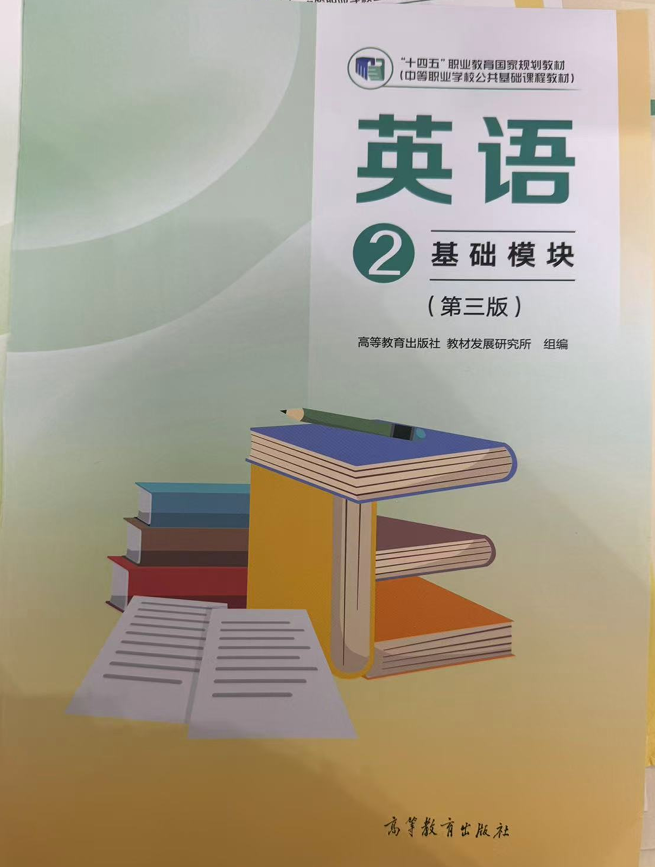
Unit 8 Green Earth(B卷·能力提升)《英语 基础模块2》(高教版第三版)单元过关卷(原卷版+解析版)
2026-04-27
|
2份
|
18页
|
54人阅读
|
0人下载
内容正文:
编写说明:本套试卷紧扣《英语 基础模块2》(高教版第三版)教材,以教材单元为基准精准覆盖核心考点。
每个单元设置AB卷,A卷为基础巩固卷,侧重基础考点训练,帮助学生扎实掌握知识要点;B卷为能力提升卷,注重知识整合与全面检测,引导学生构建知识网络。全书设计4份综合测试卷,模拟实战情境,聚焦解题能力突破,全面提升应试能力与知识应用水平。
《英语 基础模块2》(高教版第三版)《单元过关卷》
Unit 8 Green Earth
B卷·能力提升
本试卷共61小题,满分150分。考试用时120分钟。
班级 姓名 学号 成绩
Ⅰ.补全对话(5小题,共10分)
阅读下列简短对话,从A、B、C、D中选出最佳答案,将对话补全。
1.—Our history teacher just announced that we’ll have a 5,000-word research paper due next Monday, in addition to the regular final exam.
—________! That’s almost impossible to finish in such a short time.
A.You can’t be serious B.That’s a great idea
C.Could you repeat that D.I appreciate your honesty
2.— I’m so nervous about the coming-of-age ceremony speech. What if I forget my lines?
— ________! You’ve spent weeks on this.
A.You name it B.It sounds like fun
C.Don’t get me wrong D.Pull yourself together
3.—I was worried about missing the opening of the speech contest, but then I realized I could watch the live stream on my phone during the break and join in time for my part.
—________! That’s such a smart way to solve the problem.
A.Neat B.Good question C.No way D.I guess so
4.— I’ve finally finished my research paper.
— ________ It is said that it’s a tough job.
A.Don’t mention it. B.It doesn’t matter.
C.Cheer up! D.Well done!
5.—It’s my turn to give a speech, and I feel a little nervous now.
— ________. Just believe in yourself.
A.Don’t bother B.Hold your head up
C.My pleasure D.It depends
Ⅱ. 词汇(10小题,共20分)
阅读下列句子,从A、B、C、D中选出句中画线的单词或词组的意义。
6.Please take out the garbage before going out.
A. 包裹 B. 垃圾;废物 C. 工具 D. 食材
7.We should learn to sort different waste in daily life.
A. 收集 B. 丢弃 C. 分类;整理 D. 搬运
8.It’s important to recycle paper and plastic bottles.
A. 回收利用 B. 烧毁 C. 售卖 D. 存放
9.Some waste is hazardous to our health and environment.
A. 无害的 B. 有害的;危险的 C. 廉价的 D. 无用的
10.Pollution is a serious global problem for all countries.
A. 局部的 B. 地区的 C. 古老的 D. 全球的;整体的
11.The arctic environment is becoming worse these years.
A. 热带的 B. 北极的;北极地区 C. 沙漠的 D. 沿海的
12.Thick ice in the north is slowly melting now.
A. 冰;冰块 B. 泥土 C. 岩石 D. 森林
13.Protecting nature will benefit all living things.
A. 危害 B. 浪费 C. 有益于;受益 D. 限制
14.It’s easy for everyone to go green in small ways.
A. 践行绿色环保 B. 染发造型 C. 节约粮食 D. 美化校园
15.People need to plant trees to protect the air and soil.
A. 开垦荒地 B. 植树;种树 C. 修剪花草 D. 砍伐树木
Ⅲ. 完形填空(15小题,共30分)
阅读下面短文,并掌握其大意。然后从各题所给的四个选项中,选出一个最佳答案。
Ognjen Krnetié is a ranger (护林员) in the protected area of the Gradac River Gorge (峡谷) and a member of the Gradac Environmental Society. He has spent decades making sure that Gradac 16 that way. He grew up in a family that protected nature before it even became a profession. This family tradition of responsible use of nature and 17 forest and water led Ognjen to the job he does today — he is the man who makes sure the Gradac River will keep 18 for his children to enjoy.
In recent years, Gradac has fallen victim to its own 19 . When more and more people began to 20 nature escapes near cities, the gorge has experienced the entry of 21 into its protected areas: unauthorized camping fires started where it is 22 , and swimming spots crowded with bathers.
Despite all 23 , the local community remains 24 to the vision of keeping Gradac clean and lifeful. The project “Natural Measures for Ecological Gradac” is part of the community’s effort to 25 the various challenges the river faces with smart, nature-based solutions.
For Ognjen Krnetié and local residents living near Gradac, each of these 26 is more than typical nature conservation — it is a way to 27 a part of their identity and family tradition. It is also a(n) 28 for the children who run along the shores of Gradac today to bring their own 29 to the same river tomorrow, under the same willow trees, and 30 say, “You know you can drink the water straight from the river here.”
16.A.works B.forms C.stays D.stretches
17.A.getting on with B.making use of C.keeping contact with D.taking care of
18.A.clean B.quiet C.calm D.colourful
19.A.pollution B.responsibilities C.popularity D.location
20.A.avoid B.seek C.permit D.change
21.A.visitors B.animals C.opponents D.victims
22.A.admired B.prohibited C.expected D.ignored
23.A.disasters B.efforts C.difficulties D.possibilities
24.A.addicted B.opposed C.exposed D.committed
25.A.address B.analyze C.create D.record
26.A.challenges B.measures C.traditions D.barriers
27.A.preserve B.illustrate C.integrate D.adapt
28.A.routine B.opportunity C.alternative D.way
29.A.workmates B.parents C.friends D.children
30.A.willingly B.gently C.proudly D.simply
Ⅳ. 阅读理解(15小题,共45分)
A)阅读下列短文,并做短文后的题目。然后从各题所给的四个选项中,选出能回答所提问题或完成所给句子的最佳答案。
A
The love of Yuan Rishe for the environment grew out of a story she heard as a child: Having failed to find a way to recycle her used batteries (电池) in China, a German woman brought them back to Germany. After learning that batteries could cause pollution, Yuan started saving the used ones from her toys in a bag. When she heard that a children’s group was recycling used batteries, she immediately sent them there.
In 1999, 6-year-old Yuan organized a paper-recycling activity. Her team put a box at the back of their classroom and used it to collect wastepaper. The money they made by selling wastepaper was then used to buy seeds to plant. After that, children in other cities did the same. The activity also made Yuan the only school student to win a Ford Conservation and Environmental Grant (福特汽车环保奖) in 2001.
In 2004, Yuan planned to plant 2,008 trees with other children at the end of 2008. However, after her plan was announced, many students threw cold water on it, rather than encourage Yuan. Yuan turned to Wei Guiying for help. Wei offered 0.7 hectares of land to help her. Besides, with the help of school students across the country, Yuan’s plan was completed ahead of time.
Now, Yuan hopes to plant the seeds of environmental protection in her students. “It’s great to see them changing little by little and learning from every environmental protection activity,” she says.
31.Why did Yuan collect the used batteries?
A.Yuan wanted to win a big prize.
B.A German woman told her to do it.
C.Yuan needed to send them to a group.
D.The used batteries could be harmful to the environment.
32.How old was Yuan when she received her Ford grant?
A.6 B.8 C.10 D.12
33.What did many students think of Yuan’s plan when she announced it?
A.It might not work. B.It was very meaningful.
C.It would make her famous. D.It could take longer to complete.
34.Who played an important role in Yuan’s plan?
①Wei Guiying ②Yuan’s students ③The children’s group ④Other school students
A.①② B.①④ C.②③ D.③④
35.What influence does Yuan have on her students?
A.They can meet a lot of famous people.
B.They will spend more time studying plants.
C.They can get along better with each other at school.
D.They may become more active in environmental activities.
B
Think about all the plastic in our lives like plastic bags, plastic cups and plastic plates. Also, think about those forks and spoons in your school cafeteria. They may be plastic. For better or for worse, plastic seems to be everywhere.
Back in the 1990s, a man named Charles Moore discovered a huge floating island of plastic in the North Pacific Ocean. Since then, four more floating islands of plastic have been discovered in other parts of the world. With time going, Moore says, the island that he discovered is growing and spreading much farther than he expected. He made that discovery during a 30-day research expedition (考察).
“They found a lot more plastic than they’ve ever seen farther away from the area that’s called the Great Pacific Garbage Patch,” said Marieta Francis, the executive director of the A.M.R.I. — an institute that Moore created to investigate the floating plastic problem. “They ran across it sooner than expected.”
Experts say they’re not sure what all this plastic is doing to the health of our oceans or our own health. They suspect that small fish are eating tiny bits of the plastic and that those tiny little bits are getting into bigger fish when the bigger fish eat the small fish. Of course, we’re at the top of the food chain — most of the time, at least. So that means if the plastic is getting into the big fish, then it’s getting into the fish we eat and very possibly getting into us.
Moore and other researchers hope to figure out what effect all that plastic is having. But experts say their research is still in its very early stages. “What we do know for sure right now is that anywhere from 10,000 to 35,000 tons of plastic is floating on the surface of our oceans. And we humans put it there,” said Moore.
36.What can we learn from the first paragraph?
A.Plastic can be shaped very easily.
B.Plastic has a terrible effect on people’s lives.
C.Many items in daily use are made out of plastic.
D.Plastic products should not be used in school cafeterias.
37.What has Moore found?
A.The Great Pacific Garbage Patch is beginning to disappear gradually.
B.Four islands of plastic have appeared in the South Pacific Ocean.
C.The floating plastic problem can be solved easily.
D.The island of plastic has grown beyond his expectation.
38.According to experts, the floating plastic ______.
A.may threaten human health
B.may cut off the food chain
C.has caused a lot of fish to die
D.has become part of most fish’s food
39.When mentioning the islands of plastic, Moore may feel ______.
A.confident B.worried
C.enthusiastic D.confused
40.The purpose of the text is to ______.
A.call on people to fight against the islands of plastic
B.warn human beings of the bad effect of the islands of plastic
C.report what researchers have found about the islands of plastic
D.criticize human beings for what they have done to the oceans
B)阅读下面短文,从短文后的选项中选出可以填入空格处的最佳选项。
Do you know that every year volunteers collect millions of rubbish on beaches around the world? More and more people are searching for ways to reduce plastic use. A few small changes of your daily habits can quickly lead to less plastic waste.
41 It only takes a few minutes to drink a bottle of water, but the plastic bottle has to take hundreds of years to break down. Make sure you have a reusable bottle to fill up instead of buying bottled water.
Choose reusable bags instead of plastic bags. 42 You can either keep your fruit and vegetables loose (零散的) or use reusable cloth bags. When you’re ready to check out, put your things into cotton shopping bags.
Take your dinner set with you. It’s helpful to carry a diner set and a cloth napkin in your bag. 43 Drink directly from the cup. Drinking straws (吸管) are one of the most common waste things that are collected during the beach cleanup. Instead of drinking your iced coffee tea through a straw, just drink it from the cup. 44
Keep reusable bags or boxes nearby. Plastic-free living is easier if your reusable bags or boxes are easy to get, so make sure you keep them in your bag, car, or at your office. 45 Remember that our small efforts make a big difference in waste reduction.
A.That way, you’ll never have to use a plastic bag while you’re busy.
B.Use reusable water bottles.
C.If you have to use a straw, try a paper one.
D.At the store, try shopping for things without single-use plastic bags.
E.A fork and a spoon are small enough and they don’t take up much space.
Ⅴ. 语法填空(10小题,共20分)
Poyang Lake in China and Lake Victoria in Africa, the largest freshwater lakes on their continent, are working together for sustainable development. Both lakes serve as vital water sources, supporting millions of people and providing important 46 (habitat) for wildlife.
Over the past few years, close cooperation 47 (build) between experts from China’s Jiangxi province and their partners in the Lake Victoria region. Their efforts 48 (bring) practical solutions to local communities have been well received.
The two sides have worked together on eco-friendly farming and clean energy. By avoiding chemical products, local farmers in the Lake Victoria region help keep the lake clean — the same problem 49 people once faced in Poyang Lake.
In addition to farming projects, community efforts include improving sanitation, harvesting rainwater, 50 planting trees. These small but effective actions are making a 51 (true) significant difference.
The cooperation between the two lakes has been recognized as 52 model of South-South cooperation. Local environmental groups, whose work 53 (focus) on community development, express hope for continuing these projects. They believe that local actions are key 54 the sustainable development of the Lake Victoria area. With joint efforts, both regions are moving toward a future 55 (green) than before.
Ⅵ. 完成句子(5小题,共15分)
根据所给汉语提示,完成英语句子。
56.就是在老师的办公室里,我们讨论了这个问题。
______ we discussed the problem.
57.首先,我们应该多坐公交,减少污染。
To begin with, we should take more buses and ______.
58.为了保护环境,我们应该回收垃圾,节约资源。
To protect the environment, we should recycle garbage and ______.
59.我们不仅要停止浪费水,还要重复利用水资源。
We should not only stop wasting water, but also ______.
60.就是在 2020 年,他们开始了这个环保项目。
We can turn off the lights to save electricity, or ______.
Ⅶ. 应用写作(1小题,共10分)
61.【写作内容】假定你是李华,你校英文报正在开展题为“My Experience of Environmental Protection”的故事大赛。请你写一篇短文参赛,内容包括:(1) 你参与的一次环保活动;
(2) 该经历对你个人的影响。
【写作要求】正文约40个英文单词,文中不可出现你自己的真实姓名、学校等信息。
【评分标准】信息完整,语言规范,语篇连贯。
Dear Paul,
____________________________________________________________________________________________________________________________________________________________________________________________________________________________________________________________________________________________________________________________________________________________________________________________________________________________________________________________________________
Yours,
Li Hua
学科网(北京)股份有限公司 (
1
)原创精品资源学科网独家享有版权,侵权必究!
学科网(北京)股份有限公司
$
编写说明:本套试卷紧扣《英语 基础模块2》(高教版第三版)教材,以教材单元为基准精准覆盖核心考点。
每个单元设置AB卷,A卷为基础巩固卷,侧重基础考点训练,帮助学生扎实掌握知识要点;B卷为能力提升卷,注重知识整合与全面检测,引导学生构建知识网络。全书设计4份综合测试卷,模拟实战情境,聚焦解题能力突破,全面提升应试能力与知识应用水平。
《英语 基础模块2》(高教版第三版)《单元过关卷》
Unit 8 Green Earth
B卷·能力提升
本试卷共61小题,满分150分。考试用时120分钟。
班级 姓名 学号 成绩
Ⅰ.补全对话(5小题,共10分)
阅读下列简短对话,从A、B、C、D中选出最佳答案,将对话补全。
1.—Our history teacher just announced that we’ll have a 5,000-word research paper due next Monday, in addition to the regular final exam.
—________! That’s almost impossible to finish in such a short time.
A.You can’t be serious B.That’s a great idea
C.Could you repeat that D.I appreciate your honesty
2.— I’m so nervous about the coming-of-age ceremony speech. What if I forget my lines?
— ________! You’ve spent weeks on this.
A.You name it B.It sounds like fun
C.Don’t get me wrong D.Pull yourself together
3.—I was worried about missing the opening of the speech contest, but then I realized I could watch the live stream on my phone during the break and join in time for my part.
—________! That’s such a smart way to solve the problem.
A.Neat B.Good question C.No way D.I guess so
4.— I’ve finally finished my research paper.
— ________ It is said that it’s a tough job.
A.Don’t mention it. B.It doesn’t matter.
C.Cheer up! D.Well done!
5.—It’s my turn to give a speech, and I feel a little nervous now.
— ________. Just believe in yourself.
A.Don’t bother B.Hold your head up
C.My pleasure D.It depends
Ⅱ. 词汇(10小题,共20分)
阅读下列句子,从A、B、C、D中选出句中画线的单词或词组的意义。
6.Please take out the garbage before going out.
A. 包裹 B. 垃圾;废物 C. 工具 D. 食材
7.We should learn to sort different waste in daily life.
A. 收集 B. 丢弃 C. 分类;整理 D. 搬运
8.It’s important to recycle paper and plastic bottles.
A. 回收利用 B. 烧毁 C. 售卖 D. 存放
9.Some waste is hazardous to our health and environment.
A. 无害的 B. 有害的;危险的 C. 廉价的 D. 无用的
10.Pollution is a serious global problem for all countries.
A. 局部的 B. 地区的 C. 古老的 D. 全球的;整体的
11.The arctic environment is becoming worse these years.
A. 热带的 B. 北极的;北极地区 C. 沙漠的 D. 沿海的
12.Thick ice in the north is slowly melting now.
A. 冰;冰块 B. 泥土 C. 岩石 D. 森林
13.Protecting nature will benefit all living things.
A. 危害 B. 浪费 C. 有益于;受益 D. 限制
14.It’s easy for everyone to go green in small ways.
A. 践行绿色环保 B. 染发造型 C. 节约粮食 D. 美化校园
15.People need to plant trees to protect the air and soil.
A. 开垦荒地 B. 植树;种树 C. 修剪花草 D. 砍伐树木
Ⅲ. 完形填空(15小题,共30分)
阅读下面短文,并掌握其大意。然后从各题所给的四个选项中,选出一个最佳答案。
Ognjen Krnetié is a ranger (护林员) in the protected area of the Gradac River Gorge (峡谷) and a member of the Gradac Environmental Society. He has spent decades making sure that Gradac 16 that way. He grew up in a family that protected nature before it even became a profession. This family tradition of responsible use of nature and 17 forest and water led Ognjen to the job he does today — he is the man who makes sure the Gradac River will keep 18 for his children to enjoy.
In recent years, Gradac has fallen victim to its own 19 . When more and more people began to 20 nature escapes near cities, the gorge has experienced the entry of 21 into its protected areas: unauthorized camping fires started where it is 22 , and swimming spots crowded with bathers.
Despite all 23 , the local community remains 24 to the vision of keeping Gradac clean and lifeful. The project “Natural Measures for Ecological Gradac” is part of the community’s effort to 25 the various challenges the river faces with smart, nature-based solutions.
For Ognjen Krnetié and local residents living near Gradac, each of these 26 is more than typical nature conservation — it is a way to 27 a part of their identity and family tradition. It is also a(n) 28 for the children who run along the shores of Gradac today to bring their own 29 to the same river tomorrow, under the same willow trees, and 30 say, “You know you can drink the water straight from the river here.”
16.A.works B.forms C.stays D.stretches
17.A.getting on with B.making use of C.keeping contact with D.taking care of
18.A.clean B.quiet C.calm D.colourful
19.A.pollution B.responsibilities C.popularity D.location
20.A.avoid B.seek C.permit D.change
21.A.visitors B.animals C.opponents D.victims
22.A.admired B.prohibited C.expected D.ignored
23.A.disasters B.efforts C.difficulties D.possibilities
24.A.addicted B.opposed C.exposed D.committed
25.A.address B.analyze C.create D.record
26.A.challenges B.measures C.traditions D.barriers
27.A.preserve B.illustrate C.integrate D.adapt
28.A.routine B.opportunity C.alternative D.way
29.A.workmates B.parents C.friends D.children
30.A.willingly B.gently C.proudly D.simply
Ⅳ. 阅读理解(15小题,共45分)
A)阅读下列短文,并做短文后的题目。然后从各题所给的四个选项中,选出能回答所提问题或完成所给句子的最佳答案。
A
The love of Yuan Rishe for the environment grew out of a story she heard as a child: Having failed to find a way to recycle her used batteries (电池) in China, a German woman brought them back to Germany. After learning that batteries could cause pollution, Yuan started saving the used ones from her toys in a bag. When she heard that a children’s group was recycling used batteries, she immediately sent them there.
In 1999, 6-year-old Yuan organized a paper-recycling activity. Her team put a box at the back of their classroom and used it to collect wastepaper. The money they made by selling wastepaper was then used to buy seeds to plant. After that, children in other cities did the same. The activity also made Yuan the only school student to win a Ford Conservation and Environmental Grant (福特汽车环保奖) in 2001.
In 2004, Yuan planned to plant 2,008 trees with other children at the end of 2008. However, after her plan was announced, many students threw cold water on it, rather than encourage Yuan. Yuan turned to Wei Guiying for help. Wei offered 0.7 hectares of land to help her. Besides, with the help of school students across the country, Yuan’s plan was completed ahead of time.
Now, Yuan hopes to plant the seeds of environmental protection in her students. “It’s great to see them changing little by little and learning from every environmental protection activity,” she says.
31.Why did Yuan collect the used batteries?
A.Yuan wanted to win a big prize.
B.A German woman told her to do it.
C.Yuan needed to send them to a group.
D.The used batteries could be harmful to the environment.
32.How old was Yuan when she received her Ford grant?
A.6 B.8 C.10 D.12
33.What did many students think of Yuan’s plan when she announced it?
A.It might not work. B.It was very meaningful.
C.It would make her famous. D.It could take longer to complete.
34.Who played an important role in Yuan’s plan?
①Wei Guiying ②Yuan’s students ③The children’s group ④Other school students
A.①② B.①④ C.②③ D.③④
35.What influence does Yuan have on her students?
A.They can meet a lot of famous people.
B.They will spend more time studying plants.
C.They can get along better with each other at school.
D.They may become more active in environmental activities.
B
Think about all the plastic in our lives like plastic bags, plastic cups and plastic plates. Also, think about those forks and spoons in your school cafeteria. They may be plastic. For better or for worse, plastic seems to be everywhere.
Back in the 1990s, a man named Charles Moore discovered a huge floating island of plastic in the North Pacific Ocean. Since then, four more floating islands of plastic have been discovered in other parts of the world. With time going, Moore says, the island that he discovered is growing and spreading much farther than he expected. He made that discovery during a 30-day research expedition (考察).
“They found a lot more plastic than they’ve ever seen farther away from the area that’s called the Great Pacific Garbage Patch,” said Marieta Francis, the executive director of the A.M.R.I. — an institute that Moore created to investigate the floating plastic problem. “They ran across it sooner than expected.”
Experts say they’re not sure what all this plastic is doing to the health of our oceans or our own health. They suspect that small fish are eating tiny bits of the plastic and that those tiny little bits are getting into bigger fish when the bigger fish eat the small fish. Of course, we’re at the top of the food chain — most of the time, at least. So that means if the plastic is getting into the big fish, then it’s getting into the fish we eat and very possibly getting into us.
Moore and other researchers hope to figure out what effect all that plastic is having. But experts say their research is still in its very early stages. “What we do know for sure right now is that anywhere from 10,000 to 35,000 tons of plastic is floating on the surface of our oceans. And we humans put it there,” said Moore.
36.What can we learn from the first paragraph?
A.Plastic can be shaped very easily.
B.Plastic has a terrible effect on people’s lives.
C.Many items in daily use are made out of plastic.
D.Plastic products should not be used in school cafeterias.
37.What has Moore found?
A.The Great Pacific Garbage Patch is beginning to disappear gradually.
B.Four islands of plastic have appeared in the South Pacific Ocean.
C.The floating plastic problem can be solved easily.
D.The island of plastic has grown beyond his expectation.
38.According to experts, the floating plastic ______.
A.may threaten human health
B.may cut off the food chain
C.has caused a lot of fish to die
D.has become part of most fish’s food
39.When mentioning the islands of plastic, Moore may feel ______.
A.confident B.worried
C.enthusiastic D.confused
40.The purpose of the text is to ______.
A.call on people to fight against the islands of plastic
B.warn human beings of the bad effect of the islands of plastic
C.report what researchers have found about the islands of plastic
D.criticize human beings for what they have done to the oceans
B)阅读下面短文,从短文后的选项中选出可以填入空格处的最佳选项。
Do you know that every year volunteers collect millions of rubbish on beaches around the world? More and more people are searching for ways to reduce plastic use. A few small changes of your daily habits can quickly lead to less plastic waste.
41 It only takes a few minutes to drink a bottle of water, but the plastic bottle has to take hundreds of years to break down. Make sure you have a reusable bottle to fill up instead of buying bottled water.
Choose reusable bags instead of plastic bags. 42 You can either keep your fruit and vegetables loose (零散的) or use reusable cloth bags. When you’re ready to check out, put your things into cotton shopping bags.
Take your dinner set with you. It’s helpful to carry a diner set and a cloth napkin in your bag. 43 Drink directly from the cup. Drinking straws (吸管) are one of the most common waste things that are collected during the beach cleanup. Instead of drinking your iced coffee tea through a straw, just drink it from the cup. 44
Keep reusable bags or boxes nearby. Plastic-free living is easier if your reusable bags or boxes are easy to get, so make sure you keep them in your bag, car, or at your office. 45 Remember that our small efforts make a big difference in waste reduction.
A.That way, you’ll never have to use a plastic bag while you’re busy.
B.Use reusable water bottles.
C.If you have to use a straw, try a paper one.
D.At the store, try shopping for things without single-use plastic bags.
E.A fork and a spoon are small enough and they don’t take up much space.
Ⅴ. 语法填空(10小题,共20分)
Poyang Lake in China and Lake Victoria in Africa, the largest freshwater lakes on their continent, are working together for sustainable development. Both lakes serve as vital water sources, supporting millions of people and providing important 46 (habitat) for wildlife.
Over the past few years, close cooperation 47 (build) between experts from China’s Jiangxi province and their partners in the Lake Victoria region. Their efforts 48 (bring) practical solutions to local communities have been well received.
The two sides have worked together on eco-friendly farming and clean energy. By avoiding chemical products, local farmers in the Lake Victoria region help keep the lake clean — the same problem 49 people once faced in Poyang Lake.
In addition to farming projects, community efforts include improving sanitation, harvesting rainwater, 50 planting trees. These small but effective actions are making a 51 (true) significant difference.
The cooperation between the two lakes has been recognized as 52 model of South-South cooperation. Local environmental groups, whose work 53 (focus) on community development, express hope for continuing these projects. They believe that local actions are key 54 the sustainable development of the Lake Victoria area. With joint efforts, both regions are moving toward a future 55 (green) than before.
Ⅵ. 完成句子(5小题,共15分)
根据所给汉语提示,完成英语句子。
56.就是在老师的办公室里,我们讨论了这个问题。
______ we discussed the problem.
57.首先,我们应该多坐公交,减少污染。
To begin with, we should take more buses and ______.
58.为了保护环境,我们应该回收垃圾,节约资源。
To protect the environment, we should recycle garbage and ______.
59.我们不仅要停止浪费水,还要重复利用水资源。
We should not only stop wasting water, but also ______.
60.就是在 2020 年,他们开始了这个环保项目。
We can turn off the lights to save electricity, or ______.
Ⅶ. 应用写作(1小题,共10分)
61.【写作内容】假定你是李华,你校英文报正在开展题为“My Experience of Environmental Protection”的故事大赛。请你写一篇短文参赛,内容包括:(1) 你参与的一次环保活动;
(2) 该经历对你个人的影响。
【写作要求】正文约40个英文单词,文中不可出现你自己的真实姓名、学校等信息。
【评分标准】信息完整,语言规范,语篇连贯。
Dear Paul,
____________________________________________________________________________________________________________________________________________________________________________________________________________________________________________________________________________________________________________________________________________________________________________________________________________________________________________________________________________
Yours,
Li Hua
学科网(北京)股份有限公司 (
1
)原创精品资源学科网独家享有版权,侵权必究!
学科网(北京)股份有限公司
$
资源预览图

1

2

3
由于学科网是一个信息分享及获取的平台,不确保部分用户上传资料的 来源及知识产权归属。如您发现相关资料侵犯您的合法权益,请联系学科网,我们核实后将及时进行处理。