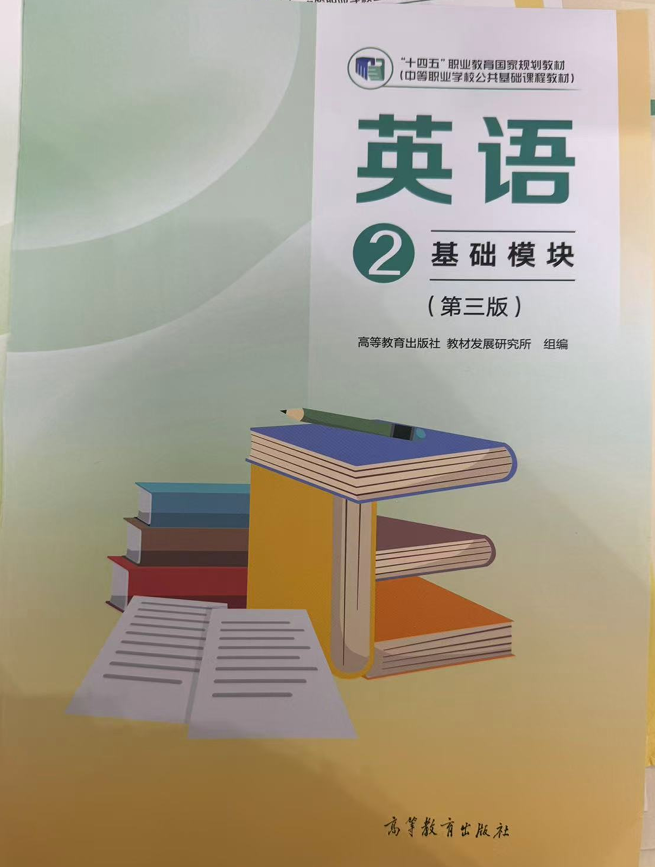
Unit 5 Ancient Civilization(A卷·基础巩固)《英语 基础模块2》(高教版第三版)单元过关卷(原卷版+解析版)
2026-04-27
|
2份
|
28页
|
65人阅读
|
0人下载
内容正文:
编写说明:本套试卷紧扣《英语 基础模块2》(高教版第三版)教材,以教材单元为基准精准覆盖核心考点。
每个单元设置AB卷,A卷为基础巩固卷,侧重基础考点训练,帮助学生扎实掌握知识要点;B卷为能力提升卷,注重知识整合与全面检测,引导学生构建知识网络。全书设计4份综合测试卷,模拟实战情境,聚焦解题能力突破,全面提升应试能力与知识应用水平。
《英语 基础模块2》(高教版第三版)《单元过关卷》
Unit 5 Ancient Civilization
A卷·基础巩固
本试卷共61小题,满分150分。考试用时120分钟。
班级 姓名 学号 成绩
Ⅰ.补全对话(5小题,共10分)
阅读下列简短对话,从A、B、C、D中选出最佳答案,将对话补全。
1.—Do you mind if I ask you a few questions about your research?
—______ I’m glad to share my ideas with you.
A.By all means. B.Not in the slightest. C.Don’t mention it. D.It depends.
【答案】B
【详解】考查情景交际。句意:——你介意我问几个关于你的研究的问题吗?—— 一点也不介意。我很乐意和你分享我的想法。A. By all means.当然可以;B. Not in the slightest.一点也不;C. Don’t mention it.别客气;D. It depends.看情况而定。根据“I’m glad to share my ideas with you.”可知,回答者完全不介意,Not in the slightest符合语境。故选B。
2.—Don’t worry, Mum. The doctor said it was only the flu.
—______! I’ll tell dad there’s nothing serious.
A.Congratulations B.What a relief C.How surprising D.What a shame
【答案】B
【详解】考查情景交际。句意:——别担心,妈妈。医生说只是流感。——总算松了一口气!我告诉爸爸没什么严重的。A. Congratulations祝贺;B. What a relief总算松了一口气;C. How surprising真令人惊讶;D. What a shame真可惜。根据“The doctor said it was only the flu.”可知,得知只是普通流感、没有大碍,应该是感到宽慰,What a relief符合语境。故选B。
3.— No words are strong enough to extend our heartfelt gratitude for your assistance.
— ______.
A.It’s my pleasure B.With pleasure C.Take it easy D.Never mind
【答案】A
【详解】考查情景交际。句意:——再华丽的言辞也无法表达我们对你帮助的衷心感谢。——这是我的荣幸。A. It’s my pleasure不客气,这是我的荣幸(用于回答别人的感谢);B. With pleasure乐意效劳(用于回答别人的请求);C. Take it easy别紧张;D. Never mind没关系。根据上文“No words are strong enough to extend our heartfelt gratitude for your assistance.”可知,此处是回答别人的感谢。故选A。
4.—I was just walking down the street, and guess who I bumped into? Taylor Swift! She even waved at me!
—________.
A.You don’t say. B.You can say it again.
C.Good luck to you. D.I dare say.
【答案】A
【详解】考查情景交际。句意:——我刚在街上走,猜猜我碰到了谁?泰勒·斯威夫特!她甚至向我挥手!——真的吗? A. You don’t say.不会吧;B. You can say it again.你说得对极了;C. Good luck to you.祝你好运;D. I dare say.我敢说。根据上文“I was just walking down the street, and guess who I bumped into? Taylor Swift!”可知,对方在分享令人惊喜的偶遇,所以用A项,表示惊讶、难以置信,意为“不会吧;真的吗”,符合对话逻辑。故填A。
5.—I’m fed up with the same dishes in the school, I want to try something different today.
—
A.How come? B.Good for you. C.Like what? D.So what?
【答案】C
【详解】考查情景交际。句意:——我受够了学校里千篇一律的饭菜,今天想尝尝不一样的。——比如呢?A. How come?怎么会;B. Good for you.真为你高兴;C. Like what?比如说;D. So what?那又怎样。根据“I want to try something different today.”可知,此处询问具体要尝试什么,用Like what提问。故选C。
Ⅱ. 词汇(10小题,共20分)
阅读下列句子,从A、B、C、D中选出句中画线的单词或词组的意义。
6.We study history to know more about how ancient civilizations developed.
A.数学 B.历史 C.音乐 D.体育
【答案】B
【详解】考查名词。句意:我们学习历史是为了更多地了解古代文明是如何发展的。history意为“历史”,作宾语。故选B。
7.Civilization includes the culture, technology, and social systems of a group of people.
A.文明 B.自然 C.灾难 D.和平
【答案】A
【详解】考查名词。句意:文明包括一群人的文化、技术和社会制度。名词“civilization”意为“文明”,作主语。故选A。
8.Ancient civilizations created many great works that still surprise people today.
A.现代的 B.古代的 C.未来的 D.虚拟的
【答案】B
【详解】考查形容词。句意:古代文明创造了许多仍能使如今的人们惊叹的伟大作品。形容词“ancient”意为“古代的”,作定语。故选B。
9.The ruins of the old temple tell us stories about the city’s ancient past.
A.遗迹 B.花园 C.广场 D.街道
【答案】A
【详解】考查名词。句意:这座古庙的废墟向我们讲述了这座城市古老的过去。名词“ruins”是“ruin”的复数形式,意为“遗迹,废墟”,作主语。故选A。
10.We can learn about ancient people’s beliefs from their religious buildings.
A.家庭 B.宗教的 C.商业的 D.军事的
【答案】B
【详解】考查形容词。句意:我们可以从古人的宗教建筑中了解他们的信仰。形容词“religious”意为“宗教的,与宗教相关的”,作定语,修饰名词buildings。故选B。
11.Pyramids in Egypt were built as tombs for ancient pharaohs.
A.宫殿 B.金字塔 C.寺庙 D.城堡
【答案】B
【详解】考查名词词义。句意:埃及的金字塔是为古代法老建造的陵墓。名词Pyramids意为“金字塔”,作主语。故选B。
12.The Great Wall is a famous symbol of ancient Chinese civilization.
A.标志 B.问题 C.结果 D.原因
【答案】A
【详解】考查名词词义。句意:长城是中国古代文明的著名标志。名词“symbol”意为“标志”,在句中作表语。故选A。
13.Trade routes helped spread culture and technology between different ancient civilizations.
A.战争 B.贸易路线 C.河流 D.山脉
【答案】B
【详解】考查名词。句意:贸易路线帮助在不同古代文明之间传播文化和科技。名词词组“Trade routes”意为“贸易路线”,作主语。故选B。
14.The ancient city was abandoned after a severe flood, leaving only ruins.
A.重建 B.发现 C.遗弃 D.保护
【答案】C
【详解】考查动词。句意:这座古城在一场严重的洪水之后被遗弃了,只留下一片废墟。abandoned是abandon的过去分词形式,意为“遗弃;放弃”。根据“after a severe flood, leaving only ruins”,古城应是被“遗弃”了。故选C。
15.The museum displays a collection of pottery from the ancient Egyptian civilization.
A.陶器 B.武器 C.布料 D.工具
【答案】A
【详解】考查名词。句意:博物馆展出了一批来自古埃及文明的陶器藏品。pottery常见释义为 “陶器;陶器制品”。故选A。
Ⅲ. 完形填空(15小题,共30分)
阅读下面短文,并掌握其大意。然后从各题所给的四个选项中,选出一个最佳答案。
Like many post-00s, 22-year-old Lin Yue grew up in a digital world filled with short videos and online games. For years, she never showed much 16 in the paper-cutting art her grandma had practiced as a national intangible cultural heritage inheritor for 40 years. She thought the traditional art was too 17 and out of date for young people like her.
That all 18 last winter holiday. Stuck at home, Lin accidentally filmed her grandma 19 a piece of red paper into a lively rabbit with a few simple cuts. She posted the 15-second video online 20 , not expecting it to get over 100,000 views overnight. Hundreds of young people left comments, saying they had 21 seen such amazing traditional art and wanted to learn it.
The unexpected 22 made Lin rethink the value of paper-cutting. She decided to 23 the art from her grandma seriously. She not only mastered the basic skills, but also 24 new elements popular with young people, such as cartoon characters and festival themes, into her works.
She kept posting videos and even started live streams to 25 paper-cutting skills. In just one year, she gained over 200,000 fans, and was 26 as the youngest inheritor of the local intangible cultural heritage. She also went to middle schools to give lessons, helping more teenagers fall in love with the 27 art.
“Traditional art doesn’t have to be 28 and far away from young people,” Lin said. “ 29 we give it a new form of expression, it can always attract the younger generation. It’s our 30 to pass down these treasures and make them alive in the modern world.”
16.A.joy B.respect C.interest D.attention
17.A.old B.dull C.boring D.complex
18.A.fell B.ended C.changed D.appeared
19.A.cut B.fold C.carve D.design
20.A.soon B.quickly C.casually D.carelessly
21.A.ever B.never C.rarely D.scarcely
22.A.win B.fame C.views D.feedback
23.A.try B.learn C.master D.practice
24.A.put B.added C.included D.introduced
25.A.show B.teach C.explain D.introduce
26.A.seen B.named C.honored D.recognized
27.A.old B.great C.wonderful D.traditional
28.A.blank B.old C.shallow D.distant
29.A.If B.When C.Though D.Because
30.A.job B.response C.mission D.responsibility
【答案】
16.C 17.A 18.C 19.A 20.C 21.B 22.D 23.B 24.D 25.A 26.D 27.D 28.B 29.A 30.D
【导语】本文是一篇记叙文。文章以00后女孩林悦的亲身经历为叙事主线,通过她从“排斥传统剪纸”到“主动传承创新”的转变,展现年轻一代与传统文化的双向奔赴。
16.考查名词词义辨析。句意:多年来,她对奶奶作为国家级非遗传承人练习了40年的剪纸艺术从未表现出太多兴趣。A. joy快乐;B. respect尊重;C. interest兴趣;D. attention 注意力。根据“She thought the traditional art was too _______ and out of date for young people like her (她认为传统艺术对像她这样的年轻人来说太陈旧过时了)”可知,她对剪纸艺术没有“兴趣”。故选C项。
17.考查形容词词义辨析。句意:她认为传统艺术对像她这样的年轻人来说太陈旧过时了。A. old陈旧的;B. dull乏味的;C. boring无聊的;D. complex复杂的。根据“out of date (过时的)”可知,她觉得传统艺术太“陈旧”。故选A项。
18.考查动词词义辨析。句意:去年寒假,一切都变了。A. fell落下;B. ended结束;C. changed改变;D. appeared出现。 根据后文林悦开始学习并推广剪纸艺术可知,她对剪纸的态度“改变”了。故选 C项。
19.考查动词词义辨析。句意:被困在家里的林悦偶然拍到奶奶用几刀简单的剪法把一张红纸剪成一只活泼的兔子。A. cut剪;B. fold折叠;C. carve雕刻;D. design 设计。根据“paper-cutting art (剪纸艺术)”可知,奶奶是在“剪”红纸。故选A项。
20.考查副词词义辨析。句意:她随意地把这段15秒的视频发到网上,没想到一夜之间就获得了超过10万的浏览量。A. soon很快;B. quickly迅速地;C. casually随意地;D. carelessly粗心地。根据“not expecting it to get over 100,000 views overnight (没想到一夜之间就获得了超过10万的浏览量)”可知,她是“随意地”发布视频。故选C项。
21.考查副词词义辨析。句意:数百名年轻人留言说,他们从未见过如此神奇的传统艺术,想要学习。A. ever曾经;B. never从未;C. rarely很少;D. scarcely几乎不。根据下文“wanted to learn it (想要学习)”可知,他们“从未”见过如此神奇的传统艺术。故选B项。
22.考查名词词义辨析。句意:意外的反馈让林悦重新思考剪纸的价值。A. win胜利;B. fame名声;C. views浏览量;D. feedback反馈。根据上文“Hundreds of young people left comments (数百名年轻人留言)”可知,这是来自网友的“反馈”。故选D项。
23.考查动词词义辨析。句意:她决定认真向奶奶学习这门艺术。A. try尝试;B. learn学习;C. master掌握;D. practice练习。根据下文“She not only mastered the basic skills”可知,她决定“学习”剪纸艺术。故选B项。
24.考查动词词义辨析。句意:她不仅掌握了基本技能,还将受年轻人欢迎的新元素,如卡通人物和节日主题,引入她的作品。A. put放置;B. added添加;C. included包括;D. introduced引入。根据“new elements popular with young people (受年轻人欢迎的新元素)”可知,她将这些元素“引入”作品中。故选D项。
25.考查动词词义辨析。句意:她不断发布视频,甚至开始直播展示剪纸技巧。A. show展示;B. teach教授;C. explain解释;D. introduce介绍。根据空前“live streams (直播)”可知,她通过直播“展示”剪纸技巧。故选A项。
26.考查动词词义辨析。句意:仅仅一年时间,她就收获了20多万粉丝,并被认可为当地最年轻的非遗传承人。A. seen看见;B. named命名;C. honored授予荣誉;D. recognized认可。根据“the youngest inheritor of the local intangible cultural heritage (当地最年轻的非遗传承人)”可知,她被官方“认可”这一身份。故选D项。
27.考查形容词词义辨析。句意:她还去中学授课,帮助更多青少年爱上这门传统艺术。A. old陈旧的;B. great伟大的;C. wonderful精彩的;D. traditional传统的。根据“paper-cutting art (剪纸艺术)”可知,这是一门“传统”艺术。故选D项。
28.考查形容词词义辨析。句意:林悦说:“传统艺术不一定必须陈旧,也不一定必须远离年轻人。” A. blank空白的;B. old陈旧的;C. shallow肤浅的;D. distant遥远的。根据空后“far away from young people (远离年轻人)”及前文“out of date (过时的)”可知,此处指传统艺术不必“陈旧”。故选B项。
29.考查连词词义辨析。句意:如果我们给它一种新的表现形式,它总能吸引年轻一代。A. If如果;B. When当……时;C. Though尽管;D. Because因为。根据“we give it a new form of expression (我们给它一种新的表现形式)”和“it can always attract the younger generation (它总能吸引年轻一代)”可知,此处是条件关系,用“如果”引导。故选A项。
30.考查名词词义辨析。句意:传承这些宝藏并让它们在现代世界中焕发生机是我们的责任。A. job工作;B. response回应;C. mission使命;D. responsibility责任。根据空后“pass down these treasures (传承这些宝藏)”可知,这是我们的“责任”。故选D项。
Ⅳ. 阅读理解(15小题,共45分)
A)阅读下列短文,并做短文后的题目。然后从各题所给的四个选项中,选出能回答所提问题或完成所给句子的最佳答案。
A
Beijing Opera is the most typical of all Chinese traditional dramatic art forms and the largest Chinese opera form. Having a history of about 200 years, it is developed from absorbing many other dramatic forms, mostly from the local drama “Huiban”, which was popular in South China during the 18th century. It is a scenic (舞台的) art including music, performance, literature, aria (唱腔) and face painting.
Theatrical art forms in many other countries do not present singing, dancing and spoken parts in one single drama. An opera singer, for example, neither dances nor speaks on stage; there are no singing or dancing parts in a modern play; in a dance drama, the dancer bas no speaking role and does not sing either. Traditional Chinese drama, including Beijing Opera, is a kind of entertainment which includes spoken parts, singing, dancing and acrobatics (杂技).
Besides its presence in China, Beijing Opera has spread to many other places. Mei Lanfang, one of the most famous performers of all time, was the first to introduce Beijing Opera to foreigners and made highly successful tours to foreign countries.
“You will be puzzled (困惑的) all the way through and a little bored from time to time; but you will be charmed and interested. You will be strongly attracted to Beijing Opera even if you know nothing of the dramatic background.” This is how one American traveller described his first experience in watching Beijing Opera.
Beijing Opera is China’s national opera and it is full of Chinese cultural traditions. Welcome to China and enjoy Beijing Opera!
31.How long is the history of Beijing Opera?
A.One hundred years. B.Two hundred years.
C.Three hundred years. D.Four hundred years.
32.According to Paragraph 3, what does the writer think of Mei Lanfang?
A.He played an important role in spreading Beijing Opera.
B.He isn’t as famous as the other Beijing Opera performer.
C.He never introduced Beijing Opera to the world.
D.He is a performer who doesn’t like to travel around the world.
33.Which of the following is True about Beijing Opera?
A.There are no dancing parts in modern Beijing Opera.
B.Beijing Opera presents singing dancing and spoken parts.
C.Beijing Opera hasn’t absorbed the other art forms.
D.Nowadays, young people aren’t interested in Beijing Opera.
34.What does “charm” underlined in Paragraph 4 most probably mean in Chinese?
A.Present B.Bore C.Attract D.Cheat
35.What’s the writer’s purpose in writing the article?
A.To show us the foreigners’ opinions. B.To introduce Mei Lanfang.
C.To tell the differences between dramas. D.To introduce Beijing Opera.
【答案】31.B 32.A 33.B 34.C 35.D
【导语】本文是一篇说明文。主要介绍了京剧的历史、艺术特点、对外传播以及外国游客对京剧的感受,展现了京剧作为中国国粹的独特魅力与文化价值。
31.细节理解题。根据第一段“Having a history of about 200 years, it is developed from absorbing many other dramatic forms, mostly from the local drama “Huiban”, which was popular in South China during the 18th century.(它有着约200年的历史,是通过吸收众多其他戏剧形式发展而来的,其中大部分源自当地流行的18世纪在中国南方盛行的“徽班”戏剧)”可知,京剧的历史约为200年。故选B。
32.细节理解题。根据第三段“Mei Lanfang, one of the most famous performers of all time, was the first to introduce Beijing Opera to foreigners and made highly successful tours to foreign countries.(梅兰芳是有史以来最著名的表演者之一,他第一个将京剧介绍给外国人,并在国外进行了非常成功的巡演)”可知,作者认为梅兰芳在传播京剧方面发挥了重要作用。故选A。
33.细节理解题。根据第二段“Traditional Chinese drama, including Beijing Opera, is a kind of entertainment which includes spoken parts, singing, dancing and acrobatics (杂技).(包括京剧在内的中国传统戏剧是一种集念、唱、舞、杂技于一体的娱乐形式)”可知,京剧同时呈现唱、舞和念白部分。故选B。
34.词句猜测题。根据第四段“but you will be charmed and interested. You will be strongly attracted to Beijing Opera even if you know nothing of the dramatic background.(但你会被____并产生兴趣。即使你对京剧的戏剧背景一无所知,你也会被它深深吸引)”可知,京剧很有吸引力,charmed与划线词后文“attracted(吸引)”语义相近。故选C。
35.推理判断题。通读全文可知,文章依次介绍了京剧的历史、艺术特点、对外传播和外国观众的感受,全文围绕京剧展开。由此推断,作者写作目的是介绍京剧,故选D。
B
Long ago, in a small village by the Min River, there lived a little boy named Wen Peng and his mother. Wen went fishing every day and sold the fish to support his family.
One day, Wen caught a beautiful gold fish. The fish began speaking, “Please let me go and I will give you a gift in return.” Wen set the fish free and the fish gave him a large pearl (珍珠). Wen brought the pearl home and found it could give him everything he wanted.
After a few days, Black Tiger, the richest and cruelest (最残忍的) man in the village, heard about the magic pearl. He wanted to take it away from Wen, but he couldn’t find the pearl and left angrily.
At the time, the mother found Wen’s face looked strange. “What’s wrong with you?” She worried. “I was holding the pearl in my mouth and I swallowed (吞下) it when Black Tiger shook me! Now I am terribly thirsty (口渴的).” He ran toward the Min River to get water to drink and his mother ran after him. He drank and drank till the river was almost empty. Suddenly, the sky became dark, Wen was turning into a dragon and rose into the air.
The mother shouted, “Look back at me before you go, my son!” The dragon looked back and a tear fell from his eye and fell beside the river. 24 times did the mother call, and 24 times did the dragon turn around, dropping 24 tears beside the river. That is why, people say, the 24 lakes along the Min River look like 24 teardrops.
36.Who gave Wen the magic gift?
A.His mother. B.Black Tiger. C.The gold fish. D.The dragon.
37.Why did Wen put the pearl in his mouth?
A.To get its magic power. B.To hide it from his mother.
C.To keep it safe from the river. D.To prevent Black Tiger from taking it away.
38.What happened to Wen when he drank water from the Min River?
A.He became sick. B.He became powerful.
C.He turned into a dragon. D.He fell into a deep sleep.
39.How did Wen feel when he was about to leave his mother?
A.Angry. B.Sad. C.Excited. D.Strange.
40.What is the best title of the passage?
A.A Legend (传说) of the Min River B.A Magic Pearl
C.Wen Peng and His Mother D.The Gold Fish and the Dragon
【答案】36.C 37.D 38.C 39.B 40.A
【导语】这是一篇民间传说。本文主要讲述了岷江二十四滩的传说。
36.细节理解题。根据第二段“One day, Wen caught a beautiful gold fish. The fish began speaking, “Please let me go and I will give you a gift in return.” Wen set the fish free and the fish gave him a large pearl (珍珠). (一天,文鹏捕到一条漂亮的金鱼。金鱼开口说:“请放我走,我会给你一份礼物作为回报。” 文鹏放了金鱼,金鱼给了他一颗大珍珠)” 可知,是金鱼给了文鹏这个神奇的礼物。故选C项。
37.推理判断题。根据第三段“After a few days, Black Tiger, the richest and cruelest (最残忍的) man in the village, heard about the magic pearl. He wanted to take it away from Wen, but he couldn’t find the pearl and left angrily.(几天后,村里最富有、最残忍的人黑虎听说了这颗神奇的珍珠。他想把珍珠从温手里拿走,但找不到珍珠,愤然离开了)”及第四段“I was holding the pearl in my mouth and I swallowed (吞下) it when Black Tiger shook me! (我把珍珠含在嘴里,黑虎摇晃我的时候,我把它吞下去了!)”可知,文鹏把珍珠含在嘴里是为了防止黑虎抢走它。故选D项。
38.细节理解题。根据第四段“He drank and drank till the river was almost empty. Suddenly, the sky became dark, Wen was turning into a dragon and rose into the air.(他喝啊喝,直到河水几乎干涸。突然,天空变暗,文鹏变成了一条龙,升到了空中)”可知,文鹏喝了岷江的水后变成了一条龙。故选C项。
39.推理判断题。根据第五段“The dragon looked back and a tear fell from his eye and fell beside the river. 24 times did the mother call, and 24 times did the dragon turn around, dropping 24 tears beside the river.(龙回头看了看,一滴眼泪从他眼里掉落到河边。母亲叫了24声,龙就转了24次身,在河边落下24滴眼泪)”可知,文鹏即将离开母亲时很伤心。故选B项。
40.主旨大意题。通读全文可知,故事围绕文鹏的经历展开,最终解释了岷江沿岸24个湖泊像24滴眼泪的由来,核心是与岷江相关的传说。因此,A项A Legend (传说) of the Min River(岷江的传说)适合作为标题。故选A项。
B)阅读下面短文,从短文后的选项中选出可以填入空格处的最佳选项。
The art of Chinese knotting, or Zhongguo Jie, has a long history in China. It is a unique form of traditional Chinese handicraft (手工艺).
41 These knots were used to record events and information in ancient times. As time went by, Chinese knotting developed into a decorative art.
The materials for making Chinese knots are usually colorful silk threads. 42 They can be made into different shapes like butterflies, flowers, and lucky symbols. Each knot has its own special meaning. For example, a double-coin knot represents wealth.
43 First, the crafter chooses the right silk threads according to the design. Then, different knotting techniques are used to create the basic shapes. Finally, the crafter combines these shapes to form a complete Chinese knot.
In the past, Chinese knots were often given as gifts during festivals. 44 Today, they are not only popular in China but also loved by people around the world. They can be seen in many places, such as homes, shops, and art galleries.
45 Many schools and communities hold Chinese knotting classes to teach this traditional art to young people. In this way, more people can learn about Chinese knotting and help keep this cultural heritage alive.
A.Making a Chinese knot involves several steps.
B.In ancient times, people made simple knots with ropes.
C.People believe that they can bring good luck and happiness.
D.These threads are easy to shape and can be knotted in different ways.
E.Chinese knotting has become a symbol of Chinese traditional culture.
【答案】41.B 42.D 43.A 44.C 45.E
【导语】本文是一篇说明文。文章主要讲述了中国结的历史、材料、制作步骤、文化意义及其在现代的传承。
41.由上文“The art of Chinese knotting, or Zhongguo Jie, has a long history in China. It is a unique form of traditional Chinese handicraft (手工艺).(中国结的艺术,或称“Zhongguo Jie”,在中国有着悠久的历史。它是中国传统手工艺的一种独特形式。)”及下文“These knots were used to record events and information in ancient times.(在古代,这些结被用来记录事件和信息。)”可知,此处需要提及中国结的起源或早期形态,为下文记录事件和信息做铺垫。B选项“In ancient times, people made simple knots with ropes.(在古代,人们用绳子打简单的结。)”能承上启下,符合语境。故选B。
42.由上文“The materials for making Chinese knots are usually colorful silk threads.(制作中国结的材料通常是五颜六色的丝线。)”及下文“They can be made into different shapes like butterflies, flowers, and lucky symbols.(它们可以做成不同的形状,如蝴蝶、花朵和幸运符号。)”可知,此处需要说明这些丝线易于塑形,为下文做成不同形状做铺垫。D选项“These threads are easy to shape and can be knotted in different ways.(这些线很容易塑形,可以用不同的方式打结。)”能承上启下,符合语境。故选D。
43.由下文“First, the crafter chooses the right silk threads according to the design. Then, different knotting techniques are used to create the basic shapes. Finally, the crafter combines these shapes to form a complete Chinese knot.(首先,工匠根据设计选择合适的丝线。然后,使用不同的打结技术来创建基本形状。最后,工匠将这些形状组合起来,形成一个完整的中国结。)”可知,此处需要说明制作中国结涉及多个步骤,为下文具体步骤做铺垫。A选项“Making a Chinese knot involves several steps.(制作一个中国结需要几个步骤。)”能引出下文,概括了制作中国结的步骤性,符合语境。故选A。
44.由上文“In the past, Chinese knots were often given as gifts during festivals.(在过去,中国结经常在节日期间作为礼物赠送。)”及下文“Today, they are not only popular in China but also loved by people around the world.(如今,它们不仅在中国很受欢迎,而且受到全世界人民的喜爱。)”可知,此处需要说明中国结作为礼物的原因或意义,为下文受欢迎做铺垫。C选项“People believe that they can bring good luck and happiness.(人们相信它们能带来好运和幸福。)”能承上启下,符合语境,说明了中国结作为礼物的原因和意义。故选C。
45.由下文“Many schools and communities hold Chinese knotting classes to teach this traditional art to young people. In this way, more people can learn about Chinese knotting and help keep this cultural heritage alive.(许多学校和社区开设了中国结课程,向年轻人传授这一传统艺术。这样,更多的人可以了解中国结,并帮助保持这一文化遗产的活力。)”可知,此处需要说明中国结的文化地位或意义,为下文开设课程和传承做铺垫。E选项“Chinese knotting has become a symbol of Chinese traditional culture.(中国结已成为中国传统文化的象征。)”符合语境,概括了中国结的文化地位和意义。故选E。
Ⅴ. 语法填空(10小题,共20分)
In 1899, a scholar noticed some carvings that looked like writing on the dragon bones. This lucky find 46 (contribute) to the discovery of Anyang, the last Shang Dynasty capital, 47 archaeologists have found a large number of these carved bones. The inscriptions on these bones tell us that by 1200 BC Chinese writing 48 (be) a highly developed writing system. A main factor to its preservation was the durability (耐久性) of the bones themselves.
The next stage in the history of Chinese writing is the bronze inscriptions — texts 49 (carve) into bronze vessels. These vessels became 50 (wide) used during the Eastern Zhou Dynasty. Although most writings consist of only a few characters, some contain descriptions of great 51 (long). The calligraphic style at this stage is similar to 52 found on the oracle bones.
53 major event in the history of Chinese script is the unification of writing by the First Emperor of Qin who united the seven states into one country in 221 BC. Before that time, each of the many states in China had its own stylistic characteristics. The First Emperor introduced the Qin script 54 the official writing and from then on all the states had to use it in their 55 (affair). The calligraphic style of this period, known as the official script, remains easily readable even to outsiders today, a testament to the remarkable survival and continuity of China’s written heritage
【答案】
46.contributed 47.where 48.had been 49.carved 50.widely 51.length 52.that 53.A 54.as 55.affairs
【导语】本文是一篇说明文。主要介绍中国文字从甲骨文、金文到秦代统一文字的发展历程,展现汉字悠久历史与传承特点。
46.考查动词时态。句意:这一幸运的发现促成了安阳的发现,安阳是商朝最后一个都城。此处描述过去发生的事件,用一般过去时,所以谓语动词为contributed。故填contributed。
47.考查定语从句。句意:考古学家在安阳发现了大量刻有文字的甲骨。此处引导非限制性定语从句,先行词为Anyang,表地点,在从句中作地点状语,所以使用关系副词where。故填where。
48.考查动词时态。句意:这些甲骨上的铭文告诉我们,到公元前1200年,汉字已经是高度发达的文字系统。根据时间状语by 1200 BC可知,此处用过去完成时,所以谓语动词为had been。故填had been。
49.考查非谓语动词。句意:汉字发展的下一个阶段是金文——刻在青铜器上的文字。此处为非谓语动词作定语,texts与carve为被动关系,用过去分词carved。故填carved。
50.考查副词。句意:这些器物在东周时期被广泛使用。此处修饰动词used,用wide的副词形式widely,意为“广泛地”,故填widely。
51.考查名词。句意:虽然大多数文字只有几个字,但有些包含篇幅很长的记述。此处位于形容词great之后,作介词of的宾语,用long的名词形式length,意为“长度”,此处用作不可数名词,故填length。
52.考查代词。句意:这一时期的书法风格与甲骨文中的风格相似。此处与前面的the calligraphic style为同名异物指代,用代词that,故填that。
53.考查冠词。句意:中国文字史上的一件大事是秦始皇统一文字。此处表泛指“一件大事”,major是以辅音音素开头的单词,用不定冠词a,位于句首,首字母大写,故填A。
54.考查介词。句意:秦始皇推行秦文作为官方文字。此处为固定搭配introduce...as...,意为“推行……作为……”,用介词as。故填as。
55.考查名词复数。句意:从那时起,所有国家都必须在事务中使用它。此处affair为可数名词,由their修饰用复数形式affairs,意为“事务”。故填affairs。
Ⅵ. 完成句子(5小题,共15分)
根据所给汉语提示,完成英语句子。
16.I want to know whether ________ my birthday party on Saturday.
我想知道星期六你是否方便参加我的生日聚会。
【答案】it is convenient for you to join in
【详解】考查固定句型和宾语从句。空前“whether”引导宾语从句,从句需用陈述语序;“对某人来说做某事是方便的”句型为“it is convenient for sb to do sth”;“你”是“you”;“参加(活动)”是“join in” ,其中“it”是形式主语,真正的主语是后面的不定式短语“to join in”。故答案为it is convenient for you to join in。
17.我认为有这样一个伙伴是值得的。
I think ________________.
【答案】it is worthwhile having/ to have such a companion
【详解】考查宾语从句和it作形式主语。分析句子结构可知,此处应用it作形式主语,构成“it is worthwhile to do sth./doing sth.”的固定句型,表示“做某事是值得的”。“有这样一个伙伴”应用“have such a companion”。故答案为it is worthwhile having/ to have such a companion。
18.他坚持说他不困。(根据中文句意完句)
He insisted that ________.
【答案】he wasn’t sleepy
【详解】考查名词性从句时态。分析句子结构可知,that引导的从句作insisted的宾语,是一个宾语从句,根据主句动词insisted“坚持说”可知,句子为一般过去时,从句表达常规事实,用陈述语气。他:he,人称代词作从句主语;不困:wasn’t sleepy系表作谓语。故答案为he wasn’t sleepy。
19.Students ________ to be finished on holiday.
学生们抱怨说他们在假期总是有一堆作业要完成。
【答案】complained that they always had a pile of homework
【详解】考查宾语从句。句子主干是“学生们抱怨……”,用 “complain that...”,句子描写过去情况,用一般过去时“complained”。分析句子结构可知“他们在假期总是有一堆作业要完成”是一个宾语从句,用that引导。他们:they,作从句主语;总是:always;有:have,此处用一般过去时had;一堆:a pile of;作业:homework。故填:complained that they always had a pile of homework。
20.你可以在网络上利用这个网址找人。
You can use the website to ________ people on the Internet.
【答案】look for
【详解】考查动词短语。根据中英文对照,横线上缺的是“找”,找:look for。use sth to do“使用某东西做某事”,所以横线上应是动词原形。故填look for。
Ⅶ. 应用写作(1小题,共10分)
61.【写作内容】假定你是李华。你的外国朋友Tom对中国传统节日很感兴趣,请你用英语给他写一封邮件,介绍一个你喜欢的中国传统节日并说明原因。
【写作要求】正文约40个英文单词,文中不可出现你自己的真实姓名、学校等信息。
【评分标准】内容完整,语言规范,语篇连贯。
___________________________________________________________________________________________________________________________________________________________________________________________________________________________________________________________________________________________________________________________________________________________________________________________________________________________________________________________________________________________
【答案】例文:
Dear Tom,
I know you are interested in traditional Chinese culture. I am writing to invite you to come and experience the Spring Festival.
The Spring Festival, lasting for 15 days, is one of the most important traditional Chinese festivals. All the family members will get together and have a big feast. Meanwhile, people will visit their relatives and express their best wishes for the new year. If you come, I am sure you will have a lot of fun.
Yours,
Li Hua
【导语】本篇书面表达属于应用文。要求李华给他的外国朋友Tom写一封电子邮件,介绍自己喜欢的中国传统节日并说明原因。
【详解】1.词汇积累
对……感兴趣:be interested in→ take an interest in
重要的:important→ significant
所有的:all→ whole
同时:meanwhile→ at the same time
2.句式拓展
简单句变复合句
原句:The Spring Festival, lasting for 15 days, is one of the most important traditional Chinese festivals.
拓展句:The Spring Festival, which lasts for 15 days, is one of the most important traditional Chinese festivals.
【点睛】【高分句型1】I am writing to invite you to come and experience the Spring Festival. (运用了动词不定式作目的状语)
【高分句型2】If you come, I am sure you will have a lot of fun. (运用了if引导的条件状语从句)
学科网(北京)股份有限公司 (
1
)原创精品资源学科网独家享有版权,侵权必究!
学科网(北京)股份有限公司
$
编写说明:本套试卷紧扣《英语 基础模块2》(高教版第三版)教材,以教材单元为基准精准覆盖核心考点。
每个单元设置AB卷,A卷为基础巩固卷,侧重基础考点训练,帮助学生扎实掌握知识要点;B卷为能力提升卷,注重知识整合与全面检测,引导学生构建知识网络。全书设计4份综合测试卷,模拟实战情境,聚焦解题能力突破,全面提升应试能力与知识应用水平。
《英语 基础模块2》(高教版第三版)《单元过关卷》
Unit 5 Ancient Civilization
A卷·基础巩固
本试卷共61小题,满分150分。考试用时120分钟。
班级 姓名 学号 成绩
Ⅰ.补全对话(5小题,共10分)
阅读下列简短对话,从A、B、C、D中选出最佳答案,将对话补全。
1.—Do you mind if I ask you a few questions about your research?
—______ I’m glad to share my ideas with you.
A.By all means. B.Not in the slightest. C.Don’t mention it. D.It depends.
2.—Don’t worry, Mum. The doctor said it was only the flu.
—______! I’ll tell dad there’s nothing serious.
A.Congratulations B.What a relief C.How surprising D.What a shame
3.— No words are strong enough to extend our heartfelt gratitude for your assistance.
— ______.
A.It’s my pleasure B.With pleasure C.Take it easy D.Never mind
4.—I was just walking down the street, and guess who I bumped into? Taylor Swift! She even waved at me!
—________.
A.You don’t say. B.You can say it again.
C.Good luck to you. D.I dare say.
5.—I’m fed up with the same dishes in the school, I want to try something different today.
—
A.How come? B.Good for you. C.Like what? D.So what?
Ⅱ. 词汇(10小题,共20分)
阅读下列句子,从A、B、C、D中选出句中画线的单词或词组的意义。
6.We study history to know more about how ancient civilizations developed.
A.数学 B.历史 C.音乐 D.体育
7.Civilization includes the culture, technology, and social systems of a group of people.
A.文明 B.自然 C.灾难 D.和平
8.Ancient civilizations created many great works that still surprise people today.
A.现代的 B.古代的 C.未来的 D.虚拟的
9.The ruins of the old temple tell us stories about the city’s ancient past.
A.遗迹 B.花园 C.广场 D.街道
10.We can learn about ancient people’s beliefs from their religious buildings.
A.家庭 B.宗教的 C.商业的 D.军事的
11.Pyramids in Egypt were built as tombs for ancient pharaohs.
A.宫殿 B.金字塔 C.寺庙 D.城堡
12.The Great Wall is a famous symbol of ancient Chinese civilization.
A.标志 B.问题 C.结果 D.原因
13.Trade routes helped spread culture and technology between different ancient civilizations.
A.战争 B.贸易路线 C.河流 D.山脉
14.The ancient city was abandoned after a severe flood, leaving only ruins.
A.重建 B.发现 C.遗弃 D.保护
15.The museum displays a collection of pottery from the ancient Egyptian civilization.
A.陶器 B.武器 C.布料 D.工具
Ⅲ. 完形填空(15小题,共30分)
阅读下面短文,并掌握其大意。然后从各题所给的四个选项中,选出一个最佳答案。
Like many post-00s, 22-year-old Lin Yue grew up in a digital world filled with short videos and online games. For years, she never showed much 16 in the paper-cutting art her grandma had practiced as a national intangible cultural heritage inheritor for 40 years. She thought the traditional art was too 17 and out of date for young people like her.
That all 18 last winter holiday. Stuck at home, Lin accidentally filmed her grandma 19 a piece of red paper into a lively rabbit with a few simple cuts. She posted the 15-second video online 20 , not expecting it to get over 100,000 views overnight. Hundreds of young people left comments, saying they had 21 seen such amazing traditional art and wanted to learn it.
The unexpected 22 made Lin rethink the value of paper-cutting. She decided to 23 the art from her grandma seriously. She not only mastered the basic skills, but also 24 new elements popular with young people, such as cartoon characters and festival themes, into her works.
She kept posting videos and even started live streams to 25 paper-cutting skills. In just one year, she gained over 200,000 fans, and was 26 as the youngest inheritor of the local intangible cultural heritage. She also went to middle schools to give lessons, helping more teenagers fall in love with the 27 art.
“Traditional art doesn’t have to be 28 and far away from young people,” Lin said. “ 29 we give it a new form of expression, it can always attract the younger generation. It’s our 30 to pass down these treasures and make them alive in the modern world.”
16.A.joy B.respect C.interest D.attention
17.A.old B.dull C.boring D.complex
18.A.fell B.ended C.changed D.appeared
19.A.cut B.fold C.carve D.design
20.A.soon B.quickly C.casually D.carelessly
21.A.ever B.never C.rarely D.scarcely
22.A.win B.fame C.views D.feedback
23.A.try B.learn C.master D.practice
24.A.put B.added C.included D.introduced
25.A.show B.teach C.explain D.introduce
26.A.seen B.named C.honored D.recognized
27.A.old B.great C.wonderful D.traditional
28.A.blank B.old C.shallow D.distant
29.A.If B.When C.Though D.Because
30.A.job B.response C.mission D.responsibility
Ⅳ. 阅读理解(15小题,共45分)
A)阅读下列短文,并做短文后的题目。然后从各题所给的四个选项中,选出能回答所提问题或完成所给句子的最佳答案。
A
Beijing Opera is the most typical of all Chinese traditional dramatic art forms and the largest Chinese opera form. Having a history of about 200 years, it is developed from absorbing many other dramatic forms, mostly from the local drama “Huiban”, which was popular in South China during the 18th century. It is a scenic (舞台的) art including music, performance, literature, aria (唱腔) and face painting.
Theatrical art forms in many other countries do not present singing, dancing and spoken parts in one single drama. An opera singer, for example, neither dances nor speaks on stage; there are no singing or dancing parts in a modern play; in a dance drama, the dancer bas no speaking role and does not sing either. Traditional Chinese drama, including Beijing Opera, is a kind of entertainment which includes spoken parts, singing, dancing and acrobatics (杂技).
Besides its presence in China, Beijing Opera has spread to many other places. Mei Lanfang, one of the most famous performers of all time, was the first to introduce Beijing Opera to foreigners and made highly successful tours to foreign countries.
“You will be puzzled (困惑的) all the way through and a little bored from time to time; but you will be charmed and interested. You will be strongly attracted to Beijing Opera even if you know nothing of the dramatic background.” This is how one American traveller described his first experience in watching Beijing Opera.
Beijing Opera is China’s national opera and it is full of Chinese cultural traditions. Welcome to China and enjoy Beijing Opera!
31.How long is the history of Beijing Opera?
A.One hundred years. B.Two hundred years.
C.Three hundred years. D.Four hundred years.
32.According to Paragraph 3, what does the writer think of Mei Lanfang?
A.He played an important role in spreading Beijing Opera.
B.He isn’t as famous as the other Beijing Opera performer.
C.He never introduced Beijing Opera to the world.
D.He is a performer who doesn’t like to travel around the world.
33.Which of the following is True about Beijing Opera?
A.There are no dancing parts in modern Beijing Opera.
B.Beijing Opera presents singing dancing and spoken parts.
C.Beijing Opera hasn’t absorbed the other art forms.
D.Nowadays, young people aren’t interested in Beijing Opera.
34.What does “charm” underlined in Paragraph 4 most probably mean in Chinese?
A.Present B.Bore C.Attract D.Cheat
35.What’s the writer’s purpose in writing the article?
A.To show us the foreigners’ opinions. B.To introduce Mei Lanfang.
C.To tell the differences between dramas. D.To introduce Beijing Opera.
B
Long ago, in a small village by the Min River, there lived a little boy named Wen Peng and his mother. Wen went fishing every day and sold the fish to support his family.
One day, Wen caught a beautiful gold fish. The fish began speaking, “Please let me go and I will give you a gift in return.” Wen set the fish free and the fish gave him a large pearl (珍珠). Wen brought the pearl home and found it could give him everything he wanted.
After a few days, Black Tiger, the richest and cruelest (最残忍的) man in the village, heard about the magic pearl. He wanted to take it away from Wen, but he couldn’t find the pearl and left angrily.
At the time, the mother found Wen’s face looked strange. “What’s wrong with you?” She worried. “I was holding the pearl in my mouth and I swallowed (吞下) it when Black Tiger shook me! Now I am terribly thirsty (口渴的).” He ran toward the Min River to get water to drink and his mother ran after him. He drank and drank till the river was almost empty. Suddenly, the sky became dark, Wen was turning into a dragon and rose into the air.
The mother shouted, “Look back at me before you go, my son!” The dragon looked back and a tear fell from his eye and fell beside the river. 24 times did the mother call, and 24 times did the dragon turn around, dropping 24 tears beside the river. That is why, people say, the 24 lakes along the Min River look like 24 teardrops.
36.Who gave Wen the magic gift?
A.His mother. B.Black Tiger. C.The gold fish. D.The dragon.
37.Why did Wen put the pearl in his mouth?
A.To get its magic power. B.To hide it from his mother.
C.To keep it safe from the river. D.To prevent Black Tiger from taking it away.
38.What happened to Wen when he drank water from the Min River?
A.He became sick. B.He became powerful.
C.He turned into a dragon. D.He fell into a deep sleep.
39.How did Wen feel when he was about to leave his mother?
A.Angry. B.Sad. C.Excited. D.Strange.
40.What is the best title of the passage?
A.A Legend (传说) of the Min River B.A Magic Pearl
C.Wen Peng and His Mother D.The Gold Fish and the Dragon
B)阅读下面短文,从短文后的选项中选出可以填入空格处的最佳选项。
The art of Chinese knotting, or Zhongguo Jie, has a long history in China. It is a unique form of traditional Chinese handicraft (手工艺).
41 These knots were used to record events and information in ancient times. As time went by, Chinese knotting developed into a decorative art.
The materials for making Chinese knots are usually colorful silk threads. 42 They can be made into different shapes like butterflies, flowers, and lucky symbols. Each knot has its own special meaning. For example, a double-coin knot represents wealth.
43 First, the crafter chooses the right silk threads according to the design. Then, different knotting techniques are used to create the basic shapes. Finally, the crafter combines these shapes to form a complete Chinese knot.
In the past, Chinese knots were often given as gifts during festivals. 44 Today, they are not only popular in China but also loved by people around the world. They can be seen in many places, such as homes, shops, and art galleries.
45 Many schools and communities hold Chinese knotting classes to teach this traditional art to young people. In this way, more people can learn about Chinese knotting and help keep this cultural heritage alive.
A.Making a Chinese knot involves several steps.
B.In ancient times, people made simple knots with ropes.
C.People believe that they can bring good luck and happiness.
D.These threads are easy to shape and can be knotted in different ways.
E.Chinese knotting has become a symbol of Chinese traditional culture.
Ⅴ. 语法填空(10小题,共20分)
In 1899, a scholar noticed some carvings that looked like writing on the dragon bones. This lucky find 46 (contribute) to the discovery of Anyang, the last Shang Dynasty capital, 47 archaeologists have found a large number of these carved bones. The inscriptions on these bones tell us that by 1200 BC Chinese writing 48 (be) a highly developed writing system. A main factor to its preservation was the durability (耐久性) of the bones themselves.
The next stage in the history of Chinese writing is the bronze inscriptions — texts 49 (carve) into bronze vessels. These vessels became 50 (wide) used during the Eastern Zhou Dynasty. Although most writings consist of only a few characters, some contain descriptions of great 51 (long). The calligraphic style at this stage is similar to 52 found on the oracle bones.
53 major event in the history of Chinese script is the unification of writing by the First Emperor of Qin who united the seven states into one country in 221 BC. Before that time, each of the many states in China had its own stylistic characteristics. The First Emperor introduced the Qin script 54 the official writing and from then on all the states had to use it in their 55 (affair). The calligraphic style of this period, known as the official script, remains easily readable even to outsiders today, a testament to the remarkable survival and continuity of China’s written heritage
Ⅵ. 完成句子(5小题,共15分)
根据所给汉语提示,完成英语句子。
16.I want to know whether ________ my birthday party on Saturday.
我想知道星期六你是否方便参加我的生日聚会。
17.我认为有这样一个伙伴是值得的。
I think ________________.
18.他坚持说他不困。(根据中文句意完句)
He insisted that ________.
19.Students ________ to be finished on holiday.
学生们抱怨说他们在假期总是有一堆作业要完成。
20.你可以在网络上利用这个网址找人。
You can use the website to ________ people on the Internet.
Ⅶ. 应用写作(1小题,共10分)
61.【写作内容】假定你是李华。你的外国朋友Tom对中国传统节日很感兴趣,请你用英语给他写一封邮件,介绍一个你喜欢的中国传统节日并说明原因。
【写作要求】正文约40个英文单词,文中不可出现你自己的真实姓名、学校等信息。
【评分标准】内容完整,语言规范,语篇连贯。
___________________________________________________________________________________________________________________________________________________________________________________________________________________________________________________________________________________________________________________________________________________________________________________________________________________________________________________________________________________________
学科网(北京)股份有限公司 (
1
)原创精品资源学科网独家享有版权,侵权必究!
学科网(北京)股份有限公司
$
资源预览图

1

2

3
由于学科网是一个信息分享及获取的平台,不确保部分用户上传资料的 来源及知识产权归属。如您发现相关资料侵犯您的合法权益,请联系学科网,我们核实后将及时进行处理。