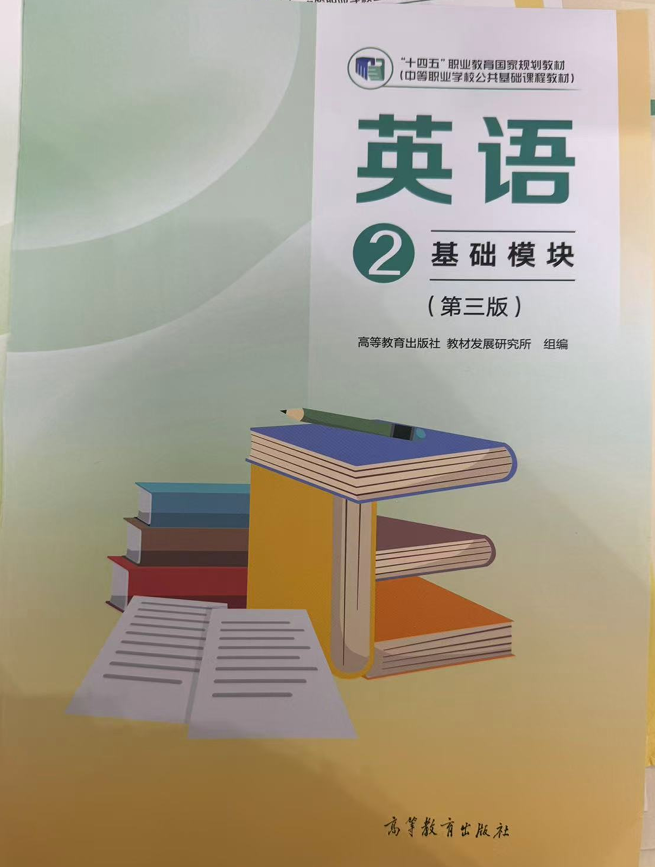
Unit 6 Craftsmanship(B卷·能力提升)《英语 基础模块2》(高教版第三版)单元过关卷(原卷版+解析版)
2026-04-27
|
2份
|
28页
|
66人阅读
|
1人下载
内容正文:
编写说明:本套试卷紧扣《英语 基础模块2》(高教版第三版)教材,以教材单元为基准精准覆盖核心考点。
每个单元设置AB卷,A卷为基础巩固卷,侧重基础考点训练,帮助学生扎实掌握知识要点;B卷为能力提升卷,注重知识整合与全面检测,引导学生构建知识网络。全书设计4份综合测试卷,模拟实战情境,聚焦解题能力突破,全面提升应试能力与知识应用水平。
《英语 基础模块2》(高教版第三版)《单元过关卷》
Unit 6 Craftsmanship
B卷·能力提升
本试卷共61小题,满分150分。考试用时120分钟。
班级 姓名 学号 成绩
Ⅰ.补全对话(5小题,共10分)
阅读下列简短对话,从A、B、C、D中选出最佳答案,将对话补全。
1.— Shall we go for a picnic this Saturday if the weather is fine?
— ________. I love getting close to nature.
A.I can’t agree more B.It’s none of your business
C.It’s a piece of cake D.I’m not sure
【答案】A
【详解】考查情景交际用语。句意:——如果天气好的话,我们这周六去野餐好吗?——我完全同意。我喜欢亲近大自然。A. I can’t agree more我完全同意;B. It’s none of your business这不关你的事;C. It’s a piece of cake小菜一碟;D. I’m not sure我不确定。根据答语中“I love getting close to nature”可知,说话人很喜欢亲近自然,对于去野餐的提议是十分赞同的,“I can’t agree more”最符合该语境。故选A项。
2.—I can drive you home.
—________. But are you sure it’s not too much trouble?
A.Take care B.That would be great C.I’m afraid not D.Don’t bother
【答案】B
【详解】考查情景交际用语。句意:—— 我可以开车送你回家。—— 那太好了,不过你确定不会太麻烦吗?A. Take care小心,保重;B. That would be great那太好了;C. I’m afraid not恐怕不行;D. Don’t bother不用麻烦了。根据后文的转折“But are you sure it’s not too much trouble?”可知,说话人首先是接受对方的好意,先表达认可和感谢,再委婉询问是否会造成麻烦,That would be great符合这种先接受再客气确认的语境。故选B项。
3.—Could you please tell me how to get to the school library from here?
—________. Go straight and turn left at the second crossing. It’s on your right.
A.Sure B.No way C.I don’t know D.Wait a minute
【答案】A
【详解】考查情景交际。句意:——你能告诉我从这里怎么去学校图书馆吗?——当然可以。直走,在第二个十字路口左转,图书馆就在你的右手边。A. Sure当然;B. No way没门;C. I don’t know我不知道;D. Wait a minute等一下。根据上下句句意可知,答语后半句清晰给出了“直走、第二个路口左转、在右手边” 的具体指路信息,说明说话人愿意且能够回答问题,因此选Sure(当然可以)。故选A项。
4.—Thanks a lot for helping me fix my broken bike this morning!
—________. It’s just a small favor.
A.You’re welcome B.That’s a pity C.Never mind D.My pleasure
【答案】A
【详解】考查情景交际。句意:——非常感谢你今天早上帮我修理坏掉的自行车!——不客气。这只是举手之劳。A. You’re welcome不客气;B. That’s a pity真遗憾;C. Never mind没关系;D. My pleasure我的荣幸。根据“Thanks a lot”可知,此处是对感谢的回应,You’re welcome符合语境。故选A。
5.— Do you dislike our new chairman of the music club?
— . I think he’s doing a good job, but he could engage quiet students more.
A.You’ve got it B.Don’t get me wrong
C.It’s up to you D.I know how you feel
【答案】B
【详解】考查情景交际。句意:——你不喜欢我们音乐俱乐部的新主席吗?——别误会我。我觉得他工作做得不错,只是他可以多和内向的学生互动交流。 A. You’ve got it你说对了,没问题,懂了; B. Don’t get me wrong别误会我,别曲解我的意思 ;C. It’s up to you由你决定,听你的 ;D. I know how you feel我懂你的感受,我感同身受。空后答句前后为转折逻辑:先肯定新主席的工作(做得不错),再指出小不足(多关注内向学生),说明说话人并非不喜欢新主席,只是对方误解了自己的态度。故选B项。
Ⅱ. 词汇(10小题,共20分)
阅读下列句子,从A、B、C、D中选出句中画线的单词或词组的意义。
6.We need great craftsmanship to make traditional handworks.
A. 热情 B. 手艺;技艺 C. 耐心 D. 过程
【答案】B
【详解】句意:制作传统手工艺品需要高超手艺;技艺。
7.He has many creative ideas for the new project.
A. 创造性的 B. 普通的 C. 独特的 D. 恰好
【答案】A
【详解】句意:他为新项目有许多创造性的想法。
8.She is an ordinary girl but she has a strong will.
A. 独特的 B. 感人的 C. 普通的;平凡的 D. 完美的
【答案】C
【详解】句意:她是一名普通的;平凡的女孩,但意志坚定。
9.She has a strong passion for Chinese traditional art.
A. 热情 B. 花费 C. 需要 D. 技艺
【答案】A
【详解】句意:她对中国传统艺术怀有浓厚热情。
10.As an art expert, he knows a lot about hand-making skills.
A. 耐心 B. 专家 C. 过程 D. 象征
【答案】B
【详解】句意:作为一名艺术专家,他十分了解手工技艺。
11.People usually spend lots of time on their hobbies.
A. 完成 B. 恰好 C. 花费;度过 D. 拒绝
【答案】C
【详解】句意:人们通常会花费;度过很多时间在爱好上。
12.It takes time and hard work to complete a fine work.
A. 完成 B. 联系 C. 对比 D. 改变
【答案】A
【详解】句意:完成一件精品需要时间与付出。
13.Every step in the making process is very important.
A. 耐心 B. 过程 C. 竞争 D. 选择
【答案】B
【详解】句意:制作过程中的每一步都至关重要。
14.Fine works require careful work and careful thinking.
A. 集中 B. 隐藏 C. 需要 D. 创造
【答案】C
【详解】句意:精品需要用心制作、用心思考。
15.Making handicrafts needs enough patience and care.
A. 耐心 B. 天赋 C. 运气 D. 经验
【答案】A
【详解】句意:制作手工艺品需要足够的耐心与细心
Ⅲ. 完形填空(15小题,共30分)
阅读下面短文,并掌握其大意。然后从各题所给的四个选项中,选出一个最佳答案。
JongMay Urbonya is an American lady full of 16 : she is fluent in Mandarin, fond of hanfu and Chinese dance. She was born in China and lived there until the age of six. It was in those years that the seeds of love for Chinese culture were 17 .
Even after moving back to the U.S., Urbonya’s parents used Chinese TV dramas to 18 her Chinese language abilities. The seeds of passion 19 her back to China in 2011, studying Chinese dance in Beijing Normal University.
“When I was a kid, I had a ‘princess dream’. I often cover my shoulder with a blanket, 20 I was an ancient Chinese princess,” she said. A chance to 21 that dream occurred in 2020, when a TV show had Urbonya visit a hanfu festival. “Hanfu has wide 22 and is winning recognition in the world. I got the full hanfu experience and I 23 then that hanfu culture is a new-found way to bring Chinese 24 to the present,” she said.
She 25 that 10 years ago when she was in college, wearing hanfu was a(n) 26 sight and she could only buy custom-made hanfu. “If I had worn hanfu walking down the street, people would probably ask 27 in their hearts, ‘Why is this foreigner wearing an ancient outfit on the street?’” Now, she has 28 hanfu in her everyday wear and is able to purchase different 29 of hanfu online. “I’m really happy to be a hanfu culture enthusiast, and I hope to make it more 30 to those outside of China,” she said.
16.A.mysteries B.virtues C.surprises D.contradictions
17.A.spread B.sowed C.collected D.blossomed
18.A.keep up B.hold up C.take up D.wrap up
19.A.delivered B.forced C.brought D.flashed
20.A.celebrating B.forgetting C.guaranteeing D.pretending
21.A.achieve B.appreciate C.imagine D.establish
22.A.tolerance B.appeal C.stimulation D.devotion
23.A.proposed B.indicated C.realized D.proved
24.A.faith B.history C.values D.relics
25.A.memorized B.declared C.reminded D.recalled
26.A.rare B.popular C.desirable D.crucial
27.A.ridiculously B.seriously C.casually D.curiously
28.A.folded B.included C.replaced D.created
29.A.ranges B.models C.styles D.sizes
30.A.valuable B.responsible C.comparable D.accessible
【答案】
16.C 17.B 18.A 19.C 20.D 21.A 22.B 23.C 24.B 25.D 26.A 27.D 28.B 29.C 30.D
【导语】本文是一篇记叙文。文章讲述了美国女士JongMay Urbonya热爱中国文化,学习中国舞蹈,痴迷汉服文化,见证汉服从小众到流行,并希望向海外推广汉服文化的故事。
16.考查名词词义辨析。句意:JongMay Urbonya是一位有着许多让人惊讶的特质的美国女士:她普通话流利,喜欢汉服和中国舞蹈。A. mysteries奥秘;B. virtues美德;C. surprises惊奇,惊讶;D. contradictions矛盾。根据后文“she is fluent in Mandarin, fond of hanfu and Chinese dance. She was born in China and lived there until the age of six.”可知,这位美国女士有着诸多与中国文化相关的能力和喜好,这是让人感到“惊讶”的特质。故选C项。
17.考查动词词义辨析。句意:正是在那些年,热爱中国文化的种子被播下。A. spread传播;B. sowed播种;C. collected收集;D. blossomed开花。根据前文“the seeds of love for Chinese culture”可知,此处是比喻的用法,种子应该是被“播种”。故选B项。
18.考查动词短语辨析。句意:即使搬回美国后,Urbonya的父母也用中国电视剧来维持她的中文能力。A. keep up保持,维持;B. hold up举起,阻挡;C. take up开始从事,占据;D. wrap up包裹,圆满完成。根据前文“used Chinese TV dramas”和后文“her Chinese language abilities”可推知,回美国后,父母用中文电视剧是为了让她“维持”中文能力。故选A项。
19.考查动词词义辨析。句意:对中国文化热爱的种子促使她在2011年回到中国,在北京师范大学学习中国舞蹈。A. delivered递送;B. forced强迫;C. brought带来,促使;D. flashed闪光。根据前文“The seeds of passion”和后文“her back to China in 2011”可推知,是对中国文化的热爱“带”她回到中国。故选C项。
20.考查动词词义辨析。句意:当我还是个孩子的时候,我有一个“公主梦”。A. celebrating庆祝;B. forgetting忘记;C. guaranteeing保证;D. pretending假装。根据前文“I often cover my shoulder with a blanket”和后文“I was an ancient Chinese princess”可知,用毯子当披风是“假装”自己是公主。故选D项。
21.考查动词词义辨析。句意:2020年,一个实现那个梦想的机会出现了,当时一个电视节目邀请Urbonya参加汉服节。A. achieve实现;B. appreciate欣赏,感激;C. imagine想象;D. establish建立。根据前文“a chance to”和后文“when a TV show had Urbonya visit a hanfu festival”可知,参加汉服节让她有机会“实现”公主梦。故选A项。
22.考查名词词义辨析。句意:汉服有着广泛的吸引力,并且正在赢得世界的认可。A. tolerance宽容;B. appeal吸引力;C. stimulation刺激;D. devotion奉献。根据后文“is winning recognition in the world”可知,汉服能赢得世界认可,说明它有广泛的“吸引力”。故选B项。
23.考查动词词义辨析。句意:我体验了完整的汉服,然后我意识到汉服文化是一种将中国历史带到当下的新方式。A. proposed提议;B. indicated表明;C. realized意识到;D. proved证明。根据前文“I got the full hanfu experience”可知,在体验汉服后,她“意识到”汉服文化的意义。故选C项。
24.考查名词词义辨析。句意:我体验了完整的汉服,然后我意识到汉服文化是一种将中国历史带到当下的新方式。A. faith信仰;B. history历史;C. values价值观;D. relics遗迹。根据前文“hanfu culture”可知,汉服是中国古代的服饰,承载着中国的历史,它能将中国的“历史”带到当下。故选B项。
25.考查动词词义辨析。句意:她回忆说,10年前她上大学的时候,穿汉服是一种罕见的景象,她只能买定制的汉服。A. memorized记住;B. declared宣布;C. reminded提醒;D. recalled回忆。根据后文“10 years ago when she was in college”可知,此处是她“回忆”过去的经历。故选D项。
26.考查形容词词义辨析。句意:她回忆说,10年前她上大学的时候,穿汉服是一种罕见的景象,她只能买定制的汉服。A. rare罕见的;B. popular流行的;C. desirable令人向往的;D. crucial关键的。根据后文“she could only buy custom-made hanfu”和“If I had worn hanfu walking down the street, people would probably ask ______ in their hearts”可知,10年前穿汉服是很“罕见的”。故选A项。
27.考查副词词义辨析。句意:如果我穿着汉服走在街上,人们可能会在心里好奇地问:“为什么这个外国人在街上穿着古代服装?”A. ridiculously荒谬地;B. seriously严肃地;C. casually随意地;D. curiously好奇地。根据后文“Why is this foreigner wearing an ancient outfit on the street?”可知,人们看到外国人穿古代服装会感到“好奇”。故选D项。
28.考查动词词义辨析。句意:现在,她已经把汉服纳入日常穿搭中,并且能够在网上购买不同款式的汉服。A. folded折叠;B. included包含,纳入;C. replaced代替;D. created创造。根据后文“hanfu in her everyday wear”可知,现在她日常穿搭里“包含”了汉服。故选B项。
29.考查名词词义辨析。句意:现在,她已经把汉服纳入日常穿搭中,并且能够在网上购买不同款式的汉服。A. ranges范围;B. models模型;C. styles款式;D. sizes尺寸。根据前文“purchase different”和后文“of hanfu online”可知,现在汉服流行,可以买到不同“款式”的汉服。故选C项。
30.考查形容词词义辨析。句意:我真的很高兴成为汉服文化爱好者,我希望让中国以外的人更容易接触到它。A. valuable有价值的;B. responsible负责的;C. comparable可比较的;D. accessible可接近的,可获得的。根据前文“I hope to make it more”和后文“to those outside of China”可知,她希望向海外推广汉服文化,让汉服更容易“获得”,让海外的人更容易接触和了解它。故选D项。
Ⅳ. 阅读理解(15小题,共45分)
A)阅读下列短文,并做短文后的题目。然后从各题所给的四个选项中,选出能回答所提问题或完成所给句子的最佳答案。
A
Most of us don’t know the reasons anymore but people today follow them because they are good fun.
Today the bride (新娘) carries flowers but long ago she carried strong-smelling grass. This was to frighten away the evil spirits and to cover the smell of people who do not wash often. People also used to believe that the bride brought good luck, so they would try to get something from her. Today, the bride will offer the guests some good luck by throwing the flowers to them after the wedding. It is said that if you catch the flowers, you will be the next one to get married. Of course, many of the single girls at a wedding try to catch the flowers.
In early times, the bridesmaids (伴娘) and the bride all wore similar dresses. This was to confuse the evil spirits. Now bridesmaids still wear similar dresses but the bride wears a different dress that is often white. Many brides wear veils (面纱) over their faces. This comes from a time when the young couple was not allowed to see each other before the wedding. The families were afraid that the bridegroom might not like the bride. So he was only allowed to lift her veil just before the wedding. By this time it was too late to refuse to marry her.
Brides often wear “something old, something new, something borrowed, something blue”. In earlier times, if the bride didn’t do this, she felt she would be in danger from the evil spirits. Wearing “something old” represents the journey between being single and being married. “Something new” represents the change from being a child to being an adult. “Something borrowed” means if you borrow something from a happily married couple, it will bring you good luck. And “something blue” comes from a time when the edge of the bride’s dress was blue which represented purity.
31.The passage mainly tells us ________.
A.today’s wedding customs B.the history of wedding customs
C.why brides wear veils D.what brides wear at weddings
32.Why did the bride carry strong-smelling grass in the past?
A.To keep the evil spirits and unpleasant smell of some people away.
B.To cover the unpleasant smell of her and keep the evil spirits away.
C.To bring good luck to the bridesmaids.
D.To throw it exactly to the bridesmaids.
33.What do we know about the wedding customs in the past from the third paragraph?
A.The bridesmaids wore completely different dresses from the brides.
B.The bridesmaids also needed to wear veils over their faces.
C.The groom could refuse to marry his bride if he didn’t like her.
D.The groom and the bride didn’t see each other until the wedding
34.Which of the following is NOT true according to the passage?
A.In order to avoid evil spirits, the bride had to wear her veil.
B.In wedding customs, blue is the symbol of purity.
C.Single girls are very happy to catch the bride’s flowers.
D.The bride and her bridesmaids dressed similarly.
35.All of the following are mentioned in this passage EXCEPT________.
A.brides’ flowers B.brides’ clothes C.grooms’ clothes D.brides’ veils
【答案】31.B 32.A 33.D 34.A 35.C
【导语】本文是一篇说明文。文章主要讲述了婚礼习俗的历史及其背后的原因。
31.主旨大意题。通读全文,文章主要介绍了婚礼习俗的历史及其背后的原因。故选B项。
32.细节理解题。根据文章第二段“Today the bride carries flowers but long ago she carried strong-smelling grass. This was to frighten away the evil spirits and to cover the smell of people who do not wash often.(今天的新娘手持鲜花,但在很久以前,她手持强烈的气味的草。这是为了驱赶邪灵并掩盖那些不经常洗澡的人的难闻气味。)”可知,新娘携带强烈气味的草是为了驱赶邪灵和掩盖他人难闻气味。故选A项。
33.推理判断题。根据文章第三段“Many brides wear veils over their faces. This comes from a time when the young couple was not allowed to see each other before the wedding.(许多新娘还会在脸上戴上面纱。这源自一个时代,那时年轻夫妇在婚礼前不允许见面。)”可知,新郎和新娘直到婚礼当天才见面。故选D项。
34.细节理解题。根据文章第三段“Many brides wear veils over their faces. This comes from a time when the young couple was not allowed to see each other before the wedding.(许多新娘还会在脸上戴上面纱。这源自一个时代,那时年轻夫妇在婚礼前不允许见面。)”可知,新娘戴面纱是为了不和新郎见面,不是为了躲避邪灵。故选A项。
35.细节理解题。根据文章第二段“Today the bride carries flowers but long ago she carried strong-smelling grass.(今天的新娘手持鲜花,但在很久以前,她手持强烈的气味的草。)”,第三段“In early times, the bridesmaids and the bride all wore similar dresses.(在早期,伴娘和新娘都穿着类似的礼服。)”及“Many brides wear veils over their faces.(许多新娘还会在脸上戴上面纱。)”可知,文章中提到了新娘的花,新娘的衣服和面纱,故没有提到的是新郎的衣服。故选C项。
B
Grandma Moses is among the most famous twentieth-century painters of the United States, yet she did not start painting until she was in her late seventies. As she once said to herself: “I would never sit back in a rocking chair, waiting for someone to help me.” No one could have had a more productive old age.
She was born on a farm in New York State, one of five boys and five girls. At twelve she left home and was in domestic (家庭的) service until, at twenty—seven, she married Thomas Moses, the hired hand of one of her employers. They farmed most of their lives, first in Virginia and then in New York State, at Eagle Bridge. She had ten children, of whom only five survived; her husband died in 1927.
Grandma Moses painted a little as a child and made embroidery (刺绣) pictures as a hobby, but only changed to oils in old age because her hands had become too stiff (硬的) to sew (缝、缝制) and she wanted to keep busy and pass the time. Her pictures were first sold at the local drugstore (杂货店) and at a market and were soon noticed by a businessman who bought everything she painted. Three of the pictures exhibited in the Museum of Modern Art, and in 1940 she had her first exhibition in New York. Between the 1930’s and her death she produced some 2,000 pictures: detailed (详细的) and lively portrayals (描绘) of the country life she had known for so long, with a wonderful sense of colour and form. “I think really hard till I think of something really pretty, and then I paint it.” she said.
36.According to the passage, Grandma Moses began to paint because she wanted to ________.
A.make herself beautiful B.keep active
C.earn more money D.become famous
37.Grandma Moses spent most of her life ________.
A.nursing B.painting C.embroidering D.farming
38.The underlined word “survived” means ________.
A.graduated from college B.examined the condition of the house
C.lived longer than the other children D.gave up themselves to the police
39.From Grandma Moses’ description of herself in the first paragraph, it can be inferred that she was ________.
A.independent B.pretty C.rich D.nervous
40.Which of the following would be the best title for the passage?
A.Grandma Moses: Her Life and Pictures. B.The Children of Grandma Moses.
C.Grandma Moses: Her Best Exhibition. D.Grandma Moses and Other Older Artists.
【答案】36.B 37.D 38.C 39.A 40.A
【导语】本文是一篇记叙文。文章讲述了美国著名画家摩西奶奶的生平,她晚年才开始画画,却创作了大量描绘乡村生活的作品,并获得了巨大成功,展现了其独立、积极的人生态度。
36.细节理解题。根据文章第三段中的“Grandma Moses painted a little as a child and made embroidery pictures as a hobby, but only changed to oils in old age because her hands had become too stiff to sew and she wanted to keep busy and pass the time. (摩西奶奶小时候画过一点画,刺绣是她的爱好,但直到老年才改用油画,因为她的手变得太僵硬,无法缝纫,她想让自己忙起来,打发时间。)”可知,摩西奶奶开始画画是因为她想保持活跃,打发时间。故选B项。
37.细节理解题。根据文章第二段中的“They farmed most of their lives, first in Virginia and then in New York State, at Eagle Bridge. (他们一生中大部分时间都在务农,先是在弗吉尼亚州,后来在纽约州的鹰桥。)”可知,摩西奶奶一生中大部分时间都在务农。故选D项。
38.词句猜测题。根据文章第二段中的“She had ten children, of whom only five survived; her husband died in 1927. (她有十个孩子,其中只有五个……;她的丈夫于1927年去世。)”可知,摩西奶奶有十个孩子,但只有五个孩子……,且她的丈夫也去世了,由此可推知,此处指的是她的孩子中只有五个活得比她长,即只有五个孩子活了下来,所以survived应为“活得比……长,比……活得久”的意思。C项“lived longer than the other children(比其他孩子活得长)”符合题意。故选C项。
39.推理判断题。根据文章第一段中的“As she once said to herself: “I would never sit back in a rocking chair, waiting for someone to help me.” No one could have had a more productive old age. (正如她曾经对自己说的:“我永远不会坐在摇椅上,等着别人来帮我。”没有人能拥有比她更充实的晚年。)”可知,摩西奶奶认为自己永远不会坐在摇椅上,等着别人来帮她,由此可推知,摩西奶奶是一个独立的人。故选A项。
40.主旨大意题。根据文章第一段中的“Grandma Moses is among the most famous twentieth-century painters of the United States, yet she did not start painting until she was in her late seventies. (摩西奶奶是美国20世纪最著名的画家之一,但她直到70多岁才开始画画。)”以及通读全文可知,本文主要介绍了摩西奶奶的生平以及她的画作。A项“Grandma Moses: Her Life and Pictures.(摩西奶奶:她的生活和画作)”,符合文意,可概括全文。故选A项。
B)阅读下面短文,从短文后的选项中选出可以填入空格处的最佳选项。
School days mean homework, studying, exams, and social interactions (互动) — not to mention getting up early every morning. It’s understandable if you don’t always feel your happiest going to school during the week. 41 The following tips can help you feel happier on school days.
Focus on the good things about school. 42 Think about the bigger picture and how your education will have a positive impact on your life in the long run. If you’re having a bad day, tell yourself that you only have to be in school for a relatively short period of your life. After that, the sky is the limit!
Do something nice for someone. Making other people smile can improve your own happiness. 43 Or, thank a teacher for a fun activity or an interesting lesson. If you see someone else that looks like they might be feeling down, tell them you like their hair style or praise the work they have done.
44 If someone isn’t nice to you at school, it’s probably not your fault. Try to remember that nobody is perfect and think about what might be going on in their lives that makes them act negatively (消极地) towards you. Try your best to sweep away a dirty look or a bad comment and move on without getting angry and upset.
Reward yourself. Once you get that big A on your exam or work, don’t forget to go out and celebrate! It’s always great to reward yourself when you do something good especially when it will benefit your future in so many ways! Always believe that you can and you will go a long way! No one can change your future except you. 45
A.A little positive thinking can go a long way towards improving your mood.
B.Try not to take negativity from others too seriously.
C.But it’s also something you can totally improve!
D.Give another student some positive encouragement.
E.Do the best with what you have, and try to have some fun along the way.
【答案】41.C 42.A 43.D 44.B 45.E
【导语】本文是一篇说明文。文章提供了一些技巧和建议,帮助学生在上学的日子里感到更快乐,强调通过积极的心态和行动可以改善校园生活体验。
41.根据空前句子“It’s understandable if you don’t always feel your happiest going to school during the week.(如果你在上学期间并不总是感到最快乐,这是可以理解的。)”以及空后句子“The following tips can help you feel happier on school days.(以下建议可以帮助你在上学的日子里感到更快乐。)”可知,此处需要一个过渡句,承接前文提到的上学时可能不开心的情况,并引出后文的改善方法,C选项(但这也是你完全可以改善的事情!)符合语境。故选C。
42.根据本段中心句“Focus on the good things about school.(关注学校里好的方面。)”可知,本段强调要从积极的角度看待学校,A选项(一点点积极的思考对改善你的情绪大有帮助。)中的“positive thinking”与中心句中的“good things”相呼应,且能引出下文对积极思考的具体阐述,符合语境。故选A。
43.根据本段中心句“Do something nice for someone.(为他人做一些好事),可知,本段讲述的是为他人做一些好事能带来快乐,根据空前句子“Making other people smile can improve your own happiness.(让别人微笑能提升你自己的幸福感。)”以及空后的句子“Or, thank a teacher for a fun activity or an interesting lesson.(或者,感谢老师带来了有趣的活动或精彩的课程。)”中的并列连词or,可知,此空给出具体的提升别人幸福感的行动方案。D选项(给其他同学一些积极的鼓励。)与后面句式保持一致,使用祈使句,且属于为他人做的好事,符合本段内容。故选D。
44.分析语篇可知,此处应为本段的中心句,与其他段落相同,应为祈使句。根据空后句子“If someone isn’t nice to you at school, it’s probably not your fault.(如果在学校有人对你不友好,那可能不是你的错。)”以及后文“Try your best to sweep away a dirty look or a bad comment and move on without getting angry and upset.(尽你最大的努力不去在意厌恶的表情或不好的评论,不要生气沮丧,继续前行。)”可知本段围绕如何积极对待别人的不友好行为展开。B选项 (别太把别人的负面情绪往心里去。)与下文内容衔接紧密,符合语境,能概括本段内容。故选B。
45.根据空前句子“No one can change your future except you.(除了你自己,没有人能改变你的未来。)”可知,此处是在强调自己要为未来努力,E选项(尽你所能,同时也要在这个过程中找点乐子。)是对前文的进一步补充,鼓励人们在努力的同时享受过程,符合语境。故选E。
Ⅴ. 语法填空(10小题,共20分)
In an ancient town in southern China lives a respected elderly pottery master. 46 (devote) to traditional pottery, he works patiently in his simple but elegant studio. Now, he is torn between preserving his family’s centuries-old craft and 47 (watch) it gradually fade away. Determined to pass the ancient skill down, he spares no effort in innovation.
He firmly believes that valuable traditional techniques deserve development instead of abandonment. Over the years, he 48 (apply) modern design concepts to traditional firing process. This is a stage 49 ancient techniques and youthful creativity combine perfectly.
50 the fact that many craftsmen focus merely on income and fame, he values meaning and tradition above material gains.
In fact, he refuses 51 (seek) quick financial gains at the expense of artistic quality. Specifically, he draws inspiration from traditional folk tales and distinctive local culture. His efforts have saved some invaluable craft from 52 (destroy) by modernization and industrialization.
He lives 53 (noble) and sticks firmly to his own cause, which he views as his responsibility. He often teaches young apprentices (学徒) for free and donates his fine works to local museums and culture centers, expecting more people to appreciate traditional pottery. Although 54 (face) numerous difficulties and challenges, he never gives up easily. People around are deeply touched by his 55 (generous) and his sincere devotion to traditional Chinese art.
【答案】
46.Devoted 47.watching 48.has applied 49.where 50.Despite 51.to seek 52.being destroyed 53.nobly 54.facing 55.generosity
【导语】文章讲述了一位中国古镇的陶艺大师坚守传统陶艺、不断创新传承工艺,淡泊名利并无私推广传统陶艺的感人故事。
46.考查非谓语动词。句意:他致力于传统陶艺,在朴素雅致的工作室里耐心创作。本句已有谓语works,空格处用非谓语形式,be devoted to是固定搭配,表示“致力于”,此处省略be动词,用过去分词devoted作状语,句首单词首字母需大写。
47.考查非谓语动词。句意:如今,他纠结于是守护家族数百年的工艺,还是眼睁睁看着它逐渐消逝。根据固定搭配between...and...可知,前后结构需保持一致,and前为preserving,空格处需用watch的动名词形式watching。
48.考查谓语动词。句意:多年来,他将现代设计理念应用于传统烧制工艺。根据时间状语“Over the years”可知,此句用现在完成时,且主语he为第三人称单数,需用has applied。
49.考查定语从句。句意:这是一个古老工艺与年轻创意完美融合的阶段。空格处引导定语从句,先行词是stage,表示抽象地点,关系词在从句中作地点状语,需用关系副词where。
50.考查介词。句意:尽管许多工匠只关注收入与名利,但他将意义和传统置于物质利益之上。根据空格后名词the fact及前后让步逻辑可知,此处需用介词despite,表示“尽管”,句首单词首字母需大写。
51.考查非谓语动词。句意:事实上,他拒绝以牺牲艺术品质为代价追求快速的经济收益。refuse to do sth.是固定搭配,表示“拒绝做某事”,此处需用动词不定式to seek。
52.考查非谓语动词。句意:他的努力使一些珍贵工艺免于被现代化和工业化所摧毁。save...from doing sth.是固定搭配,表示“使……免于做某事”,且动词destroy与逻辑主语craft之间是被动关系,需用动名词的被动形式being destroyed。
53.考查副词。句意:他活得高尚,坚定坚守自己的事业,并将其视为自身的责任。空格处修饰动词lives,需用副词nobly作状语。
54.考查非谓语动词。句意:尽管面临诸多困难与挑战,他从未轻易放弃。本句已有谓语gives up,空格处用非谓语形式,动词face与逻辑主语he之间是主动关系,需用现在分词facing作状语。
55.考查名词。句意:周围的人都被他的慷慨和对中国传统艺术真挚的热爱深深打动。根据形容词性物主代词his可知,空格处需用名词作宾语,generous的名词形式为generosity,表示“慷慨”。
Ⅵ. 完成句子(5小题,共15分)
根据所给汉语提示,完成英语句子。
56.我既没时间也没钱来参加流行音乐节。(根据中文句意完句)
I have ________ for pop festivals.
【答案】neither time nor money
【详解】考查固定短语。句意:我既没时间也没钱来参加流行音乐节。固定短语neither … nor …表示“既不……也不……”;time“时间”,money“钱”,均为不可数名词。故填neither time nor money。
57.The soldier ________ in the battle.
这名士兵因在战斗中表现出的极大勇气而受到嘉奖。(根据中文句意完句)
【答案】was awarded for his great courage
【详解】考查被动语态。“嘉奖”是“award”,句子主语“the soldier”与 “award”构成被动关系,结合语境可知,是过去发生的事,用一般过去时的被动语态was awarded;“因……表现出的极大勇气”需用介词短语“for his great courage”表达,其中“his”指代士兵,“great courage”对应极大的勇气,“for”引出被嘉奖的原因。故答案为was awarded for his great courage。
58.It’s time some of these old apartment blocks ______________ . (tear)
其中一些旧的住宅楼该拆了。
【答案】were torn down/should be torn down
【详解】考查虚拟语气和被动语态。拆除:tear down。It is (high) time that 从句中常用一般过去时或should+do的虚拟语气结构。本句中主语“some of these old apartment blocks (一些老旧的公寓楼)”和谓语“tear down (拆除)”之间为被动关系,故用被动语态be torn down,虚拟语气中be动词用were。故填were torn down/should be torn down。
59.________ in our country every year.
我国每年需要大量的能源。(根据中文句意完句)
【答案】Huge amounts of energy are needed
【详解】考查主谓一致及一般现在时态的被动语态。分析所给的句子可知,此句描述事实,所以使用一般现在时;大量的能源:Huge amounts of energy作主语;需要:need,由于主语和动词之间是被动关系,所以应是be needed;“ amounts of +不可数名词”作主语,谓语动词是复数,所以be变为are。故答案为:Huge amounts of energy are needed。
60.The trees ________ a freeze in December. (根据中文句意完成句子)
那些树被12月的一次冰冻冻坏了。
【答案】were damaged by
【详解】考查被动语态。根据“被”可知,句子要用被动语态。被动语态结构为be done,“被……损坏”短语为“be damaged by”,根据句意可知是过去发生的事情,主语“The trees”为复数,所以be动词用were。故答案为were damaged by。
Ⅶ. 应用写作(1小题,共10分)
61.【写作内容】英语报社正在征集“名人轶事”短文,请以“Someone in my heart”为题写一篇短文描述你所熟知的名人故事。
【写作要求】正文约40个英文单词,文中不可出现你自己的真实姓名、学校等信息。
【评分标准】内容完整,语言规范,语篇连贯。
___________________________________________________________________________________________________________________________________________________________________________________________________________________________________________________________________________________________________________________________________________________________________________________________________________________________________________________________________________________________
【答案】例文
Someone in my heart
Everyone’s heart has a great person, maybe a person who saves the people, maybe someone who has got good spirit. As for me, the one in my heart is Qian Xuesen, one of the most famous scientists in China.
Qian Xuesen is not only smart but also hard-working. When he was young, he studied in some top universities. He worked so hard that he won lots of prizes and had many great inventions as well. Here are two reasons I admire him. First of all, he knew wherever he was, he was a Chinese. So he gave his whole life to our country. What’s more, he is the person who makes our country stronger and stronger. I’m sure every Chinese won’t forget him.
I have learnt so much from him, and I will try my best to be a person like him.
【详解】[总体分析]
①题材:本文是一篇记叙文,为报纸投稿;
②时态:主要时态为“一般现在时和一般过去时”;
③提示:写作要点已给出,考生应注意不要遗漏“信息提示”中欣赏名人轶事的原因,适当添加细节,并突出写作重点。
[写作步骤]
第一步,表明写作意图。引出最喜欢的名人;
第二步,具体阐述写作内容。从“性格、取得成就、喜欢原因”等几个方面重点介绍;
第三步,书写结语。表达“想成为名人那样的人”的愿望。
[亮点词汇]
①as for至于
②not only…but also…不但……而且……
③as well也
[高分句型]
①As for me, the one in my heart is Qian Xuesen, one of the most famous scientists in China.(“one of the+形容词最高级+可
数名词复数”)
②He is the person who makes our country stronger and stronger.(定语从句)
学科网(北京)股份有限公司 (
1
)原创精品资源学科网独家享有版权,侵权必究!
学科网(北京)股份有限公司
$
编写说明:本套试卷紧扣《英语 基础模块2》(高教版第三版)教材,以教材单元为基准精准覆盖核心考点。
每个单元设置AB卷,A卷为基础巩固卷,侧重基础考点训练,帮助学生扎实掌握知识要点;B卷为能力提升卷,注重知识整合与全面检测,引导学生构建知识网络。全书设计4份综合测试卷,模拟实战情境,聚焦解题能力突破,全面提升应试能力与知识应用水平。
《英语 基础模块2》(高教版第三版)《单元过关卷》
Unit 6 Craftsmanship
B卷·能力提升
本试卷共61小题,满分150分。考试用时120分钟。
班级 姓名 学号 成绩
Ⅰ.补全对话(5小题,共10分)
阅读下列简短对话,从A、B、C、D中选出最佳答案,将对话补全。
1.— Shall we go for a picnic this Saturday if the weather is fine?
— ________. I love getting close to nature.
A.I can’t agree more B.It’s none of your business
C.It’s a piece of cake D.I’m not sure
2.—I can drive you home.
—________. But are you sure it’s not too much trouble?
A.Take care B.That would be great C.I’m afraid not D.Don’t bother
3.—Could you please tell me how to get to the school library from here?
—________. Go straight and turn left at the second crossing. It’s on your right.
A.Sure B.No way C.I don’t know D.Wait a minute
4.—Thanks a lot for helping me fix my broken bike this morning!
—________. It’s just a small favor.
A.You’re welcome B.That’s a pity C.Never mind D.My pleasure
5.— Do you dislike our new chairman of the music club?
— . I think he’s doing a good job, but he could engage quiet students more.
A.You’ve got it B.Don’t get me wrong
C.It’s up to you D.I know how you feel
Ⅱ. 词汇(10小题,共20分)
阅读下列句子,从A、B、C、D中选出句中画线的单词或词组的意义。
6.We need great craftsmanship to make traditional handworks.
A. 热情 B. 手艺;技艺 C. 耐心 D. 过程
7.He has many creative ideas for the new project.
A. 创造性的 B. 普通的 C. 独特的 D. 恰好
8.She is an ordinary girl but she has a strong will.
A. 独特的 B. 感人的 C. 普通的;平凡的 D. 完美的
9.She has a strong passion for Chinese traditional art.
A. 热情 B. 花费 C. 需要 D. 技艺
10.As an art expert, he knows a lot about hand-making skills.
A. 耐心 B. 专家 C. 过程 D. 象征
11.People usually spend lots of time on their hobbies.
A. 完成 B. 恰好 C. 花费;度过 D. 拒绝
12.It takes time and hard work to complete a fine work.
A. 完成 B. 联系 C. 对比 D. 改变
13.Every step in the making process is very important.
A. 耐心 B. 过程 C. 竞争 D. 选择
14.Fine works require careful work and careful thinking.
A. 集中 B. 隐藏 C. 需要 D. 创造
15.Making handicrafts needs enough patience and care.
A. 耐心 B. 天赋 C. 运气 D. 经验
Ⅲ. 完形填空(15小题,共30分)
阅读下面短文,并掌握其大意。然后从各题所给的四个选项中,选出一个最佳答案。
JongMay Urbonya is an American lady full of 16 : she is fluent in Mandarin, fond of hanfu and Chinese dance. She was born in China and lived there until the age of six. It was in those years that the seeds of love for Chinese culture were 17 .
Even after moving back to the U.S., Urbonya’s parents used Chinese TV dramas to 18 her Chinese language abilities. The seeds of passion 19 her back to China in 2011, studying Chinese dance in Beijing Normal University.
“When I was a kid, I had a ‘princess dream’. I often cover my shoulder with a blanket, 20 I was an ancient Chinese princess,” she said. A chance to 21 that dream occurred in 2020, when a TV show had Urbonya visit a hanfu festival. “Hanfu has wide 22 and is winning recognition in the world. I got the full hanfu experience and I 23 then that hanfu culture is a new-found way to bring Chinese 24 to the present,” she said.
She 25 that 10 years ago when she was in college, wearing hanfu was a(n) 26 sight and she could only buy custom-made hanfu. “If I had worn hanfu walking down the street, people would probably ask 27 in their hearts, ‘Why is this foreigner wearing an ancient outfit on the street?’” Now, she has 28 hanfu in her everyday wear and is able to purchase different 29 of hanfu online. “I’m really happy to be a hanfu culture enthusiast, and I hope to make it more 30 to those outside of China,” she said.
16.A.mysteries B.virtues C.surprises D.contradictions
17.A.spread B.sowed C.collected D.blossomed
18.A.keep up B.hold up C.take up D.wrap up
19.A.delivered B.forced C.brought D.flashed
20.A.celebrating B.forgetting C.guaranteeing D.pretending
21.A.achieve B.appreciate C.imagine D.establish
22.A.tolerance B.appeal C.stimulation D.devotion
23.A.proposed B.indicated C.realized D.proved
24.A.faith B.history C.values D.relics
25.A.memorized B.declared C.reminded D.recalled
26.A.rare B.popular C.desirable D.crucial
27.A.ridiculously B.seriously C.casually D.curiously
28.A.folded B.included C.replaced D.created
29.A.ranges B.models C.styles D.sizes
30.A.valuable B.responsible C.comparable D.accessible
Ⅳ. 阅读理解(15小题,共45分)
A)阅读下列短文,并做短文后的题目。然后从各题所给的四个选项中,选出能回答所提问题或完成所给句子的最佳答案。
A
Most of us don’t know the reasons anymore but people today follow them because they are good fun.
Today the bride (新娘) carries flowers but long ago she carried strong-smelling grass. This was to frighten away the evil spirits and to cover the smell of people who do not wash often. People also used to believe that the bride brought good luck, so they would try to get something from her. Today, the bride will offer the guests some good luck by throwing the flowers to them after the wedding. It is said that if you catch the flowers, you will be the next one to get married. Of course, many of the single girls at a wedding try to catch the flowers.
In early times, the bridesmaids (伴娘) and the bride all wore similar dresses. This was to confuse the evil spirits. Now bridesmaids still wear similar dresses but the bride wears a different dress that is often white. Many brides wear veils (面纱) over their faces. This comes from a time when the young couple was not allowed to see each other before the wedding. The families were afraid that the bridegroom might not like the bride. So he was only allowed to lift her veil just before the wedding. By this time it was too late to refuse to marry her.
Brides often wear “something old, something new, something borrowed, something blue”. In earlier times, if the bride didn’t do this, she felt she would be in danger from the evil spirits. Wearing “something old” represents the journey between being single and being married. “Something new” represents the change from being a child to being an adult. “Something borrowed” means if you borrow something from a happily married couple, it will bring you good luck. And “something blue” comes from a time when the edge of the bride’s dress was blue which represented purity.
31.The passage mainly tells us ________.
A.today’s wedding customs B.the history of wedding customs
C.why brides wear veils D.what brides wear at weddings
32.Why did the bride carry strong-smelling grass in the past?
A.To keep the evil spirits and unpleasant smell of some people away.
B.To cover the unpleasant smell of her and keep the evil spirits away.
C.To bring good luck to the bridesmaids.
D.To throw it exactly to the bridesmaids.
33.What do we know about the wedding customs in the past from the third paragraph?
A.The bridesmaids wore completely different dresses from the brides.
B.The bridesmaids also needed to wear veils over their faces.
C.The groom could refuse to marry his bride if he didn’t like her.
D.The groom and the bride didn’t see each other until the wedding
34.Which of the following is NOT true according to the passage?
A.In order to avoid evil spirits, the bride had to wear her veil.
B.In wedding customs, blue is the symbol of purity.
C.Single girls are very happy to catch the bride’s flowers.
D.The bride and her bridesmaids dressed similarly.
35.All of the following are mentioned in this passage EXCEPT________.
A.brides’ flowers B.brides’ clothes C.grooms’ clothes D.brides’ veils
B
Grandma Moses is among the most famous twentieth-century painters of the United States, yet she did not start painting until she was in her late seventies. As she once said to herself: “I would never sit back in a rocking chair, waiting for someone to help me.” No one could have had a more productive old age.
She was born on a farm in New York State, one of five boys and five girls. At twelve she left home and was in domestic (家庭的) service until, at twenty—seven, she married Thomas Moses, the hired hand of one of her employers. They farmed most of their lives, first in Virginia and then in New York State, at Eagle Bridge. She had ten children, of whom only five survived; her husband died in 1927.
Grandma Moses painted a little as a child and made embroidery (刺绣) pictures as a hobby, but only changed to oils in old age because her hands had become too stiff (硬的) to sew (缝、缝制) and she wanted to keep busy and pass the time. Her pictures were first sold at the local drugstore (杂货店) and at a market and were soon noticed by a businessman who bought everything she painted. Three of the pictures exhibited in the Museum of Modern Art, and in 1940 she had her first exhibition in New York. Between the 1930’s and her death she produced some 2,000 pictures: detailed (详细的) and lively portrayals (描绘) of the country life she had known for so long, with a wonderful sense of colour and form. “I think really hard till I think of something really pretty, and then I paint it.” she said.
36.According to the passage, Grandma Moses began to paint because she wanted to ________.
A.make herself beautiful B.keep active
C.earn more money D.become famous
37.Grandma Moses spent most of her life ________.
A.nursing B.painting C.embroidering D.farming
38.The underlined word “survived” means ________.
A.graduated from college B.examined the condition of the house
C.lived longer than the other children D.gave up themselves to the police
39.From Grandma Moses’ description of herself in the first paragraph, it can be inferred that she was ________.
A.independent B.pretty C.rich D.nervous
40.Which of the following would be the best title for the passage?
A.Grandma Moses: Her Life and Pictures. B.The Children of Grandma Moses.
C.Grandma Moses: Her Best Exhibition. D.Grandma Moses and Other Older Artists.
B)阅读下面短文,从短文后的选项中选出可以填入空格处的最佳选项。
School days mean homework, studying, exams, and social interactions (互动) — not to mention getting up early every morning. It’s understandable if you don’t always feel your happiest going to school during the week. 41 The following tips can help you feel happier on school days.
Focus on the good things about school. 42 Think about the bigger picture and how your education will have a positive impact on your life in the long run. If you’re having a bad day, tell yourself that you only have to be in school for a relatively short period of your life. After that, the sky is the limit!
Do something nice for someone. Making other people smile can improve your own happiness. 43 Or, thank a teacher for a fun activity or an interesting lesson. If you see someone else that looks like they might be feeling down, tell them you like their hair style or praise the work they have done.
44 If someone isn’t nice to you at school, it’s probably not your fault. Try to remember that nobody is perfect and think about what might be going on in their lives that makes them act negatively (消极地) towards you. Try your best to sweep away a dirty look or a bad comment and move on without getting angry and upset.
Reward yourself. Once you get that big A on your exam or work, don’t forget to go out and celebrate! It’s always great to reward yourself when you do something good especially when it will benefit your future in so many ways! Always believe that you can and you will go a long way! No one can change your future except you. 45
A.A little positive thinking can go a long way towards improving your mood.
B.Try not to take negativity from others too seriously.
C.But it’s also something you can totally improve!
D.Give another student some positive encouragement.
E.Do the best with what you have, and try to have some fun along the way.
Ⅴ. 语法填空(10小题,共20分)
In an ancient town in southern China lives a respected elderly pottery master. 46 (devote) to traditional pottery, he works patiently in his simple but elegant studio. Now, he is torn between preserving his family’s centuries-old craft and 47 (watch) it gradually fade away. Determined to pass the ancient skill down, he spares no effort in innovation.
He firmly believes that valuable traditional techniques deserve development instead of abandonment. Over the years, he 48 (apply) modern design concepts to traditional firing process. This is a stage 49 ancient techniques and youthful creativity combine perfectly.
50 the fact that many craftsmen focus merely on income and fame, he values meaning and tradition above material gains.
In fact, he refuses 51 (seek) quick financial gains at the expense of artistic quality. Specifically, he draws inspiration from traditional folk tales and distinctive local culture. His efforts have saved some invaluable craft from 52 (destroy) by modernization and industrialization.
He lives 53 (noble) and sticks firmly to his own cause, which he views as his responsibility. He often teaches young apprentices (学徒) for free and donates his fine works to local museums and culture centers, expecting more people to appreciate traditional pottery. Although 54 (face) numerous difficulties and challenges, he never gives up easily. People around are deeply touched by his 55 (generous) and his sincere devotion to traditional Chinese art.
Ⅵ. 完成句子(5小题,共15分)
根据所给汉语提示,完成英语句子。
56.我既没时间也没钱来参加流行音乐节。(根据中文句意完句)
I have ________ for pop festivals.
57.The soldier ________ in the battle.
这名士兵因在战斗中表现出的极大勇气而受到嘉奖。(根据中文句意完句)
58.It’s time some of these old apartment blocks ______________ . (tear)
其中一些旧的住宅楼该拆了。
59.________ in our country every year.
我国每年需要大量的能源。(根据中文句意完句)
60.The trees ________ a freeze in December. (根据中文句意完成句子)
那些树被12月的一次冰冻冻坏了。
Ⅶ. 应用写作(1小题,共10分)
61.【写作内容】英语报社正在征集“名人轶事”短文,请以“Someone in my heart”为题写一篇短文描述你所熟知的名人故事。
【写作要求】正文约40个英文单词,文中不可出现你自己的真实姓名、学校等信息。
【评分标准】内容完整,语言规范,语篇连贯。
___________________________________________________________________________________________________________________________________________________________________________________________________________________________________________________________________________________________________________________________________________________________________________________________________________________________________________________________________________________________
学科网(北京)股份有限公司 (
1
)原创精品资源学科网独家享有版权,侵权必究!
学科网(北京)股份有限公司
$
资源预览图

1

2

3
由于学科网是一个信息分享及获取的平台,不确保部分用户上传资料的 来源及知识产权归属。如您发现相关资料侵犯您的合法权益,请联系学科网,我们核实后将及时进行处理。