Unit 6 Being creative Lesson 4 Chinese kites 课件2025-2026学年冀教版七年级英语下册
2026-04-25
|
27页
|
588人阅读
|
149人下载
普通
资源信息
| 学段 | 初中 |
|---|---|
| 学科 | 英语 |
| 教材版本 | 初中英语冀教版七年级下册 |
| 年级 | 七年级 |
| 章节 | Lesson 4 Chinese kites |
| 类型 | 课件 |
| 知识点 | - |
| 使用场景 | 同步教学-新授课 |
| 学年 | 2026-2027 |
| 地区(省份) | 全国 |
| 地区(市) | - |
| 地区(区县) | - |
| 文件格式 | PPTX |
| 文件大小 | 14.88 MB |
| 发布时间 | 2026-04-25 |
| 更新时间 | 2026-04-25 |
| 作者 | 匿名 |
| 品牌系列 | - |
| 审核时间 | 2026-04-25 |
| 下载链接 | https://m.zxxk.com/soft/57541964.html |
| 价格 | 0.00储值(1储值=1元) |
| 来源 | 学科网 |
内容正文:
Being creative
Lesson 4: Chinese kites
Unit 6
1
Learning aims
通过阅读,了解中国风筝的历史和寓意,学习风筝的制作步骤;
掌握本课时的重点单词和短语:express, able, material, stick,be able to, cut... into..., connect... to..., look like等;
能写一篇文章关于手工艺品的制作工艺。
2
New Word
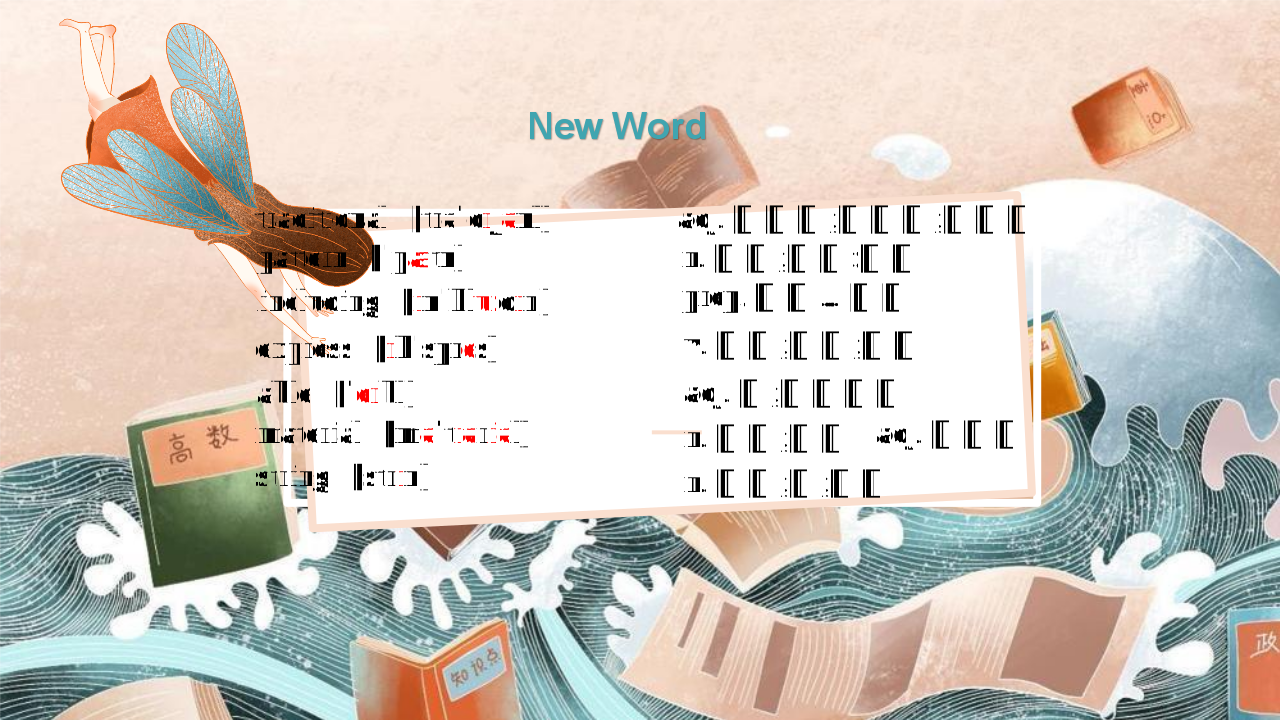
traditional [trəˈdɪʃənl]
adj. 传统的;习俗的;惯例的
pattern [ˈpætn]
n. 图案;模型:模式
including [ɪnˈkluːdɪŋ]
prep. 包括…在内
express [ɪkˈspres]
v. 表达;表示;代表
able [ˈeɪbl]
adj. 能;有才能的
material [məˈtɪəriəl]
n. 材料;布料
adj. 物质的
string [strɪŋ]
n. 细绳;线;一串
New Word
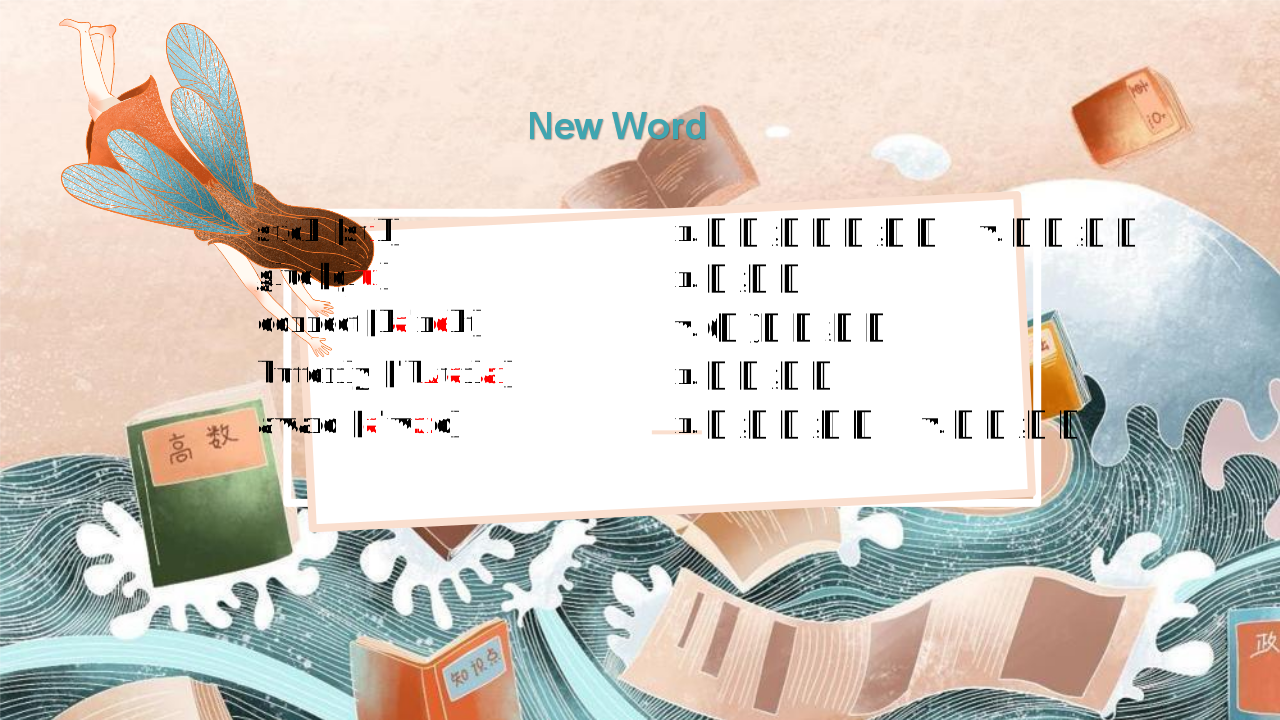
butterfly [ˈbʌtəflaɪ]
n. 蝴蝶;蝶泳
award [əˈwɔːd]
n. 奖;奖品;奖金
v. 授予;判给
stick [stɪk]
n. 枝条;条状物;指责
v. 插入;粘住
glue [ɡluː]
n. 胶;胶水
connect [kəˈnekt]
v. (使)连接;沟通
Lead-in
What’s the video about?
Read the passage and answer the questions
How far back does the history of kites go?
What do you need to make a kite?
What shape of kite did the author's group make this year?
Kites have a history of about 2,300 years.
I need special paper, a string, bamboo sticks, scissors , and glue.
It was a dragon.
Do you like to fly kites?
Where do you fly kites?
what traditional handicraft do you do?
Kites are a traditional form of art in China. They have an about 2,300-year-long history. Traditional kite patterns can mean many things, including good luck, long life, and happiness. People fly kites to express their wishes for a better life.
Last week, there was a kite festival at our school. We were happy to be able to make kites ourselves. My group made a special one. First, we got different materials: special paper, a
string, bamboo sticks, scissors, and glue. Next, we cut the
知识点讲解
1. Traditional kite patterns can mean many things, including good luck, long life, and happiness.
mean
v. 意思是;意为
过去式:meant
后加名词或从句
meaning
n. 意思;含义
the meaning of...
...的意思/含义
meaningful
adj. 有意义的
meaningless
adj. 没有意义的
Do you know the steps to make a kite? Put the sentences in the correct order.
A Find special paper, strings, bamboo sticks, scissors, and glue.
B Draw beautiful patterns on the kite.
C Connect the string to the main part of the kite.
D Use scissors to cut the paper into a shape.
A
D
C
B
paper into a shape. Then we connected the string to the main part of the kite. Finally, we drew beautiful patterns on our kite.
On the day of the festival, we had so much fun. There were many beautiful kites in the sky. They came in many different shapes. Some kites looked like birds, some looked like butterfies, and some looked like fish, Guess what our kite was. It was a dragon! We won a special award at the festival.
award n.奖;奖品;奖金 v.授予;判给
We won a special award at the festival.在节日上我们赢得了一个特殊的奖项。
What kind of handicraft do you want to make?
material n.材料;布料 adj.物质的 string n.细绳;线;一串
stick n.条状物;枝条 v.插入;粘住 glue /glu:/n.胶;胶水
connect /kə'nekt/v.(使)连接;沟通
First, we got different materials: special paper, a string, bamboo sticks,scissors, and glue. Next, we cut the paper into a shape. Then we connected the string to the main part of the kite. Finally, we drew beautiful patterns on our kite.首先,我们用到不同的材料:特制纸,一根细绳,竹签,剪刀和胶水。接下来,我们把纸剪成一个形状。然后,我们把细绳和风筝的主体连在一起。最后,在我们的风筝上画上漂亮的图案。
What kind of handicraft do you want to make? Search online for information and write down the steps.
First
______________________________________________________
Next
______________________________________________________
Then
______________________________________________________
Finally
______________________________________________________
New Lesson
Kites are a traditional form of art in China. They have an about 2,300-year-
long history. Traditional kite patterns can mean many things, including good
luck, long life, and happiness. People fly kites to express their wishes for a
better life.
Last week, there was a kite festival at our school. We were happy to be able to make kites ourselves. My group made a special one. First, we got different materials: special paper, a string, bamboo sticks,scissors, and glue. Next, we cut the paper into a shape. Then we connected the string to the main part of the kite. Finally, we drew beautiful patterns on our kite.
On the day of the festival, we had so much fun. There were many beautiful
kites in the sky. They came in many different shapes. Some kites looked like
birds, some looked like butterflies, and some looked like fish. Guess what our
kite was. It was a dragon! We won a special award at the festival.
Paper cutting is one of the traditional Chinese crafts and it also involves a lot of fun and skills. Here is how to make a paper cutting by yourself.
First, prepare a piece of colorful paper, a pair of scissors, and a pencil. Fold the paper neatly and draw a pattern on it.
Next, carefully cut along the lines you drew with the scissors. Take your time to make the cuts smooth.
Then, unfold the paper gently. If there are rough edges, you can trim them a little to make your paper cutting look nicer.
Finally, put it up on a window or a door! It will make your room more beautiful. Making paper cutting is really fun.
Read the passage and answer the questions.
A How far back does the history of kites go?
B What do you need to make a kite?
CWhat shape of kite did the author's group make this year?
They have an about 2,300-year-long history.
We need special paper, a string, bamboo sticks,scissors, and glue.
It was a dragon!
Language Points
1.We were happy to be able to make kites ourselves.我们很开心能自己做风筝。
be able to”表示“能够,会”,强调通过努力、学习等具备做某事的能力。它与can的用法在某些方面相似,但更侧重于有能力去做,而can有时更侧重于可能性。
结构:“be able to”中的“be”可以是am, is, are, was, were等,根据主语的人称和数以及时态来变化。例如:
I am able to speak English.(我会说英语。)
She is able to solve this problem.(她能解决这个问题。)
Find the key information from the passage to fill in the table.
Kites have an about 2,300-year-long history.
It can mean good luck,long life and happiness.
People fly kites to express their wishes for
a better life.
First, we got different materials.Next, we cut the paper into a shape. Then we connected the string to the main part of the kite. Finally, we drew beautiful patterns on our kite.
Some kites looked like birds, some looked like butterflies, and some looked like fish. Mine was a dragon!
be able to”一般不用于表示将来的能力,通常用will be able to或be going to be able to来表示将来能够做某事。例如:I will be able to travel next month.(下个月我将能够去旅行。)
与can/could的区别
- “can”和“could”更多地表示一种能力或可能性,是情态动词,后面直接加动词原形。“can”通常用于一般现在时和一般过去时,“could”是“can”的过去式,也可以表示委婉的语气。例如:Can you help me with my homework?(你能帮我做作业吗?)
“be able to”更强调通过努力获得的能力,有时可以用于各种时态,尤其是在完成时中表示过去某一时刻的能力。例如:After a lot of practice, he was able to run faster.(经过大量练习后,他能跑得更快了。)
一.单项选择
B
Kites are a ________ form of art in China.
A. modern B. traditional C. new D. foreign
2.They have an about 2,300-year-long ________.
A. story B. building C. history D. culture
3.People fly kites to ________ their wishes for a better life.
A. express B. keep C. hide D. lose
We won a special ________ at the festival.
A. game B. award C. kite D. paper
C
A
B
二.用所给的适当形式填空
She often ___________ (express) her feelings through drawing.
They ________ (win) an award last year.
3.We are happy ________ (make) kites ourselves.
4.Look! He __________ (draw) beautiful patterns on the kite.
expresses
won
to make
is drawing
Required(必做)
Optional(选做)
Write down the meanings of the following words: traditional, pattern, material, connect, shape
Research another traditional handicraft in China and write a short passage about it in English, including its history, materials used, and significance.
$
资源预览图
1

2
3
4
5

6
相关资源
由于学科网是一个信息分享及获取的平台,不确保部分用户上传资料的 来源及知识产权归属。如您发现相关资料侵犯您的合法权益,请联系学科网,我们核实后将及时进行处理。