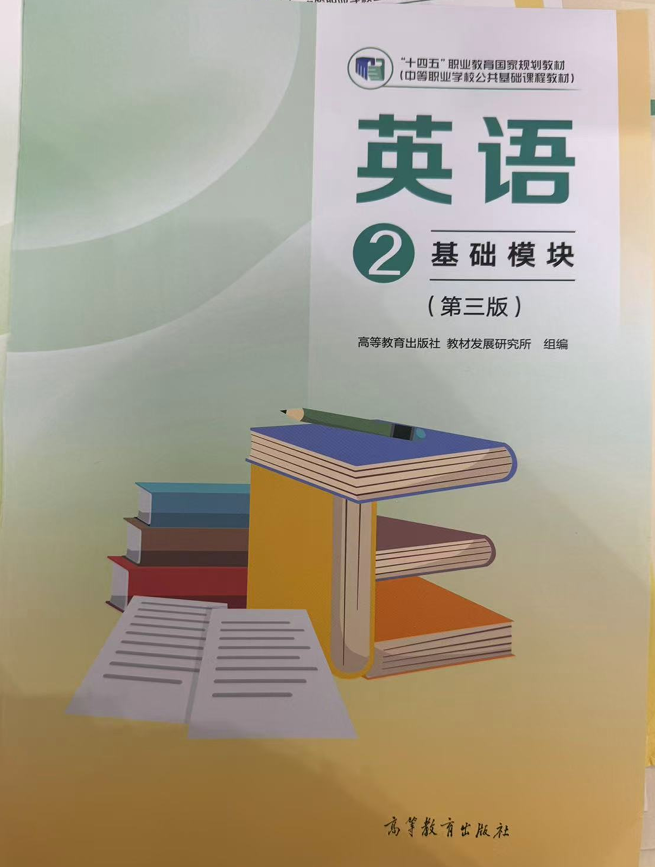
Unit 5 Ancient Civilization(A卷·基础巩固)《英语 基础模块2》(高教版第三版)单元过关卷(原卷版+解析版)
2026-04-23
|
2份
|
27页
|
51人阅读
|
0人下载
内容正文:
编写说明:本套试卷紧扣《英语 基础模块2》(高教版第三版)教材,以教材单元为基准精准覆盖核心考点。
每个单元设置AB卷,A卷为基础巩固卷,侧重基础考点训练,帮助学生扎实掌握知识要点;B卷为能力提升卷,注重知识整合与全面检测,引导学生构建知识网络。全书设计4份综合测试卷,模拟实战情境,聚焦解题能力突破,全面提升应试能力与知识应用水平。
《英语 基础模块2》(高教版第三版)《单元过关卷》
Unit 5 Ancient Civilization
A卷·基础巩固
时间:70分钟 总分:100分
班级 姓名 学号 成绩
综合卷Ⅰ(75分)
一、词汇与语法(共25小题,每小题1分,满分25分)
(一)单词辨音
从下列各小题的A、B、C三个选项中选出一个画线部分发音与所给单词的画线部分发音相同的选项。(共5小题,每小题1分,共5分)
1.painting
A.said B.rain C.certain
【答案】B
【详解】考查字母组合 ai 的发音。所给单词 “painting” 中 ai 发 /eɪ/;选项 A “said” 中 ai 发 /e/,选项 B “rain” 中 ai 发 /eɪ/,选项 C “certain” 中 ai 不发音。故选 B。
2.technology
A.school B.chair C.watch
【答案】A
【详解】考查字母组合 ch 的发音。所给单词 “technology” 中 ch 发 /k/;选项 A “school” 中 ch 发 /k/,选项 B “chair” 中 ch 发 /tʃ/,选项 C “watch” 中 ch 发 /tʃ/。故选 A。
3.exchange
A.example B.excellent C.explain
【答案】C
【详解】考查字母组合 ex 的发音。所给单词 “exchange” 中 ex 发 /ɪks/;选项 A “example” 中 ex 发 /ɪɡz/,选项 B “excellent” 中 ex 发 /eks/,选项 C “explain” 中 ex 发 /ɪks/。故选 C。
4.exhibition
A.history B.high C.mind
【答案】A
【详解】考查字母 i 的发音。所给单词 “exhibition” 中 i 发 /ɪ/;选项 A “history” 中 i 发 /ɪ/,选项 B “high” 中 igh 发 /aɪ/,选项 C “mind” 中 i 发 /aɪ/。故选 A。
5.century
A.turn B.surprise C.nature
【答案】A
【详解】考查字母组合 ur 的发音。所给单词 “century” 中 ur 发 /ɜː/;选项 A “turn” 中 ur 发 /ɜː/,选项 B “surprise” 中 ur 发 /ə/,选项 C “nature” 中 ur 发 /ə/。故选 A。
(二)词义选择
从下列各小题的A、B、C三个选项中选出一个与句子中画线的英文单词或短语含义相符的中文选项。(共10小题,每小题1分,共10分)
6.Ancient China had a great civilization.
A.社区
B.文化
C.文明
【答案】C
【详解】考查单词词义。civilization 意为 “文明”。故选 C。
7.The painting is very attractive.
A.无聊的
B.有魅力的
C.可怕的
【答案】B
【详解】考查单词词义。attractive 意为 “有魅力的”。故选 B。
8.The girl is curious about ancient history.
A.担心的
B.害怕的
C.好奇的
【答案】C
【详解】考查单词词义。curious 意为 “好奇的”。故选 C。
9.There is a painting exhibition at the museum.
A.表演
B.展览
C.比赛
【答案】B
【详解】考查单词词义。exhibition 意为 “展览”。故选 B。
10.The artist's work impressed everyone.
A.使失望
B.使惊讶
C.使留下印象
【答案】C
【详解】考查单词词义。impress 意为 “使留下印象”。故选 C。
11.The museum has many national treasures.
A.垃圾
B.工具
C.财宝;珍品
【答案】C
【详解】考查单词词义。treasure 意为 “财宝;珍品”。故选 C。
12.The Silk Road linked China with the West.
A.京杭运河
B.长城
C.丝绸之路
【答案】C
【详解】考查短语词义。Silk Road 意为 “丝绸之路”。故选 C。
13.This building was built in the 18th century.
A.年代
B.世纪
C.节日
【答案】B
【详解】考查单词词义。century 意为 “世纪”。故选 B。
14.Ancient Chinese inventions contributed to world civilization.
A.结束
B.阻碍
C.有助于
【答案】C
【详解】考查短语词义。contribute to 意为 “有助于”。故选 C。
15.The Silk Road promoted cultural exchange.
A.竞争
B.交流
C.冲突
【答案】B
【详解】考查单词词义。exchange 意为 “交流”。故选 B。
(三)语法运用
从下列各小题的A、B、C三个选项中选出一个最佳选项填入空白处完成句子。(共10小题,每小题1分,共10分)
16.I believe ______ our life is getting better.
A.that B.what C.which
【答案】A
【详解】考查宾语从句。that 引导陈述句宾语从句,无词义。故选 A。
17.Could you tell me ______ the Silk Road was so important?
A.why B.what C.which
【答案】A
【详解】考查宾语从句。why 意为 “为什么”,询问原因。故选 A。
18.I don't know ______ he will come or not.
A.that B.whether C.what
【答案】B
【详解】考查宾语从句。whether…or not 为固定搭配,意为 “是否”。故选 B。
19.He asked me ______ I had read the book.
A.that B.if C.what
【答案】B
【详解】考查宾语从句。if 意为 “是否”,引导宾语从句。故选 B。
20.The book describes ______ Bi Sheng invented clay types.
A.how B.what C.which
【答案】A
【详解】考查宾语从句。how 意为 “如何”,表示方式。故选 A。
21.The Great Wall ______ thousands of years ago.
A.built B.was built C.is built
【答案】B
【详解】考查一般过去时被动语态。长城被建造,用 was built。故选 B。
22.______ an amazing painting it is!
A.How B.What C.What a
【答案】B
【详解】考查感叹句。What + a/an + 形容词 + 可数名词单数!句中有 an,用 What。故选 B。
23.She was reading ______ the teacher came in.
A.when B.while C.because
【答案】A
【详解】考查连词。when 引导短暂性动作,意为 “这时”。故选 A。
24.He not only speaks English ______ also French.
A.but B.and C.or
【答案】A
【详解】考查固定搭配。not only…but also… 意为 “不但…… 而且……”。故选 A。
25.There are ______ books in the library.
A.a great many B.a great many of C.the great many
【答案】A
【详解】考查固定短语。a great many 意为 “许多”,直接修饰可数名词复数。故选 A。
二、情景交际(共15小题,每小题2分,共30分)
(一)简短对话
从下列各小题的A、B、C三个选项中选出一个最佳选项完成对话。(共10小题,每小题2分,共20分)
26.Speaker A: Have you heard of the podcast Western Art?
Speaker B: ______
A.Western food is great.
B.Yes, I'm listening to it right now.
C.No, I don't like art.
【答案】B
【详解】考查情景交际。对方询问是否听过播客,应正面回应。故选 B。
27.Speaker A: Which part are you on now?
Speaker B: ______
A.I'm on the third part about Greek Art.
B.I'm fine.
C.I like parts.
【答案】A
【详解】考查情景交际。对方问到哪一部分,应回答具体部分。故选 A。
28.Speaker A: Which artist impresses you most?
Speaker B: ______
A.I'm impressed by food.
B.I don't like artists.
C.Pablo Picasso. His work is amazing.
【答案】C
【详解】考查情景交际。对方询问印象最深的艺术家,应回答人名。故选 C。
29.Speaker A: The eyes of the artist in the picture are so curious.
Speaker B: ______
A.Yes, they tell a story.
B.I don't see eyes.
C.Eyes are small.
【答案】A
【详解】考查情景交际。对方评价画中眼睛,应表示赞同。故选 A。
30.Speaker A: This is Picasso's gift to us.
Speaker B: ______
A.Gifts are expensive.
B.What a great artist he was!
C.I want a gift.
【答案】B
【详解】考查情景交际。对方评价毕加索的作品,应赞美艺术家。故选 B。
31.Speaker A: When was the Silk Road started?
Speaker B: ______
A.During the Qin Dynasty.
B.In 2020.
C.Next year.
【答案】A
【详解】考查情景交际。对方询问丝绸之路开始时间,应回答秦朝。故选 A。
32.Speaker A: What can you tell me about the Tang Tri-color?
Speaker B: ______
A.I don't know what it is.
B.It was made in the Tang Dynasty with three colors.
C.It's a new technology.
【答案】B
【详解】考查情景交际。对方询问唐三彩,应介绍相关知识。故选 B。
33.Speaker A: The exhibition will be held at the National Museum.
Speaker B: ______
A.I'd love to visit it!
B.I hate museums.
C.That's too far.
【答案】A
【详解】考查情景交际。对方告知展览地点,应表示想去参观。故选 A。
34.Speaker A: Do you know when the paper-making was invented?
Speaker B: ______
A.I don't know what paper is.
B.Paper was invented in America.
C.In ancient China, about 2,000 years ago.
【答案】C
【详解】考查情景交际。对方询问造纸术发明时间,应回答古代中国。故选 C。
35.Speaker A: Ancient Chinese inventions greatly promoted world civilization.
Speaker B: ______
A.Yes, China made great contributions to the world.
B.I don't agree.
C.So what?
【答案】C
【详解】考查情景交际。对方评价中国古代发明,应表示赞同。故选 C。
(二)补全对话
在以下情景对话中有五个空白处,从对话下方的七个备选项中选择恰当的句子补全对话。(共5小题,每小题2分,共10分)
Reporter: So how long have you prepared for this exhibition?
Zhang Qian: 36
Reporter: Which artist impresses you most?
Zhang Qian: 37
Reporter: Why?
Zhang Qian: 38
Reporter: Which work is your favorite?
Zhang Qian: 39
Reporter: Those eyes are very attractive.
Zhang Qian: 40
A.Yes, there is always something fresh in his paintings.
B.The Portrait (self-portrait).
C.For about 3 months.
D.His eyes mean so much.
E.I think Picasso is the greatest.
F.I like Western art.
G.The eyes are so curious.
36.【答案】C
【详解】根据上文询问准备时长,回答大约 3 个月。故选 C。
37.【答案】E
【详解】根据上文询问印象最深的艺术家,回答毕加索。故选 E。
38.【答案】G
【详解】根据上文询问原因,回答他的眼睛充满好奇。故选 G。
39.【答案】B
【详解】根据上文询问最喜欢的作品,回答自画像。故选 B。
40.【答案】D
【详解】根据上文评价眼睛迷人,回应眼睛寓意深刻。故选 D。
三、阅读理解(共10小题,每小题2分,共20分)
阅读下列两篇短文,根据短文内容从每题所给的A、B、C三个选项中选出一个最佳选项。
A
The Silk Road was one of the most famous trade routes in history. It started during the Qin Dynasty and reached its peak during the Tang Dynasty. The Silk Road linked China with Central Asia, the Middle East, and Europe.
Through the Silk Road, many goods were traded between East and West. China exported silk, tea, and porcelain (瓷器) to the West. In return, it received gold, glass, and horses from the West. But the Silk Road was not only about trade. It also promoted cultural exchange. Ideas, religions, and technologies were shared along the route.
During the Eastern Han Dynasty, Gan Ying was sent to search for "Da Qin" (the Roman Empire). Strong evidence suggests that silk products were introduced to Greece from China as early as the 6th century BC. Marco Polo's book The Travels of Marco Polo told Europeans about amazing things like paper money and fireworks.
41.When did the Silk Road start?
A.During the Qin Dynasty.
B.During the Tang Dynasty.
C.During the Han Dynasty.
42.What did China export to the West?
A.Gold and glass. B.Silk, tea, and porcelain. C.Horses.
43.What was traded along the Silk Road besides goods?
A.Nothing. B.Only gold. C.Ideas and technologies.
44.Who was Gan Ying?
A.A Roman trader.
B.A Chinese explorer.
C.A Greek artist.
45.What did Marco Polo's book tell Europeans about?
A.Chinese food.
B.Paper money and fireworks.
C.Chinese music.
41.【答案】A
【详解】根据文中 “It started during the Qin Dynasty” 可知,丝绸之路始于秦朝。故选 A。
42.【答案】B
【详解】根据文中 “China exported silk, tea, and porcelain to the West” 可知,出口丝绸、茶叶、瓷器。故选 B。
43.【答案】C
【详解】根据文中 “Ideas, religions, and technologies were shared along the route” 可知,交流思想与技术。故选 C。
44.【答案】B
【详解】根据文中 “Gan Ying was sent to search for ‘Da Qin’” 可知,甘英是中国探险家。故选 B。
45.【答案】B
【详解】根据文中 “Marco Polo's book… told Europeans about amazing things like paper money and fireworks” 可知,介绍了纸币和烟花。故选 B。
B
The four great inventions of ancient China—paper-making, printing, gunpowder (火药), and the compass (指南针)—greatly promoted the development of the world.
Paper was invented in China around 105 AD during the Han Dynasty. Before paper, people wrote on bamboo slips (竹简) or silk, which were expensive. Paper made writing much easier and cheaper.
Printing was another great invention. Bi Sheng invented movable type printing (活字印刷) in the 11th century during the Song Dynasty. This made it possible to print books much faster than before. These inventions were introduced to other countries through the Silk Road and had a great influence on world civilization.
46.How many great inventions are mentioned?
A.Two. B.Three. C.Four.
47.When was paper invented?
A.Around 105 AD.
B.In the 11th century.
C.During the Tang Dynasty.
48.What did people use before paper?
A.Nothing. B.Bamboo slips or silk. C.Plastic.
49.Who invented movable type printing?
A.Marco Polo. B.Bi Sheng. C.Gan Ying.
50.How were the inventions introduced to other countries?
A.By airplane. B.Through the Silk Road. C.By phone.
46.【答案】C
【详解】根据文中 “The four great inventions of ancient China” 可知,提到四大发明。故选 C。
47.【答案】A
【详解】根据文中 “Paper was invented in China around 105 AD” 可知,公元 105 年。故选 A。
48.【答案】B
【详解】根据文中 “Before paper, people wrote on bamboo slips or silk” 可知,用竹简或丝绸。故选 B。
49.【答案】B
【详解】根据文中 “Bi Sheng invented movable type printing” 可知,毕昇发明活字印刷。故选 B。
50.【答案】B
【详解】根据文中 “These inventions were introduced to other countries through the Silk Road” 可知,通过丝绸之路传播。故选 B。
综合卷Ⅱ(25分)
四、英汉互译(共5小题,每小题3分,共15分)
将下列51—53小题的英文句子翻译成中文,54、55小题中文句子翻译成英文(括号中的英文提示词供翻译参考)。
51.The Silk Road linked China with the West and promoted cultural exchange.
52.Strong evidence suggests that silk products were introduced to Greece from China.
53.His book told Europeans about amazing things like paper money and fireworks.
54.你能告诉我丝绸之路为什么如此重要吗?(why)
55.中国的四大发明极大地促进了世界文明的发展。(contribute to)
51.【答案】丝绸之路连接了中国与西方,促进了文化交流。
52.【答案】有力的证据表明,丝绸制品早在公元前 6 世纪就从中国传入希腊。
53.【答案】他的书向欧洲人讲述了纸币和烟花等奇妙事物。
54.【答案】Could you tell me why the Silk Road was so important?
55.【答案】The four great inventions of China contributed greatly to the development of world civilization.
五、应用写作(本大题共10分)
根据提示完成通知填空,每空一词或短语。
NOTICE
To: All students
From: 56 (历史爱好者协会)
Date: October 15, 2027
Subject: Ancient Civilization Exhibition Visit
We will visit the 57 (国家博物馆) this Saturday. The exhibition is about the 58 (丝绸之路) and its cultural exchange. We will meet at the school gate at 59 (上午8点) . Please bring your student ID and 60 (笔记本) to take notes.
56.____________________
57.____________________
58.____________________
59.____________________
60.____________________
56.【答案】History Lovers Association
57.【答案】National Museum
58.【答案】Silk Road
59.【答案】8:00 a.m.
60.【答案】notebook
学科网(北京)股份有限公司 (
1
)原创精品资源学科网独家享有版权,侵权必究!
学科网(北京)股份有限公司
$
编写说明:本套试卷紧扣《英语 基础模块2》(高教版第三版)教材,以教材单元为基准精准覆盖核心考点。
每个单元设置AB卷,A卷为基础巩固卷,侧重基础考点训练,帮助学生扎实掌握知识要点;B卷为能力提升卷,注重知识整合与全面检测,引导学生构建知识网络。全书设计4份综合测试卷,模拟实战情境,聚焦解题能力突破,全面提升应试能力与知识应用水平。
《英语 基础模块2》(高教版第三版)《单元过关卷》
Unit 5 Ancient Civilization
A卷·基础巩固
时间:70分钟 总分:100分
班级 姓名 学号 成绩
综合卷Ⅰ(75分)
一、词汇与语法(共25小题,每小题1分,满分25分)
(一)单词辨音
从下列各小题的A、B、C三个选项中选出一个画线部分发音与所给单词的画线部分发音相同的选项。(共5小题,每小题1分,共5分)
1.painting
A.said B.rain C.certain
2.technology
A.school B.chair C.watch
3.exchange
A.example B.excellent C.explain
4.exhibition
A.history B.high C.mind
5.century
A.turn B.surprise C.nature
(二)词义选择
从下列各小题的A、B、C三个选项中选出一个与句子中画线的英文单词或短语含义相符的中文选项。(共10小题,每小题1分,共10分)
6.Ancient China had a great civilization.
A.社区
B.文化
C.文明
7.The painting is very attractive.
A.无聊的
B.有魅力的
C.可怕的
8.The girl is curious about ancient history.
A.担心的
B.害怕的
C.好奇的
9.There is a painting exhibition at the museum.
A.表演
B.展览
C.比赛
10.The artist's work impressed everyone.
A.使失望
B.使惊讶
C.使留下印象
11.The museum has many national treasures.
A.垃圾
B.工具
C.财宝;珍品
12.The Silk Road linked China with the West.
A.京杭运河
B.长城
C.丝绸之路
13.This building was built in the 18th century.
A.年代
B.世纪
C.节日
14.Ancient Chinese inventions contributed to world civilization.
A.结束
B.阻碍
C.有助于
15.The Silk Road promoted cultural exchange.
A.竞争
B.交流
C.冲突
(三)语法运用
从下列各小题的A、B、C三个选项中选出一个最佳选项填入空白处完成句子。(共10小题,每小题1分,共10分)
16.I believe ______ our life is getting better.
A.that B.what C.which
17.Could you tell me ______ the Silk Road was so important?
A.why B.what C.which
18.I don't know ______ he will come or not.
A.that B.whether C.what
19.He asked me ______ I had read the book.
A.that B.if C.what
20.The book describes ______ Bi Sheng invented clay types.
A.how B.what C.which
21.The Great Wall ______ thousands of years ago.
A.built B.was built C.is built
22.______ an amazing painting it is!
A.How B.What C.What a
23.She was reading ______ the teacher came in.
A.when B.while C.because
24.He not only speaks English ______ also French.
A.but B.and C.or
25.There are ______ books in the library.
A.a great many B.a great many of C.the great many
二、情景交际(共15小题,每小题2分,共30分)
(一)简短对话
从下列各小题的A、B、C三个选项中选出一个最佳选项完成对话。(共10小题,每小题2分,共20分)
26.Speaker A: Have you heard of the podcast Western Art?
Speaker B: ______
A.Western food is great.
B.Yes, I'm listening to it right now.
C.No, I don't like art.
27.Speaker A: Which part are you on now?
Speaker B: ______
A.I'm on the third part about Greek Art.
B.I'm fine.
C.I like parts.
28.Speaker A: Which artist impresses you most?
Speaker B: ______
A.I'm impressed by food.
B.I don't like artists.
C.Pablo Picasso. His work is amazing.
29.Speaker A: The eyes of the artist in the picture are so curious.
Speaker B: ______
A.Yes, they tell a story.
B.I don't see eyes.
C.Eyes are small.
30.Speaker A: This is Picasso's gift to us.
Speaker B: ______
A.Gifts are expensive.
B.What a great artist he was!
C.I want a gift.
31.Speaker A: When was the Silk Road started?
Speaker B: ______
A.During the Qin Dynasty.
B.In 2020.
C.Next year.
32.Speaker A: What can you tell me about the Tang Tri-color?
Speaker B: ______
A.I don't know what it is.
B.It was made in the Tang Dynasty with three colors.
C.It's a new technology.
33.Speaker A: The exhibition will be held at the National Museum.
Speaker B: ______
A.I'd love to visit it!
B.I hate museums.
C.That's too far.
34.Speaker A: Do you know when the paper-making was invented?
Speaker B: ______
A.I don't know what paper is.
B.Paper was invented in America.
C.In ancient China, about 2,000 years ago.
35.Speaker A: Ancient Chinese inventions greatly promoted world civilization.
Speaker B: ______
A.Yes, China made great contributions to the world.
B.I don't agree.
C.So what?
(二)补全对话
在以下情景对话中有五个空白处,从对话下方的七个备选项中选择恰当的句子补全对话。(共5小题,每小题2分,共10分)
Reporter: So how long have you prepared for this exhibition?
Zhang Qian: 36
Reporter: Which artist impresses you most?
Zhang Qian: 37
Reporter: Why?
Zhang Qian: 38
Reporter: Which work is your favorite?
Zhang Qian: 39
Reporter: Those eyes are very attractive.
Zhang Qian: 40
A.Yes, there is always something fresh in his paintings.
B.The Portrait (self-portrait).
C.For about 3 months.
D.His eyes mean so much.
E.I think Picasso is the greatest.
F.I like Western art.
G.The eyes are so curious.
三、阅读理解(共10小题,每小题2分,共20分)
阅读下列两篇短文,根据短文内容从每题所给的A、B、C三个选项中选出一个最佳选项。
A
The Silk Road was one of the most famous trade routes in history. It started during the Qin Dynasty and reached its peak during the Tang Dynasty. The Silk Road linked China with Central Asia, the Middle East, and Europe.
Through the Silk Road, many goods were traded between East and West. China exported silk, tea, and porcelain (瓷器) to the West. In return, it received gold, glass, and horses from the West. But the Silk Road was not only about trade. It also promoted cultural exchange. Ideas, religions, and technologies were shared along the route.
During the Eastern Han Dynasty, Gan Ying was sent to search for "Da Qin" (the Roman Empire). Strong evidence suggests that silk products were introduced to Greece from China as early as the 6th century BC. Marco Polo's book The Travels of Marco Polo told Europeans about amazing things like paper money and fireworks.
41.When did the Silk Road start?
A.During the Qin Dynasty.
B.During the Tang Dynasty.
C.During the Han Dynasty.
42.What did China export to the West?
A.Gold and glass. B.Silk, tea, and porcelain. C.Horses.
43.What was traded along the Silk Road besides goods?
A.Nothing. B.Only gold. C.Ideas and technologies.
44.Who was Gan Ying?
A.A Roman trader.
B.A Chinese explorer.
C.A Greek artist.
45.What did Marco Polo's book tell Europeans about?
A.Chinese food.
B.Paper money and fireworks.
C.Chinese music.
B
The four great inventions of ancient China—paper-making, printing, gunpowder (火药), and the compass (指南针)—greatly promoted the development of the world.
Paper was invented in China around 105 AD during the Han Dynasty. Before paper, people wrote on bamboo slips (竹简) or silk, which were expensive. Paper made writing much easier and cheaper.
Printing was another great invention. Bi Sheng invented movable type printing (活字印刷) in the 11th century during the Song Dynasty. This made it possible to print books much faster than before. These inventions were introduced to other countries through the Silk Road and had a great influence on world civilization.
46.How many great inventions are mentioned?
A.Two. B.Three. C.Four.
47.When was paper invented?
A.Around 105 AD.
B.In the 11th century.
C.During the Tang Dynasty.
48.What did people use before paper?
A.Nothing. B.Bamboo slips or silk. C.Plastic.
49.Who invented movable type printing?
A.Marco Polo. B.Bi Sheng. C.Gan Ying.
50.How were the inventions introduced to other countries?
A.By airplane. B.Through the Silk Road. C.By phone.
综合卷Ⅱ(25分)
四、英汉互译(共5小题,每小题3分,共15分)
将下列51—53小题的英文句子翻译成中文,54、55小题中文句子翻译成英文(括号中的英文提示词供翻译参考)。
51.The Silk Road linked China with the West and promoted cultural exchange.
52.Strong evidence suggests that silk products were introduced to Greece from China.
53.His book told Europeans about amazing things like paper money and fireworks.
54.你能告诉我丝绸之路为什么如此重要吗?(why)
55.中国的四大发明极大地促进了世界文明的发展。(contribute to)
五、应用写作(本大题共10分)
根据提示完成通知填空,每空一词或短语。
NOTICE
To: All students
From: 56 (历史爱好者协会)
Date: October 15, 2027
Subject: Ancient Civilization Exhibition Visit
We will visit the 57 (国家博物馆) this Saturday. The exhibition is about the 58 (丝绸之路) and its cultural exchange. We will meet at the school gate at 59 (上午8点) . Please bring your student ID and 60 (笔记本) to take notes.
56.____________________
57.____________________
58.____________________
59.____________________
60.____________________
学科网(北京)股份有限公司 (
1
)原创精品资源学科网独家享有版权,侵权必究!
学科网(北京)股份有限公司
$
资源预览图

1

2

3
由于学科网是一个信息分享及获取的平台,不确保部分用户上传资料的 来源及知识产权归属。如您发现相关资料侵犯您的合法权益,请联系学科网,我们核实后将及时进行处理。