精品解析:江苏省江阴市2025-2026学年七年级第二学期英语阶段学情自测
 切换试卷
切换试卷
2026-04-22
|
3份
|
37页
|
283人阅读
|
6人下载
资源信息
| 学段 | 初中 |
|---|---|
| 学科 | 英语 |
| 教材版本 | - |
| 年级 | 七年级 |
| 章节 | - |
| 类型 | 试卷 |
| 知识点 | - |
| 使用场景 | 同步教学-期中 |
| 学年 | 2026-2027 |
| 地区(省份) | 江苏省 |
| 地区(市) | 无锡市 |
| 地区(区县) | 江阴市 |
| 文件格式 | ZIP |
| 文件大小 | 15.37 MB |
| 发布时间 | 2026-04-22 |
| 更新时间 | 2026-05-18 |
| 作者 | 匿名 |
| 品牌系列 | - |
| 审核时间 | 2026-04-22 |
| 下载链接 | https://m.zxxk.com/soft/57488514.html |
| 价格 | 5.00储值(1储值=1元) |
| 来源 | 学科网 |
内容正文:
听力测试现在开始。第一部分听对话回答问题。本部分共有十道小题,每小题你将听到一段对话,每段对话读两遍。在听每段对话前,你将有5秒钟的时间阅读题目,听完每段对话后,你将有5秒钟的时间选出你认为最合适的答案。听到滴的信号时进入下一小题。One. what is your favorite place in your house? Mary. I like the bathroom best. I like to take a hot shower there. What is your favorite place in your house? Mary. I like the bathroom best. I like to take a hot shower there. Two, which place . shall we show the exchange students around first? Now, SHE tea house, see he you on, or beijing grand . theater, see you are, yeah, they can get a taste of traditional beijing life. Which place shall we show the exchange students around first? Now SHE t house, see he you on, or beijing grand . theater, see you are, yeah. They can get a taste of traditional beijing life. Three, I live on the nine floor. What about you? Daniel? I live on the twenties. Th floor, I live on the nine floor. What about you, Daniel? I live on the twentieth floor. For tom, what kind of traditional chinese art do you like? I love paper cutting and my brother loves clay. Tom, what kind of traditional chinese art do you like? I love paper cutting and my brother loves clay. Five, why would you like to live? Sam. I like living in a house with a big garden in front of you. Then I can play with my dog there. Where would you like to live? Sam, I like living . in a house with a big garden in front of IT. Then I can play with my dog there. Six. mom, i'm hungry. hungry. You just ate four hamburgers. Mom, i'm hungry. hungry. You just ate four hamburgers. Seven, will you go to the helping hands meeting today? Yes, I will. I have some problems with my maths homework. Will you go to the helping . hands meeting today? Yes, I will. I have some problems with my maths homework. Eight. what's your favorite animal? I like pandas best because they are so cute. What's your favorite animal? I like pound is best because they're so cute. Nine, excuse me, could you please tell me where the bank of china is? IT is next to the restaurant across the street. Excuse me, could you please tell me where the bank of china is? IT is next to the restaurant across the street. Ten, do you have lunch . at home? No, there is a restaurant near my home, so I usually have lunch there. Do you have lunch at home? No, there is a restaurant near my home, so I usually have launched ed there. 第二部分,听对话和短文回答问题。你将听到一段对话和两篇短文,各听两遍。在听每段对话或短文门前,你将有时间阅读相关小题,每小题5秒钟。听完后你仍有5秒钟的时间选择你认为最合适的备选答案。听一段对话,回答第11至12小题。Excuse me, could you please tell me the way to the airport? Sure, i'm going that way. Come with me. thanks. It's very kind of you. You're welcome. Is this your first time . in beijing? Yes, IT is. It's a very interesting place. It's clean and beautiful. By the way, what's your favorite place in beijing? The great wall? I took many . photos that I agree. Oh, we are near the airport. You can see . IT over there. Oh, yes, thanks for your help. bye. Excuse me, could you please tell me the way to the airport? Sure, i'm going that way. Come with me. thanks. It's very kind of you. You're welcome. Is this your first time . in beijing? Yes, IT is. It's a very interesting place. It's clean and beautiful. By the way, what's your favorite place in beijing? The great wall? I took many photos there. I agree. Oh, we are near the airport. You can see IT over there. Oh, yes, thanks for your help. bye. 听第一篇短文,回答第13至15小题请,根据短文内容选择正确答案,完成信息记录表。答题完毕,请等待低的信号进入下一篇短文。Some people still live in their hometown, but others may only go back to IT once, twice a year. Now millions of chinese leave the countryside to look for work in the cities. John way, a forty six year old man, is one of them. He has lived in wingo for thirty years with a hard job in a shoe factory. He doesn't find much time to visit his hometown. I often went home in the past, but now I haven't been back for about three years. I feel very sorry for my parents, yes, but I just don't have the time, he says. Some people still live in their hometown, but others may only go back to IT once or twice a year. Now millions of chinese leave the countryside to look for work in the cities. John way, a forty six year old man, is one of them. He has lived in one zau for thirteen years with a hard job in a shoe factory. He doesn't find much time to visit his . hometown. I often . went home in the past, but now I haven't been back for about three years. I feel very sorry for my parents, but I just don't have the time, he says. 听第二篇短文,回答第16至20小题。Wave not carving begins in the chin dynasty. If crafts men want to do a good job of carving nuts, IT is not easy, because they need to have a lot of knowledge. In many areas, they have to lend skills in painting, carving and handwriting. In order to show traditional stories from ancient times, they need to read many books. Thanks to . their creative design, a new ideas. People in china like wave at carving artworks very much. Many Young people become interested in the skill of not caring. Now more crafts men passed down the skills of not carving only through the family. If anyone wants to lend the skill, the crofts men will teach them. Wave on a carving begins in the chain dynasty. If crafts men want to do good job of carving nuts, IT is not easy, because they need to have a lot of knowledge. In many areas, they have to learn skills in painting, carving and handwriting. In order to show traditional stories from ancient times, they need to read many books. Thanks to their creative design and new ideas, people in china like found carving artworks very much. Many Young people become interested in the skill of not carving. Now more crafts men passed down the skills of nut carving only through the family. If anyone wants to learn the skill, the craft man will teach them. 听力测试到此结束。
2025-2026学年第二学期期中考试
初一英语试卷
(满分100分,考试时间100分钟)
一、听力测试(共20小题;每题1分,计20分)
第一部分 听对话回答问题。
本部分共有10道小题,每小题你将听到一段对话,每段对话读两遍。在听每段对话前,你将有5秒钟的时间阅读题目;听完每段对话后,你将有5秒钟的时间选出你认为最合适的答案。听到“嘀”的信号时,进入下一小题。
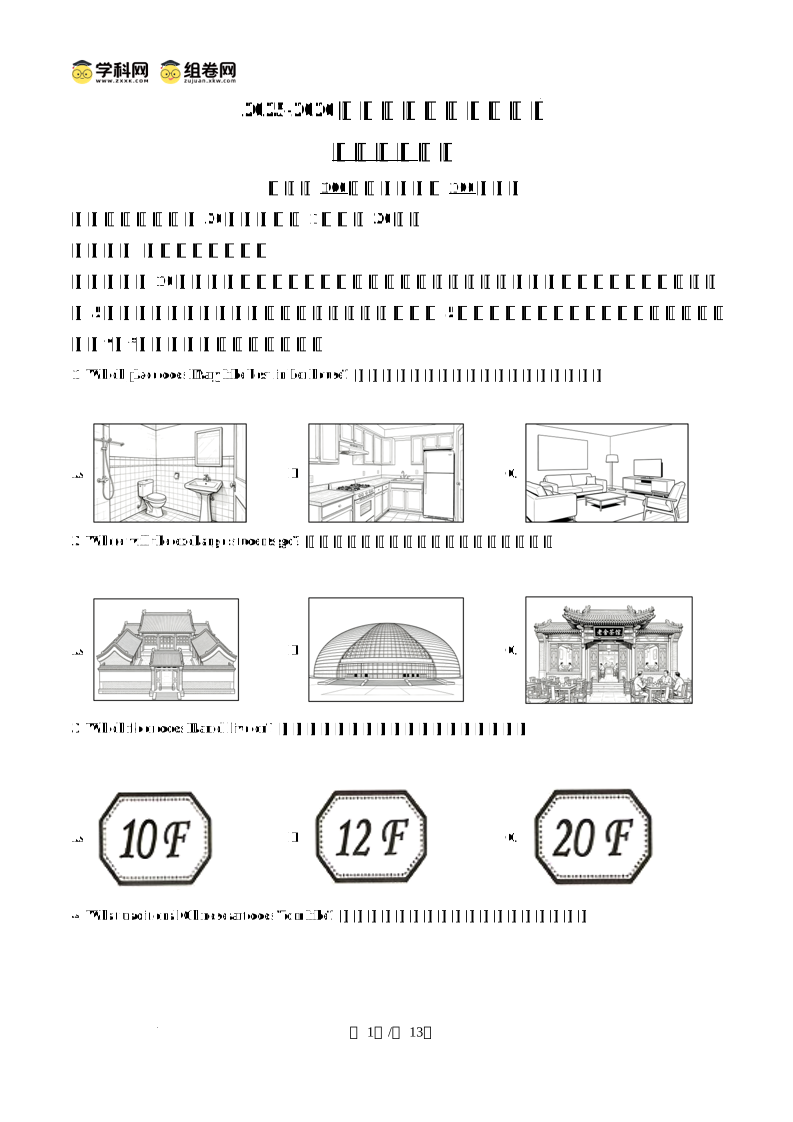
1. Which place does Mary like best in her house? 【此处可播放相关音频,请去附件查看】
A. B. C.
【答案】A
【解析】
【原文】M: What is your favorite place in your house, Mary?
W: I like the bathroom best. I like to take a hot shower there.
2. Where will the exchange students go? 【此处可播放相关音频,请去附件查看】
A. B. C.
【答案】A
【解析】
【原文】M: Which place shall we show the exchange students around first? Laoshe Teahouse, Siheyuan, or Beijing Grand Theater?
W: Siheyuan. There, they can get a taste of traditional Beijing life.
3. Which floor does Daniel live on? 【此处可播放相关音频,请去附件查看】
A. B. C.
【答案】C
【解析】
【原文】W: I live on the ninth floor. What about you, Daniel?
M: I live on the twentieth floor.
4. What traditional Chinese art does Tom like? 【此处可播放相关音频,请去附件查看】
A. B. C.
【答案】A
【解析】
【原文】W: Tom, what kind of traditional Chinese art do you like?
M: I love paper-cutting and my brother loves clay.
5. Where does Sam want to live? 【此处可播放相关音频,请去附件查看】
A. In a house with a garden behind it.
B. In a flat with a garden in front of it.
C. In a house with a garden in front of it.
【答案】C
【解析】
【原文】W: Where would you like to live, Sam?
M: I like living in a house with a big garden in front of it. Then I can play with my dog there.
6. What did the boy do just now? 【此处可播放相关音频,请去附件查看】
A. He had something to drink.
B. He had something to eat.
C. He had nothing to eat.
【答案】B
【解析】
【原文】M: Mum, I’m hungry.
W: Hungry? You just ate four hamburgers.
7. Why will the boy go to the “helping hands” meeting? 【此处可播放相关音频,请去附件查看】
A. Because he doesn’t feel well.
B. Because his computer is broken.
C. Because he has some problems with his homework.
【答案】C
【解析】
【原文】W: Will you go to the “helping hands” meeting today?
M: Yes, I will. I have some problems with my maths homework.
8. Why does the girl like pandas? 【此处可播放相关音频,请去附件查看】
A. Because they are strong.
B. Because they are cute.
C. Because they are clever.
【答案】B
【解析】
【原文】M: What’s your favorite animal?
W: I like pandas best. Because they are so cute.
9. What’s next to the Bank of China? 【此处可播放相关音频,请去附件查看】
A. A restaurant. B. A post office. C. A clothing shop.
【答案】A
【解析】
【原文】W: Excuse me, could you please tell me where the Bank of China is?
M: It is next to the restaurant across the street.
10. Where does the boy have lunch? 【此处可播放相关音频,请去附件查看】
A. At home. B. At school. C. In the restaurant.
【答案】C
【解析】
【原文】W: Do you have lunch at home?
M: No. There is a restaurant near my home, so I usually have lunch there.
第二部分 听对话和短文回答问题
你将听到一段对话和两篇短文,各听两遍。在听每段对话或短文前,你将有时间阅读相关小题,每小题5秒钟。听完后,你仍有5秒钟的时间选择你认为最合适的备选答案。
听一段对话,回答小题。【此处可播放相关音频,请去附件查看】
11. Where is the woman going?
A. To the airport. B. To the bus station. C. To the train station.
12. What does the woman think of the city?
A. Modern. B. Interesting. C. Special.
【答案】11. A 12. B
【解析】
【原文】W: Excuse me, could you please tell me the way to the airport?
M: Sure. I’m going that way. Come with me.
W: Thanks. It’s very kind of you.
M: You’re welcome. Is this your first time in Beijing?
W: Yes, it is. It’s a very interesting place. It’s clean and beautiful.
M: By the way, what’s your favorite place in Beijing?
W: The Great Wall. I took many photos there.
M: I agree. Oh, we are near the airport. You can see it over there.
W: Oh, yes. Thanks for your help. Bye.
听短文,回答小题。请根据短文内容,选择正确答案,完成信息记录表。答题完毕,请等待“嘀”的信号,进入下一篇短文。【此处可播放相关音频,请去附件查看】
Hometown
Background
Millions of Chinese leave the countryside to look for work in the cities.
Zhong Wei
• Zhong Wei has lived in ____13____ for ____14____ years.
• With a hard job in a ____15____, he doesn’t find much time to visit his hometown.
13. A. Wenzhou. B. Taizhou. C. Yangzhou.
14. A. 30. B. 3. C. 13.
15. A. clothes factory. B. shoe factory C. food factory
【答案】13. A 14. C 15. B
【解析】
【原文】Some people still live in their hometown, but others may only go back to it once or twice a year. Now, millions of Chinese leave the countryside to look for work in the cities. Zhong Wei, a 46-year-old man, is one of them. He has lived in Wenzhou for 13 years with a hard job in a shoe factory. He doesn’t find much time to visit his hometown. “I often went home in the past. But now I haven’t been back for about three years. I feel very sorry for my parents. But I just don’t have the time,” he says.
听短文,回答小题。【此处可播放相关音频,请去附件查看】
16. When did Weifang nut carving begin?
A. In the Qing Dynasty. B. In the Song Dynasty. C. In the Tang Dynasty.
17. What is the job of the nut carving like?
A. It’s easy. B. It’s difficult. C. It’s popular.
18. What do the craftsmen need to do if they want to do a good job?
A. To take wonderful pictures.
B. To ask more people for help.
C. To read and learn many skills.
19. Why do the craftsmen need to have knowledge in many areas?
A. Because they might change their jobs.
B. Because they wanted to have many hobbies.
C. Because they must have new ideas and design new artworks.
20. How do many craftsmen pass down the skill of carving nut now?
A. They teach the skill at school.
B. They teach the skill in communities.
C. They teach the skill through the family.
【答案】16. A 17. B 18. C 19. C 20. C
【解析】
【原文】Weifang nut carving begins in the Qing Dynasty. If craftsmen want to do a good job of carving nuts, it is not easy because they need to have a lot of knowledge in many areas. They have to learn skills in painting, carving and handwriting in order to show traditional stories from ancient times. They need to read many books.
Thanks to their creative design and new ideas, people in China like Weifang nut carving artworks very much. Many young people become interested in the skill of nut carving. Now more craftsmen pass down the skills of nut carving only through the family. If anyone wants to learn the skill, the craftsmen will teach them.
二、完形填空 先通读下面的短文,掌握其大意,然后在每小题所给的四个选项中,选出可以填入空白处的最佳选项,并在答题卡上将该项涂黑。(本大题共10小题,每小题1分,共10分)
When my friend invited me to join the new Tai Chi Club, I thought he was joking. I always believed tai chi was for ____21____ people. However, after the first class, I knew that I was wrong. Tai chi ____22____ both my body and mind.
The basic skill I learned in my first few tai chi classes was keeping a balance (平衡). An action was called “golden rooster standing on one leg”. This action looked really easy, ____23____ I failed (失败) many times. I felt ____24____ from practicing again and again, so I wanted to give up. Just then, my teacher taught me how to relax myself. After practicing several times, I was able to do more difficult actions and feel peace of mind as well. And my love for tai chi became ____25____.
I started to study the ____26____ behind tai chi. I found tai chi comes from Chinese yin and yang. The practice of it helps to keep a balance between opposites: ____27____ and fast, left and right, up and down, breathing in and breathing out... Finally, tai chi brings about a state (状态) of body balance and ____28____ peace.
Now I can ____29____ say tai chi is suitable for people of all ages. More importantly, practicing tai chi has made me better ____30____ the Chinese culture. What a symbol of China!
21. A. young B. old C. ordinary D. healthy
22. A. followed B. expressed C. recommended D. changed
23. A. so B. because C. but D. and
24. A. interested B. tired C. excited D. comfortable
25. A. stronger B. quiet C. usual D. cold
26. A. skill B. culture C. art D. warmth
27. A. soft B. hard C. long D. slow
28. A. world B. mind C. life D. heart
29. A. easily B. sadly C. largely D. kindly
30. A. understand B. teach C. save D. attract
【答案】21. B 22. D 23. C 24. B 25. A 26. B 27. D 28. B 29. A 30. A
【解析】
【导语】本文主要介绍了作者起初认为太极是老年人练的,练习后改变了看法,发现太极锻炼身心、蕴含阴阳文化,并帮助自己更好地理解中国文化。
【21题详解】
句意:我一直认为太极是给老年人练的。
根据后文作者“以为朋友在开玩笑”以及结尾“太极拳适合所有年龄段的人”的转变,能看出作者最初的刻板印象是“太极拳是老年人的运动”,应选old(年老的)。young(年轻的)、ordinary(普通的)、healthy(健康的)均不符合。
【22题详解】
句意:太极改变了我的身心。
前文提到作者“以为自己错了”,后文又写了练习太极拳带来的身心变化,应选changed(改变)。followed(跟随)、expressed(表达)、recommended(推荐)均不符合。
【23题详解】
句意: 这个动作看起来真的很简单,但我失败了很多次。
前半句“看起来容易”和后半句“多次失败”是转折关系,应选but(但是)。so(所以)、because(因为)、and(和)均不符合。
【24题详解】
句意:我因为一遍又一遍地练习而感到疲惫。
根据“反复练习”和“想放弃”的语境,能推断出作者此时的感受是疲惫的,应选tired(疲倦的)。interested(感兴趣的)、excited(兴奋的)、comfortable(舒适的)均不符合。
【25题详解】
句意:我对太极的爱变得强烈了。
经过坚持练习,喜爱程度加深,应选stronger(更强烈的)。quiet(安静的)、usual(平常的)、cold(冷的)均不符合。
【26题详解】
句意:我开始研究太极背后的文化。
后文提到阴阳、对立平衡等属于文化内涵,应选culture(文化)。skill(技能)、art(艺术)、warmth(温暖)均不符合。
【27题详解】
句意:它有助于保持对立面之间的平衡:慢与快、左与右、上与下、吸与呼。
与fast相对的应是slow(慢的)。soft(软的)、hard(硬的)、long(长的)均不符合。
【28题详解】
句意:最终,太极带来身体平衡和内心平静的状态。
前文多次提到“peace of mind”(内心的平静),此处“body balance”和“mind peace”对应“身心平衡”,是固定搭配。world(世界)、life(生活)、heart(心脏)均不符合。
【29题详解】
句意:现在我可以说太极适合所有年龄段的人。
作者通过亲身经历,已经彻底改变了最初的看法,因此可以轻松地、坦然地说出这句话,应选easily(容易地)。sadly(悲伤地)、largely(大部分地)、kindly(友善地)均不符合。
【30题详解】
句意:更重要的是,练习太极使我更好地理解中国文化。
表示对文化的理解,应选understand(理解)。teach(教)、save(拯救)、attract(吸引)均不符合。
三、阅读理解 阅读下面的短文,然后根据短文内容,在每小题所给的四个选项中选出最佳选项,并在答题卡上将该项涂黑。(本部分共13小题,每小题2分,共26分)
A
A
This book tells you about different kinds of homes around China. You can read stories about students’ dream flats and houses. It may give you nice ideas to design your own bedroom.
B
This book is full of warm stories between neighbours. It talks about what people can do in the community centre, how volunteers help neighbours with their problems, and how to make friends with people living around you.
C
This book shows the great changes of the writer’s hometown. You can read about how it turned into a beautiful modern town and the happy life of people living there.
D
This book introduces interesting Chinese folk art in an easy way. You can learn about the history of paper-cuts, colourful kites and Chinese knots. It also teaches you to make simple folk art works step by step.
31. Which of the following pictures is the most suitable for the book B?
A. B. C. D.
Please recommend the books (A-D) to the following people according to their interests.
32. ________ My name is Lina. I’m wondering how to make my bedroom comfortable.
33. ________ I am Jerry. I really love traditional Chinese culture. I plan to make simple paper-cuts by myself.
34. ________ I’m Max. I’m interested in the changes in towns over the years.
【答案】31. C 32. A 33. D 34. C
【解析】
【导语】本文主要介绍了四本不同主题的书籍内容。
【31题详解】
细节理解题。根据B书的介绍 “This book is full of warm stories between neighbours. It talks about what people can do in the community centre, how volunteers help neighbours with their problems, and how to make friends with people living around you.”可知,B书的核心主题是邻里互助、社区生活。选项C的图片呈现了邻里之间互相帮助的社区场景,与B书主题完全契合。故选C。
【32题详解】
细节理解题。根据A书的介绍 “It may give you nice ideas to design your own bedroom.”可知,A书可以提供设计卧室的思路,能帮助Lina打造舒适的卧室。故选A。
【33题详解】
细节理解题。根据D书的介绍 “This book introduces interesting Chinese folk art in an easy way. You can learn about the history of paper-cuts... It also teaches you to make simple folk art works step by step.”可知,D书介绍了中国民间艺术,包含剪纸的相关知识和制作方法,符合Jerry的需求。故选D。
【34题详解】
细节理解题。根据C书的介绍 “This book shows the great changes of the writer's hometown. You can read about how it turned into a beautiful modern town...”可知,C书介绍了家乡的变迁,符合Max对城镇变化的兴趣。故选C。
B
Index Easy Popular Subscribe About
Home» Recipes»
Lanzhou beef noodles
Hi, I am Lin Wei. I like cooking Chinese food very much. I started the blog in 2023 to share Chinese food. I’m happy to welcome you here!
☑The history of Lanzhou beef noodles
Do you like Lanzhou beef noodles? They come from Lanzhou, Gansu. Over 100 years ago, a cook called Ma Baozi made the dish famous on the streets of Lanzhou. And then, Lanzhou noodles became well-known around the world. Now, Lanzhou plans to make a place called the Lanzhou Beef Noodles Industrial Park. This place will bring many businesses together about making or selling beef noodles.
☑The way to make Lanzhou beef noodles
Prepare for the soup
★Prepare some ingredients (原料), like bones and meat.
★Boil (煮沸) to clean them.
★Cook them slowly for 2—3 hours.
Prepare for the noodles
★Make the dough (面团)
★Knead the dough
★Roll into strips
★Stretch the noodles
☑The unusual things about the noodles
Lanzhou beef noodles are famous for their “five colours”: one clear — the fresh beef soup, two white — soft radish pieces, three red — spicy oil, four green — fresh green onions, and five yellow — hand-made noodles. All these make the noodles look nice and taste great. That’s why people all over the world love them.
35. Where can we read the passage?
A. On a website. B. In a newspaper.
C. In a storybook. D. On a noticeboard.
36. How many steps are there about preparing for the noodles?
A. Two. B. Three. C. Four. D. Five.
37. What makes Lanzhou beef noodles yellow?
A. Beef. B. Noodles. C. Oranges. D. Onions.
38. What can we learn about Lanzhou beef noodles from the passage?
A. They were first made 100 years ago.
B. It takes much time to prepare for the soup.
C. Lin Wei made them famous around the world.
D. Lanzhou plans to make a park to show their history.
【答案】35. A 36. C 37. B 38. B
【解析】
【导语】本文是一篇应用文,主要介绍了兰州牛肉面的历史、制作方法以及特色,文章来自一个分享中国美食的博客。
【35题详解】
文章开头提到“I started the blog in 2023 to share Chinese food. I’m happy to welcome you here!”以及文章整体呈现的网页布局样式,可推断这篇文章可以在网站上读到。
【36题详解】
在“Prepare for the noodles”部分,明确列出了“Make the dough (面团) ;Knead the dough ;Roll into strips ;Stretch the noodles”四个步骤,所以准备面条有四个步骤。
【37题详解】
文章提到“four green—fresh green onions, and five yellow—hand-made noodles”,说明让兰州牛肉面呈现黄色的是手工面条。
【38题详解】
在“Prepare for the soup”部分提到“Cook them slowly for 2—3 hours”,表明准备汤需要花费很长时间。
C
Far away in the mountains, there was a small village. A girl named Annie lived there with her parents. The village was close to a river, the villagers’ favourite place — children played in its cool water in summer, and every family got their drinking water from it. However, things suddenly changed one hot summer. Months passed with almost no rain at all. And the water level in the river fell lower and lower every day. Annie got very worried: would the river dry up?
One night, she couldn’t sleep well and kept thinking about the river. “ ▲ ,” she said to herself. The next morning, she shared her ideas with her parents. They began collecting rainwater, and they used it to water their garden. They also started reusing water. For example, after they finished washing the dishes, they put the water in a bucket (桶) and used it to flush the toilet(冲厕所). By the end of the month, Annie and her family managed to save quite a lot of water.
Annie knew that if the whole village worked together, they could save much more water. She was a little worried if the villagers would listen to her, but she hoped to have a try.
At a village meeting, Annie shared her ideas. There were many leaking(漏的)taps(水龙头)and water pipes(水管)in the village. Annie told the other villagers, “If we find all the leaks and fix them, we can save hundreds of buckets of water. And every drop we save can help keep our river alive.” The villagers smiled and agreed. They checked all the taps and pipes together and helped each other fix them.
That summer, everyone in the village worked together as a big family to save water.
When the first autumn rain finally came, the villagers had a big party, and they thanked Annie with a bunch of beautiful flowers, “What a resourceful girl!”
39. Which of the following shows the correct order of what happened in the story?
①The villagers fixed the broken taps and pipes.
②Annie and her family saved water by reusing it.
③The river’s water level dropped because of little rain.
④The villagers held a party when it rained.
⑤Annie told her ideas of saving water to other villagers.
A. ②→③→⑤→①→④ B. ③→②→⑤→①→④
C. ③→⑤→②→①→④ D. ②→①→③→⑤→④
40. Which of the following can best be put in ▲ ?
A. The rain may be coming soon
B. I can’t just wait and do nothing
C. Maybe my parents know what to do
D. I should check the river again tomorrow
41. What does the underlined word resourceful mean in the passage?
A. Creative. B. Funny. C. Lively. D. Polite.
42. What can we infer from the passage?
A. The villagers fixed all the taps in a week.
B. Annie cared a lot about her village and villagers.
C. Annie’s parents invited her to the village meeting.
D. The river was the only fun place for children in the village.
43. What’s the best title for the passage?
A. A dry summer B. Wish for rain C. Fun by the river D. Leaking taps and pipes
【答案】39. B 40. B 41. A 42. B 43. A
【解析】
【导语】本文讲述了住在山村的女孩安妮在河流因干旱水位下降时,和家人一起节约用水,还号召村民一起查找并修复漏水处来节水,最终大家共同努力度过干旱,等到了秋雨,村民们感谢安妮。
【39题详解】
文章开头提到村子靠近河流,村民夏天在河中玩耍、取水饮用,后来因几乎无雨河水水位下降(③The river's water - level dropped because of little rain)。 安妮很担心,一晚睡不着思考河流问题,第二天和父母开始收集雨水、重复利用水(②Annie and her family saved water by reusing it)。 之后安妮在村民会议上分享想法(⑤Annie told her ideas of saving water to other villagers)。 村民一起检查并修理漏水的水龙头和水管(①The villagers found the broken taps and pipes)。 最后第一场秋雨到来时村民举办派对(④The villagers held a party when it rained)。 所以顺序是③ - ② - ⑤ - ① - ④,答案选B。
【40题详解】
第二段“One night, she couldn’t sleep well and kept thinking about the river.”说安妮很担心河流干涸,睡不着一直思考河流问题,此处应体现她内心的想法和行动的决心。 “I can't just wait and do nothing”(我不能只是等待而什么都不做)符合她当时想要采取行动的心理,答案选B。
【41题详解】
安妮想出收集雨水、重复利用水的办法,还在村民会议上提出检查修理漏水处来节水的想法,带领大家一起解决问题。 说明她是足智多谋的,“resourceful”意思是“足智多谋的”。
【42题详解】
从第一段提到“Annie got very worried would the river dry up?”以及她之后的行动可知安妮很关心她的村庄和村民,B正确。
【43题详解】
文章围绕村子面临干旱缺水问题,安妮想出节水办法并带动村民一起努力,最终在秋雨到来时解决危机展开。文章围绕村子面临干旱缺水问题,安妮想出节水办法并带动村民一起努力,最终在秋雨到来时解决危机展开。 “A dry summer”(一个干旱的夏天)只强调了干旱的背景,没有突出解决问题的过程;“Wait for rain”(等待雨)过于片面;“Fun by the river”(河边的乐趣)与文章主旨不符。 “Leaking taps and pipes”(漏水的水龙头和水管)只是其中一个细节。 整体围绕大家一起努力拯救河流,“Save the river”更能概括文章主旨,但选项中没有,综合来看文章主要讲的是在干旱夏天大家的行动,“A dry summer”相对更合适,答案选A。
四、信息还原 阅读下面短文,然后根据短文内容,从短文后的选项中选出可以填入空白处的最佳选项,并在答题卡上将该项涂黑。选项中有两项为多余选项。(本部分共5小题,每小题1分,共5分)
Do you think you know your city well? You can take time to know your hometown in new and fun ways. ____44____
● Act like you are visiting your city for the first time.
Start your “trip” by asking yourself a question: If my friends come to visit my hometown for the first time, where shall I show them around? ____45____ Maybe you will visit a famous landmark (地标), a great park or a nice local museum. You will find something new even in the place you pass by every day.
● ____46____
Take photos when you walk around the city. Pick a fun topic for your photos, like local special dishes, old buildings or colourful street art. When you put your heart into the photos, you may find many interesting new things around you.
● Explore (探索) the city with your friends.
____47____ You can talk about the interesting things you find in the city with your friends when you are exploring. Travelling with a friend also makes it easier to ask for help and keeps you safe. When you have fun exploring your city, you should always keep yourself safe first. If you meet any safety problems, don’t worry. ____48____ You can always trust them.
A. Then you will think about the question and make a careful plan.
B. Get to know the city through your camera.
C. If I have never been to this place, what is the best thing to do here?
D. Here are some easy tips for you to follow.
E. You can go to the police for help.
F. It is a great way to know the place you live in with your best friend.
G. You can visit the city with your parents and have a good time.
【答案】44. D 45. A 46. B 47. F 48. E
【解析】
【导语】本文介绍了用新奇有趣的方式重新认识家乡城市的三个实用小技巧。
【44题详解】
第一段总起:“You can take time to know your hometown in new and fun ways.”,这句话提出要用新方法了解家乡,后文要给出具体建议,D项“Here are some easy tips for you to follow.”正好引出下文的方法,符合语境。
【45题详解】
第二段过渡:“If my friends come to visit my hometown for the first time, where shall I show them around?”,这句话提出了一个问题,接下来需要顺承思考并做计划,A项“Then you will think about the question and make a careful plan.”承接上文问题,逻辑通顺。
【46题详解】
第三段主题:“Take photos when you walk around the city.”,这句话说明本段围绕拍照认识城市展开,B项“Get to know the city through your camera.”概括了本段用相机了解城市的核心,适合做小标题。
【47题详解】
第四段标题:“Explore the city with your friends.”,这句话点明和朋友一起探索城市,F项“It is a great way to know the place you live in with your best friend.”说明这是和最好的朋友了解家乡的好方式,衔接自然。
【48题详解】
第四段细节:“If you meet any safety problems, don’t worry.”,这句话提到遇到安全问题该怎么办,E项“You can go to the police for help.”给出了具体求助方式,和后句“You can always trust them.”对应。
五、词汇运用 (本大题共8小题,每小题1分,共8分)
(A)根据句意和汉语注释,在答题卡对应题号的横线上,写出单词的正确形式。
49. What a beautiful ________ (日历) with colourful pictures!
【答案】calendar
【解析】
【详解】句意:多么漂亮的一本带有彩色图片的日历啊!calendar“日历”,句中不定冠词“a”后接可数名词单数。
50. Mr. Lee always ________ (组织) school activities very well.
【答案】organizes
【解析】
【详解】句意:李老师总是把学校活动组织得很好。“组织”的英文是organize,“always”表明时态用一般现在时,主语Mr. Lee是第三人称单数,动词需要使用第三人称单数形式organizes。
51. ________ (即使) the best student in my class can’t work out this math problem.
【答案】Even
【解析】
【详解】句意:即使是我们班最优秀的学生,也解不出这道数学题。原句中“即使”是关键词,表达让步关系,对应的单词为even,句首首字母需大写。故填Even。
52. We can learn a lot about the life in ________ (古代的) China from old buildings.
【答案】ancient
【解析】
【详解】句意:我们可以从旧建筑中了解到很多关于中国古代生活的信息。ancient“古代的”,形容词,作定语,修饰名词China。故填ancient。
(B) 根据句意,在答题卡对应题号的横线上,写出括号内所给单词的适当形式。
53. Woodcarving is a ________ (nation) treasure of China.
【答案】national
【解析】
【详解】句意:木雕是中国的国宝。句中“treasure”为名词,意为“珍宝”,其前应用形容词修饰,“nation”为名词,意为“国家”,其形容词形式为“national”,意为“国家的”,符合语境。
54. Your story is full of warmth but ________ (I) is full of fun.
【答案】mine
【解析】
【详解】句意:你的故事充满温暖,但我的故事充满趣味。句中需要一个代词指代“我的故事”,应使用名词性物主代词。故填mine。
55. The little girl wants to be a ________ (law) when she grows up.
【答案】lawyer
【解析】
【详解】句意:这个小女孩长大后想当一名律师。 句子的语境是“wants to be a …”,此处表示职业,括号里的law是名词“法律”,对应的职业名词是lawyer,意为“律师”, 前面有不定冠词a,所以用单数形式lawyer即可。
56. Get up ________ (quick)! You are going to be late for the meeting.
【答案】quickly
【解析】
【详解】句意:快点起床!你开会要迟到了。句中此处修饰动词短语“Get up”,需要用副词,quick是形容词,意为“快的”,形容词变为副词直接在词尾加后缀-ly,quickly意为“快速地”。
六、动词填空 用括号内所给动词的适当形式填空,并将答案写在答题卡对应题号的横线上。(本大题共6小题,每小题1分,共6分)
57. — Where is your brother? I can’t find him.
— He ________ (ride) a bike with his friends in the park.
【答案】is riding
【解析】
【详解】句意:——你的弟弟在哪里?我找不到他。——他正在公园里和他的朋友们骑自行车。问句“Where is your brother? I can’t find him.”询问弟弟当前的位置,意味着答句要描述弟弟此刻正在进行的动作,所以应该使用现在进行时。现在进行时的结构是“be动词 + 动词的现在分词”。主语“He”是第三人称单数,be动词用is,ride的现在分词是riding,所以空白处应填is riding。
58. It is important for us ________ (respect) local cultures.
【答案】to respect
【解析】
【详解】句意:尊重当地文化对我们来说很重要。It is+形容词+for sb to do sth“做某事对某人来说是……的”,it作形式主语,真正的主语是动词不定式,此处应填to respect。
59. People here are willing ________ (show) us around the town.
【答案】to show
【解析】
【详解】句意:这里的人们愿意带我们参观这个城镇。句中“are willing”表示“愿意”,其后接动词时,需要使用不定式结构。故填to show。
60. Daisy ________ (seem) a little angry. What happened to her?
【答案】seems
【解析】
【详解】句意:黛西看起来有点生气。她发生什么事了?seem“看起来”,动词;此句描述现在的状态,应用一般现在时,主语是Daisy,谓语动词应用三单形式seems。
61. My pen pal is waiting for my card, so I ________ (post) it soon.
【答案】will post
【解析】
【详解】句意:我的笔友正在等我的卡片,所以我很快就会把它寄出去。句中“soon”表示“不久,很快”,是一般将来时的标志词。一般将来时的构成是“will + 动词原形”,所以这里要用“will post”来表示“将会寄出”,表示在未来的某个时间会发生寄卡片这个动作。
62. Tina’s camera doesn’t work well, and she’s going to have someone ________ (check) it.
【答案】check
【解析】
【详解】句意:蒂娜的相机不好用了,她打算让人检查一下它。“have sb. do sth.”为固定搭配,意为“让某人做某事”,其中“have”为使役动词,后接省略“to”的不定式作宾语补足语,所以此处应用动词原形“check”,表示“检查”。
七、句型转换 按要求改写句子。每空限填一词。(本大题共10空,每空0.5分,共5分)
63. Jim’s computer is broken. (改为同义句)
________ ________ ________ with Jim’s computer.
【答案】 ①. There’s ②. something ③. wrong
【解析】
【详解】句意:吉姆的电脑坏了。原句“is broken”表示“坏了”,可转换为同义句型:“There’s something wrong with...”,意为“……有问题/出了毛病”,其中“There’s”为“There is”的缩写,引出存在的事物,“something”为不定代词作主语,“wrong”为形容词作后置定语。句首首字母需大写。
64. The library is 1,000 square meters in area. (改为同义句)
The library ________ ________ ________ of 1000 square meters.
【答案】 ①. has ②. an ③. area
【解析】
【详解】句意:这个图书馆的面积是1000平方米。原句is 1,000 square meters in area用来描述物体的占地面积;同义句可用固定结构have/has an area of+面积,意为“有……的面积”。该句描述客观事实,用一般现在时;主语The library是第三人称单数,动词have要变为第三人称单数形式has;area以元音音素开头,前面搭配不定冠词an。 故填has;an;area。
65. These are Daniel’s books. (对划线部分提问)
________ ________ are these?
【答案】 ①. Whose ②. books
【解析】
【详解】句意:这些是丹尼尔的书。划线部分“Daniel’s”表示所属关系,对某物的所属关系提问应用“Whose”。此处是询问“这些是谁的书”,故填Whose;books。
66. Is Tom going to visit Brighton? (作否定回答) 每空填一个单词。
________, he ________.
【答案】 ①. No ②. isn’t
【解析】
【详解】句意:汤姆打算去参观布莱顿吗?一般疑问句是以“Is Tom”开头,此处作否定回答,应表达为“No, 主语+isn’t”,主语应用he,指代Tom。故填No;isn’t。
八、阅读表达
阅读下面短文,然后根据短文内容回答问题,并将答案写在答题卡对应题号的横线上。每小题答案不超过10个单词。
A long time ago, Chinese children had no mobile phones, iPads or computers to play with. But they still had great fun playing many interesting games in their daily life. Different games were popular in different places, and here are some classic ones for you to know.
During the Qing Dynasty, boys in northern China loved playing stone balls with their feet. They cut hard stones into small balls, about the same size as a chicken egg. They usually played the game in cold winter, because running and kicking could help them keep warm easily. When the game started, they tried their best to keep the ball around themselves, and not to lose it to other kids.
Hide-and-seek (捉迷藏) was popular across the whole country. Most of the time, some children found secret places to hide, and one child tried his best to find all of them. It was so fun that almost every child loved it.
Watching shadow plays was also a favourite activity. It started over 2,000 years ago, and became very popular in the Tang and Song Dynasties. Like today’s films, it told wonderful stories with puppets (木偶) behind a cloth, with light and music.
Playing diabolo (空竹) was popular in North China. It was made of wood or bamboo. Kids played it with two sticks and a string (线), and it made a loud sound when rotating (旋转) fast. It was also a good way to exercise.
67. How many games in the past are introduced in the passage?
_______________________
68. When did shadow play first start?
_______________________
69. Where was diabolo popular?
_______________________
70. Why did boys play stone balls in winter?
_______________________
71. Which old game would you like to try? Why?
_______________________
【答案】67. (There are) Four.
68. Over 2000 years ago.
69. (It was popular) In North China.
70. To keep warm (easily)./Because running and kicking could help them keep warm easily.
71. I would like to try Hide-and-seek because it is interesting. (言之有理即可)
【解析】
【导语】本文介绍了中国古代几种经典的儿童游戏。
【67题详解】
本文第二段至第五段分别介绍了四种游戏“stone balls”、“Hide-and-seek (捉迷藏)”、“Watching shadow plays”、“Playing diabolo (空竹)”。
【68题详解】
定位文章第四段“It started over 2,000 years ago…Tang and Song Dynasties.”,可知皮影戏始于2000多年前。
【69题详解】
定位文章第五段“Playing diabolo (空竹) was popular in North China.”,可知抖空竹在中国北方流行。
【70题详解】
定位文章第二段“They usually played…help them keep warm easily.”可知,在冬天玩石球游戏可以更容易保持温暖。
【71题详解】
选择一种喜欢的古代游戏,简单阐述原因即可。
九、书面表达(本大题共15分)
72. 假设你是李华,你的英国笔友Tony应邀今年暑假来你的家乡游玩,并且住在你家。请你根据以下提示给他写一封邮件介绍计划。
Dear Li Hua,
How is everything going? I am excited to visit your hometown this summer holiday. Can you tell me something about your home? What are your neighbours like? Where are we going to have fun and what can we do there? Is there any Chinese folk art with local colour for me to try? I am really interested in Chinese culture.
I am looking forward to hearing from you!
Yours,
Tony
注意事项:
1. 邮件内容须自拟,要求语句通顺、意思连贯、符合题意;
2. 词数不少于80个,邮件开头与结尾已给出,不计入总词数;
3. 邮件中不得使用真实的个人姓名或学校名称。
Dear Tony,
I am happy that you will come to my hometown this summer and stay at my home. ____________________________________________________________________________________________________________________________________________________________________________________________________________________________________________________________________________________________________________________________________________________________________________________________________________________________________________________________________________________________________________________________________________
Hope you will have a good time here!
Yours,
Li Hua
【答案】例文:
Dear Tony,
I’m happy that you will come to my hometown this summer and stay at my home.
I live in a house with two floors with my family. We have a nice balcony with beautiful flowers. My neighbours are friendly and are always ready to help people in need.
To know more about my hometown, I will show you around Huishan Ancient Town. There we can get a taste of the past and taste Xiaolongbao, a traditional local snack. We can try to make Huishan clay figures, which are usually in the shape of cute animals and famous people with a strong local color.
Hope you will have a good time here!
Yours,
Li Hua
【解析】
【详解】写作步骤
[第一步:审题立意]
确定文体:应用文(电子邮件),以一般现在时和一般将来时为主
明确要点:介绍自家情况、邻居情况、游玩地点与活动、体验民间艺术
确定人称:第一人称 (I/my)
注意事项:词数不少于 80 词;不得使用真实姓名、学校及地名
[第二步:构思布局]
四段式结构:
开头段:表达欢迎,回应对方来访
主体段1:介绍自家情况以及邻居情况
主体段2:介绍游玩地点与活动+体验民间艺术
结尾段:送上祝愿
[第三步:要点展开]
要点一:介绍自家情况
居所:house/flat/home
房型:two floors/spacious rooms
环境:balcony/yard, flowers/plants
状态:clean/comfortable/warm/tidy
要点二:介绍邻居情况
品质:friendly/kind/warm-hearted/easy-going/polite/helpful
行为:ready to help people in need/willing to help others
要点三:游玩地点与活动
地点:ancient town/city park/local museum
活动:show you around/take you to visit, walk along streets/visit old buildings, enjoy the scenery/feel local life
饮食:taste local snacks/try delicious food, traditional food/special dishes
要点四:体验民间艺术
艺术: Huishan clay figures/paper cutting/Chinese knots/kite-making
特点: cute animals/funny characters/traditional patterns, strong local colour/rich Chinese culture
行动: try to make/learn to make, experience traditional culture/learn local art
第1页/共1页
学科网(北京)股份有限公司
$
2025-2026学年第二学期期中考试
初一英语试卷
(满分100分,考试时间100分钟)
一、听力测试(共20小题;每题1分,计20分)
第一部分 听对话回答问题。
本部分共有10道小题,每小题你将听到一段对话,每段对话读两遍。在听每段对话前,你将有5秒钟的时间阅读题目;听完每段对话后,你将有5秒钟的时间选出你认为最合适的答案。听到“嘀”的信号时,进入下一小题。
1. Which place does Mary like best in her house? 【此处可播放相关音频,请去附件查看】
A. B. C.
2. Where will the exchange students go? 【此处可播放相关音频,请去附件查看】
A. B. C.
3. Which floor does Daniel live on? 【此处可播放相关音频,请去附件查看】
A. B. C.
4. What traditional Chinese art does Tom like? 【此处可播放相关音频,请去附件查看】
A. B. C.
5. Where does Sam want to live? 【此处可播放相关音频,请去附件查看】
A. In a house with a garden behind it.
B. In a flat with a garden in front of it.
C. In a house with a garden in front of it.
6. What did the boy do just now? 【此处可播放相关音频,请去附件查看】
A. He had something to drink.
B. He had something to eat.
C. He had nothing to eat.
7. Why will the boy go to the “helping hands” meeting? 【此处可播放相关音频,请去附件查看】
A. Because he doesn’t feel well.
B. Because his computer is broken.
C. Because he has some problems with his homework.
8. Why does the girl like pandas? 【此处可播放相关音频,请去附件查看】
A. Because they are strong.
B. Because they are cute.
C. Because they are clever.
9. What’s next to the Bank of China? 【此处可播放相关音频,请去附件查看】
A. A restaurant. B. A post office. C. A clothing shop.
10. Where does the boy have lunch? 【此处可播放相关音频,请去附件查看】
A. At home. B. At school. C. In the restaurant.
第二部分 听对话和短文回答问题
你将听到一段对话和两篇短文,各听两遍。在听每段对话或短文前,你将有时间阅读相关小题,每小题5秒钟。听完后,你仍有5秒钟的时间选择你认为最合适的备选答案。
听一段对话,回答小题。【此处可播放相关音频,请去附件查看】
11. Where is the woman going?
A. To the airport. B. To the bus station. C. To the train station.
12. What does the woman think of the city?
A. Modern. B. Interesting. C. Special.
听短文,回答小题。请根据短文内容,选择正确答案,完成信息记录表。答题完毕,请等待“嘀”的信号,进入下一篇短文。【此处可播放相关音频,请去附件查看】
Hometown
Background
Millions of Chinese leave the countryside to look for work in the cities.
Zhong Wei
• Zhong Wei has lived in ____13____ for ____14____ years.
• With a hard job in a ____15____, he doesn’t find much time to visit his hometown.
13. A. Wenzhou. B. Taizhou. C. Yangzhou.
14. A. 30. B. 3. C. 13.
15. A. clothes factory. B. shoe factory C. food factory
听短文,回答小题。【此处可播放相关音频,请去附件查看】
16. When did Weifang nut carving begin?
A. In the Qing Dynasty. B. In the Song Dynasty. C. In the Tang Dynasty.
17. What is the job of the nut carving like?
A. It’s easy. B. It’s difficult. C. It’s popular.
18. What do the craftsmen need to do if they want to do a good job?
A. To take wonderful pictures.
B. To ask more people for help.
C. To read and learn many skills.
19. Why do the craftsmen need to have knowledge in many areas?
A. Because they might change their jobs.
B. Because they wanted to have many hobbies.
C. Because they must have new ideas and design new artworks.
20. How do many craftsmen pass down the skill of carving nut now?
A. They teach the skill at school.
B. They teach the skill in communities.
C. They teach the skill through the family.
二、完形填空 先通读下面的短文,掌握其大意,然后在每小题所给的四个选项中,选出可以填入空白处的最佳选项,并在答题卡上将该项涂黑。(本大题共10小题,每小题1分,共10分)
When my friend invited me to join the new Tai Chi Club, I thought he was joking. I always believed tai chi was for ____21____ people. However, after the first class, I knew that I was wrong. Tai chi ____22____ both my body and mind.
The basic skill I learned in my first few tai chi classes was keeping a balance (平衡). An action was called “golden rooster standing on one leg”. This action looked really easy, ____23____ I failed (失败) many times. I felt ____24____ from practicing again and again, so I wanted to give up. Just then, my teacher taught me how to relax myself. After practicing several times, I was able to do more difficult actions and feel peace of mind as well. And my love for tai chi became ____25____.
I started to study the ____26____ behind tai chi. I found tai chi comes from Chinese yin and yang. The practice of it helps to keep a balance between opposites: ____27____ and fast, left and right, up and down, breathing in and breathing out... Finally, tai chi brings about a state (状态) of body balance and ____28____ peace.
Now I can ____29____ say tai chi is suitable for people of all ages. More importantly, practicing tai chi has made me better ____30____ the Chinese culture. What a symbol of China!
21. A. young B. old C. ordinary D. healthy
22. A. followed B. expressed C. recommended D. changed
23. A. so B. because C. but D. and
24. A. interested B. tired C. excited D. comfortable
25. A. stronger B. quiet C. usual D. cold
26. A. skill B. culture C. art D. warmth
27. A. soft B. hard C. long D. slow
28. A. world B. mind C. life D. heart
29. A. easily B. sadly C. largely D. kindly
30. A. understand B. teach C. save D. attract
三、阅读理解 阅读下面的短文,然后根据短文内容,在每小题所给的四个选项中选出最佳选项,并在答题卡上将该项涂黑。(本部分共13小题,每小题2分,共26分)
A
A
This book tells you about different kinds of homes around China. You can read stories about students’ dream flats and houses. It may give you nice ideas to design your own bedroom.
B
This book is full of warm stories between neighbours. It talks about what people can do in the community centre, how volunteers help neighbours with their problems, and how to make friends with people living around you.
C
This book shows the great changes of the writer’s hometown. You can read about how it turned into a beautiful modern town and the happy life of people living there.
D
This book introduces interesting Chinese folk art in an easy way. You can learn about the history of paper-cuts, colourful kites and Chinese knots. It also teaches you to make simple folk art works step by step.
31. Which of the following pictures is the most suitable for the book B?
A. B. C. D.
Please recommend the books (A-D) to the following people according to their interests.
32. ________ My name is Lina. I’m wondering how to make my bedroom comfortable.
33. ________ I am Jerry. I really love traditional Chinese culture. I plan to make simple paper-cuts by myself.
34. ________ I’m Max. I’m interested in the changes in towns over the years.
B
Index Easy Popular Subscribe About
Home» Recipes»
Lanzhou beef noodles
Hi, I am Lin Wei. I like cooking Chinese food very much. I started the blog in 2023 to share Chinese food. I’m happy to welcome you here!
☑The history of Lanzhou beef noodles
Do you like Lanzhou beef noodles? They come from Lanzhou, Gansu. Over 100 years ago, a cook called Ma Baozi made the dish famous on the streets of Lanzhou. And then, Lanzhou noodles became well-known around the world. Now, Lanzhou plans to make a place called the Lanzhou Beef Noodles Industrial Park. This place will bring many businesses together about making or selling beef noodles.
☑The way to make Lanzhou beef noodles
Prepare for the soup
★Prepare some ingredients (原料), like bones and meat.
★Boil (煮沸) to clean them.
★Cook them slowly for 2—3 hours.
Prepare for the noodles
★Make the dough (面团)
★Knead the dough
★Roll into strips
★Stretch the noodles
☑The unusual things about the noodles
Lanzhou beef noodles are famous for their “five colours”: one clear — the fresh beef soup, two white — soft radish pieces, three red — spicy oil, four green — fresh green onions, and five yellow — hand-made noodles. All these make the noodles look nice and taste great. That’s why people all over the world love them.
35. Where can we read the passage?
A. On a website. B. In a newspaper.
C. In a storybook. D. On a noticeboard.
36. How many steps are there about preparing for the noodles?
A. Two. B. Three. C. Four. D. Five.
37. What makes Lanzhou beef noodles yellow?
A. Beef. B. Noodles. C. Oranges. D. Onions.
38. What can we learn about Lanzhou beef noodles from the passage?
A. They were first made 100 years ago.
B. It takes much time to prepare for the soup.
C. Lin Wei made them famous around the world.
D. Lanzhou plans to make a park to show their history.
C
Far away in the mountains, there was a small village. A girl named Annie lived there with her parents. The village was close to a river, the villagers’ favourite place — children played in its cool water in summer, and every family got their drinking water from it. However, things suddenly changed one hot summer. Months passed with almost no rain at all. And the water level in the river fell lower and lower every day. Annie got very worried: would the river dry up?
One night, she couldn’t sleep well and kept thinking about the river. “ ▲ ,” she said to herself. The next morning, she shared her ideas with her parents. They began collecting rainwater, and they used it to water their garden. They also started reusing water. For example, after they finished washing the dishes, they put the water in a bucket (桶) and used it to flush the toilet(冲厕所). By the end of the month, Annie and her family managed to save quite a lot of water.
Annie knew that if the whole village worked together, they could save much more water. She was a little worried if the villagers would listen to her, but she hoped to have a try.
At a village meeting, Annie shared her ideas. There were many leaking(漏的)taps(水龙头)and water pipes(水管)in the village. Annie told the other villagers, “If we find all the leaks and fix them, we can save hundreds of buckets of water. And every drop we save can help keep our river alive.” The villagers smiled and agreed. They checked all the taps and pipes together and helped each other fix them.
That summer, everyone in the village worked together as a big family to save water.
When the first autumn rain finally came, the villagers had a big party, and they thanked Annie with a bunch of beautiful flowers, “What a resourceful girl!”
39. Which of the following shows the correct order of what happened in the story?
①The villagers fixed the broken taps and pipes.
②Annie and her family saved water by reusing it.
③The river’s water level dropped because of little rain.
④The villagers held a party when it rained.
⑤Annie told her ideas of saving water to other villagers.
A. ②→③→⑤→①→④ B. ③→②→⑤→①→④
C. ③→⑤→②→①→④ D. ②→①→③→⑤→④
40. Which of the following can best be put in ▲ ?
A. The rain may be coming soon
B. I can’t just wait and do nothing
C. Maybe my parents know what to do
D. I should check the river again tomorrow
41. What does the underlined word resourceful mean in the passage?
A. Creative. B. Funny. C. Lively. D. Polite.
42. What can we infer from the passage?
A. The villagers fixed all the taps in a week.
B. Annie cared a lot about her village and villagers.
C. Annie’s parents invited her to the village meeting.
D. The river was the only fun place for children in the village.
43. What’s the best title for the passage?
A. A dry summer B. Wish for rain C. Fun by the river D. Leaking taps and pipes
四、信息还原 阅读下面短文,然后根据短文内容,从短文后的选项中选出可以填入空白处的最佳选项,并在答题卡上将该项涂黑。选项中有两项为多余选项。(本部分共5小题,每小题1分,共5分)
Do you think you know your city well? You can take time to know your hometown in new and fun ways. ____44____
● Act like you are visiting your city for the first time.
Start your “trip” by asking yourself a question: If my friends come to visit my hometown for the first time, where shall I show them around? ____45____ Maybe you will visit a famous landmark (地标), a great park or a nice local museum. You will find something new even in the place you pass by every day.
● ____46____
Take photos when you walk around the city. Pick a fun topic for your photos, like local special dishes, old buildings or colourful street art. When you put your heart into the photos, you may find many interesting new things around you.
● Explore (探索) the city with your friends.
____47____ You can talk about the interesting things you find in the city with your friends when you are exploring. Travelling with a friend also makes it easier to ask for help and keeps you safe. When you have fun exploring your city, you should always keep yourself safe first. If you meet any safety problems, don’t worry. ____48____ You can always trust them.
A. Then you will think about the question and make a careful plan.
B. Get to know the city through your camera.
C. If I have never been to this place, what is the best thing to do here?
D. Here are some easy tips for you to follow.
E. You can go to the police for help.
F. It is a great way to know the place you live in with your best friend.
G. You can visit the city with your parents and have a good time.
五、词汇运用 (本大题共8小题,每小题1分,共8分)
(A)根据句意和汉语注释,在答题卡对应题号的横线上,写出单词的正确形式。
49. What a beautiful ________ (日历) with colourful pictures!
50. Mr. Lee always ________ (组织) school activities very well.
51. ________ (即使) the best student in my class can’t work out this math problem.
52. We can learn a lot about the life in ________ (古代的) China from old buildings.
(B) 根据句意,在答题卡对应题号的横线上,写出括号内所给单词的适当形式。
53. Woodcarving is a ________ (nation) treasure of China.
54. Your story is full of warmth but ________ (I) is full of fun.
55. The little girl wants to be a ________ (law) when she grows up.
56. Get up ________ (quick)! You are going to be late for the meeting.
六、动词填空 用括号内所给动词的适当形式填空,并将答案写在答题卡对应题号的横线上。(本大题共6小题,每小题1分,共6分)
57. — Where is your brother? I can’t find him.
— He ________ (ride) a bike with his friends in the park.
58. It is important for us ________ (respect) local cultures.
59. People here are willing ________ (show) us around the town.
60. Daisy ________ (seem) a little angry. What happened to her?
61. My pen pal is waiting for my card, so I ________ (post) it soon.
62. Tina’s camera doesn’t work well, and she’s going to have someone ________ (check) it.
七、句型转换 按要求改写句子。每空限填一词。(本大题共10空,每空0.5分,共5分)
63. Jim’s computer is broken. (改为同义句)
________ ________ ________ with Jim’s computer.
64. The library is 1,000 square meters in area. (改为同义句)
The library ________ ________ ________ of 1000 square meters.
65. These are Daniel’s books. (对划线部分提问)
________ ________ are these?
66. Is Tom going to visit Brighton? (作否定回答) 每空填一个单词。
________, he ________.
八、阅读表达
阅读下面短文,然后根据短文内容回答问题,并将答案写在答题卡对应题号的横线上。每小题答案不超过10个单词。
A long time ago, Chinese children had no mobile phones, iPads or computers to play with. But they still had great fun playing many interesting games in their daily life. Different games were popular in different places, and here are some classic ones for you to know.
During the Qing Dynasty, boys in northern China loved playing stone balls with their feet. They cut hard stones into small balls, about the same size as a chicken egg. They usually played the game in cold winter, because running and kicking could help them keep warm easily. When the game started, they tried their best to keep the ball around themselves, and not to lose it to other kids.
Hide-and-seek (捉迷藏) was popular across the whole country. Most of the time, some children found secret places to hide, and one child tried his best to find all of them. It was so fun that almost every child loved it.
Watching shadow plays was also a favourite activity. It started over 2,000 years ago, and became very popular in the Tang and Song Dynasties. Like today’s films, it told wonderful stories with puppets (木偶) behind a cloth, with light and music.
Playing diabolo (空竹) was popular in North China. It was made of wood or bamboo. Kids played it with two sticks and a string (线), and it made a loud sound when rotating (旋转) fast. It was also a good way to exercise.
67. How many games in the past are introduced in the passage?
_______________________
68. When did shadow play first start?
_______________________
69. Where was diabolo popular?
_______________________
70. Why did boys play stone balls in winter?
_______________________
71. Which old game would you like to try? Why?
_______________________
九、书面表达(本大题共15分)
72. 假设你是李华,你的英国笔友Tony应邀今年暑假来你的家乡游玩,并且住在你家。请你根据以下提示给他写一封邮件介绍计划。
Dear Li Hua,
How is everything going? I am excited to visit your hometown this summer holiday. Can you tell me something about your home? What are your neighbours like? Where are we going to have fun and what can we do there? Is there any Chinese folk art with local colour for me to try? I am really interested in Chinese culture.
I am looking forward to hearing from you!
Yours,
Tony
注意事项:
1. 邮件内容须自拟,要求语句通顺、意思连贯、符合题意;
2. 词数不少于80个,邮件开头与结尾已给出,不计入总词数;
3. 邮件中不得使用真实的个人姓名或学校名称。
Dear Tony,
I am happy that you will come to my hometown this summer and stay at my home. ____________________________________________________________________________________________________________________________________________________________________________________________________________________________________________________________________________________________________________________________________________________________________________________________________________________________________________________________________________________________________________________________________________
Hope you will have a good time here!
Yours,
Li Hua
第1页/共1页
学科网(北京)股份有限公司
$
资源预览图
1
2
3
所属专辑


相关资源
由于学科网是一个信息分享及获取的平台,不确保部分用户上传资料的 来源及知识产权归属。如您发现相关资料侵犯您的合法权益,请联系学科网,我们核实后将及时进行处理。