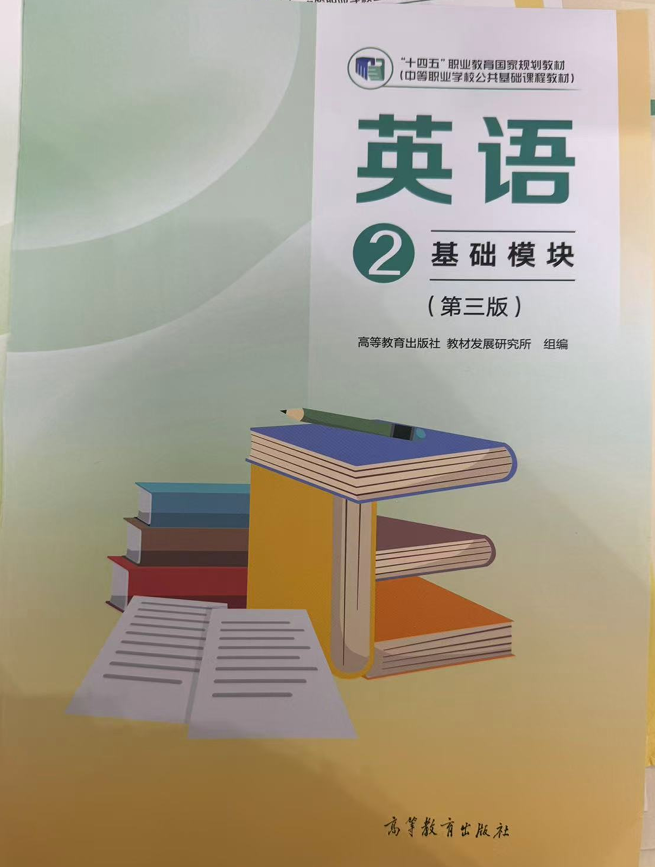
阶段检测卷(1-4单元)(A卷·基础巩固)《英语 基础模块2》(高教版第三版)单元过关卷(原卷版+解析版)
2026-04-22
|
2份
|
25页
|
79人阅读
|
0人下载
内容正文:
编写说明:本套试卷紧扣《英语 基础模块2》(高教版第三版)教材,以教材单元为基准精准覆盖核心考点。
每个单元设置AB卷,A卷为基础巩固卷,侧重基础考点训练,帮助学生扎实掌握知识要点;B卷为能力提升卷,注重知识整合与全面检测,引导学生构建知识网络。全书设计4份综合测试卷,模拟实战情境,聚焦解题能力突破,全面提升应试能力与知识应用水平。
《英语 基础模块2》(高教版第三版)《单元过关卷》
阶段测试卷 (1-4单元)
A卷·基础巩固
时间:70分钟 总分:100分
班级 姓名 学号 成绩
综合卷Ⅰ(75分)
一、词汇与语法(共25小题,每小题1分,满分25分)
(一)单词辨音
从下列各小题的A、B、C三个选项中选出一个画线部分发音与所给单词的画线部分发音相同的选项。(共5小题,每小题1分,共5分)
1.travel
A. map B. name C. face
【答案】A
【详解】考查字母 a 的发音。所给单词 travel 中字母 a 发 /æ/;选项 A map 中 a 发 /æ/;选项 B name 中 a 发 /eɪ/;选项 C face 中 a 发 /eɪ/。故选 A。
2.cough
A.through B.tough C.tough
【答案】B
【详解】考查字母组合 ough 的发音。所给单词 cough 中 ough 发 /ɒf/;选项 A through 中 ough 发 /uː/;选项 B tough 中 ough 发 /ʌf/;选项 C although 中 ough 发 /əʊ/。故选 B。
3.breath
A. head B. please C. team(画线部分:ea)
【答案】A
【详解】考查字母组合 ea 的发音。所给单词 breath 中 ea 发 /e/;选项 A head 中 ea 发 /e/;选项 B please 中 ea 发 /iː/;选项 C team 中 ea 发 /iː/。故选 A。
4.organization
A.manifest B.name C.plan
【答案】A
【详解】考查字母组合 ani 的发音。所给单词 organization 中 a 发 /ə/;选项 A manifest 中 a 发 /ə/;选项 B name 中 a 发 /eɪ/;选项 C plan 中 a 发 /æ/。故选 A。
5.brown
A.snow B.down C.grow
【答案】B
【详解】考查字母组合 ow 的发音。所给单词 brown 中 ow 发 /aʊ/;选项 A snow 中 ow 发 /əʊ/;选项 B down 中 ow 发 /aʊ/;选项 C grow 中 ow 发 /əʊ/。故选 B。
(二)词义选择
从下列各小题的A、B、C三个选项中选出一个与句子中画线的英文单词或短语含义相符的中文选项。(共10小题,每小题1分,共10分)
6.Please take your luggage with you when you leave the hotel.
A.行李 B.门票 C.地图
【答案】A
【详解】考查名词词义。luggage 意为 “行李”,故选 A。
7.He made every effort to finish the project on time.
A.错误 B.努力 C.计划
【答案】B
【详解】考查名词词义。effort 意为 “努力”,make every effort to do sth. 意为 “竭尽全力做某事”,故选 B。
8.She feels a lot of stress before the exam.
A.压力 B.成功 C.兴趣
【答案】A
【详解】考查名词词义。stress 意为 “压力”,故选 A。
9.She works as a volunteer at the nursing home every weekend.
A.志愿者 B.医生 C.老师
【答案】A
【详解】考查名词词义。volunteer 意为 “志愿者”,故选 A。
10.You can gain valuable experience from volunteer work.
A.获得 B.失去 C.浪费
【答案】A
【详解】考查动词词义。gain 意为 “获得”,故选 A。
11.A volunteer should be helpful and responsible.
A.有责任心的 B.懒惰的 C.聪明的
【答案】A
【详解】考查形容词词义。responsible 意为 “有责任心的”,故选 A。
12.We will inform you of the result soon.
A.通知 B.要求 C.建议
【答案】A
【详解】考查动词词义。inform 意为 “通知”,故选 A。
13.I look forward to hearing from you.
A.期待 B.回顾 C.忘记
【答案】A
【详解】考查短语词义。look forward to 意为 “期待”,故选 A。
14.She became confident after years of practice.
A.自信的 B.害怕的 C.懒惰的
【答案】A
【详解】考查形容词词义。confident 意为 “自信的”,故选 A。
15.Regular exercise can help reduce stress.
A.增加 B.避免 C.减少
【答案】C
【详解】考查动词词义。reduce 意为 “减少”,故选 C。
(三)语法运用
从下列各小题的A、B、C三个选项中选出一个最佳选项填入空白处完成句子。(共10小题,每小题1分,共10分)
16.Xu Xiake ______ over 30 years traveling throughout the country.
A.spends B.spent C.spending
【答案】B
【详解】考查一般过去时。徐霞客是古代人物,动作发生在过去,用 spend 的过去式 spent,故选 B。
17.______ you go to the Great Wall last summer?
A.Do B.Did C.Does
【答案】B
【详解】考查一般过去时的一般疑问句。时间状语 last summer 表示过去,助动词用 Did,故选 B。
18.There ______ some milk and two apples on the table.
A.is B.are C.have
【答案】A
【详解】考查 there be 句型的就近原则。milk 是不可数名词,be 动词用 is,故选 A。
19.The soup ______ delicious.
A.taste B.tastes C.tasting
【答案】B
【详解】考查一般现在时。主语 the soup 是单数,谓语动词用第三人称单数形式 tastes,故选 B。
20.She became ______ after years of hard work.
A.confidently B.confidence C.confident
【答案】C
【详解】考查形容词作表语。become 是系动词,后接形容词 confident(自信的),故选 C。
21.______ wonderful the volunteer work is!
A.What B.How C.What a
【答案】B
【详解】考查感叹句。How + 形容词 / 副词 + 主语 + 谓语!wonderful 是形容词,用 How 引导,故选 B。
22.______ an unforgettable experience the voluntary activity was!
A.What B.How C.What a
【答案】C
【详解】考查感叹句。What+a/an + 形容词 + 可数名词单数 + 主语 + 谓语!experience 此处为可数名词,用 What a 引导,故选 C。
23.He asked me ______ I would join the volunteer work.
A.that B.if C.what
【答案】B
【详解】考查宾语从句引导词。if 意为 “是否”,符合句意 “他问我是否要参加志愿工作”,故选 B。
24.The old man ______ by the nurse every day.
A.is looked after B.looks after C.looked after
【答案】A
【详解】考查一般现在时的被动语态。老人是被照顾,用 is looked after,故选 A。
25.I was doing my homework when my mother ______ back.
A.come B.came C.comes
【答案】B
【详解】考查一般过去时。when 引导的时间状语从句,主句用过去进行时,从句用一般过去时,come 的过去式是 came,故选 B。
二、情景交际(共15小题,每小题2分,共30分)
(一)简短对话
从下列各小题的A、B、C三个选项中选出一个最佳选项完成对话。(共10小题,每小题2分,共20分)
26.Speaker A : I'd like to book a double room for three nights, please.
Speaker B: ______
A. I'm sorry to hear that.
B. It doesn't matter.
C. Of course. Your room number is 302.
【答案】C
【详解】句意:我想预订一间双人房,住三晚。C 选项 “当然,你的房间号是 302” 符合酒店预订场景,故选 C。
27.Speaker A : How was your flight to Beijing?
Speaker B: ______
A. I don't like flying.
B. Yes, it is.
C. It was great, thank you!
【答案】C
【详解】句意:你去北京的航班怎么样?C 选项 “很棒,谢谢” 符合语境,故选 C。
28.Speaker A : Have a good trip!
Speaker B: ______
A. Yes, I have.
B. Not at all.
C. The same to you.
【答案】B
【详解】句意:旅途愉快!B 选项 “你也一样” 是常用回应,故选 B。
29.Speaker A : You don't look well. What's wrong with you?
Speaker B: ______
A. I am a student.
B. I feel very happy.
C. I have a sore throat and a bad cough.
【答案】C
【详解】句意:你看起来不太舒服,怎么了?C 选项 “我喉咙痛,咳嗽得厉害” 符合语境,故选 C。
30.Speaker A : You should drink more water and have a good rest.
Speaker B: ______
A. I don't like water.
B. I'm very busy.
C. Thank you for your advice.
【答案】C
【详解】句意:你应该多喝水,好好休息。C 选项 “谢谢你的建议” 符合礼貌回应,故选 C。
31.Speaker A : My temperature is over 39 degrees.
Speaker B: ______
A. That's normal.
B. Drink cold water.
C. You should see a doctor right away.
【答案】C
【详解】句意:我的体温超过 39 度了。C 选项 “你应该马上去看医生” 符合建议逻辑,故选 C。
32.Speaker A : Good morning, sir. I'd like to be a volunteer.
Speaker B: ______
A. No, you can't.
B. Go away.
C. Amazing! Please introduce yourself.
【答案】C
【详解】句意:早上好,先生。我想成为一名志愿者。A 选项 “太棒了!请自我介绍一下” 符合场景,故选 C。
33.Speaker A : How do you feel about your volunteer experience?
Speaker B: ______
A. It was boring.
B. I didn't do well.
C. I gained a lot and felt very fulfilled.
【答案】C
【详解】句意:你觉得你的志愿经历怎么样?A 选项 “我收获很多,感到非常充实” 符合语境,故选 C。
34.Speaker A : We're still short of helping hands for the activity.
Speaker B: ______
A. That's fine.
B. We have enough people.
C. I'd like to join and give a hand!
【答案】C
【详解】句意:我们这次活动还缺人手。C 选项 “我想加入帮忙!” 符合语境,故选 C。
35.Speaker A : Thank you for your help during the trip.
Speaker B: ______
A. I need help too.
B. Never mind.
C. You're welcome.
【答案】C
【详解】句意:谢谢你旅途中的帮助。C 选项 “不客气” 是标准回应,故选 C 。
(二)补全对话
在以下情景对话中有五个空白处,从对话下方的七个备选项中选择恰当的句子补全对话。(共5小题,每小题2分,共10分)
Guide: Good morning, everyone! Welcome to Shangri-La!
Tourist: 36 ______
Guide: It is famous for its snowy mountains and ethnic culture.
Tourist: 37 ______
Guide: About 20 minutes by bus from here.
Tourist: 38 ______
Guide: Yes. You can also try the local food and watch traditional dances.
Tourist: 39 ______
Guide: Sure! We'll be there before lunch.
Tourist: 40 ______
Guide: You're welcome!
A.Can we visit the mountains today?
B.How far is it from here?
C.What is it famous for?
D.I can't wait to get there!
E.Will we have lunch there?
F.That sounds wonderful! Thank you!
G.Are there any special activities?
36.【答案】C
【详解】根据下文回答它以雪山和民族文化闻名,可知此处询问香格里拉因什么而出名。故选 C。
37.【答案】B
【详解】根据下文回答坐大巴大约 20 分钟,可知此处询问距离这里有多远。故选 B。
38.【答案】G
【详解】根据下文回答可以品尝当地美食、观看传统舞蹈,可知此处询问是否有特色活动。故选 G。
39.【答案】A
【详解】根据下文回答当然,我们午饭前会到达那里,可知此处询问今天能否去游览雪山。故选 A。
40.【答案】F
【详解】根据下文回答不客气,可知此处游客表达赞叹并表示感谢。故选 F。
三、阅读理解(共10小题,每小题2分,共20分)
阅读下列两篇短文,根据短文内容从每题所给的A、B、C三个选项中选出一个最佳选项。
A
Xu Xiake (1587-1641) was a famous traveler in the Ming Dynasty. He became interested in books about different places at an early age and wanted to travel. When he was 19, his father died, and he had to take care of his mother. However, Xu never gave up his dream of traveling.
With the support of his family, Xu set off for the first time at the age of 22 and took four major trips in his lifetime. In order to take more first-hand experiences, he avoided traveling comfortably. Xu chose to go almost everywhere on foot and carried his luggage on his back. Although he experienced all sorts of difficulties, Xu never thought of quitting.
Xu spent over 30 years traveling throughout the country. He carefully recorded his experiences and discoveries in his diary. Due to his efforts, the diary finally became The Travel Notes of Xu Xiake.
41. When was Xu Xiake born?
A. In 1587. B. In 1622. C. In 1641.
42. Why did Xu Xiake travel on foot?
A. Because he had no money.
B. To take more first-hand experiences.
C. Because he liked walking.
43. How many major trips did Xu Xiake take in his lifetime?
A. Two. B. Three. C. Four.
44. What can we learn from Xu Xiake?
A. Never give up our dreams.
B. Travel is not important.
C. Reading is better than traveling.
45. What is The Travel Notes of Xu Xiake about?
A. His family life. B. His travel experiences and discoveries. C. Chinese history.
41.A 【详解】根据文中 “Xu Xiake (1587-1641) was a famous traveler in the Ming Dynasty.” 可知出生于 1587 年。
42.B 【详解】根据文中 “In order to take more first-hand experiences, he avoided traveling comfortably.” 可知步行是为了获取更多一手体验。
43.C 【详解】根据文中 “took four major trips in his lifetime” 可知一生进行了四次主要旅行。
44.A 【详解】根据文中 “Xu never gave up his dream of traveling.” 可知我们要学习他永不放弃梦想的精神。
45.B 【详解】根据文中 “He carefully recorded his experiences and discoveries in his diary...the diary finally became The Travel Notes of Xu Xiake.” 可知是关于他的旅行经历与发现。
B
Volunteer work is when people give their time and energy to help others without being paid. It is a great way to contribute to society and make a difference in people's lives.
There are many kinds of volunteer work. Some volunteers help clean up parks and public places. Others visit nursing homes to spend time with the elderly. Some teach children in rural areas, while others help sort garbage to protect the environment.
Volunteer work is not only good for society but also good for the volunteers themselves. It can help them learn new skills, make new friends, and gain valuable experience. Many volunteers say that helping others makes them feel happy and fulfilled.
46. What is volunteer work?
A. Work that is paid. B. Helping others without being paid. C. Working for a company.
47. Which is NOT a kind of volunteer work mentioned?
A. Cleaning up parks. B. Teaching children. C. Selling products.
48. What can volunteers learn from volunteer work?
A. New skills. B. How to make money. C. How to be lazy.
49. How do volunteers feel about helping others?
A. Bored. B. Tired. C. Happy and fulfilled.
50. What is the main idea of the passage?
A. Volunteer work benefits both society and volunteers.
B. Volunteer work is difficult.
C. Nobody wants to be a volunteer.
46.B 【详解】根据文中 “Volunteer work is when people give their time and energy to help others without being paid.” 可知是无偿帮助他人。
47.C 【详解】文中提到清理公园、教孩子,未提及卖产品。
48.A 【详解】根据文中 “It can help them learn new skills” 可知可以学习新技能。
49.C 【详解】根据文中 “helping others makes them feel happy and fulfilled” 可知感到开心且充实。
50.A 【详解】文章主旨是志愿工作对社会和志愿者自身都有益。
综合卷Ⅱ(25分)
四、英汉互译(共5小题,每小题3分,共15分)
将下列51—53小题的英文句子翻译成中文,54、55小题中文句子翻译成英文(括号中的英文提示词供翻译参考)。
51. We should take care of our environment when traveling.
译文:_______________________________________________
52. Regular exercise can help us lead a healthier life.
译文:_______________________________________________
53. Volunteer work is not only good for society but also good for volunteers themselves.
译文:_______________________________________________
54. 他们去年夏天去了北京旅游。(last summer)
译文:_______________________________________________
55. 每个人都应该为社区做出贡献。(contribute)
译文:_______________________________________________
51.我们旅行时应该爱护环境。
52.规律运动能帮助我们过上更健康的生活。
53.志愿工作不仅对社会有益,对志愿者自身也有益。
54.They traveled to Beijing last summer.
55.Everyone should contribute to the community.
五、应用写作(本大题共10分)
根据提示完成通知填空,每空一词或短语。
NOTICE
To: All students of Grade 2
From: 56 ______ (学校旅行社)
Date: October 15, 2026
Subject: Autumn Trip to Shangri-La
We will go on a trip to 57 ______ (香格里拉) this Saturday.
We will meet at the school gate at 58 ______ (上午7点半) .
Please bring your 59 ______ (身份证) and some warm clothes.
Don't 60 ______ (迟到) !
56.____________________
57.____________________
58.____________________
59.____________________
60.____________________
56.School Travel Agency
57.Shangri-La
58.7:30 a.m.
59.ID card
60.be late
学科网(北京)股份有限公司 (
1
)原创精品资源学科网独家享有版权,侵权必究!
学科网(北京)股份有限公司
$
编写说明:本套试卷紧扣《英语 基础模块2》(高教版第三版)教材,以教材单元为基准精准覆盖核心考点。
每个单元设置AB卷,A卷为基础巩固卷,侧重基础考点训练,帮助学生扎实掌握知识要点;B卷为能力提升卷,注重知识整合与全面检测,引导学生构建知识网络。全书设计4份综合测试卷,模拟实战情境,聚焦解题能力突破,全面提升应试能力与知识应用水平。
《英语 基础模块2》(高教版第三版)《单元过关卷》
阶段测试卷 (1-4单元)
A卷·基础巩固
时间:70分钟 总分:100分
班级 姓名 学号 成绩
综合卷Ⅰ(75分)
一、词汇与语法(共25小题,每小题1分,满分25分)
(一)单词辨音
从下列各小题的A、B、C三个选项中选出一个画线部分发音与所给单词的画线部分发音相同的选项。(共5小题,每小题1分,共5分)
1.travel(画线部分:a)
A. map B. name C. face
2.cough(画线部分:ough)
A.through B.tough C.tough
3.breath(画线部分:ea)
A. head B. please C. team(画线部分:ea)
4.organization(画线部分:a)
A.manifest B.name C.plan
5.brown(画线部分:ow)
A.snow B.down C.grow
(二)词义选择
从下列各小题的A、B、C三个选项中选出一个与句子中画线的英文单词或短语含义相符的中文选项。(共10小题,每小题1分,共10分)
6.Please take your luggage with you when you leave the hotel.
A.行李 B.门票 C.地图
7.He made every effort to finish the project on time.
A.错误 B.努力 C.计划
8.She feels a lot of stress before the exam.
A.压力 B.成功 C.兴趣
9.She works as a volunteer at the nursing home every weekend.
A.志愿者 B.医生 C.老师
10.You can gain valuable experience from volunteer work.
A.获得 B.失去 C.浪费
11.A volunteer should be helpful and responsible.
A.有责任心的 B.懒惰的 C.聪明的
12.We will inform you of the result soon.
A.通知 B.要求 C.建议
13.I look forward to hearing from you.
A.期待 B.回顾 C.忘记
14.She became confident after years of practice.
A.自信的 B.害怕的 C.懒惰的
15.Regular exercise can help reduce stress.
A.增加 B.避免 C.减少
(三)语法运用
从下列各小题的A、B、C三个选项中选出一个最佳选项填入空白处完成句子。(共10小题,每小题1分,共10分)
16.Xu Xiake ______ over 30 years traveling throughout the country.
A.spends B.spent C.spending
17.______ you go to the Great Wall last summer?
A.Do B.Did C.Does
18.There ______ some milk and two apples on the table.
A.is B.are C.have
19.The soup ______ delicious.
A.taste B.tastes C.tasting
20.She became ______ after years of hard work.
A.confidently B.confidence C.confident
21.______ wonderful the volunteer work is!
A.What B.How C.What a
22.______ an unforgettable experience the voluntary activity was!
A.What B.How C.What a
23.He asked me ______ I would join the volunteer work.
A.that B.if C.what
24.The old man ______ by the nurse every day.
A.is looked after B.looks after C.looked after
25.I was doing my homework when my mother ______ back.
A.come B.came C.comes
二、情景交际(共15小题,每小题2分,共30分)
(一)简短对话
从下列各小题的A、B、C三个选项中选出一个最佳选项完成对话。(共10小题,每小题2分,共20分)
26.Speaker A : I'd like to book a double room for three nights, please.
Speaker B: ______
A. I'm sorry to hear that.
B. It doesn't matter.
C. Of course. Your room number is 302.
27.Speaker A : How was your flight to Beijing?
Speaker B: ______
A. I don't like flying.
B. Yes, it is.
C. It was great, thank you!
28.Speaker A : Have a good trip!
Speaker B: ______
A. Yes, I have.
B. Not at all.
C. The same to you.
29.Speaker A : You don't look well. What's wrong with you?
Speaker B: ______
A. I am a student.
B. I feel very happy.
C. I have a sore throat and a bad cough.
30.Speaker A : You should drink more water and have a good rest.
Speaker B: ______
A. I don't like water.
B. I'm very busy.
C. Thank you for your advice.
31.Speaker A : My temperature is over 39 degrees.
Speaker B: ______
A. That's normal.
B. Drink cold water.
C. You should see a doctor right away.
32.Speaker A : Good morning, sir. I'd like to be a volunteer.
Speaker B: ______
A. No, you can't.
B. Go away.
C. Amazing! Please introduce yourself.
33.Speaker A : How do you feel about your volunteer experience?
Speaker B: ______
A. It was boring.
B. I didn't do well.
C. I gained a lot and felt very fulfilled.
34.Speaker A : We're still short of helping hands for the activity.
Speaker B: ______
A. That's fine.
B. We have enough people.
C. I'd like to join and give a hand!
35.Speaker A : Thank you for your help during the trip.
Speaker B: ______
A. I need help too.
B. Never mind.
C. You're welcome.
(二)补全对话
在以下情景对话中有五个空白处,从对话下方的七个备选项中选择恰当的句子补全对话。(共5小题,每小题2分,共10分)
Guide: Good morning, everyone! Welcome to Shangri-La!
Tourist: 36 ______
Guide: It is famous for its snowy mountains and ethnic culture.
Tourist: 37 ______
Guide: About 20 minutes by bus from here.
Tourist: 38 ______
Guide: Yes. You can also try the local food and watch traditional dances.
Tourist: 39 ______
Guide: Sure! We'll be there before lunch.
Tourist: 40 ______
Guide: You're welcome!
A.Can we visit the mountains today?
B.How far is it from here?
C.What is it famous for?
D.I can't wait to get there!
E.Will we have lunch there?
F.That sounds wonderful! Thank you!
G.Are there any special activities?
三、阅读理解(共10小题,每小题2分,共20分)
阅读下列两篇短文,根据短文内容从每题所给的A、B、C三个选项中选出一个最佳选项。
A
Xu Xiake (1587-1641) was a famous traveler in the Ming Dynasty. He became interested in books about different places at an early age and wanted to travel. When he was 19, his father died, and he had to take care of his mother. However, Xu never gave up his dream of traveling.
With the support of his family, Xu set off for the first time at the age of 22 and took four major trips in his lifetime. In order to take more first-hand experiences, he avoided traveling comfortably. Xu chose to go almost everywhere on foot and carried his luggage on his back. Although he experienced all sorts of difficulties, Xu never thought of quitting.
Xu spent over 30 years traveling throughout the country. He carefully recorded his experiences and discoveries in his diary. Due to his efforts, the diary finally became The Travel Notes of Xu Xiake.
41. When was Xu Xiake born?
A. In 1587. B. In 1622. C. In 1641.
42. Why did Xu Xiake travel on foot?
A. Because he had no money.
B. To take more first-hand experiences.
C. Because he liked walking.
43. How many major trips did Xu Xiake take in his lifetime?
A. Two. B. Three. C. Four.
44. What can we learn from Xu Xiake?
A. Never give up our dreams.
B. Travel is not important.
C. Reading is better than traveling.
45. What is The Travel Notes of Xu Xiake about?
A. His family life. B. His travel experiences and discoveries. C. Chinese history.
B
Volunteer work is when people give their time and energy to help others without being paid. It is a great way to contribute to society and make a difference in people's lives.
There are many kinds of volunteer work. Some volunteers help clean up parks and public places. Others visit nursing homes to spend time with the elderly. Some teach children in rural areas, while others help sort garbage to protect the environment.
Volunteer work is not only good for society but also good for the volunteers themselves. It can help them learn new skills, make new friends, and gain valuable experience. Many volunteers say that helping others makes them feel happy and fulfilled.
46. What is volunteer work?
A. Work that is paid. B. Helping others without being paid. C. Working for a company.
47. Which is NOT a kind of volunteer work mentioned?
A. Cleaning up parks. B. Teaching children. C. Selling products.
48. What can volunteers learn from volunteer work?
A. New skills. B. How to make money. C. How to be lazy.
49. How do volunteers feel about helping others?
A. Bored. B. Tired. C. Happy and fulfilled.
50. What is the main idea of the passage?
A. Volunteer work benefits both society and volunteers.
B. Volunteer work is difficult.
C. Nobody wants to be a volunteer.
综合卷Ⅱ(25分)
四、英汉互译(共5小题,每小题3分,共15分)
将下列51—53小题的英文句子翻译成中文,54、55小题中文句子翻译成英文(括号中的英文提示词供翻译参考)。
51. We should take care of our environment when traveling.
译文:_______________________________________________
52. Regular exercise can help us lead a healthier life.
译文:_______________________________________________
53. Volunteer work is not only good for society but also good for volunteers themselves.
译文:_______________________________________________
54. 他们去年夏天去了北京旅游。(last summer)
译文:_______________________________________________
55. 每个人都应该为社区做出贡献。(contribute)
译文:_______________________________________________
五、应用写作(本大题共10分)
根据提示完成通知填空,每空一词或短语。
NOTICE
To: All students of Grade 2
From: 56 ______ (学校旅行社)
Date: October 15, 2026
Subject: Autumn Trip to Shangri-La
We will go on a trip to 57 ______ (香格里拉) this Saturday.
We will meet at the school gate at 58 ______ (上午7点半) .
Please bring your 59 ______ (身份证) and some warm clothes.
Don't 60 ______ (迟到) !
56.____________________
57.____________________
58.____________________
59.____________________
60.____________________
学科网(北京)股份有限公司 (
1
)原创精品资源学科网独家享有版权,侵权必究!
学科网(北京)股份有限公司
$
资源预览图

1

2

3
由于学科网是一个信息分享及获取的平台,不确保部分用户上传资料的 来源及知识产权归属。如您发现相关资料侵犯您的合法权益,请联系学科网,我们核实后将及时进行处理。