Unit5 Section A Grammar Focus(4a-4d)教学设计- 2025-2026学年人教版八年级英语下册
2026-05-06
|
6页
|
429人阅读
|
1人下载
普通
内容正文:
课题
Unit 5 Nature’s Temper
Grammar Focus (4a-4d)
学段
初中
年级
八
课型
语法课
课时
3
学科
English
单元
主题分析
本单元属于“人与自然”范畴,涉及“自然灾害与防范措施,人身安全与自我保护”子主题内容,学生将通过探讨不同类型的灾难、描述防灾减灾措施、分析灾害的双重致命性,以及学习预防准备,深入理解自然灾难的多维冲击与应对策略。主题强调灾害意识与生存能力,引导学生在敬畏自然的同时,思考人类的责任与行动。
文本解读
What:本课是人教版新版八年级下册第五单元Nature’s Temper的第三课时语法课,聚焦过去进行时的语法专项训练。4a通过问答句对引导学生识别过去进行时动词形式;4b训练“when/while”引导时间状语从句的句型转换能力;4c在语篇中综合运用过去进行时、一般过去时及相关连词;4d创设“记者采访”情境,推动语法知识在模拟交际中迁移运用。
Why:本课旨在帮助学生系统掌握过去进行时的基本形式、意义及与一般过去时的搭配使用,特别是理解“when”和“while”在连接同时或先后动作时的区别。通过语法训练提升学生在描述过去特定情景时语言的准确性与生动性,进一步渗透灾害应对意识与家庭协作精神。
How:教学遵循“观察归纳—机械操练—意义运用—创造输出”的路径。首先引导学生通过4a的例句自主归纳过去进行时的构成与表意功能;接着通过4b的句子合并练习在对比中掌握“when”与“while”的用法差异;随后借助4c的语篇填空,在完整语境中综合运用时态与连词;最后通过4d的采访角色扮演,将语法知识转化为有意义的模拟交际,完成从理解、操练到真实运用的闭环。
学情分析
1.已有知识经验
学生已经掌握了一般过去时的基本用法,能够描述过去发生的简单事件,大多数学生能正确使用动词过去式,并熟悉如yesterday、last night等时间状语,这是学习过去进行时的重要前提。
2.潜在学习难点
学生容易混淆过去进行时与一般过去时的用法差异,难以准确判断何时表示“过去某个时刻正在进行的动作”,何时表示“过去完成的单一动作”。
3.教学支持建议
设计并置的对比情景,直观展示两种时态差异;使用时间轴图示法,帮助学生可视化理解动作的持续性与时间点。
教学目标
语言
能力
Students will be able to correctly combine the Past Continuous and Past Simple tenses using "when" and "while" to describe the sequence or simultaneity of past events.
文化意识
Students will recognize and appreciate the importance of family cooperation and mutual support during natural disasters through analyzing the different responses of the families in the text.
思维品质
Students will develop analytical and comparative thinking skills by contrasting the use of the past continuous and simple past tenses and differentiating the logical relationships indicated by "when" versus "while".
学习能力
Students will improve collaborative learning skills by working in pairs or groups to complete sentence combining tasks and conduct role-play interviews.
教学
重难点
教学重点
Students will identify and use the past continuous tense to describe actions in progress at a specific time in the past.
教学难点
Students will apply the target grammar structures in controlled exercises, contextual passages, and interview dialogues.
教学过程设计
教学环节
教师活动
学生活动
设计意图
Step 1
Lead-in
Teacher shows a series of pictures depicting a sudden weather event and asks students:"Look at this scene. What is happening? Now, imagine someone was in the middle of an action when this event started. For example, if this storm is happening now, what are people doing? (They are running for shelter. A man is trying to drive.) But if we talk about yesterday, how do we say it?" Writes a correct student response on the board, highlighting the past continuous structure (was/were +doing).
Students watch the pictures and answer the teacher's questions in the present tense, then attempt to transform sentences into the past tense with guidance. They notice the form for ongoing past actions.
通过视觉上引人入胜的图片,直接创设本课的目标语境——突发天气事件。提问引导学生从描述现在进行时自然过渡到对过去某个时刻正在发生动作的思考,利用已知(现在进行时)引出新知(过去进行时),激发兴趣并明确学习焦点。
Step 2
Presentation
Work on 4a
1.Teacher directs students to activity 4a in their textbooks and instructs them to read the sentence and underline the verbs showing an ongoing action in the past.
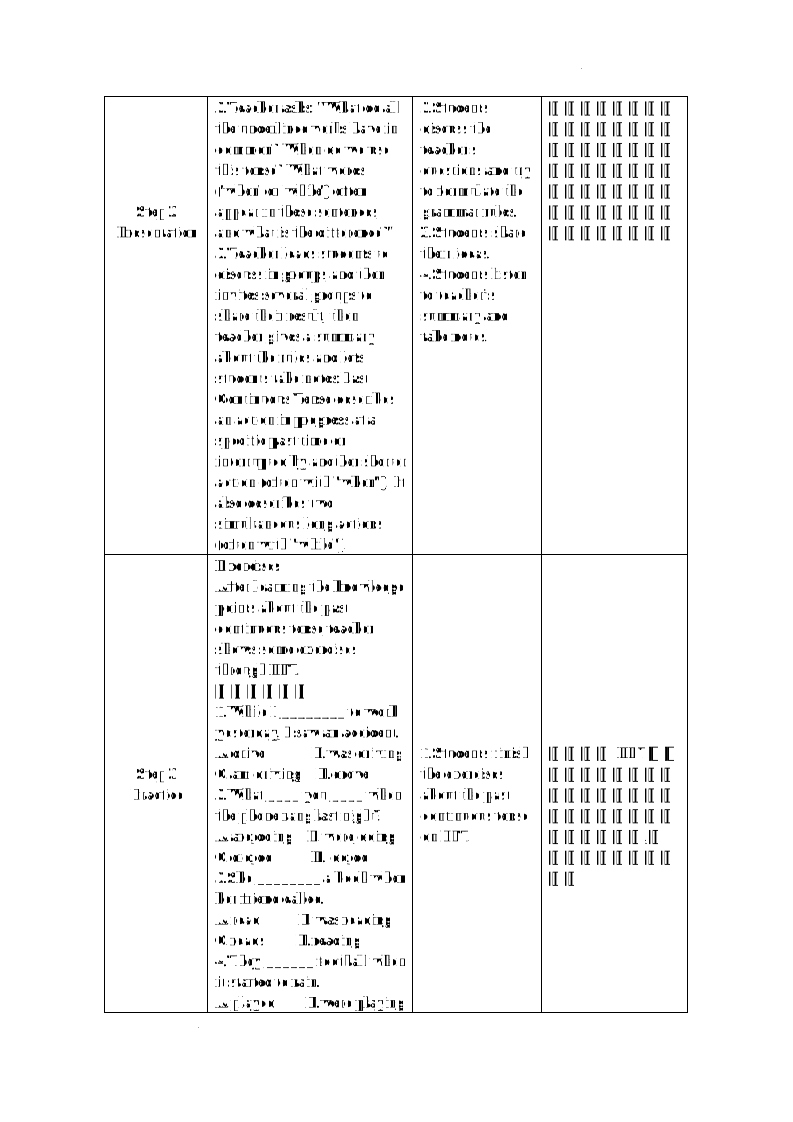
2.Teacher asks: "What do all the underlined verbs have in common? When do we use this tense? What words ('when' or 'while') often appear in these sentences, and what is the difference?" 3.Teacher leads students to discuss in groups,and then invites several groups to share their result, then teacher gives a summary about the rules and lets students take notes:Past Continuous Tense describes an action in progress at a specific past time or interrupted by another shorter action (often with "when"). It also describes two simultaneous long actions (often with "while").
1.Students read the sentences individually, underline the past continuous verbs. 2.Students discuss the teacher's questions and try to formulate the grammar rules.
3.Students share their ideas.
4.Students listen to teacher’s summary and take notes.
采用发现式教学法,让学生通过观察和分析课本中的典型例句自己总结语法规则,这比直接灌输规则更能加深理解。教师通过提问引导学生关注动词形式和时间连词的使用,为后续的练习做好铺垫。
Step 3
Practice
Exercises
After learning the knowledge points about the past continuous tense,teacher shows some exercises through PPT.
单项选择题。
1.While I ________ to work yesterday, I saw an accident.
A.drive B.was driving
C.am driving D.drove
2.What ____ you ____ when the phone rang last night?
A.are;doing B.were;doing
C.did;do D. do;do
3.She ________ a book when her friend called.
A.read B.was reading
C.reads D.reading
4.They ______ football when it started to rain.
A.played B.were playing
C.are playing D.play
5.At 8 PM last night, my parents _______ TV.
A.watched B.were watching
C.watch D.are watching
Work on 4b
1.Teacher directs students to the task 4b and models the first example:"I was doing my homework when the typhoon landed on the coast." 2.Teacher monitors and assists as students work individually or in pairs.
3.Teacher invites some students to share their answers.
Work on 4c
1.Teacher introduces the activity 4c as a story context and has students read the passage quickly for gist first. Then, instructs them to complete the blanks individually.
2.Teacher asks students to compare answers with a partner and discuss why they chose those forms. Then checks answers with the whole class, focusing on the reason for each choice.
3.Teacher asks a open question: “What can you learn from this tornado story?
1.Students finish the exercises about the past continuous tense on PPT.
2.Students combine the sentence pairs using "when" or "while".
3.Students share answers with the class.
4.Students skim the passage to understand the tornado story. 5.Students fill in the blanks with was, were, when, or while. 6.Students participate in checking answers and explaining their choices.
7.Students have a free talk and share their ideas.
教师通过PPT展示相关练习,趁热打铁,对刚刚讲解的过去进行时知识点进行学以致用,强化学生的理解和记忆。
机械性控制练习旨在巩固学生对过去进行时结构以及与when/while搭配用法的掌握。通过例句演示,学生明确两种连词引导的从句中时态的差异。
半控制性练习将语法点置于有意义的语篇中,要求学生在理解故事脉络的基础上准确运用目标语法。这比单句练习更进了一步,考察学生在上下文中的判断能力和语言运用能力。开放性问题升华主题,帮助学生体会自然灾害后人们的团结协作精神。
Step 4
Production
Work on 4d
1.Teacher sets the scene for the activity 4d and assigns roles:In your group,one is a "Reporter", the others are "Family Members" (Jenny, Dad, little sister.).
2.Teacher gives clear instructions: Reporters must interview family members to find out what they were doing when the tornado hit and while they were waiting. Encourages creativity in the responses. Teacher models the beginning of a dialogue beyond the textbook prompt. 3.Teacher circulates, provides language support, and encourages use of the past continuous tense.
4.Teacher asks several groups to perform their conversations.
1.In groups(one Reporter, one Family Member), students conduct interviews.
2.Some groups perform their short role-play for the class.
自由产出活动是语言学习的目标阶段。角色扮演模拟真实交际场景,让学生综合运用本节课所学进行有意义的交流。创造性扩展鼓励学生使用更多语言资源,将语法知识转化为交际能力。表演环节能增强学生的参与感和成就感。
Step 5
Summary
Teacher summarizes the lesson: “Today we learned to talk about ongoing past actions using was/were + doing, and to connect them with when and while.”
Students listen to the summary.
简要总结巩固学习目标,促进语言内化。
Step 6
Homework
Level A:Rewrite 5 given Simple Past sentences using the Past Continuous to show an action in progress at a specific past time.(She cooked dinner at 7 PM.→ She was cooking dinner at 7 PM.)
Level B:Interview two family members about what they were doing at a specific time last weekend. Write a 5-sentence report summarizing their activities.
Level C:Imagine you are a news reporter describing the scene during an interesting event (eg, a festival, a sudden rainstorm). Write a 5-8 sentence eyewitness account, using the Past Continuous to set the scene.
本分层作业设计遵循“因材施教”原则,旨在满足不同学习水平学生的需求。各层任务目标清晰、递进,共同确保全班学生在最近发展区内获得提升。
板书设计
Unit 5 Nature’s Temper
Grammar Focus (4a-4d)
Past Continuous Tense
→ was/were + V-ing
When + short action (simple past)
While + long action (past continuous)
Example:
While I was reading, the phone rang.
I was reading when the phone rang.
教学反思
1、 成功之处:
1.活动设计层次分明:教学过程从感知发现、到机械控制、再到意义应用,最后到自由交际产出,环节清晰,层层递进。
2.注重学生主体:没有直接灌输语法规则,而是通过设计问题链(“这些动词有什么共同点?”“when和while出现的语境有何不同?”),引导学生观察、对比、归纳过去进行时的形式和表意功能。
二、存在问题:
1.纠错与反馈的即时性不足:在学生进行小组对话练习时,教师巡视聆听,但更多地是记录普遍性错误,并在最后进行集中点评。错过了对一些典型错误进行即时、个别化纠正的机会。
2.产出活动的深度和差异性有待加强:角色扮演活动中,虽然学生积极性高,但部分对话停留在模仿课本句型的层面,内容拓展有限。
三、改进措施:
1.优化反馈机制:巡视时,针对听见的普遍性结构错误,可立即进行全班暂停,进行澄清和正确示例朗读;课后将收集到的典型“佳句”和“病句”制作成一份简单的“学习快报”,下节课开始用5分钟进行同伴纠错或欣赏,将反馈转化为更深层次的学习材料。
2.搭建语言“脚手架”:在角色扮演活动中设计分层任务卡,基础卡提供更多可替换的短语库和完整句型框架;挑战卡要求必须包含一个when或while描述的背景活动,让不同层次的学生都能“够得着”且有提升空间。
学科网(北京)股份有限公司
$
资源预览图

1

2
3

相关资源
示范课
由于学科网是一个信息分享及获取的平台,不确保部分用户上传资料的 来源及知识产权归属。如您发现相关资料侵犯您的合法权益,请联系学科网,我们核实后将及时进行处理。