Unit8知识点-Assessment练习 2025-2026学年译林版八年级英语下册
2026-04-20
|
6页
|
167人阅读
|
0人下载
内容正文:
八年级英语下册Unit8知识点-Assessment练习
小试牛刀
A. 用所给动词的适当形式填空(一般将来时的被动语态)
1. More trees __________ (plant) in the desert next year.
2. Single-use plastic bags __________ (ban) in many countries soon.
3. The river __________ (clean) by volunteers next weekend.
4. A new recycling centre __________ (build) in our town next month.
5. I believe more attention __________ (pay) to environmental protection in the future.
B. 选用方框中的短语填空(每个限用一次)
| take shorter showers | recycle paper | say no to | donate old clothes | turn off lights |
1. To save electricity, we should __________ when leaving a room.
2. To save water, we can __________.
3. We can __________ plastic bags and bottles.
4. Instead of throwing away old clothes, we can __________ to charities.
5. __________ is a good way to reduce waste.
C. 句型转换(改为一般将来时的被动语态)
1. People will plant more trees in the park.
→ More trees __________ __________ in the park.
2. The government will build a new recycling centre.
→ A new recycling centre __________ __________ by the government.
3. Volunteers will clean up the beach next Saturday.
→ The beach __________ __________ up by volunteers next Saturday.
配套练习
A. 单项选择(★)
从A、B、C、D中选择最佳答案。
1. The new environmental law __________ next year.
A. will pass
B. will be passed
C. passes
D. is passed
2. More recycling bins __________ in our school soon.
A. will put
B. will be put
C. are put
D. put
3. If we don’t take action, the air pollution __________ worse.
A. will get
B. gets
C. got
D. has got
4. Which of the following is a way to “reduce” waste?
A. Using reusable water bottles.
B. Donating old books.
C. Recycling plastic bottles.
D. Turning off lights.
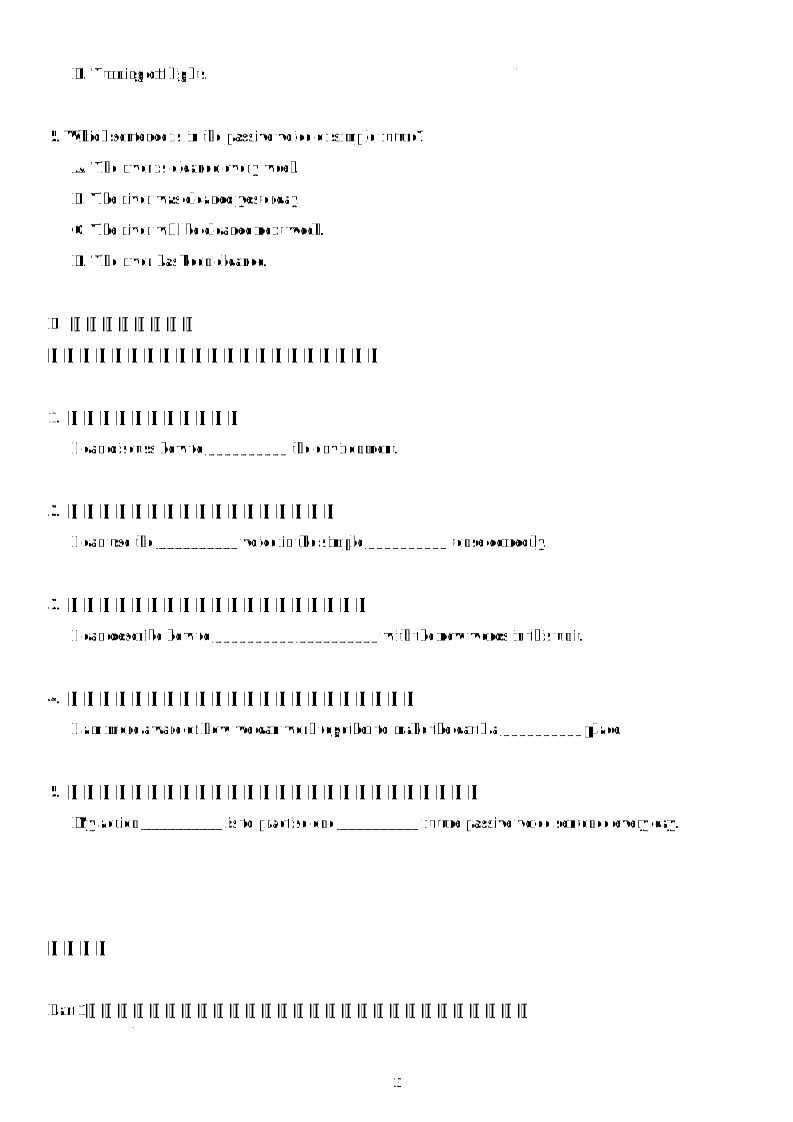
5. Which sentence is in the passive voice of simple future?
A. The river is cleaned every week.
B. The river was cleaned yesterday.
C. The river will be cleaned next week.
D. The river has been cleaned.
B. 完成句子(★★)
根据本单元所学内容,用正确的词汇完成句子。
1. 我能讨论如何保护环境。
I can discuss how to __________ the environment.
2. 我能正确使用一般将来时的被动语态。
I can use the __________ voice in the simple __________ tense correctly.
3. 我能用本单元的新单词描述如何践行环保。
I can describe how to __________ __________ with the new words in this unit.
4. 我更加意识到我们可以共同努力让地球变得更绿。
I am more aware of how we can work together to make the earth a __________ place.
5. 我的行动计划是每天练习一个一般将来时被动语态的句子。
My action __________ is to practise one __________ future passive voice sentence every day.
拓展思考
Part 1(写一段自我评估:你在这单元学到了什么?哪里需要加强?)
写一段话(至少5句)。你掌握了哪些内容?哪些部分还需要练习?你的行动计划是什么?
使用以下表达:I have learned, I am good at, I need to spend more time on, my action plan is to, I will
__________________________________________________________________
__________________________________________________________________
__________________________________________________________________
__________________________________________________________________
__________________________________________________________________
Part 2(描述你将如何为环保做贡献)
写一段话(至少5句)。你会在未来做什么?为什么?
使用以下表达:In the future, I will, for example, I will also, I think it is important because, I hope
__________________________________________________________________
__________________________________________________________________
__________________________________________________________________
__________________________________________________________________
__________________________________________________________________
Part 3(为什么一般将来时的被动语态在谈论环保计划时很有用?)
写一段话(至少5句)。解释使用被动语态时强调动作的承受者,适合描述将要采取的措施。
使用以下表达:The passive voice in the simple future tense is useful when talking about environmental plans because, we focus on, for example, instead of saying, we say, it helps us, I think
__________________________________________________________________
__________________________________________________________________
__________________________________________________________________
__________________________________________________________________
__________________________________________________________________
参考答案与解析
小试牛刀 A
1. will be planted (一般将来时被动语态)
2. will be banned (一般将来时被动语态)
3. will be cleaned (一般将来时被动语态)
4. will be built (一般将来时被动语态)
5. will be paid (一般将来时被动语态)
小试牛刀 B
1. turn off lights
2. take shorter showers
3. say no to
4. donate old clothes
5. Recycling paper
小试牛刀 C
1. will be planted
2. will be built
3. will be cleaned
配套练习 A
1. B (will be passed)
2. B (will be put)
3. A (will get worse)
4. A (减少使用一次性物品是“reduce”)
5. C (will be cleaned 是一般将来时被动语态)
配套练习 B
1. protect
2. passive, future
3. go green
4. greener
5. plan, will
拓展思考(示例)
Part 1
I have learned how to use the passive voice in the simple future tense and many new words about environmental protection. I am good at talking about ways to reduce waste. I need to spend more time on using “will be + past participle” correctly. My action plan is to write five sentences every day using this structure. I will also read more environmental articles online.
Part 2
In the future, I will use reusable bags instead of plastic ones. I will also take shorter showers to save water. I think it is important because every drop of water and every piece of plastic matters. I hope more people will join me in protecting our planet.
Part 3
The passive voice in the simple future tense is useful when talking about environmental plans because we focus on the action or the thing being affected, not who does it. For example, instead of saying “People will plant more trees,” we say “More trees will be planted.” This helps us emphasize the solution, not the doer. I think this structure is very helpful for writing reports and giving speeches about the environment.
1
学科网(北京)股份有限公司
$
资源预览图

1

2
3
相关资源
示范课
由于学科网是一个信息分享及获取的平台,不确保部分用户上传资料的 来源及知识产权归属。如您发现相关资料侵犯您的合法权益,请联系学科网,我们核实后将及时进行处理。