Unit 2 Live longer, live better-Reading and interaction 教案-2025-2026学年高中英语沪教版选择性必修第四册
2026-04-20
|
4页
|
18人阅读
|
0人下载
普通
资源信息
| 学段 | 高中 |
|---|---|
| 学科 | 英语 |
| 教材版本 | 高中英语沪教版选择性必修第四册 |
| 年级 | 高二 |
| 章节 | Reading and interaction |
| 类型 | 教案 |
| 知识点 | - |
| 使用场景 | 同步教学-新授课 |
| 学年 | 2026-2027 |
| 地区(省份) | 全国 |
| 地区(市) | - |
| 地区(区县) | - |
| 文件格式 | DOCX |
| 文件大小 | 87 KB |
| 发布时间 | 2026-04-20 |
| 更新时间 | 2026-04-20 |
| 作者 | 匿名 |
| 品牌系列 | - |
| 审核时间 | 2026-04-20 |
| 下载链接 | https://m.zxxk.com/soft/57428459.html |
| 价格 | 1.00储值(1储值=1元) |
| 来源 | 学科网 |
内容正文:
Unit 2 Live longer, live better-Reading and interaction
教学目标和重难点
教学目标
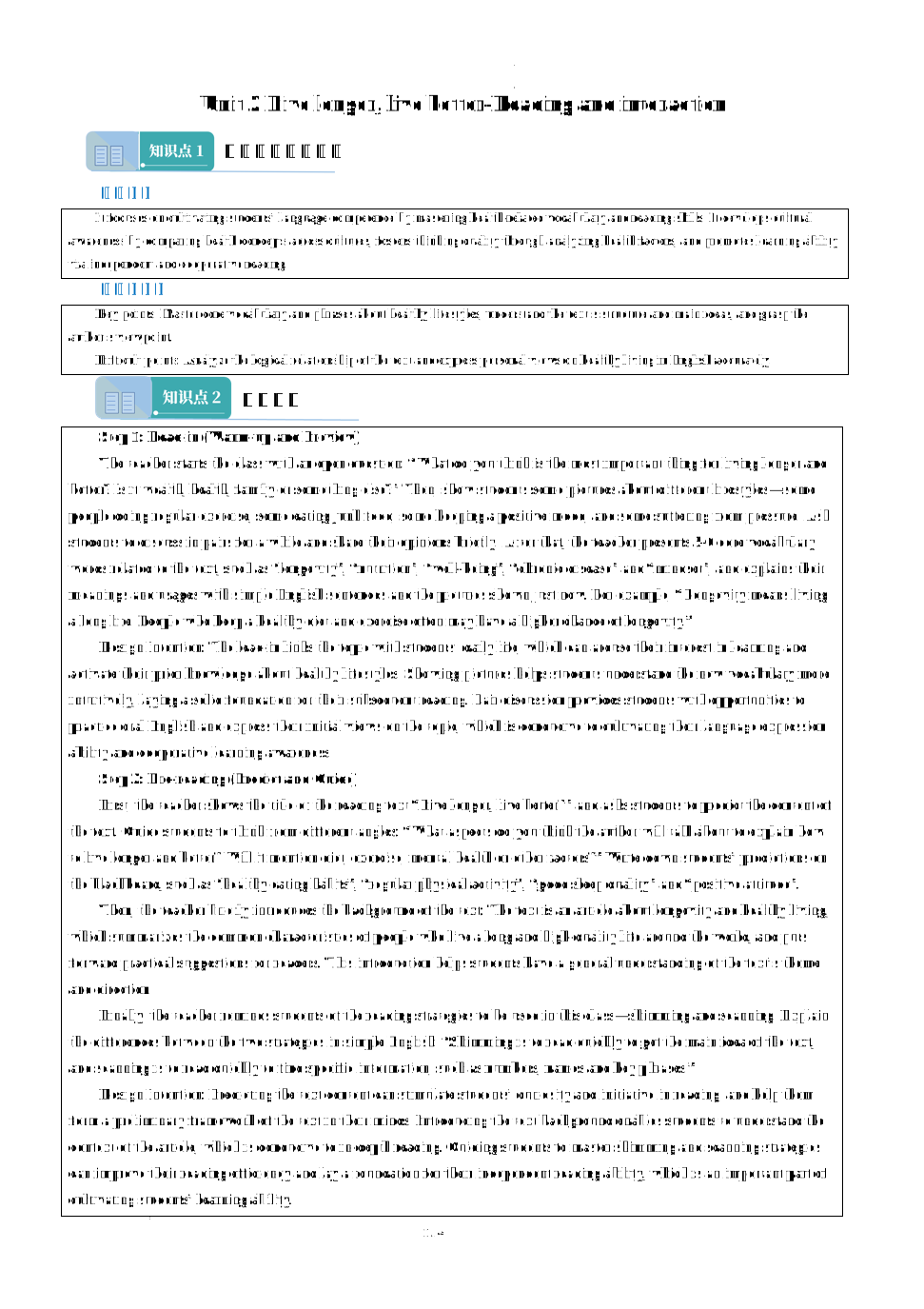
It focuses on cultivating students’ language competence by mastering health-related vocabulary and reading skills. It develops cultural awareness by comparing health concepts across cultures, fosters thinking quality through analyzing health factors, and promotes learning ability via independent and cooperative reading.
教学重难点
Key points: Master core vocabulary and phrases about healthy lifestyles, understand the text’s structure and main ideas, and grasp the author’s viewpoint.
Difficult points: Analyze the logical relationship of the text and express personal views on healthy living in English accurately.
教学过程
Step 1: Lead-in (Warm-up and Preview)
The teacher starts the class with an open question: “What do you think is the most important thing for living longer and better? Is it wealth, health, family or something else?” Then, show students some pictures about different lifestyles—some people doing regular exercise, some eating junk food, some keeping a positive mood, and some suffering from pressure. Ask students to discuss in pairs for a while and share their opinions briefly. After that, the teacher presents 5-6 core vocabulary words related to the text, such as “longevity”, “nutrition”, “well-being”, “chronic disease” and “mindset”, and explains their meanings and usages with simple English sentences and the pictures shown just now. For example, “Longevity means living a long life. People who keep a healthy diet and exercise often may have a higher chance of longevity.”
Design Intention: The lead-in links the topic with students’ daily life, which can arouse their interest in learning and activate their prior knowledge about healthy lifestyles. Showing pictures helps students understand the new vocabulary more intuitively, laying a solid foundation for their subsequent reading. Pair discussion provides students with opportunities to practice oral English and express their initial views on the topic, which is conducive to cultivating their language expression ability and cooperative learning awareness.
Step 2: Pre-reading (Predict and Guide)
First, the teacher shows the title of the reading text “Live longer, live better?” and asks students to predict the content of the text. Guide students to think from different angles: “What aspects do you think the author will talk about to explain how to live longer and better? Will it mention diet, exercise, mental health or other factors?” Write down students’ predictions on the blackboard, such as “healthy eating habits”, “regular physical activity”, “good sleep quality” and “positive attitude”.
Then, the teacher briefly introduces the background of the text: The text is an article about longevity and healthy living, which summarizes the common characteristics of people who live a long and high-quality life around the world, and puts forward practical suggestions for readers. This introduction helps students have a general understanding of the text’s theme and direction.
Finally, the teacher reminds students of the reading strategies to be used in this class—skimming and scanning. Explain the differences between the two strategies in simple English: “Skimming is to read quickly to get the main idea of the text, and scanning is to read quickly to find specific information, such as numbers, names and key phrases.”
Design Intention: Predicting the text content can stimulate students’ curiosity and initiative in reading, and help them form a preliminary framework of the text in their minds. Introducing the text background enables students to understand the context of the article, which is conducive to in-depth reading. Guiding students to master skimming and scanning strategies can improve their reading efficiency and lay a foundation for their independent reading ability, which is an important part of cultivating students’ learning ability.
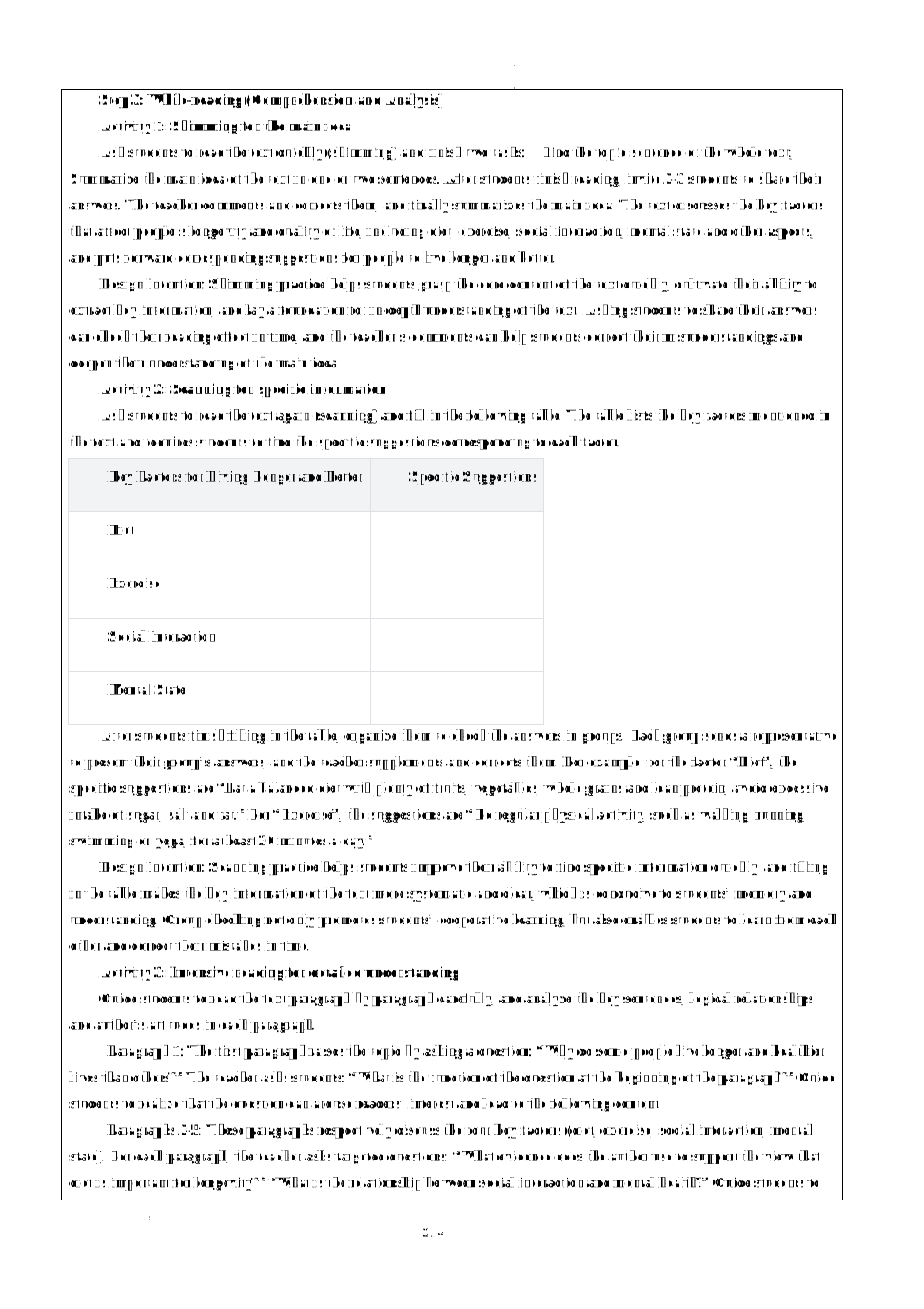
Step 3: While-reading (Comprehension and Analysis)
Activity 1: Skimming for the main idea
Ask students to read the text quickly (skimming) and finish two tasks: Find the topic sentence of the whole text; Summarize the main idea of the text in one or two sentences. After students finish reading, invite 2-3 students to share their answers. The teacher comments and corrects them, and finally summarizes the main idea: The text discusses the key factors that affect people’s longevity and quality of life, including diet, exercise, social interaction, mental state and other aspects, and puts forward corresponding suggestions for people to live longer and better.
Design Intention: Skimming practice helps students grasp the core content of the text quickly, cultivate their ability to extract key information, and lay a foundation for in-depth understanding of the text. Asking students to share their answers can check their reading effect in time, and the teacher’s comments can help students correct their misunderstandings and deepen their understanding of the main idea.
Activity 2: Scanning for specific information
Ask students to read the text again (scanning) and fill in the following table. The table lists the key factors mentioned in the text and requires students to find the specific suggestions corresponding to each factor.
Key Factors for Living Longer and Better
Specific Suggestions
Diet
Exercise
Social Interaction
Mental State
After students finish filling in the table, organize them to check the answers in groups. Each group sends a representative to present their group’s answers, and the teacher supplements and corrects them. For example, for the factor “Diet”, the specific suggestions are “Eat a balanced diet with plenty of fruits, vegetables, whole grains and lean protein; avoid excessive intake of sugar, salt and fat.” For “Exercise”, the suggestions are “Do regular physical activity, such as walking, running, swimming or yoga, for at least 30 minutes a day.”
Design Intention: Scanning practice helps students improve their ability to find specific information quickly, and filling in the table makes the key information of the text more systematic and clear, which is conducive to students’ memory and understanding. Group checking not only promotes students’ cooperative learning, but also enables students to learn from each other and correct their mistakes in time.
Activity 3: Intensive reading for detailed understanding
Guide students to read the text paragraph by paragraph carefully, and analyze the key sentences, logical relationships and author’s attitudes in each paragraph.
Paragraph 1: The first paragraph raises the topic by asking a question: “Why do some people live longer and healthier lives than others?” The teacher asks students: “What is the function of the question at the beginning of the paragraph?” Guide students to realize that the question can arouse readers’ interest and lead to the following content.
Paragraphs 2-5: These paragraphs respectively discuss the four key factors (diet, exercise, social interaction, mental state). For each paragraph, the teacher asks targeted questions: “What evidence does the author use to support the view that diet is important for longevity?” “What is the relationship between social interaction and mental health?” Guide students to find the supporting details in the text, such as examples, data or expert opinions, and analyze the logical relationship between sentences (such as cause and effect, contrast, etc.).
Paragraph 6: The last paragraph summarizes the main points of the text and puts forward a call: “Living longer and better is not about one single factor, but a combination of healthy habits, positive mindset and good social connections.” The teacher asks students: “What is the author’s attitude towards living longer and better? Is it optimistic, pessimistic or neutral?” Guide students to grasp the author’s positive and practical attitude.
In the process of intensive reading, the teacher also helps students solve difficult sentences in the text. For example, “Research shows that people who maintain strong social connections are less likely to suffer from chronic diseases and have a lower risk of premature death.” The teacher explains the sentence structure (attributive clause) and key phrases (“maintain strong social connections”, “suffer from chronic diseases”, “premature death”) to help students understand the meaning of the sentence accurately.
Design Intention: Intensive reading helps students deeply understand the details, logical structure and author’s attitude of the text, and improve their ability to analyze and understand complex sentences. Targeted questions guide students to think actively, cultivate their thinking quality, and help them form a good reading habit of thinking while reading. Solving difficult sentences can remove obstacles for students’ reading and ensure that they can understand the text thoroughly.
Step 4: Post-reading (Interaction and Application)
Activity 1: Group Discussion
Divide students into groups of 4-5, and assign the following discussion topics: Do you agree with all the suggestions mentioned in the text? Why or why not? What are the healthy habits you have in your daily life? Do they conform to the suggestions in the text? What other factors do you think can help people live longer and better?
Before the discussion, the teacher reminds students to use the vocabulary and sentence patterns learned in the text, such as “I agree that... because...”, “In my opinion, ... is also important for longevity”, “I have a habit of... which is good for my health”. During the discussion, the teacher walks around the classroom, listens to students’ discussions, and provides guidance and help when necessary. For example, if a student has difficulty expressing an idea, the teacher can prompt them with relevant vocabulary or sentence patterns.
After the discussion, each group sends a representative to share their group’s views. The teacher makes comments on students’ performances, affirming their advantages and pointing out areas for improvement. For example, praise students for using the learned vocabulary and sentence patterns correctly, and suggest that they can express their views more clearly and logically.
Design Intention: Group discussion provides students with a platform to practice oral English and exchange ideas, which helps them apply the knowledge learned in the text to practical communication. It also cultivates students’ cooperative learning ability and critical thinking ability, as they need to express their own views, listen to others’ opinions and put forward their own ideas. The teacher’s guidance and comments can help students improve their oral expression ability and correct their mistakes in time.
Activity 2: Text Retelling
Ask students to retell the main content of the text in their own words. They can refer to the table filled in during the scanning activity and the key points summarized in the intensive reading. The teacher can first give a model retelling to help students understand the requirements: “The text mainly talks about how to live longer and better. It mentions four key factors: diet, exercise, social interaction and mental state. For diet, we should eat a balanced diet; for exercise, we should do regular physical activity...”
Invite 2-3 students to retell the text in front of the class. The teacher evaluates their retelling from the aspects of completeness, accuracy and fluency, and encourages other students to supplement and correct.
Design Intention: Text retelling helps students consolidate the content of the text, improve their ability to organize language and express ideas in English. It also checks students’ understanding of the text comprehensively, and helps the teacher find out the problems that students may have in understanding the text. The model retelling provides a reference for students, reducing their difficulty in retelling.
Activity 3: Writing Practice
Ask students to write a short passage (80-100 words) about their own healthy lifestyle, combining the suggestions in the text and their own actual situation. The teacher reminds students to pay attention to the structure of the passage (beginning: introduce the importance of healthy lifestyle; body: talk about their own healthy habits; ending: express their determination to keep the habits). They can use the vocabulary and sentence patterns learned in the text.
After students finish writing, collect some students’ works and display them in front of the class. The teacher and students comment on the works together, focusing on the accuracy of vocabulary and grammar, the clarity of ideas and the fluency of expression.
Design Intention: Writing practice is an important way to apply the knowledge learned in the text. It helps students improve their writing ability and consolidate the vocabulary and sentence patterns learned. Displaying and commenting on students’ works can enhance their confidence in writing, and help them learn from each other’s advantages and find their own shortcomings.
Step 5: Summary and Extension
Summary
The teacher leads students to summarize the key points of this class: Master the core vocabulary and phrases about healthy lifestyles; Understand the main idea and logical structure of the text; Learn to use skimming and scanning strategies to read efficiently; Be able to express personal views on healthy living in English.
Design Intention: Summarizing the key points helps students sort out the knowledge learned in this class, form a systematic knowledge framework, and deepen their memory and understanding of the knowledge.
Extension
Ask students to read an extra-curricular article about longevity (provided by the teacher) after class, and write a short reading report (50-60 words) to share their gains. Encourage students to form a healthy lifestyle with their family and friends, and record their changes in a week. Invite students to collect health-related English proverbs or sayings, and share them in the next class.
Design Intention: Extracurricular extension activities help students expand their knowledge, consolidate the content learned in class, and connect English learning with daily life. Reading extra-curricular articles can improve students’ reading ability and broaden their horizons. Encouraging students to practice healthy lifestyles helps them realize the practical significance of the topic, and cultivating their ability to collect information can improve their learning ability.
Step 6: Homework Arrangement
Recite the core vocabulary and key sentences of the text. Finish the writing practice in class and revise it according to the comments. Complete the extra-curricular reading task and write the reading report. Collect 2-3 English proverbs or sayings about health.
Design Intention: Homework is an extension of classroom teaching, which helps students consolidate the knowledge learned in class and improve their learning ability. Reciting vocabulary and sentences helps students master the basic language knowledge. Revising the writing helps students improve their writing ability. The extra-curricular reading and collecting proverbs can enrich students’ knowledge and stimulate their interest in English learning.
1 / 1
学科网(北京)股份有限公司
学科网(北京)股份有限公司
学科网(北京)股份有限公司
$
资源预览图
1
2
相关资源
由于学科网是一个信息分享及获取的平台,不确保部分用户上传资料的 来源及知识产权归属。如您发现相关资料侵犯您的合法权益,请联系学科网,我们核实后将及时进行处理。