Unit4 Words Grammar activity 教学设计-2025-2026学年高中英语沪教版选择性必修第三册
2026-04-19
|
4页
|
24人阅读
|
0人下载
普通
资源信息
| 学段 | 高中 |
|---|---|
| 学科 | 英语 |
| 教材版本 | 高中英语沪教版选择性必修第三册 |
| 年级 | 高二 |
| 章节 | Grammar activity,Unit 4 Words |
| 类型 | 教案-教学设计 |
| 知识点 | - |
| 使用场景 | 同步教学 |
| 学年 | 2025-2026 |
| 地区(省份) | 全国 |
| 地区(市) | - |
| 地区(区县) | - |
| 文件格式 | DOCX |
| 文件大小 | 86 KB |
| 发布时间 | 2026-04-19 |
| 更新时间 | 2026-04-19 |
| 作者 | 匿名 |
| 品牌系列 | - |
| 审核时间 | 2026-04-19 |
| 下载链接 | https://m.zxxk.com/soft/57422266.html |
| 价格 | 1.00储值(1储值=1元) |
| 来源 | 学科网 |
内容正文:
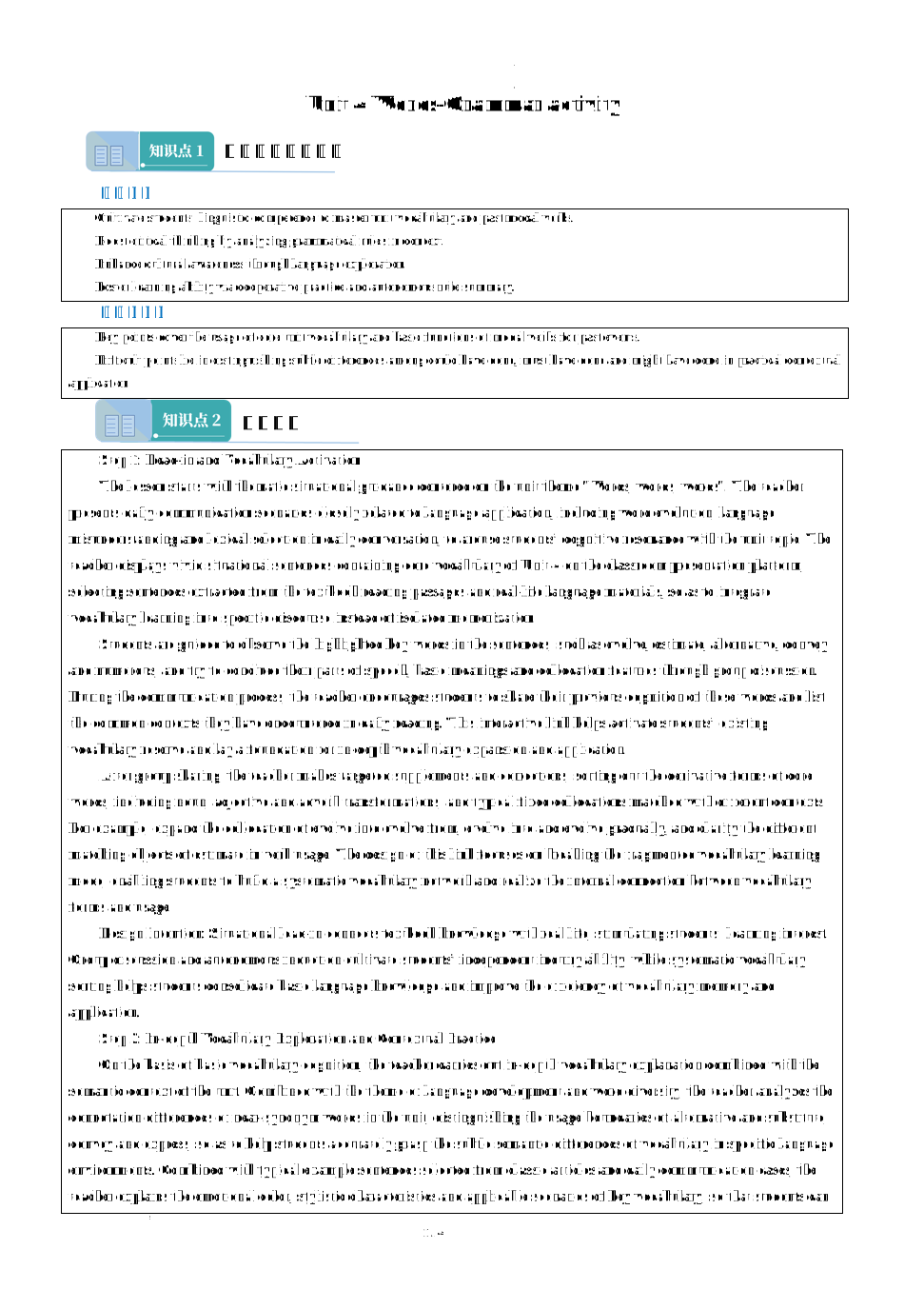
Unit 4 Words-Grammar activity
教学目标和重难点
教学目标
Cultivate students’ linguistic competence to master unit vocabulary and past modal verbs.
Boost critical thinking by analyzing grammatical rules in context.
Enhance cultural awareness through language exploration.
Foster learning ability via cooperative practice and autonomous rule summary.
教学重难点
Key points cover the usage of core unit vocabulary and basic functions of modal verbs for past events.
Difficult points lie in distinguishing subtle differences among could have done, must have done and might have done in practical contextual application.
教学过程
Step 1: Lead-in and Vocabulary Activation
The lesson starts with thematic situational guidance centered on the unit theme "Words, words, words". The teacher presents daily communication scenarios closely related to language application, including word evolution, language misunderstanding and lexical selection in daily conversation, to arouse students’ cognitive resonance with the unit topic. The teacher displays vivid situational sentences containing core vocabulary of Unit 4 on the classroom presentation platform, selecting sentences extracted from the textbook reading passages and real-life language materials, so as to integrate vocabulary learning into specific discourse instead of isolated memorization.
Students are guided to observe the highlighted key words in the sentences, such as evolve, estimate, alternative, convey and numerous, and try to conclude their parts of speech, basic meanings and collocation features through group discussion. During the communication process, the teacher encourages students to share their previous cognition of these words and list the common contexts they have encountered in daily reading. This interactive link helps activate students’ existing vocabulary reserve and lay a foundation for in-depth vocabulary expansion and application.
After group sharing, the teacher makes targeted supplements and corrections, sorting out the derivative forms of core words, including noun, adjective and adverb transformations, and typical fixed collocations matched with different contexts. For example, expand the collocation of evolve into evolve from, evolve into and evolve gradually, and clarify the different matching objects of estimate in verb usage. The design of this link focuses on breaking the fragmented vocabulary learning mode, enabling students to build a systematic vocabulary network and realize the internal connection between vocabulary forms and usage.
Design Intention: Situational lead-in connects textbook knowledge with real life, stimulating students’ learning interest. Group discussion and autonomous induction cultivate students’ independent inquiry ability, while systematic vocabulary sorting helps students consolidate basic language knowledge and improve the efficiency of vocabulary memory and application.
Step 2: In-depth Vocabulary Exploration and Contextual Practice
On the basis of basic vocabulary cognition, the teacher carries out in-depth vocabulary explanation combined with the semantic context of the unit. Combined with the theme of language development and word diversity, the teacher analyzes the connotation differences of near-synonym words in the unit, distinguishing the usage boundaries of alternative and substitute, convey and express, so as to help students accurately grasp the subtle semantic differences of vocabulary in specific language environments. Combined with typical example sentences selected from classic articles and daily communication cases, the teacher explains the emotional color, stylistic characteristics and applicable scenarios of key vocabulary, so that students can understand that vocabulary selection needs to adapt to discourse themes and communication purposes.
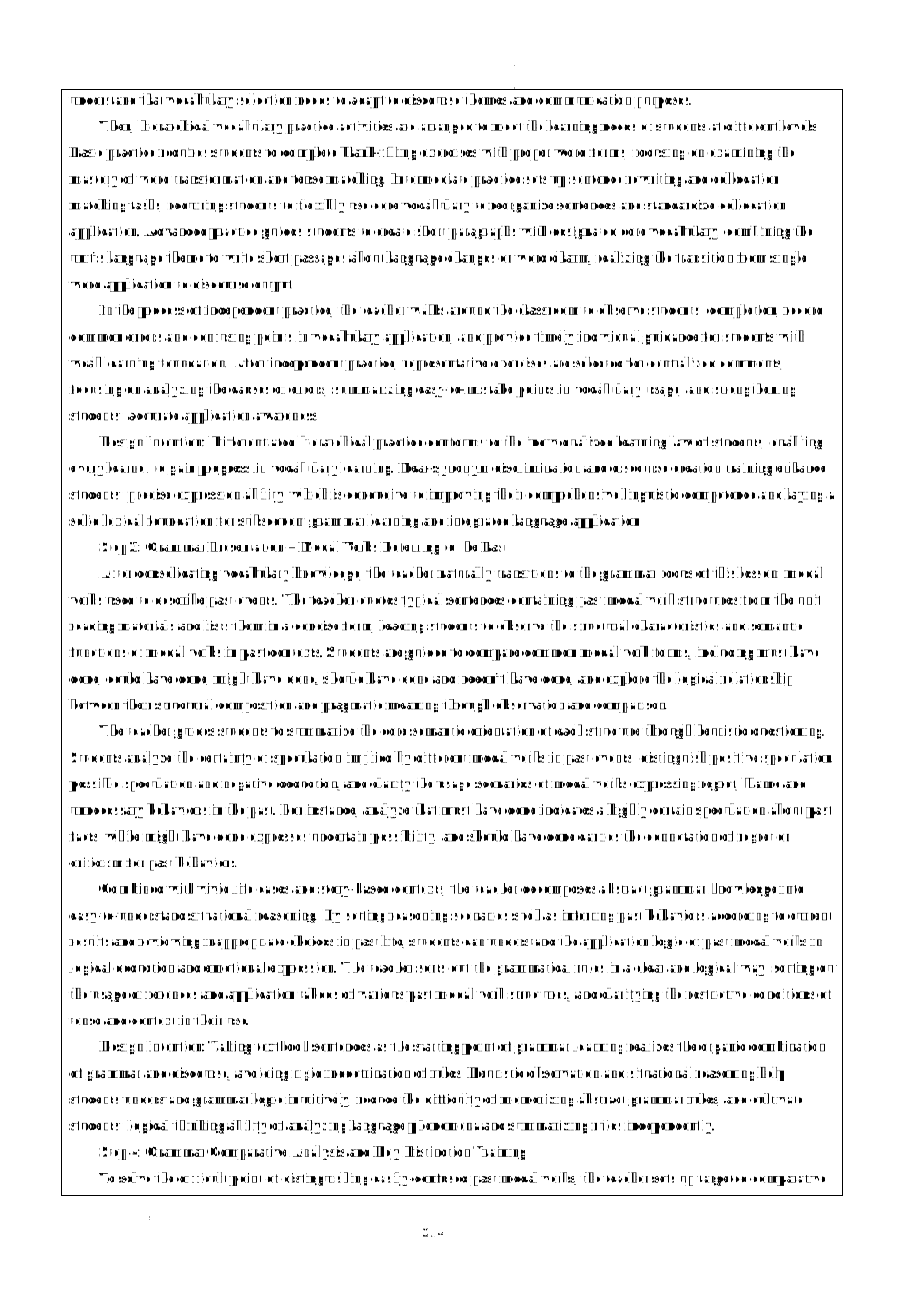
Then, hierarchical vocabulary practice activities are arranged to meet the learning needs of students at different levels. Basic practice requires students to complete blank-filling exercises with proper word forms, focusing on examining the mastery of word transformation and tense matching. Intermediate practice sets up sentence rewriting and collocation matching tasks, requiring students to flexibly use core vocabulary to reorganize sentences and standardize collocation application. Advanced practice guides students to create short paragraphs with designated core vocabulary, combining the unit’s language theme to write short passages about language changes or word charm, realizing the transition from single word application to discourse output.
In the process of independent practice, the teacher walks around the classroom to observe students’ completion, record common errors and confusing points in vocabulary application, and provide timely individual guidance for students with weak learning foundation. After independent practice, representative exercises are selected for centralized comments, focusing on analyzing the causes of errors, summarizing easy-to-mistake points in vocabulary usage, and strengthening students’ accurate application awareness.
Design Intention: Differentiated hierarchical practice conforms to the individualized learning law of students, enabling every learner to gain progress in vocabulary learning. Near-synonym discrimination and discourse creation training enhance students’ precise expression ability, which is conducive to improving their comprehensive linguistic competence and laying a solid lexical foundation for subsequent grammar learning and integrated language application.
Step 3: Grammar Presentation – Modal Verbs Referring to the Past
After consolidating vocabulary knowledge, the teacher naturally transitions to the grammar focus of this lesson: modal verbs used to describe past events. The teacher quotes typical sentences containing past modal verb structures from the unit reading materials and lists them in a concise form, leading students to observe the structural characteristics and semantic functions of modal verbs in past contexts. Students are guided to compare common modal verb forms, including must have done, could have done, might have done, should have done and needn’t have done, and explore the logical relationship between their structural composition and pragmatic meaning through observation and comparison.
The teacher guides students to summarize the core semantic orientation of each structure through heuristic questioning. Students analyze the certainty of speculation implied by different modal verbs in past events, distinguish positive speculation, possible speculation and negative deduction, and clarify the usage scenarios of modal verbs expressing regret, blame and unnecessary behaviors in the past. For instance, analyze that must have done indicates a highly certain speculation about past facts, while might have done expresses uncertain possibility, and should have done carries the connotation of regret or criticism for past behaviors.
Combined with vivid life cases and story-based contexts, the teacher decomposes abstract grammar knowledge into easy-to-understand situational reasoning. By setting reasoning scenarios such as inferring past behaviors according to current results and reviewing inappropriate choices in past life, students can understand the application logic of past modal verbs in logical deduction and emotional expression. The teacher sorts out the grammatical rules in a clear and logical way, sorting out the usage differences and application taboos of various past modal verb structures, and clarifying the restrictive conditions of tense and context in their use.
Design Intention: Taking textbook sentences as the starting point of grammar learning realizes the organic combination of grammar and discourse, avoiding rigid indoctrination of rules. Heuristic observation and situational reasoning help students understand grammar logic intuitively, reduce the difficulty of memorizing abstract grammar rules, and cultivate students’ logical thinking ability of analyzing language phenomena and summarizing rules independently.
Step 4: Grammar Comparative Analysis and Key Distinction Training
To solve the difficult point of distinguishing easily-confused past modal verbs, the teacher sets up targeted comparative analysis links to focus on breaking through learning barriers. First of all, the teacher makes a horizontal comparison between could have done and might have done, explaining the subtle differences in semantic tone and application scope. The former can represent unrealized past possibilities and implicit regrets, while the latter focuses more on uncertain objective speculation with weak semantic tone. Combined with contrasting example sentences, students are guided to perceive the different pragmatic effects brought by different modal verb collocations.
Then, the teacher distinguishes should have done and ought to have done, clarifying their consistent core meaning of "regret for not completing things that should be done" and slight differences in stylistic usage, as well as the negative structure shouldn’t have done for criticizing inappropriate past behaviors. At the same time, the usage of needn’t have done is supplemented to indicate that certain past behaviors were unnecessary, forming a complete knowledge system of modal verbs expressing past emotions and speculation.
On this basis, targeted targeted discrimination exercises are arranged, including single-choice questions, sentence judgment and error correction tasks. The exercises focus on designing confusing contexts with similar scenarios but different logical tones, requiring students to select the most appropriate modal verb structure according to contextual logic and semantic connotation. In the process of completing the exercises, students are encouraged to write down the reasoning basis for each choice, combining the summarized grammar rules to conduct logical analysis, so as to deepen their understanding of the differences of grammar points.
After students complete the exercises, group mutual correction is organized first. Students exchange their judgment basis in groups, discuss controversial questions, and conduct peer learning and mutual explanation. Then the teacher conducts centralized comments on universal difficult questions, sorts out regular distinguishing skills, and summarizes quick judgment methods based on context clues, emotional tones and logical certainty, helping students form flexible grammar application thinking.
Design Intention: Focused breakthrough of difficult and confusing grammar points accurately responds to the difficult teaching content of this lesson. Contrastive analysis and reasoning-based exercises enable students to move beyond mechanical memorization of rules and master the essential differences of grammar points. Group mutual correction promotes interactive learning among students and strengthens the depth of grammar knowledge understanding.
Step 5: Integrated Vocabulary and Grammar Comprehensive Application
After the separate learning of vocabulary and grammar, the teacher designs integrated application tasks to realize the organic integration of unit vocabulary and past modal verbs, and promote the internalization of knowledge. The first task is situational dialogue creation. Students are divided into fixed cooperative groups and given themed situational prompts, such as discussing possible reasons for a friend’s late arrival, speculating on the origin of ancient words, and reflecting on inappropriate language expressions in past communication. Students need to use multiple core vocabulary of Unit 4 and at least three types of past modal verb structures to complete dialogues.
In the process of group cooperation, students negotiate dialogue content, reasonably arrange language expression logic, and flexibly apply vocabulary collocations and grammar rules learned in this lesson. The teacher patrols each group, focuses on observing students’ flexible application of knowledge in collaborative communication, and gives timely guidance to problems such as inappropriate vocabulary matching and wrong modal verb selection, so as to ensure the smooth progress of cooperative tasks.
The second task is short discourse writing. Based on the unit’s language theme, students are required to write a short essay to describe a past language misunderstanding experience, analyze the possible causes of the misunderstanding with speculative modal verbs, and use unit core vocabulary to enrich expression content. This task requires students to integrate vocabulary accumulation, grammar application and logical expression, realizing the comprehensive output of language knowledge. After writing, students conduct self-checking to sort out vocabulary collocation errors and grammar structure problems, forming good autonomous learning habits.
After the completion of the two major tasks, each group selects representatives to display dialogue results and share written excerpts. Other students listen carefully and make simple evaluations from the perspectives of vocabulary richness, grammar accuracy and expression fluency. The teacher makes comprehensive comments on the display results, affirms excellent expressions, optimizes insufficient content, and strengthens students’ awareness of standardized and flexible application of comprehensive knowledge.
Design Intention: Integrated collaborative tasks connect vocabulary and grammar knowledge, realizing the transition from single knowledge learning to comprehensive language application. Cooperative dialogue and independent writing exercise students’ expressive ability and cooperative communication skills. Peer evaluation and teacher comments help students optimize language output and consolidate the overall learning effect of the lesson.
Step 6: Classroom Summary, Knowledge Consolidation and Expansion
At the end of the class, the teacher and students jointly complete the systematic summary of the lesson’s learning content. The teacher sorts out the key content in the order of core vocabulary, key collocations, derivative changes and past modal verb categories, sorts out the knowledge context of the whole lesson in a concise way, and helps students integrate scattered knowledge points into a complete logical system. Students are invited to take the initiative to share the key knowledge and learning gains they have mastered in this lesson, as well as the remaining confusing points, to achieve targeted sorting and consolidation.
In view of the expanding application of knowledge, the teacher appropriately expands the application scenarios of past modal verbs, combining reading comprehension and cloze test question types in daily examinations, explaining the examination forms and problem-solving skills of such grammar points in comprehensive questions, so that students can clarify the connection between daily learning and ability assessment. At the same time, the teacher assigns layered after-class consolidation tasks: basic tasks focus on vocabulary dictation and grammar rule consolidation exercises; expansion tasks require students to collect sentences containing past modal verbs in extracurricular reading and analyze their usage, expanding the scope of knowledge application.
The teacher emphasizes that vocabulary and grammar learning should always be combined with specific contexts, and encourages students to consciously use the language knowledge learned in this lesson in daily English listening, speaking, reading and writing, gradually forming the habit of standardized expression and flexible application, and laying a foundation for subsequent unit learning and long-term English ability improvement.
Design Intention: Joint classroom summary helps students review key content and optimize knowledge memory. Examination-oriented expansion and layered after-class tasks meet the needs of knowledge consolidation and ability expansion. The emphasis on contextual application runs through the whole learning process, guiding students to establish scientific language learning concepts and continuously improve their comprehensive English literacy.
1 / 1
学科网(北京)股份有限公司
学科网(北京)股份有限公司
学科网(北京)股份有限公司
$
资源预览图
1
2
相关资源
由于学科网是一个信息分享及获取的平台,不确保部分用户上传资料的 来源及知识产权归属。如您发现相关资料侵犯您的合法权益,请联系学科网,我们核实后将及时进行处理。