精品解析:2026年广西南宁市初中毕业班质量调研(一模)英语
 切换试卷
切换试卷
2026-04-17
|
2份
|
29页
|
778人阅读
|
9人下载
资源信息
| 学段 | 初中 |
|---|---|
| 学科 | 英语 |
| 教材版本 | - |
| 年级 | 九年级 |
| 章节 | - |
| 类型 | 试卷 |
| 知识点 | - |
| 使用场景 | 中考复习-一模 |
| 学年 | 2026-2027 |
| 地区(省份) | 广西壮族自治区 |
| 地区(市) | 南宁市 |
| 地区(区县) | - |
| 文件格式 | ZIP |
| 文件大小 | 5.95 MB |
| 发布时间 | 2026-04-17 |
| 更新时间 | 2026-04-28 |
| 作者 | 匿名 |
| 品牌系列 | - |
| 审核时间 | 2026-04-17 |
| 下载链接 | https://m.zxxk.com/soft/57405917.html |
| 价格 | 5.00储值(1储值=1元) |
| 来源 | 学科网 |
内容正文:
2026届初中毕业班质量调研
英语
(考试形式:闭卷 考试时间:120分钟 分值:120分)
注意事项:
1.请在答题卡上作答。在本试卷、草稿纸上作答无效。
2.考试结束后,将本试卷和答题卡一并交回。
3.先播放听力,在听力开始前有两分钟听力试音时间。
一、听力(共30小题,每小题1分,共30分)
情境导语:Time flies at school.
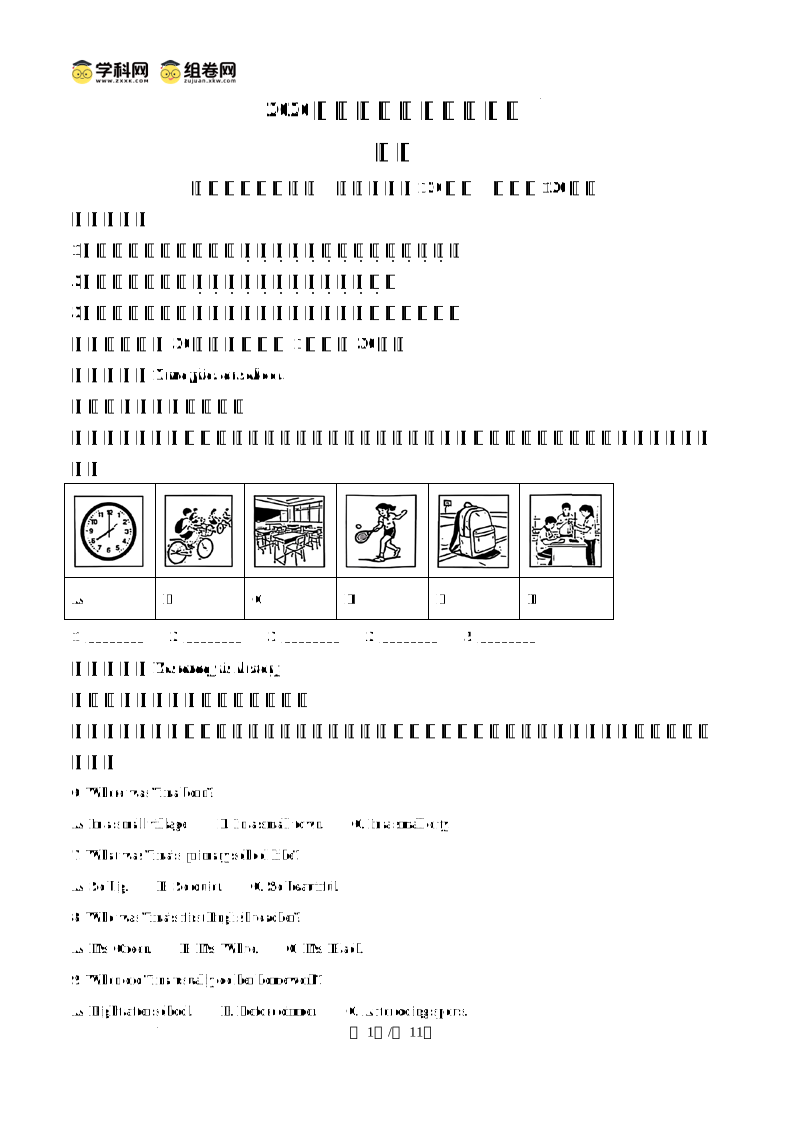
(一)听句子,选图片。
你将听到五个句子,请选出与所听句子内容相符的图片,有一幅图是多余的。每个句子读两遍。
A
B
C
D
E
F
1. ________ 2. ________ 3. ________ 2. ________ 5. ________
情境导语:Yesterday is history.
(二)听短对话,选择最佳答案。
你将听到五段对话,每段对话后有一个小题,请根据对话内容,选出最佳答案。每段对话读两遍。
6. Where was Tina born?
A. In a small village. B. In a small town. C. In a small city.
7. What was Tina’s primary school like?
A. So big. B. So quiet. C. So beautiful.
8. Who was Tina’s first English teacher?
A. Ms. Green. B. Ms. White. C. Ms. Black.
9. When did Tina usually do her homework?
A. Right after school. B. Before dinner. C. After doing sports.
10. What did Tina enjoy most in primary school?
A. Making models. B. Flying kites. C. Watching games.
情境导语:Make every day count.
(三)听长对话,选择最佳答案。
你将听到三段对话,请根据对话内容,选出每个问题的最佳答案。每段对话读两遍。
请听第一段对话,回答第11至13小题。
11. When do Tina and Betty meet?
A. This morning. B. This afternoon. C. This evening.
12. Where are Tina and Betty going?
A. To the library. B. To Betty’s home. C. To the community centre.
13. What are Tina and Betty preparing for?
A. An English speech. B. A painting show. C. A science survey.
请听第二段对话,回答第14至16小题。
14. What is Tina working on?
A. A first aid project. B. A food saving project. C. A volunteer project.
15. Why does Tina join in the project?
A. To help others. B. To improve skills. C. To increase knowledge.
16. What does Tina think of this project?
A. Useful. B. Creative. C. Necessary.
请听第三段对话,回答第17至20小题。
17. What does Grandpa grow in his garden?
A. Onions and beans. B. Carrots and potatoes. C. Cucumbers and cabbages.
18. When did Grandpa plant the vegetables?
A. Last October. B. Last November. C. Last December.
19. How many kilos of the vegetables could Grandpa get?
A. About 10 kilos. B. About 15 kilos. C. About 20 kilos.
20. What does Tina learn from Grandpa?
A. Never too late to learn.
B. Do the right thing at the right time.
C. Great things come from small beginnings.
情境导语:Spend time with close people.
(四)听短文,选择最佳答案。
你将听到一篇短文,请根据短文内容,选出每个问题的最佳答案。短文读两遍。
21. What is Allen’s father?
A. A program host. B. A news reporter. C. A training manager.
22. Why did Allen live with Aunt Joanna years ago?
A. Because Joanna wanted to have a child.
B. Because Allen’s parents were busy with work.
C. Because Allen’s school was near Joanna’s house.
23. What do Allen’s parents think is more important now?
A. Tina’s schoolwork. B. Business trips. C. Family time.
24. Where do Allen and her parents have a picnic?
A. By the lake. B. On the beach. C. On the hill.
25. How does Allen feel now?
A. More loved. B. More nervous. C. More disappointed.
情境导语:Enjoy your free time.
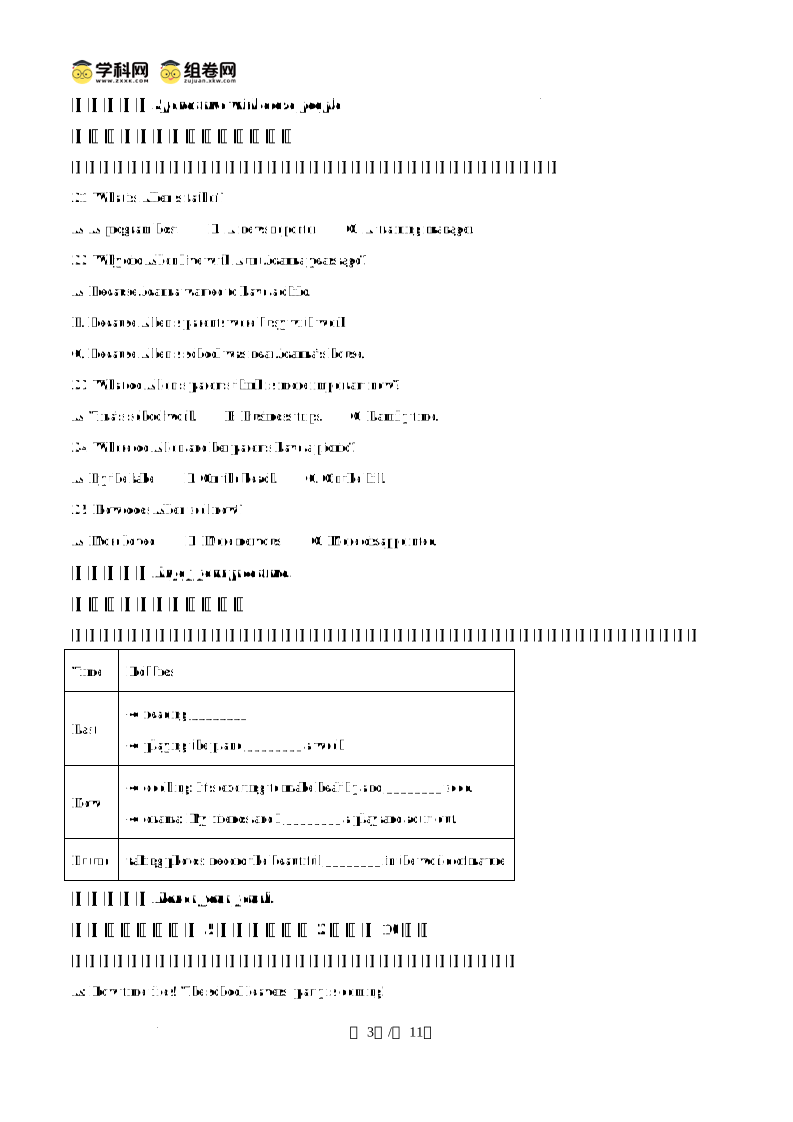
(五)听短文,填信息。
你将听到一篇短文,请根据短文内容,将所缺信息填入答题卡对应的横线上,每空一词。短文读三遍。
Time
Hobbies
Past
◆ reading ________
◆ playing the piano ________ a week
Now
◆ cooking: It’s exciting to make healthy and ________ food.
◆ drama: My friends and I ________ a play and act it out.
Future
taking photos: record the beautiful ________ in the world of nature
情境导语:Honor your youth.
二、补全对话(共5小题,每小题2分,共10分)
根据对话内容,从下面选出恰当的句子补全对话,有一个选项是多余的。
A: How time flies! The school leavers’ party is coming!
B: ____1____
A: On July 2nd. ____2____
B: Yes, I do. I will make a video of our school life.
A: A video? ____3____
B: I’m preparing for it. Would you like to join me?
A: ____4____ What can I do?
B: ____5____
A: No problem! The video will be a big surprise!
A. Yes, I’d love to.
B. What a good idea!
C. When is the party?
D. I’m sorry to hear that.
E. Do you have any ideas for the party?
F. You can collect photos from classmates.
【答案】1. C 2. E 3. B 4. A 5. F
【解析】
【导语】本文是一则对话,围绕学校毕业派对的准备展开,A询问派对时间和想法,B提议制作校园生活视频并邀请A一起收集照片。
【1题详解】
A先提出毕业派对即将到来,B应询问派对时间以获取信息。C项“When is the party?”直接提问,与下文A回答“On July 2nd.”自然衔接。
【2题详解】
A回答时间后,接着询问B是否有派对想法。E项“Do you have any ideas for the party?”符合语境,引出B制作视频的回答。
【3题详解】
上文A对制作视频表示惊讶,此处需要夸赞这个想法,衔接下文准备工作,B项“What a good idea! ”完美衔接。
【4题详解】
B邀请A一起制作视频,“What can I do?”说明愿意加入,A项“Yes, I’d love to.”表达接受邀请,符合语境。
【5题详解】
上文“What can I do?”提示此处是回答具体做什么。F项“You can collect photos from classmates.”直接给出任务,与A回答“No problem!”呼应。
情境导语:Pass on the light.
三、完形填空(共10小题,每小题1.5分,共15分)
阅读下面语篇,从各题所给的A、B、C三个选项中,选出最佳选项。
In a small village by the sea, there was a young sailor called Tom. He always dreamed to ____6____ the whole world by sailing. His father was a lighthouse keeper. He saw too many risks that the sea brought to the sailors, so he ____7____ a lot every time Tom was on the sea.
One spring morning, Tom sailed alone on the sea, with ____8____ nearby. At first, the trip was nice with warm sunshine and soft wind. Suddenly the weather became ____9____. Thick fog came. What was worse, his compass (指南针) didn’t ____10____ well. Tom was lost! He tried to find his way back.
Just when he was tired out, he saw a weak ____11____ far away. It was from the lighthouse. His father was standing there, lighting the lantern. His father was caring about him ____12____, so he noticed the bad weather and guessed that Tom might get into danger.
Year after year, Tom kept sailing and achieved his early dream, ____13____ his father grew older and older. When his father was too weak to ____14____ the lighthouse any more, Tom took over the duty. Every time he lit the lantern, he understood his father better. And this made the ____15____ between him and his father deeper.
The lighthouse stood against time. It was a symbol of their lasting love. Whatever the future would be, the warm light of his father’s love would always be with him.
6. A. explore B. control C. save
7. A. laughed B. worried C. relaxed
8. A. nobody B. somebody C. everybody
9. A. perfect B. normal C. terrible
10. A. sell B. work C. speak
11. A. bird B. smoke C. light
12. A. at times B. all the time C. for the first time
13. A. or B. while C. because
14. A. look after B. wait for C. depend on
15. A. problem B. difference C. connection
【答案】6. A 7. B 8. A 9. C 10. B 11. C 12. B 13. B 14. A 15. C
【解析】
【导语】本文讲述了水手Tom与灯塔看守人父亲之间的故事,父亲担心儿子出海的安全,但在Tom遇险时用灯塔的光指引他回家,最终Tom继承父业,理解了父爱的深沉。
【6题详解】
句意:他总是梦想通过航行探索整个世界。
根据上下文可知Tom是水手、喜爱航海远行,explore“探索”符合语境;control“控制”和save“拯救”与“世界”搭配不当。
【7题详解】
句意:他的父亲看到大海给水手带来的太多风险,所以每次Tom出海时他都非常担心。
根据上文父亲见过大海带给水手的诸多危险,可判断父亲内心忧虑,worried“担心”正确;laughed“笑”和relaxed“放松”与风险矛盾。
【8题详解】
句意:一个春天的早晨,Tom独自出海,附近没有人。
后文介绍他迷失方向无人帮助,故应独自一人。nobody正确;somebody“某人”和everybody“每个人”与alone矛盾。
【9题详解】
句意:突然天气变得糟糕。
前文nice(阳光温暖、风柔和),后文thick fog,所以天气变坏。terrible“糟糕的”正确;perfect“完美的”和normal“正常的”不符。
【10题详解】
句意:更糟的是,他的指南针不好用了。
指南针是工具,work“运转”正确;sell“卖”和speak“说话”不合逻辑。
【11题详解】
句意:就在他筋疲力尽时,他看到远处有微弱的光。
下文明确提到“It was from the lighthouse”,所以看到的是光。light正确;bird“鸟”和smoke“烟”不符。
【12题详解】
句意:他的父亲一直在关心他,所以注意到了坏天气并猜到Tom可能遇险。
父亲能注意到天气变化并猜测,说明一直关心。all the time“一直”正确;at times“有时”和for the first time“第一次”不合逻辑。
【13题详解】
句意:年复一年,Tom继续航行并实现了早年的梦想,而他的父亲越来越老。
表示两个动作同时发生或对比,while“而”正确;or“或者”表选择,because“因为”表因果,均不符。
【14题详解】
句意:当父亲太虚弱无法再照看灯塔时,Tom接过了职责。
灯塔需要人照看,look after“照看”正确;wait for“等待”和depend on“依赖”不合语境。
【15题详解】
句意:这让父子之间的联系更加深厚。
接替职责后更理解父亲,加深了情感联系。connection“联系”正确;problem“问题”和difference“差异”与“更深”不搭配。
情境导语:Time leaves marks.
四、阅读(共20小题,每小题2分,共40分)
A
Over the years, people have used different forms of money as a way to trade or save.
Seashells
It is said that the first kind of money was seashells. People used them as money around 3,000 years ago.
Coins
Then people learned to make metal (金属) coins, which were made of gold, silver, iron (铁) and so on. The earliest metal coins were made of gold. They were from Lydia (an ancient country), and were used around 600 BCE.
Paper money
The first paper money, called jiaozi appeared in China’s Song Dynasty. In the 1600s, banks of Sweden (瑞典) started giving out paper money. It has become popular around the world and is still used widely today.
Digital money
Now, people often pay for things online. Digital money is a new form of money.
根据语篇内容,选择最佳选项。
16. How many kinds of money are mentioned in the text?
A. Two. B. Three. C. Four.
17. When did people use seashells as money?
A. Around 600 years ago. B. Around 1,600 years ago. C. Around 3,000 years ago.
18. What were the earliest metal coins made of?
A. Gold. B. Silver. C. Iron.
19. Where did paper money first appear?
A. In China. B. In Lydia. C. In Sweden.
20. In which part of a magazine can we probably read this text?
A. Famous people. B. Interesting history. C. Popular sports.
【答案】16. C 17. C 18. A 19. A 20. B
【解析】
【导语】本文介绍了历史上四种货币形式:贝壳、金属硬币、纸币和数字货币,说明了货币的发展演变过程。
【16题详解】
文中依次出现四个小标题:Seashells、Coins、Paper money、Digital money,对应四种货币类型。
【17题详解】
Seashells部分指出:“People used them as money around 3,000 years ago.”,明确表示人们在大约3000年前使用贝壳作为货币。
【18题详解】
Coins部分指出:“The earliest metal coins were made of gold.”,明确表示最早的金属硬币是由黄金制成的。
【19题详解】
Paper money部分指出:“The first paper money, called jiaozi, appeared in China’s Song Dynasty.”,明确表示最早的纸币出现在中国。
【20题详解】
全文讲述货币从贝壳到数字货币的发展历史,属于历史类话题。B项“Interesting history”符合。
B
At the beginning of 2025, my New Year’s goal was huge. I didn’t just want to be better. I wanted to be the best student in my whole grade. To make it happen, I promised myself to study for three more hours every night.
Everything went well at first. I studied hard for a few weeks, trying to memorize each page of the textbooks. My scores went up soon. I was proud of myself. At the same time, I felt tired. However, I kept studying hard until midnight. Actually, I was so sleepy that I couldn’t focus on my schoolwork. Slowly, my scores began to drop, like running sand through my fingers. I tried even harder but I didn’t do well in the final exam. I was completely lost.
Instead of giving up, I stopped to think: what really went wrong? With the help of my teachers and parents, I realized it wasn’t a proper plan in the long run. So, I thought it over and improved the daily plan of 2026. I decided to take a rest every 40 minutes during study hours and not to stay up late. I also tried to use a mind map to review the lessons. I followed this plan step by step and made progress in the new term.
This “roller-coaster (过山车) journey” tells me that a big goal needs a daily plan you can actually follow. Running a long race too fast only burns you out.
根据语篇内容,选择最佳选项。
21. What was the writer’s New Year’s goal of 2025?
A. To make some progress little by little.
B. To be the top student in the whole grade.
C. To do reading for a long time every night.
22. What do the words “like running sand through my fingers” mean?
A. The writer liked playing with sand.
B. The writer thought time went by fast.
C. The writer felt helpless about his scores.
23. Why did the writer think over his plan of 2025?
A. Because he was so proud of himself.
B. Because he found the plan not proper.
C. Because he wanted to memorize the plan.
24. How did the writer make progress in 2026?
A. By managing time better and improving methods.
B. By focusing more on schoolwork and staying up late.
C. By resting for a longer time and taking a roller-coaster.
25. What is the best title for the text?
A. Stay Curious, Stay Young B. Easy Come, Easy Go C. Run Slow, Go Far
【答案】21. B 22. C 23. B 24. A 25. C
【解析】
【导语】本文作者分享了自己2025年因目标过高、过度学习导致成绩下滑的教训,并在2026年通过合理规划时间、改进学习方法取得稳步进步,领悟到欲速则不达的道理。
【21题详解】
第一段指出:“I wanted to be the best student in my whole grade.”,明确表示作者2025年的新年目标是成为全年级最好的学生。
【22题详解】
第二段指出:“Slowly, my scores began to drop, like running sand through my fingers.”,用沙子从指缝流走比喻分数不断下降,表达作者对此感到无力。
【23题详解】
第三段指出:“I realized it wasn’t a proper plan in the long run. So, I thought it over and improved...”,说明作者反思2025年计划是因为发现它不合适。
【24题详解】
第三段指出:“I decided to take a rest every 40 minutes... not to stay up late. I also tried to use a mind map...”,说明作者通过更好的时间管理和改进学习方法在2026年取得进步。
【25题详解】
文章最后一段总结:“Running a long race too fast only burns you out.”,强调欲速则不达,慢而稳才能走得远。选项C“Run Slow, Go Far”准确概括主旨。
C
One day in 2006, students at Xavier High School in New York wrote to their favourite writers. They invited the writers to visit the school. Some students wrote to Kurt Vonnegut Jr. (1922~2007), a humorous American writer. Here is Vonnegut’s reply.
Dear Xavier High School,
Thanks for your kind letters! You really know how to cheer up an 84-year-old man in his sunset years. I don’t make public appearances anymore because I look just like an iguana (鬣蜥) now.
What I want to tell you is simple: Practice any kind of art—music, acting, poetry and so on. No matter how well or badly you do it, don’t do it for money or fame (名声). Do it to grow, find out what’s in your heart, and make your spirit stronger.
Take it seriously! Start right now and keep doing art for the rest of your life. Draw a funny or nice picture of your teacher and share it. Dance home after school, and you can even sing in the shower.
Here’s your assignment for tonight—I hope your teacher will not let you pass if you don’t do it: Write a six-line poem with similar ending sounds about anything. Try your best, but don’t tell anyone about it or show it to anyone. Then tear (撕) it into small pieces and throw them into different bins. You’ll find this effort is your best reward (回报)—you’ve experienced becoming, learned a lot more about yourself, and enriched your mind.
Good luck to you all!
Kurt Vonnegut Jr.
November 5, 2006
根据语篇内容,选择最佳选项。
26. Who was Vonnegut?
A. A kind teacher. B. A humorous writer. C. A cheerful musician.
27. How did Vonnegut start his letter?
A. With a lively joke. B. With an old saying. C. With a fun question.
28. What’s the meaning of the underlined word “assignment” in the text?
A. Prize. B. Situation. C. Homework.
29. Which of the following shows Vonnegut’s idea?
A. Alexander plays music to make money.
B. Lily keeps writing to learn about herself.
C. Jackson studies acting to become famous.
30. What’s the purpose of the letter?
A. To invite teenagers to create poems together.
B. To advise teenagers to share personal stories.
C. To encourage teenagers to develop their minds.
【答案】26. B 27. A 28. C 29. B 30. C
【解析】
【导语】本文讲述了美国幽默作家冯内古特在回信中鼓励学生从事艺术创作,不为名利,只为自我成长和丰富内心,并布置了一个写诗然后撕掉的特殊作业。
【26题详解】
第一段指出:“Some students wrote to Kurt Vonnegut Jr. (1922~2007), a humorous American writer.”,直接点明他是一名幽默的作家。
【27题详解】
书信第一段指出:“I don’t make public appearances anymore because I look just like an iguana now.”,他以自嘲像鬣蜥的趣味玩笑开启信件。
【28题详解】
书信第四段指出:“Here’s your assignment for tonight — I hope your teacher will not let you pass if you don’t do it...”,结合今晚需完成、不做会无法过关的语境,可知该词意为作业。
【29题详解】
书信第二段指出:“don’t do it for money or fame... find out what’s in your heart... learned a lot more about yourself”,表明他主张追求艺术是为了解自我、充实内心,而非金钱和名声。
【30题详解】
整封信的核心是鼓励年轻人从事任何形式的艺术,不为名利,只为成长、发现自己、丰富内心。最后一段说“you’ve experienced becoming, learned a lot more about yourself, and enriched your mind”。因此信的目的是鼓励青少年发展心智。
D
Imagine getting Traditional Chinese Medicine (TCM) services through your smartphone. You just need to take a photo of the tongue (舌头), and then you can get a health report in under 2 minutes. The long and tiring hospital trip is no longer necessary. Thanks to a new app, this has come true.
Why can it be so convenient? Because the app mixes TCM examination with modern AI technology. In half a year, it has helped over 30,000 users, and 94% of them are satisfied with the results.
TCM-AI tools like this app are playing a bigger part in improving healthcare. They are especially helpful in some faraway areas with few experienced doctors. People in those areas can now get quality TCM services without leaving the area, though accurate diagnosis (精确的诊断) still depends on the doctor’s skilled judgment.
Although AI has made progress in TCM, there are still big challenges. One of them is that TCM lacks (缺少) standard rules. TCM has many different schools (流派) and methods that have developed over thousands of years. They may offer different treatments for the same illness, and that’s why it is hard for AI to learn. To solve the problem, China is working on making standards for TCM by setting up 180 national and 30 international standards by 2026. Researchers are also building better TCM-AI tools.
In short, AI and TCM working together will greatly improve healthcare by making it easier to get TCM services. However, this is just the beginning, and there is still much work to do. With joint efforts, TCM is expected to improve healthcare quality and help more communities.
根据语篇内容,按要求回答问题。
31. How fast can you get a health report by using the app?
________________________________________________________________________________
32. Why can you get a health report so conveniently?
________________________________________________________________________________
33. Where are TCM-AI tools especially helpful?
________________________________________________________________________________
34. Why is it difficult for AI to learn TCM? (不超过15词)
________________________________________________________________________________
35. What is the main idea of the text? (不超过15词)
________________________________________________________________________________
【答案】31. You can get a health report in under 2 minutes.
32. Because the app mixes TCM examination with modern AI technology.
33. They are especially helpful in some faraway areas with few experienced doctors.
34. Because TCM has many schools and different treatment methods.
35. AI brings progress and challenges to TCM.
【解析】
【导语】本文介绍了AI与中医结合的应用带来的便利、在偏远地区的帮助,以及面临的标准缺乏等挑战。
【31题详解】
第一段指出:“and then you can get a health report in under 2 minutes”,说明使用这款APP可在两分钟内拿到健康报告。
【32题详解】
第二段指出:“Because the app mixes TCM examination with modern AI technology”,说明APP结合中医问诊与现代人工智能技术,所以十分便捷。
【33题详解】
第三段指出:“They are especially helpful in some faraway areas with few experienced doctors”,说明中医人工智能工具在缺少资深医生的偏远地区作用显著。
【34题详解】
第四段指出:“TCM has many different schools and methods...offer different treatments for the same illness”,说明中医流派众多、疗法不同,导致人工智能难以学习。
【35题详解】
全文讲述人工智能助力中医发展,同时也面临诸多难题,以此概括文章主旨。
情境导语:Time makes a difference.
五、选词填空(共10小题,每小题1分,共10分)
根据语篇内容,从方框中选择恰当的单词,并用其正确形式填空。将单词填写在答题卡对应的横线上。每个单词只能用一次。
environment change never strong but plan difficult provide they grow
More than 60 years ago, Saihanba (塞罕坝) was a desert with terrible sandstorms in northern Hebei, China. There were few trees, and ____36____ winds often blew. In 1962, people decided to turn it into a green forest. It was not for quick results, ____37____ for future generations (几代人).
Thousands of young people came here to plant trees. They faced many problems, such as cold winters, little water and poor soil, but they ____38____ gave up. Then they used scientific methods to help the trees ____39____ well. For over half a century, three generations kept working hard to make ____40____ dream come true.
Today, great ____41____ have taken place in Saihanba. It has become the largest man-made forest in the world, a green barrier (屏障) in northern China. It has ____42____ clean water and fresh air for millions of people. This tree-planting project has brought new life to Saihanba, and played an important role in protecting the ____43____.
The story of Saihanba teaches us to ____44____ ahead for the future and stick to our long-term goals. No matter how ____45____ the road is, small efforts can lead to great success. Saihanba is a wonderful gift from China to the whole world, made in the past, seen at present and long-lasting for the future.
【答案】36. strong
37. but 38. never
39. grow 40. their
41. changes
42. provided
43. environment
44. plan 45. difficult
【解析】
【导语】本文讲述了三代人历经艰辛坚持植树造林,将塞罕坝变成世界最大人工林,改善了环境,也告诉我们要有长远规划、坚持不懈的道理。
【36题详解】
句意:树木稀少,强劲的大风经常刮起。修饰 winds要用形容词,strong winds表示“大风、强风”,符合荒漠沙尘暴的语境。
【37题详解】
句意:这不是为了快速见效,而是为了后代。固定结构 not…but…表示“不是……而是……”,表示转折并列。
【38题详解】
句意:他们面临很多困难,但从未放弃。gave up是动词短语,用频度副词never修饰,体现坚持不懈的精神。
【39题详解】
句意:他们用科学的方法帮助树木好好生长。固定搭配 help sb./sth. do sth.,用动词原形;grow表示“生长”,符合种树语境。
【40题详解】
句意:三代人努力让他们的梦想成真。修饰名词dream,要用形容词性物主代词their。
【41题详解】
句意:如今塞罕坝发生了巨大的变化。根据后文“It has become the largest man-made forest in the world”可知发生了巨大的变化,句中谓语是have taken place,主语要用复数名词changes。
【42题详解】
句意:它为数百万人提供了干净的水和新鲜的空气。前面有has,是现在完成时has done;固定搭配provide sth. for sb.,故用过去分词provided。
【43题详解】
句意:在保护环境方面发挥重要作用。种树是与环境有关的,protect the environment是固定搭配,意为“保护环境”。
【44题详解】
句意:塞罕坝的故事教会我们为未来提前规划。根据future可知是为未来谋划,plan ahead表示 “提前规划、未雨绸缪”,固定搭配teach sb. to do sth.,用动词原形。
【45题详解】
句意:无论道路多么艰难,微小的努力也能带来巨大成功。how后面接形容词,difficult表示“困难的、艰难的”,符合句意。
情境导语:Time passes, happiness remains.
六、书面表达(15分)
46. 你校英语报正在举办“Secrets of Happiness”征文活动,请你以“How I Make Myself Happy”为题写一篇短文投稿,谈谈自己的做法。内容包括:
1.体育锻炼;
2.人际交往;
3.心态调节。
注意:
1.词数为80左右,开头已给出,不计入总词数;
2.可适当增加细节,以使行文连贯;
3.文中不得出现真实姓名及学校名称。
参考词汇:exercise (v./n. 锻炼), get along with (和睦相处), positive (adj. 积极的), attitude (n. 态度)
How I Make Myself Happy
Everyone wants to be happy.
________________________________________________________________________________________________________________________________________________________________________________________________________________________________________________________________________________________________________________________________________________________________________________________________________________________________________________________________________________________________________________________________________________________________________________________________________________________________________________________________________________________________________________________________________________________________________________________________________________________________________________________________________________________________________________________________________________________________________________________________________________________
【答案】
How I Make Myself Happy
Everyone wants to be happy. I have my own ways to stay joyful.
First, I exercise regularly, like running or playing basketball. It keeps me healthy and energetic. Second, I try to get along well with my family and friends. Sharing stories and helping each other brings me warmth. Finally, I keep a positive attitude. When facing problems, I tell myself to stay calm and find solutions.
Happiness is not far away if we take these small steps.
【解析】
【详解】写作步骤
[第一步:审题立意]
确定文体:记叙文,以一般现在时为主
明确要点:体育锻炼的方式及作用、人际交往的做法及效果、心态调节的方法及意义
确定人称:第一人称
注意事项:不得出现真实姓名及学校名称
[第二步:构思布局]
三段式结构:
开头段:总起句,引出自己获得快乐的方式
主体段:分别介绍体育锻炼、人际交往、心态调节三个方面的具体做法
结尾段:总结感受,点明快乐不难实现
[第三步:要点展开]
要点一:体育锻炼
活动选择:running/playing basketball/swimming/jumping rope等
作用效果:keeps me healthy and energetic/makes me feel relaxed/helps me sleep better
要点二:人际交往
交往对象:family/friends/classmates等
具体做法:share stories/help each other/spend time together等
作用效果:brings me warmth/makes me feel loved/gives me support等
要点三:心态调节
心态类型:positive attitude/optimistic mindset/calm thinking等
具体做法:stay calm/find solutions/learn from mistakes/accept imperfections等
第1页/共1页
学科网(北京)股份有限公司
$
2026届初中毕业班质量调研
英语
(考试形式:闭卷 考试时间:120分钟 分值:120分)
注意事项:
1.请在答题卡上作答。在本试卷、草稿纸上作答无效。
2.考试结束后,将本试卷和答题卡一并交回。
3.先播放听力,在听力开始前有两分钟听力试音时间。
一、听力(共30小题,每小题1分,共30分)
情境导语:Time flies at school.
(一)听句子,选图片。
你将听到五个句子,请选出与所听句子内容相符的图片,有一幅图是多余的。每个句子读两遍。
A
B
C
D
E
F
1. ________ 2. ________ 3. ________ 2. ________ 5. ________
情境导语:Yesterday is history.
(二)听短对话,选择最佳答案。
你将听到五段对话,每段对话后有一个小题,请根据对话内容,选出最佳答案。每段对话读两遍。
6. Where was Tina born?
A. In a small village. B. In a small town. C. In a small city.
7. What was Tina’s primary school like?
A. So big. B. So quiet. C. So beautiful.
8. Who was Tina’s first English teacher?
A. Ms. Green. B. Ms. White. C. Ms. Black.
9. When did Tina usually do her homework?
A. Right after school. B. Before dinner. C. After doing sports.
10. What did Tina enjoy most in primary school?
A. Making models. B. Flying kites. C. Watching games.
情境导语:Make every day count.
(三)听长对话,选择最佳答案。
你将听到三段对话,请根据对话内容,选出每个问题的最佳答案。每段对话读两遍。
请听第一段对话,回答第11至13小题。
11. When do Tina and Betty meet?
A. This morning. B. This afternoon. C. This evening.
12. Where are Tina and Betty going?
A. To the library. B. To Betty’s home. C. To the community centre.
13. What are Tina and Betty preparing for?
A. An English speech. B. A painting show. C. A science survey.
请听第二段对话,回答第14至16小题。
14. What is Tina working on?
A. A first aid project. B. A food saving project. C. A volunteer project.
15. Why does Tina join in the project?
A. To help others. B. To improve skills. C. To increase knowledge.
16. What does Tina think of this project?
A. Useful. B. Creative. C. Necessary.
请听第三段对话,回答第17至20小题。
17. What does Grandpa grow in his garden?
A. Onions and beans. B. Carrots and potatoes. C. Cucumbers and cabbages.
18. When did Grandpa plant the vegetables?
A. Last October. B. Last November. C. Last December.
19. How many kilos of the vegetables could Grandpa get?
A. About 10 kilos. B. About 15 kilos. C. About 20 kilos.
20. What does Tina learn from Grandpa?
A. Never too late to learn.
B. Do the right thing at the right time.
C. Great things come from small beginnings.
情境导语:Spend time with close people.
(四)听短文,选择最佳答案。
你将听到一篇短文,请根据短文内容,选出每个问题的最佳答案。短文读两遍。
21. What is Allen’s father?
A. A program host. B. A news reporter. C. A training manager.
22. Why did Allen live with Aunt Joanna years ago?
A. Because Joanna wanted to have a child.
B. Because Allen’s parents were busy with work.
C. Because Allen’s school was near Joanna’s house.
23. What do Allen’s parents think is more important now?
A. Tina’s schoolwork. B. Business trips. C. Family time.
24. Where do Allen and her parents have a picnic?
A. By the lake. B. On the beach. C. On the hill.
25. How does Allen feel now?
A. More loved. B. More nervous. C. More disappointed.
情境导语:Enjoy your free time.
(五)听短文,填信息。
你将听到一篇短文,请根据短文内容,将所缺信息填入答题卡对应的横线上,每空一词。短文读三遍。
Time
Hobbies
Past
◆ reading ________
◆ playing the piano ________ a week
Now
◆ cooking: It’s exciting to make healthy and ________ food.
◆ drama: My friends and I ________ a play and act it out.
Future
taking photos: record the beautiful ________ in the world of nature
情境导语:Honor your youth.
二、补全对话(共5小题,每小题2分,共10分)
根据对话内容,从下面选出恰当的句子补全对话,有一个选项是多余的。
A: How time flies! The school leavers’ party is coming!
B: ____1____
A: On July 2nd. ____2____
B: Yes, I do. I will make a video of our school life.
A: A video? ____3____
B: I’m preparing for it. Would you like to join me?
A: ____4____ What can I do?
B: ____5____
A: No problem! The video will be a big surprise!
A. Yes, I’d love to.
B. What a good idea!
C. When is the party?
D. I’m sorry to hear that.
E. Do you have any ideas for the party?
F. You can collect photos from classmates.
情境导语:Pass on the light.
三、完形填空(共10小题,每小题1.5分,共15分)
阅读下面语篇,从各题所给的A、B、C三个选项中,选出最佳选项。
In a small village by the sea, there was a young sailor called Tom. He always dreamed to ____6____ the whole world by sailing. His father was a lighthouse keeper. He saw too many risks that the sea brought to the sailors, so he ____7____ a lot every time Tom was on the sea.
One spring morning, Tom sailed alone on the sea, with ____8____ nearby. At first, the trip was nice with warm sunshine and soft wind. Suddenly the weather became ____9____. Thick fog came. What was worse, his compass (指南针) didn’t ____10____ well. Tom was lost! He tried to find his way back.
Just when he was tired out, he saw a weak ____11____ far away. It was from the lighthouse. His father was standing there, lighting the lantern. His father was caring about him ____12____, so he noticed the bad weather and guessed that Tom might get into danger.
Year after year, Tom kept sailing and achieved his early dream, ____13____ his father grew older and older. When his father was too weak to ____14____ the lighthouse any more, Tom took over the duty. Every time he lit the lantern, he understood his father better. And this made the ____15____ between him and his father deeper.
The lighthouse stood against time. It was a symbol of their lasting love. Whatever the future would be, the warm light of his father’s love would always be with him.
6. A. explore B. control C. save
7. A. laughed B. worried C. relaxed
8. A. nobody B. somebody C. everybody
9. A. perfect B. normal C. terrible
10. A. sell B. work C. speak
11. A. bird B. smoke C. light
12. A. at times B. all the time C. for the first time
13. A. or B. while C. because
14. A. look after B. wait for C. depend on
15. A. problem B. difference C. connection
情境导语:Time leaves marks.
四、阅读(共20小题,每小题2分,共40分)
A
Over the years, people have used different forms of money as a way to trade or save.
Seashells
It is said that the first kind of money was seashells. People used them as money around 3,000 years ago.
Coins
Then people learned to make metal (金属) coins, which were made of gold, silver, iron (铁) and so on. The earliest metal coins were made of gold. They were from Lydia (an ancient country), and were used around 600 BCE.
Paper money
The first paper money, called jiaozi appeared in China’s Song Dynasty. In the 1600s, banks of Sweden (瑞典) started giving out paper money. It has become popular around the world and is still used widely today.
Digital money
Now, people often pay for things online. Digital money is a new form of money.
根据语篇内容,选择最佳选项。
16. How many kinds of money are mentioned in the text?
A. Two. B. Three. C. Four.
17. When did people use seashells as money?
A. Around 600 years ago. B. Around 1,600 years ago. C. Around 3,000 years ago.
18. What were the earliest metal coins made of?
A. Gold. B. Silver. C. Iron.
19. Where did paper money first appear?
A. In China. B. In Lydia. C. In Sweden.
20. In which part of a magazine can we probably read this text?
A. Famous people. B. Interesting history. C. Popular sports.
B
At the beginning of 2025, my New Year’s goal was huge. I didn’t just want to be better. I wanted to be the best student in my whole grade. To make it happen, I promised myself to study for three more hours every night.
Everything went well at first. I studied hard for a few weeks, trying to memorize each page of the textbooks. My scores went up soon. I was proud of myself. At the same time, I felt tired. However, I kept studying hard until midnight. Actually, I was so sleepy that I couldn’t focus on my schoolwork. Slowly, my scores began to drop, like running sand through my fingers. I tried even harder but I didn’t do well in the final exam. I was completely lost.
Instead of giving up, I stopped to think: what really went wrong? With the help of my teachers and parents, I realized it wasn’t a proper plan in the long run. So, I thought it over and improved the daily plan of 2026. I decided to take a rest every 40 minutes during study hours and not to stay up late. I also tried to use a mind map to review the lessons. I followed this plan step by step and made progress in the new term.
This “roller-coaster (过山车) journey” tells me that a big goal needs a daily plan you can actually follow. Running a long race too fast only burns you out.
根据语篇内容,选择最佳选项。
21. What was the writer’s New Year’s goal of 2025?
A. To make some progress little by little.
B. To be the top student in the whole grade.
C. To do reading for a long time every night.
22. What do the words “like running sand through my fingers” mean?
A. The writer liked playing with sand.
B. The writer thought time went by fast.
C. The writer felt helpless about his scores.
23. Why did the writer think over his plan of 2025?
A. Because he was so proud of himself.
B. Because he found the plan not proper.
C. Because he wanted to memorize the plan.
24. How did the writer make progress in 2026?
A. By managing time better and improving methods.
B. By focusing more on schoolwork and staying up late.
C. By resting for a longer time and taking a roller-coaster.
25. What is the best title for the text?
A. Stay Curious, Stay Young B. Easy Come, Easy Go C. Run Slow, Go Far
C
One day in 2006, students at Xavier High School in New York wrote to their favourite writers. They invited the writers to visit the school. Some students wrote to Kurt Vonnegut Jr. (1922~2007), a humorous American writer. Here is Vonnegut’s reply.
Dear Xavier High School,
Thanks for your kind letters! You really know how to cheer up an 84-year-old man in his sunset years. I don’t make public appearances anymore because I look just like an iguana (鬣蜥) now.
What I want to tell you is simple: Practice any kind of art—music, acting, poetry and so on. No matter how well or badly you do it, don’t do it for money or fame (名声). Do it to grow, find out what’s in your heart, and make your spirit stronger.
Take it seriously! Start right now and keep doing art for the rest of your life. Draw a funny or nice picture of your teacher and share it. Dance home after school, and you can even sing in the shower.
Here’s your assignment for tonight—I hope your teacher will not let you pass if you don’t do it: Write a six-line poem with similar ending sounds about anything. Try your best, but don’t tell anyone about it or show it to anyone. Then tear (撕) it into small pieces and throw them into different bins. You’ll find this effort is your best reward (回报)—you’ve experienced becoming, learned a lot more about yourself, and enriched your mind.
Good luck to you all!
Kurt Vonnegut Jr.
November 5, 2006
根据语篇内容,选择最佳选项。
26. Who was Vonnegut?
A. A kind teacher. B. A humorous writer. C. A cheerful musician.
27. How did Vonnegut start his letter?
A. With a lively joke. B. With an old saying. C. With a fun question.
28. What’s the meaning of the underlined word “assignment” in the text?
A. Prize. B. Situation. C. Homework.
29. Which of the following shows Vonnegut’s idea?
A. Alexander plays music to make money.
B. Lily keeps writing to learn about herself.
C. Jackson studies acting to become famous.
30. What’s the purpose of the letter?
A. To invite teenagers to create poems together.
B. To advise teenagers to share personal stories.
C. To encourage teenagers to develop their minds.
D
Imagine getting Traditional Chinese Medicine (TCM) services through your smartphone. You just need to take a photo of the tongue (舌头), and then you can get a health report in under 2 minutes. The long and tiring hospital trip is no longer necessary. Thanks to a new app, this has come true.
Why can it be so convenient? Because the app mixes TCM examination with modern AI technology. In half a year, it has helped over 30,000 users, and 94% of them are satisfied with the results.
TCM-AI tools like this app are playing a bigger part in improving healthcare. They are especially helpful in some faraway areas with few experienced doctors. People in those areas can now get quality TCM services without leaving the area, though accurate diagnosis (精确的诊断) still depends on the doctor’s skilled judgment.
Although AI has made progress in TCM, there are still big challenges. One of them is that TCM lacks (缺少) standard rules. TCM has many different schools (流派) and methods that have developed over thousands of years. They may offer different treatments for the same illness, and that’s why it is hard for AI to learn. To solve the problem, China is working on making standards for TCM by setting up 180 national and 30 international standards by 2026. Researchers are also building better TCM-AI tools.
In short, AI and TCM working together will greatly improve healthcare by making it easier to get TCM services. However, this is just the beginning, and there is still much work to do. With joint efforts, TCM is expected to improve healthcare quality and help more communities.
根据语篇内容,按要求回答问题。
31. How fast can you get a health report by using the app?
________________________________________________________________________________
32. Why can you get a health report so conveniently?
________________________________________________________________________________
33. Where are TCM-AI tools especially helpful?
________________________________________________________________________________
34. Why is it difficult for AI to learn TCM? (不超过15词)
________________________________________________________________________________
35. What is the main idea of the text? (不超过15词)
________________________________________________________________________________
情境导语:Time makes a difference.
五、选词填空(共10小题,每小题1分,共10分)
根据语篇内容,从方框中选择恰当的单词,并用其正确形式填空。将单词填写在答题卡对应的横线上。每个单词只能用一次。
environment change never strong but plan difficult provide they grow
More than 60 years ago, Saihanba (塞罕坝) was a desert with terrible sandstorms in northern Hebei, China. There were few trees, and ____36____ winds often blew. In 1962, people decided to turn it into a green forest. It was not for quick results, ____37____ for future generations (几代人).
Thousands of young people came here to plant trees. They faced many problems, such as cold winters, little water and poor soil, but they ____38____ gave up. Then they used scientific methods to help the trees ____39____ well. For over half a century, three generations kept working hard to make ____40____ dream come true.
Today, great ____41____ have taken place in Saihanba. It has become the largest man-made forest in the world, a green barrier (屏障) in northern China. It has ____42____ clean water and fresh air for millions of people. This tree-planting project has brought new life to Saihanba, and played an important role in protecting the ____43____.
The story of Saihanba teaches us to ____44____ ahead for the future and stick to our long-term goals. No matter how ____45____ the road is, small efforts can lead to great success. Saihanba is a wonderful gift from China to the whole world, made in the past, seen at present and long-lasting for the future.
情境导语:Time passes, happiness remains.
六、书面表达(15分)
46. 你校英语报正在举办“Secrets of Happiness”征文活动,请你以“How I Make Myself Happy”为题写一篇短文投稿,谈谈自己的做法。内容包括:
1.体育锻炼;
2.人际交往;
3.心态调节。
注意:
1.词数为80左右,开头已给出,不计入总词数;
2.可适当增加细节,以使行文连贯;
3.文中不得出现真实姓名及学校名称。
参考词汇:exercise (v./n. 锻炼), get along with (和睦相处), positive (adj. 积极的), attitude (n. 态度)
How I Make Myself Happy
Everyone wants to be happy.
________________________________________________________________________________________________________________________________________________________________________________________________________________________________________________________________________________________________________________________________________________________________________________________________________________________________________________________________________________________________________________________________________________________________________________________________________________________________________________________________________________________________________________________________________________________________________________________________________________________________________________________________________________________________________________________________________________________________________________________________________________________
第1页/共1页
学科网(北京)股份有限公司
$
资源预览图
1

2
3
相关资源
由于学科网是一个信息分享及获取的平台,不确保部分用户上传资料的 来源及知识产权归属。如您发现相关资料侵犯您的合法权益,请联系学科网,我们核实后将及时进行处理。