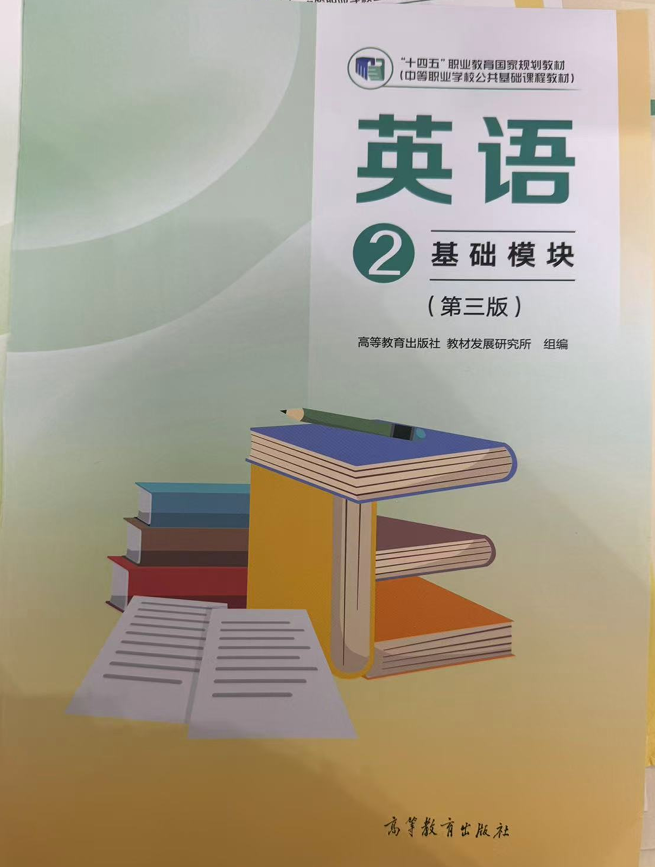
Unit 6 Craftsperson(A卷·基础巩固)《英语 基础模块2》(高教版第三版)单元过关卷(原卷版+解析版)
2026-04-16
|
2份
|
31页
|
83人阅读
|
0人下载
内容正文:
编写说明:本套试卷紧扣《英语 基础模块2》(高教版第三版)教材,以教材单元为基准精准覆盖核心考点。
每个单元设置AB卷,A卷为基础巩固卷,侧重基础考点训练,帮助学生扎实掌握知识要点;B卷为能力提升卷,注重知识整合与全面检测,引导学生构建知识网络。全书设计4份综合测试卷,模拟实战情境,聚焦解题能力突破,全面提升应试能力与知识应用水平。
《英语 基础模块2》(高教版第三版)《单元过关卷》
Unit 6 Craftsmanship
A卷·基础巩固
考试时间:90分钟 满分:100分
班级 姓名 学号 成绩
Part Ⅰ Language in Use (1.5*20=30 points)
Section A
Please match the picture with the relevant places.请将图片与相应的地点进行匹配。
____1____
____2____
____3____
____4____
____5____
A.the Great Wall
B.Statue of Liberty
C. the West Lake
D.Eiffel Tower
E. Mount Fuji
【答案】1.E 2.C 3.A 4.B 5.D
【解析】1.考查专有名词。图片中是日本富士山;E. Mount Fuji日本富士山。E项单词与图片匹配。故选E。
2.考查专有名词。图片中是中国西湖的三潭映月;C. the West Lake西湖。C项单词与图片匹配。故选C。
3.考查专有名词。图片中是中国的长城;A. the Great Wall长城。A项单词与图片匹配。故选A。
4.考查专有名词。图片中是美国的自由女神像;B. Statue of Liberty自由女神像。B项单词与图片匹配。故选B。
5.考查专有名词。图片中是法国的埃菲尔铁塔;D. Eiffel Tower埃菲尔铁塔。D项单词与图片匹配。故选D。
Section B
Please match Picture A, B or C with the related activities. 请将图片A,B,C与相应的活动相匹配。
6. make handcrafts________
7. learn skills________
8. work carefully________
9. make traditional items________
10. use tools________
【答案】6.A 7.B 8.C 9.C 10.A
Section C
Please choose the proper answer to each question. 请选择合适的应答。
11.—How was the movie last night?
—________. I almost fell asleep.
A.It was boring B.The same to you C.My pleasure D.Much better
【答案】A
【解析】略
12.—Jack used to be noisy, but he looks quiet now.
—________. He has changed a lot after his mother's death in an accident.
A.I'm afraid not B.I agree with you C.People sure change D.I'm sure
【答案】B
【详解】考查情景交际。句意为"杰克过去是一个外向的男孩,但是现在变得很安静。""我同意你说的,他的妈妈在一场事故中死亡后,他变了很多。"由句意知我同意你的说法,故选B。
13.—______?
—I will apply for a position as an assistant.
A.Where do you live B.What kind of education have you got
C.What experience do you have D.What kind of job will you apply for
【答案】D
【详解】考查情景交际。句意:—你打算申请什么样的工作?—我想申请助理的职位。A. Where do you live你住在哪里;B. What kind of education have you got你接受过什么样的教育;C. What experience do you have你有什么样的经验;D. What kind of job will you apply for你打算申请什么样的工作。根据“I will apply for a position as an assistant.”可知,此处在询问“你打算申请什么样的工作”。故选 D。
14.—I have tried very hard to find a solution to the problem, but in vain (徒劳).
—Why not turn to Frank for help? You see, ________.
A.great minds think alike
B.two heads are better than one
C.a bird in the hand is worth two in the bush
D.it’s better to think twice before doing something
【答案】B
【详解】考查情景交际。句意:—我已经非常努力地寻找这个问题的解决方法,但是徒劳无功。 —为什么不向Frank求助呢?你看,三个臭皮匠顶个诸葛亮。A. great minds think alike英雄所见略同;B. two heads are better than one三个臭皮匠顶个诸葛亮;C. a bird in the hand is worth two in the bush双鸟在林不如一鸟在手;D. it’s better to think twice before doing something三思而后行。根据“I have tried very hard to find a solution to the problem, but in vain.”以及答语“Why not turn to Frank for help?”可知,两个人一起想办法可能会更好。B选项“三个臭皮匠顶个诸葛亮”,符合语境。故选B。
15.— Can I get you something to drink?
— No, thanks; ______.
A.I’m good B.Sure thing C.I appreciate it D.That’s okay
【答案】A
【详解】考查情景交际。句意:—我能给你拿点喝的吗? —不用了,谢谢。我很好。A. I’m good我很好(在别人提出建议或提供帮助时使用,作为一种委婉的拒绝方式);B. Sure thing当然可以;C. I appreciate it我很感激;D. That’s okay没关系。根据答语“No, thanks”可知,此处是拒绝别人提供的东西(如饮品、食物等),“我不需要,我挺好的”,是一种常见的委婉拒绝并表示自身状态的回答。故选A。
Section D
Please complete the dialogue with the given sentences. 请选择符合对话情景的句子,使对话完整,有两个选项是多余的。
A: Do you know May 10th is China Brand Day?
B: ____16____ What’s the Day for?
A: ____17____ “Made in China” used to remind people of cheap and low-quality products.
B: How about now?
A: It has changed now. ____18____
B: I see. Have you ever heard of sports brands like Li-Ning?
A: Certainly. ____19____
B: What do you think of them?
A: They are not that expensive. ____20____
B: Wow, I can’t wait to have a try. What do you think Chinese brands will be like in 10 years?
A: I think they will do better in showing Chinese culture.
B: I can’t agree more.
A.Also, young people don’t like them.
B.For showing Chinese brands to the world.
C.And they are really nice and of high quality.
D.I often buy some shoes of that brand.
E.Sorry, I’ve never heard of it.
F.People still don’t like Chinese brands.
G.More Chinese brands are accepted around the world.
【答案】16.E 17.B 18.G 19.D 20.C
【导语】本文两个人谈论中国品牌日和发展中国品牌的必要性的对话。
16.根据“Do you know May 10th is China Brand Day? (你知道5月10日是中国品牌日吗?)”和“What’s the Day for? (这个节日是为了什么?)”可知,此处应是说明自己不知道中国品牌日,选项E“对不起,我从来没听说过。”符合语境。故选E。
17.根据“What’s the Day for? (这个节日是为了什么?)”可知,此处应是说明中国品牌日的目的,选项B“向世界展示中国品牌。”符合语境。故选B。
18.根据“‘Made in China’ used to remind people of cheap and low-quality products. (‘中国制造’过去常常让人想起廉价劣质的产品。)”和“It has changed now. (现在已经变了。)”可知,此处应是说明现在“中国制造”的产品被世界所接受,选项G“越来越多的中国品牌被世界所接受。”符合语境。故选G。
19.根据“Have you ever heard of sports brands like Li-Ning? (你听说过像李宁这样的运动品牌吗?)”和“Certainly. (当然。)”以及“What do you think of them? (你觉得它们怎么样?)”可知,此处应是提到了李宁品牌的产品,选项D“我经常买一些那个牌子的鞋。”符合语境。故选D。
20.根据“What do you think of them? (你觉得它们怎么样?)”和“They are not that expensive. (它们没那么贵。)”可知,此处应是对李宁品牌的鞋子进行评价,表示价格不贵,且质量很好,选项C“它们真的很好看,且质量也很好。”符合语境。故选C。
Part Ⅱ Reading Comprehension (2*40=40 points)
Passage 1
Please read the following information and choose the right answer to each question. 请阅读以下信息,选择正确的答案。
Are you interested in Chinese traditional arts? Do you want to learn how to make them by hand? If so, come and join our clubs this weekend in our school.
Sky Lantern Club
Introduction: Sky lanterns are made of bamboo and covered with paper. They were first used to ask for help when people were in trouble. They are used to show luck and good wishes. Time: Saturday 8: 30 a. m.—10: 30 a. m.
Place: Art Building 2 Room 501
Paper Cutting Club
Introduction: Paper cutting turns a piece of paper into a beautiful piece of art. Pictures about flowers, animals and so on are put on windows as symbol of good wishes and good luck. Time: Saturday 9: 00 a. —11: 00 a. m.
Place: Art Building 2 Room 502
Chinese Knot Club
Introduction: Chinese knots are usually made of red and yellow ropes. They are used to express good wishes, including happiness and so on. Time: Sunday 2: 30 p. m.—4: 30 p. m.
Place: Art Building 2 Room 503
Chinese Kites Club
Introduction: In China, there’s a long history to fly a kite in the spring. As a folk art, the Chinese kite is usually made of painted paper and bamboo. Time: Sunday 4: 30 p. m. —5: 30 p. m
Place: Art Building 2 Room 504
21.Sky lanterns were first made to _______
A.show happiness B.ask for help C.put on windows D.express good wishes
22.You must prepare red and yellow ropes enough before making _______
A.sky lanterns B.paper cutting C.Chinese knots D.Chinese kites
23.If you want to learn paper cutting, you can go to ________.
A.Room 501 B.Room 502 C.Room 603 D.Room 604
24.Which one can be made like a bird with paper and bamboo?
A.Sky lanterns. B.Paper cutting. C.Chinese knots. D.Chinese kites.
25.This passage is probably posted ________
A.on the school notice board B.on a city bus
C.in a book about tradition culture D.on the website of sports club
【答案】21.B 22.C 23.B 24.D 25.A
【导语】本文是一篇应用文。主要介绍了学校周末即将举办的几个中国传统手工艺俱乐部活动。
21.细节理解题。根据Sky Lantern Club部分的“Sky lanterns are made of bamboo and covered with paper. They were first used to ask for help when people were in trouble. They are used to show luck and good wishes. (天灯是用竹子做的,上面盖着纸。它们最初是用来在人们遇到麻烦时寻求帮助的。它们被用来表示好运和良好的祝愿。)”可知,天灯最初被制作是用来寻求帮助的。故选B。
22.细节理解题。根据Chinese Knot Club部分的“Chinese knots are usually made of red and yellow ropes. (中国结通常是用红色和黄色的绳子做成的。)”可知,制作中国结前必须准备足够的红、黄绳。故选C。
23.细节理解题。根据Paper Cutting Club部分的“Place: Art Building 2 Room 502 (地点:2号艺术大楼502室)”可知,你可以在2号艺术楼502室学习剪纸。故选B。
24.细节理解题。根据Chinese Kites Club部分的“As a folk art, the Chinese kite is usually made of painted paper and bamboo. (作为一种民间艺术,中国风筝通常由彩纸和竹子制成。)”可知,中国风筝可以用纸和竹子做成鸟的样子。故选D。
25.推理判断题。根据文章第一段的“come and join our clubs this weekend in our school. (这个周末加入我们学校的俱乐部吧。)”可知,这篇文章主要讲了如果你对中国传统艺术感兴趣、想要学习手工制作,可以加入学校的俱乐部,并介绍了制作天灯制作俱乐部、剪纸俱乐部、中国结俱乐部,故这篇文章可能属于一个学校布告,最可能出现在学校公告栏。故选A。
Passage 2
Please read the following passage and choose the right answer to each question. 请阅读下文,选择正确的答案。
Do you know where the colors of your clothes come from? The answer is dye (染料). The clothes we wear these days are mainly dyed by machine. But in the past, people did this by hand.
Tie-dye (扎染) is an old way of dyeing in China. It is a kind of art with a history of more than 1,000 years. The dyes often come from plants. People use the natural plants to make the colors. They put the clothes in the colors and take them out after some time. Then they put the clothes in the sun. After that, the clothes become beautiful.
Nowadays tie-dye is very popular even among many young people. They like to wear tie-dye clothes. And many foreign friends like to buy tie-dye clothes as souvenirs. In 2006, the tie-dye skills were added to China’s national intangible cultural heritage (非物质文化遗产) list.
Anning in Yunnan is well-known for tie-dye. Yang Chen, 52, is the inheritor (继承人) of tie-dye. He learned the skills from his mother in the 1980s. And he has passed it down to his daughter. He thought people should try their best to make tie-dye skills better. Yang Chen has learned all the old skills of tie-dye. At the same time, he also tries to make some creative designs. Yang likes telling people about the history of tie-dye in Chinese culture. And he thinks that the old skills are very important. “The old skills are the roots of our culture,” he says. So now he teaches tie-dye skills in schools and other places. He wants more young people to learn about the old skills, and he also hopes that one day tie-dye will be part of fashion everywhere. He thinks it’s important to keep this traditional Chinese art alive. Some might worry that tie-dye will be replaced by machinery dyeing. But Yang is confident. “Machines can’t do what we do,” he says. “They can’t replace our creative hands.”
26.How does the writer start the text?
A.By giving a fact. B.By telling a story.
C.By giving an example. D.By asking a question.
27.What are the dyes for tie-dye made from?
A.Silk . B.Animals. C.Plants. D.Sunshine.
28.Who is Yang Chen?
A.A famous fashion designer. B.An inventor of tie-dye skills.
C.The inheritor of tie-dye skills. D.An expert in machinery dyeing.
29.Why does Yang Chen teach tie-dye skills in schools and other places?
A.To make money from teaching. B.To keep the traditional art alive.
C.To compete with machinery dyeing. D.To show off his creative designs.
30.What is the main idea of the text?
A.The development plan of tie-dye in the future.
B.The history and popularity of tie-dye in China.
C.The introduction of traditional dyeing methods.
D.The importance of learning traditional art forms.
【答案】26.D 27.C 28.C 29.B 30.B
【导语】本文是一篇说明文。主要介绍中国传统扎染工艺的历史、现状与传承。
26.根据第1段中的“Do you know where the colors of your clothes come from?”可知,作者以设问句开篇,引出“染料”这一话题,进而过渡到对扎染的介绍。
27.根据第2段中的“The dyes often come from plants.”可知,扎染的染料通常取自天然植物。
28.根据第4段中的“Yang Chen, 52, is the inheritor (继承人) of tie-dye.”可知,杨晨是扎染技艺的传承人。
29.根据第4段中的“So now he teaches tie-dye skills in schools and other places. He wants more young people to learn about the old skills, and he also hopes that one day tie-dye will be part of fashion everywhere.”可知,他想让传统艺术延续下去。
30.文章主要介绍了扎染的历史、天然原料、当下流行度,以及传承人杨晨守护技艺的努力,核心是介绍中国扎染的历史与现状。
Passage 3
Please read the following passage and choose the right answer to each question. 请阅读下文,选择正确的答案。
Creating arts in the tea cup, namely, Dian Cha (点茶), is gaining its popularity in modern China. In 2019, Dian Cha was listed as an intangible cultural heritage (非物质文化遗产) of Jiangsu Province.
Dian Cha was started in the Song Dynasty when tea had become a necessity for almost everyone. The process of Dian Cha begins with hot water being poured over fine powdered tea, so as to create a paste. Then more hot water is slowly added as the tea is constantly whisked (搅动) with a bamboo stick. It is believed that this method later spread to other parts of East Asia, including Japan, where similarities can be seen in the way matcha is prepared today. Usually, the whole process has to be completed within 10 minutes.
Over the past six years, Zhao Shinan, a 21-year-old university student, has created nearly 150 patterns in cups with tea and spoons. Zhao is a crazy fan of the culture and art in the Song Dynasty, “My grandfather loves traditional culture and I have been learning Dian Cha since childhood under his influence,” Zhao says. He intended to bring the old tradition back to modern life and have more people appreciate its charm.
So far, more than 100 people have knocked on Zhao Shinan’s door to learn the technique. “They are of different ages and jobs, but all of them are interested in tea,” Zhao says.
31.When was Dian Cha started?
A.The Tang Dynasty. B.The Song Dynasty.
C.The Ming Dynasty. D.The Qing Dynasty.
32.What ingredients (原料) are needed to make Dian Cha? Hot water and ________.
A.matcha B.a paste C.powdered tea D.a bamboo stick
33.How many patterns in cups with tea and spoons has been created by Zhao Shinan?
A.150. B.Only 150. C.More than 150. D.About 150.
34.In the last paragraph, the author tries to prove that ________.
A.Zhao Shinan’s unique tea pattern technique has a wide appeal across various age and professions
B.Zhao Shinan is an excellent university student
C.Zhao Shinan is a crazy fan of modern culture
D.traditional culture is more important than modern culture
35.On which section of a newspaper can we find the passage?
A.Science. B.Society. C.Sports. D.Culture.
【答案】31.B 32.C 33.D 34.A 35.D
【导语】本文是一篇记叙文。主要介绍了点茶艺术的历史、操作过程和年轻人的传承。
31.细节理解题。根据第二段“Dian Cha was started in the Song Dynasty when tea had become a necessity for almost everyone. (点茶起源于宋代,当时茶几乎已经成为每个人的必需品。)”可知,点茶起源于宋代。故选B。
32.细节理解题。根据第二段“The process of Dian Cha begins with hot water being poured over fine powdered tea, so as to create a paste. (点茶的过程始于将热水倒入细腻的茶粉中,形成糊状物。)”可知,点茶的原料是热水和茶粉。故选C。
33.细节理解题。根据第三段“Over the past six years, Zhao Shinan, a 21-year-old university student, has created nearly 150 patterns in cups with tea and spoons. (在过去的六年里,21岁的大学生赵世南用茶和茶匙在茶杯中创作了近150种图案。)”可知,赵世南创作了大约150种图案。故选D。
34.细节理解题。根据第四段“So far, more than 100 people have knocked on Zhao Shinan’s door to learn the technique.“They are of different ages and jobs, but all of them are interested in tea,” Zhao says. (到目前为止,已有100多人敲开赵世南的门,向他学习点茶技艺。赵世南说:“他们年龄不同,职业各异,但都对茶感兴趣。”)”可知,赵世南独特的茶艺图案技艺吸引了不同年龄和职业的广泛人群。故选A。
35.推理判断题。根据第一段“Creating arts in the tea cup, namely, Dian Cha (点茶), is gaining its popularity in modern China. In 2019, Dian Cha was listed as an intangible cultural heritage (非物质文化遗产) of Jiangsu Province. (在茶杯中创作艺术,即点茶,正在现代中国逐渐流行起来。2019年,点茶被列为江苏省的非物质文化遗产。)”可知,本文主要介绍了点茶艺术的历史、操作过程和年轻人的传承,与文化有关,应是刊登在报纸的文化版面。故选D。
Passage 4
Please read the following passage and choose the right answer to each question. 请阅读下文,选择正确的答案。
In ancient China, there were “four treasures of the study”—the writing brush, ink, paper, and the ink stone (砚台). The ink stone was already very popular in the Han Dynasty. The Ming and Qing dynasties saw the appearance of the Four Famous Ink Stones—Duan Ink Stone, She Ink Stone, Tao Ink Stone and Chengni Ink Stone. Among all the ink stones, the Chengni ink stone was one of the most famous and was widely loved.
The Chengni ink stone first appeared during the Western Han Dynasty, but the skills of making it were lost during the late Ming Dynasty and early Qing Dynasty. Thankfully, today, the traditional skills have been revived (恢复) with the help of Lin Yongmao and his son Lin Tao.
In 1984, Lin Yongmao began working at the museum in Xinjiang, Shanxi Province. There, he read some books about the Xinjiang Chengni ink stone, and then decided to revive the lost skills.
It was easier said than done. It took the father and son two years to find proper materials to produce the Chengni ink stone. That was just the first step. After failing many times, they finally succeeded in making two Chengni ink stones in 1991. Three years later, their Chengni ink stones won a gold prize at an expo (博览会) on China’s famous ink stones. But the father and son did not stop there. While improving the skills of making the Chengni ink stone, they set up a workshop in the hope of passing the skills on to young people. They also worked with universities and colleges to make the Chengni ink stone more popular. At the same time, Lin Tao has created special Chengni ink stone products and brought them to competitions at home and abroad to expand the influence of the Chengni ink stone.
36.From Paragraph 1, we know________.
A.the ink stone has a long history. B.the story of the four treasures of the study.
C.the writing brush was widely loved. D.the inventions of different ink stones.
37.When did Lin Yongmao and Lin Tao win a gold prize?
A.In 1984. B.In 1986. C.In 1991. D.In 1994.
38.What’s the writer’s purpose for writing the text about the Chengni ink stone?
A.To tell us how to produce it. B.To explain how hard it is to revive it.
C.To encourage us to make it. D.To help us understand its history and revival.
39.What does the underlined word "expand" mean?
A.Clean B.Increase C.Avoid D.Accept
40.What can be a suitable title for the text?
A.Ink stones in ancient China B.Best ink stones makers in China
C.Bringing ancient skills back to life D.Introducing ink stones to the world
【答案】36.A 37.D 38.D 39.B 40.C
【导语】本文主要介绍了中国古代文房四宝之一的澄泥砚,讲述了它的历史渊源,以及林永茂父子恢复其传统制作技艺、传承推广澄泥砚文化的故事。
36.第一段说明:“The ink stone was already very popular in the Han Dynasty.”,结合后文对澄泥砚历史的介绍,可知砚台拥有悠久的历史,该段内容也印证了这一点。
37.文中明确说明:“they finally succeeded in making two Chengni ink stones in 1991. Three years later, their Chengni ink stones won a gold prize...”,1991年的三年后为1994年,因此林永茂父子在1994年获得金奖。
38.文章先介绍了澄泥砚的历史,再讲述了林永茂父子恢复其制作技艺、传承推广的过程,作者的写作目的是帮助读者了解澄泥砚的历史与复兴,对应选项D。
39.划线词expand所在句为“brought them to competitions at home and abroad to expand the influence of the Chengni ink stone”,结合“将产品带到国内外比赛”的行为,可知目的是扩大、提升澄泥砚的影响力,因此expand意为“increase(增加、扩大)”。
40.文章核心围绕“失传的澄泥砚制作技艺被林永茂父子恢复、传承”展开,“Bringing ancient skills back to life(让古老技艺重获新生)”精准概括了全文主旨,适合作为标题。
Part Ⅲ Language in Use (1.5*10=15 points)
Section A
Please read the passage and fills in the blanks with the given words. 请阅读下列文章,在空白处填上合适词汇的选项。
A.works B.masters C. skills D.detail E. traditions
Craftsmanship requires excellent ____41____. Skilled workers create amazing ____42____ with great care. They pay attention to every ____43____ to ensure quality. Passing down ____44____ from generation to generation is important. True ____45____ are respected for their dedication.
【答案】41.C 42.A 43.D 44.E 45.B
【导语】本文是一篇说明文,主要讲述了工匠精神所需的要素以及传统技艺传承等相关内容。
41.考查名词。句意:工匠精神需要出色的技能。根据“Craftsmanship requires (工匠精神需要)”可知,工匠精神需要出色的技能,所以空格处应填入名词作宾语,题目所给名词“skills (技能)”符合题意。故选C。
42.考查名词。句意:技术熟练的工人精心创造出令人惊叹的作品。根据“create (创造)”可知,创造出作品,所以空格处应填入名词作宾语,题目所给名词“works (作品)” 符合题意。故选A。
43.考查名词。句意:他们关注每一个细节以确保质量。根据“every”可知,空处为单数可数名词,题目所给单数名词“detail (细节)” 符合题意。故选D。
44.考查名词。句意:代代相传传统很重要。根据“pass down… from generation to generation”可知,此处表示传承传统,题目所给名词“traditions (传统)” 符合题意。故选E。
45.考查名词。句意:真正的大师因其奉献精神而受到尊重。根据“are respected for their dedication (因其奉献精神而受到尊重)”可知,空格处为名词作主语,表示人,题目所给名词“masters (大师)” 符合题意。故选B。
Section B
Please read the passage and fills in the blanks with the given words or phrases. 请阅读下列文章,在空白处填上合适词汇的选项。
A.invention B.important C. history
D.event E. influenced
Many great people have left their marks on ____46____. One of the most ____47____ figures is Thomas Edison. His most famous ____48____, the light bulb, changed the world. Another significant ____49____ was the first moon landing, which ____50____ science and technology development greatly. We can learn a lot from these people and events.
【答案】46.C 47.B 48.A 49.D 50.E
【导语】这是一篇说明文,主要介绍了对历史有重要影响的人物及事件。
46.考查名词。句意:很多伟人在历史上留下来他们的足迹。分析句子可知,空处和介词on一起作地点状语,空处需填表示地点的名词,题目所给名词“history (历史)”是抽象的表示地点的名词,符合题意。故选C。
47.考查形容词。句意:最重要的人物之一是托马斯・爱迪生。分析句子可知,此处是one of the+形容词最高级+可数名词复数的用法,意为“最……之一……”,空处应填形容词,题目所给唯一一个形容词“important (重要的)”符合题意。故选B。
48.考查名词。句意:他最著名的发明电灯改变了世界。根据空前形容词famous和空后可数名词单数the light bulb可知,空处应使用可数名词单数,题目所给名词“invention (发明)”符合题意。故选A。
49.考查名词。句意:另一个重要事件是第一次登月,这件事对科学技术的发展影响很大。根据空前形容词significant和空后谓语动词was可知,空处作主语,且应使用名词单数形式。题目所给名词“ event (事件)”符合题意。故选D。
50.考查动词。句意:另一个重要事件是第一次登月,这件事对科学技术的发展影响很大。分析句子可知,此处是which引导的非限制性定语从句部分,先行词是“the first moon landing”,空处作谓语,根据主句谓语动词was可知,句子时态为一般过去时,空处需填动词一般过去式,题目所给动词“influenced (影响)”符合题意。故选E。
Part Ⅳ Writing (15 points)
Section A
Please put the words or phrases in order to make sentences. 请连词成句。
51.by hand / are / these pottery works / usually / created (连词成句)
__________________________________________________
【答案】These pottery works are usually created by hand.
【详解】考查陈述句。句意:这些陶器作品通常是手工制作的。根据所给词可知,本句是陈述句。These pottery works:名词短语,作主语;usually:副词,作状语; are… created:动词,作谓语(此处为被动语态);by hand:介词短语,作方式状语。故答案为:These pottery works are usually created by hand.
52.the old temple, which, was built, stands, on the hill, in the 7th century (.) (连词成句)
__________________________________________________
【答案】The old temple which stands on the hill was built in the 7th century.
【详解】考查定语从句和被动语态。句意:山上的那座古庙建于7世纪。根据所给词及标点符号可知,本句是含which引导的定语从句的主从复合句。the old temple:名词短语作主语;which stands on the hill:which引导的定语从句,修饰先行词the old temple,时态为一般现在时;was built:一般过去时的被动语态,作谓语;in the 7th century:作时间状语。故答案为:The old temple which stands on the hill was built in the 7th century.
53.be, will, opening, the, When, ceremony, held (?) (连词成句)
_______________________________________________________________________________
【答案】When will the opening ceremony be held?
【详解】考查特殊疑问句。句意:开幕式什么时候举行?根据所给词及标点符号可知,本句是特殊疑问词When引导的特殊疑问句,will:助动词;the opening ceremony,名词短语,作主语;be held:与助动词“will”构成一般将来时的被动语态结构。故答案为:When will the opening ceremony be held?
54.meeting, next, will, sports, the, held, week, be(.) (连词成句)
____________________________________________________________
【答案】The sports meeting will be held next week.
【详解】考查一般将来时和被动语态。句意:运动会下周举行。根据根据提示词标点符号(.)可知,这是一个肯定的陈述句,时态是一般将来时。 the sports meeting:名词短语作主语, the位于句首大写首字母;主语the sports meeting与谓语动词held之间构成被动关系,要使用一般将来时的被动语态will be held,作谓语;next week:下周,作时间状语。故答案为:The sports meeting will be held next week.
55.drones, be, can, used, light shows, for (.)
________________________________
【答案】Drones can be used for light shows.
【详解】考查含情态动词的被动语态。句意:无人机可以用于灯光表演。根据所给词及标点符号可知,这是陈述句。drones:复数名词,作主语,位于句首首字母要大写;can be used for:含情态动词的被动语态,作谓语;light shows:名词短语,作宾语。故答案为:Drones can be used for light shows.
Section B
Please write a passage according to the information. 请根据提示写一篇短文。
假如你是李华,你的英国朋友Tom来信说对“中国红”很感兴趣。请你根据以下信息,给他回一封信,介绍“中国红”。词数60左右,开头和结尾已写好,不计入字数。
内容包括:
1. 地位:最受欢迎的颜色之一;
2. 寓意:代表幸福、好运(常在节日中使用);
3.形式:剪纸、灯笼、红包等。
Key words: Chinese Red, papercut(剪纸), lantern (灯笼),red packet (红包)
Dear Tom,
Knowing that you are interested in Chinese Red, I’m writing to tell you something about it.
____________________________________________________________________________________________________________________________________________________________________________________________________________________________________________________________________________________________________________
I truly hope my letter will help you understand Chinese Red better.
Yours,
Li Hua
【答案】例文:
Dear Tom,
Knowing that you are interested in Chinese Red, I’m writing to tell you something about it.
It’s one of Chinese people’s favorite colors, representing/standing for happiness and good luck/which stands for happiness and good luck. We often use it during festivals. We usually use red paper to make papercuts, such as Fu character and put them up on the doors and windows in the Spring Festivals. We can also see bright red lanterns. What’s more, red packets with money are given to children as gifts, which means best wishes.
I truly hope my letter will help you understand Chinese Red better.
Yours,
Li Hua
【导语】本篇书面表达属于应用文(书信),Li Hua向英国朋友Tom介绍“中国红”的地位、寓意及常见形式。
【详解】1. 词汇积累
代表:stand for → represent
最喜欢的:favorite → most-loved
此外:What’s more→ moreover
红包:red packet → red envelope
2. 句式拓展
简单句变复合句
原句:We often use it during festivals.
拓展句:We often use it during festivals when we get together with our families to celebrate.
【点睛】【高分句型1】It’s one of Chinese people’s favorite colors, representing happiness and good luck. (运用了现在分词作伴随状语)
【高分句型2】What’s more, red packets with money are given to children as gifts, which means best wishes. (运用了非限制性定语从句)
学科网(北京)股份有限公司 (
1
)原创精品资源学科网独家享有版权,侵权必究!
学科网(北京)股份有限公司
$
编写说明:本套试卷紧扣《英语 基础模块2》(高教版第三版)教材,以教材单元为基准精准覆盖核心考点。
每个单元设置AB卷,A卷为基础巩固卷,侧重基础考点训练,帮助学生扎实掌握知识要点;B卷为能力提升卷,注重知识整合与全面检测,引导学生构建知识网络。全书设计4份综合测试卷,模拟实战情境,聚焦解题能力突破,全面提升应试能力与知识应用水平。
《英语 基础模块2》(高教版第三版)《单元过关卷》
Unit 6 Craftsmanship
A卷·基础巩固
考试时间:90分钟 满分:100分
班级 姓名 学号 成绩
Part Ⅰ Language in Use (1.5*20=30 points)
Section A
Please match the picture with the relevant places.请将图片与相应的地点进行匹配。
____1____
____2____
____3____
____4____
____5____
A.the Great Wall
B.Statue of Liberty
C. the West Lake
D.Eiffel Tower
E. Mount Fuji
Section B
Please match Picture A, B or C with the related activities. 请将图片A,B,C与相应的活动相匹配。
6. make handcrafts________
7. learn skills________
8. work carefully________
9. make traditional items________
10. use tools________
Section C
Please choose the proper answer to each question. 请选择合适的应答。
11.—How was the movie last night?
—________. I almost fell asleep.
A.It was boring B.The same to you C.My pleasure D.Much better
12.—Jack used to be noisy, but he looks quiet now.
—________. He has changed a lot after his mother's death in an accident.
A.I'm afraid not B.I agree with you C.People sure change D.I'm sure
13.—______?
—I will apply for a position as an assistant.
A.Where do you live B.What kind of education have you got
C.What experience do you have D.What kind of job will you apply for
14.—I have tried very hard to find a solution to the problem, but in vain (徒劳).
—Why not turn to Frank for help? You see, ________.
A.great minds think alike
B.two heads are better than one
C.a bird in the hand is worth two in the bush
D.it’s better to think twice before doing something
15.— Can I get you something to drink?
— No, thanks; ______.
A.I’m good B.Sure thing C.I appreciate it D.That’s okay
Section D
Please complete the dialogue with the given sentences. 请选择符合对话情景的句子,使对话完整,有两个选项是多余的。
A: Do you know May 10th is China Brand Day?
B: ____16____ What’s the Day for?
A: ____17____ “Made in China” used to remind people of cheap and low-quality products.
B: How about now?
A: It has changed now. ____18____
B: I see. Have you ever heard of sports brands like Li-Ning?
A: Certainly. ____19____
B: What do you think of them?
A: They are not that expensive. ____20____
B: Wow, I can’t wait to have a try. What do you think Chinese brands will be like in 10 years?
A: I think they will do better in showing Chinese culture.
B: I can’t agree more.
A.Also, young people don’t like them.
B.For showing Chinese brands to the world.
C.And they are really nice and of high quality.
D.I often buy some shoes of that brand.
E.Sorry, I’ve never heard of it.
F.People still don’t like Chinese brands.
G.More Chinese brands are accepted around the world.
Part Ⅱ Reading Comprehension (2*40=40 points)
Passage 1
Please read the following information and choose the right answer to each question. 请阅读以下信息,选择正确的答案。
Are you interested in Chinese traditional arts? Do you want to learn how to make them by hand? If so, come and join our clubs this weekend in our school.
Sky Lantern Club
Introduction: Sky lanterns are made of bamboo and covered with paper. They were first used to ask for help when people were in trouble. They are used to show luck and good wishes. Time: Saturday 8: 30 a. m.—10: 30 a. m.
Place: Art Building 2 Room 501
Paper Cutting Club
Introduction: Paper cutting turns a piece of paper into a beautiful piece of art. Pictures about flowers, animals and so on are put on windows as symbol of good wishes and good luck. Time: Saturday 9: 00 a. —11: 00 a. m.
Place: Art Building 2 Room 502
Chinese Knot Club
Introduction: Chinese knots are usually made of red and yellow ropes. They are used to express good wishes, including happiness and so on. Time: Sunday 2: 30 p. m.—4: 30 p. m.
Place: Art Building 2 Room 503
Chinese Kites Club
Introduction: In China, there’s a long history to fly a kite in the spring. As a folk art, the Chinese kite is usually made of painted paper and bamboo. Time: Sunday 4: 30 p. m. —5: 30 p. m
Place: Art Building 2 Room 504
21.Sky lanterns were first made to _______
A.show happiness B.ask for help C.put on windows D.express good wishes
22.You must prepare red and yellow ropes enough before making _______
A.sky lanterns B.paper cutting C.Chinese knots D.Chinese kites
23.If you want to learn paper cutting, you can go to ________.
A.Room 501 B.Room 502 C.Room 603 D.Room 604
24.Which one can be made like a bird with paper and bamboo?
A.Sky lanterns. B.Paper cutting. C.Chinese knots. D.Chinese kites.
25.This passage is probably posted ________
A.on the school notice board B.on a city bus
C.in a book about tradition culture D.on the website of sports club
Passage 2
Please read the following passage and choose the right answer to each question. 请阅读下文,选择正确的答案。
Do you know where the colors of your clothes come from? The answer is dye (染料). The clothes we wear these days are mainly dyed by machine. But in the past, people did this by hand.
Tie-dye (扎染) is an old way of dyeing in China. It is a kind of art with a history of more than 1,000 years. The dyes often come from plants. People use the natural plants to make the colors. They put the clothes in the colors and take them out after some time. Then they put the clothes in the sun. After that, the clothes become beautiful.
Nowadays tie-dye is very popular even among many young people. They like to wear tie-dye clothes. And many foreign friends like to buy tie-dye clothes as souvenirs. In 2006, the tie-dye skills were added to China’s national intangible cultural heritage (非物质文化遗产) list.
Anning in Yunnan is well-known for tie-dye. Yang Chen, 52, is the inheritor (继承人) of tie-dye. He learned the skills from his mother in the 1980s. And he has passed it down to his daughter. He thought people should try their best to make tie-dye skills better. Yang Chen has learned all the old skills of tie-dye. At the same time, he also tries to make some creative designs. Yang likes telling people about the history of tie-dye in Chinese culture. And he thinks that the old skills are very important. “The old skills are the roots of our culture,” he says. So now he teaches tie-dye skills in schools and other places. He wants more young people to learn about the old skills, and he also hopes that one day tie-dye will be part of fashion everywhere. He thinks it’s important to keep this traditional Chinese art alive. Some might worry that tie-dye will be replaced by machinery dyeing. But Yang is confident. “Machines can’t do what we do,” he says. “They can’t replace our creative hands.”
26.How does the writer start the text?
A.By giving a fact. B.By telling a story.
C.By giving an example. D.By asking a question.
27.What are the dyes for tie-dye made from?
A.Silk . B.Animals. C.Plants. D.Sunshine.
28.Who is Yang Chen?
A.A famous fashion designer. B.An inventor of tie-dye skills.
C.The inheritor of tie-dye skills. D.An expert in machinery dyeing.
29.Why does Yang Chen teach tie-dye skills in schools and other places?
A.To make money from teaching. B.To keep the traditional art alive.
C.To compete with machinery dyeing. D.To show off his creative designs.
30.What is the main idea of the text?
A.The development plan of tie-dye in the future.
B.The history and popularity of tie-dye in China.
C.The introduction of traditional dyeing methods.
D.The importance of learning traditional art forms.
Passage 3
Please read the following passage and choose the right answer to each question. 请阅读下文,选择正确的答案。
Creating arts in the tea cup, namely, Dian Cha (点茶), is gaining its popularity in modern China. In 2019, Dian Cha was listed as an intangible cultural heritage (非物质文化遗产) of Jiangsu Province.
Dian Cha was started in the Song Dynasty when tea had become a necessity for almost everyone. The process of Dian Cha begins with hot water being poured over fine powdered tea, so as to create a paste. Then more hot water is slowly added as the tea is constantly whisked (搅动) with a bamboo stick. It is believed that this method later spread to other parts of East Asia, including Japan, where similarities can be seen in the way matcha is prepared today. Usually, the whole process has to be completed within 10 minutes.
Over the past six years, Zhao Shinan, a 21-year-old university student, has created nearly 150 patterns in cups with tea and spoons. Zhao is a crazy fan of the culture and art in the Song Dynasty, “My grandfather loves traditional culture and I have been learning Dian Cha since childhood under his influence,” Zhao says. He intended to bring the old tradition back to modern life and have more people appreciate its charm.
So far, more than 100 people have knocked on Zhao Shinan’s door to learn the technique. “They are of different ages and jobs, but all of them are interested in tea,” Zhao says.
31.When was Dian Cha started?
A.The Tang Dynasty. B.The Song Dynasty.
C.The Ming Dynasty. D.The Qing Dynasty.
32.What ingredients (原料) are needed to make Dian Cha? Hot water and ________.
A.matcha B.a paste C.powdered tea D.a bamboo stick
33.How many patterns in cups with tea and spoons has been created by Zhao Shinan?
A.150. B.Only 150. C.More than 150. D.About 150.
34.In the last paragraph, the author tries to prove that ________.
A.Zhao Shinan’s unique tea pattern technique has a wide appeal across various age and professions
B.Zhao Shinan is an excellent university student
C.Zhao Shinan is a crazy fan of modern culture
D.traditional culture is more important than modern culture
35.On which section of a newspaper can we find the passage?
A.Science. B.Society. C.Sports. D.Culture.
Passage 4
Please read the following passage and choose the right answer to each question. 请阅读下文,选择正确的答案。
In ancient China, there were “four treasures of the study”—the writing brush, ink, paper, and the ink stone (砚台). The ink stone was already very popular in the Han Dynasty. The Ming and Qing dynasties saw the appearance of the Four Famous Ink Stones—Duan Ink Stone, She Ink Stone, Tao Ink Stone and Chengni Ink Stone. Among all the ink stones, the Chengni ink stone was one of the most famous and was widely loved.
The Chengni ink stone first appeared during the Western Han Dynasty, but the skills of making it were lost during the late Ming Dynasty and early Qing Dynasty. Thankfully, today, the traditional skills have been revived (恢复) with the help of Lin Yongmao and his son Lin Tao.
In 1984, Lin Yongmao began working at the museum in Xinjiang, Shanxi Province. There, he read some books about the Xinjiang Chengni ink stone, and then decided to revive the lost skills.
It was easier said than done. It took the father and son two years to find proper materials to produce the Chengni ink stone. That was just the first step. After failing many times, they finally succeeded in making two Chengni ink stones in 1991. Three years later, their Chengni ink stones won a gold prize at an expo (博览会) on China’s famous ink stones. But the father and son did not stop there. While improving the skills of making the Chengni ink stone, they set up a workshop in the hope of passing the skills on to young people. They also worked with universities and colleges to make the Chengni ink stone more popular. At the same time, Lin Tao has created special Chengni ink stone products and brought them to competitions at home and abroad to expand the influence of the Chengni ink stone.
36.From Paragraph 1, we know________.
A.the ink stone has a long history. B.the story of the four treasures of the study.
C.the writing brush was widely loved. D.the inventions of different ink stones.
37.When did Lin Yongmao and Lin Tao win a gold prize?
A.In 1984. B.In 1986. C.In 1991. D.In 1994.
38.What’s the writer’s purpose for writing the text about the Chengni ink stone?
A.To tell us how to produce it. B.To explain how hard it is to revive it.
C.To encourage us to make it. D.To help us understand its history and revival.
39.What does the underlined word "expand" mean?
A.Clean B.Increase C.Avoid D.Accept
40.What can be a suitable title for the text?
A.Ink stones in ancient China B.Best ink stones makers in China
C.Bringing ancient skills back to life D.Introducing ink stones to the world
Part Ⅲ Language in Use (1.5*10=15 points)
Section A
Please read the passage and fills in the blanks with the given words. 请阅读下列文章,在空白处填上合适词汇的选项。
A.works B.masters C. skills D.detail E. traditions
Craftsmanship requires excellent ____41____. Skilled workers create amazing ____42____ with great care. They pay attention to every ____43____ to ensure quality. Passing down ____44____ from generation to generation is important. True ____45____ are respected for their dedication.
Section B
Please read the passage and fills in the blanks with the given words or phrases. 请阅读下列文章,在空白处填上合适词汇的选项。
A.invention B.important C. history
D.event E. influenced
Many great people have left their marks on ____46____. One of the most ____47____ figures is Thomas Edison. His most famous ____48____, the light bulb, changed the world. Another significant ____49____ was the first moon landing, which ____50____ science and technology development greatly. We can learn a lot from these people and events.
Part Ⅳ Writing (15 points)
Section A
Please put the words or phrases in order to make sentences. 请连词成句。
51.by hand / are / these pottery works / usually / created (连词成句)
__________________________________________________
52.the old temple, which, was built, stands, on the hill, in the 7th century (.) (连词成句)
__________________________________________________
53.be, will, opening, the, When, ceremony, held (?) (连词成句)
_______________________________________________________________________________
54.meeting, next, will, sports, the, held, week, be(.) (连词成句)
____________________________________________________________
55.drones, be, can, used, light shows, for (.)
________________________________
Section B
Please write a passage according to the information. 请根据提示写一篇短文。
假如你是李华,你的英国朋友Tom来信说对“中国红”很感兴趣。请你根据以下信息,给他回一封信,介绍“中国红”。词数60左右,开头和结尾已写好,不计入字数。
内容包括:
1. 地位:最受欢迎的颜色之一;
2. 寓意:代表幸福、好运(常在节日中使用);
3.形式:剪纸、灯笼、红包等。
Key words: Chinese Red, papercut(剪纸), lantern (灯笼),red packet (红包)
Dear Tom,
Knowing that you are interested in Chinese Red, I’m writing to tell you something about it.
____________________________________________________________________________________________________________________________________________________________________________________________________________________________________________________________________________________________________________
I truly hope my letter will help you understand Chinese Red better.
Yours,
Li Hua
学科网(北京)股份有限公司 (
1
)原创精品资源学科网独家享有版权,侵权必究!
学科网(北京)股份有限公司
$
资源预览图

1

2

3
由于学科网是一个信息分享及获取的平台,不确保部分用户上传资料的 来源及知识产权归属。如您发现相关资料侵犯您的合法权益,请联系学科网,我们核实后将及时进行处理。