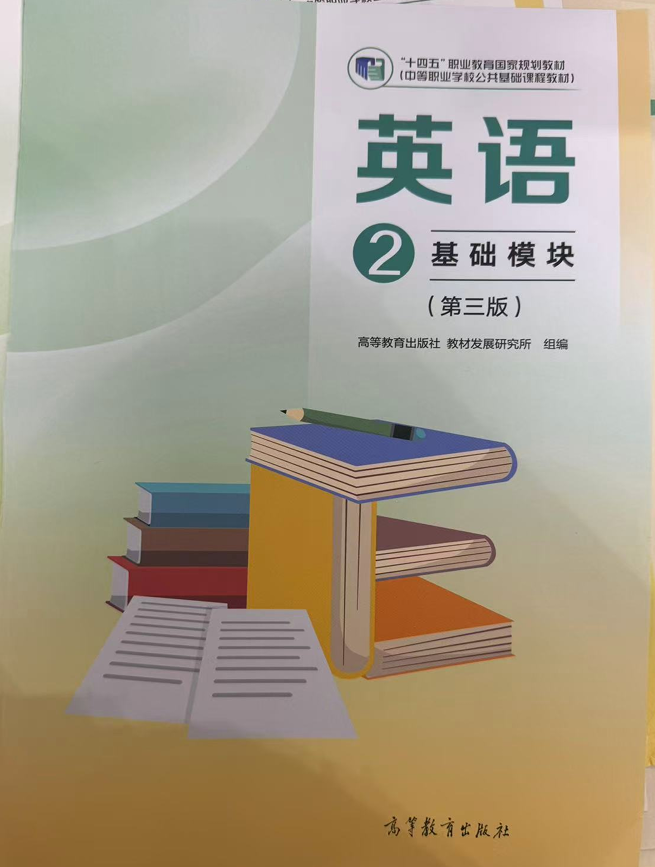
3.2 Internship(Reading and Writing 1)-《英语 基础模块2》(高教版第三版)《一课一练》(原卷版+解析版)
2026-04-16
|
2份
|
14页
|
73人阅读
|
1人下载
内容正文:
编写说明:基于中职学生英语知识不牢固、学习内驱力不够的学情特点,为了更好地提高学生的学习效率,辅助教师们抓好课前、课中、课后三个教学环节,本专辑深度解读最新的《中等职业学校英语课程标准》,匠心打造了契合江苏职教高考命题特色的【江苏专用】《英语 基础模块2》(高教版第三版)《一课一练》专辑,专辑共40练。
本卷为《英语 基础模块2》(高教版第三版)Unit 3 Internship(Reading and Writing 1)的课前预习和课堂检测。
《英语 基础模块2》(高教版第三版)
Unit 3 Internship
一课一练(12) Reading and Writing 1
【课前预习】
一、核心词汇检测
核心词汇:
report n. 报告
career n. 职业
arrangement n. 安排
challenge n. 挑战
intern n. 实习生
procedure n. 步骤
section n. 部分
deal n. 交易
receive v. 接到;受到
performance n. 表现
sign v. 签署
核心短语:
dream of doing 梦想做
be sure to do sth. 一定会做某事 / 必定会发生
turn A into B 把 A 变成 B
keep track of 记录
job description 职位描述
make sure 确保
get sb. prepared for… 让某人为…… 做好准备
【课堂检测】
一、词汇单选
1.I have to ______ the three-party agreement before the internship.
A. design
B. sign
C. draw
D. paint
【答案】B
【解析】sign 意为 “签署”,常与协议、文件搭配;design(设计)、draw(画)、paint(粉刷)均不符合。
2.As an ______, you need to learn basic skills at work.
A. intern
B. author
C. pilot
D. sailor
【答案】A
【解析】intern 意为 “实习生”,符合实习场景;author(作者)、pilot(飞行员)、sailor(水手)与语境无关。
3.Writing a weekly training ______ is part of your task.
A. novel
B. poster
C. report
D. menu
【答案】C
【解析】report 意为 “报告”,training report 为固定搭配;novel(小说)、poster(海报)、menu(菜单)不适用。
4.Learning to work with others is a big ______ for new trainees.
A. prize
B. challenge
C. gift
D. toy
【答案】B
【解析】challenge 意为 “挑战”,符合职场新人语境;prize(奖品)、gift(礼物)、toy(玩具)均不相关。
5.He chose teaching as his lifelong ______.
A. career
B. snack
C. game
D. song
【答案】A
【解析】career 意为 “职业”,lifelong career 表示 “终身职业”;snack(小吃)、game(游戏)、song(歌曲)不符合。
6.Please follow the ______ when you use the machine.
A. excuse
B. procedure
C. mistake
D. result
【答案】B
【解析】procedure 意为 “步骤”,指操作流程;excuse(借口)、mistake(错误)、result(结果)不搭配。
7.The hotel ______ is in charge of welcoming guests.
A. section
B. price
C. weight
D. height
【答案】A
【解析】section 意为 “部门 / 区域”,hotel section 表示酒店岗位区域;price(价格)、weight(重量)、height(高度)无关。
8.Did you ______ the email from the internship host?
A. refuse
B. receive
C. forget
D. lose
【答案】B
【解析】receive 意为 “接到 / 收到”,常与信息、邮件搭配;refuse(拒绝)、forget(忘记)、lose(丢失)不符合。
9.Your ______ at work will be recorded by the trainer.
A. temperature
B. performance
C. height
D. width
【答案】B
【解析】performance 意为 “表现”,work performance 为常用搭配;temperature(温度)、height(高度)、width(宽度)不适用。
10.The ______ of the activity is well done.
A. arrangement
B. lock
C. key
D. light
【答案】A
【解析】arrangement 意为 “安排”,指活动与实习事务;lock(锁)、key(钥匙)、light(灯)无关。
二、阅读理解
Thriving in Your First Year of Work: A Practical Guide
Transitioning (过渡) from campus to the workplace is a significant step, bringing new responsibilities and challenges. For most graduates, it’s the first time they are fully financially independent and dealing with a professional environment. Adapting successfully requires more than just technical skills. Here are four essential strategies to help you build a strong foundation for your career.
Set Clear Professional Goals
Begin by defining what you want to achieve in your role, both in the short and long term. Goals should be challenging yet realistic, pushing you to grow without causing burnout. Break larger goals into attainable tasks and create a timeline for completion. This structured approach turns abstract ambitions into a clear action plan, providing direction and a sense of accomplishment as you progress.
Develop Workplace Communication
Effective interaction is significant. You will cooperate with colleagues, report to managers, and possibly engage with clients. To build strong professional relationships, practice active listening and express your ideas clearly and respectfully. Pay attention to non-verbal cues (提示) and be open to feedback. Understanding others’ viewpoints promotes teamwork and shows emotional intelligence, which is highly valued in any organization.
Master Time and Task Management
The workload can be overwhelming. Prioritize your tasks based on urgency and importance. Use tools like digital calendars or planners to schedule your day, allocating time for deep work, meetings, and breaks. Avoid multitasking, as it often reduces efficiency. Instead, focus on completing one task well before moving to the next. Staying organized is key to meeting deadlines and maintaining a healthy work-life balance.
Manage Your Finances Wisely
Your first salary brings independence but also financial responsibilities. Start by creating a budget: track your income, essential expenses (rent, utilities, groceries), and discretionary spending (entertainment, dining out). Prioritize saving a portion of your income, even a small amount, to build an emergency fund. Additionally, explore basic investment options to grow your wealth over time. Financial stability reduces stress and provides greater freedom to pursue your goals.
By focusing on these areas, you can navigate your first year with confidence, laying the groundwork for a successful and fulfilling career.
11.Who is the intended audience of this guide?
A.University graduates entering the workforce.
B.Senior managers planning to hire new graduates.
C.High school students applying for part-time jobs.
D.Financial advisors assisting young professionals.
12.According to the guide, how should one deal with large professional goals?
A.Seek advice from experienced colleagues instantly.
B.Break them into smaller, manageable steps.
C.Adjust them frequently based on feedback.
D.Focus merely on urgent tasks first.
13.What does the guide emphasize about workplace communication?
A.The primary goal is to impress leaders with complex ideas.
B.It is mainly about promoting one’s own achievements.
C.Understanding and respecting others’ views is crucial.
D.Avoiding non-verbal communication is recommended.
14.What is the key to handling a heavy workload effectively?
A.Prioritizing tasks and avoiding distractions.
B.Multitasking to complete more tasks meanwhile.
C.Relying entirely on digital tools for scheduling.
D.Working longer hours to ensure all deadlines are met.
15.What is the first step recommended for financial management?
A.Investing immediately in high-risk opportunities.
B.Making a budget to keep track of finances.
C.Setting aside all discretionary income for savings.
D.Consulting a financial advisor for complex plans.
【答案】11.A 12.B 13.C 14.A 15.B
【导语】本文是一篇应用文。文章为初入职场的大学毕业生提供了一份实用指南,围绕设定职业目标、职场沟通、时间任务管理以及财务管理四个方面展开,助力其顺利度过职场第一年。
11.推理判断题。根据第一段中“For most graduates, it’s the first time they are fully financially independent and dealing with a professional environment. Adapting successfully requires more than just technical skills. Here are four essential strategies to help you build a strong foundation for your career.(对大多数毕业生而言,这是他们首次实现完全经济独立并置身专业环境。要成功适应职场,仅靠专业技能远远不够。以下是四项关键策略,助你筑牢职业生涯根基)”可知,这份指南的目标受众是初入职场的大学毕业生。故选A项。
12.细节理解题。根据第二段中“Goals should be challenging yet realistic, pushing you to grow without causing burnout. Break larger goals into attainable tasks and create a timeline for completion.(目标应该具有挑战性,但也要切合实际,既能推动你成长,又不会让你精疲力竭。把大目标分解成可完成的任务,并制定完成时间表)”可知,对于大的职业目标,应该将它们分解成更小、更易管理的步骤。故选B项。
13.细节理解题。根据第三段中“Understanding others’ viewpoints promotes teamwork and shows emotional intelligence, which is highly valued in any organization.(理解他人的观点可以促进团队合作,并展现出情商,这在任何组织中都是非常受重视的)”可知,职场沟通中,指南强调理解和尊重他人的观点至关重要。故选C项。
14.细节理解题。根据第四段中“The workload can be overwhelming. Prioritize your tasks based on urgency and importance. Use tools like digital calendars or planners to schedule your day, allocating time for deep work, meetings, and breaks. Avoid multitasking, as it often reduces efficiency.(工作量可能会让人难以承受。根据紧急性和重要性对任务进行优先级排序。使用数字日历或计划表等工具来安排你的一天,为深度工作、会议和休息分配时间。避免多任务处理,因为它通常会降低效率)”可知,有效处理繁重工作量的关键是优先安排任务并避免分心。故选A项。
15.细节理解题。根据第五段中“Your first salary brings independence but also financial responsibilities. Start by creating a budget: track your income, essential expenses (rent, utilities, groceries), and discretionary spending (entertainment, dining out).(你的第一份薪水带来了独立,但也带来了经济责任。首先制定一个预算:跟踪你的收入、基本开支(租金、水电费、杂货)和可自由支配的开支(娱乐、外出就餐))”可知,财务管理的第一步是制定预算以跟踪财务状况。故选B项。
原创精品资源学科网独家享有版权,侵权必究!
学科网(北京)股份有限公司
学科网(北京)股份有限公司
$
编写说明:基于中职学生英语知识不牢固、学习内驱力不够的学情特点,为了更好地提高学生的学习效率,辅助教师们抓好课前、课中、课后三个教学环节,本专辑深度解读最新的《中等职业学校英语课程标准》,匠心打造了契合江苏职教高考命题特色的【江苏专用】《英语 基础模块2》(高教版第三版)《一课一练》专辑,专辑共40练。
本卷为《英语 基础模块2》(高教版第三版)Unit 3 Internship(Reading and Writing 1)的课前预习和课堂检测。
《英语 基础模块2》(高教版第三版)
Unit 3 Internship
一课一练(12) Reading and Writing 1
【课前预习】
一、核心词汇检测
核心词汇:
report n. __________
career n. __________
arrangement n. __________
challenge n. __________
intern n. __________
procedure n. __________
section n. __________
deal n. __________
receive v. __________
performance n. __________
sign v. __________
核心短语:
dream of doing __________
be sure to do sth. __________
turn A into B __________
keep track of __________
job description __________
make sure __________
get sb. prepared for… __________
【课堂检测】
一、词汇单选
1.I have to ______ the three-party agreement before the internship.
A. design
B. sign
C. draw
D. paint
2.As an ______, you need to learn basic skills at work.
A. intern
B. author
C. pilot
D. sailor
3.Writing a weekly training ______ is part of your task.
A. novel
B. poster
C. report
D. menu
4.Learning to work with others is a big ______ for new trainees.
A. prize
B. challenge
C. gift
D. toy
5.He chose teaching as his lifelong ______.
A. career
B. snack
C. game
D. song
6.Please follow the ______ when you use the machine.
A. excuse
B. procedure
C. mistake
D. result
7.The hotel ______ is in charge of welcoming guests.
A. section
B. price
C. weight
D. height
8.Did you ______ the email from the internship host?
A. refuse
B. receive
C. forget
D. lose
9.Your ______ at work will be recorded by the trainer.
A. temperature
B. performance
C. height
D. width
10.The ______ of the activity is well done.
A. arrangement
B. lock
C. key
D. light
二、阅读理解
Thriving in Your First Year of Work: A Practical Guide
Transitioning (过渡) from campus to the workplace is a significant step, bringing new responsibilities and challenges. For most graduates, it’s the first time they are fully financially independent and dealing with a professional environment. Adapting successfully requires more than just technical skills. Here are four essential strategies to help you build a strong foundation for your career.
Set Clear Professional Goals
Begin by defining what you want to achieve in your role, both in the short and long term. Goals should be challenging yet realistic, pushing you to grow without causing burnout. Break larger goals into attainable tasks and create a timeline for completion. This structured approach turns abstract ambitions into a clear action plan, providing direction and a sense of accomplishment as you progress.
Develop Workplace Communication
Effective interaction is significant. You will cooperate with colleagues, report to managers, and possibly engage with clients. To build strong professional relationships, practice active listening and express your ideas clearly and respectfully. Pay attention to non-verbal cues (提示) and be open to feedback. Understanding others’ viewpoints promotes teamwork and shows emotional intelligence, which is highly valued in any organization.
Master Time and Task Management
The workload can be overwhelming. Prioritize your tasks based on urgency and importance. Use tools like digital calendars or planners to schedule your day, allocating time for deep work, meetings, and breaks. Avoid multitasking, as it often reduces efficiency. Instead, focus on completing one task well before moving to the next. Staying organized is key to meeting deadlines and maintaining a healthy work-life balance.
Manage Your Finances Wisely
Your first salary brings independence but also financial responsibilities. Start by creating a budget: track your income, essential expenses (rent, utilities, groceries), and discretionary spending (entertainment, dining out). Prioritize saving a portion of your income, even a small amount, to build an emergency fund. Additionally, explore basic investment options to grow your wealth over time. Financial stability reduces stress and provides greater freedom to pursue your goals.
By focusing on these areas, you can navigate your first year with confidence, laying the groundwork for a successful and fulfilling career.
11.Who is the intended audience of this guide?
A.University graduates entering the workforce.
B.Senior managers planning to hire new graduates.
C.High school students applying for part-time jobs.
D.Financial advisors assisting young professionals.
12.According to the guide, how should one deal with large professional goals?
A.Seek advice from experienced colleagues instantly.
B.Break them into smaller, manageable steps.
C.Adjust them frequently based on feedback.
D.Focus merely on urgent tasks first.
13.What does the guide emphasize about workplace communication?
A.The primary goal is to impress leaders with complex ideas.
B.It is mainly about promoting one’s own achievements.
C.Understanding and respecting others’ views is crucial.
D.Avoiding non-verbal communication is recommended.
14.What is the key to handling a heavy workload effectively?
A.Prioritizing tasks and avoiding distractions.
B.Multitasking to complete more tasks meanwhile.
C.Relying entirely on digital tools for scheduling.
D.Working longer hours to ensure all deadlines are met.
15.What is the first step recommended for financial management?
A.Investing immediately in high-risk opportunities.
B.Making a budget to keep track of finances.
C.Setting aside all discretionary income for savings.
D.Consulting a financial advisor for complex plans.
原创精品资源学科网独家享有版权,侵权必究!
学科网(北京)股份有限公司
学科网(北京)股份有限公司
$
资源预览图

1

2

3
由于学科网是一个信息分享及获取的平台,不确保部分用户上传资料的 来源及知识产权归属。如您发现相关资料侵犯您的合法权益,请联系学科网,我们核实后将及时进行处理。