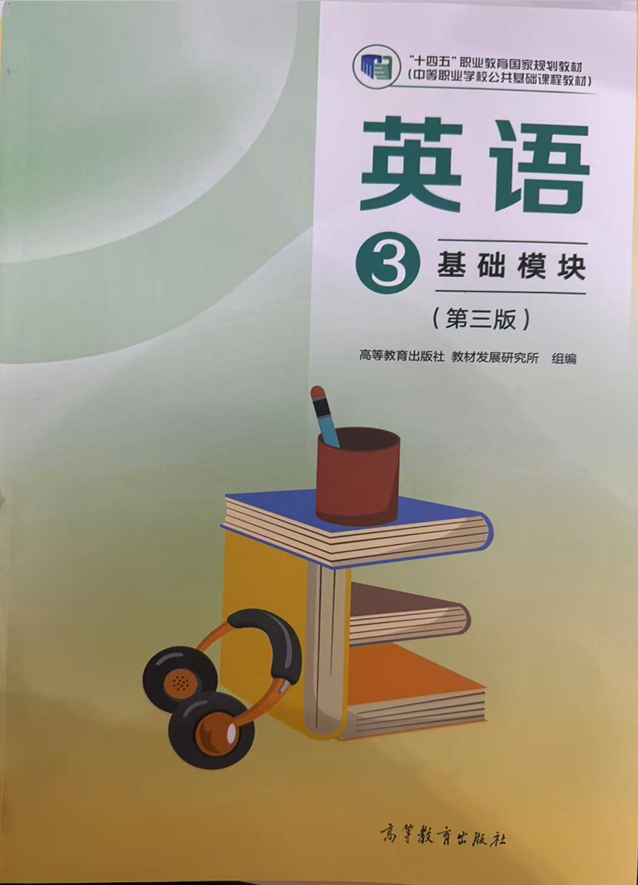
Unit 1 Festivals Around the World(A卷·基础巩固)《英语 基础模块3》(高教版第三版)单元过关卷(原卷版+解析版)
2026-04-15
|
2份
|
18页
|
120人阅读
|
1人下载
内容正文:
编写说明:本套试卷紧扣《英语 基础模块3》(高教版第三版)教材,以教材单元为基准精准覆盖核心考点。
每个单元设置AB卷,A卷为基础巩固卷,侧重基础考点训练,帮助学生扎实掌握知识要点;B卷为能力提升卷,注重知识整合与全面检测,引导学生构建知识网络。全书设计4份综合测试卷,模拟实战情境,聚焦解题能力突破,全面提升应试能力与知识应用水平。
《英语 基础模块3》(高教版第三版)《单元过关卷》
Unit 1 Festivals Around the World
(A卷·基础巩固)
考试时间:90分钟 满分:100分
班级 姓名 学号 成绩
一、单项选择(共15小题,每小题2分,共30分)
从每小题所给的四个选项中,选出一个可以填入空白处的最佳选项。
1.—What’s your favorite ________, Li Hua?
—The Mid-Autumn Festival. Because I enjoy eating moon cakes.
A.festival B.sport C.food D.subject
【答案】A
【详解】句意:——李华,你最喜欢的节日是什么?——中秋节。因为我喜欢吃月饼。
考查名词辨析。festival节日;sport运动;food食物;subject学科。根据答语“The Mid-Autumn Festival.”可知,询问的是最喜欢的节日,festival“节日”符合题意。故选A。
2.—My sister is crazy about collecting stamps. She has thousands of them!
—Wow, she must be a ________ stamp collector.
A.typical B.scary C.strict D.simple
【答案】A
【详解】句意:——我妹妹热衷于集邮。她有数千张邮票!——哇,她一定是个典型的集邮爱好者。
考查形容词辨析。typical典型的;scary吓人的;strict严格的;simple简单的。根据“She has thousands of them!”(她有数千张邮票!)可知,她对集邮非常热衷,是“典型的”集邮爱好者,typical符合语境。故选A。
3.—Smart apps like DeepSeek are very popular at present.
—Yes. It’s a ________ that technology is changing how we learn.
A.choice B.plan C.system D.sign
【答案】D
【详解】句意:——像DeepSeek这样的智能应用目前非常流行。——是的,这是一个迹象,表明技术正在改变我们的学习方式。
考查名词辨析。choice选择;plan计划;system系统;sign迹象、征兆。根据语境,前句提到智能应用流行,后句“技术正在改变学习方式”是对前文现象的总结或体现,因此这是一种“迹象”而非具体的选择、计划或系统。故选D。
4.—Mum’s birthday is coming. How do we ________ it?
—How about having a surprise party for her?
A.spell B.celebrate C.change D.stop
【答案】B
【详解】句意:——妈妈的生日快到了。我们怎么庆祝呢?——给她办个惊喜派对怎么样?
考查动词辨析。spell拼写;celebrate庆祝;change改变;stop停止。根据宾语“Mum’s birthday”以及答语“having a surprise party”可知,讨论的是如何“庆祝”生日。celebrate“庆祝”,符合此语境。故选B。
5.Planting trees helps ________ the soil in place and prevent erosion.
A.keep B.to keep C.keeping D.A and B
【答案】D
【详解】句意:植树有助于保持土壤稳定,防止侵蚀。
keep动词原形;to keep动词不定式;keeping动名词或现在分词。help后接动词不定式作宾语,to可省略也可保留,即 help (to) do sth。
6.I decided ________ a new hobby this term.
A.try B.to try C.trying D.tried
【答案】B
【详解】句意:我决定这学期尝试一个新的爱好。
固定搭配decide to do sth.意为“决定做某事”,空处需填动词不定式,应填to try。
7.—How can we protect trees?
—By ________ laws to stop illegal logging and planting more trees.
A.make B.making C.to make D.made
【答案】B
【详解】句意:——我们怎样才能保护树木?——通过制定法律来阻止非法砍伐并种植更多的树。
根据By可知,介词后接动词时需用动名词形式,表示通过某种方式。应填making。
8.People in New York enjoy ________ to the New Year together happily every year.
A.count down B.counting down C.to count down D.counted down
【答案】B
【详解】句意:纽约的人们每年都喜欢一起快乐地倒数迎接新年。
count down倒数,动词原形;counting down动名词/现在分词;to count down动词不定式;counted down过去式。enjoy doing sth.为固定搭配,意为“喜欢做某事”,enjoy后接动名词形式作宾语。
9.Don’t forget ________ the umbrella with you, Tom. It’s raining outside.
A.take B.taking C.to take D.took
【答案】C
【详解】句意:汤姆,别忘了带上雨伞。外面正在下雨。
根据“Don’t forget...the umbrella with you”可知,此处是“forget to do sth.”结构,表示“忘记去做某事”,事情还未做,所以应用动词不定式形式作宾语。应填to take。
10.The variety of accents made it difficult for us ________ each other.
A.understanding B.understood C.understand D.to understand
【答案】D
【详解】句意:口音的多样性让我们很难互相理解。
make it difficult for sb. to do sth.是固定结构,表示“让某人做某事很困难”,此处需要用不定式to understand作真正宾语,it是形式宾语。
11.—When did you start ________ to cook?
— Last Sunday, when I helped my mom make pizza for the family party.
A.learn B.to learn C.learned D.learns
【答案】B
【详解】句意:——你什么时候开始学做饭的?——上个周日。当我帮助我的妈妈为家庭聚会做披萨时。
learn“学习”,是动词,而start“开始”后接动词不定式或动名词作宾语。
12.He couldn’t afford ________ a new dictionary, so he borrowed one from the library.
A.to buying B.buying C.to buy D.bought
【答案】C
【详解】句意:他买不起一本新字典,所以他从图书馆借了一本。
buy“买”,是动词,而afford“支付得起”后需接动词不定式作宾语。
13.My brother refuses ________ me use his computer. What should I do?
A.let B.letting C.to let D.lets
【答案】C
【详解】句意:我哥哥拒绝让我用他的电脑。我该怎么办?
固定搭配refuse to do sth.意为“拒绝做某事”,可知空处应填动词不定式。
14.—Could you please come to my home for the Mid-Autumn Festival?
—________
A.You are good at it. B.Sorry, I am late for it.
C.Why do you think so? D.Thanks, I’d love to come.
【答案】D
【详解】句意:——你能来我家过中秋节吗?——谢谢,我很乐意来。
考查交际用语。You are good at it你很擅长这个;Sorry, I am late for it抱歉,我迟到了;Why do you think so你为什么这么认为;Thanks, I’d love to come谢谢,我很乐意来。根据“Could you please come...”的邀请语境,可知合适的回应是接受邀请,D项意为“谢谢,我很乐意来”,是接受邀请的常见表达,符合交际习惯。故选D。
15.—We’d like to start a new program for the festival. Will you join us?
—________
A.That’s all right. B.Thank you. C.Sure. I’d love to. D.You’re welcome.
【答案】C
【详解】句意:——我们想为节日启动一个新的节目。你愿意加入我们吗?——当然。我很乐意。
考查情景交际。That’s all right.没关系;Thank you.谢谢你;Sure. I’d love to.当然。我很乐意;You’re welcome.不用谢。根据“Will you join us?”可知,对方发出了邀请,可以给出肯定回答,“Sure. I’d love to.”符合对话语境。故选C。
第二节 语言应用(共5题,每小题2分,共10分)
根据图片所提供的信息,从三个选项中选出可以填入空白处的最佳选项。
16.What festival does the picture show?
A.Spring Festival B.Mid-Autumn Festival C.Dragon Boat Festival
【答案】B
【详解】考查细节理解。题意:这幅画展示的是什么节日?根据图中文字“HAPPY MID AUTUMN FESTIVAL (中秋节快乐)”可知,图片中有玉兔和月饼等中秋节的传统象征元素,展示的是中秋节的场景。故选B。
17.People can do the following activities during the Mid-Autumn Festival except ________.
A.enjoying the moon B.reuniting with family C.rowing a dragon boat
【答案】C
【详解】考查常识。句意:人们可以在中秋节做以下除了划龙舟之外的活动。根据图片和常识,得知中秋节活动有赏月、和家人团聚,划龙舟不是中秋节活动。故选C。
18.Lily is so happy because ________ Day is coming.
A.Children’s B.Christmas C.National
【答案】B
【详解】考查细节理解。句意:莉莉很高兴,因为圣诞节就要到了。根据“just another christmas really (其实也就是又一个圣诞节罢了)”可知,莉莉很高兴,因为圣诞节就要到了。故选B。
19.What is not usually done on that particular day?
A.Going trick or treating. B.Making pumpkin lanterns. C.Appreciating the moon.
【答案】C
【详解】考查推理判断。题意:在那个特殊的日子里,人们通常不做什么?根据“HAPPY HALLOWEEN (万圣节快乐)”可知,此处谈论的是万圣节,且根据文化常识可知,人们在万圣节会玩“不给糖就捣乱”或是制作南瓜灯,并不会去赏月。故选C。
20.Who is the card written for?
A.A father. B.A mother. C.A friend.
【答案】B
【详解】考查细节理解。句意:这张卡片是写给谁的?根据“Happy Mother’s Day (母亲节快乐)”可知,这张卡片是写给一位母亲的。故选B。
二、阅读理解(共4小题,每小题2.5分,共10分)
阅读下列短文,根据短文内容从每小题所给的四个选项中,选出一个最佳选项。
We call the Chinese New Year the Spring Festival. There is a name for each Chinese year. We may call it the year of the sheep, the year of the tiger or the year of the dog. And the year 2024 is the year of the Dragon.
Before New Year’s Day, people are busy shopping and cleaning their houses. On New Year’s Eve, there is a big family dinner. After dinner, all the family stay up late to welcome the New Year. On the first day of the New Year, people put on their new clothes and go to visit their friends and relatives. They say “Goodluck” and some other greetings to each other. People usually have a very good time during the festival.
21.How many Chinese festivals are talked about in this passage?
A.One. B.Two. C.Three. D.Four.
22.We can find every Chinese year is given ________ name.
A.an animal B.a plant C.a family D.a full
23.The year 2024 was the year of the ________.
A.Sheep B.Dragon C.Dog D.Monkey
24.How do Chinese people usually spend New Year’s Eve?
A.They put on new clothes and go to the park.
B.They visit their friends and relatives.
C.They are busy shopping and cleaning their houses.
D.They have a big dinner and stay up late to welcome the New Year.
【答案】21.A 22.A 23.B 24.D
【导语】本文是一篇说明文。文章主要讲述了中国春节的命名方式、习俗以及人们如何庆祝春节。
21.细节理解题。根据文章内容可知,整篇文章只讨论了中国的一个节日——春节(Chinese New Year /the Spring Festival),没有涉及其他节日。故选A。
22.细节理解题。根据第一段“There is a name for each Chinese year. We may call it the year of the sheep, the year of the tiger or the year of the dog. (中国的每一年都有一个名字。我们可以称它为羊年、虎年或狗年。)”可知,每个中国年都有一个动物的名字。故选A。
23.细节理解题。根据第一段“And the year 2024 is the year of the Dragon. (而2024年是龙年。)”可知,2024年是龙年。故选B。
24.细节理解题。根据第二段“On New Year’s Eve, there is a big family dinner. After dinner, all the family stay up late to welcome the New Year. (在除夕夜,有一个大的家庭晚餐。晚饭后,全家人都熬夜迎接新年。)”可知,中国人在除夕夜通常会吃一顿丰盛的家庭晚餐,然后熬夜迎接新年。故选D。
三、补全对话(共5小题,每小题2分,共10分)
根据对话内容,从文后选择恰当的选项补全对话,其中有两项多余。
A: Hi, Li Hua! Are you doing anything special for the Spring Festival?
B: Yes, ____25____
A: That’s wonderful! What traditions do you usually follow?
B: ____26____ We also give red envelopes to children.
A: Sounds interesting! ____27____
B: It symbolizes good luck and prosperity.
A: I see. ____28____
B: Sure! You’re welcome to join our family dinner on New Year’s Eve.
A: Thank you so much! ____29____
B: At 6:00 PM. See you then!
A.Can I experience it with you?
B.What time will it start?
C.We clean the house and put up couplets.
D.Why do you give red envelopes?
E.My whole family will get together.
F.I don’t celebrate Spring Festival.
G.That’s too early.
【答案】25.E 26.C 27.D 28.A 29.B
【导语】本文是一段关于春节安排和传统习俗的对话。
25.根据问句“Are you doing anything special for the Spring Festival? (你春节有什么特别安排吗?)”可知,此处应回答春节特别安排,结合答语“Yes (是的)”,选项E“我的全家会团聚”符合语境。故选E。
26.根据问句“What traditions do you usually follow? (你们通常遵循什么传统?)”可知,此处应回答春节的传统,选项C“我们会打扫房子、贴对联”是春节传统习俗,符合语境。故选C。
27.根据答语“It symbolizes good luck and prosperity. (它象征着好运和繁荣)”,可知此处是询问红包的意义,选项D“你们为什么发红包?”符合语境。故选D。
28.根据答语“You’re welcome to join our family dinner on New Year’s Eve. (欢迎你除夕夜来参加我们的家宴)”可知,此处是发出参与的请求,结合前文对习俗的讨论,选项A“我能和你们一起体验吗?”符合语境。故选A。
29.根据答语“At 6:00 PM (晚上6点)”,可知此处是询问家宴的时间,选项B“它什么时候开始?” 符合语境。故选B。
四、翻译(共5题,每小题4分,共20分)
30.The Chinese have celebrated the Spring Festival for thousands of years. (句子英译汉)
__________________________________________________
【答案】中国人庆祝春节已有数千年的历史。
【详解】考查现在完成时。The Chinese:中国人,作主语;have celebrated:庆祝,作谓语,现在完成时;the Spring Festival:春节,作宾语;for thousands of years:数千年,介词短语作状语。故本句译为:中国人庆祝春节已有数千年的历史。
31.Thanksgiving Day is a big holiday in America. (句子英译汉)
__________________________________________________
【答案】感恩节是美国的一个重大节日。
【详解】考查陈述句。Thanksgiving Day:感恩节,作主语; is:是,作谓语;a big holiday:一个重大节日,作表语,其中a是冠词修饰名词holiday,big作定语修饰名词holiday; in America:在美国,作后置定语。故本句译为:感恩节是美国的一个重大节日。
32.Although it rains, we still go to the temple fair. (句子英译汉)
__________________________________________________
【答案】尽管下雨,我们仍然去逛庙会。
【详解】考查让步状语从句。“Although it rains”是让步状语从句;“Although”从属连词,引导让步状语从句,意为“尽管”;“it”作主语,意为“天气”;“rains”作谓语,意为“下雨”;“we still go to the temple fair”是主句;“we”作主语,意为“我们”;“still”作状语,意为“仍然”;“go to the temple fair”作谓语,意为“去逛庙会”。故本句译为:尽管下雨,我们仍然去逛庙会。
33.________, and they enjoy the same food and hobbies.
他们的家庭生活和我们很相似,他们喜欢同样的食物和爱好。(根据中文句意完句)
【答案】Their family life is similar to ours
【详解】考查动词时态和动词短语。分析句子可知,他们的家庭生活:Their family life,作主语;和……相似:be similar to,是动词短语,根据and连接并列句中的enjoy谓语动词可知,用一般现在时,life表示“生活”是不可数的,谓语动词使用单数,be动词用is;我们的:ours,名词性物主代词作宾语。故填Their family life is similar to ours。
34.Their task ________ in the west.
他们的任务是在西部探测油田。
【答案】is to explore oil mines
【详解】考查一般现在时及不定式结构作表语。分析所给的汉语可知,此句描述事实,所以应是一般现在时。是:is作谓语;探测油田:to explore oil mines,是不定式短语作表语解释主语Their task的具体内容。故答案为:is to explore oil mines。
五、书面表达(20分)
35.假设你是王芳,你的美国笔友 Emma 来信说她对中国的传统节日很感兴趣,想了解春节。请你给她回一封邮件,内容包括:
介绍春节的时间(农历正月初一)和重要性;
描述春节期间人们的主要活动(如贴春联、吃年夜饭、拜年等);
邀请她有机会来中国体验春节。
要求:
1. 80词以上;
2. 格式正确,语言通顺,语法无误;
3. 不得出现真实姓名和校名。
Dear Emma,
___________________________________________________________________________________________________________________________________________________________________________________________________________________________________________________________________________________________________________________________________________________________________________________________________________
Yours,
Wang Fang
【答案】例文:
Dear Emma,
I’m very happy to know you’re interested in Chinese traditional festivals. Let me share something about the Spring Festival with you.
The Spring Festival falls on the first day of the lunar new year. It’s the most important festival for Chinese people, a time for family reunion. Before the festival, we clean our houses and put up Spring Festival couplets for good luck. On New Year’s Eve, families have a big reunion dinner. During the festival, people visit relatives and friends to send best wishes. Children love it most because they can get red envelopes with lucky money.
I sincerely invite you to come to China and experience the Spring Festival someday. You’ll surely love the warm atmosphere and interesting traditions.
Looking forward to your reply.
Yours,
Wang Fang
【导语】本篇书面表达属于应用文。要求以王芳的身份给美国笔友Emma回信介绍中国春节,需包含春节的农历时间与重要性、春节传统活动、邀请对方来华体验三大核心要点。
【详解】1. 词汇积累
家庭团圆:family reunion→ family gathering
年夜饭:reunion dinner→ New Year’s Eve dinner
拜年:visit relatives and friends→ pay New Year visits
红包:red envelopes→ lucky money envelopes
2. 句式拓展
简单句变复合句
原句:Before the festival, we clean our houses and put up Spring Festival couplets for good luck.
拓展句:As the holiday approaches, we clean our houses and put up Spring Festival couplets for good luck.
【点睛】【高分句型1】Let me share something about the Spring Festival with you. (运用了祈使句)
【高分句型2】Children love it most because they can get red envelopes with lucky money. (运用了because引导的原因状语从句)
学科网(北京)股份有限公司 (
1
)原创精品资源学科网独家享有版权,侵权必究!
学科网(北京)股份有限公司
$
编写说明:本套试卷紧扣《英语 基础模块3》(高教版第三版)教材,以教材单元为基准精准覆盖核心考点。
每个单元设置AB卷,A卷为基础巩固卷,侧重基础考点训练,帮助学生扎实掌握知识要点;B卷为能力提升卷,注重知识整合与全面检测,引导学生构建知识网络。全书设计4份综合测试卷,模拟实战情境,聚焦解题能力突破,全面提升应试能力与知识应用水平。
《英语 基础模块3》(高教版第三版)《单元过关卷》
Unit 1 Festivals Around the World
(A卷·基础巩固)
考试时间:90分钟 满分:100分
班级 姓名 学号 成绩
一、单项选择(共15小题,每小题2分,共30分)
从每小题所给的四个选项中,选出一个可以填入空白处的最佳选项。
1.—What’s your favorite ________, Li Hua?
—The Mid-Autumn Festival. Because I enjoy eating moon cakes.
A.festival B.sport C.food D.subject
2.—My sister is crazy about collecting stamps. She has thousands of them!
—Wow, she must be a ________ stamp collector.
A.typical B.scary C.strict D.simple
3.—Smart apps like DeepSeek are very popular at present.
—Yes. It’s a ________ that technology is changing how we learn.
A.choice B.plan C.system D.sign
4.—Mum’s birthday is coming. How do we ________ it?
—How about having a surprise party for her?
A.spell B.celebrate C.change D.stop
5.Planting trees helps ________ the soil in place and prevent erosion.
A.keep B.to keep C.keeping D.A and B
6.I decided ________ a new hobby this term.
A.try B.to try C.trying D.tried
7.—How can we protect trees?
—By ________ laws to stop illegal logging and planting more trees.
A.make B.making C.to make D.made
8.People in New York enjoy ________ to the New Year together happily every year.
A.count down B.counting down C.to count down D.counted down
9.Don’t forget ________ the umbrella with you, Tom. It’s raining outside.
A.take B.taking C.to take D.took
10.The variety of accents made it difficult for us ________ each other.
A.understanding B.understood C.understand D.to understand
11.—When did you start ________ to cook?
— Last Sunday, when I helped my mom make pizza for the family party.
A.learn B.to learn C.learned D.learns
12.He couldn’t afford ________ a new dictionary, so he borrowed one from the library.
A.to buying B.buying C.to buy D.bought
13.My brother refuses ________ me use his computer. What should I do?
A.let B.letting C.to let D.lets
14.—Could you please come to my home for the Mid-Autumn Festival?
—________
A.You are good at it. B.Sorry, I am late for it.
C.Why do you think so? D.Thanks, I’d love to come.
15.—We’d like to start a new program for the festival. Will you join us?
—________
A.That’s all right. B.Thank you. C.Sure. I’d love to. D.You’re welcome.
第二节 语言应用(共5题,每小题2分,共10分)
根据图片所提供的信息,从三个选项中选出可以填入空白处的最佳选项。
16.What festival does the picture show?
A.Spring Festival B.Mid-Autumn Festival C.Dragon Boat Festival
17.People can do the following activities during the Mid-Autumn Festival except ________.
A.enjoying the moon B.reuniting with family C.rowing a dragon boat
18.Lily is so happy because ________ Day is coming.
A.Children’s B.Christmas C.National
19.What is not usually done on that particular day?
A.Going trick or treating. B.Making pumpkin lanterns. C.Appreciating the moon.
20.Who is the card written for?
A.A father. B.A mother. C.A friend.
二、阅读理解(共4小题,每小题2.5分,共10分)
阅读下列短文,根据短文内容从每小题所给的四个选项中,选出一个最佳选项。
We call the Chinese New Year the Spring Festival. There is a name for each Chinese year. We may call it the year of the sheep, the year of the tiger or the year of the dog. And the year 2024 is the year of the Dragon.
Before New Year’s Day, people are busy shopping and cleaning their houses. On New Year’s Eve, there is a big family dinner. After dinner, all the family stay up late to welcome the New Year. On the first day of the New Year, people put on their new clothes and go to visit their friends and relatives. They say “Goodluck” and some other greetings to each other. People usually have a very good time during the festival.
21.How many Chinese festivals are talked about in this passage?
A.One. B.Two. C.Three. D.Four.
22.We can find every Chinese year is given ________ name.
A.an animal B.a plant C.a family D.a full
23.The year 2024 was the year of the ________.
A.Sheep B.Dragon C.Dog D.Monkey
24.How do Chinese people usually spend New Year’s Eve?
A.They put on new clothes and go to the park.
B.They visit their friends and relatives.
C.They are busy shopping and cleaning their houses.
D.They have a big dinner and stay up late to welcome the New Year.
三、补全对话(共5小题,每小题2分,共10分)
根据对话内容,从文后选择恰当的选项补全对话,其中有两项多余。
A: Hi, Li Hua! Are you doing anything special for the Spring Festival?
B: Yes, ____25____
A: That’s wonderful! What traditions do you usually follow?
B: ____26____ We also give red envelopes to children.
A: Sounds interesting! ____27____
B: It symbolizes good luck and prosperity.
A: I see. ____28____
B: Sure! You’re welcome to join our family dinner on New Year’s Eve.
A: Thank you so much! ____29____
B: At 6:00 PM. See you then!
A.Can I experience it with you?
B.What time will it start?
C.We clean the house and put up couplets.
D.Why do you give red envelopes?
E.My whole family will get together.
F.I don’t celebrate Spring Festival.
G.That’s too early.
四、翻译(共5题,每小题4分,共20分)
30.The Chinese have celebrated the Spring Festival for thousands of years.
__________________________________________________
31.Thanksgiving Day is a big holiday in America. __________________________________________________
32.Although it rains, we still go to the temple fair.
__________________________________________________
33.________, and they enjoy the same food and hobbies.
他们的家庭生活和我们很相似,他们喜欢同样的食物和爱好。
34.Their task ________ in the west.
他们的任务是在西部探测油田。
五、书面表达(20分)
35.假设你是王芳,你的美国笔友 Emma 来信说她对中国的传统节日很感兴趣,想了解春节。请你给她回一封邮件,内容包括:
介绍春节的时间(农历正月初一)和重要性;
描述春节期间人们的主要活动(如贴春联、吃年夜饭、拜年等);
邀请她有机会来中国体验春节。
要求:
1. 80词以上;
2. 格式正确,语言通顺,语法无误;
3. 不得出现真实姓名和校名。
Dear Emma,
___________________________________________________________________________________________________________________________________________________________________________________________________________________________________________________________________________________________________________________________________________________________________________________________________________
Yours,
Wang Fang
学科网(北京)股份有限公司 (
1
)原创精品资源学科网独家享有版权,侵权必究!
学科网(北京)股份有限公司
$
资源预览图

1

2

3
由于学科网是一个信息分享及获取的平台,不确保部分用户上传资料的 来源及知识产权归属。如您发现相关资料侵犯您的合法权益,请联系学科网,我们核实后将及时进行处理。