Unit 8 课时7 Integration D+Further study(课件)英语新教材译林版七年级下册
2026-04-13
|
60页
|
731人阅读
|
2人下载
精品
资源信息
| 学段 | 初中 |
|---|---|
| 学科 | 英语 |
| 教材版本 | 初中英语译林版七年级下册 |
| 年级 | 七年级 |
| 章节 | Integration,Further study |
| 类型 | 课件 |
| 知识点 | - |
| 使用场景 | 同步教学-新授课 |
| 学年 | 2026-2027 |
| 地区(省份) | 全国 |
| 地区(市) | - |
| 地区(区县) | - |
| 文件格式 | PPTX |
| 文件大小 | 51.08 MB |
| 发布时间 | 2026-04-13 |
| 更新时间 | 2026-04-13 |
| 作者 | xkw_059798213 |
| 品牌系列 | 上好课·上好课 |
| 审核时间 | 2026-04-13 |
| 下载链接 | https://m.zxxk.com/soft/57316654.html |
| 价格 | 4.00储值(1储值=1元) |
| 来源 | 学科网 |
内容正文:
Unit 4 Wonderland
IntegrationD+ Further study
Contents
01
02
03
04
05
06
Teaching objectives
Pre-writing
Post-writing
Lead-in
While-writing
Language points
Teaching objectives
Through the study of this section, students will be able to:
exerting imagination and creativity, complete the continuation of the story, and express unique thoughts on the development of the plot.
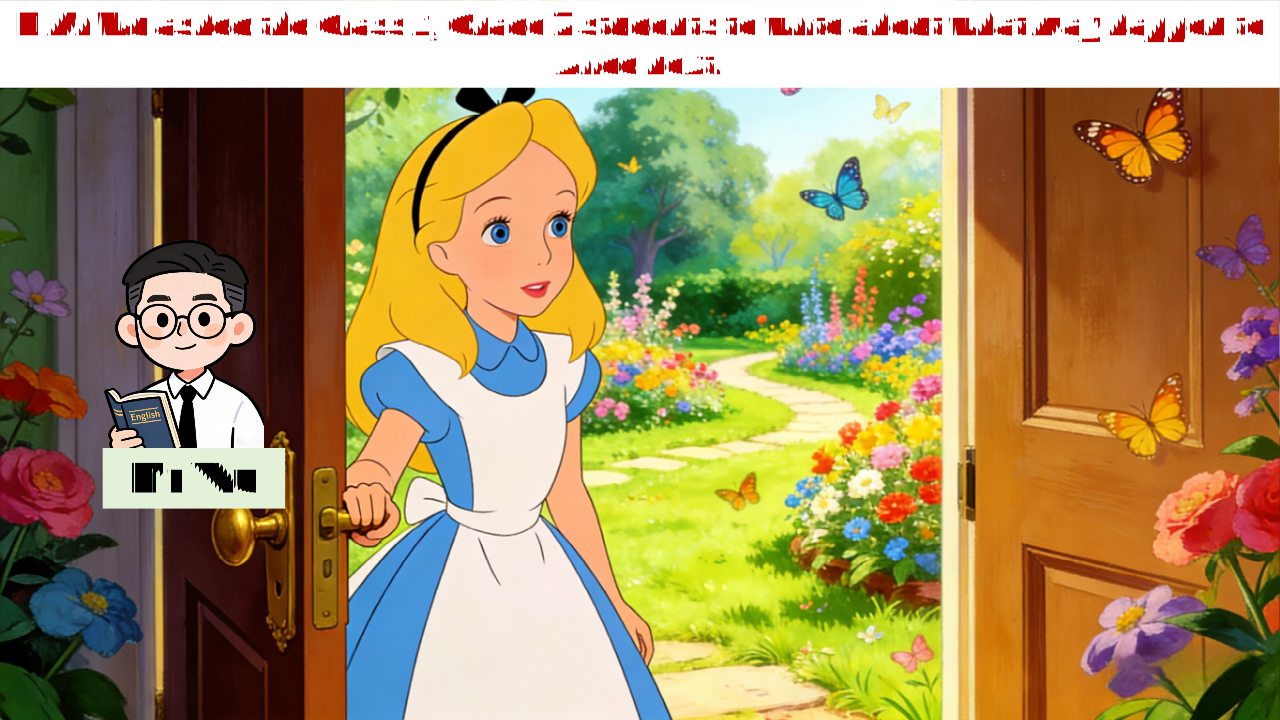
D Mr Wu asked the Class 1, Grade 7 students to write about what may happen to Alice next.
Mr Wu
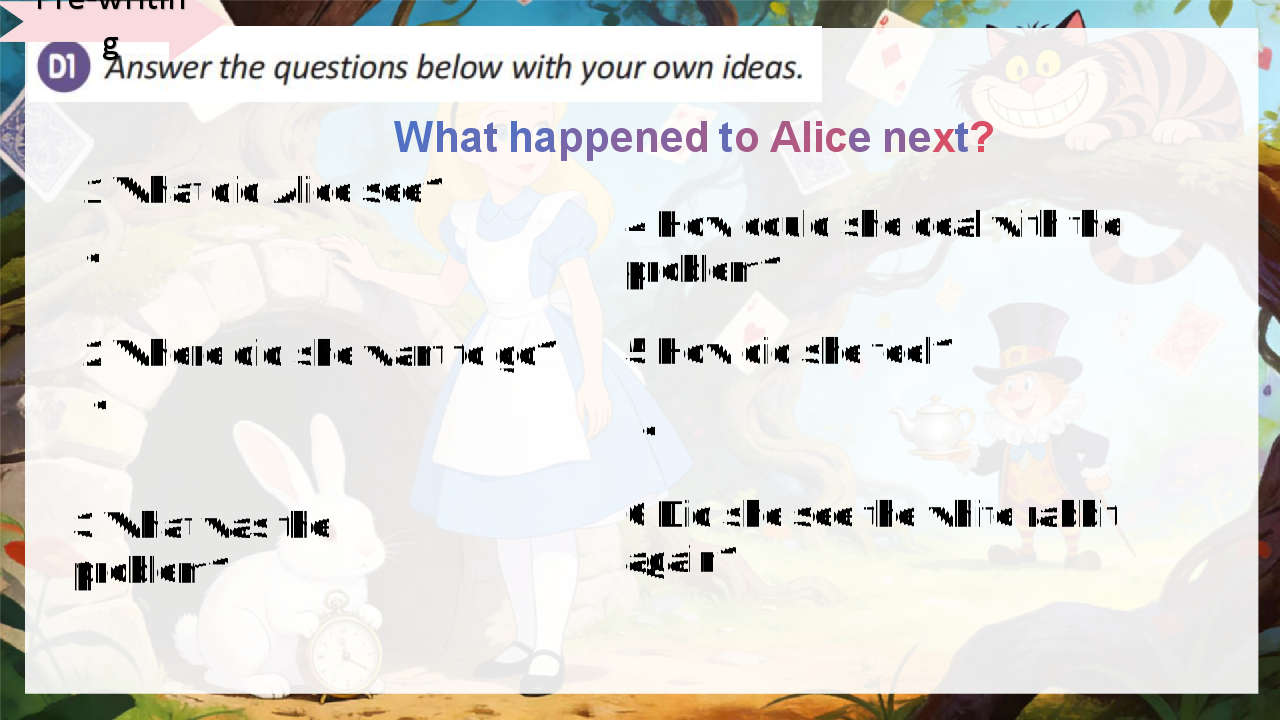
1 What did Alice see?
2 Where did she want to go?
•
3 What was the problem?
•
4 How could she deal with the problem?
•
5 How did she feel?
•
•
6 Did she see the white rabbit again?
•
What happened to Alice next?
Pre-writing
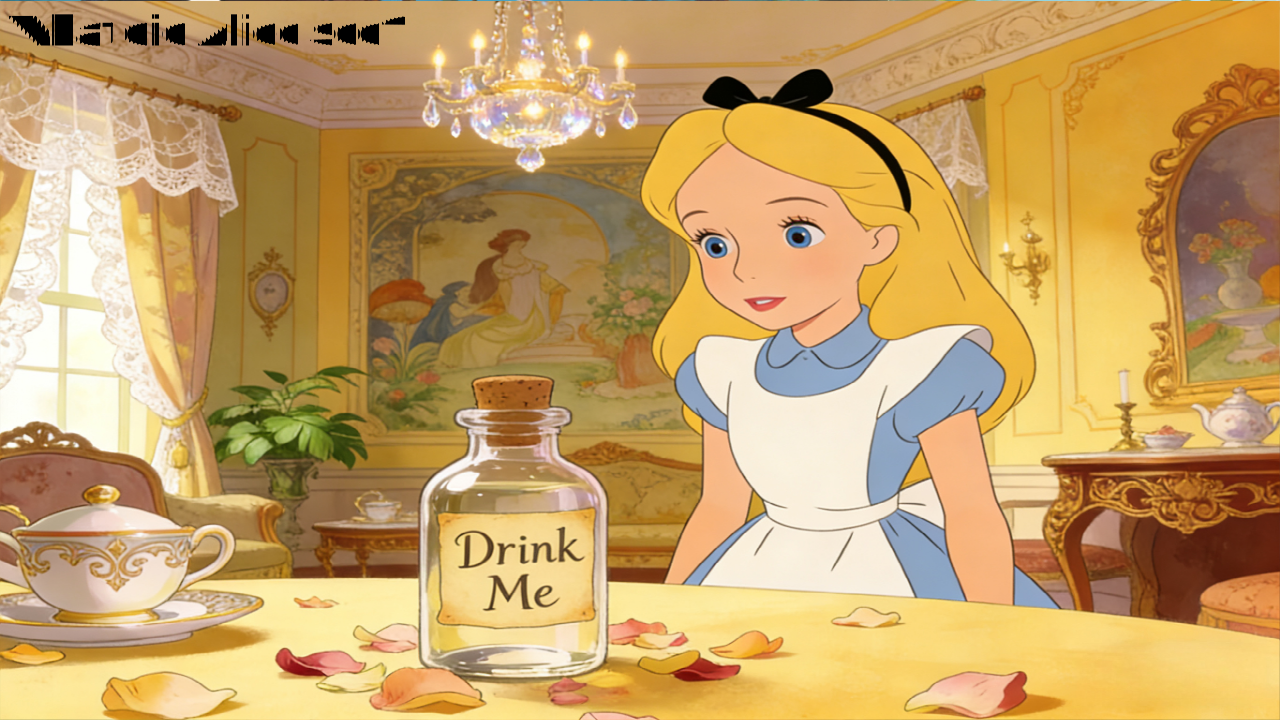
What did Alice see?
Alice did not know what to do. Then she went back to the table and saw a little bottle on it. A note on the bottle said “DRINK ME”.
Alice opened the bottle and drank a little. It tasted sweet and Alice liked it very much. She drank some more. Then she felt a little ill. Suddenly, her body became smaller and smaller.
Describe what Alice could see/ hear/feel/taste
Use the simple pat tense to describe the main events.
Where did she want to go?
Use the simple past tense to describe the main events.
Include some kind of problem
that the character needs to deal with
Alice had to go back to the table, but she was too small to reach the key.She tried to climb up, but failed. Then she saw a piece of cake in a box under the table. A note on the box said “EAT ME".
Soon Alice was small enough to go through the door, so she decided to enter the garden. When she walked towards the door, she found that she did not have the key.
too...to... 太……而不能……
Tip: When writing a story, remember to include the five main points of an event - when, where, who, what and how. Create an exciting plot to make your story more interesting.
who, when, where, what ,why and how
who:
Near the table where the small bottle and the key were placed, and near the door leading to the garden.
Alice
It is not mentioned in the text.
when:
where:
Alice drank from the bottle because of the label "DRINK ME". She wanted to enter the garden because she could pass through the door after her body shrank.
why:
Alice discovered a small bottle labeled "DRINK ME" under the table. After drinking from it, her body shrank. When she was about to enter the garden, she realized she didn't have the key. She went back to the table but was too small to reach the key. Additionally, she saw a piece of cake in a box under the table with a note saying "EAT ME".
what:
Alice made her body shrink by drinking the liquid from the bottle.
how:
who, when, where, what ,why and how
1. What did Alice see on the table?
2. Why did Alice go back to the table?
3. What did the note on the bottle say?
Alice saw a little bottle on the table.
Because she found she didn't have the key when she walked towards the door to enter the garden, so she needed to get the key from the table.
"DRINK ME".
Read the article again and answer the questions.
Alice realized ..
Alice could see/hear/smell ...
Alice felt ...
Suddenly/Soon/Then/Next/Sadly, ...
Alice wanted to
Alice decided to ..
She tried to .... but ...
Useful expressions
While-writing
Alice realized she had lost the key to the garden. She could see the beautiful flowers and the sparkling fountains inside the garden, but she couldn't enter. She felt very sad. Then, she decided to look around the table for the key. Sadly, she couldn't find it anywhere. Suddenly, she heard a small voice. It was a little mouse. The mouse told her that there was a secret passage under the table that could lead her to the garden. Alice wanted to try it. She tried to move some things around the table to find the passage, and after a while, she finally found it. She crawled through the passage and happily entered the garden at last.
Post-writing
In life, just like Alice facing mysterious items, we often encounter unexpected choices. Embracing curiosity and being brave to explore can lead us to discover new aspects of ourselves and the world.
在生活中,就像爱丽丝面对神秘物品一样,我们时常会遇到意想不到的选择。怀揣好奇心并勇于探索,能引领我们发现自身和世界新的一面。
Post-writing
Assessment
1. 我对各种奇幻故事了解得更多了。
2. 我能正确使用一般过去时。
3. 我能用本单元的新单词谈论并续写一个奇幻故事。
4. 我能理解并识别意群。
5. 我能更好地理解什么是奇幻故事以及人们为什么喜欢读它。
我擅长:
我需要花更多时间在:
我的行动计划:
Assessment
通过完成第 127 页的练习来评估你对新单词和语法的学习情况。
结果: 薄弱 良好 出色
一个贫穷的小男孩赢得了一次参观一家非常神奇且奇特的巧克力工厂的机会。根据罗尔德·达尔的经典奇幻小说改编的电影《查理和巧克力工厂》(2005 年)大获成功。观看这部电影,看看你能从这个故事中学到什么。
Further study
Language points
1 suddenly /'sʌdənli/ adv. 突然 (教材P102)
· Suddenly, I have a good idea.突然,我有一个好主意。
· The sky suddenly went dark and it started to rain.
天空骤然转暗,开始下起雨来。
· “Listen!” said Doyle suddenly. “听!”多伊尔突然说。
· Don’t make any sudden movements. 不要做任何突然的活动。
· His death was very sudden. 他的死很突然。
· We were walking quietly, and all of a sudden, a dog barked loudly.
我们正安静地走着,突然一只狗大声地吠了起来。
探究一 核心单词
归纳拓展
suddenly adv. 突然。可位于句首、句中或句末作状语,但在句首时,通常用逗号隔开。
sudden adj. 突然的;忽然的;骤然的。在句中作定语或表语。短语:all of a sudden 突然;猛地。
学会运用24: [常州] When the office had a power cut ________ (突然), everyone screamed.
学会运用25: On the way back home from the party, Helen ________ found she lost her ring.
A. suddenly B. quickly C. badly D. faithfully
学会运用26: 他突然听到上面的声音。
He _________ _________ a voice from above.
suddenly
A
suddenly heard
2 decide /dɪ'saɪd/ vt. & vi. 决定 (教材P102)
· He decided to buy some new clothes and a new pair of shoes. 他决定买一些新衣服和一双新鞋。
· He couldn’t decide what to do. 他无法决定该做什么。
· It’s up to you to decide when we will start.
由你来决定我们什么时候开始。
· We need to decide on a place for the party.
我们需要为聚会选定一个地点。
· He has made a decision that he will work hard on English.
=He has decided to work hard on English.
他已决定努力学习英语。
归纳拓展
decide vt. 决定。后常接动词不定式、带疑问词的动词不定式或名词性从句作宾语。
decide vi. 决定。后常接介词on。
decision [C] n. 决定
make a decision = reach/come to a decision 做决定
make a decision to do sth. = decide to do sth.
决定做某事
学会运用27: After he thought twice, he d to become a teacher in a poor village after college.
学会运用28: —You can _______ between joining the dancing club and going to the chess club.
—I consider going to the chess club, for I like playing chess better.
A. decide B. guess C. hide D. wait
ecided
A
学会运用29: 他们决定在周日去野餐。
They decided ________ ________ ________ _________ on Sunday.
to have a picnic
3 towards /tə'wɔːdz/ prep. (AmE toward) 向,朝(教材P102)
· He took a step towards the door.
他朝门口迈了一步。
· Are your classmates friendly toward (s) you?
你的同学们对你友好吗?
辨析: towards 与 to
作静态介词表示静态位置
时,两词均表示“朝” “向”,常可通用。 He sat with his back to /
toward (s) the door.
他背朝门坐着。
作动态介词,toward (s)
强调动作方向,而to 不
仅指方向,且指 “到达”。 He went toward (s) the park.
他朝公园走去。
He went to the park.
他到公园去。
一语辨异
He is walking towards the school. How long does it take him to get to the school? 他正朝学校走去。他到学校需要多长时间?
~~~~~
~~
学会运用30: Don’t wait for good things to happen to you. You need to walk __________ (朝、向) happiness.
学会运用31: —I’m proud of China’s Tiangong Space Station program.
—Me, too. We have taken another step _______ our space dream.
A. behind B. towards C. across D. besides
towards
B
学会运用32: 所有的植物都喜欢朝着阳光生长。
All plants like to ________ ________ _________ the sunlight.
grow up towards
4 reach /riːtʃ/ vt. & vi. 够得着;抵达;实现;达到(教材P102)
· The apples on the tree are red and big, but I can’t reach them
树上的苹果又红又大,但我够不到它们
· I can’t reach the book on the top shelf.
我够不到书架顶层的书。
· Mr and Mrs Black will reach Shanghai tomorrow afternoon.
布莱克夫妇将于明天下午到达上海。
· We finally reached our destination after a long journey.
经过长途跋涉,我们终于到达了目的地。
· She reached Beijing at last yesterday.
她昨天最终到达了北京。
· She reached her goal of becoming a doctor through hard work. 她通过努力工作实现了成为医生的目标。
· The company has reached a new level in recent years.
近年来,该公司已达到了一个新的水平。
归纳拓展
reach vt. & vi. 够得着。reach for sth. 伸手去够某物;be able to reach sth. 能够到某物。
reach vt. 到达;抵达。后面直接跟宾语,相当于get to 或arrive at/in。
reach vt. 实现。reach a goal 实现目标
reach vt. 达到。reach a level of... 达到……水平
学会运用33: The girl is tall enough to r the books on the shelf.
学会运用34: —Can you ________ the apple on the tree?
—Oh! Let me try. It seems hard to pick it down.
A. reach B. find C. see D. search
学会运用35: 你父亲通常几点到家?
What time does your father usually __________ ________?
each
A
arrive/get home
5 fail /feɪl/ vi. & vt.失败,未能( 做到);不及格 (教材P102)
· I fail to see (= I don’t understand) why you won’t even give it a try. 我不懂为什么你连试一试都不愿意
· She failed to get into the art college. 她未能进入艺术学院。
· He failed the exam because he was so careless with his spelling. 因为他在拼写方面如此粗心,他考试没及格。
· Everyone shouldn’t be afraid of failure as failure is also the wealth in our life. 每个人都不应该害怕失败,因为失败也是我们生活中的财富。
归纳拓展
fail vi. & vt. 失败,未能(做到)。
fail in sth. 在某事上失败了
fail to do sth. 做某事失败了
fail vi. & vt. 不及格。
fail the exam 考试不及格
failure n. 失败。
be afraid of failure 害怕失败
学会运用36: Every time she f , Jane tells herself not to give up.
学会运用37: Which of the following is wrong? ( )
A. My brother failed in the maths exam.
B. My brother failed to passing in the maths exam.
C. My brother failed the maths exam.
D. My brother failed to pass the maths exam.
ails
B
学会运用38: 如果你考试失败打算干什么?
What will you do if ________ ________ _______ _______?
you fail the exam
6 guide /ɡaɪd/ n. 指南;导游 (教材P100)
· This is a guide to learning French. 这是一本学习法语的指南。
· The guide showed us around the city. 导游带我们游览了这座城市。
· She guided us through the busy streets to the museum.
她带领我们穿过繁忙的街道去博物馆。
· The woman guided him into the room. 这位妇女领他进了房间。
(二)拓展词
归纳拓展
guide [C] n. 指南;导游。
guide v. 指导;指引;给……领路。
学会运用39: Let’s have a look at the TV g and see what’s on.
学会运用40: “I’m still working because I’m still capable and hope to ______________ (指导) more young people,” said Wu Mengchao when he was interviewed.
学会运用41: 导游上午会带你们游览全城。
During the morning your ________ ________ _______ you around the whole city.
uide
guide
guide will show
7 enter /'entə(r)/ vt. & vi. 进入(教材P102)
· Please enter the house by the front door next time.
下次请从前门进屋。
· He entered the army after high school. 他高中毕业后参军了。
· He is going to enter the drawing competition.
他将要去参加绘画比赛。
· Knock before you enter. 进来前先敲门。
· I’ll meet you at the entrance to the museum.
我将在博物馆入口处见你。
归纳拓展
enter vt. 进入(某个地方),相当于come/go into;加入(某个组织或领域);参加(考试、比赛)等。enter the army 参军后。
enter v. 进入。before you enter 在你进来之前
entrance n. 入口(处);通道。the front / back / side entrance to the house 房子的前门/ 后门/ 侧门
学会运用42: Please e the classroom quietly.
学会运用43: It’s impolite to _________ your teachers’ office without
knocking at the door.
A. describe B. check C. choose D. enter
学会运用44:门是锁着的,所以他进不去这个房子。
The door was locked, so he ________ _______ the house.
nter
D
couldn’t enter
8 plot 熟义 n. 故事情节
生义n. 小块土地(教材P100)
· He has written only a skeletal plot for the book so far.
那本书他目前只写了一个情节梗概。
· She bought a small plot of land to grow flowers.
她买了一小块地种花。
(三)熟词生义(从教材熟词 挖中考生义)
学会运用45: The plot is almost impossible to follow.
___________几乎叫人不明所以。
学会运用46: They grow food on their own plots of land.
他们在自己的____________上种粮食。
故事情节
小块土地
1 give up 放弃 (教材P101)
· Don’t give up your hope. 不要放弃你的希望。
· Hobbies are very important, so you shouldn’t give them up. 爱好是非常重要的,所以你不应当放弃它们。
探究二 核心短语
归纳拓展
give up 放弃。后接名词或动名词,但当宾语是代词时,必须位于两词中间。
辨析: give up 与 give in
相同点 不同点
give up 都有“放弃,让步”之意;都是“动词+ 副词”构成的动词短语。 give up 指行为者碰到某种困难或由于某种原因而自己主动放弃;可作及物动词短语,后接名词或动名词作宾语;当宾语是代词时,必须位于两词中间。
give in give in 指行为者屈于某种压力而被迫按别人的要求去做,侧重于屈服;只作不及物动词短语,后不接宾语。
e.g. His mother gave in and bought him a new bike. 他的母亲拗不过他,给他买了一辆新自行车。
一语辨异
In the race, he didn't give up even when tired, but finally gave in to the opponent's speed. 在比赛中,他即使累了也没有放弃,但最终还是屈服于对手的速度。
~~~~~
~~~~~
学会运用1: Let’s talk about whether we should ________ ________ (放弃) the plan.
学会运用2: My grandpa decided to ________ smoking for his health.
A. give away B. give out
C. give back D. give up
give up
【点拨】考查动词短语辨析。句意:我爷爷为了他的健康决定戒烟。give away 赠送;give out 分发;give back归还;give up 放弃。根据 “My grandpa decided to... smoking for his health.”可知,是放弃吸烟,故选D。
D
学会运用3: 如果你不放弃,最后总会成功。(汉译英)
________ ________ ________ ________ ________, you will succeed/will be successful in the end/at last.
If you don’t give up
2 in the face of 面对(困难等) (教材P101)
· Don’t hang back in the face of difficulties.
不要在困难面前退缩。
· The little hut looked very fragile in the face of the storm.
在暴风雨面前,那座小屋看起来非常脆弱。
归纳拓展
in the face of 面对(困难等)。这个短语在英文中常用来表示“面对”某种情况或挑战,尤其是那些困难、具有挑战或不利的情况。
学会运用4: _______ difficulties, we must have the courage to overcome them.
A. In the face B. In the face of
C. To the face of D. On the face
学会运用5: 面对失败,他没有放弃,而是更加努力。
________ ________ ________ ________ failure, he didn’t ________ ________ but worked harder.
B
In the face of
give up
Alice had to go back to the table, but she was too small to reach the key. 爱丽丝不得不回到桌子旁,但她太小了,够不到钥匙。(教材P102)
(分析结构)本句是一个由转折连词but 连接的并列句。 too... to... 表示否定含义,即“太……而不能……”,too 后面接形容词或副词原形;to 后接动词原形。在“too... to...”结构中加for sb./sth. 来提示动词不定式的逻辑主语,可以起到一定的限制作用。
~~ ~~~~
探究三 核心句式
· My son is too young to join the army. 我儿子太小不能参军。
· The box is too heavy for her to carry. 这箱子太重,她提不动。
敲黑板
此结构通常可以用not ... enough to ... 来改写。
The boy is too short to reach the apple on the table.= The boy isn't tall enough to reach the apple on the table.男孩太矮,够不到桌上的苹果。
学会运用1: He coughed too badly ________ (fall) asleep.
学会运用2: Mike is not old enough to go to school. (同义句转换)
Mike is ________ ________ ________ ________ to school.
学会运用3: 这道数学题太难,我解不出来。
The maths problem is ________ ____________ ________ ________ ________ work out.
to fall
too young to go
too difficult for
me to
Thanks for your listening!
null
2024
Other
86376.0
null
78236.555
$
资源预览图
1

2

3
4
5
6

相关资源
由于学科网是一个信息分享及获取的平台,不确保部分用户上传资料的 来源及知识产权归属。如您发现相关资料侵犯您的合法权益,请联系学科网,我们核实后将及时进行处理。