Unit 3 My hometown Reading 1 课件 2025-2026学年译林版七年级英语下册
2026-04-08
|
31页
|
110人阅读
|
0人下载
普通
资源信息
| 学段 | 初中 |
|---|---|
| 学科 | 英语 |
| 教材版本 | 初中英语译林版七年级下册 |
| 年级 | 七年级 |
| 章节 | Reading |
| 类型 | 课件 |
| 知识点 | - |
| 使用场景 | 同步教学-新授课 |
| 学年 | 2026-2027 |
| 地区(省份) | 全国 |
| 地区(市) | - |
| 地区(区县) | - |
| 文件格式 | PPTX |
| 文件大小 | 8.78 MB |
| 发布时间 | 2026-04-08 |
| 更新时间 | 2026-04-08 |
| 作者 | 匿名 |
| 品牌系列 | - |
| 审核时间 | 2026-04-08 |
| 下载链接 | https://m.zxxk.com/soft/57229775.html |
| 价格 | 2.00储值(1储值=1元) |
| 来源 | 学科网 |
内容正文:
译林版七年级英语下册
Unit 3 My hometown Reading 1
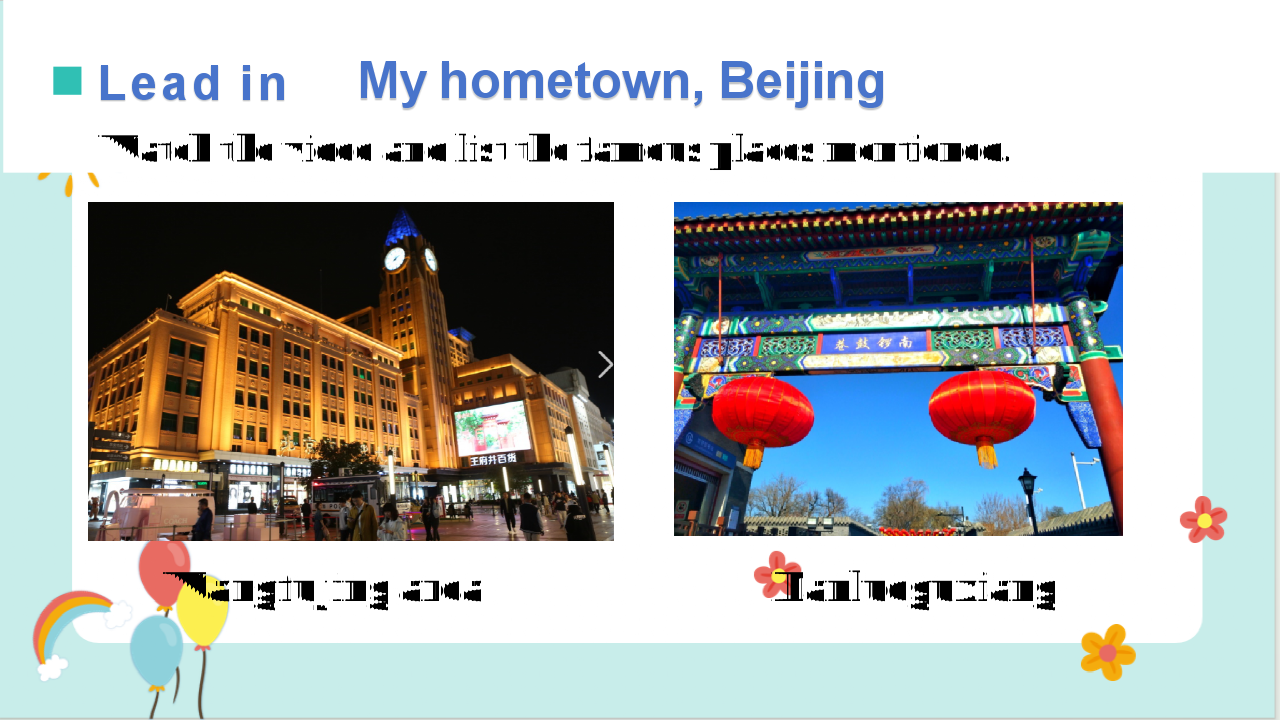
Lead in
Watch the video and list the famous places mentioned.
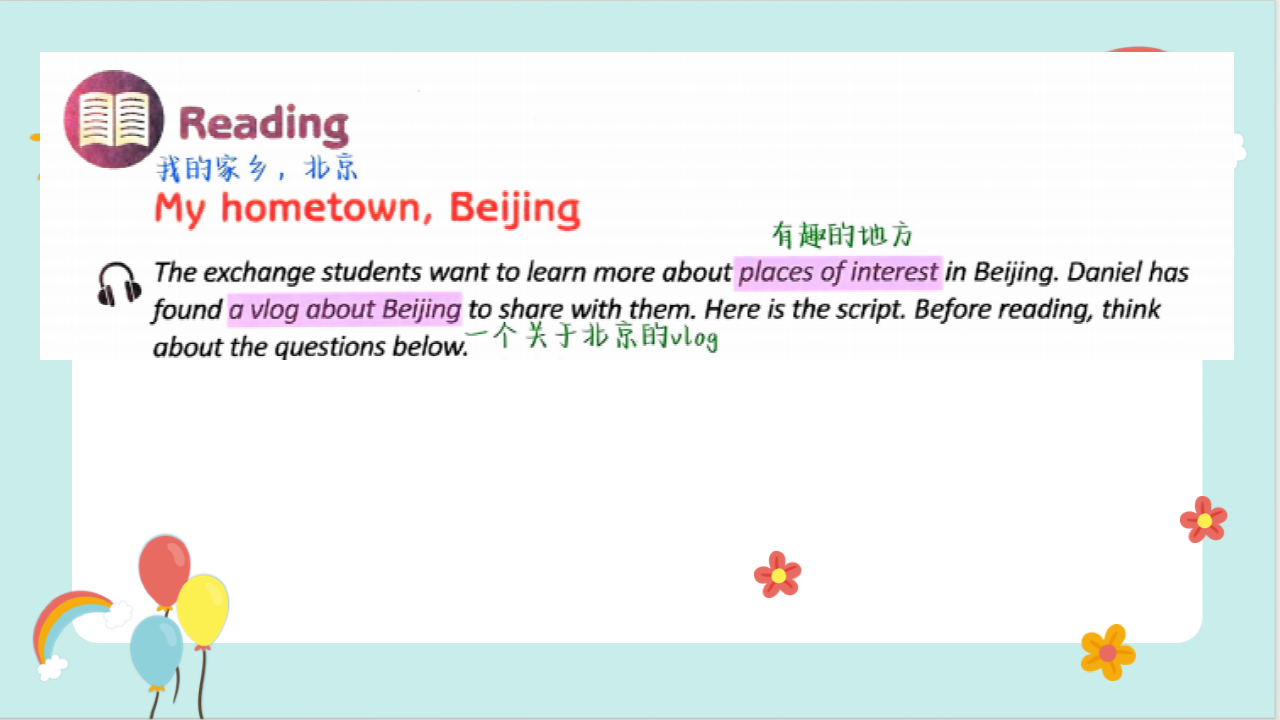
My hometown, Beijing
Wangfujing area
Nanluoguxiang
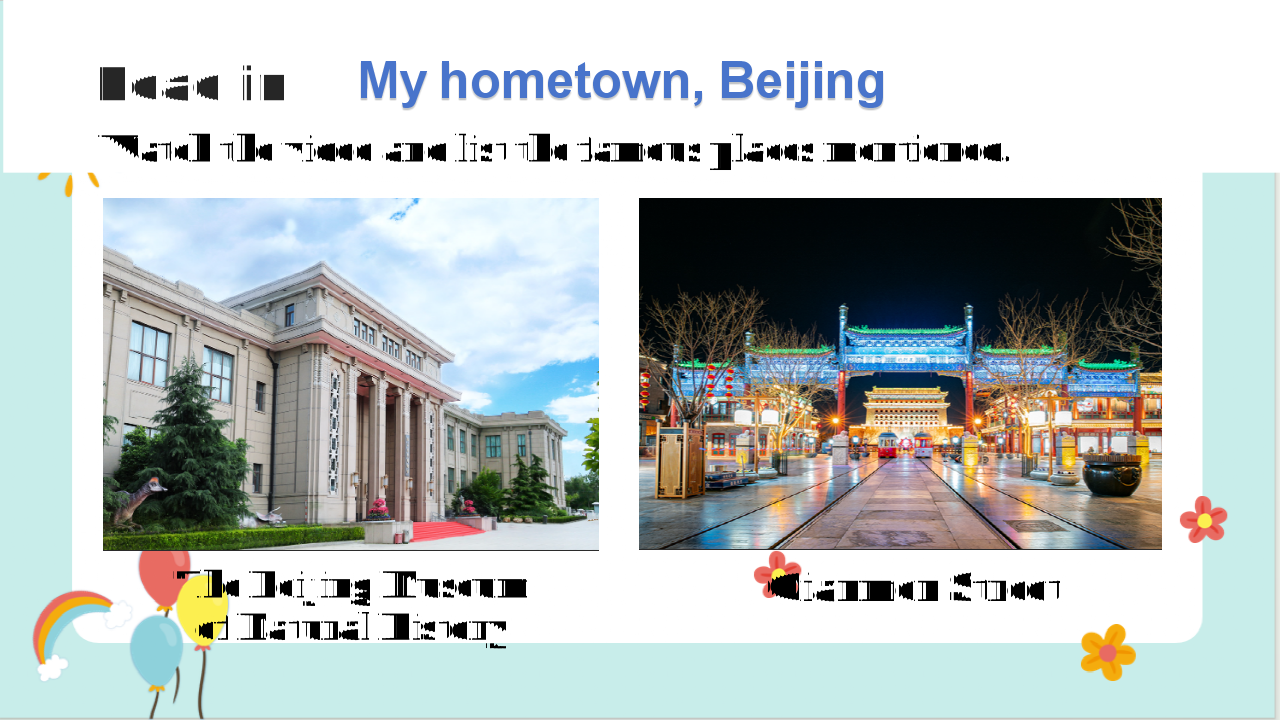
Lead in
Watch the video and list the famous places mentioned.
My hometown, Beijing
The Beijing Museum of Natural History
Qianmen Street
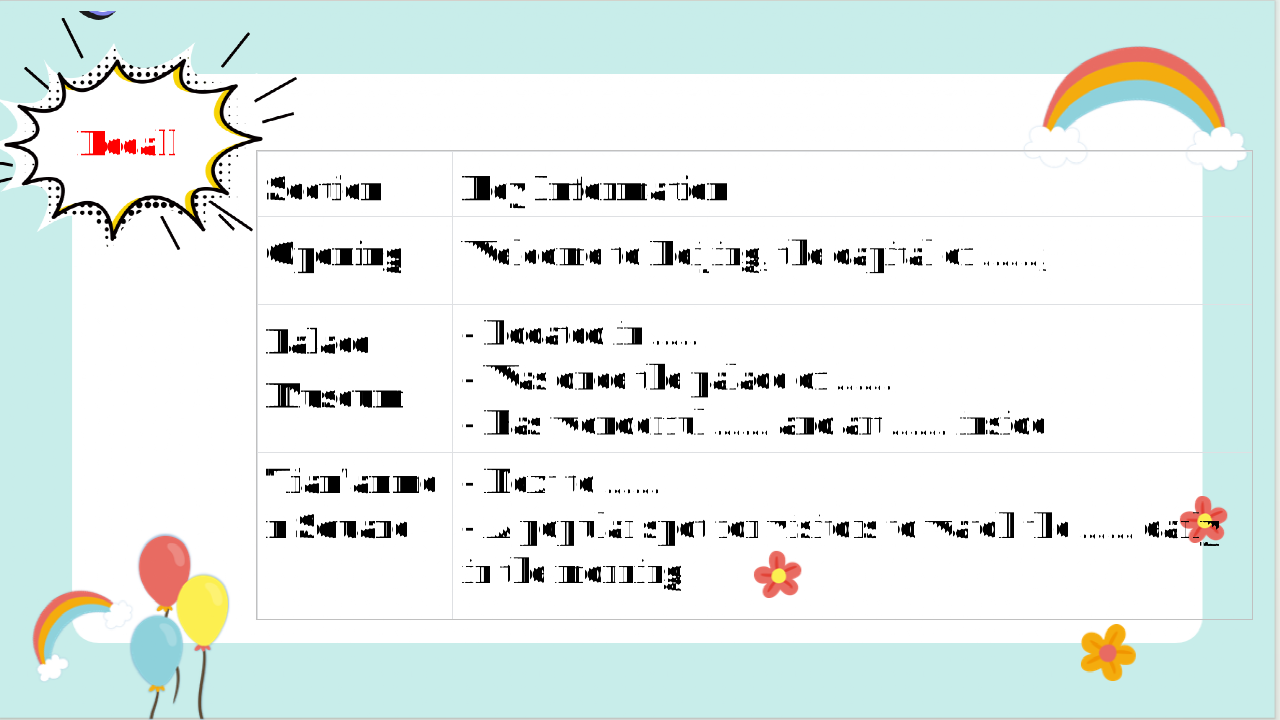
Recall
Section Key Information
Opening Welcome to Beijing, the capital of ......;
Palace Museum - Located in .....
- Was once the palace of ......
- Has wonderful ...... and art ...... inside
Tian'anmen Square - Next to ......
- A popular spot for visitors to watch the ...... early in the morning
Recall
Siheyuan & Hutong - Siheyuan: A traditional Chinese ..... with ...buildings around a central courtyard
- ......: The narrow lanes between siheyuan
- Walking through hutong lets you experience old Beijing life
Food & Culture - Try delicious ......
- Enjoy ....... at a local theatre in the evening; it is wonderful and not to be missed
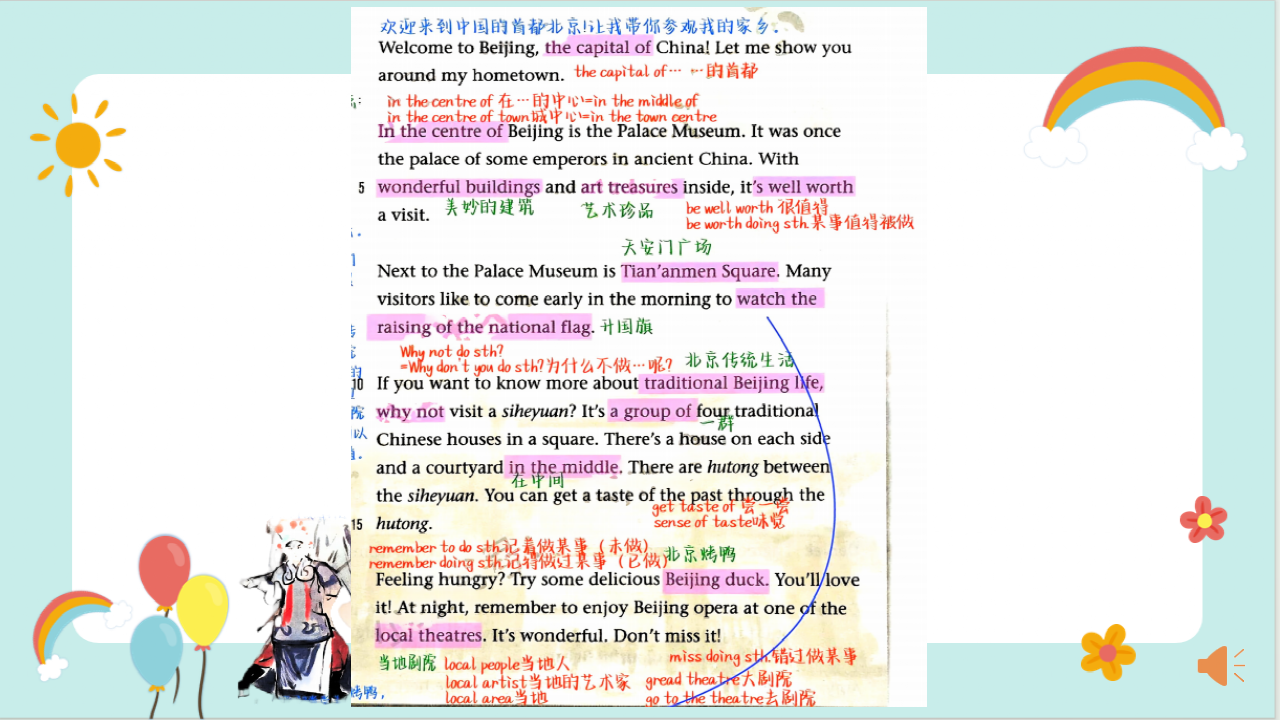
Welcome to Beijing, the capital of China! Let me show you around my hometown.
1.capital /ˈkæpɪt(ə)l/ n.首都,首府,省会
【用法】:表示国家或地区的首都,前面通常加定冠词 the。
【例句】:Beijing is the capital of China.
(北京是中国的首都。)
【拓展】:也可表示 “资本”,但中考重点考 “首都”。
Welcome to Beijing, the capital of China! Let me show you around my hometown.
In the centre of Beijing is the Palace Museum. It was once the palace of some emperors in ancient China. With wonderful buildings and art treasures inside, it’s well worth a visit.
Next to the Palace Museum is Tian'anmen Square. Many visitors like to come early in the morning to watch the raising of the national flag.
If you want to know more about traditional Beijing life, why not visit a siheyuan? It's a group of four traditional Chinese houses in a square. There's a house on each side and a courtyard in the middle. There are hutong between the siheyuan. You can get a taste of the past by walking 15 through the hutong.
Feeling hungry? Try some delicious Beijing duck. You’ll love it! At night, remember to enjoy Beijing opera at one of the local theatres. It’s wonderful. Don’t miss it!
Introduction
Places of interest
Traditional
life and houses
Local food and culture
Places of interest
Traditional life and houses
Local food and culture
the Palace Museum
Tian'anmen Square
Siheyuan
Beijing duck
Beijing opera
A Complete the chart with the information in the script.
art treasures
national flag
Activity 1
Welcome to Beijing, the capital of China! Let me show you around my hometown.
2.show sb around 领某人参观
【用法】:固定短语,后接地点或人。
【例句】:Our teacher will show us around the museum tomorrow.(明天老师会带我们参观博物馆。)
【同义短语】:take sb. around
【同步练习】——Could you please ____ me ____ your hometown?
——I’m new here.
A. show; off B. take; around C. show; around
✅ 答案:C
解析:show sb. around = take sb. around,均表示“领参观”,但 show around 更常用。
Read for details.
Beijing duck
Taste:
Delicious
Local theatres
Beijing opera
Where:
local
[ˈloʊk(ə)l]当地的,地方的
theatre
[ˈθiːətər]剧院,戏院
While-reading
What does the vlogger think of her hometown
according to the vlog? How do you know that?
She loves her hometown a lot. She uses words and expressions like “wonderful”, “it’s well worth a visit”, “Don’t miss it!”, …
Appreciation
art treasures
Finish Part B on page 33.
In the centre of Beijing is the Palace Museum.
坐落在北京市中心是故宫博物院。
本句是倒装句,主语是the Palace Museum。正常的语序是The Palace Museum is in the centre of Beijing.。
the national flag
traditional Beijing life
Complete the chart with the information in the script.
What to see and do in Beijing
See wonderful buildings and (1) __________ at the Palace Museum
Visit a siheyuan and know more about
(3) ___________
Try some Beijing
(4) ___________
Enjoy Beijing
(5) ___________
Watch the raising of the
(2) ____________ at Tian’anmen Square
art treasures
national flag
duck
Traditional Beijing life
opera
A
duck
opera
It's a group of four traditional Chinese houses in a square.
traditional adj. “传统的;惯例的;因袭的;守旧的”
常见搭配及例句:
traditional culture 传统文化
e.g. We should protect our traditional culture.
(我们应该保护我们的传统文化。)
traditional food 传统食物
e.g. Dumplings are traditional food in China.
(饺子是中国的传统食物。)
a traditional festival 一个传统节日
e.g. Spring Festival is a traditional festival in China.
(春节是中国的一个传统节日。)
1. It was once the palace of some emperors in ancient China.
它曾经是中国古代一些皇帝的宫殿。
once adv. 曾经
once upon a time (用于故事的开头)从前,很久以前
e.g. I once met your mother. 我曾经见过你母亲。
Once upon a time there was a beautiful princess.
从前,有一位美丽的公主。
once adv. 仅一次;一次
e.g. He cleans his car once a week. 他每周洗一次汽车。
Careful Reading
1 The Palace Museum is in the centre/north of Beijing.
2 The Palace Museum has many ancient/modern buildings.
3 Many people like to visit Tian'anmen Square late at night/early in the morning.
4 The four houses in a siheyuan make a square/circle.
5 You can enjoy Beijing opera at the local theatres/cinemas.
1. Where is the Palace Museum? - It's ______ the centre of Beijing.
A. in B. on C. at
2. There are many ______ buildings in the Palace Museum.
A. modern B. ancient C. new
3. People can ______ the traditional Beijing life in a siheyuan.
A. get a taste of B. look for C. think about
4. Let's go to watch Beijing opera tonight. - ______
A. You're welcome. B. That's a good idea. C. Thank you.
一、单项选择
A
B
A
B
1. Many people don’t like the taste (味道) of them.
2. Look! There are lots of flags (旗) around the palace.
3. It makes many people interested in ancient (古代的) poems.
4. - Traditional culture is a precious treasure (财富) for a nation. - I agree.
5. Nanjing is the capital of Jiangsu Province(省).
taste
flags
ancient
treasure
apital
二、根据中文提示完成单词
Role play as a guide to introduce Beijing.
Required(必做)
Optional(选做)
Retell the article and draw a mind map.
Circle a, an and the in the article.
114072.0
$
资源预览图
1
2
3
4
5
6
相关资源
由于学科网是一个信息分享及获取的平台,不确保部分用户上传资料的 来源及知识产权归属。如您发现相关资料侵犯您的合法权益,请联系学科网,我们核实后将及时进行处理。