Unit 6 Nurturing Nature Starting out 课件-2025-2026学年高二英语外研版(2019)选择性必修第一册
2026-04-07
|
9页
|
383人阅读
|
89人下载
普通
资源信息
| 学段 | 高中 |
|---|---|
| 学科 | 英语 |
| 教材版本 | 高中英语外研版选择性必修第一册 |
| 年级 | 高二 |
| 章节 | Starting out |
| 类型 | 课件 |
| 知识点 | - |
| 使用场景 | 同步教学-新授课 |
| 学年 | 2025-2026 |
| 地区(省份) | 广西壮族自治区,海南省,重庆市,四川省,贵州省,云南省,西藏自治区,陕西省,甘肃省,青海省,宁夏回族自治区,新疆维吾尔自治区,台湾省,香港特别行政区,澳门特别行政区 |
| 地区(市) | - |
| 地区(区县) | - |
| 文件格式 | PPTX |
| 文件大小 | 39.94 MB |
| 发布时间 | 2026-04-07 |
| 更新时间 | 2026-04-07 |
| 作者 | 匿名 |
| 品牌系列 | - |
| 审核时间 | 2026-04-07 |
| 下载链接 | https://m.zxxk.com/soft/57222717.html |
| 价格 | 0.00储值(1储值=1元) |
| 来源 | 学科网 |
内容正文:
1. find out some information about four natural places by reading.
2. introduce World Heritage Sites from different aspects.
3. share our ideas about World Heritage Sites and measures to protect them.
Learning objectives
By the end of the class, we will be able to:
Activity 1 Free talk
Look at the title and the picture and answer the question.
What comes to your mind at the first sight of these pictures?
Activity 2 Look and talk
Look at the pictures and answer the question.
What do you konw about these places?
Uluru, Australia
Mount Kilimanjaro, Tanzania
Iguazú Falls, Argentina and Brazil
Huanglong, China
3
Activity 3 Read and talk
Read the introductions to these places and answer the questions.
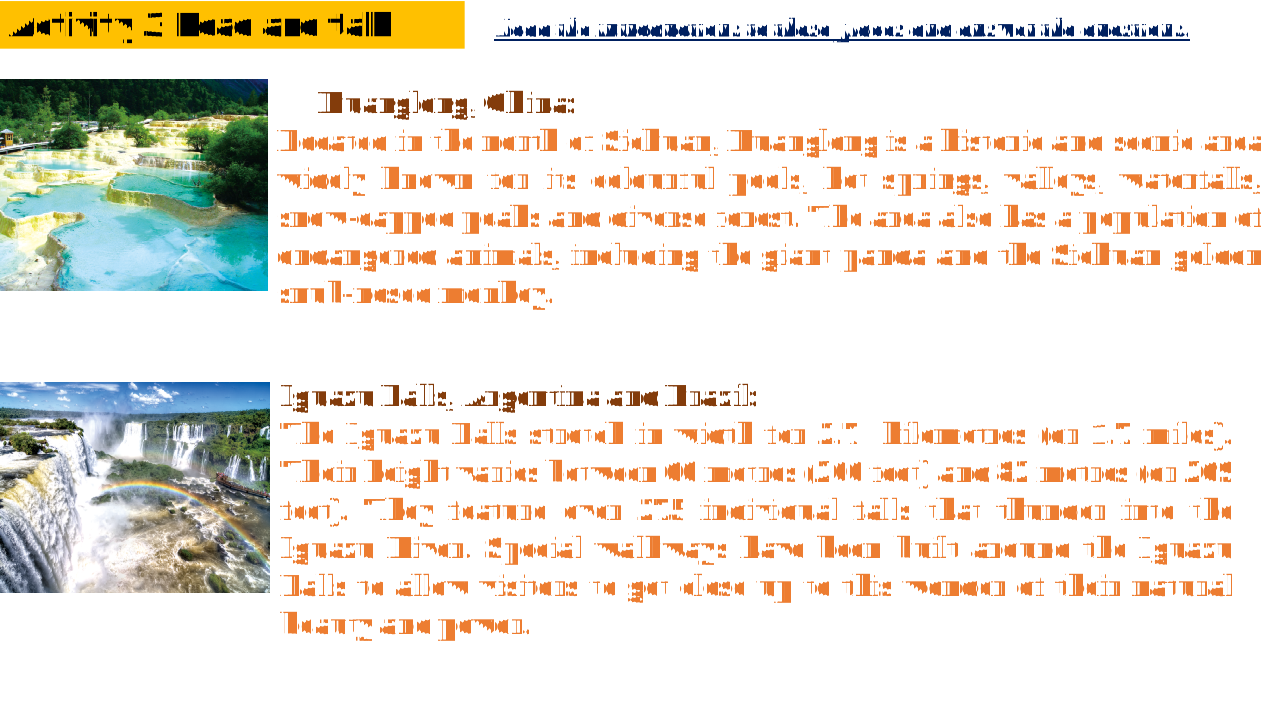
Huanglong, China:
Located in the north of Sichuan, Huanglong is a historic and scenic area widely known for its colourful pools, hot springs, valleys, waterfalls, snow-capped peaks and diverse forest. The area also has a population of endangered animals, including the giant panda and the Sichuan golden snub-nosed monkey.
Iguazú Falls, Argentina and Brazil:
The Iguazú Falls stretch in width for 2.7 kilometres (or 1.7 miles). Their height varies between 60 metres (200 feet) and 82 metres (or 269 feet). They feature over 275 individual falls that thunder into the Iguazu River. Special walkways have been built around the Iguazu Falls to allow visitors to get close up to this wonder of their natural beauty and power.
4
Activity 3 Read and talk
Read the introductions to these places and answer the questions.
Mount Kilimanjaro, Tanzania:
Located in north-east Tanzania, Mount Kilimanjaro is the highest mountain in Africa and the world’s tallest free standing mountain, about 5,895m above sea level. The mountain is encircled by mountain forest. Mount Kilimanjaro consists of three principal volcanoes: Kibo (centre), Mawensi (east), and Shira (west). Shira and Mawensi are extinct volcanoes. However, Kibo is a dormant volcano; it can erupt again. The mountain has been the subject of many scientific studies because of its shrinking glaciers and disappearing ice fields.
Uluru, Australia:
Uluru, also known as Ayers Rock and officially gazetted as "Uluru / Ayers Rock", is a large sandstone rock formation in southwestern Northern Territory, central Australia. Uluru is sacred to the Aboriginal people of the area. Uluru / Ayers Rock rises 348 metres above the surrounding desert plain and reaches a height 863 metres above sea level. The area around the formation is home to an abundance of springs, waterholes, rock caves and ancient paintings.
What specific information can you get from the introductions?
5
Activity 4 Watch and find out
Watch the video and answer the questions.
1.What World Heritage Sites are mentioned?
2.From what aspects are they introduced?
6
Activity 4 Watch and find out
Watch the video again and complete the table.
Type Number Example Famous for Significance Threat
_______World Heritage Sites
_______World Heritage Sites
_______World Heritage Sites
7
Activity 5 Retell and consolidate
Work in groups. Retell the World Heritage Sites and please considering
the following:
1. basic information about World Heritage Sites
2. examples and are famous for…
3. significance
4. threats
Criteria
Items Contents Total Suggestions
Content Basic information, example, famous for, significance, threats
Language the expressions we newly learnt
Organization fluency and logic
Performance enthusiasm, confidence, proper body language
Superior:
Secondary:
Basic:
Activity 6 Think and share
What message does the speaker want to convey?
What can we do to protect World Heritage Sites?
9
$
资源预览图

1

2

3
4
相关资源
由于学科网是一个信息分享及获取的平台,不确保部分用户上传资料的 来源及知识产权归属。如您发现相关资料侵犯您的合法权益,请联系学科网,我们核实后将及时进行处理。