Unit3知识点-Lesson3练习2025-2026学年北师大版英语七年级下册
2026-04-07
|
6页
|
65人阅读
|
0人下载
内容正文:
七年级英语下册Unit3知识点-Lesson3练习
小试牛刀
A. 用所给动词的适当形式填空(一般现在时)
1. Weather __________ (affect) not only humans, but also animals and plants.
2. On bright and sunny days, people often __________ (feel) good.
3. Birds __________ (not sing) much on windy days.
4. Many plants __________ (die) at low temperatures.
5. In thick fog, people __________ (have) to close the highway to avoid accidents.
6. Too much rain or too little rain __________ (be) not good for farming.
7. Scientists __________ (be) able to make better weather forecasts now.
B. 用 have to, can, can’t 填空
1. In thick fog, drivers __________ drive slowly and carefully.
2. During big storms, schools __________ close to keep students safe.
3. We __________ change the weather, but we __________ prepare for it.
4. If there is a sudden change in the weather, travellers __________ change their travel plans.
5. You __________ find out about the weather easily on the internet.
C. 句型转换(改为一般疑问句并作肯定/否定回答)
1. Weather affects farming greatly.
一般疑问句:________________________________________
肯定回答:________________ 否定回答:________________
2. People have to close the highway in thick fog.
一般疑问句:________________________________________
肯定回答:________________ 否定回答:________________
3. Scientists are able to make better weather forecasts.
一般疑问句:________________________________________
肯定回答:________________ 否定回答:________________
配套练习
A. 单项选择(★)
从A、B、C、D中选择最佳答案。
1. “Weather matters.” 这句话中 “matters” 的意思是:
A. 事情 B. 物质 C. 重要 D. 麻烦
2. 下列句子中,not only...but also 使用正确的是:
A. Weather affects not only humans but also animals.
B. Weather not only affects humans but also animals.
C. Both A and B are correct. D. Neither is correct.
3. “Birds do not sing much on windy days.” 这句话的肯定形式是:
A. Birds sing much on windy days. B. Birds don’t sing much on windy days.
C. Birds sings much on windy days. D. Birds are singing much on windy days.
4. 根据课文,在浓雾天气,人们必须:
A. 关闭学校 B. 关闭高速公路 C. 改变旅行计划 D. 停止户外活动
5. 我们现在可以很容易地了解天气,因为:
A. 我们可以改变天气 B. 科学家可以控制天气
C. 可以在互联网上查询 D. 天气预报总是准确的
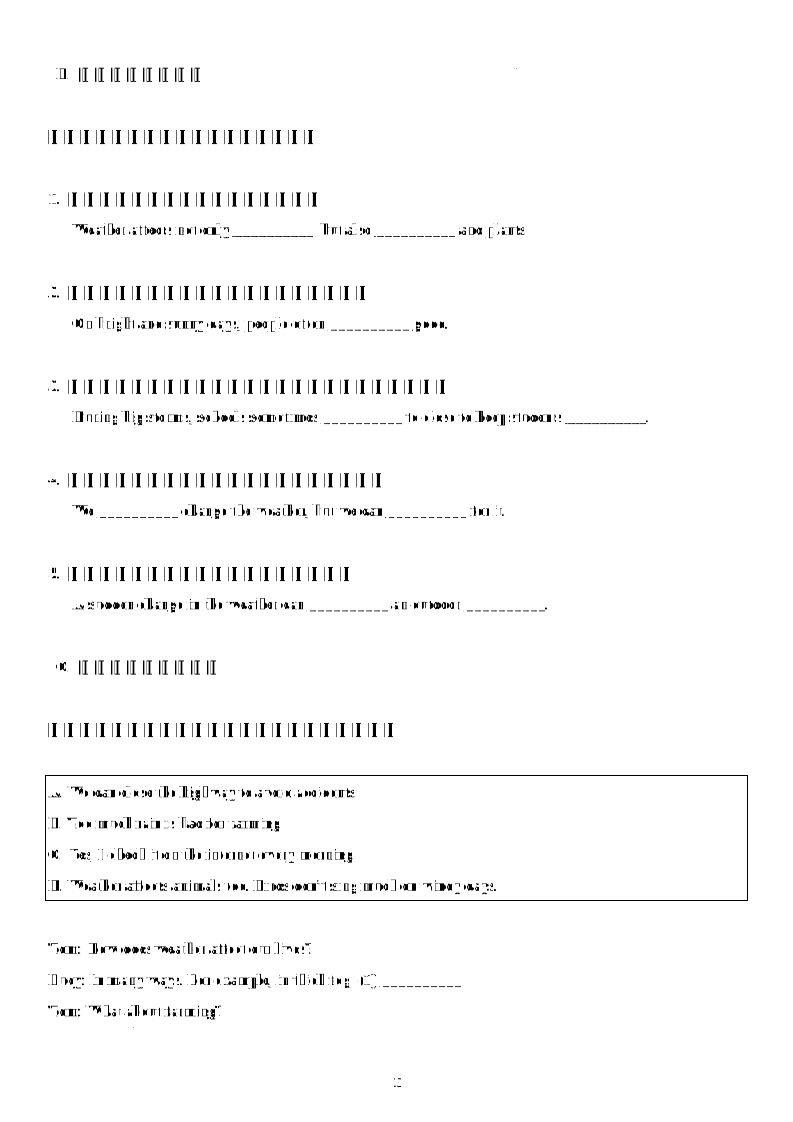
B. 完成句子(★★)
根据中文提示,用正确形式完成句子。
1. 天气不仅影响人类,也影响动植物。
Weather affects not only __________, but also __________ and plants.
2. 在阳光明媚的日子里,人们常常感觉很好。
On bright and sunny days, people often __________ good.
3. 在大风暴期间,学校有时不得不关闭以确保学生安全。
During big storms, schools sometimes __________ to close to keep students __________.
4. 我们不能改变天气,但我们可以为它做准备。
We __________ change the weather, but we can __________ for it.
5. 突然的天气变化可以停止一个户外活动。
A sudden change in the weather can __________ an outdoor __________.
C. 补全对话(★★★)
根据上下文,从方框中选择合适的句子完成对话。
A. We can close the highway to avoid accidents.
B. Too much rain is bad for farming.
C. Yes, I check it on the internet every morning.
D. Weather affects animals too. Birds don’t sing much on windy days.
Tom: How does weather affect our lives?
Lucy: In many ways. For example, in thick fog, (1) __________
Tom: What about farming?
Lucy: (2) __________ And too little rain is also bad.
Tom: Does weather affect animals?
Lucy: Yes. (3) __________
Tom: Can we find out about the weather easily?
Lucy: (4) __________ It’s very convenient.
拓展思考
Part 1(描述天气对人类和动植物的影响)
写一段话(至少5句),说明天气如何影响人类、动物和植物。使用 not only...but also 和 have to。
________________________________________________
________________________________________________
________________________________________________
________________________________________________
________________________________________________
Part 2(如何为坏天气做准备)
根据课文,我们不能改变天气,但可以准备。写一段话(至少5句),说明在以下天气中我们应该如何准备:暴雨、浓雾、大雪、高温。使用 can, should, have to。
________________________________________________
________________________________________________
________________________________________________
________________________________________________
________________________________________________
Part 3(你的经历)
描述一次你经历过的特殊天气(比如大暴雨、大雪、台风等)。当时发生了什么?人们做了什么?你的感受如何?写一段话(至少5句),使用一般过去时或一般现在时。
________________________________________________
________________________________________________
________________________________________________
________________________________________________
________________________________________________
参考答案与解析
小试牛刀 A
1. affects 2. feel 3. don’t sing 4. die 5. have 6. is 7. are
小试牛刀 B
1. have to 2. have to 3. can’t, can 4. have to 5. can
小试牛刀 C
1. Does weather affect farming greatly? Yes, it does. / No, it doesn’t.
2. Do people have to close the highway in thick fog? Yes, they do. / No, they don’t.
3. Are scientists able to make better weather forecasts? Yes, they are. / No, they aren’t.
配套练习 A
1. C 2. A 3. A 4. B 5. C
配套练习 B
1. humans, animals 2. feel 3. have, safe 4. can’t, prepare 5. stop, event
配套练习 C
1. A 2. B 3. D 4. C
拓展思考(示例)
Part 1
Weather affects not only humans but also animals and plants. On sunny days, people feel happy. On rainy days, people may feel sad. Birds don’t sing much on windy days. Plants die if it is too cold. Farmers have to worry about too much or too little rain. So weather really matters to all living things.
Part 2
We can’t change the weather, but we can prepare for it. During a big storm, we should stay at home. Schools may have to close. In thick fog, drivers have to drive slowly. On very hot days, we should drink more water and stay in the shade. On snowy days, we can wear warm clothes and boots. Being prepared keeps us safe.
Part 3
Last summer, there was a big storm in my city. It rained heavily for three hours. The wind was very strong. People had to stay inside. Some trees fell down on the road. My family and I stayed at home and watched the news. After the storm, we went outside and saw many branches on the ground. It was scary but also exciting. I learned that we should always check the weather forecast before going out.
1
学科网(北京)股份有限公司
$
资源预览图

1

2
3
相关资源
示范课
由于学科网是一个信息分享及获取的平台,不确保部分用户上传资料的 来源及知识产权归属。如您发现相关资料侵犯您的合法权益,请联系学科网,我们核实后将及时进行处理。