Units 1-2复习 单元语法+阅读改编+重点单词短语总结+练习题2025-2026学年人教版英语八年级下册
2026-04-07
|
20页
|
556人阅读
|
10人下载
普通
资源信息
| 学段 | 初中 |
|---|---|
| 学科 | 英语 |
| 教材版本 | 初中英语人教版八年级下册 |
| 年级 | 八年级 |
| 章节 | Unit 1 Time to Relax,Unit 2 Stay Healthy |
| 类型 | 教案-讲义 |
| 知识点 | - |
| 使用场景 | 同步教学-单元练习 |
| 学年 | 2026-2027 |
| 地区(省份) | 全国 |
| 地区(市) | - |
| 地区(区县) | - |
| 文件格式 | DOCX |
| 文件大小 | 161 KB |
| 发布时间 | 2026-04-07 |
| 更新时间 | 2026-04-07 |
| 作者 | 匿名 |
| 品牌系列 | - |
| 审核时间 | 2026-04-07 |
| 下载链接 | https://m.zxxk.com/soft/57217762.html |
| 价格 | 1.00储值(1储值=1元) |
| 来源 | 学科网 |
内容正文:
八下 Unit 1-2复习 单元语法+阅读改编+重点单词短语【学生版】
Unit1 Time to Relax
一、U1单元语法
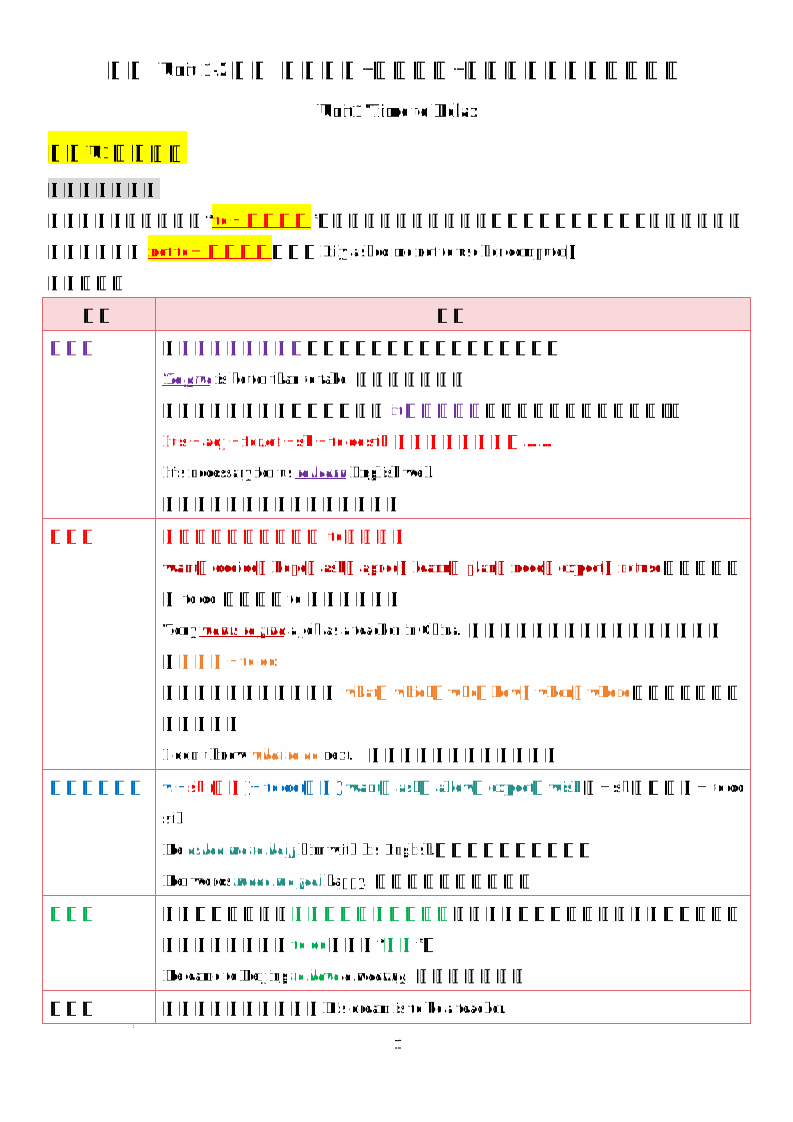
动词不定式精讲
一、构成:基本形式是“to + 动词原形”,没有人称和数的变化,在句子中不能作谓语。否定式是在动词不定式前加not to + 动词原形,如:Lily asked me not to use her computer。
二、用法:
功能
示例
作主语
①动词不定式作主语时,谓语动词用第三人称单数形式;
To give is better than to take. 奉献比索取好。
②为了避免句子头重脚轻,常用it作形式主语,常用于以下固定句型中:。
It’s + adj + for/of + sb + to do sth 做某事对某人来说……
It’s necessary for us to learn English well.
对我们来说,学好英语是必要的。
作宾语
①及物动词后直接跟带to的不定式
want、decide、hope、ask、agree、learn、plan、need、expect、refuse等动词后常接to do 作宾语(to 不可以省略)
Tony wants to find a job as a teacher in China. 托尼想在中国找一份做老师的工作。
②疑问词+ to do:
动词不定式可以和疑问词what、which、who、how、when、where等连用,构成不定式短语。
I don’t know what to do next. 我不知道接下来该做什么。
作宾语补足语
v.+ sb.(宾语)+ to do(宾补) want、ask、allow、expect、wish等+ sb.(宾语)+ to do sth.
He asked me to help him with his English.他请求我帮他学英语。
Her words made me feel happy. 她的话让我感到开心。
作状语
动词不定式作状语表示目的、结果或原因。考查动词不定式作目的状语较多,动词不定式表目的时,to do翻译成“为了”。
He came to Beijing to have a meeting. 他来北京开会。
作表语
放在系动词之后,如:His dream is to be a teacher.
作定语
放在被修饰词之后,如:Would you like something to eat?
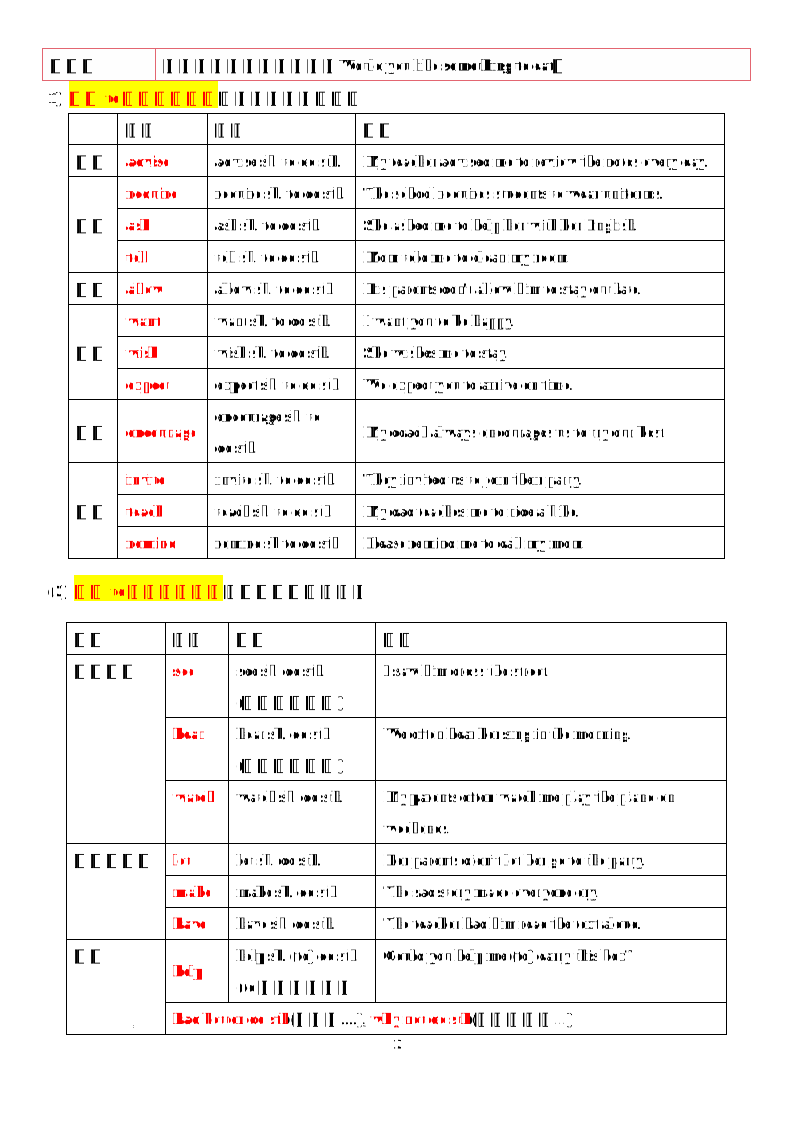
1) 不省 to 的动词不定式(动词原形)作宾补
单词
搭配
例句
建议
advise
advise sb. to do sth.
My teacher advised me to review the notes every day.
要求
require
require sb. to do sth.
The school requires students to wear uniforms.
ask
ask sb. to do sth.
She asked me to help her with her English.
tell
tell sb. to do sth.
Mom told me to clean my room.
允许
allow
allow sb. to do sth.
His parents don't allow him to stay out late.
期望
want
want sb. to do sth.
I want you to be happy.
wish
wish sb. to do sth.
She wishes me to stay.
expect
expect sb. to do sth.
We expect you to arrive on time.
鼓励
encourage
encourage sb. to do sth.
My coach always encourages us to try our best.
其他
invite
invite sb. to do sth.
They invited us to join their party.
teach
teach sb. to do sth.
My dad teaches me to ride a bike.
remind
remind sb to do sth
Please remind me to call my mom.
(2) 省略 to 的动词不定式(动词原形)作宾补
类别
单词
搭配
例句
感官动词
see
see sb. do sth.
(看见整个过程)
I saw him cross the street.
hear
hear sb. do sth.
(听见整个过程)
We often hear her sing in the morning.
watch
watch sb. do sth.
My parents often watch me play the piano on weekends.
使役动词:
let
let sb. do sth.
Her parents didn’t let her go to the party.
make
make sb. do sth.
The sad story made everyone cry.
have
have sb. do sth.
The teacher had him read the text aloud.
其他
help
help sb. (to) do sth.
(to 可省可不省)
Could you help me (to) carry this box?
had better do sth(最好做....), why not do sth(为什么不做...)
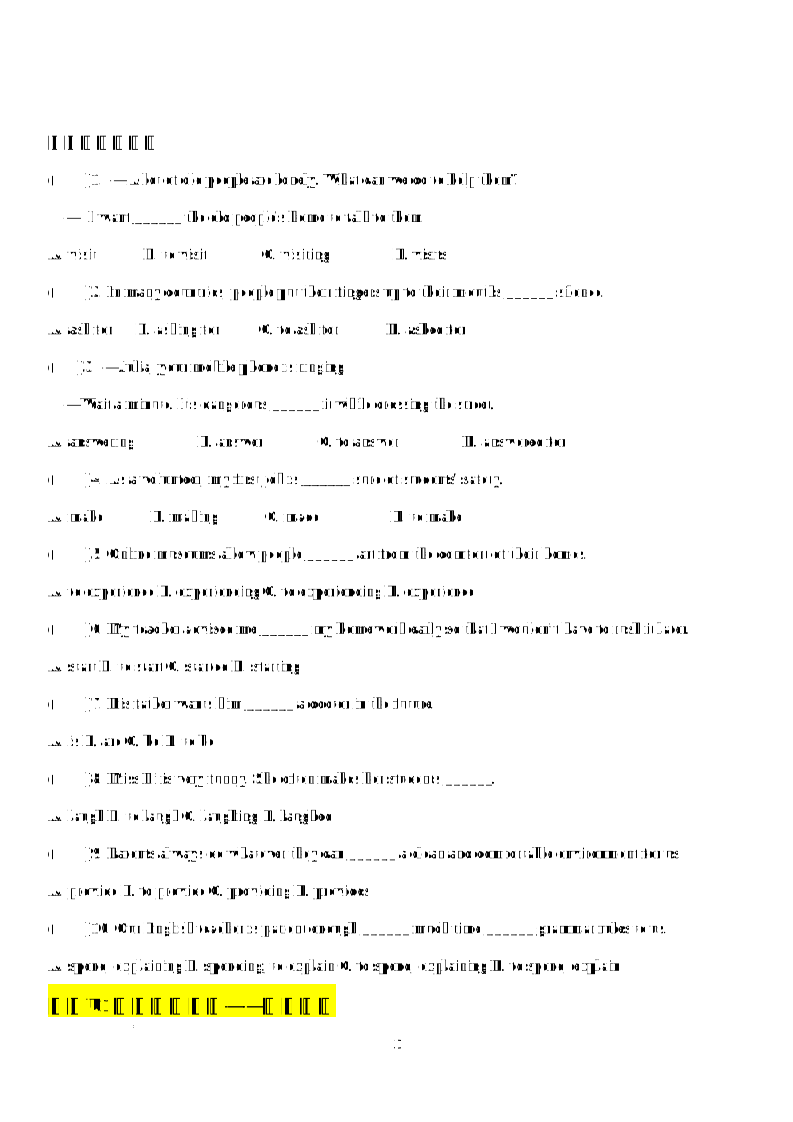
一、单项选择。
( )1. —A lot of old people are lonely. What can we do to help them?
— I want ______ the old people's home to talk to them.
A. visit B. to visit C. visiting D. visits
( )2. In many countries, people put their fingers up to their mouths ______ silence.
A. ask for B. asking for C. to ask for D. asked for
( )3. —Julia, your mobile phone is ringing.
—Wait a minute. It's dangerous ______ it while crossing the street.
A. answering B. answer C. to answer D. answered for
( )4. As a volunteer, my first job is ______ sure of students' safety.
A. make B. making C. made D. to make
( )5. Online museums allow people ______ art from the comfort of their homes.
A. to experience B. experiencing C. to experiencing D. experience
( )6. My teacher advised me ______ my homework early so that I wouldn’t have to rush it later.
A. start B. to start C. started D. starting
( )7. His father wants him ______ a doctor in the future.
A. is B. are C. be D. to be
( )8. Miss Li is very funny. She often makes her students ______.
A. laugh B. to laugh C. laughing D. laughed
( )9. Parents always do whatever they can ______ a clean and comfortable environment for us.
A. provide B. to provide C. providing D. provides
( )10. Our English teacher is patient enough ______ much time ______ grammar rules to us.
A. spend; explaining B. spending; to explain C. to spend; explaining D. to spend; explain
二、U1语法拓展训练——回归教材
阅读下面短文,用括号内所给词的适当形式填空。
creative it achievement of on not remember find use that
Hobbies That Are Good for You
When work or school is over, what do you do to pass the time? Do you spend time 1. ________ hobbies you love? Reading or listening to music can help us to calm down after a busy day. Physical hobbies, such as playing tennis or doing yoga, can help us to keep fit. And some hobbies are 2. __________. For example, people sometimes paint pictures 3. __________ ___________ a beautiful landscape orobject, or reduce stress.
Luca Bruno likes to be creative in his free time. But he doesn't make art or write stories. Instead, this Italian teenager finds 4. _______________ fun to make mobile phone apps. He thinks that apps can be a great way to help people. He started programming when he was ten, after he read about famous businessmen who started out as programmers. His latest app allows people around the world 5. ____________ ___________ study partners for learning Italian. They can learn Italian and make friends at the same time!
“It gives me such a sense of 6. ___________________to see people 7. ________________the app,” says Luca. “I believe I'm helping people around the world to learn Italian!”
Some people prefer 8. ________________ to make things. They prefer to collect them! In India, Maya Badal doesn't collect coins or stamps. Instead, this teenage girl collects postcards!
“I know some people think postcards are rather old-fashioned, but I think they're a good way to learn about different places,” Maya says. “I think it's interesting to see the beautiful buildings and landscapes in foreign countries."
Maya's first postcard shows the Mogao Caves in Dunhuang. Her dad sent it to her when she was five, and she liked it so much 9. ________________she put it up on her bedroom wall! Now there are over one hundred postcards from thirty-two countries on Maya's walls. She dreams 10. ________________ travelling to these places in the future!
三、U1重点词汇扩展
1
学科网(北京)股份有限公司
学科网(北京)股份有限公司
词汇拓展
1. ski → (动名词) skiing 2. program → (名词, “程序设计员”) programmer
3. express → (名词,”表达”) expression 4. single → (副词) singly
5. instructor → (动词) instruct → (名词, “用法说明”) instruction → (复数) instructions
6. scared → (动词) scare → (形容词, “令人害怕的”) scaring/scary
7. deal → (过去式) dealt → (过去分词) dealt 8. push → (反义词,”拉”) pull
9. manage → (名词, 管理) management → (名词, 管理者) manager
10. chat → (动名词) chatting → (过去式、过去分词) chatted
11. stress → (修饰人的形容词) stressed → (修饰物的形容词) stressful
12. Italian → (名词, 意大利) Italy 13. achievement → (动词) achieve
14. teenage → (名词) teenager 15. foreign → (名词, 外国人) foreigner
16. suggestion → (动词) suggest 17. failure → (动词) fail
18. inspiration → (动词) inspire
19. surprisingly → (形容词) surprising → (名词) surprise
20. importantly → (形容词) important → (名词) importance
四、U1重点短语总结
1. 滑冰;溜冰ice skating 2. 放弃give up 3. 害怕;恐惧scared of
4. 克服(困难);解决(问题)get over 5. 正在做;由某人决定up to 6. 作为回报in return
7. 开始做某事;进入get into 8. 试一试某事give it a go 9. 偶尔;间或once in a while
10. 出外游玩go on an outing 11. 梦想;希望dream of 12. 到目前为止so far
五、U1单元练习
一、用方框中所给短语的适当形式填空。
go on an outing; so far; get over; give it a go; up to; scared of; in return; dream of
1. I always ___________________ joining the school's sports club to make more friends.
2. Although it is difficult to climb the mountains, I want to ___________________.
3. Can I buy you lunch ___________________ for your help?
4. Emily can't ___________________ her shyness, so she doesn't want to take part in this speech competition.
5. Last month, my family and I ___________________ to the small mountain near our town. We took many beautiful photos.
6. It's not ___________________ you to tell me how to do my job.
7. I am ___________________ going out alone at night. Can you go with me?
8. ___________________, they have not found a way to fight the virus.
二、单项选择。
( )1. We will attend the festival in our town ______ more about tea culture.
A. learning B. to learn C. learned
( )2. Our English teacher is humorous and he often tells funny jokes to make us ______.
A. to laugh B. laugh C. laughed
Unit 2 Stay Healthy
一、U2单元语法
一、情态动词 should/could情态动词可以用来表示提议或建议。
1. should
情态动词 should 作“应该;应当;可以”讲,用以表达职责和义务、提出劝告,should +动词原形。should 的否定式是shouldn’t(should not) +动词原形,意思是“不应当;不该”。
When you have the flu, you should wear a mask when you're outside.患流感时,你出门应戴上口罩。
You shouldn't eat so much next time. 下次你不应该吃这么多了。
一般疑问句
Should +主语+动词原形+其他?
—It’s too cold. Should I close the window?
肯定回答
Yes, 主语+ should.
—Yes, you should.
否定回答
No, 主语+shouldn’t.
—No, you shouldn’t.
2. could
情态动词,意为 “可以;可能”,表示提出比较委婉、客气的建议,语气比 should 更弱,给对方选择的余地。其后同样接 动词原形 。
①could是can的过去式,表能力。
could的否定形式为 could not (缩写为 couldn’t )
He could write poems when he was 10. 他十岁时就会写诗了
could提问__could /couldn’t _答
②could不是can的过去式,表请求或征询许可。
could比can语气更委婉更礼貌。
could提问___can/can’t___答。
—— Mom, Could I ride my bike? —— No, you can’t.
反身代词 1.表示 某人自己 ,常用于主语和宾语是同一人的情况。
人称
代词
反身代词
第一人称单数
I
myself
第二人称单数
you
yourself
第三人称单数
he/she/it
himself/herself/itself
第一人称复数
we
ourselves
第二人称复数
you
yourselves
第三人称复数
they
themselves
2. 反身代词的用法
(1) 作宾语,当宾语和主语指同一个人时使用。例如:She often washes herself.(她经常自己洗澡。)
(2) 作同位语,用于强调主语。例如:I myself finished the work.(我自己完成了这项工作。)
(3) 作表语。Just be yourself. 做你自己就好了。
练习
一、用 should,could 或 shouldn't 填空。
1. Li Ming is ill. He ___________ take some medicine.
2. —I feel a little cold. —You ___________ try wearing a thicker jacket.
3. She has a sore throat. She ___________ eat too much hot food.
4. We ___________ learn from each other and help each other.
5. As students, you ___________ break the school rules.
二、用适当的反身代词填空:
myself / yourself / himself / herself / itself / ourselves / yourselves / themselves
1. The little girl finished the homework by ___________.
2. We enjoyed ___________ at the party last night.
3. He taught ___________ French when he was free.
4. Help ___________ to some fish, children.
5. The robot can clean the room by ___________.
6. I can do it by ___________. Don’t worry.
7. She hurt ___________ when she played basketball.
8. The boys made model planes by ___________.
9. Help ___________ to some fruit, Tom.
10. They enjoyed ___________ on the farm last weekend.
二、U2语法拓展训练——回归教材
阅读下面短文,用括号内所给词的适当形式填空。
on open they make happily burning that take threw out
James lived in the city with his friend Allen. It was their first time living away from their families, and they enjoyed learning how to do many things 1. .
One Saturday, James decided 2. fried chicken. First, he poured oil into a pan. Then he turned 3. the stove and left the oil to heat while he prepared the chicken. Just then, he heard the front door4. , followed by the sound of Allen singing.
“Guess what,” Allen called out 5. . “We won!”
“No way!” James followed him into the living room. He wanted to hear all about the football game! Suddenly, Allen stopped 6. and looked up.
“Hey, do you smell something 7. ?”
“Oh no!”
They both rushed back into the kitchen. The pan was on fire! Large flames were jumping into the air. In a panic(惊慌失措地), James turned off the stove at once. But he was so close to the pan
8. a flame jumped onto his shirt. James cried out and 9. himself to the floor. He put 10. the fire by rolling on the ground, but the pan was still burning!
“Get water, quick!” he shouted.
Allen was about to(即将...) do so when he stopped short. Thanks to(由于;因为) the first aid and safety classes he took at school, he knew that water could make oil fires much worse(更糟糕)! Instead, he ran to the living room to get the fire extinguisher. In seconds, the fire in the burning pan was put out(扑灭).
“Are you OK?” Allen asked his friend.
“I think so,” James said. It was lucky that his shirt wasn’t too thin! His arm was red, but it didn’t hurt very much.
“Maybe we should eat out tonight,” James said as he ran cool water over his arm.
“Sure, we could do that. What do you want?”
“Anything but fried chicken,” he said sadly.
三、U2重点词汇扩展
5
学科网(北京)股份有限公司
学科网(北京)股份有限公司
二、词汇拓展
1. ourselves → (主格) we → (宾格) us → (形容词性物主代词) our → (名词性物主代词) ours
2. stomachache → (名词, 胃) stomach
3. headache → (名词, 头) head
4. toothache → (名词, 牙) tooth → (复数) teeth
5. backache → (名词, 背) back
6. suffer → (名词) suffering
7. press → (名词) pressure
8. careless → (副词) carelessly → (名词) care → (形容词) careful → (副词) carefully
9. runny → (动词) run
10. bruised → (动词/名词, 青瘀) bruise
11. medicine → (形容词) medical
12. description → (动词) describe
13. patient → (名词) patience → (副词) patiently
14. injury → (动词) injure
15. illness → (形容词) ill
16. knife → (复数) knives
17. safety → (形容词) safe → (副词) safely
18. clear → (副词) clearly
19. pain → (形容词) painful
20. brightness → (形容词) bright
21. environment → (形容词) environmental
22. cross → (介词) across → (名词) crossing
23. themselves → (主格) they → (宾格) them → (形容词性物主代词) their → (名词性物主代词) theirs
24. fry → (形容词) fried/frying
25. happily → (名词) happiness
26. burn → (过去式、过去分词) burnt/burnt → (形容词) burning
27. throw → (过去式) threw → (过去分词) thrown
28. quick → (副词) quickly
29. sadly → (形容词) sad → (名词) sadness
30. smoke → (表人的名词) smoker → (动名词) smoking
31. unfortunately → (形容词) unfortunate → (反义词) fortunate
32. luckily → (形容词) lucky → (名词) luck
33. badly/bad → (比较级) worse → (最高级) worst
34. harm → (形容词) harmful
35. hit → (过去式) hit → (过去分词) hit
36. shock → (使人震惊的) shocked → (令人震惊的) shocking
37. bleed → (过去式) bled → (形容词) bleeding
38. tight → (副词) tightly
39. nervously → (形容词) nervous
40. allergic → (名词) allergy
四、U2重点短语总结
1. suffer from 受苦;受折磨 2. take a seat 坐下
3. take one's temperature 给某人体温 4. stop...from doing 防止……;阻止……
5. what's more 更有甚者;更为重要的是 6. turn on 接通(电流、煤气、水等);打开
7. no way 不可能;没门 8. catch fire 着火
9. be about to 即将;正要(做某事) 10. stop short 突然停住
11. first aid 急救 12. eat out 上馆子吃饭;在外用餐
13. lie down 平躺;平卧 14. from now on 从现在起
五、U2单元练习
一、根据句意,用括号内所给单词的正确形式填空。
1. You can do it by __________ (you). Don't ask others for help.
2. Last night, my father _________ (cough) again. I should advise him to give up smoking.
3. She left the door unlocked again. Such a _________ (care) habit that always makes her mum worry.
4. The Chinese artists can change their coloured _________ (mask) quickly when performing face changing.
5. The doctor seldom thought of himself and always thought of __________ (patient) first.
二、根据汉语意思完成句子,每空一词。
1. 许经常讲话后喉咙疼。她总是随身带着一瓶水。
Xu often has a ____________ ____________ after talking. She always takes a bottle of water with her.
2. 在二战期间,数百万的德国人也遭受了战争的迫害。
During World War Ⅱ, millions of Germans _____________ _____________ ____________ the war too.
3. 拥有一个健康身体的方法之一是避免在运动之后喝太多冷饮。
One of the ways to have a healthy body is to _________ _________ too many cold drinks after exercising.
4. 她昨晚熬夜了,现在头疼。
She stayed up late last night and now she _________ _________ _________.
八下 Unit 1-2复习 单元语法+阅读改编+重点单词短语【教师版】
Unit1 Time to Relax
一、U1单元语法
动词不定式精讲
一、构成:基本形式是“to + 动词原形”,没有人称和数的变化,在句子中不能作谓语。否定式是在动词不定式前加not to + 动词原形,如:Lily asked me not to use her computer。
二、用法:
功能
示例
作主语
①动词不定式作主语时,谓语动词用第三人称单数形式;
To give is better than to take. 奉献比索取好。
②为了避免句子头重脚轻,常用it作形式主语,常用于以下固定句型中:。
It’s + adj + for/of + sb + to do sth 做某事对某人来说……
It’s necessary for us to learn English well.
对我们来说,学好英语是必要的。
作宾语
①及物动词后直接跟带to的不定式
want、decide、hope、ask、agree、learn、plan、need、expect、refuse等动词后常接to do 作宾语(to 不可以省略)
Tony wants to find a job as a teacher in China. 托尼想在中国找一份做老师的工作。
②疑问词+ to do:
动词不定式可以和疑问词what、which、who、how、when、where等连用,构成不定式短语。
I don’t know what to do next. 我不知道接下来该做什么。
作宾语补足语
v.+ sb.(宾语)+ to do(宾补) want、ask、allow、expect、wish等+ sb.(宾语)+ to do sth.
He asked me to help him with his English.他请求我帮他学英语。
Her words made me feel happy. 她的话让我感到开心。
作状语
动词不定式作状语表示目的、结果或原因。考查动词不定式作目的状语较多,动词不定式表目的时,to do翻译成“为了”。
He came to Beijing to have a meeting. 他来北京开会。
作表语
放在系动词之后,如:His dream is to be a teacher.
作定语
放在被修饰词之后,如:Would you like something to eat?
1) 不省 to 的动词不定式(动词原形)作宾补
单词
搭配
例句
建议
advise
advise sb. to do sth.
My teacher advised me to review the notes every day.
要求
require
require sb. to do sth.
The school requires students to wear uniforms.
ask
ask sb. to do sth.
She asked me to help her with her English.
tell
tell sb. to do sth.
Mom told me to clean my room.
允许
allow
allow sb. to do sth.
His parents don't allow him to stay out late.
期望
want
want sb. to do sth.
I want you to be happy.
wish
wish sb. to do sth.
She wishes me to stay.
expect
expect sb. to do sth.
We expect you to arrive on time.
鼓励
encourage
encourage sb. to do sth.
My coach always encourages us to try our best.
其他
invite
invite sb. to do sth.
They invited us to join their party.
teach
teach sb. to do sth.
My dad teaches me to ride a bike.
remind
remind sb to do sth
Please remind me to call my mom.
(2) 省略 to 的动词不定式(动词原形)作宾补
类别
单词
搭配
例句
感官动词
see
see sb. do sth.
(看见整个过程)
I saw him cross the street.
hear
hear sb. do sth.
(听见整个过程)
We often hear her sing in the morning.
watch
watch sb. do sth.
My parents often watch me play the piano on weekends.
使役动词:
let
let sb. do sth.
Her parents didn’t let her go to the party.
make
make sb. do sth.
The sad story made everyone cry.
have
have sb. do sth.
The teacher had him read the text aloud.
其他
help
help sb. (to) do sth.
(to 可省可不省)
Could you help me (to) carry this box?
had better do sth(最好做....), why not do sth(为什么不做...)
一、单项选择。
( B )1. —A lot of old people are lonely. What can we do to help them?
— I want ______ the old people's home to talk to them.
A. visit B. to visit C. visiting D. visits
( C )2. In many countries, people put their fingers up to their mouths ______ silence.
A. ask for B. asking for C. to ask for D. asked for
( C )3. —Julia, your mobile phone is ringing.
—Wait a minute. It's dangerous ______ it while crossing the street.
A. answering B. answer C. to answer D. answered for
( D )4. As a volunteer, my first job is ______ sure of students' safety.
A. make B. making C. made D. to make
( A )5. Online museums allow people ______ art from the comfort of their homes.
A. to experience B. experiencing C. to experiencing D. experience
( B )6. My teacher advised me ______ my homework early so that I wouldn’t have to rush it later.
A. start B. to start C. started D. starting
( D )7. His father wants him ______ a doctor in the future.
A. is B. are C. be D. to be
( A )8. Miss Li is very funny. She often makes her students ______.
A. laugh B. to laugh C. laughing D. laughed
( B )9. Parents always do whatever they can ______ a clean and comfortable environment for us.
A. provide B. to provide C. providing D. provides
( C )10. Our English teacher is patient enough ______ much time ______ grammar rules to us.
A. spend; explaining B. spending; to explain C. to spend; explaining D. to spend; explain
二、U1语法拓展训练——回归教材
阅读下面短文,用括号内所给词的适当形式填空。
creative it achievement of on not remember find use that
Hobbies That Are Good for You
When work or school is over, what do you do to pass the time? Do you spend time 1. ____on___ hobbies you love? Reading or listening to music can help us to calm down after a busy day. Physical hobbies, such as playing tennis or doing yoga, can help us to keep fit. And some hobbies are 2. ___creative______. For example, people sometimes paint pictures 3. ____to_____ _____remember_____ a beautiful landscape orobject, or reduce stress.
Luca Bruno likes to be creative in his free time. But he doesn't make art or write stories. Instead, this Italian teenager finds 4. ______it________ fun to make mobile phone apps. He thinks that apps can be a great way to help people. He started programming when he was ten, after he read about famous businessmen who started out as programmers. His latest app allows people around the world 5. ______to_____ _____find_____ study partners for learning Italian. They can learn Italian and make friends at the same time!
“It gives me such a sense of 6. ___achievement____to see people 7. ____use______the app,” says Luca. “I believe I'm helping people around the world to learn Italian!”
Some people prefer 8. ____not______ to make things. They prefer to collect them! In India, Maya Badal doesn't collect coins or stamps. Instead, this teenage girl collects postcards!
“I know some people think postcards are rather old-fashioned, but I think they're a good way to learn about different places,” Maya says. “I think it's interesting to see the beautiful buildings and landscapes in foreign countries."
Maya's first postcard shows the Mogao Caves in Dunhuang. Her dad sent it to her when she was five, and she liked it so much 9. ______that______she put it up on her bedroom wall! Now there are over one hundred postcards from thirty-two countries on Maya's walls. She dreams 10. ________of_______ travelling to these places in the future!
三、U1重点词汇扩展
1
学科网(北京)股份有限公司
学科网(北京)股份有限公司
词汇拓展
1. ski → (动名词) skiing 2. program → (名词, “程序设计员”) programmer
3. express → (名词,”表达”) expression 4. single → (副词) singly
5. instructor → (动词) instruct → (名词, “用法说明”) instruction → (复数) instructions
6. scared → (动词) scare → (形容词, “令人害怕的”) scaring/scary
7. deal → (过去式) dealt → (过去分词) dealt 8. push → (反义词,”拉”) pull
9. manage → (名词, 管理) management → (名词, 管理者) manager
10. chat → (动名词) chatting → (过去式、过去分词) chatted
11. stress → (修饰人的形容词) stressed → (修饰物的形容词) stressful
12. Italian → (名词, 意大利) Italy 13. achievement → (动词) achieve
14. teenage → (名词) teenager 15. foreign → (名词, 外国人) foreigner
16. suggestion → (动词) suggest 17. failure → (动词) fail
18. inspiration → (动词) inspire
19. surprisingly → (形容词) surprising → (名词) surprise
20. importantly → (形容词) important → (名词) importance
四、U1重点短语总结
1. 滑冰;溜冰ice skating 2. 放弃give up 3. 害怕;恐惧scared of
4. 克服(困难);解决(问题)get over 5. 正在做;由某人决定up to 6. 作为回报in return
7. 开始做某事;进入get into 8. 试一试某事give it a go 9. 偶尔;间或once in a while
10. 出外游玩go on an outing 11. 梦想;希望dream of 12. 到目前为止so far
五、U1单元练习
一、用方框中所给短语的适当形式填空。
go on an outing; so far; get over; give it a go; up to; scared of; in return; dream of
1. I always ____dream of______ joining the school's sports club to make more friends.
2. Although it is difficult to climb the mountains, I want to ____give it a go____.
3. Can I buy you lunch _____in return______ for your help?
4. Emily can't _____get over________ her shyness, so she doesn't want to take part in this speech competition.
5. Last month, my family and I _____went on an outing________ to the small mountain near our town. We took many beautiful photos.
6. It's not ____up to_____ you to tell me how to do my job.
7. I am _____scared of________ going out alone at night. Can you go with me?
8. _____So far________, they have not found a way to fight the virus.
二、单项选择。
( B )1. We will attend the festival in our town ______ more about tea culture.
A. learning B. to learn C. learned
( B )2. Our English teacher is humorous and he often tells funny jokes to make us ______.
A. to laugh B. laugh C. laughed
Unit 2 Stay Healthy
一、U2单元语法
一、情态动词 should/could情态动词可以用来表示提议或建议。
1. should
情态动词 should 作“应该;应当;可以”讲,用以表达职责和义务、提出劝告,should +动词原形。should 的否定式是shouldn’t(should not) +动词原形,意思是“不应当;不该”。
When you have the flu, you should wear a mask when you're outside.患流感时,你出门应戴上口罩。
You shouldn't eat so much next time. 下次你不应该吃这么多了。
一般疑问句
Should +主语+动词原形+其他?
—It’s too cold. Should I close the window?
肯定回答
Yes, 主语+ should.
—Yes, you should.
否定回答
No, 主语+shouldn’t.
—No, you shouldn’t.
2. could
情态动词,意为 “可以;可能”,表示提出比较委婉、客气的建议,语气比 should 更弱,给对方选择的余地。其后同样接 动词原形 。
①could是can的过去式,表能力。
could的否定形式为 could not (缩写为 couldn’t )
He could write poems when he was 10. 他十岁时就会写诗了
could提问__could /couldn’t _答
②could不是can的过去式,表请求或征询许可。
could比can语气更委婉更礼貌。
could提问___can/can’t___答。
—— Mom, Could I ride my bike? —— No, you can’t.
反身代词 1.表示 某人自己 ,常用于主语和宾语是同一人的情况。
人称
代词
反身代词
第一人称单数
I
myself
第二人称单数
you
yourself
第三人称单数
he/she/it
himself/herself/itself
第一人称复数
we
ourselves
第二人称复数
you
yourselves
第三人称复数
they
themselves
2. 反身代词的用法
(1) 作宾语,当宾语和主语指同一个人时使用。例如:She often washes herself.(她经常自己洗澡。)
(2) 作同位语,用于强调主语。例如:I myself finished the work.(我自己完成了这项工作。)
(3) 作表语。Just be yourself. 做你自己就好了。
练习
一、用 should,could 或 shouldn't 填空。
1. Li Ming is ill. He ___should_____ take some medicine.
2. —I feel a little cold. —You ___could___ try wearing a thicker jacket.
3. She has a sore throat. She __shouldn’t____ eat too much hot food.
4. We ___should____ learn from each other and help each other.
5. As students, you _____shouldn’t____ break the school rules.
二、用适当的反身代词填空:
myself / yourself / himself / herself / itself / ourselves / yourselves / themselves
1. The little girl finished the homework by __herself____.
2. We enjoyed ___ourselves____ at the party last night.
3. He taught ___himself__ French when he was free.
4. Help ____yourselves____ to some fish, children.
5. The robot can clean the room by ___itself____.
6. I can do it by ___myself____. Don’t worry.
7. She hurt ____herself____ when she played basketball.
8. The boys made model planes by ___themselves_____.
9. Help ____yourself____ to some fruit, Tom.
10. They enjoyed ____themselves___ on the farm last weekend.
二、U2语法拓展训练——回归教材
阅读下面短文,用括号内所给词的适当形式填空。
on open they make happily burning that talk threw out
James lived in the city with his friend Allen. It was their first time living away from their families, and they enjoyed learning how to do many things by 1. themselves .
One Saturday, James decided 2. to make fried chicken. First, he poured oil into a pan. Then he turned 3. on the stove and left the oil to heat while he prepared the chicken. Just then, he heard the front door4. open , followed by the sound of Allen singing.
“Guess what,” Allen called out 5. happily . “We won!”
“No way!” James followed him into the living room. He wanted to hear all about the football game! Suddenly, Allen stopped 6. talking and looked up.
“Hey, do you smell something 7. burning ?”
“Oh no!”
They both rushed back into the kitchen. The pan was on fire! Large flames were jumping into the air. In a panic(惊慌失措地), James turned off the stove at once. But he was so close to the pan
8. that a flame jumped onto his shirt. James cried out and 9. threw himself to the floor. He put 10. out the fire by rolling on the ground, but the pan was still burning!
“Get water, quick!” he shouted.
Allen was about to(即将...) do so when he stopped short. Thanks to(由于;因为) the first aid and safety classes he took at school, he knew that water could make oil fires much worse(更糟糕)! Instead, he ran to the living room to get the fire extinguisher. In seconds, the fire in the burning pan was put out(扑灭).
“Are you OK?” Allen asked his friend.
“I think so,” James said. It was lucky that his shirt wasn’t too thin! His arm was red, but it didn’t hurt very much.
“Maybe we should eat out tonight,” James said as he ran cool water over his arm.
“Sure, we could do that. What do you want?”
“Anything but fried chicken,” he said sadly.
三、U2重点词汇扩展
5
学科网(北京)股份有限公司
学科网(北京)股份有限公司
二、词汇拓展
1. ourselves → (主格) we → (宾格) us → (形容词性物主代词) our → (名词性物主代词) ours
2. stomachache → (名词, 胃) stomach
3. headache → (名词, 头) head
4. toothache → (名词, 牙) tooth → (复数) teeth
5. backache → (名词, 背) back
6. suffer → (名词) suffering
7. press → (名词) pressure
8. careless → (副词) carelessly → (名词) care → (形容词) careful → (副词) carefully
9. runny → (动词) run
10. bruised → (动词/名词, 青瘀) bruise
11. medicine → (形容词) medical
12. description → (动词) describe
13. patient → (名词) patience → (副词) patiently
14. injury → (动词) injure
15. illness → (形容词) ill
16. knife → (复数) knives
17. safety → (形容词) safe → (副词) safely
18. clear → (副词) clearly
19. pain → (形容词) painful
20. brightness → (形容词) bright
21. environment → (形容词) environmental
22. cross → (介词) across → (名词) crossing
23. themselves → (主格) they → (宾格) them → (形容词性物主代词) their → (名词性物主代词) theirs
24. fry → (形容词) fried/frying
25. happily → (名词) happiness
26. burn → (过去式、过去分词) burnt/burnt → (形容词) burning
27. throw → (过去式) threw → (过去分词) thrown
28. quick → (副词) quickly
29. sadly → (形容词) sad → (名词) sadness
30. smoke → (表人的名词) smoker → (动名词) smoking
31. unfortunately → (形容词) unfortunate → (反义词) fortunate
32. luckily → (形容词) lucky → (名词) luck
33. badly/bad → (比较级) worse → (最高级) worst
34. harm → (形容词) harmful
35. hit → (过去式) hit → (过去分词) hit
36. shock → (使人震惊的) shocked → (令人震惊的) shocking
37. bleed → (过去式) bled → (形容词) bleeding
38. tight → (副词) tightly
39. nervously → (形容词) nervous
40. allergic → (名词) allergy
四、U2重点短语总结
1. suffer from 受苦;受折磨 2. take a seat 坐下
3. take one's temperature 给某人体温 4. stop...from doing 防止……;阻止……
5. what's more 更有甚者;更为重要的是 6. turn on 接通(电流、煤气、水等);打开
7. no way 不可能;没门 8. catch fire 着火
9. be about to 即将;正要(做某事) 10. stop short 突然停住
11. first aid 急救 12. eat out 上馆子吃饭;在外用餐
13. lie down 平躺;平卧 14. from now on 从现在起
五、U2单元练习
一、根据句意,用括号内所给单词的正确形式填空。
1. You can do it by _____yourself____ (you). Don't ask others for help.
2. Last night, my father __coughed___ (cough) again. I should advise him to give up smoking.
3. She left the door unlocked again. Such a __careless___ (care) habit that always makes her mum worry.
4. The Chinese artists can change their coloured __masks___ (mask) quickly when performing face changing.
5. The doctor seldom thought of himself and always thought of ___patients___ (patient) first.
二、根据汉语意思完成句子,每空一词。
1. 许经常讲话后喉咙疼。她总是随身带着一瓶水。
Xu often has a ___sore_____ _____throat____ after talking. She always takes a bottle of water with her.
2. 在二战期间,数百万的德国人也遭受了战争的迫害。
During World War Ⅱ, millions of Germans ____also_____ ____suffered___ ____from_____ the war too.
3. 拥有一个健康身体的方法之一是避免在运动之后喝太多冷饮。
One of the ways to have a healthy body is to __avoid___ ___drinking__ too many cold drinks after exercising.
4. 她昨晚熬夜了,现在头疼。
She stayed up late last night and now she ___has___ ___a___ ____headache___.
5
学科网(北京)股份有限公司
学科网(北京)股份有限公司
$
资源预览图
1
2
3
相关资源
由于学科网是一个信息分享及获取的平台,不确保部分用户上传资料的 来源及知识产权归属。如您发现相关资料侵犯您的合法权益,请联系学科网,我们核实后将及时进行处理。