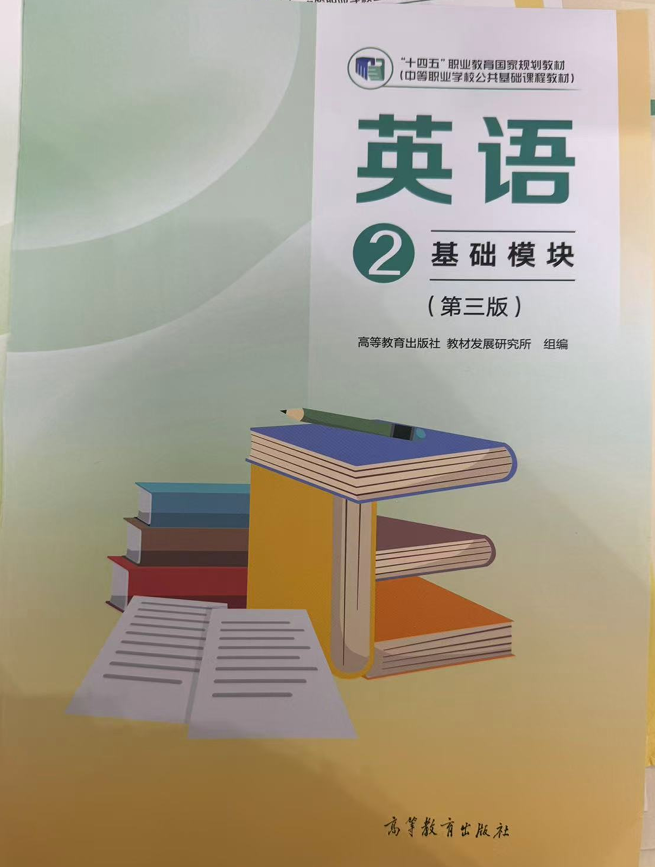
Unit 5 Ancient Civilization(B卷·能力提升)《英语 基础模块2》(高教版第三版)单元过关卷(原卷版+解析版)
2026-04-03
|
2份
|
37页
|
52人阅读
|
0人下载
内容正文:
编写说明:本套试卷紧扣《英语 基础模块2》(高教版第三版)教材,以教材单元为基准精准覆盖核心考点。
每个单元设置AB卷,A卷为基础巩固卷,侧重基础考点训练,帮助学生扎实掌握知识要点;B卷为能力提升卷,注重知识整合与全面检测,引导学生构建知识网络。全书设计4份综合测试卷,模拟实战情境,聚焦解题能力突破,全面提升应试能力与知识应用水平。
《英语 基础模块2》(高教版第三版)《单元过关卷》
Unit 5 Ancient Civilization
B卷·能力提升
考试时间:40分钟 满分:100分
班级 姓名 学号 成绩
第一部分 英语知识运用(共四节,满分 55 分)
第一节(共 5 小题;每小题 1 分,满分 5 分)
语音辨音
从A、B、C、D四个选项中找出其划线部分与所给单词划线部分读音相同的选项。
1.together
A.shopping B.polite C.money D.wonder
2.widely
A.decision B.receive C.firework D.direction
3.lucky
A.actually B.future C.put D.umbrella
4.celebrate
A.activity B.grass C.phrase D.lantern
5.smoothly
A.although B.thank C.through D.breath
第二节(共 25 小题;每小题 1 分,满分 25 分)
从 A、B、C、D 四个选项中选出可以填入空白处的最佳选项。
6.Do you know ________ over there?
A.what happen B.what was happened C.what is happening D.what did happen
7.—The dragon boat races are so exciting, but our boat is still behind.
—Don’t worry. I’m sure ________.
A.how are the races going B.who is the winner
C.when the races will end D.that our team will win
8.Scientists looked at birds and studied ______.
A.how do they fly B.what do they fly C.how they fly D.what they fly
9.I ________ think he ________ come tomorrow.
A./; won’t B.don’t; will C./; will be D.don’t; won’t
10.I ________ to interrupt others while they are talking.
A.think it is not polite B.don’t think it is polite
C.think it’s polite D.don’t think it’s not polite
11.I don't think it's good for parents to give their children ____ they want.
A.whatever B.however C.wherever D.whoever
12.I’m curious ________ the Northern Lights usually appear in the polar regions.
A.why B.that C.which D.who
13.The manager asked the worker _________, but he didn’t get any replies.
A.how long did he stay in the office B.how could he work out the problem
C.why he was late again D.whether he can help repair the machine
14.I was curious about ________.
A.what life was like in 50 years
B.how did Newton come up with the idea of gravity
C.whether robots will replace humans to fly aeroplanes
D.why a stocking that looked red to some people looked grey to him
15.—I want to buy a new computer. Any advice, John?
— Well, it depends on ________. If money is not the problem, you can choose IBM.
A.what colour you like
B.where you will use it
C.when you will buy one
D.how much you can afford
16.— Lucy, the film Ne zha 2 is very hot now. Would you like to watch it with me tonight?
— Good idea. Could you tell me ________.
— Just the two of us.
A.how we’ll get there B.what time you want to go
C.whom we’ll go with D.which cinema you’ll choose
17.I don’t doubt ________ he can finish the task, but I doubt ________ he wants to do it.
A.that; that B.if; if C.that; if D.if; that
18.I haven’t given you my address. And you have no idea ________.
A.where I am staying B.what I am doing
C.when I did cleaning D.how I kept running
19.When you finish reading the book, just give it to Kate or Alice, or ________ is interested in it.
A.wherever B.whenever C.whatever D.whoever
20.We should punish ________breaks the rules.
A.who B.whoever C.what D.whatever
21.You might not know _______ , but you might have heard of the Morandi colors(莫兰迪色). These colors _______ after Giorgio Morandi, an Italian painter.
A.who is Morandi; are named B.who is Morandi; named
C.who Morandi is; are named D.who Morandi is; named
22.I wonder if she ________ to the party tonight. If she ________, we can surprise her with a cake.
A.comes; is coming B.is coming; will come
C.comes; will come D.will come; comes
23.The tourists are discussing ________ Chengdu or Changsha is the best city ________ at this time of the year.
A.whether; to visit B.if; to visit
C.whether; to be visited D.if; to be visited
24.I never doubt ________ the Sanxingdui Museum is well worth ________.
A.whether; visiting B.that; visiting
C.that; being visited D.if; a visit
25.I ________ think there ________ be more pollution in two years.
A.don’t; will B./; won’t C.will; don’t D.won’t; /
26.A report shows ________ teenagers need to devote more time ________ others.
A.which; understanding B.whether; understanding
C.that; to understand D./; to understanding
27.Vicky hopes to become a friend of ________ shares her interests.
A.anyone B.whomever C.whoever D.who
28.They have promised to do ________ everything back to normal.
A.all they can bring B.all which they can to bring
C.whatever they can to bring D.no matter what they can bring
29.There are many kinds of books in the library and you can choose ________ you like.
A.however B.whenever C.whoever D.whatever
30.—Sorry, it’s already 6 o’clock. I have to be off for an important dinner.
—OK. ________.
A.It couldn’t be better B.You really have me there
C.Take your time D.Let’s call it a day
第三节(共 10 小题;每小题 1.5 分,满分 15 分)
阅读下面短文,从每题所给的 A、B、C、D 四个选项中选出最佳选项,并在答题卡上将该项涂黑。
Nathan is a middle school student. He often goes to a 31 to see the fossils (化石). And he always feels proud to see some of them. Why? Because he found them!
Nathan got 32 plants and animals when he was very little and he wanted to be a paleontologist (古生物学家). One day, he went climbing with his father. They didn’t know a big 33 was waiting for them. After two hours of climbing, they finally reached the mountain top. When they were about to sit down and relax, Nathan 34 noticed a special fossil under his foot! He asked his 35 to come and have a look. Both of them were surprised. They took some photos of the fossil and sent 36 to the workers in the museum. Soon, some of the workers 37 . It turned out that the fossil was a bone from the arm of a duck-billed dinosaur (鸭嘴龙). Later, the workers found more bones there. Everyone was 38 . The dinosaur was a very important find 39 it was from about 69 million years ago.
“You see, Dad? I know I will 40 a paleontologist some day,” Nathan said excitedly. His father’s smile said everything.
31.A.zoo B.lab C.company D.museum
32.A.afraid of B.interested in C.worried about D.proud of
33.A.surprise B.problem C.collection D.fantasy
34.A.still B.ever C.suddenly D.usually
35.A.father B.mother C.uncle D.friend
36.A.it B.them C.him D.her
37.A.forgot B.relaxed C.arrived D.left
38.A.down B.excited C.lucky D.lonely
39.A.because B.or C.but D.so
40.A.name B.follow C.trust D.become
第四节(共 5 小题;每小题 2 分,满分 10 分)
The Laba Festival is one of the most important traditional festivals in China . It falls on the eighth day of the ____41____ (twelve) lunar month .
At the Laba Festival, people usually cook Laba Congee. There is a story about how people started eating congee during the festival. Zhu Yuanzhang, the first emperor of the Ming Dynasty, helped a rich man look after some cows when he was young. One day, because of Zhu’s ____42____ (careless), a cow got hurt. The rich man was so angry that he locked Zhu in a small room. After some time, Zhu felt so hungry that he started to look for food in the room. ____43____ (lucky), he found some rice , beans and other food in the corner. He cooked them by himself and had a good meal. That day was the eighth day of the last month. As a result, Zhu named it Laba Congee.
Another custom on Laba Festival is to make Laba garlic ( 蒜). It’s really easy ____44____ (do) it . People put clean garlic into vinegar (醋) on that day . As the days go by, the garlic turns green and has a special flavor. Some people think nothing could be ____45___ (good ) with it while eating dumplings.
第二部分 阅读(共两节,满分 50 分)
第一节(共 15 小题;每小题 2.5 分,满分 37.5 分)
阅读下列短文,从每题所给的 A、B、C、D 四个选项中选出最佳选项,并在答题卡上将该项涂黑。
A
When Li Xia and her 10-year-old son visited a museum, her son noticed an archaeological (考古的) blind box that allows people to dig up the earth and find their own treasures. The boy asked his mother to buy the blind box online as his birthday gift.
“My boy spent a night digging up the box. He was so interested in the treasures hidden in it that he asked me to visit the museum that produced the box later,” says Li.
The blind box is a star product designed by Hunan Museum in Changsha, Hunan Province. Since it was on sale in 2021, it has become the most popular product at the museum’s online store according to Zhang Lin, designer of the blind box.
“It offers a joyful way to recreate the experience of how archaeologists work. Most buyers are young people and children,” says Zhang. With tools such as scoops, brushes and gloves, people can follow the same steps as archaeologists do to find out their own treasures. The most interesting part lies in the unknown journey to discover what kind of treasures people would finally dig out. The treasures are small-sized copies of cultural relics (文物) chosen from Hunan Museum’s collections, such as bronze ware (青铜器) of the Shang Dynasty (商朝).
“The blind box is a special creation of museums in China. It mixes the blind box with archaeology. It’s interesting, so it can catch people’s eye,” says Yang Yueming, a professor from Beijing Normal University.
“Behind the blind box is people’s love for their long history. It also shows that the cultural products have provided a joyful and fun experience,” Yang adds.
46.Where did Li Xia buy her son the blind box?
A.In a museum. B.In a supermarket.
C.In an online store. D.In a big box company.
47.How can people find their own treasures?
A.By visiting the museums.
B.By collecting many useful tools.
C.By following the steps as archeologists.
D.By digging up the box from the museum.
48.Which can be the best title of the text?
A.A popular toy from museums.
B.Treasures created by the museum.
C.Cultural products develop rapidly.
D.The blind box opens the door to history.
B
Just as the saying (谚语) goes, “Life is like a box of chocolates. You never know what you’re going to get.” Not only life, so are the mystery boxes (盲盒) from a museum in Zhengzhou, Henan Province.
The museum catches visitors’ eye with many kinds of archaeological (考古的) mystery boxes. These mystery boxes are popular because visitors can find replicas of cultural relics (文物复制品) by themselves.
If you want an archaeological mystery box, you just need to spend about 60 yuan on it. Then you can dig and find your own treasure. The mystery boxes come in different sizes and shapes. Some are small and some are big. The museum’s first mystery boxes sold out very soon because many people were interested in them. And many visitors asked the museum to produce more.
However, the museum in Henan is not the only museum to sell archaeological mystery boxes in China. The Shaanxi History Museum in Xi’an has made its own mystery box models. And the mystery boxes from the Sanxingdui Museum in Sichuan are also popular with people.
The museums are trying to tell ancient Chinese stories by producing creative products.
It’s a great way for young people to get to know about Chinese history and culture, too. If you’re interested, come and get one!
49.How does the writer start the text?
A.By introducing a saying. B.By asking a question.
C.By showing a study. D.By telling a story.
50.Why are the archaeological mystery boxes popular?
A.Because they come in different sizes.
B.Because there are real treasures in them.
C.Because visitors can find replicas of cultural relics by themselves.
D.Because they can show visitors’ love for their family.
51.What does the underlined word “produce” mean?
A.Make things. B.Show things. C.Hit things. D.Grow things.
52.What is the text mainly about?
A.The differences between museums.
B.How to make mystery boxes.
C.The archaeological mystery boxes in Chinese museums.
D.The history of museums.
C
The world’s earliest known tea set is now on show at Shaanxi History Museum in Xi’an, known as Chang’an during the Tang Dynasty, when it was the national capital and one of the world’s biggest cities.
Liang Guilin, a researcher with the museum who has studied tea-related history for a long time, says the earliest known tea was broken up and shaped into cakes after being steamed and dried. These were stored in cages when taken to the royal palace.
“When people prepared to enjoy tea, they would break the cakes into small pieces and make them into powder,” Liang explains. Sieved (已过滤的) tea powders were poured into boiling water. People added salt. Boiling times were skillfully controlled to produce perfect conditions— not “too fresh” nor “too old”, he says.
“This tea set’s discovery proves (证实) that tea culture is rooted (植根) in China and offers a physical sample of what’s recorded (记录) in The Classic of Tea”.
The Classic of Tea was written by writer Lu Yu and was first published in 780. It’s the world’s first known book on tea. It offers lots of information about how different kinds of tea were grown, processed, rated, cooked and tasted, as well as how tea sets should be designed and produced.
Liang’s study of tea’s development in China has led him to believe tea is more than a drink. He considers a good tea set to be the “father of good tea” and boiling water to be the “mother”. The best tea can only be made through balancing different elements.
53.Which of the following is the correct order of enjoying tea?
①Sieve tea powders. ②Make tea cakes into powder. ③Pour into boiling water.
④Break tea cakes into small pieces. ⑤Add salt
A.④⑤①③② B.④③②①⑤ C.④②①③⑤ D.④②③①⑤
54.The underlined sentence in the last paragraph means ________.
A.a good tea set makes the best tea
B.both a good tea set and boiling water make the best tea
C.boiling water makes the best tea
D.neither a good tea set nor boiling water makes the best tea
55.It can be inferred from the passage that ________.
A.The tea set on show is very valuable to Chinese history.
B.Lu Yu invented tea drinking in the Tang Dynasty.
C.Ancient people drank tea just like we do today.
D.The Shanxi History Museum is the largest museum in China.
56.What is the main purpose of this passage?
A.To introduce the way of making tea in ancient China.
B.To explain how The Classic of Tea was written and published.
C.To show that Chinese tea culture has a long and rooted history through the earliest tea set.
D.To describe the collection of Shaanxi History Museum.
D
Sanxingdui flourished (繁荣) during the late Shang Dynasty and had a highly developed bronze (青铜) culture. However, there is no written record of this civilization, so we once knew very little about it.
For decades, experts have been trying hard to solve the mysteries behind Sanxingdui. One major mystery is the sudden disappearance of the Sanxingdui civilization. Hundreds of jade, bronze, and valuable things were broken or burned and buried. Then the civilization disappeared completely. Where did its people go? What happened to them?
Around the same time, a similar civilization appeared in Jinsha, about 38 kilometres from Sanxingdui. Experts generally accept that the Jinsha civilization is a continuation (延续) of the Sanxingdui culture. However, the reason for the move remains a subject of discussion.
War? Floods? After the 2008 Wenchuan earthquake, Fan Niannian, a scientist studying rivers at Sichuan University suggested that the actual cause might have been a major earthquake. He explained, “The earthquake may not have destroyed Sanxingdui directly. Instead, it could have caused a landslide (山崩) that changed the flow of the Minjiang River. This would have cut off the water supply. Without water, the Sanxingdui people had no choice but to move.”
Professor Fan’s idea makes sense, but it still doesn’t explain why they broke and buried their treasures instead of taking them away. Was it part of a sacrificial ceremony? There is evidence suggesting that they did not do it in a hurry—it was deliberate (故意的). That’s what still remains so mysterious.
57.When did the Sanxingdui civilization flourish?
A.In the early Shang Dynasty. B.In the late Shang Dynasty.
C.In the early Zhou Dynasty. D.In the late Zhou Dynasty.
58.Why did Professor Fan Niannian think the Sanxingdui people might have moved?
A.Because a war destroyed their home.
B.Because a major earthquake cut off their water supply.
C.Because a flood buried their city.
D.Because they ran out of food and other resources.
59.We can infer from the passage that the author believes________.
A.the Sanxingdui civilization was completely destroyed by a war.
B.experts have finally solved all the mysteries of Sanxingdui.
C.the reason why treasures were buried deliberately is still unknown.
D.the Jinsha civilization has no connection with Sanxingdui.
60.What is the passage mainly about?
A.The importance of the Sanxingdui discovery.
B.The debate (争论) on whether the Sanxingdui people moved to Jinsha.
C.The possible reasons for and the remaining mysteries of Sanxingdui’s disappearance.
D.A detailed introduction to the bronze culture of the late Shang Dynasty.
第二节(共 5 小题;每小题 2.5 分,满分 12.5 分)
M: Are you really going to a museum?
W: Of course, art is very important. I like it. 61 Don’t you like art? And this is the largest museum in Beijing.
M: 62
W: Mostly modern art, but in all styles and forms.
M: Is there a special exhibit?
W: Yes, there is a modern art exhibit all month, and it’s on the third floor. 63 Look at this piece of art, it’s very famous. Can you see why?
M: No, I can’t. 64
W: You really don’t have a taste for art. Look at the shapes and colors. It’s fantastic. It takes talent to make this kind of painting.
M: Look at this one. It looks really old.
W: Yes, it is. 65 Look at all the details. I bet it’s expensive.
M: Yeah, I think so too, but it’s not for sale. And I couldn’t afford it if it was.
A.Let’s go upstairs.
B.What kind of art is there?
C.It was done hundreds of years ago.
D.It’s a way to understand culture and history.
E.It looks like a kid painted it with some colored pencils or something.
第三部分 书面表达(满分 15 分)
66.假如你是李华,你的英国笔友Eric给你发来电子邮件想了解中国的瓷器。请你给他回复一封邮件。
要求:1. 应包含图表提示中的所有要点,可适当进行拓展。
2. 书写工整、规范,文中不得提及真实的人名、校名等相关信息。
3. 不少于80词,开头和结尾已给出,不计入总词数。
Name: Jingdezhen porcelain (瓷器)
History: more than 1,600 years
Material: china clay
Producer: craftsmen (手艺人)
Uses: be enjoyed by people; be used for decoration (装饰)
Meaning: a symbol of traditional Chinese culture
Dear Eric,
I’m writing to introduce Jingdezhen porcelain to you.
____________________________________________________________________________________________________________________________________________________________________________________________________________________________________________________________________________________________________________________________________________________________________________________________________________________________________________________________________________________________________________________________________________________________________________________________________________________________________________________________________________________________________________________________________________
Have a good day!
Yours,
Li Hua
学科网(北京)股份有限公司 (
1
)原创精品资源学科网独家享有版权,侵权必究!
学科网(北京)股份有限公司
$
编写说明:本套试卷紧扣《英语 基础模块2》(高教版第三版)教材,以教材单元为基准精准覆盖核心考点。
每个单元设置AB卷,A卷为基础巩固卷,侧重基础考点训练,帮助学生扎实掌握知识要点;B卷为能力提升卷,注重知识整合与全面检测,引导学生构建知识网络。全书设计4份综合测试卷,模拟实战情境,聚焦解题能力突破,全面提升应试能力与知识应用水平。
《英语 基础模块2》(高教版第三版)《单元过关卷》
Unit 5 Ancient Civilization
B卷·能力提升
考试时间:40分钟 满分:100分
班级 姓名 学号 成绩
第一部分 英语知识运用(共四节,满分 55 分)
第一节(共 5 小题;每小题 1 分,满分 5 分)
语音辨音
从A、B、C、D四个选项中找出其划线部分与所给单词划线部分读音相同的选项。
1.together
A.shopping B.polite C.money D.wonder
2.widely
A.decision B.receive C.firework D.direction
3.lucky
A.actually B.future C.put D.umbrella
4.celebrate
A.activity B.grass C.phrase D.lantern
5.smoothly
A.although B.thank C.through D.breath
【答案】1.B 2.C 3.D 4.C 5.A
【解析】1.考查元音字母的发音。together/təˈɡeðə(r)/ ;A. shopping/ˈʃɒpɪŋ/;B. polite/pəˈlaɪt/;C. money/ˈmʌni/;D. wonder/ˈwʌndə(r)/。根据音标可知,together的划线部分发音和polite划线部分发音一致。故选B。
2.考查元音字母的发音。widely/ˈwaɪdli/ A. decision/dɪˈsɪʒ(ə)n/;B. receive/rɪˈsiːv/;C. firework/ˈfaɪəwɜːk/;D. direction/dəˈrekʃ(ə)n/。根据音标可知,widely的划线部分发音和firework划线部分发音一致。故选C。
3.考查元音字母的发音。lucky/ˈlʌki/ A. actually/ˈæktʃuəli/;B. future/ˈfjuːtʃə(r)/;C. put/pʊt/;D. umbrella/ʌmˈbrelə/。根据音标可知,lucky的划线部分发音和umbrella划线部分发音一致。故选D。
4.考查元音字母的发音。celebrate/ˈselɪbreɪt/ A. activity/ækˈtɪvəti/;B. grass/ɡrɑːs/;C. phrase/freɪz/;D. lantern/ˈlæntən/。根据音标可知,celebrate的划线部分发音和phrase划线部分发音一致。故选C。
5.考查辅音字母组合的发音。smoothly/ˈsmuːðli/ A. although/ɔːlˈðəʊ/;B. thank/θæŋk/;C. through/θruː/;D. breath/breθ/。根据音标可知,smoothly的划线部分发音和although划线部分发音一致。故选A。
第二节(共 25 小题;每小题 1 分,满分 25 分)
从 A、B、C、D 四个选项中选出可以填入空白处的最佳选项。
6.Do you know ________ over there?
A.what happen B.what was happened C.what is happening D.what did happen
【答案】C
【详解】句意:你知道那边正在发生什么事吗?
happen是不及物动词,没有被动语态,排除B选项;本句是宾语从句,从句用陈述句语序,排除D选项;A选项what作主语,谓语动词应用第三人称单数,故排除;C选项为陈述句语序,且时态是现在进行时,符合“询问那边正在发生什么”的语境。
7.—The dragon boat races are so exciting, but our boat is still behind.
—Don’t worry. I’m sure ________.
A.how are the races going B.who is the winner
C.when the races will end D.that our team will win
【答案】D
【详解】句意:——龙舟比赛真刺激,但我们船还落后。——别担心。我相信我们的队会赢。
考查宾语从句。how are the races going比赛进行得怎么样,疑问语序;who is the winner获胜者是谁,疑问语序;when the races will end比赛何时结束,陈述语序;that our team will win我们的队会赢,陈述语序。主句“I’m sure”后接宾语从句,需用陈述语序,排除A、B。根据前句“Don’t worry”可知,说话人是在安慰对方,表达对结果的积极预期,应用that引导的肯定性从句。故选D。
8.Scientists looked at birds and studied ______.
A.how do they fly B.what do they fly C.how they fly D.what they fly
【答案】C
【详解】句意:科学家们观察鸟类并研究它们如何飞行。
how do they fly和what do they fly为疑问语序,不符合宾语从句陈述语序的要求;what they fly语义不通,不符合“研究鸟类飞行方式”的语境;how they fly为陈述语序,且语义表达“它们如何飞行”,符合本题语法和语境要求。
9.I ________ think he ________ come tomorrow.
A./; won’t B.don’t; will C./; will be D.don’t; won’t
【答案】B
【详解】句意:我认为他明天不会来。
考查否定转移。/; won’t主句无否定,从句否定;don’t; will主句否定,从句肯定;/; will主句和从句均为肯定;don’t; won’t主句和从句均否定。在英语中,当主句谓语是think(认为)时,若要对宾语从句的内容进行否定,通常将否定词转移到主句,即用“I don’t think + 肯定形式的宾语从句”表达“我认为……不……”。本句中“他明天不会来”应表达为“I don’t think he will come tomorrow”,从句用肯定形式“will”。“don’t; will”符合否定转移结构。故选B。
10.I ________ to interrupt others while they are talking.
A.think it is not polite B.don’t think it is polite
C.think it’s polite D.don’t think it’s not polite
【答案】B
【详解】句意:我认为在别人说话时打断他们是不礼貌的。
考查否定前移。根据“to interrupt others while they are talking.”以及常识可知,“打断别人说话”这一行为是不礼貌的,因此排除C/D;在英语中,当“think”的主语是第一人称,且“think”后接宾语从句表示否定意义时,通常否定前移,即把否定词放在主句的谓语动词前,而宾语从句用肯定形式。故选B。
11.I don't think it's good for parents to give their children ____ they want.
A.whatever B.however C.wherever D.whoever
【答案】A
【详解】句意:我认为父母给孩子想要的一切并不好。
考查连词。A. whatever无论什么,不管什么;B. however无论如何;C. wherever无论哪里;D. whoever 无论是谁。此处连词引导宾语从句且在从句中作宾语,表示事物,应该用whatever,故选A。
12.I’m curious ________ the Northern Lights usually appear in the polar regions.
A.why B.that C.which D.who
【答案】A
【详解】句意:我很好奇为什么北极光通常出现在极地地区。
考查宾语从句。why为什么;that无实义,仅起引导作用;which哪一个;who谁。主句“I’m curious...the Northern Lights usually appear in the polar regions”可知,应是好奇为什么北极光出现在极地地区,选择表示原因的引导词“why”。故选A。
13.The manager asked the worker _________, but he didn’t get any replies.
A.how long did he stay in the office B.how could he work out the problem
C.why he was late again D.whether he can help repair the machine
【答案】C
【详解】句意:经理问那个工人为什么又迟到了,但他没有得到任何答复。
考查宾语从句。how long did he stay in the office他在办公室待了多久,疑问语序;how could he work out the problem他怎么能解决这个问题,疑问语序;why he was late again他为什么又迟到了,陈述语序;whether he can help repair the machine他是否能帮忙修理这台机器,陈述语序。根据“The manager asked the worker…”可知,此处是宾语从句,应该用陈述语序,排除A、B选项;主句时态是一般过去时,从句时态遵循“主过从必过”原则,D选项为一般现在时,不符合语境。故选C。
14.I was curious about ________.
A.what life was like in 50 years
B.how did Newton come up with the idea of gravity
C.whether robots will replace humans to fly aeroplanes
D.why a stocking that looked red to some people looked grey to him
【答案】D
【详解】句意:我好奇为什么一只袜子对某些人看起来是红色的,对他看起来却是灰色的。
考查宾语从句。题干中“about”后需接宾语从句,且从句必须使用陈述句语序(主语+谓语),时态应与主句“was”(过去时)保持一致。选项A中“in 50 years”表示未来,但用了过去时“was”,时态不一致;选项B为疑问语序;选项C用了将来时“will”,但主句为过去时,应改为过去将来时“would”以保持时态一致。故选D。
15.—I want to buy a new computer. Any advice, John?
— Well, it depends on ________. If money is not the problem, you can choose IBM.
A.what colour you like
B.where you will use it
C.when you will buy one
D.how much you can afford
【答案】D
【详解】句意:——我想买台新电脑。约翰,有一些建议吗?——嗯,这取决于你能付得起多少钱。如果钱不是问题,你可以选择IBM。
考查宾语从句。what colour you like你喜欢什么颜色;where you will use it你将在哪里使用它;when you will buy one你将什么时候买一个;how much you can afford你能付得起多少钱;根据“If money is not the problem”可知,此处表示钱方面的问题,故选D。
16.— Lucy, the film Ne zha 2 is very hot now. Would you like to watch it with me tonight?
— Good idea. Could you tell me ________.
— Just the two of us.
A.how we’ll get there B.what time you want to go
C.whom we’ll go with D.which cinema you’ll choose
【答案】C
【详解】句意:—— Lucy,电影《哪吒2》现在很火。今晚你愿意和我一起看吗?——好主意。你能告诉我还有谁和我们一起去吗?——只有我们两个。
考查宾语从句。how we’ll get there我们怎么到那儿;what time you want to go你想什么时候去; whom we’ll go with 我们将和谁一起去;which cinema you’ll choose你选择去哪家电影院。根据“Could you tell me …?”和答语“Just the two of us.”可知,回答只有我们两个人去,则此处应问和谁一起去。故选C。
17.I don’t doubt ________ he can finish the task, but I doubt ________ he wants to do it.
A.that; that B.if; if C.that; if D.if; that
【答案】C
【详解】句意:我不怀疑他能完成这项任务,但我怀疑他是否想要做这件事。
考查宾语从句的引导词。根据“I don’t doubt”可知,此句为否定句,只能用that引导宾语从句,排除B和D;根据“but I doubt”可知,此句为肯定句,常用if引导宾语从句。故选C。
18.I haven’t given you my address. And you have no idea ________.
A.where I am staying B.what I am doing
C.when I did cleaning D.how I kept running
【答案】A
【详解】句意:我还没有给你我的地址。你不知道我住在哪里。
考查宾语从句。where I am staying我住在哪里;what I am doing我正在做什么;when I did cleaning我什么时候打扫了卫生;how I kept running我是如何坚持跑步的。前句提到“address”,因此后句应与地点信息有关。故选A。
19.When you finish reading the book, just give it to Kate or Alice, or ________ is interested in it.
A.wherever B.whenever C.whatever D.whoever
【答案】D
【详解】句意:当你读完这本书时,把它给Kate或Alice,或者是对它感兴趣的任何人。
考查从属连词辨析。wherever无论在哪里;whenever无论何时;whatever无论什么;whoever无论是谁。根据“is interested in it”可知介词to后接宾语从句,从句中缺少主语中,因此应用whoever来引导该宾语从句,whoever在句中作主语,表示“……的任何人”。故选D。
20.We should punish ________breaks the rules.
A.who B.whoever C.what D.whatever
【答案】B
【详解】句意:我们应该惩罚任何违反规则的人。
考查宾语从句引导词。who谁;whoever无论谁、任何人;what什么;whatever无论什么。根据句意,可知是无论任何人违反规则都应该受到惩罚,因此whoever符合题意。故选B。
21.You might not know _______ , but you might have heard of the Morandi colors(莫兰迪色). These colors _______ after Giorgio Morandi, an Italian painter.
A.who is Morandi; are named B.who is Morandi; named
C.who Morandi is; are named D.who Morandi is; named
【答案】C
【详解】句意:你可能不知道莫兰迪是谁,但你可能听说过莫兰迪色。这些颜色以意大利画家乔治·莫兰迪的名字命名。
考查宾语从句和被动语态。分析第一句可知这是一个宾语从句,从句用陈述语序:连接词+主语+谓语,据此排除AB选项。分析第二句可知句子主语和为动词之间是动宾关系,应用被动语态:be done,故选C。
22.I wonder if she ________ to the party tonight. If she ________, we can surprise her with a cake.
A.comes; is coming B.is coming; will come
C.comes; will come D.will come; comes
【答案】D
【详解】句意:我想知道她今晚是否会来参加聚会。如果她来,我们可以用蛋糕给她一个惊喜。
考查条件状语从句和宾语从句的时态。第一空,根据“I wonder if she...to the party tonight.”可知,此处是宾语从句,结合“tonight”可知,从句表示将来动作,需用一般将来时,排除A和C;第二空,根据“If she...,”可知,此处是“If”引导的条件状语从句,遵循“主将从现”的原则,从句用一般现在时表将来, 主语为“she”,动词用第三人称单数形式comes,排除B。故选D。
23.The tourists are discussing ________ Chengdu or Changsha is the best city ________ at this time of the year.
A.whether; to visit B.if; to visit
C.whether; to be visited D.if; to be visited
【答案】A
【详解】句意:游客们正在讨论成都和长沙哪个是每年这个时候最适合游览的城市。
考查连词和非谓语动词用法。whether是否;if是否。根据“discussing…Chengdu or Changsha”可知,discuss后接“是否”时常用whether;“the best city…” 中,city与visit是主动关系,此处需要用动词不定式作后置定语,whether和to visit符合语境。故选A。
24.I never doubt ________ the Sanxingdui Museum is well worth ________.
A.whether; visiting B.that; visiting
C.that; being visited D.if; a visit
【答案】B
【详解】句意:我从不怀疑三星堆博物馆非常值得参观。
考查宾语从句引导词和worth的用法。whether是否; that无实义; if 是否;visiting值得参观,是动名词形式;being visited是动名词的被动形式,a visit是名词。doubt在否定句中后接that引导的宾语从句,“be worth doing”是固定搭配,意为“值得做某事”,用主动形式表被动含义,故选择B。
25.I ________ think there ________ be more pollution in two years.
A.don’t; will B./; won’t C.will; don’t D.won’t; /
【答案】A
【详解】句意:我认为两年内不会有更多的污染。
考查时态及否定转移。think后接宾语从句,从句中是否定的意思时,应将否定形式前移到主句中,故第一个空用否定的形式,第二个空用肯定的形式,根据“in two years”可知,从句时态为一般将来时。故选A。
26.A report shows ________ teenagers need to devote more time ________ others.
A.which; understanding B.whether; understanding
C.that; to understand D./; to understanding
【答案】D
【详解】句意:一份报告显示青少年需要投入更多时间理解他人。
考查宾语从句引导词和动词短语搭配。主句“A report shows”后接宾语从句,从句“teenagers need to devote more time to understanding others”为陈述事实,引导词“that”可省略。动词短语“devote time to”中“to”为介词,后需接动名词,因此“to understanding”正确。故选D。
27.Vicky hopes to become a friend of ________ shares her interests.
A.anyone B.whomever C.whoever D.who
【答案】C
【详解】句意:Vicky希望成为任何与她有共同兴趣的人的朋友。
考查宾语从句。此句有两个谓语,此空应填连词,排除A;该引导词在从句中作主语,排除B;根据“Vicky hopes to become a friend of...shares her interests.”可知,Vicky希望成为任何与她有共同兴趣的人的朋友,whoever“无论谁”符合题意。故选C。
28.They have promised to do ________ everything back to normal.
A.all they can bring B.all which they can to bring
C.whatever they can to bring D.no matter what they can bring
【答案】C
【详解】句意:他们已承诺尽一切努力使一切恢复正常。
考查宾语从句和不定式。由句中“everything back to normal”知,此句是说他们承诺做他们能做的一切事情让一切恢复正常,应用whatever引导的从句作宾语,且用动词不定式作目的状语,B项中“all”后应跟that引导定语从句,故排除,故选C。
29.There are many kinds of books in the library and you can choose ________ you like.
A.however B.whenever C.whoever D.whatever
【答案】D
【详解】句意:图书馆里有很多种书,你可以选择你喜欢的任何书。
考查单词辨析。however无论如何;whenever无论何时;whoever无论谁;whatever无论什么。分析句子“you can choose...you like.”可知,此句是一个宾语从句;再者根据“you like”可知,like缺少宾语,因此用whatever引导宾语从句。故选D。
30.—Sorry, it’s already 6 o’clock. I have to be off for an important dinner.
—OK. ________.
A.It couldn’t be better B.You really have me there
C.Take your time D.Let’s call it a day
【答案】D
【详解】句意:——抱歉,已经6点钟了。我得下班去参加一个重要的晚宴。——好的。今天就到这儿吧。
考查情景交际。It couldn’t be better那再好不过了;You really have me there你真地说服我了; Take your time慢慢来;Let’s call it a day今天就到这儿吧。根据上文“Sorry, it’s already 6 o’clock. I have to be off for an important dinner.”可知已经到了下班时间了,对方有重要的晚宴要参加,因此应结束一天的工作了。故选D。
第三节(共 10 小题;每小题 1.5 分,满分 15 分)
阅读下面短文,从每题所给的 A、B、C、D 四个选项中选出最佳选项,并在答题卡上将该项涂黑。
Nathan is a middle school student. He often goes to a 31 to see the fossils (化石). And he always feels proud to see some of them. Why? Because he found them!
Nathan got 32 plants and animals when he was very little and he wanted to be a paleontologist (古生物学家). One day, he went climbing with his father. They didn’t know a big 33 was waiting for them. After two hours of climbing, they finally reached the mountain top. When they were about to sit down and relax, Nathan 34 noticed a special fossil under his foot! He asked his 35 to come and have a look. Both of them were surprised. They took some photos of the fossil and sent 36 to the workers in the museum. Soon, some of the workers 37 . It turned out that the fossil was a bone from the arm of a duck-billed dinosaur (鸭嘴龙). Later, the workers found more bones there. Everyone was 38 . The dinosaur was a very important find 39 it was from about 69 million years ago.
“You see, Dad? I know I will 40 a paleontologist some day,” Nathan said excitedly. His father’s smile said everything.
31.A.zoo B.lab C.company D.museum
32.A.afraid of B.interested in C.worried about D.proud of
33.A.surprise B.problem C.collection D.fantasy
34.A.still B.ever C.suddenly D.usually
35.A.father B.mother C.uncle D.friend
36.A.it B.them C.him D.her
37.A.forgot B.relaxed C.arrived D.left
38.A.down B.excited C.lucky D.lonely
39.A.because B.or C.but D.so
40.A.name B.follow C.trust D.become
【答案】
31.D 32.B 33.A 34.C 35.A 36.B 37.C 38.B 39.A 40.D
【导语】本文讲述了内森从小对古生物感兴趣,一次爬山时突然发现鸭嘴龙化石,博物馆工作人员赶到后确认这是6900万年前的重要发现。他因此更加坚定未来要成为古生物学家的梦想。
31.句意:他经常去博物馆看化石。
zoo动物园;lab实验室;company公司;museum博物馆。根据“see the fossils”可知,看化石应该是去博物馆。故选D。
32.句意:内森很小的时候就对动植物产生了兴趣,他想成为一名古生物学家。
afraid of害怕;interested in对……感兴趣;worried about担心;proud of以……为傲。根据“he wanted to be a paleontologist”可知,内森很小的时候就对动植物产生了兴趣。故选B。
33.句意:他们不知道有一个大惊喜在等着他们。
surprise惊喜;problem问题;collection收藏品;fantasy幻想。根据“When they were about to sit down and relax, Nathan... noticed a special fossil under his foot! He asked his... to come and have a look. Both of them were surprised.”可知,内森发现了化石,这是一个惊喜。故选A。
34.句意:当他们正要坐下休息时,内森突然注意到脚下有一块特殊的化石!
still仍然;ever曾经;suddenly突然;usually通常。根据“Nathan... noticed a special fossil under his foot”可知,此处指突然发现脚下的化石。故选C。
35.句意:他叫他父亲过来看一看。
father父亲;mother母亲;uncle叔叔;friend朋友。根据“he went climbing with his father”可知,内森是和他的父亲一起爬山的,所以是喊父亲过来看一看。故选A。
36.句意:他们给化石拍了一些照片,寄给博物馆的工作人员。
it它;them它们;him他;her她。根据“They took some photos of the fossil and sent... to the workers in the museum.”可知,此处指把拍的照片寄给博物馆工作人员,应用代词them。故选B。
37.句意:很快,一些工作人员来了。
forgot忘记;relaxed放松;arrived到达;left离开。根据“some of the workers...”可知,此处指博物馆工作人员收到照片后到达现场考察化石。故选C。
38.句意:每个人都很兴奋。
down沮丧;excited兴奋的;lucky幸运的;lonely孤独的。根据“the workers found more bones there”可知,发现恐龙化石应该是让人兴奋。故选B。
39.句意:这种恐龙是一个非常重要的发现,因为它来自大约6900万年前。
because因为;or或者;but但是;so所以。根据“The dinosaur was a very important find... it was from about 69 million years ago.”可知,横线前后是因果关系,前果后因。故选A。
40.句意:“你看,爸爸?我知道有一天我会成为一名古生物学家,”内森兴奋地说。
name命名;follow跟随;trust信任;become成为。根据“a paleontologist”可知,此处指成为一名古生物学家。故选D。
第四节(共 5 小题;每小题 2 分,满分 10 分)
The Laba Festival is one of the most important traditional festivals in China . It falls on the eighth day of the ____41____ (twelve) lunar month .
At the Laba Festival, people usually cook Laba Congee. There is a story about how people started eating congee during the festival. Zhu Yuanzhang, the first emperor of the Ming Dynasty, helped a rich man look after some cows when he was young. One day, because of Zhu’s ____42____ (careless), a cow got hurt. The rich man was so angry that he locked Zhu in a small room. After some time, Zhu felt so hungry that he started to look for food in the room. ____43____ (lucky), he found some rice , beans and other food in the corner. He cooked them by himself and had a good meal. That day was the eighth day of the last month. As a result, Zhu named it Laba Congee.
Another custom on Laba Festival is to make Laba garlic ( 蒜). It’s really easy ____44____ (do) it . People put clean garlic into vinegar (醋) on that day . As the days go by, the garlic turns green and has a special flavor. Some people think nothing could be ____45___ (good ) with it while eating dumplings.
【答案】41.twelfth 42.carelessness 43.Luckily 44.to do 45.better
【导语】本文是一篇说明文,主要介绍了中国腊八节的时间、传统美食腊八粥和腊八蒜的相关习俗及由来。
41.考查序数词。句意:它在农历十二月初八。根据名词单数“month”可知,此处表示“第十二个”月份,应用twelve的序数词形式twelfth。故填twelfth。
42.考查副词。句意:因为朱的粗心,一头牛受伤了。分析句子可知,此处被名词所有格“Zhu’s”修饰,应用careless的名词形式carelessness。故填carelessness。
43.考查副词。句意:幸运的是,他在角落里找到了一些大米、豆子和其他食物。分析句子可知,此处修饰整个句子,应用lucky的副词形式Luckily,句首首字母大写。故填Luckily。
44.考查非谓语动词。句意:做它真的很容易。根据“It’s really easy”可知,此处用法为固定句型“It’s +形容词+ to do sth.”意为“做某事是……的”,此处应用动词不定式to do。故填to do。
45.考查形容词比较级。句意:有些人认为吃饺子时没有什么比它更好的了。根据“nothing could be”可知,此处表示“更好的”,应用good的比较级better。故填better。
第二部分 阅读(共两节,满分 50 分)
第一节(共 15 小题;每小题 2.5 分,满分 37.5 分)
阅读下列短文,从每题所给的 A、B、C、D 四个选项中选出最佳选项,并在答题卡上将该项涂黑。
A
When Li Xia and her 10-year-old son visited a museum, her son noticed an archaeological (考古的) blind box that allows people to dig up the earth and find their own treasures. The boy asked his mother to buy the blind box online as his birthday gift.
“My boy spent a night digging up the box. He was so interested in the treasures hidden in it that he asked me to visit the museum that produced the box later,” says Li.
The blind box is a star product designed by Hunan Museum in Changsha, Hunan Province. Since it was on sale in 2021, it has become the most popular product at the museum’s online store according to Zhang Lin, designer of the blind box.
“It offers a joyful way to recreate the experience of how archaeologists work. Most buyers are young people and children,” says Zhang. With tools such as scoops, brushes and gloves, people can follow the same steps as archaeologists do to find out their own treasures. The most interesting part lies in the unknown journey to discover what kind of treasures people would finally dig out. The treasures are small-sized copies of cultural relics (文物) chosen from Hunan Museum’s collections, such as bronze ware (青铜器) of the Shang Dynasty (商朝).
“The blind box is a special creation of museums in China. It mixes the blind box with archaeology. It’s interesting, so it can catch people’s eye,” says Yang Yueming, a professor from Beijing Normal University.
“Behind the blind box is people’s love for their long history. It also shows that the cultural products have provided a joyful and fun experience,” Yang adds.
46.Where did Li Xia buy her son the blind box?
A.In a museum. B.In a supermarket.
C.In an online store. D.In a big box company.
47.How can people find their own treasures?
A.By visiting the museums.
B.By collecting many useful tools.
C.By following the steps as archeologists.
D.By digging up the box from the museum.
48.Which can be the best title of the text?
A.A popular toy from museums.
B.Treasures created by the museum.
C.Cultural products develop rapidly.
D.The blind box opens the door to history.
【答案】46.C 47.C 48.D
【导语】本文是说明文。主要介绍了湖南长沙湖南博物馆推出的考古盲盒,它将盲盒与考古结合,受到大众喜爱。
46.细节理解题。根据“ The blind box is a star product ... it has become the most popular product at the museum’s online store”以及“The boy asked his mother to buy the blind box online”可知,李霞是在网店给儿子买的盲盒。故选C。
47.细节理解题。根据“people can follow the same steps as archaeologists do to find out their own treasures”可知,人们可以按照考古学家的步骤来找到宝藏。故选C。
48.最佳标题题。文章围绕考古盲盒展开,它让人们在体验中接触历史文化,D选项“盲盒打开了通往历史的大门”最能概括主旨。故选D。
B
Just as the saying (谚语) goes, “Life is like a box of chocolates. You never know what you’re going to get.” Not only life, so are the mystery boxes (盲盒) from a museum in Zhengzhou, Henan Province.
The museum catches visitors’ eye with many kinds of archaeological (考古的) mystery boxes. These mystery boxes are popular because visitors can find replicas of cultural relics (文物复制品) by themselves.
If you want an archaeological mystery box, you just need to spend about 60 yuan on it. Then you can dig and find your own treasure. The mystery boxes come in different sizes and shapes. Some are small and some are big. The museum’s first mystery boxes sold out very soon because many people were interested in them. And many visitors asked the museum to produce more.
However, the museum in Henan is not the only museum to sell archaeological mystery boxes in China. The Shaanxi History Museum in Xi’an has made its own mystery box models. And the mystery boxes from the Sanxingdui Museum in Sichuan are also popular with people.
The museums are trying to tell ancient Chinese stories by producing creative products.
It’s a great way for young people to get to know about Chinese history and culture, too. If you’re interested, come and get one!
49.How does the writer start the text?
A.By introducing a saying. B.By asking a question.
C.By showing a study. D.By telling a story.
50.Why are the archaeological mystery boxes popular?
A.Because they come in different sizes.
B.Because there are real treasures in them.
C.Because visitors can find replicas of cultural relics by themselves.
D.Because they can show visitors’ love for their family.
51.What does the underlined word “produce” mean?
A.Make things. B.Show things. C.Hit things. D.Grow things.
52.What is the text mainly about?
A.The differences between museums.
B.How to make mystery boxes.
C.The archaeological mystery boxes in Chinese museums.
D.The history of museums.
【答案】49.A 50.C 51.A 52.C
【导语】本文是一篇说明文,文章通过引用谚语引出主题,介绍了河南郑州博物馆的考古盲盒,包括其受欢迎的原因、价格、大小形状以及其他博物馆也推出类似产品的情况,还说明了博物馆通过创意产品讲述中国古代故事,这是年轻人了解中国历史文化的好方式。
49.细节理解题。根据文章第一段“Just as the saying (谚语) goes, ‘Life is like a box of chocolates. You never know what you’re going to got.’”可知,作者通过引用一句谚语来开始文章。故选A。
50.细节理解题。根据文章第二段“These mystery boxes are popular because visitors can find replicas of cultural relics (文物复制品) by themselves.”可知,考古盲盒受欢迎是因为游客可以自己找到文物复制品。故选C。
51.词句猜测题。根据文章第三段“The museum’s first mystery boxes sold out very soon because many people were interested in them. And many visitors asked the museum to produce more.”以及前文提到盲盒售罄,游客要求更多,可推断“produce”意为“制作、生产”东西。故选A。
52.主旨大意题。文章主要围绕中国博物馆里的考古盲盒展开,介绍了其相关情况,包括受欢迎原因、不同博物馆的盲盒等,所以文章主要是关于中国博物馆里的考古盲盒。故选C。
C
The world’s earliest known tea set is now on show at Shaanxi History Museum in Xi’an, known as Chang’an during the Tang Dynasty, when it was the national capital and one of the world’s biggest cities.
Liang Guilin, a researcher with the museum who has studied tea-related history for a long time, says the earliest known tea was broken up and shaped into cakes after being steamed and dried. These were stored in cages when taken to the royal palace.
“When people prepared to enjoy tea, they would break the cakes into small pieces and make them into powder,” Liang explains. Sieved (已过滤的) tea powders were poured into boiling water. People added salt. Boiling times were skillfully controlled to produce perfect conditions— not “too fresh” nor “too old”, he says.
“This tea set’s discovery proves (证实) that tea culture is rooted (植根) in China and offers a physical sample of what’s recorded (记录) in The Classic of Tea”.
The Classic of Tea was written by writer Lu Yu and was first published in 780. It’s the world’s first known book on tea. It offers lots of information about how different kinds of tea were grown, processed, rated, cooked and tasted, as well as how tea sets should be designed and produced.
Liang’s study of tea’s development in China has led him to believe tea is more than a drink. He considers a good tea set to be the “father of good tea” and boiling water to be the “mother”. The best tea can only be made through balancing different elements.
53.Which of the following is the correct order of enjoying tea?
①Sieve tea powders. ②Make tea cakes into powder. ③Pour into boiling water.
④Break tea cakes into small pieces. ⑤Add salt
A.④⑤①③② B.④③②①⑤ C.④②①③⑤ D.④②③①⑤
54.The underlined sentence in the last paragraph means ________.
A.a good tea set makes the best tea
B.both a good tea set and boiling water make the best tea
C.boiling water makes the best tea
D.neither a good tea set nor boiling water makes the best tea
55.It can be inferred from the passage that ________.
A.The tea set on show is very valuable to Chinese history.
B.Lu Yu invented tea drinking in the Tang Dynasty.
C.Ancient people drank tea just like we do today.
D.The Shanxi History Museum is the largest museum in China.
56.What is the main purpose of this passage?
A.To introduce the way of making tea in ancient China.
B.To explain how The Classic of Tea was written and published.
C.To show that Chinese tea culture has a long and rooted history through the earliest tea set.
D.To describe the collection of Shaanxi History Museum.
【答案】53.C 54.B 55.A 56.C
【导语】本文是一篇说明文,通过介绍陕西历史博物馆展出的世界最早茶具,结合唐代茶饼制作、饮用方式及《茶经》记载,阐述了中国茶文化的悠久起源与深厚传统,强调了茶具与茶艺在中国文化中的重要地位。
53.细节理解题。根据“they would break the cakes into small pieces...make them into powder. Sieved tea powders were poured into boiling water. People added salt”可知,正确顺序为:④将茶饼弄碎 → ②制成粉末 → ①过滤茶粉 → ③倒入沸水 → ⑤加盐,故选C。
54.词句猜测题。根据“He considers a good tea set to be the ‘father of good tea’ and boiling water to be the ‘mother’. The best tea can only be made through balancing different elements.”可知,好的茶具与沸水如同父母,共同协作才能制出最好的茶,故选B。
55.推理判断题。根据“The world’s earliest known tea set is now on show”及“proves that tea culture is rooted in China and offers a physical sample”可推断,这套茶具对中国历史极具价值,故选A。
56.主旨大意题。本文通过介绍世界上最早的茶具展览,结合《茶经》记载和专家解读,证明了中国茶文化的悠久历史与深厚根基,故选C。
D
Sanxingdui flourished (繁荣) during the late Shang Dynasty and had a highly developed bronze (青铜) culture. However, there is no written record of this civilization, so we once knew very little about it.
For decades, experts have been trying hard to solve the mysteries behind Sanxingdui. One major mystery is the sudden disappearance of the Sanxingdui civilization. Hundreds of jade, bronze, and valuable things were broken or burned and buried. Then the civilization disappeared completely. Where did its people go? What happened to them?
Around the same time, a similar civilization appeared in Jinsha, about 38 kilometres from Sanxingdui. Experts generally accept that the Jinsha civilization is a continuation (延续) of the Sanxingdui culture. However, the reason for the move remains a subject of discussion.
War? Floods? After the 2008 Wenchuan earthquake, Fan Niannian, a scientist studying rivers at Sichuan University suggested that the actual cause might have been a major earthquake. He explained, “The earthquake may not have destroyed Sanxingdui directly. Instead, it could have caused a landslide (山崩) that changed the flow of the Minjiang River. This would have cut off the water supply. Without water, the Sanxingdui people had no choice but to move.”
Professor Fan’s idea makes sense, but it still doesn’t explain why they broke and buried their treasures instead of taking them away. Was it part of a sacrificial ceremony? There is evidence suggesting that they did not do it in a hurry—it was deliberate (故意的). That’s what still remains so mysterious.
57.When did the Sanxingdui civilization flourish?
A.In the early Shang Dynasty. B.In the late Shang Dynasty.
C.In the early Zhou Dynasty. D.In the late Zhou Dynasty.
58.Why did Professor Fan Niannian think the Sanxingdui people might have moved?
A.Because a war destroyed their home.
B.Because a major earthquake cut off their water supply.
C.Because a flood buried their city.
D.Because they ran out of food and other resources.
59.We can infer from the passage that the author believes________.
A.the Sanxingdui civilization was completely destroyed by a war.
B.experts have finally solved all the mysteries of Sanxingdui.
C.the reason why treasures were buried deliberately is still unknown.
D.the Jinsha civilization has no connection with Sanxingdui.
60.What is the passage mainly about?
A.The importance of the Sanxingdui discovery.
B.The debate (争论) on whether the Sanxingdui people moved to Jinsha.
C.The possible reasons for and the remaining mysteries of Sanxingdui’s disappearance.
D.A detailed introduction to the bronze culture of the late Shang Dynasty.
【答案】57.B 58.B 59.C 60.C
【导语】本文是一篇说明文,主要介绍了三星堆文明繁荣的时期、突然消失的谜团、可能的原因以及仍存在的未解之谜,同时提到了与金沙文明的可能联系。
57.细节理解题。根据文章第一段“Sanxingdui flourished (繁荣) during the late Shang Dynasty and had a highly developed bronze (青铜) culture.”可知,三星堆文明在商朝晚期繁荣。故选B。
58.细节理解题。根据文章第四段“The earthquake may not have destroyed Sanxingdui directly. Instead, it could have caused a landslide (山崩) that changed the flow of the Minjiang River. This would have cut off the water supply. Without water, the Sanxingdui people had no choice but to move.”可知,范教授认为地震可能引发了山崩,改变了岷江的流向,切断了水源,导致三星堆人不得不迁移。故选B。
59.推理判断题。根据文章最后一段“Was it part of a sacrificial ceremony? There is evidence suggesting that they did not do it in a hurry—it was deliberate (故意的). That’s what still remains so mysterious.”可知,作者认为三星堆人故意埋藏宝藏的原因仍然未知。故选C。
60.主旨大意题。文章主要探讨了三星堆文明消失的可能原因以及仍存在的未解之谜,同时提到了与金沙文明的可能联系。因此,文章的主要内容是关于三星堆消失的可能原因和剩余的谜团。故选C。
第二节(共 5 小题;每小题 2.5 分,满分 12.5 分)
M: Are you really going to a museum?
W: Of course, art is very important. I like it. 61 Don’t you like art? And this is the largest museum in Beijing.
M: 62
W: Mostly modern art, but in all styles and forms.
M: Is there a special exhibit?
W: Yes, there is a modern art exhibit all month, and it’s on the third floor. 63 Look at this piece of art, it’s very famous. Can you see why?
M: No, I can’t. 64
W: You really don’t have a taste for art. Look at the shapes and colors. It’s fantastic. It takes talent to make this kind of painting.
M: Look at this one. It looks really old.
W: Yes, it is. 65 Look at all the details. I bet it’s expensive.
M: Yeah, I think so too, but it’s not for sale. And I couldn’t afford it if it was.
A.Let’s go upstairs.
B.What kind of art is there?
C.It was done hundreds of years ago.
D.It’s a way to understand culture and history.
E.It looks like a kid painted it with some colored pencils or something.
【答案】61.D 62.B 63.A 64.E 65.C
【导语】本文是两人在博物馆关于艺术品的对话。
61.根据“Of course, art is very important. I like it.”可知,自己认为艺术很重要,很喜欢它。选项D“这是一种理解文化和历史的方式。”符合语境,故选D。
62.根据“Mostly modern art, but in all styles and forms.”可知,询问艺术的种类。选项B“有什么样的艺术?”符合语境,故选B。
63.根据“there is a modern art exhibit all month, and it’s on the third floor”可知,整个月都有一个现代艺术展览,在三楼。选项A“我们上楼吧。”符合语境,故选A。
64.根据“Look at this piece of art, it’s very famous. Can you see why?”和“No, I can’t”可知,看不出这件艺术品的著名之处。选项E“看起来像是小孩用彩色铅笔画的。”符合语境,故选E。
65.根据“Look at this one. It looks really old.”可知,这件艺术品很古老。选项C“它是几百年前完成的。”符合语境,故选C。
第三部分 书面表达(满分 15 分)
66.假如你是李华,你的英国笔友Eric给你发来电子邮件想了解中国的瓷器。请你给他回复一封邮件。
要求:1. 应包含图表提示中的所有要点,可适当进行拓展。
2. 书写工整、规范,文中不得提及真实的人名、校名等相关信息。
3. 不少于80词,开头和结尾已给出,不计入总词数。
Name: Jingdezhen porcelain (瓷器)
History: more than 1,600 years
Material: china clay
Producer: craftsmen (手艺人)
Uses: be enjoyed by people; be used for decoration (装饰)
Meaning: a symbol of traditional Chinese culture
Dear Eric,
I’m writing to introduce Jingdezhen porcelain to you.
____________________________________________________________________________________________________________________________________________________________________________________________________________________________________________________________________________________________________________________________________________________________________________________________________________________________________________________________________________________________________________________________________________________________________________________________________________________________________________________________________________________________________________________________________________
Have a good day!
Yours,
Li Hua
【答案】例文
Dear Eric,
I’m writing to introduce Jingdezhen porcelain to you. It is very famous in China and has a very long history of over 1,600 years. Made from high-quality china clay, it is known for its beautiful designs. Skilled craftsmen use traditional techniques to create these amazing works of art.
Jingdezhen porcelain is used in daily life and also widely appreciated as decoration in homes and museums. What’s more, it is a symbol of traditional Chinese culture, representing the wisdom and creativity of our people. I hope you can see it in person one day!
Have a good day!
Yours,
Li Hua
【详解】[总体分析]
① 题材:本文是一封电子邮件;
② 时态:主要为“一般现在时”;
③ 提示:写作提示已给出,注意不要遗漏内容,可适当增加细节,并突出写作重点。
[写作步骤]
第一步,承接给出的开头,介绍景德镇瓷器的历史、材料以及制作者;
第二步,介绍景德镇瓷器的用途以及意义;
第三步,书写结语,祝对方度过愉快的一天。
[亮点词汇]
①a very long history很长的历史
②is known for因……而众所周知
③works of art艺术品
④What’s more另外
⑤a symbol of……的象征
[高分句型]
I hope you can see it in person one day! (省略that的宾语从句)
学科网(北京)股份有限公司 (
1
)原创精品资源学科网独家享有版权,侵权必究!
学科网(北京)股份有限公司
$
资源预览图

1

2

3
由于学科网是一个信息分享及获取的平台,不确保部分用户上传资料的 来源及知识产权归属。如您发现相关资料侵犯您的合法权益,请联系学科网,我们核实后将及时进行处理。