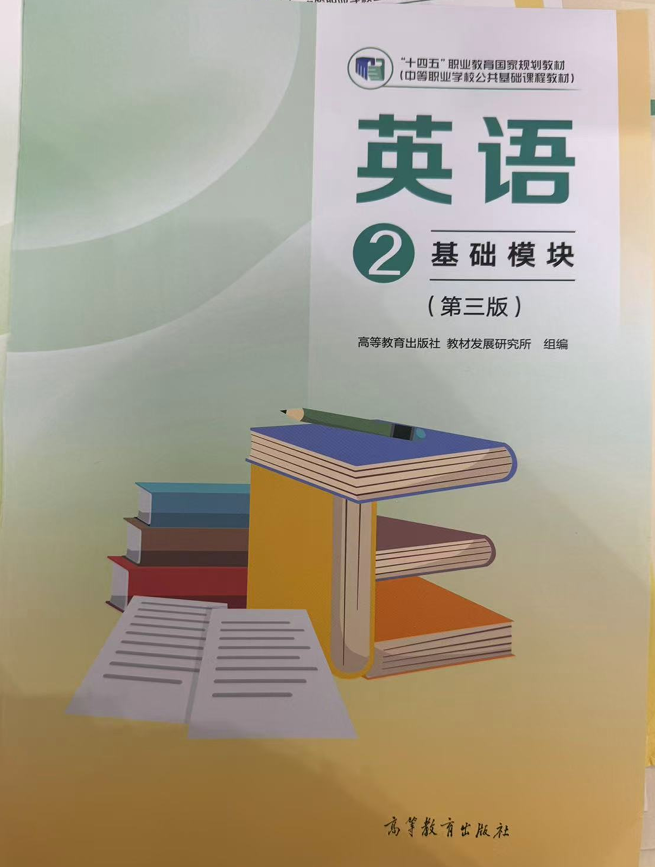
Unit 5 Ancient Civilizationl(A卷·基础巩固)《英语 基础模块2》(高教版第三版)单元过关卷(原卷版+解析版)
2026-04-03
|
2份
|
34页
|
92人阅读
|
0人下载
内容正文:
编写说明:本套试卷紧扣《英语 基础模块2》(高教版第三版)教材,以教材单元为基准精准覆盖核心考点。
每个单元设置AB卷,A卷为基础巩固卷,侧重基础考点训练,帮助学生扎实掌握知识要点;B卷为能力提升卷,注重知识整合与全面检测,引导学生构建知识网络。全书设计4份综合测试卷,模拟实战情境,聚焦解题能力突破,全面提升应试能力与知识应用水平。
《英语 基础模块2》(高教版第三版)《单元过关卷》
Unit 5 Ancient Civilization
A卷·基础巩固
考试时间:40分钟 满分:100分
班级 姓名 学号 成绩
第一部分 英语知识运用(共四节,满分 55 分)
第一节(共 5 小题;每小题 1 分,满分 5 分)
语音辨音
读下列单词,从每题所给的A、B、C和D四个选项中,选出画线部分发音不同的一项。
1.A.map B.nap C.take D.bad
2.A.tick B.bike C.sink D.itchy
3.A.code B.solar C.role D.box
4.A.temple B.medal C.settle D.tablet
5.A.flu B.but C.puppet D.fund
【答案】11.C 2.B 3.D 4.D 5.A
【解析】1.考查元音字母的发音。A. map/mæp/;B. nap/næp/;C. take/teɪk/;D. bad/bæd/。结合单词音标可知,C项划线部分发音是/eɪ/,其余各项划线部分发音都是/æ/。故选C。
2.考查元音字母的发音。A. tick/tɪk/;B. bike/baɪk/;C. sink/sɪŋk/;D. itchy/ˈɪʧi/。结合单词音标可知,B项划线部分发音是/aɪ/,其余各项划线部分发音都是/ɪ/。故选B。
3.考查元音字母的发音。A. code/kəʊd/;B. solar/ˈsəʊlə/;C. role/rəʊl/;D. box/bɒks/。结合单词音标可知,D项划线部分发音是/ɒ/,其余各项划线部分发音都是/əʊ/。故选D。
4.考查元音字母的发音。A. temple/ˈtempəl/;B. medal/ˈmedəl/;C. settle/ˈsetəl/;D. tablet/ˈtæblət/。结合单词音标可知,D项划线部分发音是/ə/,其余各项划线部分发音都是/e/。故选D。
5.考查元音字母的发音。A. flu/fluː/;B. but/bʌt/;C. puppet/ˈpʌpɪt/;D. fund/fʌnd/。结合单词音标可知,A项划线部分发音是/uː/,其余各项划线部分发音都是/ʌ/。故选A。
第二节(共 25 小题;每小题 1 分,满分 25 分)
从 A、B、C、D 四个选项中选出可以填入空白处的最佳选项。
6. I think ________ he is a good student.
A.that B.if C.whether D.what
【答案】A
【详解】句意:我认为他是一个好学生。
考查宾语从句引导词。that无实义,仅起连接作用;if是否;whether是否;what什么。根据“I think”可知,主句后接宾语从句,从句“he is a good student”是一个完整的陈述句,不缺成分,且句意无是否之意,因此需用无实义的连接词that引导。故选A。
7.—I wonder ________ you will come to my birthday party this Sunday.
—Sure, I will.
A.if B.that C.what D.how
【答案】A
【详解】句意:——我想知道这个星期天你是否会来参加我的生日聚会。——当然,我会去的。
if是否;that无实义;what什么;how如何。根据答语“Sure, I will.”可知,上句意在询问对方是否会来,表示“是否”应用if引导宾语从句。应填if。
8.I don’t understand ________ you said.
A.what B.that C.which D.how
【答案】A
【详解】句意:我不理解你所说的。
考查宾语从句引导词。what什么;that那个,引导名词性从句时不作成分;which哪一个;how如何。此处从句缺少宾语,需用“what”指代“你所说的内容”。故选A。
9.—We don’t know ________.
—It’s heard that he is Mr. Green’s son.
A.where he comes from B.if does he live here
C.who he is D.who is he
【答案】C
【详解】句意:——我们不知道他是谁。——听说他是格林先生的儿子。
考查宾语从句。where he comes from他来自哪里;if does he live here语序错误;who he is他是谁;who is he语序错误。宾语从句应使用陈述句语序,排除BD选项;根据“It’s heard that he is Mr. Green’s son.”可知,设空处是询问人物身份,排除A选项。故选C。
10.—________ of the two skirts are very nice. I can’t decide ________ to choose.
— Why not ask your mum for help?
A.All; what B.Both; which one
C.Both; what D.All; which one
【答案】B
【详解】句意:——这两件裙子都很好看。我决定不了选择哪一件。——为什么不向你妈妈求助呢?
考查不定代词和宾语从句的引导词。all指三者或三者以上都;both指两者都;what什么,不能用于宾语从句中表示选择;which one哪一个,可以用于宾语从句中表示选择。根据“the two skirts”可知,此处是指两者都,应用both,排除A和D选项;第二空,根据“I can’t decide...to choose”可知,此处是指不能决定选择哪一件,所以应该用which one引导宾语从句,排除C选项。故选B。
11.—I wonder ______ coat it is on the chair.
—It might be Tom’s. This is his chair.
A.whose B.what C.which D.why
【答案】A
【详解】句意:——我想知道凳子上的外套是谁的。——可能是Tom的。这是他的凳子。
考查宾语从句。whose谁的;what什么;which 哪个;why为什么。根据“It might be Tom’s.”可知,问句询问外套是谁的,用whose提问。故选A。
12.Could you tell me ______ you will go to Shanghai next week?
A.who B.where C.when D.what
【答案】C
【详解】句意:你能告诉我你下周什么时候去上海吗?
who谁;where哪里;when什么时候;what什么。根据“you will go to Shanghai next week”可知,此处是询问下周去上海的时间,所以用when引导宾语从句,应填when。
13.—Could you tell me _________________ in China?
—It started in Xi’an. It went through Asia, the Middle East, North Africa and Europe.
A.how the Silk Road started B.when the Silk Road started
C.why the Silk Road started D.where the Silk Road started
【答案】D
【详解】句意:——你能告诉我丝绸之路在中国从哪里开始吗?——它从西安开始。它穿越了亚洲、中东、北非和欧洲。
考查宾语从句引导词辨析。how the Silk Road started丝绸之路如何开始的;when the Silk Road started丝绸之路什么时候开始的;why the Silk Road started丝绸之路为什么开始;where the Silk Road started丝绸之路从哪里开始的。根据答语“It started in Xi’an.”可知,此处是在询问丝绸之路的起点,所以应该用where引导宾语从句。故选D。
14.—Could you tell me ________ you study for tests?
—By making notes.
A.how B.when C.where D.why
【答案】A
【详解】句意:——你能告诉我你是如何为考试学习的吗?——通过做笔记。
考查疑问词辨析。how如何;when什么时候;where在哪里;why为什么。根据“By making notes.”可知,此处询问学习的方式,应用how。故选A。
15.I wonder ________ the famous poet Bai Juyi wrote so many poems about Jiujiang.
A.what B.why C.that D.which
【答案】B
【详解】句意:我想知道著名诗人白居易为什么写了这么多关于九江的诗。
考查宾语从句引导词辨析。what什么;why为什么;that无实义,仅引导作用;which哪一个。根据“the famous poet Bai Juyi wrote so many poems about Jiujiang”可知,句子意思完整,不缺少主语或宾语,而是询问原因,因此应选用表示原因的引导词why。故选B。
16.—Could you tell me ________ ?
—Sure. It’s on Main Street.
A.where is the post office B.where the post office is
C.where was the post office D.where the post office was
【答案】B
【详解】句意:——你能告诉我邮局在哪里吗?——当然。它在主街。
考查宾语从句的时态和语序。根据“Could you tell me”可知此处为宾语从句,语序为陈述句语序,而could表委婉语气,所以主句的时态为一般现在时,根据“主现从不限”的原则和语境可知此处时态为一般现在时,故选B。
17.The old man asked me ________.
A.where was the station B.where the station was
C.where is the station D.where the station is
【答案】B
【详解】句意:老人问我车站在哪里。
考查宾语从句。根据“The old man asked me”可知,空处是宾语从句,从句用陈述句语序,排除A、C选项;主句时态是一般过去时,从句也应用过去的时态,排除D选项。故选B。
18.The teacher told us that the earth ________ around the sun. This is a basic scientific fact.
A.goes B.went C.will go D.has gone
【答案】A
【详解】句意:老师告诉我们地球绕着太阳转。这是一个基本的科学事实。
考查宾语从句的时态。当主句为过去时,但宾语从句表示客观真理或普遍事实时,从句需用一般现在时。根据“This is a basic scientific fact”可知,地球绕太阳转是永恒客观事实,故用一般现在时。故选A。
19.—Lisa, could you please tell me ________?
—It’s on the second floor of the shopping mall.
A.where is the coffee shop B.where the coffee shop is
C.when is the coffee shop open D.when the coffee shop is open
【答案】B
【详解】句意:——Lisa,你能告诉我咖啡店在哪里吗?——它在购物中心的二楼。
考查宾语从句。根据“could you please tell me…”可知,空格处作tell的宾语,属于宾语从句。宾语从句要用陈述语序,即“引导词+主语+谓语”,排除A、C项;根据答语“It’s on the second floor of the shopping mall.”可知,此处询问的是地点,应用疑问词where引导。故选B。
20.I __________ he __________ tomorrow.
A.don't think; will come B.think; won't come
C.not think; will come D.think; don't come
【答案】A
【详解】句意:我认为他明天不会来了。
此句是宾语从句,主句是I think,从句的否定需要前移到主句中,故排除BD,又通过tomorrow可知从句使用一般将来时态,will+动词原形。主句是一般现在时态,提取助动词do,故选A。
21.—I’ve been working so hard lately with no result. I feel like giving up.
—Hey, you know what they say—April showers bring May flowers. It tells us ________.
A.when can we get beautiful flowers B.that hard times lead to better things
C.why flowers need watering in April D.when the rainiest month of the year is
【答案】B
【详解】句意:——我最近一直很努力,却没有任何结果。我都想放弃了。——嘿,你知道有句话叫“四月雨带来五月花”。它告诉我们,艰难的时光会带来更好的结果。
空格处为宾语从句,需用陈述语序,故排除A;“April showers bring May flowers”的深层寓意是:艰难困苦会带来美好的结果,用于鼓励人们在低谷时保持希望,坚持下去,选项B“that hard times lead to better things”符合谚语引申义,和语境匹配。
22.—I’m not sure ________ this method will improve our English.
—It surely will. Practice makes perfect.
A.whether B.why C.how D.where
【答案】A
【详解】句意:——我不确定这种方法是否能提高我们的英语水平。——肯定能。熟能生巧。
whether是否;why为什么;how如何;where哪里。根据“I’m not sure...this method will improve our English.”可知,此处表达不确定的内容,应用whether引导此宾语从句。
23.I like the ________ 2998. It tells us ________ life would be like in the future.
A.horror film; how B.science fiction film; what
C.western; how about D.comedy; what kind of
【答案】B
【详解】句意:我喜欢这部2998号科幻电影。它告诉我们未来的生活会是什么样子。
horror film恐怖电影;science fiction film科幻电影;western西部片;comedy喜剧片;how怎样;what什么;how about怎么样;what kind of哪种。根据“life would be like in the future”可知,这是在描述未来的生活,属于科幻题材,第一空应填science fiction film;“what life would be like”是固定表达,表示“生活会是什么样子”,第二空应填what。
24.—Did you notice someone was passing?
—Yes, I did. I knew it was a girl, but I didn’t see clearly ______ she was.
A.where B.what C.how D.who
【答案】D
【详解】句意:——你注意到有人经过了吗?——是的,我注意到了。我知道那是一个女孩,但我没有看清楚她是谁。
考查宾语从句的连接词。where哪里;what什么;how如何;who谁。根据“I knew it was a girl, but I didn’t see clearly...she was”可知知道是一个女孩,但是没看清楚是谁,用who引导宾语从句。故选D。
25.—There’re many great celebrations in our hometown during the Spring Festival.
—I wonder ________. I can’t decide which one to join in.
A.which is the most attractive B.why people celebrate it
C.where will the celebrations be held D.if they are different from ours
【答案】A
【详解】句意:——春节期间我们家乡有很多盛大的庆祝活动。——我想知道哪一个最吸引人。我无法决定参加哪一个。
考查宾语从句。which is the most attractive哪一个最吸引人;why people celebrate it人们为什么庆祝它;where will the celebrations be held庆祝活动将在哪里举行;if they are different from ours它们是否与我们的不同。根据答句后半句“I can’t decide which one to join in.”可知,说话者是在多个庆祝活动中进行选择,因此询问“哪一个最吸引人”最符合语境。故选A。
26.—I am having some problems with my son. He seems to say no to ________ I say.
—It’s necessary for you two to have more communication.
A.whenever B.however C.whatever D.wherever
【答案】C
【详解】句意:——我和我儿子之间出了点问题。他似乎对我说的任何话都说不。——你们两个有必要多交流。
考查连词。whenever无论何时;however无论怎样;whatever无论什么;wherever无论哪里;根据“He seems to say no to...I say.”可知,儿子对我说的任何事情都说不,此处应用whatever作say的宾语,故选C。
27.—Christina, do you remember ________ the science festival?
—Of course! Last November. I enjoyed the colorful activities a lot.
A.when we held B.when will we hold C.when did we hold D.when we will hold
【答案】A
【详解】句意:——克里斯蒂娜,你还记得我们什么时候举办的科学节吗?——当然记得!去年十一月。我非常喜欢那些丰富多彩的活动。
when we held我们什么时候举办的,一般过去时,陈述语序;when will we hold我们什么时候将举办,一般将来时,疑问语序;when did we hold我们什么时候举办的,一般过去时,疑问语序;when we will hold我们什么时候将举办,一般将来时,陈述语序。根据答句“Last November.”可知,这里问的是过去举办科学节的时间,所以句子时态应用一般过去时,且宾语从句要用陈述语序。应填when we held。
28.—The 2026 Winter Olympic Games are coming. I’m wondering ________.
—Why not search the Internet?
A.how many medals will China win B.where it will be held
C.that China will host it again D.if can I watch it online
【答案】B
【详解】句意:——2026年冬奥会要来了。我想知道它将在哪里举行。——为什么不上网查查呢?
考查宾语从句。how many medals will China win中国将赢得多少枚奖牌(疑问语序);where it will be held它将在哪里举行(陈述语序);that China will host it again中国将再次举办冬奥会(陈述语序);if can I watch it online我能不能在网上看(疑问语序)。空处是宾语从句,用陈述语序,可排除选项A和D;且“wondering”后接的应该是有待确定的内容,“where it will be held”符合语境。故选B。
29.Central Bank Digital Currency (CBDC) has attracted much attention recently. I’m wondering ________.
A.that it will be safe to use its service to pay online
B.how soon will it be used widely all over the country
C.what are its advantages compared to paper money
D.if it can be used without an Internet connection
【答案】D
【详解】句意:中央银行数字货币最近受到了关注。我想知道它是否可以在没有互联网连接的情况下使用。
在这个句子“I’m wondering….”中,空格处需要填入一个宾语从句。宾语从句必须使用陈述句语序(即主语在前,谓语在后)。A选项“that it will be safe to use its service to pay online”语法正确,但“wonder that”通常表示“对……感到惊讶”,而此处语境更偏向于“好奇、想知道”,用“if/whether”更合适。 B选项“how soon will it be used…” 使用了疑问句语序(will it),因此语法错误。 C选项“what are its advantages…”同样使用了疑问句语序(are its),因此语法错误。 D选项“if it can be used…”使用了陈述句语序(it can be),符合宾语从句的语法规则,且“wonder if”表示“想知道是否……”,符合句意表达对数字货币离线支付功能的疑问。 因此,D选项在语法和语义上均为正确选项。
30.— Excuse me, is the museum open every day?
— ________ . It’s only open from Monday to Friday.
A.Yes, of course B.That’s right C.I’m afraid not D.I’m not sure
【答案】C
【详解】句意:——请问博物馆每天都开放吗?——恐怕不是。它只在周一到周五开放。
考查情景交际。Yes, of course 是的,当然;That’s right那是正确的;I’m afraid not恐怕不行;I’m not sure我不确定。根据答句中“It’s only open from Monday to Friday.”可以推知,这个博物馆不是每天开放,所以是否定回答,用“I’m afraid not”符合语境。故选C。
第三节(共 10 小题;每小题 1.5 分,满分 15 分)
阅读下面短文,从每题所给的 A、B、C、D 四个选项中选出最佳选项,并在答题卡上将该项涂黑。
Archaeology (考古学) is a magical gateway to the past. 31 just a few pieces of material, archaeologists can unlock the secrets of the past. The Sanxingdui Ruins site is home to one of 32 archaeological discoveries of the 20th century. It 33 by accident in 1929.
At that time, when farmers were digging up earth 34 bricks, they found some artifacts (手工艺品). In 1986, archaeologists found two 35 sacrificial pits (祭祀坑) accidentally. 36 date back to the Shang Dynasty (16th century to 11th century BC). They 37 in the ancient Shu Kingdom. Thousands of beautiful artifacts were discovered in the pits.
Six more sacrificial pits were uncovered after November 2019. There are thousands of artifacts 38 date back more than 3,000 years, including gold masks, ivory, jade, silk and so on. Archaeologists believed 39 the new findings could help us to understand our history better.
If you become 40 archaeologist, you will find a wonderful world under the ground. Are you interested in Archaeology? Try your best to study hard, and your dream will come true one day.
31.A.Without B.On C.With
32.A.important B.importantly C.the most important
33.A.find B.found C.was found
34.A.make B.made C.to make
35.A.large B.larger C.the largest
36.A.They B.Them C.Their
37.A.are B.were C.is
38.A.who B.that C.where
39.A.that B.why C.what
40.A.a B.an C.the
【答案】
31.C 32.C 33.C 34.C 35.A 36.A 37.B 38.B 39.A 40.B
【导语】本文是一篇说明文,介绍了考古学这一神奇学科,以三星堆遗址为例,讲述其发现过程、重要发现以及考古学家的看法等,鼓励读者若对考古学感兴趣就努力学习实现梦想。
31.句意:考古学是通往过去的一扇神奇的大门。仅凭几块材料,考古学家就能解开过去的秘密。
Without没有;On在……上面;With凭借。根据“archaeologists can unlock the secrets of the past”可知,此处表示凭借几块材料就能解开过去秘密,用With表方式或工具。故选C。
32.句意:三星堆遗址是20世纪最重要的考古发现之一。
important重要的,形容词;importantly重要地,副词;the most important最重要的,为important的最高级形式。“one of the+形容词最高级+复数名词”表示“最……之一”,是固定结构,此处用the most important。故选C。
33.句意:它于1929年被偶然发现。
find发现,动词原形;found过去式或过去分词;was found一般过去时的被动语态。根据“by accident”及“in 1929”可知,此处描述过去发生的事情且表被动,用一般过去时的被动语态was found。故选C。
34.句意:当时,农民们在挖土制砖时,发现了一些手工艺品。
make制作,动词原形;made过去式或过去分词;to make动词不定式。农民挖土的目的是制砖,此处用动词不定式表目的。故选C。
35.句意:1986年,考古学家偶然发现了两个大型祭祀坑。
large大的,形容词;larger更大的,为large的比较级形式;the largest最大的,为large的最高级形式。根据“two...sacrificial pits”可知,此处没有比较之意,用形容词原级large修饰名词。故选A。
36.句意:它们可以追溯到商朝(公元前16世纪至公元前11世纪)。
They它们,主格;Them它们,宾格;Their它们的,形容词性物主代词。根据“date back to the Shang Dynasty”可知,此处缺主语,用主格They指代前面的“two sacrificial pits”。故选A。
37.句意:它们位于古蜀国。
are是,be动词的复数形式,用于一般现在时;were是,be动词的复数形式的过去式,用于一般过去时;is是,be动词的单数形式,用于一般现在时。根据“in the ancient Shu Kingdom”可知,此处表示过去位于古蜀国,且主语“They”为复数,用be动词were。故选B。
38.句意:有数千件可以追溯到3000多年前的文物,包括金面具、象牙、玉器、丝绸等。
who谁,引导定语从句,先行词是人;that引导定语从句,先行词既可以是人也可以是物,在从句中作主语或宾语;where哪里,引导定语从句,先行词是地点,在从句中作地点状语。根据“There are thousands of artifacts...date back more than 3,000 years”可知,此处为定语从句,先行词artifacts为物,用that引导。故选B。
39.句意:考古学家认为,这些新发现可以帮助我们更好地了解我们的历史。
that引导宾语从句,无实际意义;why为什么,引导宾语从句,在从句中表原因;what什么,引导宾语从句,在从句中作主语、宾语或表语。根据“Archaeologists believed...the new findings could help us to understand our history better.”可知,此处为宾语从句,从句不缺成分,用that引导。故选A。
40.句意:如果你成为一名考古学家,你将在地下发现一个奇妙的世界。
a一个,用于辅音音素开头的单词前;an一个,用于元音音素开头的单词前;the定冠词,表特指。根据“If you become...archaeologist”可知,此处表示成为一名考古学家,archaeologist以元音音素开头,用an。故选B。
第四节(共 5 小题;每小题 2 分,满分 10 分)
Paper was 41 (invent) in A.D.(公元)105 by Cai Lun in China. It is an important part of our everyday life, but few people ever think about how it is 42 (make). Today most paper is made 43 trees. However, with concern for the environment (考虑到环境), more and more paper is produced from recycled paper 44 (product). It's not easy for workers to make paper. So, we’d better not 45 (waste) paper.
【答案】41.invented 42.made 43.from 44.products 45.waste
【导语】本文介绍了纸张由蔡伦发明的历史、现代纸张的制作原料,提及环保背景下再生纸制品的使用,点明造纸的不易,呼吁人们不要浪费纸张。
41.句意:纸张于公元105年由中国的蔡伦发明。句中Paper与invent为被动关系,且句子为一般过去时的被动语态,结构为was/were+动词过去分词,因此填invented。
42.句意:它是我们日常生活的重要部分,但很少有人思考纸张是如何被制造的。it指代paper,与make为被动关系,此处为一般现在时被动语态is+动词过去分词,因此填made。
43.句意:如今大多数纸张由树木制成。固定搭配be made from,意为“由……制成”,成品看不出原材料,符合纸张由树木制作的语境。
44.句意:越来越多的纸张由再生纸制品生产而成。product为可数名词,此处表泛指各类再生纸制品,需用复数形式products。
45.句意:所以我们最好不要浪费纸张。固定搭配had better (not) do sth.,意为“最好(不)做某事”,后接动词原形。
第二部分 阅读(共两节,满分 50 分)
第一节(共 15 小题;每小题 2.5 分,满分 37.5 分)
阅读下列短文,从每题所给的 A、B、C、D 四个选项中选出最佳选项,并在答题卡上将该项涂黑。
A
In 1992, a farmer in Longyou County, Zhejiang Province made an amazing discovery. While pumping water from a pond, he found a large underground cave (洞穴). This led to the discovery of 24 ancient man-made caves, now known as the Longyou Caves. What makes these caves even more mysterious is the strange stone balls found inside.
These stone balls are perfectly round and smooth, with diameters ranging from 10 to 30 centimeters. They are made of hard granite, and each one is almost exactly the same in shape. The most puzzling question is: how were they made so perfectly round without modern tools?
Archaeologists estimate (估计) that the caves were built about 2,000 years ago, during the Han Dynasty. However, no historical records mention their construction. The stone balls add to the mystery. Some experts believe they might have been used as bearings for large doors or machines. Others think they could have been part of an ancient calendar system. A few even suggest they might have had religious meaning.
What’s particularly interesting is that similar stone balls have been found in other parts of the world, like Costa Rica. But the Longyou stone balls are unique in their perfect roundness and smooth surface. Scientists have tried to recreate them using ancient methods, but haven’t succeeded in making balls as perfect as the originals.
Today, the Longyou Caves are open to tourists, and the stone balls remain one of China’s fascinating archaeological mysteries, reminding us that ancient people had skills and knowledge that we are still trying to understand.
46.What did the farmer find that led to the discovery of the caves?
A.Ancient writings on stone.
B.A large underground cave while pumping water.
C.Some perfectly round stones in a field.
D.Old tools from the Han Dynasty.
47.How do the Longyou stone balls differ from similar ones found elsewhere?
A.They are much larger in size.
B.They are made of different materials.
C.Their perfect roundness and smooth surface are unique.
D.They have special marks on them.
48.What is the main idea the writer wants to express in the last paragraph?
A.The caves are now a popular tourist attraction.
B.Ancient people’s technology remains partly a mystery to us today.
C.Scientists will soon solve the mystery of the stone balls.
D.The stone balls are the most important discovery in Longyou Caves.
【答案】46.B 47.C 48.B
【导语】本文介绍浙江龙游石窟的发现,洞内石球工艺精湛成因成谜,专家有多种猜测,至今仍是未解之谜。
46.第一段陈述事实:“While pumping water from a pond, he found a large underground cave.”,这一发现引出了石窟群。
47.第四段说明特点:“But the Longyou stone balls are unique in their perfect roundness and smooth surface.”,这是它们与其他石球的区别。
48.最后一段点明主旨:“reminding us that ancient people had skills and knowledge that we are still trying to understand.”,说明古人技艺对我们仍是谜团。
B
When kids go on an outing with their parents, they usually expect to see beautiful sights. But one family made an amazing discovery while hiking in the Badlands of North Dakota, US.
A father named Sam Fisher with his two sons, Jessin and Liam, and their cousin Kaiden, discovered a dinosaur fossil (恐龙化石). Although Fisher and his family were excited by what they found, they were careful with it. Right away, Fisher sent a photo of the fossil to his old high school classmate, Dr. Tyler Lyson, one of the paleontologists (scientists who study fossils) at the Denver Museum of Nature and Science.
Soon, Dr. Lyson, the family and a team went to study the fossil. They took out the remains (遗骸) of a teenage T. rex (霸王龙) and named it “Teen Rex”. It was about 12 to 14 years old when it died, weighed about 3,500 pounds and was 25 feet long— half the size of an adult (成年) T. rex.
Liam shared how they found the fossil. “I went up to a ledge (岩架) with my dad and then we saw the bones (骨头). We called for Jessin and Kaiden. Upon seeing the bones, Jessin said, ‘That’s a dinosaur.’” Jessin said he had seen cow bones before and the dinosaur remains were huge. Dr. Lyson praised the kids for the discovery. “Their love for exploring brought an amazing discovery that helps science.”
Later, the museum held an exhibition of “Teen Rex”. The museum hoped the exhibition would encourage more young scientists.
49.What can we know about “Teen Rex” from the passage?
A.It was over 20 feet long.
B.It was as big as an adult T. rex.
C.It weighed less than 3,500 pounds.
D.It died when it was a baby dinosaur.
50.How did Jessin know the bones were from a dinosaur?
A.He learned about it from his dad.
B.He saw the same bones in a museum before.
C.He heard Dr. Lyson talk about dinosaur bones.
D.He found the bones were much bigger than cow bones.
51.What might Dr. Lyson say to the kids?
A.Good job on your find!
B.Take care when you hike.
C.Work hard for your dream.
D.I will show you more fossils.
52.In which part of a children’s magazine can we find the passage?
A.Dream big B.Amazing kids
C.Save our planet D.Outdoor fun for the family
【答案】49.A 50.D 51.A 52.B
【导语】本文主要讲述了一家人徒步旅行时发现恐龙化石,孩子们的探索精神带来了惊人的发现,帮助了科学,重点突出了孩子们的厉害之处。
49.根据第三段“It was about 12 to 14 years old when it died, weighed about 3,500 pounds and was 25 feet long— half the size of an adult (成年) T. rex.”可知,“Teen Rex”长25英尺,也就是超过20英尺。
50.根据第四段“Jessin said he had seen cow bones before and the dinosaur remains were huge.”可知,Jessin之前见过牛骨头,而恐龙遗骸非常大,所以他知道这些骨头来自恐龙。
51.根据第四段“Dr. Lyson praised the kids for the discovery. ‘Their love for exploring brought an amazing discovery that helps science.’”可知,莱森博士表扬了孩子们的发现,所以可能会对孩子们说“Good job on your find!”(你们找得真棒!) 。
52.文章主要讲述了一家人徒步旅行时发现恐龙化石,孩子们的探索精神带来了惊人的发现,帮助了科学,重点突出了孩子们的厉害之处。“Amazing kids”(了不起的孩子)符合文章主题。
C
Finding and Losing Troy
Was Troy a real place or just a story? For years, many people thought it was just a myth (神话). But a German named Heinrich Schliemann believed it was real. His strong belief helped him make some very important discoveries.
As a boy, Schliemann loved reading. His favorite book was The Iliad, a book about the great war at Troy. The brave heroes and strong walls in the story interested him deeply. He promised himself that one day he would find the lost city of Troy.
However, life first took him in a different direction. He became a successful businessman, traveled to many different places around the world, learned several languages, and made a lot of money.
In his late forties, he finally had enough money to follow his childhood dream. He traveled through Greece and Turkey to search for Troy. Hisarlik, an ancient Turkish site, caught his eye.
In 1871, he started digging at Hisarlik with a team of local workers. He soon became impatient with the slow work. To dig faster, he used dynamite. This sped up the excavation (挖掘) but also caused serious damage to the site.
Piece by piece, they uncovered weapons (武器), pottery (陶器) and many other ancient objects. These findings showed that Hisarlik had a history of over 5,000 years. It had been rebuilt many times. Schliemann believed one of these lost cities was Troy.
His discovery made him famous around the world. But not all historians think highly of him. Most of them thought his decision to use dynamite destroyed important parts of the ancient site forever.
53.Why did Schliemann want to find Troy?
A.He read about it in a book. B.His teacher told him to.
C.He saw it in a movie. D.His parents asked him.
54.What did “dynamite” do according to the passage?
A.It made the story true. B.It made the digging quick.
C.It helped protect things well. D.It didn’t help find weapons and pottery.
55.How do most of the historians feel about Schliemann?
A.They think highly of him. B.They do not know him.
C.They feel happy for his discoveries. D.They are angry with his method.
56.What can we learn from this story?
A.Making money is always good.
B.Using fast methods is always right.
C.Sometimes a good finding has a bad side.
D.Old stories are important and interesting.
【答案】53.A 54.B 55.D 56.C
【导语】本文是一篇记叙文,讲述了德国人海因里希·谢里曼受书籍启发,经商致富后发掘特洛伊遗址成名,却因使用炸药破坏遗迹引发历史学家争议的故事。
53.细节理解题。根据“As a boy, Schliemann loved reading. His favorite book was The Iliad, a book about the great war at Troy…He promised himself that one day he would find the lost city of Troy”可知,他因在书中读到特洛伊而想要寻找它,故选A。
54.细节理解题。根据“To dig faster, he used dynamite. This sped up the excavation but also caused serious damage to the site”可知,炸药加快了挖掘速度,故选B。
55.观点态度题。根据“Most of them thought his decision to use dynamite destroyed important parts of the ancient site forever”可知,历史学家对他使用炸药的方法不满,故选D。
56.推理判断题。根据“His discovery made him famous…his decision to use dynamite destroyed important parts of the ancient site forever”可知,海因里希的发现有价值,但方法造成了破坏,即好的发现可能有坏的一面,故选C。
D
While England’s Stonehenge is known for its mysterious stone circle, there is an even older place in Turkey called Göbekli Tepe. It is thought to be the world’s oldest temple, built around 11,000 years ago—about 6,000 years before Stonehenge.
Göbekli Tepe was discovered in the 1990s. It is made up of several big round spaces built with huge T-shaped stone blocks. Many of these blocks are cut with pictures of animals such as foxes, snakes, birds, and wild pigs. Unlike Stonehenge, these stones were not moved from far away; they were shaped directly from the nearby hills.
What amazes experts most is that Göbekli Tepe was built by hunter-gatherers (狩猎采集者) —people who did not yet farm or live in cities. This changes the old idea that large religious (宗教的) places were only built after farming began. Göbekli Tepe makes us rethink history. Maybe building such places brought people together, which later led to farming.
The purpose of Göbekli Tepe remains unknown, just like Stonehenge. Some think it was an important place, used for special events, burials, or watching the sky. Others believe it was a meeting place for different groups to trade and tell stories.
Today, Göbekli Tepe is a protected World Heritage Site (世界遗产). It helps us rethink human history and shows that ancient people were more skilled and organized than we once believed. The site reminds us that human societies could achieve great things through cooperation (合作) long before the rise of cities or kingdoms.
57.What makes Göbekli Tepe special compared to Stonehenge?
A.It is a temple from England. B.It was built 6,000 years ago.
C.It is older than Stonehenge. D.It was built with huge stones.
58.Why are experts surprised by Göbekli Tepe?
A.Because it was used for community events.
B.Because it was shaped directly from the nearby hills.
C.Because it was built by hunter-gatherers, not farmers.
D.Because its stones are covered with animal carvings.
59.What was a possible use of Göbekli Tepe according to the passage?
A.A hunting ground. B.A tourist site for visitors.
C.A palace for a king. D.A religious meeting place.
60.What is the main purpose of the passage?
A.To explain how ancient people moved and shaped huge stones.
B.To argue that Göbekli Tepe is more important than Stonehenge.
C.To describe a mysterious ancient site and its historical importance.
D.To encourage tourists to visit Turkey’s protected World Heritage Site.
【答案】57.C 58.C 59.D 60.C
【导语】本文主要介绍了土耳其的哥贝克力石阵这一神秘的古老遗址。
57.细节理解题。根据“it is thought to be the world’s oldest temple, built around 11,000 years ago—about 6,000 years before Stonehenge”可知,哥贝克力石阵与英国巨石阵相比,最特殊的点是比巨石阵更古老。故选C。
58.细节理解题。根据“What amazes experts most is that Göbekli Tepe was built by hunter-gatherers —people who did not yet farm or live in cities”可知,专家感到最惊讶的核心原因是,这座大型遗址由尚未从事农耕、未定居城市的狩猎采集者建造,这打破了人们的固有认知。故选C。
59.推理判断题。根据“This changes the old idea that large religious (宗教的) places were only built after farming began. Göbekli Tepe makes us rethink history.”和“it was an important place, used for special events, burials, or watching the sky. Others believe it was a meeting place for different groups to trade and tell stories.”可知,旧观念认为“大型宗教场所只有农耕出现后才会建造”,而哥贝克力石阵是大型古老遗址;第四段又说有人认为它被用于特殊活动、葬礼、观星,也有人认为是不同族群的聚会地。结合这些信息,可推断它可能是宗教聚会场所。故选D。
60.主旨大意题。全文的行文核心围绕哥贝克力石阵展开,作者的写作目的是描述这一神秘的远古遗址,并阐释其历史重要性。故选C。
第二节(共 5 小题;每小题 2.5 分,满分 12.5 分)
A: Hi, Lucy! I just read an article about amber. 61 .
B: Yes! I know amber can keep pieces of the past.
A: You’re right. Scientists found a dinosaur’s tail with feathers in amber. 62
B: Really? That’s amazing! I used to think dinosaurs had no feathers.
A: Me too. 63
B: I wonder if amber can tell us more about ancient species.
A: 64 It may help us discover more unknown species.
B: What other secrets do you think nature has?
A: I’m not sure. 65
B: I agree. We should put more effort into exploring nature.
A.But now we know we were wrong.
B.Have you heard about its secrets?
C.Do you believe it?
D.But I think there are still many unsolved mysteries.
E.Of course it can.
【答案】61.B 62.C 63.A 64.E 65.D
【导语】本文是A和Lucy关于琥珀秘密的对话。A读了有关琥珀的文章后与Lucy分享,提到科学家在琥珀中发现了带羽毛的恐龙尾巴,两人由此讨论琥珀对研究古代物种的作用以及自然界未解之谜。
61.A说刚读了关于琥珀的文章,Lucy回答“Yes! I know amber can keep pieces of the past.”,说明A的空白处应是一个询问Lucy是否了解琥珀的问句。选项B“Have you heard about its secrets?”与Lucy的肯定回答形成问答对应。
62.A介绍了科学家在琥珀中发现带羽毛恐龙尾巴的事实,Lucy表示惊讶,A紧接着追问Lucy是否相信这一发现。选项C“Do you believe it?”自然引出Lucy关于自己原先想法的陈述“I used to think dinosaurs had no feathers.”,逻辑连贯。
63.Lucy说以前认为恐龙没有羽毛,A表示同感“Me too.”,随后应补充对过去错误认识的总结。选项A“But now we know we were wrong.”既承接了“Me too.”,又自然过渡到下一话题。
64.Lucy提出疑问“I wonder if amber can tell us more about ancient species.”,A对此给出肯定回答,并进一步说明其作用。选项E“Of course it can.”直接回应了Lucy的疑问,与后文“It may help us discover more unknown species.”衔接紧密。
65.Lucy问“What other secrets do you think nature has?”,A表示不确定,但紧接着表达自己的观点。选项D“But I think there are still many unsolved mysteries.”与后文Lucy的回应“I agree.”形成观点一致的对话逻辑。
第三部分 书面表达(满分 15 分)
66.造纸术不仅是中国古代的伟大发明,同时也促进了世界文明的发展。请根据下面表格里所提供的内容,以“One of the Most Helpful Inventions”为题写一篇短文。词数60~80。
Invention
paper
Time
the Western Han dynasty
Inventor
Cai Lun
Materials
bark, ropes, rags and so on
Uses
writing, painting, printing books and so on
______________________________________________________________________________________________________________________________________________________________________________________________________________________________________________________________________________________________________________________________________________________________________________________________________________________________________________________________________________________
【答案】例文:
One of the Most Helpful Inventions
As we all know, paper is one of the four most important inventions in ancient China. It was invented in the Western Han dynasty by Cai Lun. After he had done many experiments, Cai Lun made paper with bark, ropes, rags and so on. It is a great contribution to the world.
Nowadays, paper is very useful in our work, study and daily life. We can use it to write, paint, print books and so on.
Thanks for the invention of paper. It has made our life more colorful.
【详解】1. 题干解读:该题属于说明文写作。主要的写作内容题中表格已给出,写作时可把题中内容根据逻辑进行串联,再围绕文章中心进行自我发挥,丰富文章的内容。
2. 写作指导:本文主要以第三人称来进行写作;时态主要采用一般现在时,用一般过去时叙述发生在过去的事情;写作时应注意条理清晰,不要遗漏内容要点;最后应检查文章的语言是否符合英文表达习惯。
学科网(北京)股份有限公司 (
1
)原创精品资源学科网独家享有版权,侵权必究!
学科网(北京)股份有限公司
$
编写说明:本套试卷紧扣《英语 基础模块2》(高教版第三版)教材,以教材单元为基准精准覆盖核心考点。
每个单元设置AB卷,A卷为基础巩固卷,侧重基础考点训练,帮助学生扎实掌握知识要点;B卷为能力提升卷,注重知识整合与全面检测,引导学生构建知识网络。全书设计4份综合测试卷,模拟实战情境,聚焦解题能力突破,全面提升应试能力与知识应用水平。
《英语 基础模块2》(高教版第三版)《单元过关卷》
Unit 5 Ancient Civilization
A卷·基础巩固
考试时间:40分钟 满分:100分
班级 姓名 学号 成绩
第一部分 英语知识运用(共四节,满分 55 分)
第一节(共 5 小题;每小题 1 分,满分 5 分)
语音辨音
读下列单词,从每题所给的A、B、C和D四个选项中,选出画线部分发音不同的一项。
1.A.map B.nap C.take D.bad
2.A.tick B.bike C.sink D.itchy
3.A.code B.solar C.role D.box
4.A.temple B.medal C.settle D.tablet
5.A.flu B.but C.puppet D.fund
第二节(共 25 小题;每小题 1 分,满分 25 分)
从 A、B、C、D 四个选项中选出可以填入空白处的最佳选项。
6. I think ________ he is a good student.
A.that B.if C.whether D.what
7.—I wonder ________ you will come to my birthday party this Sunday.
—Sure, I will.
A.if B.that C.what D.how
8.I don’t understand ________ you said.
A.what B.that C.which D.how
9.—We don’t know ________.
—It’s heard that he is Mr. Green’s son.
A.where he comes from B.if does he live here
C.who he is D.who is he
10.—________ of the two skirts are very nice. I can’t decide ________ to choose.
— Why not ask your mum for help?
A.All; what B.Both; which one
C.Both; what D.All; which one
11.—I wonder ______ coat it is on the chair.
—It might be Tom’s. This is his chair.
A.whose B.what C.which D.why
12.Could you tell me ______ you will go to Shanghai next week?
A.who B.where C.when D.what
13.—Could you tell me _________________ in China?
—It started in Xi’an. It went through Asia, the Middle East, North Africa and Europe.
A.how the Silk Road started B.when the Silk Road started
C.why the Silk Road started D.where the Silk Road started
14.—Could you tell me ________ you study for tests?
—By making notes.
A.how B.when C.where D.why
15.I wonder ________ the famous poet Bai Juyi wrote so many poems about Jiujiang.
A.what B.why C.that D.which
16.—Could you tell me ________ ?
—Sure. It’s on Main Street.
A.where is the post office B.where the post office is
C.where was the post office D.where the post office was
17.The old man asked me ________.
A.where was the station B.where the station was
C.where is the station D.where the station is
18.The teacher told us that the earth ________ around the sun. This is a basic scientific fact.
A.goes B.went C.will go D.has gone
19.—Lisa, could you please tell me ________?
—It’s on the second floor of the shopping mall.
A.where is the coffee shop B.where the coffee shop is
C.when is the coffee shop open D.when the coffee shop is open
20.I __________ he __________ tomorrow.
A.don't think; will come B.think; won't come
C.not think; will come D.think; don't come
21.—I’ve been working so hard lately with no result. I feel like giving up.
—Hey, you know what they say—April showers bring May flowers. It tells us ________.
A.when can we get beautiful flowers B.that hard times lead to better things
C.why flowers need watering in April D.when the rainiest month of the year is
22.—I’m not sure ________ this method will improve our English.
—It surely will. Practice makes perfect.
A.whether B.why C.how D.where
23.I like the ________ 2998. It tells us ________ life would be like in the future.
A.horror film; how B.science fiction film; what
C.western; how about D.comedy; what kind of
24.—Did you notice someone was passing?
—Yes, I did. I knew it was a girl, but I didn’t see clearly ______ she was.
A.where B.what C.how D.who
25.—There’re many great celebrations in our hometown during the Spring Festival.
—I wonder ________. I can’t decide which one to join in.
A.which is the most attractive B.why people celebrate it
C.where will the celebrations be held D.if they are different from ours
26.—I am having some problems with my son. He seems to say no to ________ I say.
—It’s necessary for you two to have more communication.
A.whenever B.however C.whatever D.wherever
27.—Christina, do you remember ________ the science festival?
—Of course! Last November. I enjoyed the colorful activities a lot.
A.when we held B.when will we hold C.when did we hold D.when we will hold
28.—The 2026 Winter Olympic Games are coming. I’m wondering ________.
—Why not search the Internet?
A.how many medals will China win B.where it will be held
C.that China will host it again D.if can I watch it online
29.Central Bank Digital Currency (CBDC) has attracted much attention recently. I’m wondering ________.
A.that it will be safe to use its service to pay online
B.how soon will it be used widely all over the country
C.what are its advantages compared to paper money
D.if it can be used without an Internet connection
30.— Excuse me, is the museum open every day?
— ________ . It’s only open from Monday to Friday.
A.Yes, of course B.That’s right C.I’m afraid not D.I’m not sure
第三节(共 10 小题;每小题 1.5 分,满分 15 分)
阅读下面短文,从每题所给的 A、B、C、D 四个选项中选出最佳选项,并在答题卡上将该项涂黑。
Archaeology (考古学) is a magical gateway to the past. 31 just a few pieces of material, archaeologists can unlock the secrets of the past. The Sanxingdui Ruins site is home to one of 32 archaeological discoveries of the 20th century. It 33 by accident in 1929.
At that time, when farmers were digging up earth 34 bricks, they found some artifacts (手工艺品). In 1986, archaeologists found two 35 sacrificial pits (祭祀坑) accidentally. 36 date back to the Shang Dynasty (16th century to 11th century BC). They 37 in the ancient Shu Kingdom. Thousands of beautiful artifacts were discovered in the pits.
Six more sacrificial pits were uncovered after November 2019. There are thousands of artifacts 38 date back more than 3,000 years, including gold masks, ivory, jade, silk and so on. Archaeologists believed 39 the new findings could help us to understand our history better.
If you become 40 archaeologist, you will find a wonderful world under the ground. Are you interested in Archaeology? Try your best to study hard, and your dream will come true one day.
31.A.Without B.On C.With
32.A.important B.importantly C.the most important
33.A.find B.found C.was found
34.A.make B.made C.to make
35.A.large B.larger C.the largest
36.A.They B.Them C.Their
37.A.are B.were C.is
38.A.who B.that C.where
39.A.that B.why C.what
40.A.a B.an C.the
第四节(共 5 小题;每小题 2 分,满分 10 分)
Paper was 41 (invent) in A.D.(公元)105 by Cai Lun in China. It is an important part of our everyday life, but few people ever think about how it is 42 (make). Today most paper is made 43 trees. However, with concern for the environment (考虑到环境), more and more paper is produced from recycled paper 44 (product). It's not easy for workers to make paper. So, we’d better not 45 (waste) paper.
第二部分 阅读(共两节,满分 50 分)
第一节(共 15 小题;每小题 2.5 分,满分 37.5 分)
阅读下列短文,从每题所给的 A、B、C、D 四个选项中选出最佳选项,并在答题卡上将该项涂黑。
A
In 1992, a farmer in Longyou County, Zhejiang Province made an amazing discovery. While pumping water from a pond, he found a large underground cave (洞穴). This led to the discovery of 24 ancient man-made caves, now known as the Longyou Caves. What makes these caves even more mysterious is the strange stone balls found inside.
These stone balls are perfectly round and smooth, with diameters ranging from 10 to 30 centimeters. They are made of hard granite, and each one is almost exactly the same in shape. The most puzzling question is: how were they made so perfectly round without modern tools?
Archaeologists estimate (估计) that the caves were built about 2,000 years ago, during the Han Dynasty. However, no historical records mention their construction. The stone balls add to the mystery. Some experts believe they might have been used as bearings for large doors or machines. Others think they could have been part of an ancient calendar system. A few even suggest they might have had religious meaning.
What’s particularly interesting is that similar stone balls have been found in other parts of the world, like Costa Rica. But the Longyou stone balls are unique in their perfect roundness and smooth surface. Scientists have tried to recreate them using ancient methods, but haven’t succeeded in making balls as perfect as the originals.
Today, the Longyou Caves are open to tourists, and the stone balls remain one of China’s fascinating archaeological mysteries, reminding us that ancient people had skills and knowledge that we are still trying to understand.
46.What did the farmer find that led to the discovery of the caves?
A.Ancient writings on stone.
B.A large underground cave while pumping water.
C.Some perfectly round stones in a field.
D.Old tools from the Han Dynasty.
47.How do the Longyou stone balls differ from similar ones found elsewhere?
A.They are much larger in size.
B.They are made of different materials.
C.Their perfect roundness and smooth surface are unique.
D.They have special marks on them.
48.What is the main idea the writer wants to express in the last paragraph?
A.The caves are now a popular tourist attraction.
B.Ancient people’s technology remains partly a mystery to us today.
C.Scientists will soon solve the mystery of the stone balls.
D.The stone balls are the most important discovery in Longyou Caves.
B
When kids go on an outing with their parents, they usually expect to see beautiful sights. But one family made an amazing discovery while hiking in the Badlands of North Dakota, US.
A father named Sam Fisher with his two sons, Jessin and Liam, and their cousin Kaiden, discovered a dinosaur fossil (恐龙化石). Although Fisher and his family were excited by what they found, they were careful with it. Right away, Fisher sent a photo of the fossil to his old high school classmate, Dr. Tyler Lyson, one of the paleontologists (scientists who study fossils) at the Denver Museum of Nature and Science.
Soon, Dr. Lyson, the family and a team went to study the fossil. They took out the remains (遗骸) of a teenage T. rex (霸王龙) and named it “Teen Rex”. It was about 12 to 14 years old when it died, weighed about 3,500 pounds and was 25 feet long— half the size of an adult (成年) T. rex.
Liam shared how they found the fossil. “I went up to a ledge (岩架) with my dad and then we saw the bones (骨头). We called for Jessin and Kaiden. Upon seeing the bones, Jessin said, ‘That’s a dinosaur.’” Jessin said he had seen cow bones before and the dinosaur remains were huge. Dr. Lyson praised the kids for the discovery. “Their love for exploring brought an amazing discovery that helps science.”
Later, the museum held an exhibition of “Teen Rex”. The museum hoped the exhibition would encourage more young scientists.
49.What can we know about “Teen Rex” from the passage?
A.It was over 20 feet long.
B.It was as big as an adult T. rex.
C.It weighed less than 3,500 pounds.
D.It died when it was a baby dinosaur.
50.How did Jessin know the bones were from a dinosaur?
A.He learned about it from his dad.
B.He saw the same bones in a museum before.
C.He heard Dr. Lyson talk about dinosaur bones.
D.He found the bones were much bigger than cow bones.
51.What might Dr. Lyson say to the kids?
A.Good job on your find!
B.Take care when you hike.
C.Work hard for your dream.
D.I will show you more fossils.
52.In which part of a children’s magazine can we find the passage?
A.Dream big B.Amazing kids
C.Save our planet D.Outdoor fun for the family
C
Finding and Losing Troy
Was Troy a real place or just a story? For years, many people thought it was just a myth (神话). But a German named Heinrich Schliemann believed it was real. His strong belief helped him make some very important discoveries.
As a boy, Schliemann loved reading. His favorite book was The Iliad, a book about the great war at Troy. The brave heroes and strong walls in the story interested him deeply. He promised himself that one day he would find the lost city of Troy.
However, life first took him in a different direction. He became a successful businessman, traveled to many different places around the world, learned several languages, and made a lot of money.
In his late forties, he finally had enough money to follow his childhood dream. He traveled through Greece and Turkey to search for Troy. Hisarlik, an ancient Turkish site, caught his eye.
In 1871, he started digging at Hisarlik with a team of local workers. He soon became impatient with the slow work. To dig faster, he used dynamite. This sped up the excavation (挖掘) but also caused serious damage to the site.
Piece by piece, they uncovered weapons (武器), pottery (陶器) and many other ancient objects. These findings showed that Hisarlik had a history of over 5,000 years. It had been rebuilt many times. Schliemann believed one of these lost cities was Troy.
His discovery made him famous around the world. But not all historians think highly of him. Most of them thought his decision to use dynamite destroyed important parts of the ancient site forever.
53.Why did Schliemann want to find Troy?
A.He read about it in a book. B.His teacher told him to.
C.He saw it in a movie. D.His parents asked him.
54.What did “dynamite” do according to the passage?
A.It made the story true. B.It made the digging quick.
C.It helped protect things well. D.It didn’t help find weapons and pottery.
55.How do most of the historians feel about Schliemann?
A.They think highly of him. B.They do not know him.
C.They feel happy for his discoveries. D.They are angry with his method.
56.What can we learn from this story?
A.Making money is always good.
B.Using fast methods is always right.
C.Sometimes a good finding has a bad side.
D.Old stories are important and interesting.
D
While England’s Stonehenge is known for its mysterious stone circle, there is an even older place in Turkey called Göbekli Tepe. It is thought to be the world’s oldest temple, built around 11,000 years ago—about 6,000 years before Stonehenge.
Göbekli Tepe was discovered in the 1990s. It is made up of several big round spaces built with huge T-shaped stone blocks. Many of these blocks are cut with pictures of animals such as foxes, snakes, birds, and wild pigs. Unlike Stonehenge, these stones were not moved from far away; they were shaped directly from the nearby hills.
What amazes experts most is that Göbekli Tepe was built by hunter-gatherers (狩猎采集者) —people who did not yet farm or live in cities. This changes the old idea that large religious (宗教的) places were only built after farming began. Göbekli Tepe makes us rethink history. Maybe building such places brought people together, which later led to farming.
The purpose of Göbekli Tepe remains unknown, just like Stonehenge. Some think it was an important place, used for special events, burials, or watching the sky. Others believe it was a meeting place for different groups to trade and tell stories.
Today, Göbekli Tepe is a protected World Heritage Site (世界遗产). It helps us rethink human history and shows that ancient people were more skilled and organized than we once believed. The site reminds us that human societies could achieve great things through cooperation (合作) long before the rise of cities or kingdoms.
57.What makes Göbekli Tepe special compared to Stonehenge?
A.It is a temple from England. B.It was built 6,000 years ago.
C.It is older than Stonehenge. D.It was built with huge stones.
58.Why are experts surprised by Göbekli Tepe?
A.Because it was used for community events.
B.Because it was shaped directly from the nearby hills.
C.Because it was built by hunter-gatherers, not farmers.
D.Because its stones are covered with animal carvings.
59.What was a possible use of Göbekli Tepe according to the passage?
A.A hunting ground. B.A tourist site for visitors.
C.A palace for a king. D.A religious meeting place.
60.What is the main purpose of the passage?
A.To explain how ancient people moved and shaped huge stones.
B.To argue that Göbekli Tepe is more important than Stonehenge.
C.To describe a mysterious ancient site and its historical importance.
D.To encourage tourists to visit Turkey’s protected World Heritage Site.
第二节(共 5 小题;每小题 2.5 分,满分 12.5 分)
A: Hi, Lucy! I just read an article about amber. 61 .
B: Yes! I know amber can keep pieces of the past.
A: You’re right. Scientists found a dinosaur’s tail with feathers in amber. 62
B: Really? That’s amazing! I used to think dinosaurs had no feathers.
A: Me too. 63
B: I wonder if amber can tell us more about ancient species.
A: 64 It may help us discover more unknown species.
B: What other secrets do you think nature has?
A: I’m not sure. 65
B: I agree. We should put more effort into exploring nature.
A.But now we know we were wrong.
B.Have you heard about its secrets?
C.Do you believe it?
D.But I think there are still many unsolved mysteries.
E.Of course it can.
第三部分 书面表达(满分 15 分)
66.造纸术不仅是中国古代的伟大发明,同时也促进了世界文明的发展。请根据下面表格里所提供的内容,以“One of the Most Helpful Inventions”为题写一篇短文。词数60~80。
Invention
paper
Time
the Western Han dynasty
Inventor
Cai Lun
Materials
bark, ropes, rags and so on
Uses
writing, painting, printing books and so on
______________________________________________________________________________________________________________________________________________________________________________________________________________________________________________________________________________________________________________________________________________________________________________________________________________________________________________________________________________________
学科网(北京)股份有限公司 (
1
)原创精品资源学科网独家享有版权,侵权必究!
学科网(北京)股份有限公司
$
资源预览图

1

2

3
由于学科网是一个信息分享及获取的平台,不确保部分用户上传资料的 来源及知识产权归属。如您发现相关资料侵犯您的合法权益,请联系学科网,我们核实后将及时进行处理。