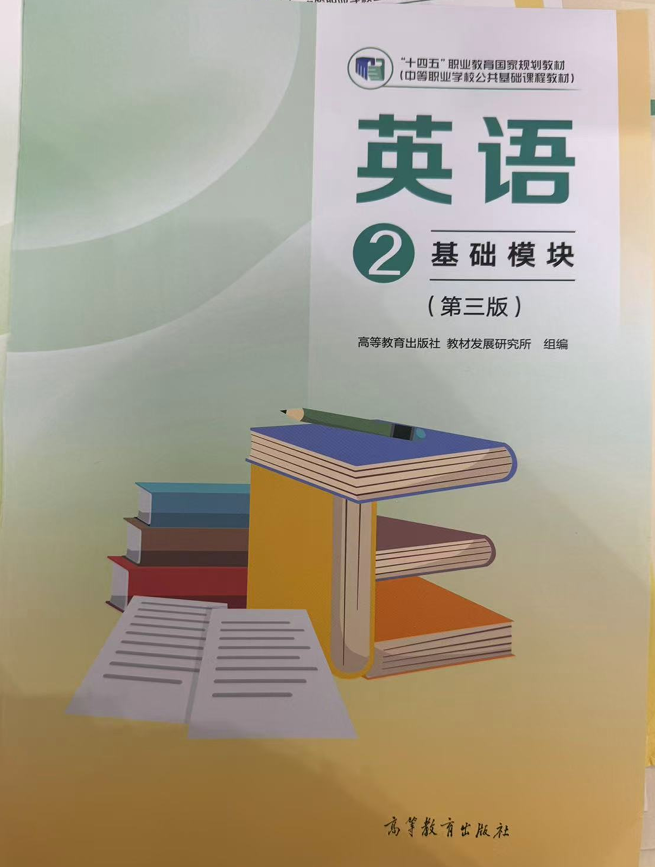
阶段检测卷(1-8单元)(A卷·基础巩固)《英语 基础模块2》(高教版第三版)单元过关卷(原卷版+解析版)
2026-04-03
|
2份
|
41页
|
64人阅读
|
0人下载
内容正文:
编写说明:本套试卷紧扣《英语 基础模块2》(高教版第三版)教材,以教材单元为基准精准覆盖核心考点。
每个单元设置AB卷,A卷为基础巩固卷,侧重基础考点训练,帮助学生扎实掌握知识要点;B卷为能力提升卷,注重知识整合与全面检测,引导学生构建知识网络。全书设计4份综合测试卷,模拟实战情境,聚焦解题能力突破,全面提升应试能力与知识应用水平。
《英语 基础模块2》(高教版第三版)《单元过关卷》
阶段检测卷(1-8单元)
A卷·基础巩固
考试时间:120分钟 满分:150分
班级 姓名 学号 成绩
第一部分:单项选择题(共25小题;每小题1分,满分25分)
从A、B、C、D四个选项中,选出可以填入空白处的最佳选项。
1.Trees are important ________ human beings and animals on the Earth.
A.for B.to C.at D.in
2.It not only helps you know the rhythm of music, ________ teaches you to breathe.
A.or B.and C.but also D.so
3.My little sister likes pandas ________ they are very cute.
A.because B.so C.but D.or
4.Tom is good ________ running and he runs every day.
A.at B.in C.for D.with
5.There ________ a smart library in our school.
A.has B.have C.is D.are
6.—Mom, can I play games on my iPad now?
—No, you ________ finish your homework first.
A.must B.can C.could D.may
7.Grandpa is teaching ________ how to grow vegetables in the garden.
A.we B.us C.our D.ours
8.We can’t change the weather, ________ we can prepare for it.
A.and B.so C.or D.but
9.There is ________ useful book about green energy. ________ book is written by a famous scientist.
A.a; the B.an; the C.a; a D.an; an
10.—What’s ________ matter with you?
—I have ________ bad cold.
A.a; the B.the; a C./; a D.the; /
11.—________ good movie NeZha 2 is!
—Yes. It’s so interesting that I have watched it three times.
A.How B.What C.How a D.What a
12.The rest of us ________ left waiting for the bus yesterday.
A.is B.are C.was D.were
13.—What do you think of the colour of my bedroom?
—Sorry, but what did you say? I ________ about something else.
A.think B.thought C.am thinking D.was thinking
14.—Could you please tell me ________?
—Sure. Go along this street and turn left.
A.where is the hospital B.where the hospital is
C.where was the hospital D.where the hospital was
15.My sister together with my parents ________ shopping at the supermarket. I can call ________ of them to get me some ink.
A.is; any B.are; any C.is; either D.are; either
16.The road sign shows us ________.
A.how can we get to the International Meeting Center
B.where is the International Meeting Center
C.which road leads to the International Meeting Center
D.what can we do in the International Meeting Center
17.Paper ________ by Cai Lun in ancient China more than 1900 years ago.
A.invented B.is invented C.was invented D.invents
18.It is very important for us ________ personal privacy online.
A.to protect B.protect C.protecting D.protected
19.—Walking and jogging are good for health.
—________ and ________.
A.So are they; so is riding B.So are they; so riding is
C.So they are; so is riding D.So they are; so riding is
20.It is I who _______ going to Beijing on business next week.
A.is B.am C.are D.was
21.—Do you want to play basketball ________ football after school?
—Basketball, ________ I’m not good at it.
A.and; but B.or; so C.but; and D.or; but
22.I ________ to review for the test today so I ________ a bad grade.
A.forget; get B.forgot; got C.forget; got D.forgot; get
23.My brother used to ________ afraid of the dark, but now he dares ________ alone at night.
A.be; to go B.being; going C.be; going D.being; to go
24.My parents have a low opinion of K-pop. They think most Korean songs are not worth ________ at all.
A.listening to B.being listened to C.listening D.being listening to
25.—I will meet you at 16: 00 at the school gate. Don’t be late.
—OK. ________.
A.You’re welcome B.See you then
C.That’s right D.It sounds interesting
第二部分:完形填空(共20小题;每小题1.5分,满分30分)
阅读下面短文,掌握其大意,然后从26-45各题所给的A、B、C、D四个选项中,选出最佳选项。
Have you ever heard of Zhu Yanjun, a middle-aged builder from a small village in Gansu Province? Can you believe that he 26 the second prize in Chinese Poetry Competition hosted by CCTV in February, 2023?
Born in a family of farmers, Zhu’s love for 27 started from a very young age under the influence of his Chinese teacher. He dreamed of writing his own books one day, just like his teacher. 28 he finished middle school, Zhu went to big cities to look for jobs. He worked building houses in more than ten 29 . Wherever he was, he went to local book stores with a 30 . He would take notes from the books and 31 the words in a dictionary to check the meanings.
At the beginning, he read poems 32 the Tang Dynasty and poems written by Chairman Mao Zedong. As time went by, he found some 33 methods (方法) to remember them. He especially likes Chairman Mao’s words: 34 in the world is difficult for one who sets his mind to it. Over the years, he has read 35 poems and can memorize more than 1,000 of them.
There is an old Chinese saying, “Reading 10,000 books is not as good as 36 10,000 miles.” Zhu said, “ 37 I have been to many different cities, it is not for travel. I get to know the history and traditions of many places by reading books and poems. It opens up a new 38 for me.” Reading also helps him live 39 and he never complains (抱怨) about hard work. There are 40 everywhere in his home, so he can read whenever he wants.
Zhu was very 41 in his children’s study. The children were 42 to finish their homework and do some reading before they play. “Getting a good education is very important for my kids, because knowledge can bring 43 a better life,” said Zhu.
Zhu is already 50 years old, but he 44 learning all the time. His story tells us that learning is a lifelong journey. Whether we are old or 45 , we should always learn to improve ourselves. Our lifetime is limited (有限). Let’s put it to good use.
26.A.invented B.won C.created D.discovered
27.A.reading B.singing C.drawing D.running
28.A.If B.During C.After D.Unless
29.A.museums B.villages C.countries D.cities
30.A.notebook B.textbook C.newspaper D.napkin
31.A.put up B.write down C.look up D.take out
32.A.behind B.from C.at D.on
33.A.useful B.fair C.real D.ancient
34.A.something B.nothing C.everything D.anything
35.A.several B.a few C.thousands of D.a couple of
36.A.playing B.working C.studying D.traveling
37.A.As soon as B.Because C.Until D.Although
38.A.building B.house C.school D.world
39.A.politely B.peacefully C.heavily D.safely
40.A.books B.clothes C.letters D.pictures
41.A.talented B.strict C.interested D.pleased
42.A.allowed B.prevented C.required D.interviewed
43.A.her B.him C.me D.them
44.A.keeps on B.cuts down C.puts off D.gives up
45.A.rich B.poor C.young D.kind
三、阅读理解(共25小题;每小题2分,满分50分)
阅读下列短文,从每题所给的A、B、C、D四个选项中,选出最佳选项,并在答题卡上将该项涂黑。
A
This movie is not like common Chinese movies. It is about how the new youth in the 1940s worked closely to protect our country.
—Angela Viewing score: 80
It may be one of the best war and historical movies. It does a good job in the stories and special effects (特效).
—Katie Viewing score: 100
This movie allows us to understand the early days of China in 1949. I believe China will become
stronger and stronger.
—James Viewing score: 90
The stories are wonderful. However, the acting skills of the actors need to be improved.
—Rich Viewing score: 70
46.What type of movie does this movie belong to?
A.A documentary. B.An action movie. C.A drama. D.A historical movie.
47.Who likes the movie Volunteer Army: The Heroes Attack least?
A.Angela. B.Katie. C.Rich. D.James.
48.If Mrs. Wang wants to watch Volunteer Army: The Heroes Attack with her 7-year-old twin sons and her 65-year-old parents on National Day, how much must she pay?
A.¥50. B.¥75. C.¥125. D.¥150.
49.What can you learn from the material?
A.James thinks the actors act well.
B.It takes more than two hours to watch this movie.
C.Rich wrote the movie review later than the other three.
D.Volunteer Army: The Heroes Attack is popular with most people.
50.Where can we read this material?
A.On a website. B.In a letter.
C.In a magazine. D.From a TV show.
B
Trees are important to us. They do a lot for us, our environment (环境) and animals.
Trees help to keep the air clean and make us healthy. They take in dirty air and give clean air to us. Go for a walk in the park in the morning, and you can feel how nice it is to be with many trees and clean air.
Trees also give us many kinds of beautiful flowers and delicious fruits such as apples and oranges. Trees give homes to different insects, birds and other animals. Even the sap (汁液) of trees is useful as food for insects.
▲ We can use them in many ways. But we are hurting them and they can’t grow back quickly. We cut down trees to make paper, desks and chairs. Also, we sometimes clear (清空) the forest to make space to build houses, shops and so on. Clearing the forest is bad. Many animals lose (失去) their homes because of this.
It is time for us to stop hurting our great friends—trees. Use less paper and join tree-planting activities. All of us can do something for our dear friends!
51.How do trees help us stay healthy?
A.They clean the air. B.They share their sap.
C.They make us enjoy flowers. D.They give us delicious fruits.
52.Which of the following is the best for “ ▲ ”?
A.Planting trees is easy. B.Trees are very useful.
C.Not all trees are big. D.Trees grow slowly.
53.What does the underlined word “this” in Paragraph 4 refer to?
A.Building houses and shops. B .Making paper.
C.Making desks and chairs. D.Clearing the forest.
54.What is the structure of the passage? (①= Paragraph 1, ②= Paragraph 2…)
A. B. C. D.
55.The writer wrote the passage mainly to ________.
A.tell us not to hurt trees B.teach us how to make use of trees
C.ask us not to make space for buildings D.show us how to make friends with animals
C
There are many interesting ways to learn about our world. Sometimes, scientists use their senses to study nature. Other times, they use tools to collect information. Recently, drones (无人驾驶飞机) have become a big help for scientists.
Drones can travel far and fit into small spaces, especially the ones that are hard for people to reach. For example, scientists can send a drone to check the size of the ice shelf (冰架) in Antarctica or find out when new icebergs might break off in the Arctic Ocean.
Drones can also go underwater. Some drones can enter lakes or even the deepest parts of the ocean. They can help scientists learn more about our oceans and the life in them.
Drones are also great for studying pollution. They can fly into the air and find pollution. They can see where the pollution comes from and where it goes. This information helps scientists understand how to keep our air clean and safe for everyone.
Another exciting use of drones is watching wild animals. Scientists use drones to study whales. They can also count animal populations and help scientists know when an endangered animal is in trouble.
How would you like to look into the mouth of a volcano (火山)? Does that sound dangerous? Drones have made it much safer. Instead of risking their lives, scientists send drones to fly over volcanoes. These drones take pictures and assemble information that can help scientists see volcanic activity and even predict volcanic eruptions (爆发).
Weather is another area where drones are helpful. Scientists can use drones to check things like temperature and pressure. With drones, scientists can make better predictions about the weather.
So, what would you want to study with a drone? Would you watch wild animals in the forest, visit the Amazon rainforest or create maps of new areas? With all the different kinds of drones available, the possibilities are endless!
56.According to Paragraph 1, which word may scientists use to describe drones?
A.Useful. B.Natural. C.Expensive. D.Interesting.
57.Which of the following questions can be answered in Paragraph 4?
A.Can drones cut pollution? B.Can drones predict pollution?
C.Can drones lead to pollution? D.Can drones help study pollution?
58.The underlined word “assemble” in Paragraph 6 is closest in meaning to “________”.
A.Collect B.need C.change D.add
59.What’s the writer’s attitude (态度) towards learning about the world with drones?
A.Doubtful. B.Supportive. C.Uncertain. D.Disappointed.
60.Which of the following best shows the structure of the passage?
(①=Paragraph 1, ②=Paragraph 2... )
A.①/②③④⑤⑥⑦⑧ B.①②③④⑤⑥⑦/⑧
C.①/②③④⑤⑥⑦/⑧ D.①/②/③④⑤⑥⑦⑧
D
Imagine watching a live opera performance not in a grand theater, but right on your phone. That’s what’s happening in China today, as traditional arts meet modern technology.
According to the China Association of Performing Arts, nearly 500 national and local art troupes (剧团) have joined Douyin, a popular short-video app. Over 6,000 performers are now bringing their shows to a whole new audience online. Since 2023, more than 81.9 million livestreams (直播) have been broadcast (播出)—that’s about 830 shows every single day!
“Online performances haven’t split our audience; they’ve made it larger,” said Pan Yan from the association. “Livestreams help attract new viewers, many of whom later come to enjoy live shows in theaters.”
The China National Opera House is a good example. Opera is a beautiful art form that combines music, drama, and poetry. But for many young people, it can feel hard to understand. To change this, the opera house started livestreaming in 2024. Its artists began singing popular songs like The Moon Represents My Heart in a classical style. This creative mix caught people’s attention.
By 2025, the Opera House had broadcast over 2,600 live shows, with more than 30 million views. Some streams even offered behind-the-scenes tours before big performances. Viewers were surprised and excited that opera could be so clear. One person commented, “So opera is understandable after all—it’s really touching!”
The success in Beijing has inspired other cities, including Shenzhen. Local art groups here are now exploring ways to use livestreaming to share Cantonese opera and other traditional arts with younger audiences. The digital stage is opening doors—and hearts.
61.How many livestreams are on Douyin each day on average?
A.About 500. B.About 830. C.About 2,600. D.About 30 million.
62.What does the underlined word “split” in paragraph 3 most probably mean?
A.Increased. B.Changed. C.Divided. D.Repeated.
63.What did the China National Opera House do to attract young people?
A.They built modern theaters in big cities.
B.They sang pop songs in a classical style online.
C.They invited famous pop stars to perform with them.
D.They offered free tickets to students and young people.
64.What does the viewer’s comment in paragraph 5 suggest?
A.The viewer used to find opera hard to understand.
B.The viewer was surprised by the number of shows.
C.The viewer enjoyed watching operas in theaters.
D.The viewer prefers online shows to live ones.
65.What is the main idea of the passage?
A.Young people are hard to be attracted by traditional arts.
B.Traditional arts are finding new audiences through livestreaming.
C.Douyin has become an important platform for art troupes.
D.The China National Opera House sets a good example.
E
The ancient Silk Road was a once-in-a-lifetime journey. It was one of the most important milestones (里程碑) of trade and culture in world history, and the pioneer, Zhang Qian, could not be easily forgotten by history. He was a great diplomat (外交官), traveller and explorer in the Han Dynasty of China, remembered as “the first Chinese to open his eyes to see the world”.
In 138 B.C., Zhang Qian was sent to the west of China for an alliance with the Yuezhi people to fight against the Xiongnu. He started his trip from Chang’an to Longxi. But unluckily, Zhang was caught by the Xiongnu people just as he left Han, and was held prisoner (囚犯) for ten years.
Zhang finally managed to run away with some of his men and continued to travel west. When Zhang at last reached the Yuezhi, he was sad to find that they didn’t want to fight against the Xiongnu people. On the return journey, Zhang Qian and his men were caught again. It was not until 126 B.C. that they returned to Chang’an.
Though Zhang hadn’t finished his task, he brought back first-hand information about Central Asia. The paths Zhang Qian explored later served as the highways connecting Europe, the Middle East, Mesopotamia, Central Asia, and East Asia. Commodities (商品) have been transported along this network of highways, which has been known as the “Silk Road” since the 19th century. Zhang Qian has been remembered as the great explorer that opened up a new era (时代) of cultural exchange between the East and the West.
66.What does the underlined word “alliance” in Paragraph 2 mean?
A.A long journey to a faraway place. B.A secret plan to run away.
C.An agreement to work together. D.An introduction to each other.
67.What is the result of Zhang Qian’s journey to the West?
A.He reached an agreement with the Xiongnu.
B.He sold many commodities and made money.
C.He built a bridge between the East and the West.
D.He made Han the most powerful country.
68.What kind of person is Zhang Qian?
A.Careful and creative. B.Energetic and active.
C.Proud and open-minded. D.Brave and strong-minded.
69.What is the best title for the passage?
A.Zhang Qian and the Silk Road B.Zhang Qian and the Yuezhi People
C.The Importance of the Silk Road D.The History of the Han Dynasty
70.The writer would most probably talk about ________ after Paragraph 4.
A.how the Xiongnu people were beaten back
B.why people did business along the Silk Road
C.what Zhang Qian did in the rest of his lifetime
D.how the Silk Road made a difference to the cultural exchange
第四部分:情景对话(共10小题;每小题2分,满分20分)
阅读A段对话,从对话后所给五个选项中选出可以填入空白处的最佳选项,并在答题卡上将该项涂黑。阅读B段短文,从对话后的七个选项中选出可以填入空白处的最佳选项,并在答题卡上将该项涂黑,选项中有两项为多余选项。
A
(Jackie Robinson was a famous baseball player. A reporter talked with his daughter, Sharon Robinson, about her famous father. The following is the interview.)
A: Reporter B: Sharon Robinson
A: 71
B: Well, he was famous for stealing bases (偷垒). He was a good athlete. When he was in university, baseball wasn’t even his favorite sport. He loved football most. But he also played basketball.
A: 72
B: He was a good husband and a loving father.
A: 73
B: He encouraged me in lots of ways. He taught me to care about other people. He taught me not to be afraid to speak out and to believe in something and stand up for it.
A: Did your father ever encourage you to take part in sports activities?
B: 74 I was also an athlete, and he encouraged me to practice swimming, skating and playing basketball.
A: 75
B: He will be remembered for his character and what he did as a baseball player.
A.How did he encourage you, his daughter?
B.What were his greatest advantages as a person?
C.Sure.
D.What will he be remembered for?
E.Sharon, would you please tell us something about your father?
B
A: Thank you for your talk about the deep sea. I have some questions.
B: 76
A: Where does the deep sea begin?
B: 77
A: What did China’s Fendouzhe do?
B: 78
A: What are deep-sea animals like?
B: 79
A: Is there rubbish in the deep sea?
B: 80 We need to protect the ocean.
A.It begins at about 200 metres below the surface.
B.Yes, there is rubbish even at 10,000 metres deep.
C.Of course! Please ask.
D.It dived into the deep sea and explored it in 2020.
E.No, there is no rubbish in the deep sea.
F.Many of them are colorful and strange.
G.It’s about 11,000 metres deep.
第五部分:书面表达(满分25分)
81.由于环境污染、人类的残杀,很多野生动物正濒临灭绝。请以“How to protect wild animals”为题,用英语写一篇短文,说明保护野生动物的重要性以及怎样保护他们。
内容要点:
1. 为什么有些野生动物处于危险中;
2. 保护野生动物的重要性;
3. 我们应该采取什么措施来保护野生动物。
写作要求:
1. 词数80左右
2. 语句通顺,逻辑清晰
3. 文中不得出现真实的信息
___________________________________________________________________________________________________________________________________________________________________________________________________________________________________________________________________________________________________________________________________________________________________________________________________________
学科网(北京)股份有限公司 (
1
)原创精品资源学科网独家享有版权,侵权必究!
学科网(北京)股份有限公司
$
编写说明:本套试卷紧扣《英语 基础模块2》(高教版第三版)教材,以教材单元为基准精准覆盖核心考点。
每个单元设置AB卷,A卷为基础巩固卷,侧重基础考点训练,帮助学生扎实掌握知识要点;B卷为能力提升卷,注重知识整合与全面检测,引导学生构建知识网络。全书设计4份综合测试卷,模拟实战情境,聚焦解题能力突破,全面提升应试能力与知识应用水平。
《英语 基础模块2》(高教版第三版)《单元过关卷》
阶段检测卷(1-8单元)
A卷·基础巩固
考试时间:120分钟 满分:150分
班级 姓名 学号 成绩
第一部分:单项选择题(共25小题;每小题1分,满分25分)
从A、B、C、D四个选项中,选出可以填入空白处的最佳选项。
1.Trees are important ________ human beings and animals on the Earth.
A.for B.to C.at D.in
【答案】B
【详解】句意:树木对地球上的人类和动物很重要。
for为了;to对;at在;in在……里面。固定短语be important to“对……重要”,此处应填to。
2.It not only helps you know the rhythm of music, ________ teaches you to breathe.
A.or B.and C.but also D.so
【答案】C
【详解】句意:它不仅帮助你了解音乐的节奏,而且还教你们呼吸。
or或者;and和;but also而且;so所以。根据句中的“not only”可知,此处考查固定搭配“not only... but also...”,意为“不但……而且……”,表示递进关系。
3.My little sister likes pandas ________ they are very cute.
A.because B.so C.but D.or
【答案】A
【详解】句意:我的小妹妹喜欢熊猫,因为它们很可爱。
考查连词辨析。because因为;so所以;but但是;or否则。根据句意,喜欢熊猫的原因是它们可爱,后句是前句的原因,应用because引导原因状语从句。故选A。
4.Tom is good ________ running and he runs every day.
A.at B.in C.for D.with
【答案】A
【详解】句意:汤姆擅长跑步并且他每天都跑。
at在;in在……里面;for为了;with和。固定搭配be good at意为“擅长”,此处表示汤姆擅长跑步,符合语境。
5.There ________ a smart library in our school.
A.has B.have C.is D.are
【答案】C
【详解】句意:我们学校有一个智能图书馆。
has有,动词单数形式;have有,动词原形;is是,主语是单数;are是,主语为复数。该句为There be句型,表示“某地存在某物”,主语“a smart library”是单数,be动词应用is。
6.—Mom, can I play games on my iPad now?
—No, you ________ finish your homework first.
A.must B.can C.could D.may
【答案】A
【详解】句意:——妈妈,我现在可以在我的iPad上玩游戏吗? ——不,你必须先完成作业。
考查情态动词辨析。must必须;can能够;could可以(can的过去式);may可以。根据“No”可知,妈妈不允许孩子现在玩游戏,强调“必须先完成作业”,带有强制或规定的语气,因此用must表示“必须”。故选A。
7.Grandpa is teaching ________ how to grow vegetables in the garden.
A.we B.us C.our D.ours
【答案】B
【详解】句意:爷爷正在教我们在花园里如何种蔬菜。
we我们(主格);us我们(宾格);our我们的(形容词性物主代词);ours我们的(名词性物主代词)。根据“Grandpa is teaching...”可知,动词 teaching后接人称代词宾格作宾语。故选us。
8.We can’t change the weather, ________ we can prepare for it.
A.and B.so C.or D.but
【答案】D
【详解】句意:我们不能改变天气,但是我们可以为此做好准备。
and和,并且;so所以;or或者,否则;but但是。句中前后两个分句“We can’t change the weather”和“we can prepare for it”之间存在转折关系,故填but。
9.There is ________ useful book about green energy. ________ book is written by a famous scientist.
A.a; the B.an; the C.a; a D.an; an
【答案】A
【详解】句意:有一本关于绿色能源的有用的书。这本书是由一位著名科学家写的。
考查冠词。a一个,用于辅音音素前;the这/那,表示特指;an一个,用于元音音素前。根据“useful book”可知,第一空表示一本有用的书,useful以辅音音素开头,用不定冠词a;第二空特指前面提到的书,用定冠词the。故选A。
10.—What’s ________ matter with you?
—I have ________ bad cold.
A.a; the B.the; a C./; a D.the; /
【答案】B
【详解】句意:——你怎么了?——我得了重感冒。
a一个;the这个,那个;/不填。第一空考查“What’s the matter with sb.?”这一固定句型,表示“某人怎么了”,第二空考查“have a bad cold”这一固定搭配,表示“得了重感冒”,应填the;a。
11.—________ good movie NeZha 2 is!
—Yes. It’s so interesting that I have watched it three times.
A.How B.What C.How a D.What a
【答案】D
【详解】句意:——《哪吒 2》是一部多么好的电影啊!——是的。它太有趣了,我都看了三遍了。
感叹句的中心词是名词movie,应用What引导;movie为单数可数名词,且good以辅音音素开头,前面需加不定冠词a。符合结构:What+a+形容词+单数可数名词+主语+谓语!
12.The rest of us ________ left waiting for the bus yesterday.
A.is B.are C.was D.were
【答案】D
【详解】句意:我们其余的人被留下来等公共汽车。
考查主谓一致。is是,单数;are是,复数;was是,单数过去式;were是,复数过去式。根据“The rest of us…left waiting for the bus.”可知,主语“The rest of us”中“the rest of”后接复数名词“us”,指“我们中剩下的人”,表示复数概念;且根据“yesterday”可知,此处描述的是过去发生的动作,需用过去时态,故谓语动词用复数过去式were。故选D。
13.—What do you think of the colour of my bedroom?
—Sorry, but what did you say? I ________ about something else.
A.think B.thought C.am thinking D.was thinking
【答案】D
【详解】句意:——你觉得我卧室的颜色怎么样?——对不起,你说什么?我刚才在想别的事情。
考查动词时态。think想,一般现在时;thought想,一般过去时;am thinking想,现在进行时;was thinking想,过去进行时。根据“Sorry, but what did you say?”可知,说话者没有听清对方的话,原因是在对方说话的那一刻,说话者“正在思考”别的事情。此处表示过去某个时刻正在进行的动作,应用过去进行时,结构为“was/were doing”。主语是I,be动词用was。故选D。
14.—Could you please tell me ________?
—Sure. Go along this street and turn left.
A.where is the hospital B.where the hospital is
C.where was the hospital D.where the hospital was
【答案】B
【详解】句意:——你能告诉我医院在哪里吗?——当然。沿着这条街走然后左转。
宾语从句需用陈述语序,即“连接词 + 主语 + 谓语”,根据答语可知是询问现在的路线,应用一般现在时,选项B是宾语从句的一般现在时。
15.My sister together with my parents ________ shopping at the supermarket. I can call ________ of them to get me some ink.
A.is; any B.are; any C.is; either D.are; either
【答案】A
【详解】句意:我妹妹和我父母正在超市购物。我可以给他们中的任何一个打电话让给我带些墨水。
考查主谓一致和不定代词辨析。is是 (用于第三人称单数);any 任何一个 ;are 是 (用于第二人称及复数);either 两者中的任何一个;根据“My sister together with my parents…”,可知有“together with”,谓语动词的数要与前面的主语“My sister”保持一致,be动词要用“is”。而由“my sister”和“my parents”,可知这里表示从三个人当中任选一个,第二空应填“any”。故选A。
16.The road sign shows us ________.
A.how can we get to the International Meeting Center
B.where is the International Meeting Center
C.which road leads to the International Meeting Center
D.what can we do in the International Meeting Center
【答案】C
【详解】句意:这个路标告诉我们哪条路通向国际会议中心。
考查宾语从句。宾语从句需用陈述语序。A项、B项\D项均为疑问语序,C项为陈述语序。故选C。
17.Paper ________ by Cai Lun in ancient China more than 1900 years ago.
A.invented B.is invented C.was invented D.invents
【答案】C
【详解】句意:纸是1900多年前中国古代的蔡伦发明的。
Paper和invent之间是被动关系,且时间状语“more than 1900 years ago”表示过去,需用一般过去时的被动语态,故用was invented。
18.It is very important for us ________ personal privacy online.
A.to protect B.protect C.protecting D.protected
【答案】A
【详解】句意:对我们来说,在网上保护个人隐私是非常重要的。
“It is + 形容词 + for sb. + to do sth.”意为“对某人来说做某事是……的”,其中it作形式主语,动词不定式to protect作真正主语,所以应该填to protect。
19.—Walking and jogging are good for health.
—________ and ________.
A.So are they; so is riding B.So are they; so riding is
C.So they are; so is riding D.So they are; so riding is
【答案】C
【详解】句意:——散步和慢跑对健康有益。——它们确实是,骑行也是。
考查倒装句。so+be动词+主语,表示前文的情况也适用于后者;so+主语+be动词,表示“确实如此”,第一空肯定散步和慢跑确实对健康有好处。第二空表示骑行对健康也有好处,故选C。
20.It is I who _______ going to Beijing on business next week.
A.is B.am C.are D.was
【答案】B
【详解】句意:是我下周去北京出差。
考查主谓一致。it is…who…是强调句型。根据句意结构,去掉it is who可知原句为I am going to Beijing on business next week, 故选B。
21.—Do you want to play basketball ________ football after school?
—Basketball, ________ I’m not good at it.
A.and; but B.or; so C.but; and D.or; but
【答案】D
【详解】句意:——放学后你想打篮球还是踢足球?——篮球,但我不擅长。
考查并列连词辨析。and和;but但是;or或者;so所以。根据“basketball… football”可知,第一空在疑问句中连接两个选择项,需用“or”表示“或者”;第二空根据“I’m not good at it”可知,“篮球”和“不擅长”之间存在转折关系,需用“but”。故选D。
22.I ________ to review for the test today so I ________ a bad grade.
A.forget; get B.forgot; got C.forget; got D.forgot; get
【答案】B
【详解】句意:我忘记复习今天的考试了,所以我得了个很差的成绩。
考查动词时态。forget忘记,动词原形;get得到,动词原形;forgot忘记,动词过去式;got得到,动词过去式。根据语境可知,句子描述的是过去发生的一系列动作,“忘记复习”和“取得糟糕成绩”都已经发生过了 ,所以两个空都应该用过去式。故选B。
23.My brother used to ________ afraid of the dark, but now he dares ________ alone at night.
A.be; to go B.being; going C.be; going D.being; to go
【答案】A
【详解】句意:我弟弟过去怕黑,但现在他敢晚上一个人出去。
第一空,固定搭配“used to do sth.”表示“过去常常做某事”故用be;第二空,此处dares是三单形式,说明dare是作为实义动词来使用的,“dare to do sth.”是固定搭配,表示“敢于做某事”,故用to go。
24.My parents have a low opinion of K-pop. They think most Korean songs are not worth ________ at all.
A.listening to B.being listened to C.listening D.being listening to
【答案】A
【详解】句意:我父母对韩国流行音乐评价很低。他们认为大多数韩国歌曲根本不值得听。
be worth doing意为“值得做某事”,主动形式表被动含义,不用被动语态,“听歌”需用短语listen to,介词to不可省略,listening to正确。
25.—I will meet you at 16: 00 at the school gate. Don’t be late.
—OK. ________.
A.You’re welcome B.See you then
C.That’s right D.It sounds interesting
【答案】B
【详解】句意:——我将于16:00在校门口见你。不要迟到。——好的。到时候见。
考查情境交际。You’re welcome不用客气;See you then到时见;That’s right那是对的;It sounds interesting它听起来很有趣。根据“OK”可知,此处是说到时见。故选B。
第二部分:完形填空(共20小题;每小题1.5分,满分30分)
阅读下面短文,掌握其大意,然后从26-45各题所给的A、B、C、D四个选项中,选出最佳选项。
Have you ever heard of Zhu Yanjun, a middle-aged builder from a small village in Gansu Province? Can you believe that he 26 the second prize in Chinese Poetry Competition hosted by CCTV in February, 2023?
Born in a family of farmers, Zhu’s love for 27 started from a very young age under the influence of his Chinese teacher. He dreamed of writing his own books one day, just like his teacher. 28 he finished middle school, Zhu went to big cities to look for jobs. He worked building houses in more than ten 29 . Wherever he was, he went to local book stores with a 30 . He would take notes from the books and 31 the words in a dictionary to check the meanings.
At the beginning, he read poems 32 the Tang Dynasty and poems written by Chairman Mao Zedong. As time went by, he found some 33 methods (方法) to remember them. He especially likes Chairman Mao’s words: 34 in the world is difficult for one who sets his mind to it. Over the years, he has read 35 poems and can memorize more than 1,000 of them.
There is an old Chinese saying, “Reading 10,000 books is not as good as 36 10,000 miles.” Zhu said, “ 37 I have been to many different cities, it is not for travel. I get to know the history and traditions of many places by reading books and poems. It opens up a new 38 for me.” Reading also helps him live 39 and he never complains (抱怨) about hard work. There are 40 everywhere in his home, so he can read whenever he wants.
Zhu was very 41 in his children’s study. The children were 42 to finish their homework and do some reading before they play. “Getting a good education is very important for my kids, because knowledge can bring 43 a better life,” said Zhu.
Zhu is already 50 years old, but he 44 learning all the time. His story tells us that learning is a lifelong journey. Whether we are old or 45 , we should always learn to improve ourselves. Our lifetime is limited (有限). Let’s put it to good use.
26.A.invented B.won C.created D.discovered
27.A.reading B.singing C.drawing D.running
28.A.If B.During C.After D.Unless
29.A.museums B.villages C.countries D.cities
30.A.notebook B.textbook C.newspaper D.napkin
31.A.put up B.write down C.look up D.take out
32.A.behind B.from C.at D.on
33.A.useful B.fair C.real D.ancient
34.A.something B.nothing C.everything D.anything
35.A.several B.a few C.thousands of D.a couple of
36.A.playing B.working C.studying D.traveling
37.A.As soon as B.Because C.Until D.Although
38.A.building B.house C.school D.world
39.A.politely B.peacefully C.heavily D.safely
40.A.books B.clothes C.letters D.pictures
41.A.talented B.strict C.interested D.pleased
42.A.allowed B.prevented C.required D.interviewed
43.A.her B.him C.me D.them
44.A.keeps on B.cuts down C.puts off D.gives up
45.A.rich B.poor C.young D.kind
【答案】
26.B 27.A 28.C 29.D 30.A 31.C 32.B 33.A 34.B 35.C 36.D 37.D 38.D 39.B 40.A 41.B 42.C 43.D 44.A 45.C
【导语】本文主要讲述了来自甘肃农村的建筑工人朱彦君通过坚持阅读和背诵诗歌,在央视《中国诗词大会》中获得亚军的故事,展现了他对知识的热爱和终身学习的精神。
26.句意:你能相信他在2023年2月央视举办的《中国诗词大会》中获得了二等奖吗?
invented发明;won赢得;created创造;discovered发现。根据“Chinese Poetry Competition”可知,此处指在比赛中赢得奖项。故选B。
27.句意:出生在农民家庭的朱彦君,在语文老师的影响下从小就热爱阅读。
reading阅读;singing唱歌;drawing绘画;running跑步。根据下文“writing his own books”可知,此处指对阅读的热爱。故选A。
28.句意:中学毕业后,朱彦君去大城市找工作。
If如果;During在……期间;After在……之后;Unless除非。根据“finished middle school”和“went to big cities”的先后关系,此处指“在……之后”。故选C。
29.句意:他在十多个城市从事房屋建造工作。
museums博物馆;villages村庄;countries国家;cities城市。根据“big cities”和“wherever he was”的提示,此处指多个城市。故选D。
30.句意:无论在哪里,他都会带着笔记本去当地书店。
notebook笔记本;textbook教科书;newspaper报纸;napkin餐巾纸。根据下文“take notes”可知,需要携带笔记本。故选A。
31.句意:他会从书中做笔记,并在字典中查单词的意思。
put up张贴;write down写下;look up查阅;take out取出。根据“check the meanings”可知,此处指查阅字典。故选C。
32.句意:起初,他阅读唐诗和毛泽东主席写的诗。
behind在……后面;from来自;at在;on在……上。根据“the Tang Dynasty”可知,此处指来自唐朝的诗。故选B。
33.句意:随着时间的推移,他发现了一些有用的记忆方法。
useful有用的;fair公平的;real真实的;ancient古老的。根据“methods to remember them”可知,此处指有用的方法。故选A。
34.句意:他特别喜欢毛主席的话:世上无难事,只怕有心人。
something某事;nothing无事;everything一切;anything任何事。根据“is difficult”的否定含义可知,此处指世上无难事。故选B。
35.句意:多年来,他阅读了数千首诗,并能背诵1000多首。
several几个;a few一些;thousands of数千;a couple of几个。根据“more than 1,000”的提示,此处指数千首诗。故选C。
36.句意:中国有句古话:“读万卷书不如行万里路”。
playing玩耍;working工作;studying学习;traveling旅行。根据后文travel的提示,此处指旅行万里路。故选D。
37.句意:朱彦君说:“虽然我去过很多不同的城市,但都不是为了旅游。”
As soon as一……就;Because因为;Until直到;Although虽然。根据“it is not for travel”的转折关系,此处引导让步状语从句。故选D。
38.句意:通过阅读书籍和诗歌,我了解了许多地方的历史和传统,这为我打开了一个新世界。
building建筑;house房子;school学校;world世界。根据“opens up a new”可知,此处指打开新世界。故选D。
39.句意:阅读也帮助他平静地生活,他从不抱怨工作的辛苦。
politely礼貌地;peacefully平静地;heavily沉重地;safely安全地。根据“never complains”可知,此处指平静的生活状态。故选B。
40.句意:他家里到处都是书,所以可以随时阅读。
books书;clothes衣服;letters信件;pictures图片。根据“everywhere in his home”和“read whenever he wants”可知应填books,故选A。
41.句意:朱彦君对孩子们的学习要求很严格。
talented有天赋的;strict严格的;interested感兴趣的;pleased高兴的。根据下文要求孩子先完成作业可知,他对孩子严格。故选B。
42.句意:孩子们被要求在玩耍前完成作业并阅读。
allowed允许;prevented阻止;required要求;interviewed采访。根据“finish their homework”可知,此处指要求孩子完成作业。故选C。
43.句意:朱彦君说:“让孩子接受良好教育很重要,因为知识能给他们带来更好的生活。”
her她;him他;me我;them他们。根据“my kids”可知,此处用复数代词。故选D。
44.句意:朱彦君已经50岁了,但他一直在坚持学习。
keeps on继续;cuts down削减;puts off推迟;gives up放弃。根据“learning all the time”可知,此处指继续学习。故选A。
45.句意:无论我们年老还是年轻,都应该不断学习提升自己。
rich富有;poor贫穷;young年轻;kind善良。根据“Whether we are old or”可知,此处与old对应的是“年轻”。故选C。
三、阅读理解(共25小题;每小题2分,满分50分)
阅读下列短文,从每题所给的A、B、C、D四个选项中,选出最佳选项,并在答题卡上将该项涂黑。
A
This movie is not like common Chinese movies. It is about how the new youth in the 1940s worked closely to protect our country.
—Angela Viewing score: 80
It may be one of the best war and historical movies. It does a good job in the stories and special effects (特效).
—Katie Viewing score: 100
This movie allows us to understand the early days of China in 1949. I believe China will become
stronger and stronger.
—James Viewing score: 90
The stories are wonderful. However, the acting skills of the actors need to be improved.
—Rich Viewing score: 70
46.What type of movie does this movie belong to?
A.A documentary. B.An action movie. C.A drama. D.A historical movie.
47.Who likes the movie Volunteer Army: The Heroes Attack least?
A.Angela. B.Katie. C.Rich. D.James.
48.If Mrs. Wang wants to watch Volunteer Army: The Heroes Attack with her 7-year-old twin sons and her 65-year-old parents on National Day, how much must she pay?
A.¥50. B.¥75. C.¥125. D.¥150.
49.What can you learn from the material?
A.James thinks the actors act well.
B.It takes more than two hours to watch this movie.
C.Rich wrote the movie review later than the other three.
D.Volunteer Army: The Heroes Attack is popular with most people.
50.Where can we read this material?
A.On a website. B.In a letter.
C.In a magazine. D.From a TV show.
【答案】46.D 47.C 48.B 49.D 50.A
【导语】本文是一篇应用文,主要介绍了《志愿军:雄兵出击》这部电影的相关信息,包括电影海报、票价优惠、观众评分及影评等。
46.文章第一段明确指出“Volunteer Army: The Heroes Attack was the most popular movie among the war and historical movies during the Mid-Autumn Festival.”,直接说明这部电影属于战争历史类电影。
47.影评里每个人的观看评分“Angela Viewing score: 80;Katie Viewing score: 100;James Viewing score: 90;Rich Viewing score: 70”,Rich的评分最低,这表明Rich最不喜欢这部电影。
48.由票价信息“Price: ¥50;●50% off on National Day for all. ●Free for children under 6 years old. Free for people over 60 years old.”可知,国庆节期间所有人半价,即每人25元;6岁以下儿童免费,60岁以上老人免费。王夫人与7岁(不享受免费)的双胞胎儿子以及65岁(免费)的父母一同观影,需要支付王夫人和两个孩子的票钱,共3人×25元=75元。
49.从影评中每个人较高的评分以及“Volunteer Army: The Heroes Attack was the most popular movie among the war and historical movies during the Mid-Autumn Festival(《志愿军:雄兵出击》是中秋节期间战争历史电影中最受欢迎的)”能明确,《志愿军:雄兵出击》很受大多数人欢迎。
50.材料中有“search movies, TV, actors, more…(搜索电影、电视、演员……)”、“TOMATOMETER(番茄评分)”、“AUDIENCE SCORE(观众评分)”以及影评等内容,这些通常出现在网站上,所以能在网站上读到这篇材料。
B
Trees are important to us. They do a lot for us, our environment (环境) and animals.
Trees help to keep the air clean and make us healthy. They take in dirty air and give clean air to us. Go for a walk in the park in the morning, and you can feel how nice it is to be with many trees and clean air.
Trees also give us many kinds of beautiful flowers and delicious fruits such as apples and oranges. Trees give homes to different insects, birds and other animals. Even the sap (汁液) of trees is useful as food for insects.
▲ We can use them in many ways. But we are hurting them and they can’t grow back quickly. We cut down trees to make paper, desks and chairs. Also, we sometimes clear (清空) the forest to make space to build houses, shops and so on. Clearing the forest is bad. Many animals lose (失去) their homes because of this.
It is time for us to stop hurting our great friends—trees. Use less paper and join tree-planting activities. All of us can do something for our dear friends!
51.How do trees help us stay healthy?
A.They clean the air. B.They share their sap.
C.They make us enjoy flowers. D.They give us delicious fruits.
52.Which of the following is the best for “ ▲ ”?
A.Planting trees is easy. B.Trees are very useful.
C.Not all trees are big. D.Trees grow slowly.
53.What does the underlined word “this” in Paragraph 4 refer to?
A.Building houses and shops. B .Making paper.
C.Making desks and chairs. D.Clearing the forest.
54.What is the structure of the passage? (①= Paragraph 1, ②= Paragraph 2…)
A. B. C. D.
55.The writer wrote the passage mainly to ________.
A.tell us not to hurt trees B.teach us how to make use of trees
C.ask us not to make space for buildings D.show us how to make friends with animals
【答案】51.A 52.B 53.D 54.C 55.A
【导语】本文是一篇说明文,主要介绍了树木对人类、环境和动物的重要作用,同时指出了人类对树木的破坏行为,并呼吁大家停止伤害树木、保护树木。
51.第二段提到“Trees help to keep the air clean and make us healthy.”,直接说明树木通过净化空气来帮助我们保持健康。
52.该段下文提到“We can use them in many ways.”,后文列举了砍树造纸、做桌椅、砍伐森林建房屋等用途,因此段首的主题句应总述树木的用途。B选项“Trees are very useful.”能概括下文内容,起到总起作用。
53.第四段提到“Clearing the forest is bad. Many animals lose their homes because of this.”,这里的“this”指代前文提到的Clearing the forest“砍伐森林”。
54.文章结构分析:①总起段,点明树木对我们很重要;②③分述树木的作用 (净化空气、提供花果和栖息地);④讲述树木被人类破坏的现状;⑤呼吁保护树木。整体为“总——分——总”结构,对应选项C的结构图。
55.文章先介绍树木的重要性,再指出人类的破坏行为,最后在尾段发出呼吁“It is time for us to stop hurting our great friends—trees.”,因此作者的写作目的是告诉我们不要伤害树木。
C
There are many interesting ways to learn about our world. Sometimes, scientists use their senses to study nature. Other times, they use tools to collect information. Recently, drones (无人驾驶飞机) have become a big help for scientists.
Drones can travel far and fit into small spaces, especially the ones that are hard for people to reach. For example, scientists can send a drone to check the size of the ice shelf (冰架) in Antarctica or find out when new icebergs might break off in the Arctic Ocean.
Drones can also go underwater. Some drones can enter lakes or even the deepest parts of the ocean. They can help scientists learn more about our oceans and the life in them.
Drones are also great for studying pollution. They can fly into the air and find pollution. They can see where the pollution comes from and where it goes. This information helps scientists understand how to keep our air clean and safe for everyone.
Another exciting use of drones is watching wild animals. Scientists use drones to study whales. They can also count animal populations and help scientists know when an endangered animal is in trouble.
How would you like to look into the mouth of a volcano (火山)? Does that sound dangerous? Drones have made it much safer. Instead of risking their lives, scientists send drones to fly over volcanoes. These drones take pictures and assemble information that can help scientists see volcanic activity and even predict volcanic eruptions (爆发).
Weather is another area where drones are helpful. Scientists can use drones to check things like temperature and pressure. With drones, scientists can make better predictions about the weather.
So, what would you want to study with a drone? Would you watch wild animals in the forest, visit the Amazon rainforest or create maps of new areas? With all the different kinds of drones available, the possibilities are endless!
56.According to Paragraph 1, which word may scientists use to describe drones?
A.Useful. B.Natural. C.Expensive. D.Interesting.
57.Which of the following questions can be answered in Paragraph 4?
A.Can drones cut pollution? B.Can drones predict pollution?
C.Can drones lead to pollution? D.Can drones help study pollution?
58.The underlined word “assemble” in Paragraph 6 is closest in meaning to “________”.
A.Collect B.need C.change D.add
59.What’s the writer’s attitude (态度) towards learning about the world with drones?
A.Doubtful. B.Supportive. C.Uncertain. D.Disappointed.
60.Which of the following best shows the structure of the passage?
(①=Paragraph 1, ②=Paragraph 2... )
A.①/②③④⑤⑥⑦⑧ B.①②③④⑤⑥⑦/⑧
C.①/②③④⑤⑥⑦/⑧ D.①/②/③④⑤⑥⑦⑧
【答案】56.A 57.D 58.A 59.B 60.C
【导语】本文是一篇说明文,主要介绍了无人机在科学研究中的多种应用,展现了其帮助科学家探索世界的多样性和有效性。
56.第一段提到“Recently, drones have become a big help for scientists”,明确表明无人机对科学家来说有很大帮助,即“有用的”。选项A“Useful(有用的)”符合描述。
57.第四段指出“Drones are also great for studying pollution”,并详细说明了无人机在研究污染方面的作用,如找到污染源和污染去向等。因此,选项D“Can drones help study pollution?(无人机能帮助研究污染吗?)”是可以在第四段中找到答案的问题。
58.第六段提到“These drones take pictures and assemble information that can help scientists see volcanic activity”,其中“assemble information”意味着无人机收集信息以帮助科学家观察火山活动。选项A“Collect(收集)”与“assemble”在此处的意思最为接近。
59.文章通过列举无人机在科学研究中的多种应用,如探索极地、研究海洋、监测污染、观察野生动物、探索火山和监测天气等,展现了无人机在帮助科学家学习关于世界的知识方面的广泛用途和潜力。这表明作者对使用无人机来探索世界持支持态度,选项B“Supportive(支持的)”符合作者的态度。
60.第一段总述无人机对科学家来说是一个很大的帮助;第二至七段详细介绍了无人机在科学研究中的多种应用;第八段总结了使用无人机学习的无限可能性。因此,文章的结构可以概括为“总-分-总”,选项C“①/②③④⑤⑥⑦/⑧”最能体现这一结构。
D
Imagine watching a live opera performance not in a grand theater, but right on your phone. That’s what’s happening in China today, as traditional arts meet modern technology.
According to the China Association of Performing Arts, nearly 500 national and local art troupes (剧团) have joined Douyin, a popular short-video app. Over 6,000 performers are now bringing their shows to a whole new audience online. Since 2023, more than 81.9 million livestreams (直播) have been broadcast (播出)—that’s about 830 shows every single day!
“Online performances haven’t split our audience; they’ve made it larger,” said Pan Yan from the association. “Livestreams help attract new viewers, many of whom later come to enjoy live shows in theaters.”
The China National Opera House is a good example. Opera is a beautiful art form that combines music, drama, and poetry. But for many young people, it can feel hard to understand. To change this, the opera house started livestreaming in 2024. Its artists began singing popular songs like The Moon Represents My Heart in a classical style. This creative mix caught people’s attention.
By 2025, the Opera House had broadcast over 2,600 live shows, with more than 30 million views. Some streams even offered behind-the-scenes tours before big performances. Viewers were surprised and excited that opera could be so clear. One person commented, “So opera is understandable after all—it’s really touching!”
The success in Beijing has inspired other cities, including Shenzhen. Local art groups here are now exploring ways to use livestreaming to share Cantonese opera and other traditional arts with younger audiences. The digital stage is opening doors—and hearts.
61.How many livestreams are on Douyin each day on average?
A.About 500. B.About 830. C.About 2,600. D.About 30 million.
62.What does the underlined word “split” in paragraph 3 most probably mean?
A.Increased. B.Changed. C.Divided. D.Repeated.
63.What did the China National Opera House do to attract young people?
A.They built modern theaters in big cities.
B.They sang pop songs in a classical style online.
C.They invited famous pop stars to perform with them.
D.They offered free tickets to students and young people.
64.What does the viewer’s comment in paragraph 5 suggest?
A.The viewer used to find opera hard to understand.
B.The viewer was surprised by the number of shows.
C.The viewer enjoyed watching operas in theaters.
D.The viewer prefers online shows to live ones.
65.What is the main idea of the passage?
A.Young people are hard to be attracted by traditional arts.
B.Traditional arts are finding new audiences through livestreaming.
C.Douyin has become an important platform for art troupes.
D.The China National Opera House sets a good example.
【答案】61.B 62.C 63.B 64.A 65.B
【导语】本文是一篇说明文,主要讲述了中国传统艺术通过直播找到新受众,让传统艺术焕发新生的现象。
61.第二段明确指出“Since 2023, more than 81.9 million livestreams have been broadcast —that’s about 830 shows every single day!”,这直接说明抖音上平均每天的直播数量约为830场。
62.第三段中“Online performances haven’t split our audience; they’ve made it larger”,后半句“让观众规模变大”是对前半句的反向解释,由此可推知split的含义是“分割、分流”。
63.第四段提到“To change this, the opera house started livestreaming in 2024. Its artists began singing popular songs like The Moon Represents My Heart in a classical style.”,这直接说明中国国家大剧院为吸引年轻人,在线上用古典风格演唱流行歌曲。
64.第五段观众评论“So opera is understandable after all—it’s really touching!”,结合前文第四段提到的“对很多年轻人来说,戏曲很难理解”,可推知这位观众过去认为戏曲难以理解。
65.文章开篇点明传统艺术与现代科技结合,通过抖音直播走进大众视野,全文围绕传统艺术借助直播吸引新观众展开,故核心主旨是传统艺术正通过直播找到新的受众。
E
The ancient Silk Road was a once-in-a-lifetime journey. It was one of the most important milestones (里程碑) of trade and culture in world history, and the pioneer, Zhang Qian, could not be easily forgotten by history. He was a great diplomat (外交官), traveller and explorer in the Han Dynasty of China, remembered as “the first Chinese to open his eyes to see the world”.
In 138 B.C., Zhang Qian was sent to the west of China for an alliance with the Yuezhi people to fight against the Xiongnu. He started his trip from Chang’an to Longxi. But unluckily, Zhang was caught by the Xiongnu people just as he left Han, and was held prisoner (囚犯) for ten years.
Zhang finally managed to run away with some of his men and continued to travel west. When Zhang at last reached the Yuezhi, he was sad to find that they didn’t want to fight against the Xiongnu people. On the return journey, Zhang Qian and his men were caught again. It was not until 126 B.C. that they returned to Chang’an.
Though Zhang hadn’t finished his task, he brought back first-hand information about Central Asia. The paths Zhang Qian explored later served as the highways connecting Europe, the Middle East, Mesopotamia, Central Asia, and East Asia. Commodities (商品) have been transported along this network of highways, which has been known as the “Silk Road” since the 19th century. Zhang Qian has been remembered as the great explorer that opened up a new era (时代) of cultural exchange between the East and the West.
66.What does the underlined word “alliance” in Paragraph 2 mean?
A.A long journey to a faraway place. B.A secret plan to run away.
C.An agreement to work together. D.An introduction to each other.
67.What is the result of Zhang Qian’s journey to the West?
A.He reached an agreement with the Xiongnu.
B.He sold many commodities and made money.
C.He built a bridge between the East and the West.
D.He made Han the most powerful country.
68.What kind of person is Zhang Qian?
A.Careful and creative. B.Energetic and active.
C.Proud and open-minded. D.Brave and strong-minded.
69.What is the best title for the passage?
A.Zhang Qian and the Silk Road B.Zhang Qian and the Yuezhi People
C.The Importance of the Silk Road D.The History of the Han Dynasty
70.The writer would most probably talk about ________ after Paragraph 4.
A.how the Xiongnu people were beaten back
B.why people did business along the Silk Road
C.what Zhang Qian did in the rest of his lifetime
D.how the Silk Road made a difference to the cultural exchange
【答案】66.C 67.C 68.D 69.A 70.D
【导语】本文是一篇记叙文,讲述了汉代外交家、探险家张骞出使西域、开辟丝绸之路的历史事迹,突出了他坚韧不拔的精神及其对东西方文化交流的深远影响。
66.第二段指出出使任务:“In 138 B.C., Zhang Qian was sent to the west of China for an alliance with the Yuezhi people to fight against the Xiongnu.”,这里说明张骞被派往中国西部与月氏人结成“alliance”来对抗匈奴,由此可推测“alliance”意思是共同合作的协议,即“An agreement to work together”。
67.第四段“The paths Zhang Qian explored later served as the highways... Zhang Qian has been remembered as the great explorer that opened up a new era of cultural exchange between the East and the West.”表明张骞的探索开辟了东西方文化交流的新时代,架起了沟通的桥梁。
68.文中描述张骞被匈奴扣押十年后成功逃脱,继续西行;返回途中再次被俘,最终回到长安。这些经历体现了他面对困难不屈服、意志坚定的品质。
69.全文围绕张骞出使西域的经历及其对丝绸之路的贡献展开,A项“张骞与丝绸之路”准确概括了文章主旨。
70.第四段结尾提到张骞开辟了东西方文化交流的新时代,因此接下来最可能讨论丝绸之路对文化交流的具体影响。
第四部分:情景对话(共10小题;每小题2分,满分20分)
阅读A段对话,从对话后所给五个选项中选出可以填入空白处的最佳选项,并在答题卡上将该项涂黑。阅读B段短文,从对话后的七个选项中选出可以填入空白处的最佳选项,并在答题卡上将该项涂黑,选项中有两项为多余选项。
A
(Jackie Robinson was a famous baseball player. A reporter talked with his daughter, Sharon Robinson, about her famous father. The following is the interview.)
A: Reporter B: Sharon Robinson
A: 71
B: Well, he was famous for stealing bases (偷垒). He was a good athlete. When he was in university, baseball wasn’t even his favorite sport. He loved football most. But he also played basketball.
A: 72
B: He was a good husband and a loving father.
A: 73
B: He encouraged me in lots of ways. He taught me to care about other people. He taught me not to be afraid to speak out and to believe in something and stand up for it.
A: Did your father ever encourage you to take part in sports activities?
B: 74 I was also an athlete, and he encouraged me to practice swimming, skating and playing basketball.
A: 75
B: He will be remembered for his character and what he did as a baseball player.
A.How did he encourage you, his daughter?
B.What were his greatest advantages as a person?
C.Sure.
D.What will he be remembered for?
E.Sharon, would you please tell us something about your father?
【答案】71.E 72.B 73.A 74.C 75.D
【分析】试题分析: 本文是记者与一位著名棒球运动员的女儿Sharon Robinson的一篇采访,谈论了她的父亲Jackie Robinson。
71.根据下文的介绍了Jackie Robinson的一些事情,所以此处询问“Sharon, would you please tell us something about your father? 莎伦,请给我们讲讲你父亲的情况好吗” 符合语境。所以答案为:E。
72.根据下文答语He was a good husband and a loving father. 他是个好丈夫,也是个慈爱的父亲。谈论“父亲”的优点,所以此处询问“What were his greatest advantages as a person? 他最大的优点是什么”符合语境。 所以答案为:B。
73.根据下文谈论“鼓励她的事情”可知,此处询问“How did he encourage you, his daughter? 他是如何鼓励你的,他的女儿”符合语境。所以答案为:A。
74.根据后文I was also an athlete, and he encouraged me to practice swimming, skating and playing basketball.可知,Jackie Robinson鼓励过女儿参加体育活动,所以此处作肯定回答。所以答案为:C。
75.根据下文He will be remembered for his character and what he did as a baseball player.可知,上文应询问“What will he be remembered for?他会因为什么而被记住”符合语境。 所以答案为:D。
B
A: Thank you for your talk about the deep sea. I have some questions.
B: 76
A: Where does the deep sea begin?
B: 77
A: What did China’s Fendouzhe do?
B: 78
A: What are deep-sea animals like?
B: 79
A: Is there rubbish in the deep sea?
B: 80 We need to protect the ocean.
A.It begins at about 200 metres below the surface.
B.Yes, there is rubbish even at 10,000 metres deep.
C.Of course! Please ask.
D.It dived into the deep sea and explored it in 2020.
E.No, there is no rubbish in the deep sea.
F.Many of them are colorful and strange.
G.It’s about 11,000 metres deep.
【答案】76.C 77.A 78.D 79.F 80.B
【导语】本文围绕深海知识展开,主要介绍了深海的深度、中国“奋斗者”号的探索以及深海生物和海洋保护等内容。
76.根据上文“I have some questions.”可知,此处应表示同意对方提问,选项C“当然可以!请问吧。”符合语境。故选C。
77.根据上文“Where does the deep sea begin?”可知,此处应回答深海开始的深度,选项A“它从海面以下大约200米处开始。”符合语境。故选A。
78.根据上文“What did China’s Fendouzhe do?”可知,此处应说明“奋斗者”号的行动,选项D“它在2020年潜入深海并进行了探索。”符合语境。故选D。
79.根据上文“What are deep-sea animals like?”可知,此处应描述深海动物的特点,选项F“它们中的许多色彩鲜艳而且奇特。”符合语境。故选F。
80.根据上文“Is there rubbish in the deep sea?”以及后文“We need to protect the ocean.”可知,此处应说明深海也有垃圾的问题,选项B“是的,即使在1万米深处也有垃圾。”符合语境。故选B。
第五部分:书面表达(满分25分)
81.由于环境污染、人类的残杀,很多野生动物正濒临灭绝。请以“How to protect wild animals”为题,用英语写一篇短文,说明保护野生动物的重要性以及怎样保护他们。
内容要点:
1. 为什么有些野生动物处于危险中;
2. 保护野生动物的重要性;
3. 我们应该采取什么措施来保护野生动物。
写作要求:
1. 词数80左右
2. 语句通顺,逻辑清晰
3. 文中不得出现真实的信息
___________________________________________________________________________________________________________________________________________________________________________________________________________________________________________________________________________________________________________________________________________________________________________________________________________
【答案】例文
How to protect wild animals
Many wild animals are in danger because the environment that they are living in has changed a lot. With the development of cities, the air is polluted and the water is not clean any more. Wild animal’s living places are polluted badly. At the same time, many people kill them for their fur, skin, teeth and meat.
As we all know, animals are our friends, so it’s our duty to protect wild animals. We can plant more trees to make homes for them and stop them from being killed.
Let’s work together to protect the wild animals.
【详解】1. 题干解读:这是一篇材料作文。内容是根据下面提供的信息以“How to protect wild animals”为题,用英语写一篇短文,说明保护野生动物的重要性以及怎样保护他们。我们可从以下几个方面展开作文,即本文的写作要点:(1)为什么有些野生动物处于危险中;(2)保护野生动物的重要性;(3)我们应该采取什么措施来保护野生动物。
2. 例文点评:例文采用三段式;时态主要为一般现在时。人称主要为第一人称。第一段介绍野生动物处于危险中的原因。第二段介绍保护野生动物的重要性和措施。第三段呼吁人们共同来保护野生动物。
3.高分亮点:
短语:be in danger;with the development of;at the same time;stop … from;work together。
句型:
1). Many wild animals are in danger because the environment that they are living in has changed a lot. 许多野生动物处于危险之中,因为它们生活的环境已经发生了很大的变化。该句是由because引导的原因状语从句。
2). As we all know, animals are our friends, so it’s our duty to protect wild animals. 众所周知,动物是我们的朋友,所以保护野生动物是我们的责任。
It’s our duty to do sth. 做某事是我们的责任。it引导的固定句型
学科网(北京)股份有限公司 (
1
)原创精品资源学科网独家享有版权,侵权必究!
学科网(北京)股份有限公司
$
资源预览图

1

2

3
由于学科网是一个信息分享及获取的平台,不确保部分用户上传资料的 来源及知识产权归属。如您发现相关资料侵犯您的合法权益,请联系学科网,我们核实后将及时进行处理。