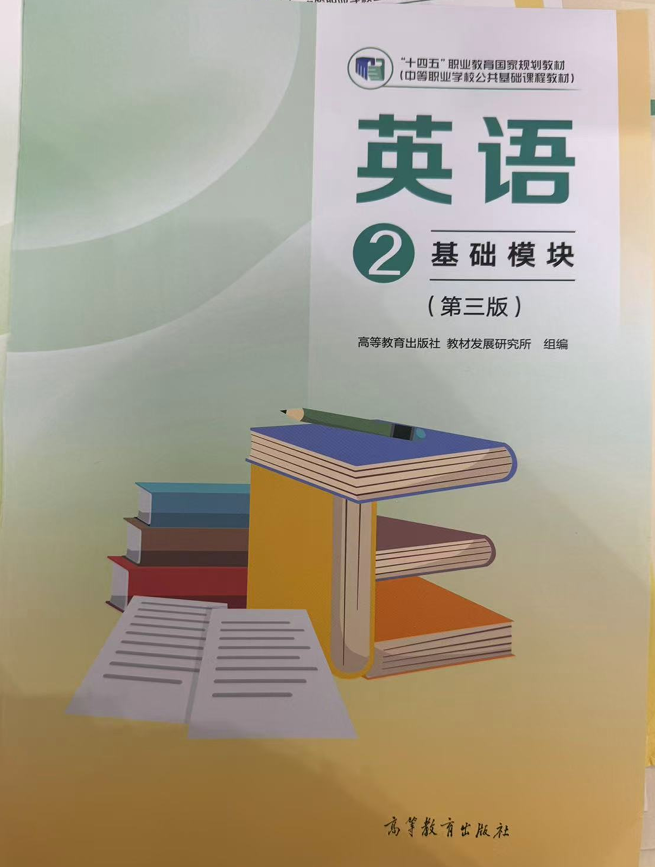
阶段检测卷(1-4单元)(B卷·能力提升)《英语 基础模块2》(高教版第三版)单元过关卷(原卷版+解析版)
2026-04-03
|
2份
|
38页
|
43人阅读
|
0人下载
内容正文:
编写说明:本套试卷紧扣《英语 基础模块2》(高教版第三版)教材,以教材单元为基准精准覆盖核心考点。
每个单元设置AB卷,A卷为基础巩固卷,侧重基础考点训练,帮助学生扎实掌握知识要点;B卷为能力提升卷,注重知识整合与全面检测,引导学生构建知识网络。全书设计4份综合测试卷,模拟实战情境,聚焦解题能力突破,全面提升应试能力与知识应用水平。
《英语 基础模块2》(高教版第三版)《单元过关卷》
阶段检测卷(1-4单元)
B卷·能力提升
考试时间:120分钟 满分:150分
班级 姓名 学号 成绩
第一部分:单项选择题(共25小题;每小题1分,满分25分)
从A、B、C、D四个选项中,选出可以填入空白处的最佳选项。
1.________ letter on my desk is from Lynn.
A.A B.An C.The D./
【答案】C
【详解】句意:我桌子上的信是Lynn写来的。根据“on my desk”,此处表示特指,用定冠词the。a和an均为泛指;letter是单数可数名词,前面冠词不能省略。
2.Carla is playing ________ erhu in the next room. She is ________ good erhu player.
A.an; a B.the; an C.the; a D.a; the
【答案】C
【详解】句意:卡拉正在隔壁房间拉二胡。她是一名优秀的二胡演奏家。
根据语境:演奏中国传统乐器(如erhu)前需加定冠词the;“good erhu player”中“good”以辅音音素开头,表“一名”需用不定冠词a,因此应选the; a。
3.Look at those low-flying cars! ________ amazing scenes they are!
A.How B.What C.What a D.What an
【答案】B
【详解】句意:看那些低空行驶的汽车!多么令人惊叹的场景啊!
考查感叹句。根据“amazing scenes they are!”可知,scenes是复数名词,感叹句应用“What”直接修饰复数名词,而不用冠词。故选B。
4.My lifestyle ________ from my brother’s in many ways.
A.different B.difference C.is different D.are different
【答案】C
【详解】句意:我的生活方式在许多方面与我哥哥的不同。
考查形容词和主谓一致。different不同的,形容词;difference差异,名词;is different是不同;are different是不同。句子缺少谓语动词,“different from”是固定短语,意为“与……不同”,主语“My lifestyle”是单数,需用be动词“is”。故选C。
5.He ________ two hours every weekend playing the guitar to relax.
A.spend B.spends C.is spending D.spent
【答案】B
【详解】句意:他每个周末花两个小时弹吉他来放松。
every weekend是一般现在时的标志,一般现在时表示经常性、习惯性的动作。主语He是第三人称单数,谓语动词需用第三人称单数形式,故用spends。
6.She always ______ a book before going to bed when she was a student.
A.read B.reads C.reading D.to read
【答案】A
【详解】句意:当她还是学生的时候,总是在睡前读一本书。
考查动词时态。句中“when she was a student”为过去时间状语,主句时态需用一般过去时,谓语动词应用过去式read。故选A。
7.—I called you at 8:00 last night, but no one answered.
—Oh, sorry. I ________ a storybook in my room at that time.
A.read B.was reading C.am reading D.will read
【答案】B
【详解】句意:——我昨晚八点给你打电话,但没人接。——哦,抱歉。那时我正在房间里读故事书。
read表示“读”,是一般过去时;was reading表示“正在读”,是过去进行时;am reading是现在进行时;will read是一般将来时。根据对话中的时间状语“at that time”指代昨晚八点这一过去的具体时刻,表示过去某个时间点正在进行的动作,应使用过去进行时,应填was reading。
8.________, we arrived at the airport on time.
A.At the end B.In the end C.By the end D.By the end of
【答案】B
【详解】句意:最终,我们准时到达了机场。
考查短语辨析。At the end在……的末尾,常与of连用;In the end最终,最后;By the end到……为止,常与of连用;By the end of到……为止,后接具体时间或事件。根据句意,此处表示“最终准时到达”,不需要接宾语,应选用独立作状语的短语。故选B。
9.She is ________ at this ________ news.
A.surprised; surprising B.surprising; surprised
C.surprised; surprised D.surprising; surprising
【答案】A
【详解】句意:她对这条令人惊讶的消息感到吃惊。
考查形容词辨析。surprised感到惊讶的;surprising令人惊讶的。第一空修饰人“She”,表示人的感受,用surprised;第二空修饰物“news”,表示事物本身的性质,用surprising。故选A。
10.—Who called me just now?
—A girl who called ________ Jessica.
A.myself B.himself C.herself D.yourself
【答案】C
【详解】句意:——刚才谁叫我?——一个自称Jessica的女孩。
myself我自己;himself他自己;herself她自己;yourself你自己。 “call oneself +名字”表示“某人自称……”,根据“A girl”可知,反身代词用herself。
11.He doesn’t have enough ________ while his father is ________ in repairing cars.
A.experiences; experience B.experiences; experienced
C.experience; experience D.experience; experienced
【答案】D
【详解】句意:他没有足够的经验,而他的父亲在修车方面很有经验。
考查名词辨析与形容词的用法。experiences经历,复数名词;experience经验,不可数名词/经历;experienced有经验的,形容词。根据“He doesn’t have enough”可知第一空表示“足够的经验”,experience作“经验”讲时为不可数名词;第二空需用形容词作表语,表示“有经验的”。故选D。
12.—Is it OK if I borrow your e-dictionary, Yaowen?
—Of course. But you ________ be careful when using it.
A.can B.may C.must D.shall
【答案】C
【详解】句意:——耀文,我借你的电子词典可以吗?——当然可以。但是你用的时候必须小心。
can能;may可以;must必须;shall将。“But you...be careful when using it.”强调使用电子词典时必须要小心,应用情态动词must。
13.—I can’t finish the work in such a short time.
—Don’t worry. You are ________ to ask for help.
A.too brave B.brave enough C.enough brave D.so brave
【答案】B
【详解】句意:——我无法在这么短的时间内完成这项工作。——别担心。你足够勇敢,可以寻求帮助。
too brave太勇敢;brave enough足够勇敢;enough brave错误结构;so brave如此勇敢。根据前句“Don’t worry”及后句“to ask for help”可知,表示“足够勇敢”去做某事,应用brave enough,enough修饰形容词后置。
14.Some people think success only belongs to those ________ talent and ________ believe success mostly comes down to luck.
A.have; others B.with; others C.have; the others D.with; the others
【答案】B
【详解】句意:一些人认为成功只属于那些有天赋的人。另一些人则认为成功主要归结于运气。
have有;with带有;others其他人或物,表泛指;the others其他人或物,表特指。根据“Some people think success only belongs to those...talent”可知,此处指有天赋的人,用介词with加名词talent作后置定语修饰those;根据“Some people...”和“...believe success mostly comes down to luck.”可知,此处指“另一些人”,表泛指,用others。
15.No one would like to make friends with ________ dishonest.
A.a B.an C.the D./
【答案】C
【详解】句意:没有人愿意和不诚实的人交朋友。
考查定冠词的用法。根据“the+形容词”可表示一类人,此处“the dishonest”表示“不诚实的人”这一类人。故选C。
16.Many volunteers ________ to help clean up the beach after the storm last Saturday.
A.come B.came C.will come D.have come
【答案】B
【详解】句意:上周六风暴过后,许多志愿者来帮忙清理海滩。
根据“last Saturday”可知,句子时态是一般过去时,谓语动词要用过去式,“come”的过去式是“came”。
17.Yesterday when I got home from school, my sister ________ for dinner, so she invited me to join her.
A.goes out B.went out C.has gone out D.was going out
【答案】D
【详解】句意:昨天我放学回家时,我姐姐正要出去吃晚饭,所以她邀请我和她一起去。
考查过去进行时的特殊用法。根据“Yesterday when I got home from school”、“so she invited me to join her”和选项动词“go”可知,此处应用过去进行时表示从过去某个时刻看将要发生的动作,其谓语结构为:was/were+现在分词。故选D。
18.While she ________, she ________ a beautiful song.
A.cooked; was hearing B.was cooking; heard
C.cooked; hear D.was cooking; was hearing
【答案】B
【详解】句意:当她做饭时,她听到了一首优美的歌。
while引导的时间状语从句常用过去进行时表示背景动作,主句用一般过去时表示发生的动作,应填was cooking; heard。
19.My brother ________ play computer games for hours, but now he is used to doing sports.
A.used to B.was used to C.got used to D.use to
【答案】A
【详解】句意:我哥哥过去常常连续好几个小时玩电脑游戏,但现在他习惯做运动了。
used to do sth.表示“过去常常做某事”,符合语境中过去和现在的对比;be used to doing sth.表示“习惯于做某事”;get used to doing sth.表示“逐渐习惯做某事”;use to do sth.表达错误,均不符合题意。
20.—Look! ________ the rides are moving ________!
—Wow! I am beginning to feel dizzy (头晕目眩的) now.
A.What high speed, at B.What high speed, in
C.What a high speed, at D.How high speed, at
【答案】A
【详解】句意:——看!这些游乐设施正以多么高的速度移动啊!——哇!我现在开始觉得头晕了。
通常引导感叹句会用what或how。What+(a/an)+形容词+名词+主语+谓语!名词为可数单数 时,加不定冠词,比如What a beautiful flower (it is)!名词为可数复数或不可数时,不加冠词,比如What lovely weather (we have)! How+形容词/副词+主语+谓语!speed 既可用作可数也可作不可数名词,本题侧重“at high speed”的固定搭配,通常不加冠词,故选项 C 不符合习惯表达,答案为 A。
21.This book is different ________ the other one. It’s ________ the health subject.
A.from; on B.as; of C.at; about D.in; for
【答案】A
【详解】句意:这本书和另一本不同。它是关于健康主题的。
考查介词辨析。from从……;as作为;at在,某处;in在……里面;on关于,学术、主题等;of……的;about关于;for为了。根据“This book is different…the other one”可知,be different from表示“与……不同”,第一空用from;再根据“It’s…the health subject”可知,此处表示“关于健康主题”,on用于引出具体主题,符合语境,第二空用on。故选A。
22.She speaks English ________ in our school, but she practices ________ than anyone else.
A.most fluently; harder B.more fluently; hardest
C.fluently; harder D.the most fluently; hardest
【答案】A
【详解】句意:她在我们学校英语说得最流利,但她练习得比任何人都刻苦。
most fluently 最流利地(最高级);more fluently 更流利地(比较级);fluently 流利地(原级);the most fluently 最流利地(带定冠词的最高级);harder 更刻苦地(比较级);hardest 最刻苦地(最高级)。第一空“in our school(在我们学校)”表示三者及以上范围,需用最高级,副词最高级作状语时省略定冠词the,故用most fluently;第二空“than anyone else(比任何人)”是比较级标志,需用harder。
23.Kate, you must get up at 6:30 tomorrow morning ________ you might miss your flight.
A.and B.or C.but D.so
【答案】B
【详解】句意:凯特,你明天早上必须在六点半起床,否则你可能会误机。
and 和;or否则;but但是;so所以。根据“you must get up at 6:30 tomorrow morning...you might miss your flight.”可知,此处表示如果不早起就会误机,是“祈使句+or+陈述句”的固定结构,应填or。
24.This delicious soup is made ________ fresh vegetables and chicken.
A.with B.on C.in D.by
【答案】A
【详解】句意:这道美味的汤是用新鲜蔬菜和鸡肉做成的。
with用;on在……上;in在……里;by被。be made with表示用某种原料制作食物,符合此处语义,应填with。
25.—Mom, I didn’t have any confidence before the game, but I won at last!
—________ I am proud of you!
A.Guess what? B.You got me there.
C.Kidding me? D.That’s really something.
【答案】D
【详解】句意:——妈妈,比赛前我一点信心都没有,但最后我赢了!——太了不起了!我为你骄傲!
Guess what?你猜怎么着?;You got me there.你难住我了。;Kidding me?在逗我吗?;That’s really something.真了不起。根据语境,孩子向妈妈分享“赛前没信心,但最后赢了比赛”,妈妈需要表达夸赞,选项D符合赞赏的语气。
第二部分:完形填空(共20小题;每小题1.5分,满分30分)
阅读下面短文,掌握其大意,然后从26-45各题所给的A、B、C、D四个选项中,选出最佳选项。
Once a young man was travelling by train. It was a long and boring journey. As the train was moving 26 a wilderness(荒野), the passengers looked out of the windows 27 . When the train reached a bend(拐弯处), it 28 and then a simple house 29 . It was so easy to notice 30 everybody on the train turned to “enjoy” with eyes wide open. Some passengers even began a 31 about it. The young man was also 32 by the scenery. On his return he 33 the train at the nearest station and found his 34 to the house. Its owner said that he was troubled by the 35 of the train. He wanted to 36 the house, but nobody would buy it.
37 the young man spent 30000 dollars on the 38 . He thought it was a good place for 39 because it was facing the railway bend. When the train moved slowly past, the 40 passengers would be very interested in the house.
He 41 to connect with some big companies and told them that could be used for advertisement. 42 the Coca-Cola Company took it to put up their 43 . To everyone’s surprise, the young man was 44 180000 dollars for a three-year rent(租金).
This is a true story. It tells us that discovery is very important to 45 . Many people have got new ideas from it.
26.A.over B.around C.through D.across
27.A.happily B.quietly C.safely D.clearly
28.A.dropped off B.fell behind C.slowed down D.rushed out
29.A.appeared B.found C.discovered D.came
30.A.when B.that C.why D.how
31.A.discussion B.meeting C.subject D.competition
32.A.attacked B.frightened C.trapped D.attracted
33.A.got on B.looked for C.got off D.waited for
34.A.address B.way C.key D.trip
35.A.track B.conductor C.passenger D.noise
36.A.change B.paint C.sell D.mend
37.A.Soon B.Yet C.Instead D.After
38.A.room B.place C.house D.land
39.A.information B.relaxing C.travelling D.advertisement
40.A.excited B.tired C.surprised D.worried
41.A.tried B.had C.agreed D.stopped
42.A.Since then B.At last C.At least D.So far
43.A.messages B.companies C.notices D.signs
44.A.shown B.allowed C.offered D.returned
45.A.success B.confidence C.activity D.invention
【答案】
26.D 27.B 28.C 29.A 30.B 31.A 32.D 33.C 34.B 35.D 36.C 37.A 38.C 39.D 40.B 41.A 42.B 43.D 44.C 45.A
【分析】这篇文章主要讲述了一个做广告的房子.以前当人们坐火车进行一次漫长而又无聊的旅行时,在拐弯处的房子引起了人们的注意.有一个年轻人发现了这个房子的价值,买下了它,用它来做广告.后来,可口可乐公司在这座房子张贴广告.这个故事告诉我们新想法的思考是非常重要的。
26.句意:当火车缓慢穿过荒野时,乘客们安静的看向外面。A. over在……上面 B. around在……周围 C. through空间穿过 D. across平面穿过。根据句意可知,是火车穿过a wilderness(荒野),是沿着铁轨平面通过,故选D
27.句意:当火车缓慢穿过荒野时,乘客们安静的看向外面。A. happily快乐 B. quietly安静 C. safely安全 D. clearly清楚。根据It was a long and boring journey.可知,这是个长途无聊的旅行,车上很安静,故选B
28.句意:当火车到达了一个转弯处时,它减速然后一个简易的房子出现了。考查短语,A. dropped off减少 B. fell behind落后 C. slowed down减速 D. rushed out 冲出。根据When the train reached a bend(转弯处),可知根据常识火车拐弯需要减速,故选C.
29.句意:当火车到达了一个转弯处时,它减速然后一个简单的房子出现了。A. appeared出现 B. found找到 C. discovered发现 D. came来。根据句意可知,是房子出现了,主语是house,(如果用B或C,主语应该是人们发现了房子)故选A
30.句意:能很容易的注意到火车上的每个人都睁大眼睛,很喜欢这个房子。A. when当……的时候 B. that C. why为什么 D. how怎么样。根据句子结构,这里的it是做形式主语,真正的主语是后面的从句,从句中不缺少成分,可知,应该用that引导,故选B
31.句意:一些乘客甚至开始讨论它。A. discussion讨论 B. meeting会议 C. subject物体 D. competition比赛。根据可知,故选A
32.句意:那个年轻人也被风景吸引了。考查动词,A. attacked攻击 B. frightened害怕 C. trapped诱捕 D. attracted 吸引。根据 was also,结合by the scenery,可知这是被动语态be+过去分词,句意是“被风景吸引”,故选D
33.句意:他回来后在最近的车站下了车,然后找到了去那个房子的路。考查短语,A.got on上车 B.looked for 寻找C.got off下车 D.waited for等待,根据found his way to the house他找到去这所房子的路,可知是下了火车才能找到去房子的路,故选C
34.句意:他回来后在最近的车站下了车,然后找到了去那个房子的路。A. address地址 B. way路 C. key钥匙 D. trip旅行。根据可知,故选B
35.句意:它的主人说他被火车的噪音烦扰。考查名词,A.track轨道B.conductor售票员 C.passenger旅客 D.noise 噪音,根据he was troubled by the,结合后面的of the train,可知是指“被火车的噪音所困扰”,故选D
36.句意:他想要卖这个房子。A. change改变 B. paint刷漆 C. sell卖 D. mend修理。根据后文but nobody would buy it可知,没人想买,这个主人是想要卖房,故选C
37.句意:很快这个年轻人花了三万美元买了这个房子。A. Soon很快 B. Yet已经 C. Instead而不是 D. After在……之后。根据可知,故选A
38.句意:很快这个年轻人花了三万美元买了这个房子。考查名词,A.room房间 B.place地点 C.house房子 D.land陆地,根据前文He wanted to sell the house,可知房子主人想把房子卖掉,所以年轻人在房子上花费了30,000美元,故选C
39.句意:他认为这是一个做广告的好地方,因为它正对着火车的拐弯处。考查名词,A.Information信息B.relaxing放松C.travelling旅行D.advertisements广告,根据He tried to connect with some big companies and told them that could be used for advertisements他试图与一些大公司联系,并告诉他们可以用在广告上,可知这个人认为这是做广告的好地方,故选D
40.句意:当火车缓慢经过时,疲倦的乘客会被这所房子吸引。考查形容词,A.excited 激动的B.tired疲倦的 C.surprised惊讶的 D.worried担心的,根据passengers would be very interested in the house,可知疲倦的乘客会对这个房子感兴趣,故选B
41.句意:他尽力和几家大公司联系并告诉他们这里能用来做广告。A. tried尽力做 B. had不得不做 C. agreed同意做 D. stopped停止做。根据可知,故选A
42.句意:最后可口可乐公司用它来贴上自己的招牌。考查短语,A.Since then 从那时以来B.At last最后 C.At least至少 D.So far到目前为止,根据the Coca-Cola Company took it to put up their signs,可知此处是指“最后可口可乐公司租下了它,贴上了自己的招牌”,故选B
43.句意:最后可口可乐公司用它来贴上自己的招牌。A. messages信息 B. companies公司 C. notices通知 D. signs招牌。根据可知,故选D
44.句意:令每个人惊奇的是,这个年轻人被提供了三年十八万的租金。考查动词,A.shown展示 B.allowed允许 C.offered提供 D.returned归还;返回,根据180,000dollars for a three-year rent,可知是可口可乐公司提供了180000美元为期三年的租金,故选C
45.句意:它告诉我们善于发现对于成功来说是很重要的。考查名词,A.success成功 B.confidence自信 C.activity活动 D.invention发明,根据It tells us that discovery is very important to,结合语境,可知此处是表达“发现对于成功来说是很重要的”,故选A
三、阅读理解(共25小题;每小题2分,满分50分)
阅读下列短文,从每题所给的A、B、C、D四个选项中,选出最佳选项,并在答题卡上将该项涂黑。
A
Zoo
Fun Day at the Zoo!
Want to make friends with animals and get close to nature?
Join us and have fun!
When
10:00 AM-4:00 PM
9th May
Where
Sunshine City Zoo (You will take the school bus to get there.)
Who can join
Students at No. 5 Middle School
Price
¥20 each child
What will you do?
See animals like lions, elephants, and monkeys.
Watch the exciting bird show.
Take photos of your happy time.
Important rules
1.Stay with your teacher or group.
2.Bring your lunch.
3. Be kind to animals.
4. Don’t litter.
For more information
630035 Sunactivity@camp.com
46.When is the activity?
A.On 1st May. B.On 9th May. C.On 10th May. D.On 20th May.
47.How will students get to Sunshine City Zoo?
A. B.
C. D.
48.What can students do at the zoo?
①Watch animals. ②Feed animals. ③ Take pictures. ④ Enjoy the bird show.
A.①②③ B.②③④ C.①②④ D.①③④
49.What can we learn from the reading?
A.Only Grade 7 students can have the activity.
B.Students don’t need to bring their own lunch.
C.Students can call to know more about the activity.
D.Students should stay with parents in the activity.
50.Where can we find the reading?
A.On a map. B.In a storybook.
C.In a cookbook. D.On a school noticeboard.
【答案】46.B 47.A 48.D 49.C 50.D
【导语】本文是一则面向第五中学学生的阳光城动物园欢乐日活动通知,介绍了活动的时间、地点、出行方式、参与资格、费用、活动内容、规则以及咨询方式。
46.原文信息中When板块:“9th May”,明确标注活动时间为5月9日。
47.原文Where板块:“Sunshine City Zoo (You will take the school bus to get there.)”,文中说明学生将乘坐校车前往动物园。选项A对应的图片为校车,符合原文描述。
48.原文What will you do板块:“See animals like Lions, elephants, and monkeys. Watch the exciting bird show. Take photos of your happy time.”,文中提及可以观看动物、观赏鸟类表演、拍照,原文并未提及可以投喂动物,因此①③④符合要求。
49.原文For more information板块:“630035 Sunactivity@camp.com”,文章末尾留下了联系电话,学生可拨打电话了解更多活动信息。
50.本文是面向学校学生的活动通知,结合内容推断,最有可能出现在学校布告栏,地图、故事书、食谱都不符合该内容的出处特征。
B
Many tourism platforms (平台) in China have used AI technologies, while some provinces and cities have designed their own AI tourism service (服务) platforms with special features. On some popular tourism platforms, tourists can give simple instructions, such as asking about must-visit attractions for a three-day trip to Shanghai. AI usually gives helpful answers within minutes.
Mr Liang, CEO of a travel company, said, “AI solves 80% of users’ questions in minutes, cutting trip-planning time from 9 hours to 6.6 hours.”
Guizhou and Shanghai have introduced AI assistants (助手) for travellers. Guizhou’s “Huang Xiao Xi”, a digital guide in traditional clothing, creates travel plans in just a few seconds. “Hu Xiao You”, a smart tourism system used in Shanghai, provides real-time updates (更新) on traffic at tourist sites, public transport, nearby shops, and even toilet locations.
Museums are also using AI. Wearable smart guides provide guiding tours at a lower cost than human guides. They also allow visitors to change the speed of introductions according to their own choice, With new tools like virtual reality (VR,虚拟现实), augmented reality (AR,增强现实), and three-D technology, users can “talk” to historical figures (人物), “communicate” with cultural relics, and watch ancient paintings come to life. These high-tech methods break down the distance between visitors and cultural heritage (遗产), making ancient history easier to understand and remember.
Gan Chunhui, a researcher in Shanghai, believes AI brings new ways of working in tourism. “Instead of taking the place of traditional jobs, China makes use of technology to breathe new life into these roles,” Gan said. “For tourists, this means more personalized and convenient trips that deepen their understanding of Chinese culture. For local communities, AI helps keep valuable heritage alive without changing the natural beauty of historical sites,”
51.What can AI tourism platforms mainly do according to Paragraph 1?
A.Deal with hotel booking services. B.Provide travel suggestions.
C.Set up free travel platforms. D.Answer questions from foreigners.
52.How does Paragraph 3 support its main idea?
A.By giving examples of AI tools. B.By showing different opinions.
C.By discussing difficulties we meet. D.By discussing tourism in different times.
53.What can be inferred (推断) about AI in museums from the article?
A.It makes visiting more expensive. B.It works faster than human guides.
C.It provides lively visiting experiences. D.It shows more pictures than real objects.
54.What is Gan Chunhui’s opinion about AI in tourism?
A.AI will finally take the place of traditional jobs.
B.AI is not helpful for protecting cultural heritage.
C.The tourism industry depends too much on AI technology.
D.AI brings positive effects to both tourists and local communities.
55.What would be the best title for this passage?
A.AI Makes Tourism Smarter in China B.The Rise of Online Travel Companies
C.Planning a Perfect Trip to Shanghai D.Why Traditional Tourism Is Dying
【答案】51.B 52.A 53.C 54.D 55.A
【导语】本文是一篇说明文,主要讲述了人工智能技术在中国旅游业的应用,介绍AI在旅游平台、景区导览、博物馆参观等场景的功能,并阐述了AI 为游客和当地社区带来的积极影响。
51.根据第一段中 “tourists can give simple instructions, such as asking about must-visit attractions for a three-day trip to Shanghai. AI usually gives helpful answers within minutes” 可知,AI旅游平台主要能为游客提供旅行建议
52.第三段通过列举VR(虚拟现实)、AR(增强现实)和3D技术等AI工具的例子,说明AI如何让文物和历史 “活” 起来,以此支撑段落主旨
53.根据第四段中 “users can ‘talk’ to historical figures, ‘communicate’ with cultural relics, and watch ancient paintings come to life. These high-tech methods break down the distance between visitors and cultural heritage” 可知,博物馆里的AI技术能让参观变得生动有趣,拉近游客与文化遗产的距离
54. 根据最后一段中 “For tourists, this means more personalized and convenient trips... For local communities, AI helps keep valuable heritage alive...” 可知,甘春辉认为AI 既为游客提供了便捷的旅行体验,也帮助当地社区保护了文化遗产,带来了双重积极影响
55.全文围绕AI技术在中国旅游业的应用展开,从旅游平台、景区助手到博物馆创新,都体现了AI让旅游变得更智能、便捷,因此选项A最适合作为文章标题。
C
People often talk about jobs. But when I tell others what I do for a living, they can hardly believe it. But I’m not joking at all.
I spend my days at work eating chocolate! I taste chocolate to make sure that people can get excellent chocolate from our factory.
Every week, I take chocolate from our factory. I need to taste it. I also need to taste raw materials (原材料). I spend days choosing the best ones to go into the chocolate.
Just next to my office, there is a kitchen. I test and taste the chocolate I make there. My kitchen is full of machines. It's wonderful to work there.
No two days are the same in this job.Sometimes I am in the kitchen. Sometimes I’m out of the country and that can be difficult because I am a father of three. But I love this interesting job. Many people ask me, “Do you ever get bored with chocolate?” The answer is “No”. In fact, I often eat some more in the morning at home!
56.What does the writer do at work?
①sells chocolate machines
②tests and tastes chocolate
③buys chocolate of different tastes
④chooses raw materials for chocolate
A.①③ B.①④ C.②④ D.②③
57.What does the underlined word“that”refer to?
A.Going to a foreign country. B.Eating too much chocolate.
C.Living a different life every day. D.Working a long time in the kitchen.
58.What does the writer think of his job?
A.Boring. B.Easy. C.Healthy. D.Interesting.
59.How many children does the writer have?
A.Two. B.Three. C.Four. D.Five.
60.What is the best title for the text?
A.My Favourite Food B.Making Chocolate
C.A Special Job D.Planning for a Job
【答案】56.C 57.A 58.D 59.B 60.C
【导语】本文是一篇记叙文,讲述了作者作为一名巧克力品尝师的独特职业经历。文章通过描述作者每天品尝巧克力、挑选原材料、在厨房工作以及出国的经历,展现了这份工作的特殊性和趣味性。作者虽然有时会因为工作而面临一些困难,比如需要出国,但他依然热爱这份有趣的工作。文章旨在让读者了解不同职业的特点,尤其是那些不为人知的特殊职业。
56.根据原文第二段“I taste chocolate to make sure that people can get excellent chocolate from our factory.”和第三段“I spend days choosing the best ones to go into the chocolate.”可知,作者的工作内容是“品尝和测试巧克力”以及“为巧克力挑选原材料”。
57.根据原文倒数第二段“Sometimes I’m in the kitchen. Sometimes I’m out of the country and that can be difficult because I am a father of three.”可知,画线词“that”指代的是前文提到的“出国”这件事。
58.根据原文倒数第二段“But I love this interesting job.”可知,作者认为他的工作很有趣。
59.根据原文倒数第二段“...because I am a father of three.”可知,作者有三个孩子。
60.通读全文可知,文章主要讲述了作者一份特殊的职业——品尝和检测巧克力。
D
Our heart tells us a lot about our health. When it is hurting, it sends us signals (信号) that we need to understand.
Some people feel very tired, even after sleeping. Small activities wear them out. They lose interest in seeing people or doing things they used to enjoy. They feel empty inside. Crying doesn’t help, and sad songs make them feel worse. They might think, “Life is not interesting.” Some have sleep problems-waking up often, or sleeping too much but still feeling tired. Their heart may beat fast even when resting. Climbing a few stairs leaves them breathless. They might have a red tongue or numb (麻木的) fingers in the left hand. They stop trusting others and overthink small things. These are signs of emotional heart fatigue (疲劳), often caused by stress.
For emotional fatigue, rest is important. Go to bed before 11 PM, take a nap at noon, spend time in the sun, walk barefoot on grass, or play with a pet. Press your wrist or chest gently while breathing slowly: inhale (吸入) for 4 seconds, hold for 7, exhale (呼出) for 8. Eat warm foods like red date porridge, and avoid cold drinks and coffee. Try light exercise like walking. It’s okay to be alone. Later, do small things like growing a plant or writing one good thing each day.
If tiredness lasts over two weeks, or if you have serious body signs, see a doctor. Remember: It’s okay to say no to things that tire your heart. Not everything is worth your energy.
61.What is most likely a sign of emotional heart fatigue?
A.Feeling energetic after sleep. B.Enjoying listening to blues.
C.Having a fast heartbeat at rest. D.Thinking carefully before deciding.
62.What should you do to deal with emotional heart fatigue?
A.Drink cold coffee for energy. B.Avoid being alone for long.
C.Walk without shoes on grass. D.Run fast every morning.
63.How does the writer feel about emotional heart fatigue?
A.Hopeful. B.Worried. C.Angry. D.Uninterested.
64.What can we infer from the advice “It’s okay to say no”?
A.The writer thinks we shouldn’t help others.
B.The writer thinks it’s polite to refuse others.
C.The writer thinks we should always put ourselves first.
D.The writer thinks it’s necessary to protect our hearts.
65.What’s the writer’s main purpose in writing this passage?
A.To tell interesting stories about hearts.
B.To explain how the heart works in our body.
C.To teach people to deal with emotional heart fatigue.
D.To encourage people to see doctors.
【答案】61.C 62.C 63.A 64.D 65.C
【导语】本文是一篇关于情感性心疲劳的说明文。作者通过列举情感性心疲劳的常见症状,向读者介绍如何识别这一问题,并提供多种缓解方法,如调整作息、饮食、呼吸练习及适度运动等。
61.根据第二段“Their heart may beat fast even when resting.”可知,即使在休息时,他们的心跳也可能很快。所以C选项“休息时心跳过快”符合原文对症状的描述。选项A“睡后精力充沛”与文中“feel very tired, even after sleeping”相反;选项B“喜欢听蓝调音乐”与文中“sad songs make them feel worse”不符;选项D“做决定前仔细思考”与文中“overthink small things”不符。
62.根据第三段“walk barefoot on gras”可知,赤脚在草地上走路是建议之一。选项A“喝冷咖啡提神”与文中“avoid cold drinks and coffee”相悖;选项B“避免长时间独处”与文中“It’s okay to be alone.”矛盾;选项D“每天早上快跑”与文中“Try light exercise like walking.”不符,快跑属剧烈运动,不推荐。
63.根据全文可知,作者清晰给出了情绪性心疲劳的识别方法和多种可操作的应对措施,整体传递出积极应对的导向,可见作者对处理该问题抱有希望的态度。担忧、生气、不感兴趣均不符合作者态度。
64.根据最后一段“Remember: It’s okay to say no to things that tire your heart. Not everything is worth your energy.”可知,并非所有事情都值得你耗费精力,强调保护自己的精力和情感健康。选项A“作者认为我们不该帮助别人”过于极端;选项B“作者认为拒绝别人是礼貌的”偏离主题。选项C“作者认为我们应总把自己放在第一位”表述绝对,曲解文意。
65.根据全文可知,文章围绕情绪性心疲劳展开,先介绍症状,再给出应对方法与建议,核心写作目的是教人们处理情绪性心疲劳。A选项“讲述心脏相关的有趣故事”不符合文意;B选项“解释心脏的工作原理”原文未提及;D选项“鼓励人们看医生”只是文中提到的注意事项,并非主要写作目的。
E
Zen Micheline Hung, 14, lives in New York, the US. She volunteers (做志愿者) in a town.
Hung spends time playing the piano for dogs and cats there. It’s relaxing for her. She loves animals very much. She hopes to help them feel great before they find a home. “Why do you play music for pets?” her friends ask. “I want to do something helpful for the town.” she says.
Hung works very hard. She finds every pet is different. Each of them has its own favourite music. She first watches pets and then plays different music on the piano. When they hear their favourite, they just listen quietly.
Hung’s parents also help there. They do some washing, do some cleaning and take care of the animals. Hung and her parents often talk about the pets when they are at home. They feel happy and warm in life.
Volunteering helps others in need and brings fun to us. Why not do something nice like Hung to make the world better?
66.What is Hung’s volunteer work?
A.To clean up the town. B.To help people in need.
C.To play music for animals. D.To help animals find homes.
67.Why does Hung volunteer in the town?
A.To make new friends there. B.To help the town get better.
C.To play games with animals. D.To practise playing the piano.
68.What is the main idea of Paragraph 3?
A.Hung does a good job. B.Hung is welcome in the town.
C.Hung practises the piano hard. D.Hung helps pets live a great life.
69.From Paragraph 4, we learn volunteering makes Hung and her family ________.
A.tired B.special C.famous D.close
70.Why does the writer write the passage?
A.To ask people to keep pets. B.To let people visit the town.
C.To let people learn from Hung. D.To ask people to care about animals.
【答案】66.C 67.B 68.D 69.D 70.C
【导语】本文是一篇记叙文,主要讲述了14岁的Zen Micheline Hung在小镇做志愿者,为宠物弹钢琴的故事,展现了她的善良以及志愿活动给她和家人带来的积极影响。
66.第二段指出:“Hung spends time playing the piano for dogs and cats there.”,这直接说明Hung的志愿工作是为动物弹钢琴。
67.第二段指出:I want to do something helpful for the town.,意思是她想为小镇做些有益的事,也就是帮助小镇变得更好。
68.第三段指出:“She finds every pet is different. Each of them has its own favourite music. She first watches pets and then plays different music on the piano. When they hear their favourite, they just listen quietly.”,Hung针对不同宠物的喜好弹奏对应音乐,帮宠物在待领养期间过得舒适愉悦,准确概括了段落主旨。
69.第四段指出:“Hung and her parents often talk about the pets when they are at home. They feel happy and warm in life.”,说明志愿活动让一家人经常交流,感情更亲密
70.最后一段指出:“Why not do something nice like Hung to make the world better?”,说明作者写这篇文章是为了让人们向Hung学习。
第四部分:情景对话(共10小题;每小题2分,满分20分)
阅读A段对话,从对话后所给五个选项中选出可以填入空白处的最佳选项,并在答题卡上将该项涂黑。阅读B段短文,从对话后的七个选项中选出可以填入空白处的最佳选项,并在答题卡上将该项涂黑,选项中有两项为多余选项。
A
A: Hi, Tom! I heard you joined a volunteer group. 71
B: Yes! We help take care of homeless animals.
A: That’s great! 72
B: Because many homeless animals have no food or shelter. They need our help.
A: 73 What can I do to help?
B: You can donate food or money. 74
A: I’d love to! When do you usually go to the animal hospital? B: We go there every weekend. 75
A: Sure! I’ll join you this weekend.
A.Why do you want to help them?
B.Would you like to come with us?
C.Is that true?
D.You can also come to help clean their cages.
E.I agree with you.
【答案】71.C 72.A 73.E 74.D 75.B
【导语】本文主要介绍了A和Tom的对话:A听说Tom加入了照顾流浪动物的志愿者小组,询问相关情况,Tom解释帮助流浪动物的原因,A表示认同并询问帮忙的方式,最后Tom邀请A周末一起参与志愿活动。
71.A听说Tom加入了志愿者小组,向Tom确认消息是否属实,Tom给出肯定回答并说明小组的工作内容,C项“Is that true?”符合这一对话逻辑。
72.A称赞Tom的志愿行为后,询问他帮助流浪动物的原因,Tom解释很多流浪动物没有食物和住所,需要帮助,A项“Why do you want to help them?”与这一回答对应。
73.Tom说明帮助流浪动物的缘由后,A表示认同,接着询问自己能做些什么来帮忙,E项“I agree with you.”衔接自然,承接上文并引出下文的求助提问。
74.Tom建议A可以捐赠食物或钱后,补充另一种帮忙的方式,D项“You can also come to help clean their cages.”与前文捐赠的建议并列,丰富了帮忙的途径。
75. Tom说明每周都会去动物医院后,邀请A一起参与,A给出肯定回应并表示周末会加入,B项“Would you like to come with us?”符合对话的邀请逻辑。
B
A: Hello, Tom!
B: Hello, Lily!
A: 76
B: I’m fine, thank you. And you?
A: I’m fine, too. 77
B: I want to go to the library.
A: 78
B: Because I want to borrow some books about English.
A: Oh, I see. 79
B: Yes, I like English very much.
A: 80
B: I want to be an English teacher in the future.
A.Why do you want to go there?
B.How are you?
C.What do you want to be in the future?
D.Where do you want to go?
E.Do you like English?
F.What’s your favorite subject?
G.How do you go to the library?
【答案】76.B 77.D 78.A 79.E 80.C
【导语】本文主要是莉莉和汤姆之间的日常对话,围绕汤姆想去图书馆的原因、对英语的喜好以及未来的职业理想展开。
76.莉莉先主动打招呼,结合汤姆的回应“I’m fine, thank you.”可知,莉莉应是询问汤姆的近况。B项“How are you?”意为“你好吗?”,符合对话开头的问候逻辑,能够自然引出汤姆的回应。
77.汤姆回答自己很好后,莉莉进一步询问,结合汤姆的回应“I want to go to the library.”可知,莉莉应是询问汤姆想去哪里。D项“Where do you want to go?”意为“你想去哪里?”,与汤姆的回答直接对应,衔接自然。
78.汤姆说明想去图书馆后,莉莉进一步追问,结合汤姆的回应“Because I want to borrow some books about English.”可知,莉莉应是询问汤姆去图书馆的原因。A项“Why do you want to go there?”意为“你为什么想去那里?”,用because回答,符合对话逻辑。
79.汤姆说明去图书馆是为了借英语相关的书,莉莉回应“Oh, I see.”后,结合汤姆的回应“Yes, I like English very much.”可知,莉莉应是询问汤姆是否喜欢英语。E项“Do you like English?”意为“你喜欢英语吗?”,是一般疑问句,与汤姆的肯定回答对应,符合语境。
80.汤姆表明自己非常喜欢英语后,结合汤姆的回应“I want to be an English teacher in the future.”可知,莉莉应是询问汤姆未来想成为什么样的人。C项“What do you want to be in the future?”意为“你未来想成为什么?”,与汤姆的职业理想回答直接衔接,符合对话推进逻辑。
第五部分:书面表达(满分25分)
81.国家提出了将劳动教育纳入中小学国家课程的方案。为此,你校上周末组织初一年级同学作为志愿者去养老院参加了一次特别的劳动之旅。同学们在这次活动中体验了各种劳动,并体会到了助人的快乐。现请你以“A Special School Trip”为题,记录下上周末特殊的学校之旅。
内容要点:
1. What was the weather like that day?
2. How did you get there?
3. What did you do there?
4. ...
要求:
1. 60词左右,开头已给出,不计入总词数;
2.文中不能出现自己的姓名和所在学校的名称。
A Special School Trip
Last weekend, our school took us to the old people’s home.
_____________________________________________________________________________________________________________________________________________________________________________________________________________________________________________________________________________________________________________________________________________________________________________________________________________________________________________________________________________________________________________________________________________________________________________________________________________________________________________________________________________________________________________________________________________________________________________________________________________________________________________________________________________________
【答案】例文
A Special School Trip
Last weekend, our school took us to the old people’s home. We went there by bus. It was a sunny day and we had a great time there.
We did a lot of things there. First, we cleaned the rooms for the old. Then, some students played the guitar for them and some students sang songs with them. I drew a picture for all the old people. In the evening, we cooked food with the grandmas and grandpas. We had a big dinner together.
We learned a lot and we were all very happy.
【详解】[总体分析]
①题材:本文是一篇材料作文;
②时态:为“一般过去时”;
③提示:内容要点已给出,考生应按要求进行写作,不可遗漏任何信息提示,适当添加细节,使行文连贯。
[写作步骤]
第一步,承接已给出的开头,介绍该趟学校旅行的交通方式及天气状况;
第二步,详述当日的活动安排;
第三步,发表自己的感受。
[亮点词汇]
① have a great time 玩得开心;
② a lot of 很多
③ have a big dinner 享用一顿丰盛的晚餐
[高分句型]
Then, some students played the guitar for them and some students sang songs with them. (and并列两个句子)
学科网(北京)股份有限公司 (
1
)原创精品资源学科网独家享有版权,侵权必究!
学科网(北京)股份有限公司
$
编写说明:本套试卷紧扣《英语 基础模块2》(高教版第三版)教材,以教材单元为基准精准覆盖核心考点。
每个单元设置AB卷,A卷为基础巩固卷,侧重基础考点训练,帮助学生扎实掌握知识要点;B卷为能力提升卷,注重知识整合与全面检测,引导学生构建知识网络。全书设计4份综合测试卷,模拟实战情境,聚焦解题能力突破,全面提升应试能力与知识应用水平。
《英语 基础模块2》(高教版第三版)《单元过关卷》
阶段检测卷(1-4单元)
B卷·能力提升
考试时间:120分钟 满分:150分
班级 姓名 学号 成绩
第一部分:单项选择题(共25小题;每小题1分,满分25分)
从A、B、C、D四个选项中,选出可以填入空白处的最佳选项。
1.________ letter on my desk is from Lynn.
A.A B.An C.The D./
2.Carla is playing ________ erhu in the next room. She is ________ good erhu player.
A.an; a B.the; an C.the; a D.a; the
3.Look at those low-flying cars! ________ amazing scenes they are!
A.How B.What C.What a D.What an
4.My lifestyle ________ from my brother’s in many ways.
A.different B.difference C.is different D.are different
5.He ________ two hours every weekend playing the guitar to relax.
A.spend B.spends C.is spending D.spent
6.She always ______ a book before going to bed when she was a student.
A.read B.reads C.reading D.to read
7.—I called you at 8:00 last night, but no one answered.
—Oh, sorry. I ________ a storybook in my room at that time.
A.read B.was reading C.am reading D.will read
8.________, we arrived at the airport on time.
A.At the end B.In the end C.By the end D.By the end of
9.She is ________ at this ________ news.
A.surprised; surprising B.surprising; surprised
C.surprised; surprised D.surprising; surprising
10.—Who called me just now?
—A girl who called ________ Jessica.
A.myself B.himself C.herself D.yourself
11.He doesn’t have enough ________ while his father is ________ in repairing cars.
A.experiences; experience B.experiences; experienced
C.experience; experience D.experience; experienced
12.—Is it OK if I borrow your e-dictionary, Yaowen?
—Of course. But you ________ be careful when using it.
A.can B.may C.must D.shall
13.—I can’t finish the work in such a short time.
—Don’t worry. You are ________ to ask for help.
A.too brave B.brave enough C.enough brave D.so brave
14.Some people think success only belongs to those ________ talent and ________ believe success mostly comes down to luck.
A.have; others B.with; others C.have; the others D.with; the others
15.No one would like to make friends with ________ dishonest.
A.a B.an C.the D./
16.Many volunteers ________ to help clean up the beach after the storm last Saturday.
A.come B.came C.will come D.have come
17.Yesterday when I got home from school, my sister ________ for dinner, so she invited me to join her.
A.goes out B.went out C.has gone out D.was going out
18.While she ________, she ________ a beautiful song.
A.cooked; was hearing B.was cooking; heard
C.cooked; hear D.was cooking; was hearing
19.My brother ________ play computer games for hours, but now he is used to doing sports.
A.used to B.was used to C.got used to D.use to
20.—Look! ________ the rides are moving ________!
—Wow! I am beginning to feel dizzy (头晕目眩的) now.
A.What high speed, at B.What high speed, in
C.What a high speed, at D.How high speed, at
21.This book is different ________ the other one. It’s ________ the health subject.
A.from; on B.as; of C.at; about D.in; for
22.She speaks English ________ in our school, but she practices ________ than anyone else.
A.most fluently; harder B.more fluently; hardest
C.fluently; harder D.the most fluently; hardest
23.Kate, you must get up at 6:30 tomorrow morning ________ you might miss your flight.
A.and B.or C.but D.so
24.This delicious soup is made ________ fresh vegetables and chicken.
A.with B.on C.in D.by
25.—Mom, I didn’t have any confidence before the game, but I won at last!
—________ I am proud of you!
A.Guess what? B.You got me there.
C.Kidding me? D.That’s really something.
第二部分:完形填空(共20小题;每小题1.5分,满分30分)
阅读下面短文,掌握其大意,然后从26-45各题所给的A、B、C、D四个选项中,选出最佳选项。
Once a young man was travelling by train. It was a long and boring journey. As the train was moving 26 a wilderness(荒野), the passengers looked out of the windows 27 . When the train reached a bend(拐弯处), it 28 and then a simple house 29 . It was so easy to notice 30 everybody on the train turned to “enjoy” with eyes wide open. Some passengers even began a 31 about it. The young man was also 32 by the scenery. On his return he 33 the train at the nearest station and found his 34 to the house. Its owner said that he was troubled by the 35 of the train. He wanted to 36 the house, but nobody would buy it.
37 the young man spent 30000 dollars on the 38 . He thought it was a good place for 39 because it was facing the railway bend. When the train moved slowly past, the 40 passengers would be very interested in the house.
He 41 to connect with some big companies and told them that could be used for advertisement. 42 the Coca-Cola Company took it to put up their 43 . To everyone’s surprise, the young man was 44 180000 dollars for a three-year rent(租金).
This is a true story. It tells us that discovery is very important to 45 . Many people have got new ideas from it.
26.A.over B.around C.through D.across
27.A.happily B.quietly C.safely D.clearly
28.A.dropped off B.fell behind C.slowed down D.rushed out
29.A.appeared B.found C.discovered D.came
30.A.when B.that C.why D.how
31.A.discussion B.meeting C.subject D.competition
32.A.attacked B.frightened C.trapped D.attracted
33.A.got on B.looked for C.got off D.waited for
34.A.address B.way C.key D.trip
35.A.track B.conductor C.passenger D.noise
36.A.change B.paint C.sell D.mend
37.A.Soon B.Yet C.Instead D.After
38.A.room B.place C.house D.land
39.A.information B.relaxing C.travelling D.advertisement
40.A.excited B.tired C.surprised D.worried
41.A.tried B.had C.agreed D.stopped
42.A.Since then B.At last C.At least D.So far
43.A.messages B.companies C.notices D.signs
44.A.shown B.allowed C.offered D.returned
45.A.success B.confidence C.activity D.invention
三、阅读理解(共25小题;每小题2分,满分50分)
阅读下列短文,从每题所给的A、B、C、D四个选项中,选出最佳选项,并在答题卡上将该项涂黑。
A
Zoo
Fun Day at the Zoo!
Want to make friends with animals and get close to nature?
Join us and have fun!
When
10:00 AM-4:00 PM
9th May
Where
Sunshine City Zoo (You will take the school bus to get there.)
Who can join
Students at No. 5 Middle School
Price
¥20 each child
What will you do?
See animals like lions, elephants, and monkeys.
Watch the exciting bird show.
Take photos of your happy time.
Important rules
1.Stay with your teacher or group.
2.Bring your lunch.
3. Be kind to animals.
4. Don’t litter.
For more information
630035 Sunactivity@camp.com
46.When is the activity?
A.On 1st May. B.On 9th May. C.On 10th May. D.On 20th May.
47.How will students get to Sunshine City Zoo?
A. B.
C. D.
48.What can students do at the zoo?
①Watch animals. ②Feed animals. ③ Take pictures. ④ Enjoy the bird show.
A.①②③ B.②③④ C.①②④ D.①③④
49.What can we learn from the reading?
A.Only Grade 7 students can have the activity.
B.Students don’t need to bring their own lunch.
C.Students can call to know more about the activity.
D.Students should stay with parents in the activity.
50.Where can we find the reading?
A.On a map. B.In a storybook.
C.In a cookbook. D.On a school noticeboard.
B
Many tourism platforms (平台) in China have used AI technologies, while some provinces and cities have designed their own AI tourism service (服务) platforms with special features. On some popular tourism platforms, tourists can give simple instructions, such as asking about must-visit attractions for a three-day trip to Shanghai. AI usually gives helpful answers within minutes.
Mr Liang, CEO of a travel company, said, “AI solves 80% of users’ questions in minutes, cutting trip-planning time from 9 hours to 6.6 hours.”
Guizhou and Shanghai have introduced AI assistants (助手) for travellers. Guizhou’s “Huang Xiao Xi”, a digital guide in traditional clothing, creates travel plans in just a few seconds. “Hu Xiao You”, a smart tourism system used in Shanghai, provides real-time updates (更新) on traffic at tourist sites, public transport, nearby shops, and even toilet locations.
Museums are also using AI. Wearable smart guides provide guiding tours at a lower cost than human guides. They also allow visitors to change the speed of introductions according to their own choice, With new tools like virtual reality (VR,虚拟现实), augmented reality (AR,增强现实), and three-D technology, users can “talk” to historical figures (人物), “communicate” with cultural relics, and watch ancient paintings come to life. These high-tech methods break down the distance between visitors and cultural heritage (遗产), making ancient history easier to understand and remember.
Gan Chunhui, a researcher in Shanghai, believes AI brings new ways of working in tourism. “Instead of taking the place of traditional jobs, China makes use of technology to breathe new life into these roles,” Gan said. “For tourists, this means more personalized and convenient trips that deepen their understanding of Chinese culture. For local communities, AI helps keep valuable heritage alive without changing the natural beauty of historical sites,”
51.What can AI tourism platforms mainly do according to Paragraph 1?
A.Deal with hotel booking services. B.Provide travel suggestions.
C.Set up free travel platforms. D.Answer questions from foreigners.
52.How does Paragraph 3 support its main idea?
A.By giving examples of AI tools. B.By showing different opinions.
C.By discussing difficulties we meet. D.By discussing tourism in different times.
53.What can be inferred (推断) about AI in museums from the article?
A.It makes visiting more expensive. B.It works faster than human guides.
C.It provides lively visiting experiences. D.It shows more pictures than real objects.
54.What is Gan Chunhui’s opinion about AI in tourism?
A.AI will finally take the place of traditional jobs.
B.AI is not helpful for protecting cultural heritage.
C.The tourism industry depends too much on AI technology.
D.AI brings positive effects to both tourists and local communities.
55.What would be the best title for this passage?
A.AI Makes Tourism Smarter in China B.The Rise of Online Travel Companies
C.Planning a Perfect Trip to Shanghai D.Why Traditional Tourism Is Dying
C
People often talk about jobs. But when I tell others what I do for a living, they can hardly believe it. But I’m not joking at all.
I spend my days at work eating chocolate! I taste chocolate to make sure that people can get excellent chocolate from our factory.
Every week, I take chocolate from our factory. I need to taste it. I also need to taste raw materials (原材料). I spend days choosing the best ones to go into the chocolate.
Just next to my office, there is a kitchen. I test and taste the chocolate I make there. My kitchen is full of machines. It's wonderful to work there.
No two days are the same in this job.Sometimes I am in the kitchen. Sometimes I’m out of the country and that can be difficult because I am a father of three. But I love this interesting job. Many people ask me, “Do you ever get bored with chocolate?” The answer is “No”. In fact, I often eat some more in the morning at home!
56.What does the writer do at work?
①sells chocolate machines
②tests and tastes chocolate
③buys chocolate of different tastes
④chooses raw materials for chocolate
A.①③ B.①④ C.②④ D.②③
57.What does the underlined word“that”refer to?
A.Going to a foreign country. B.Eating too much chocolate.
C.Living a different life every day. D.Working a long time in the kitchen.
58.What does the writer think of his job?
A.Boring. B.Easy. C.Healthy. D.Interesting.
59.How many children does the writer have?
A.Two. B.Three. C.Four. D.Five.
60.What is the best title for the text?
A.My Favourite Food B.Making Chocolate
C.A Special Job D.Planning for a Job
D
Our heart tells us a lot about our health. When it is hurting, it sends us signals (信号) that we need to understand.
Some people feel very tired, even after sleeping. Small activities wear them out. They lose interest in seeing people or doing things they used to enjoy. They feel empty inside. Crying doesn’t help, and sad songs make them feel worse. They might think, “Life is not interesting.” Some have sleep problems-waking up often, or sleeping too much but still feeling tired. Their heart may beat fast even when resting. Climbing a few stairs leaves them breathless. They might have a red tongue or numb (麻木的) fingers in the left hand. They stop trusting others and overthink small things. These are signs of emotional heart fatigue (疲劳), often caused by stress.
For emotional fatigue, rest is important. Go to bed before 11 PM, take a nap at noon, spend time in the sun, walk barefoot on grass, or play with a pet. Press your wrist or chest gently while breathing slowly: inhale (吸入) for 4 seconds, hold for 7, exhale (呼出) for 8. Eat warm foods like red date porridge, and avoid cold drinks and coffee. Try light exercise like walking. It’s okay to be alone. Later, do small things like growing a plant or writing one good thing each day.
If tiredness lasts over two weeks, or if you have serious body signs, see a doctor. Remember: It’s okay to say no to things that tire your heart. Not everything is worth your energy.
61.What is most likely a sign of emotional heart fatigue?
A.Feeling energetic after sleep. B.Enjoying listening to blues.
C.Having a fast heartbeat at rest. D.Thinking carefully before deciding.
62.What should you do to deal with emotional heart fatigue?
A.Drink cold coffee for energy. B.Avoid being alone for long.
C.Walk without shoes on grass. D.Run fast every morning.
63.How does the writer feel about emotional heart fatigue?
A.Hopeful. B.Worried. C.Angry. D.Uninterested.
64.What can we infer from the advice “It’s okay to say no”?
A.The writer thinks we shouldn’t help others.
B.The writer thinks it’s polite to refuse others.
C.The writer thinks we should always put ourselves first.
D.The writer thinks it’s necessary to protect our hearts.
65.What’s the writer’s main purpose in writing this passage?
A.To tell interesting stories about hearts.
B.To explain how the heart works in our body.
C.To teach people to deal with emotional heart fatigue.
D.To encourage people to see doctors.
E
Zen Micheline Hung, 14, lives in New York, the US. She volunteers (做志愿者) in a town.
Hung spends time playing the piano for dogs and cats there. It’s relaxing for her. She loves animals very much. She hopes to help them feel great before they find a home. “Why do you play music for pets?” her friends ask. “I want to do something helpful for the town.” she says.
Hung works very hard. She finds every pet is different. Each of them has its own favourite music. She first watches pets and then plays different music on the piano. When they hear their favourite, they just listen quietly.
Hung’s parents also help there. They do some washing, do some cleaning and take care of the animals. Hung and her parents often talk about the pets when they are at home. They feel happy and warm in life.
Volunteering helps others in need and brings fun to us. Why not do something nice like Hung to make the world better?
66.What is Hung’s volunteer work?
A.To clean up the town. B.To help people in need.
C.To play music for animals. D.To help animals find homes.
67.Why does Hung volunteer in the town?
A.To make new friends there. B.To help the town get better.
C.To play games with animals. D.To practise playing the piano.
68.What is the main idea of Paragraph 3?
A.Hung does a good job. B.Hung is welcome in the town.
C.Hung practises the piano hard. D.Hung helps pets live a great life.
69.From Paragraph 4, we learn volunteering makes Hung and her family ________.
A.tired B.special C.famous D.close
70.Why does the writer write the passage?
A.To ask people to keep pets. B.To let people visit the town.
C.To let people learn from Hung. D.To ask people to care about animals.
第四部分:情景对话(共10小题;每小题2分,满分20分)
阅读A段对话,从对话后所给五个选项中选出可以填入空白处的最佳选项,并在答题卡上将该项涂黑。阅读B段短文,从对话后的七个选项中选出可以填入空白处的最佳选项,并在答题卡上将该项涂黑,选项中有两项为多余选项。
A
A: Hi, Tom! I heard you joined a volunteer group. 71
B: Yes! We help take care of homeless animals.
A: That’s great! 72
B: Because many homeless animals have no food or shelter. They need our help.
A: 73 What can I do to help?
B: You can donate food or money. 74
A: I’d love to! When do you usually go to the animal hospital? B: We go there every weekend. 75
A: Sure! I’ll join you this weekend.
A.Why do you want to help them?
B.Would you like to come with us?
C.Is that true?
D.You can also come to help clean their cages.
E.I agree with you.
B
A: Hello, Tom!
B: Hello, Lily!
A: 76
B: I’m fine, thank you. And you?
A: I’m fine, too. 77
B: I want to go to the library.
A: 78
B: Because I want to borrow some books about English.
A: Oh, I see. 79
B: Yes, I like English very much.
A: 80
B: I want to be an English teacher in the future.
A.Why do you want to go there?
B.How are you?
C.What do you want to be in the future?
D.Where do you want to go?
E.Do you like English?
F.What’s your favorite subject?
G.How do you go to the library?
第五部分:书面表达(满分25分)
81.国家提出了将劳动教育纳入中小学国家课程的方案。为此,你校上周末组织初一年级同学作为志愿者去养老院参加了一次特别的劳动之旅。同学们在这次活动中体验了各种劳动,并体会到了助人的快乐。现请你以“A Special School Trip”为题,记录下上周末特殊的学校之旅。
内容要点:
1. What was the weather like that day?
2. How did you get there?
3. What did you do there?
4. ...
要求:
1. 60词左右,开头已给出,不计入总词数;
2.文中不能出现自己的姓名和所在学校的名称。
A Special School Trip
Last weekend, our school took us to the old people’s home.
_____________________________________________________________________________________________________________________________________________________________________________________________________________________________________________________________________________________________________________________________________________________________________________________________________________________________________________________________________________________________________________________________________________________________________________________________________________________________________________________________________________________________________________________________________________________________________________________________________________________________________________________________________________________
学科网(北京)股份有限公司 (
1
)原创精品资源学科网独家享有版权,侵权必究!
学科网(北京)股份有限公司
$
资源预览图

1

2

3
由于学科网是一个信息分享及获取的平台,不确保部分用户上传资料的 来源及知识产权归属。如您发现相关资料侵犯您的合法权益,请联系学科网,我们核实后将及时进行处理。