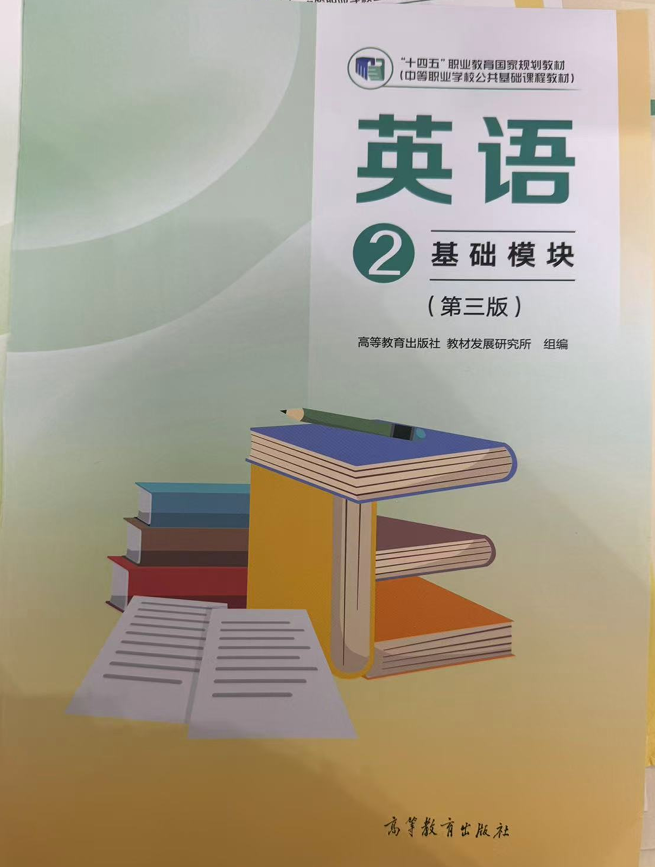
阶段检测卷(1-4单元)(A卷·基础巩固)《英语 基础模块2》(高教版第三版)单元过关卷(原卷版+解析版)
2026-04-03
|
2份
|
44页
|
60人阅读
|
2人下载
内容正文:
编写说明:本套试卷紧扣《英语 基础模块2》(高教版第三版)教材,以教材单元为基准精准覆盖核心考点。
每个单元设置AB卷,A卷为基础巩固卷,侧重基础考点训练,帮助学生扎实掌握知识要点;B卷为能力提升卷,注重知识整合与全面检测,引导学生构建知识网络。全书设计4份综合测试卷,模拟实战情境,聚焦解题能力突破,全面提升应试能力与知识应用水平。
《英语 基础模块2》(高教版第三版)《单元过关卷》
阶段检测卷(1-4单元)
A卷·基础巩固
考试时间:120分钟 满分:150分
班级 姓名 学号 成绩
第一部分:单项选择题(共25小题;每小题1分,满分25分)
从A、B、C、D四个选项中,选出可以填入空白处的最佳选项。
1.________ that he is the best student in our class.
A.There is no doubt B.It is no doubt
C.There are no doubts D.It has no doubt
【答案】A
【详解】句意:毫无疑问,他是我们班最好的学生。
考查存现句。There is no doubt毫无疑问;It is no doubt错误用法;There are no doubts错误用法;It has no doubt错误用法。英语中表达“毫无疑问”的固定句型是“There is no doubt+that从句”。故选A。
2.Sarah ________ kind to everyone.
A.is B.are C.has D.have
【答案】A
【详解】句意:莎拉对每个人都很友善。
is是,主语应是第三人称单数形式;are是,主语应是第二人称或复数形式;has有,主语应是第三人称单数;have有,主语应是第一、二人称或复数形式。主语Sarah是第三人称单数,且kind是形容词,前面应用系动词is。
3.—I haven’t seen you for a long time.
—Yes. I ________ as a volunteer teacher in Xizang for half a year. I came back two days ago.
A.work B.have worked C.will work D.worked
【答案】D
【详解】句意:——我好久没见到你了。——是的。我在西藏当了半年的志愿者教师。我两天前回来了。
根据“I came back two days ago.”可知,说话者已经从西藏回来了,说明在西藏当志愿者教师是过去发生的事情,且该动作已经结束,不强调对现在的影响,因此应该用一般过去时,动词work的过去式是worked。
4.When I was a child, I ________ swim in the river near my home.
A.used to B.was used to C.am used to D.use to
【答案】A
【详解】句意:当我还是一个孩子的时候,我常常在我家附近的小河游泳。
used to do something表示过去常常做某事,符合语境。
5.—Our local dance show A Dream of Red Mansions is so hot.
—Indeed. I ________ for tickets the whole morning. Luckily, I finally got one!
A.fights B.will fight
C.fight D.was fighting
【答案】D
【详解】句意:——我们当地的舞蹈表演《红楼梦》非常火爆。——确实,我整个上午都在为票而“斗争”。幸运的是,我终于弄到了一张!
考查动词时态。根据“the whole morning. Luckily, I finally got one!”可知,此处表示过去一段时间内一直在进行的动作,用过去进行时。故选D。
6.Bad luck! It ________ when we left the train station this morning.
A.is raining B.was raining C.rain D.rained
【答案】B
【详解】句意:真倒霉!今天早上我们离开火车站的时候正在下雨。
根据“when we left the train station this morning”可知,此处表示过去某一时刻正在发生的动作,用过去进行时,应填was raining。
7.It ________ heavily all day, so we had to stay inside.
A.rained B.was raining C.rains D.is raining
【答案】B
【详解】句意:雨下了一整天,所以我们不得不待在室内。
考查动词时态。rained下过雨(过去式);was raining过去一段时间一直在下雨/当时正在下雨(过去进行时);rains下雨(第三人称单数现在时);is raining现在正在下雨(现在进行时)。根据“It...heavily all day, so we had to stay inside.”可知,雨下了一整天,描述的是过去段时间一直持续的动作,应用过去进行时。故选B。
8.—________ beautiful the lake is! I want to take some photos here.
—Yes, the scenery is really amazing.
A.What B.What a C.How D.How a
【答案】C
【详解】句意:——这个湖多美啊!我想在这儿拍一些照片。——是的,这风景真的很令人惊叹。
What通常用于感叹句中修饰名词,其结构为“What+a/an+形容词+可数名词单数+主语+谓语!”或“What+形容词+可数名词复数/不可数名词+主语+谓语!”;How用于感叹句中修饰形容词、副词或动词,其结构为“How+形容词/副词+主语+谓语!” 。在“________ beautiful the lake is!”这个感叹句中,被修饰的是形容词“beautiful”,所以应该用“How”来引导感叹句,不需要加“a”。
9.---How did the accident happen?
---You know, it ________ difficult to see the road clearly because it _________.
A.was; was raining B.is; has rained
C.is; is raining D.will be; will rain
【答案】A
【详解】句意:事故是如何发生的?你知道的,因为正在下雨所以看清道路是比较困难的。
考查动词的时态。根据“How did ”及当时的语境,可知,看清道路这件事发生在过去,第一空用过去式was,第二空强调过去时刻正在下雨时发生了这种状况,用过去进行时,其构成是was/were doing,故选A。
10.The heavy rain ________ the delay of the flight.
A.led to B.leads to C.has led to D.will lead to
【答案】A
【详解】句意:大雨导致了航班的延误。
led to一般过去时;leads to一般现在时;has led to现在完成时;will lead to一般将来时。句中描述大雨造成航班延误是已经发生的具体事件,描述过去发生的动作应用一般过去时。应填led to。
11.We ________ leave when it started raining heavily. So we had to stay at home.
A.is about to B.are about to C.was about to D.were about to
【答案】D
【详解】句意:我们正要离开时,天开始下大雨了。所以我们不得不待在家里。
句中“started”和“had to”提示事情发生在过去,时态为一般过去时,主语We是复数,be动词用were。
12.Christian ________ with John and Anthony in London for about a year.
A.lived B.lives C.is living D.will live
【答案】A
【详解】句意:克里斯蒂安曾与约翰和安东尼在伦敦住了一年左右。
根据时间状语“for about a year”可知,此处描述的是过去持续了一段时间且已结束的动作,应用一般过去时。
13.He ________ in the library when I saw him.
A.reads B.read C.was reading D.is reading
【答案】C
【详解】句意:当我看见他的时候,他正在图书馆看书。
根据“when I saw him”可知,看见他是过去发生的动作,强调当时正在进行的动作,应用过去进行时。
14.— Why didn’t you go out yesterday?
— Because it ________ heavily all day.
A.rains B.rained C.is raining D.was raining
【答案】D
【详解】句意:——昨天你为什么没出去?——因为一整天都在下大雨。
考查时态。rains一般现在时;rained一般过去时;is raining现在进行时;was raining过去进行时。根据时间状语“yesterday”和“all day”可知,动作是过去持续发生的,应用过去进行时。故选D。
15.The students ________ on the playground when it began to rain.
A.run B.ran C.were running D.are running
【答案】C
【详解】句意:当开始下雨时,学生们正在操场上跑步。
根据“when it began to rain”可知,从句是一般过去时,主句表示过去某一时刻正在进行的动作,应用过去进行时,结构为was/were doing,应填were running。
16.—________ beautiful the West Lake is! —Yes, it’s one of the most beautiful lakes in China.
A.What B.What a C.How D.How a
【答案】C
【详解】句意:——西湖多美啊!——是的,它是中国最美丽的湖泊之一。
What什么(后接名词);What a一个(后接可数名词单数);How多么(后接形容词或副词);How a错误结构。根据题干“beautiful the West Lake is”可知,感叹句中心词是形容词beautiful,应用How引导,结构为How + adj. + 主语 + 谓语,应填How。
17.—Were there any shopping centres in the past?
—No, there ________.
A.wasn’t B.isn’t C.weren’t D.aren’t
【答案】C
【详解】句意:——过去有购物中心吗?——不,没有
根据问句“Were there any shopping centres in the past?”可知,时态为一般过去时,且主语shopping centres为复数,否定回答应用weren’t。
18.—What do you usually do to relax on weekends?
—I usually ________ to music and read books.
A.listen B.listens C.listened D.listening
【答案】A
【详解】句意:——你周末通常做什么来放松?——我通常听音乐和读书。
“usually”提示句子描述的是经常性、习惯性的动作,应用一般现在时,主语“I”是第一人称,谓语动词用原形“listen”。
19.He ________ to bed when I ________ to his home last night.
A.went; got B.was going; got
C.went; was getting D.was going; was getting
【答案】B
【详解】句意:昨晚我到他家时,他正要上床睡觉。
根据“when I … to his home last night”可知,主句用过去进行时表示当时正在进行的动作,表示“他正要上床睡觉”,从句用一般过去时,因此第一空用was going,第二空用got。
20.________ is________ that global warming is a threat to us all.
A.There, doubt B.It, no doubt C.It, doubt D.There, no doubt
【答案】D
【详解】句意:毫无疑问,全球变暖对我们所有人都是一个威胁。
There is doubt错误搭配;It is no doubt错误搭配;It is doubt错误搭配;There is no doubt毫无疑问,为固定搭配。根据题干结构________ is________ that...以及句意可知,此处应表示“毫无疑问”,应用固定句型There is no doubt that...,应填There,no doubt。
21.________ strange clothes Nancy is wearing!
A.What B.How C.What a D.How a
【答案】A
【详解】句意:南希穿的衣服多么奇怪啊!
考查感叹句。根据“strange clothes Nancy is wearing!”可知,strange clothes是名词短语,clothes为复数形式,应用What引导感叹句:What adj. n.+主谓。故选A。
22.—I hear the old town in your hometown is very beautiful.
—Yes. It ________ and many tourists come every year.
A.is well worth a visit B.well worth a visit
C.is worth to visit D.worth visiting well
【答案】A
【详解】句意:——我听说你家乡的古镇很美。——是的,它很值得一游,每年都有许多游客来。
考查固定搭配。 is well worth a visit(很值得一游);well worth a visit(缺少系动词);is worth to visit(worth后应接动名词或名词);worth visiting well(语序错误,well应前置修饰worth)。根据句子结构,空格处需填入完整的谓语,且“be worth + 名词/动名词”为固定搭配,表示“值得……”,well可修饰worth表示“很值得”。故选A。
23.Next to our home ________ engineer. ________ engineer is called Tom, and he is very friendly.
A.live an; An B.live a; A C.lives an; The D.lives a; The
【答案】C
【详解】句意:我家隔壁住着一位工程师。这位工程师叫汤姆,他非常友好。
live,居住,动词原形;an,不定冠词,用于元音音素开头单词的前面;lives为第三人称单数形式;the,定冠词,特指;a用于辅音音素开头单词的前面。主语“engineer”是单数,谓语动词用第三人称单数形式lives,且engineer以元音音素开头,用不定冠词an;结合“… engineer is called Tom”可知,此处特指上文提到的那位工程师,用定冠词The,应填lives an; The。
24.My brother ________ his homework when I ________ home yesterday.
A.did; got B.was doing; got
C.did; was getting D.was doing; was getting
【答案】B
【详解】句意:昨天当我到家的时候,我哥哥正在做作业。
在这个句子中,存在两个同时发生的动作:“我哥哥做作业”和“我到家”。根据“yesterday”可知,这两个动作都发生在过去。对于“我哥哥做作业”这个动作,它在我到家这个时间点正在进行,所以应该用过去进行时“was doing”;对于“我到家”这个动作,它是一个瞬间完成的动作,所以应该用一般过去时“got”。
25.—________ yourself?
—I am able to be true to myself. That is what I like best.
A.What do you like best about B.How do you know
C.Do you think D.What happened to
【答案】A
【详解】句意:——关于你自己,你最喜欢什么?——我能够做真实的自己。这是我最喜欢的。
考查情景交际用语。What do you like best about关于你自己,你最喜欢什么;How do you know你怎么认识你自己;Do you think你认为你自己;What happened to你自己发生了什么事。根据答句“I am able to be true to myself. That is what I like best”可知,问句应询问关于自己最喜欢什么。故选A。
第二部分:完形填空(共20小题;每小题1.5分,满分30分)
阅读下面短文,掌握其大意,然后从26-45各题所给的A、B、C、D四个选项中,选出最佳选项。
When I was a teenager, my father and I were standing in line to buy tickets for the circus(马戏团). Finally there was only one family in front of us.
This family seemed quite different. There were eight 26 all probably under the age of twelve. You could tell they didn't have lots of money. Their clothes were not expensive, but they were 27 . The children were well-behaved, standing in line, two-by-two behind their parents, holding hands. They were 28 talking about the clowns(小丑), elephants and other things they would see that night in a 29 voice. They probably had 30 been to the circus before.
The ticket lady asked the father how many 31 he wanted. He responded, "I need eight children's tickets and two adult tickets so I can take my 32 to the circus.”
The ticket lady gave the price. The father looked 33 and asked, "How much did you say?" The ticket lady told him again. The man 34 didn't have enough money. 35 could he tell his eight children that he didn't have enough money to take them to the circus?
Seeing this, my dad reached into his pocket, pulled out a $20 cash and 36 it on the ground. Then he reached down, picked 37 up, patted(拍)the man and said, "Excuse me, Sir, this fell out of your 38 " The man 39 and saw the money. He knew what was going on. He looked straight into my dad's eyes, took my dad's 40 in both of his, with tears in eyes, "Thank you, thank you, Sir. This 41 a lot to me and my family.”
That day my father and I drove home 42 any tickets. The $20 that my dad 43 was what we were going to buy our own tickets with. 44 we didn't see the circus that night, we both felt a joy inside us. It's more pleasant to give than to 45 .
26.A.children B.adults C.boys D.girls
27.A.untidy B.dirty C.cheap D.clean
28.A.excitedly B.strangely C.quickly D.luckily
29.A.high B.sharp C.low D.loud
30.A.never B.always C.ever D.forever
31.A.people B.tickets C.shows D.prices
32.A.wife B.family C.kids D.friends
33.A.satisfied B.sad C.angry D.surprised
34.A.obviously B.suddenly C.badly D.completely
35.A.What B.When C.Why D.How
36.A.dropped B.threw C.pointed D.placed
37.A.them B.us C.it D.himself
38.A.pocket B.clothes C.bag D.box
39.A.turned over B.turned on C.turned around D.turned up
40.A.hands B.head C.legs D.fingers
41.A.helps B.supports C.improves D.means
42.A.like B.without C.as D.with
43.A.gave up B.gave in C.gave away D.gave off
44.A.Unless B.Although C.If D.Until
45.A.accept B.send C.borrow D.receive
【答案】
26.A 27.D 28.A 29.C 30.A 31.B 32.B 33.D 34.A 35.D 36.B 37.C 38.A 39.C 40.A 41.D 42.B 43.C 44.B 45.D
【分析】文章大意:本文讲述了作者的父亲把口袋里仅有的买票钱给了另外一家人,虽然最后作者和父亲没看成马戏表演,但是他们感觉给予比接受更让人快乐。
26.句意:有八个孩子,大概都在十二岁以下。
children孩子们;adults成年人;boys男孩们;girls女孩们。根据“all probably under the age of twelve.”都在12岁以下,可知是有8个孩子,故选A。
27.句意:他们的衣服不贵,但很干净。
untidy不整洁的;dirty脏的;cheap便宜的;clean干净的。由转折词but,可知是他们的衣服不贵,但很干净,故选D。
28.句意:他们兴奋地谈论小丑、大象和其他的事情。
excitedly兴奋地;strangely奇怪地;quickly快速地;luckily幸运地。根据“talking about the clowns(小丑),…”可知,小孩子讨论小丑通常是非常兴奋的,故选A。
29.句意:他们兴奋地低声谈论着那天晚上要看到的小丑、大象和其他东西。
A. high高的;sharp锋利的;low低的;loud大声的。根据上文“The children were well-behaved, standing in line, 孩子们都很乖,站成一排,”可知,这些孩子行为举止良好,推断出是用低的声音讨论事情,故选C。
30.句意:他们以前可能从没去过马戏团。
never从不;always总是;ever曾经;forever永远。根据上文“They were … talking about the clowns(小丑), elephants and other things”可知,他们兴奋地讨论他们那天晚上要看到的小丑,大象,可推断他们之前从未看到过类似表演,故选A。
31.句意:女售票员问这位父亲要几张票。
A. people人们;tickets票;shows表演;prices价格。根据下文“I need eight children's tickets and two adult tickets”,可知,售票员是问他买多少张票,故选B。
32.句意:我要八张儿童票和两张成人票,这样我就可以带我的家人去看马戏。
wife妻子;family家庭;kids孩子;friends朋友。根据上文“I need eight children's tickets and two adult tickets”,可知,这个男人买8张小孩票和2张大人票,是为了带全家人去看马戏,故选B。
33.句意:父亲看起来很惊讶,问道:“你说多少?”
satisfied满意的;sad悲伤的;angry生气的;surprised惊讶的。根据下文“How much did you say?”这个男人问道:“你说多少?”可知,他对售票员报出的价格应 是感到惊讶的,故选D。
34.句意:这个人显然没有足够的钱。
obviously显然地;suddenly突然;badly悲伤地;completely完整地。根据下文“he didn't have enough money to take them to the circus”,可知,很显然这个男人没有那么多钱买票,故选A。
35.句意:他该如何告诉他的八个孩子他没有足够的钱带他们去看马戏?
What什么;When何时;Why为什么;How怎样、如何。根据“… could he tell his eight children that he didn't have enough money to take them to the circus?”结合上文语境,可知是“他该如何告诉他的八个孩子他没有足够的钱带他们去看马戏”,故选D。
36.句意:看到这一幕,我爸爸把手伸进口袋,掏出一张20美元的现金,把它扔在地上。
dropped掉落、下降;threw扔;pointed指向;placed放置。根据“Then he reached down, picked … up,” 可知,作者的爸爸把钱扔到地上,然后再弯腰捡起它,drop是掉落之意,throw是人为的扔出,而句中是父亲故意扔出这个钱让对方误以为是他掉下来的,故选B。
37.句意:然后他弯腰捡起它。
them他们;us我们;it它;himself他自己。设空处指代上文提到的“a $20 cash”,指物“一张20美元的现金”,单数,故选C。
38.句意:对不起,先生,这是从你的口袋里掉出来的。
pocket口袋;clothes衣服;bag包;box盒子。根据上文“…my dad reached into his pocket,pulled out a $20 cash,爸爸把手伸进口袋,掏出一张20美元的现金,”结合“Excuse me, Sir, this fell out of your … .”可知,“this”指代前文的cash,因此作者的爸爸应是说“对不起,先生,这钱是从你的口袋里掉出来的”,故选A。
39.句意:那人转过身来,看见了钱。
turned over移交;turned on打开;turned around转向、转身,turned up调大音量。根据上文“Finally there was only one family in front of us.”可知,这家人是站在作者的前面,所以这个男人是转过身来,故选C。
40.句意:他直视着爸爸的眼睛,握住爸爸的双手,眼里含着泪水。
hands手;head头;legs腿;fingers手指。根据“in both of his, with tears in eyes,” 可知,这个男人激动的握着作者父亲的手,故选A。
41.句意:这对我和我的家庭意义重大。
helps帮助;supports支持;improves提高;means意味着。根据上文“Thank you, thank you, Sir.”可知,这个男人对作者的父亲表示感激,因为这对他和他的家人来说意味着许多,故选D。
42.句意:那天,我和爸爸没有买票就开车回家了。
like像;without没有;as作为;with伴随着。根据下文“we didn't see the circus that night,”可知,作者和父亲没有去看马戏,很显然他们没有买票,故选B。
43.句意:我爸爸给的那20美元是我们自己买票用的。
gave up放弃;gave in屈服;gave away赠送;gave off发出。根据“The $20 that my dad … was what we were going to buy our own tickets with.”可知此句是一个定语从句,空格处修饰The ﹩20 ,由上文“Seeing this, my dad reached into his pocket, pulled out a $20 cash and dropped it on the ground. Then he reached down, picked it up, patted the man and said, ‘Excuse me, Sir, this fell out of your pocket.’”可知,作者的父亲把自己口袋里仅有的20美元赠送给了那个男人,故选C。
44.句意:虽然那天晚上我们没有去看马戏表演,但我们都能感到内心的喜悦。
Unless除非;Although虽然、尽管;If如果;Until直到。根据“… we didn't see the circus that night, we both felt a joy inside us.”可知前后句之间存在一种相反的让步关系,因此用Although引导让步状语从句,故选B。
45.句意:给予比接受更快乐。
accept接受;send发送;borrow借入;receive接受。根据上文的情节,作者的父亲把自己口袋里仅有的20美元赠送给了那个男人,虽然作者和父亲最后没看成马戏表演,但是他们感到非常愉快,由此可见,此处表示“给予比接受更让人快乐”,故选D。
三、阅读理解(共25小题;每小题2分,满分50分)
阅读下列短文,从每题所给的A、B、C、D四个选项中,选出最佳选项,并在答题卡上将该项涂黑。
A
School Sports Meeting Report
Day 1 results
·100m race (boys):
Winner (获胜者)—Mike (Class 5)
·100m race (girls):
Winner—Sarah (Class 3)
·Long jump:
Winner—Tom (Class 1)
·Relay race (4×100m):
Winner—Class 4
Great job, everyone!
Today’s events
Don’t miss these exciting games:
·200m race (9:00 am)
·High jump(10:30 am)
·Shot put (2:30 pm)
·Tug-of-war(4:00 pm)
Cheer for your classmates!
Injury (受伤) report
·Lucy (Class 2) had sore legs. She is OK now.
·Sam (Class 6) had a small cut on his arm. The nurse helped him.
Remember: Safety first
Good acts spotlight
·Anna (Class 1) helped Lucy go to the nurse.
·Students from Class 3 picked up rubbish.
·Many students cheered for all players.
Thank you for your kindness!
Let’s enjoy the rest of the sports meeting together! Go, team!
46.Who won the long jump event?
A.Mike, from Class 5. B.Sarah, from Class 3.
C.Tom, from Class 1. D.Lucy, from Class 2
47.How many events are there today?
A.Three. B.Four. C.Five. D.Six.
48.What was wrong with Lucy?
A.She had a fever. B.She got the flu.
C.She had a sore back. D.She had sore legs.
49.How would you describe Anna and the students from Class 3?
A.Helpful. B.Friendly. C.Creative. D.Hard-working.
50.Where can we probably find this report?
A.In Lucy’s book report. B.On the school notice board.
C.On the menu of the dining hall. D.On the blackboard in the classroom.
【答案】46.C 47.B 48.D 49.A 50.B
【分析】本文是一篇说明文,主要记录了学校运动会的当日比赛结果、后续赛事安排、受伤情况以及好人好事。
46.根据文中“Long jump: Winner—Tom (Class 1)”可知,跳远项目的获胜者是1班的Tom。
47.根据文中“Today’s events: 200m race (9:00 am) · High jump (10:30 am) · Shot put (2:30 pm) · Tug-of-war (4:00 pm)”可知,当日共有四项赛事。
48.根据文中“Lucy (Class 2) had sore legs.”可知,Lucy的问题是腿疼。
49.根据文中“Anna (Class 1) helped Lucy go to the nurse. Students from Class 3 picked up rubbish.”可知,Anna和3班的学生都乐于助人。
50.这份报告是学校运动会的总结,内容包含比赛结果、安全提醒和好人好事,这类内容通常会张贴在学校公告栏上供师生查看。
B
Volunteering means helping others without payment. It’s not a hard thing to do, but it can bring you a lot of good things. Here are four great reasons for you to try it.
Make New Friends Easily. When you volunteer, you’ll work with other kids and adults who also like to help people. While you’re doing the same things, you’ll talk and laugh together. Soon you’ll become friends.
Learn Useful New Skills. Take Lisa as an example. She volunteered at an animal shelter last month. There, she learned how to feed baby dogs and keep their cages clean. Now, she uses these skills to care for her pet cat. These skills can help you in your daily life too.
Make You Feel Happy. Just as the saying goes, “The fragrance (香气) always stays in the hand that gives the rose.” Think: when you give an old lady a flower, she smiles. When you help a boy find a lost toy, his eyes light up. Their joy brings you a deeper happiness than any other gift.
Make Your Community Better. A clean street and a happy old people’s home—all these good things start with small acts of help. You can change the place where you live. Little by little, you’ll make your community a nicer place for everyone.
So why not start now? Join a volunteer project this week. Even if you help a little, you’ll see that it makes a big difference—not just for others, but for yourself too.
51.What does the underlined word “it” refer to in Paragraph 1?
A.Helping others without payment. B.Learning something.
C.Working with people. D.Cleaning the streets.
52.How does the writer support his idea in Paragraph 3?
A.By asking a question. B.By giving an example.
C.By listing some numbers. D.By comparing different ideas.
53.What does the saying “The fragrance (香气) always stays in the hand that gives the rose.” mean in the text?
A.It’s easy to get roses.
B.Roses have a sweet smell.
C.People like to receive roses.
D.Giving brings happiness to both sides.
54.What change can volunteering bring to your community according to the text?
A.It can make the streets clean but noisy.
B.It can help people to make more friends.
C.It can increase the number of old people’s homes.
D.It can make your community a nicer place for everyone.
55.What is the main idea of the text?
A.How to find a volunteer project.
B.How to make friends through volunteering.
C.What skills you can learn from volunteering.
D.The reasons for volunteering.
【答案】51.A 52.B 53.D 54.D 55.D
【导语】本文主要讲述了做志愿活动是无偿帮助他人,介绍了做志愿者的四个原因,鼓励大家参与志愿活动。
51.词句猜测题。根据“Volunteering means helping others without payment. It’s not a hard thing to do, but it can bring you a lot of good things.”可知,志愿活动意味着无偿帮助他人。这并不是一件难事,却能给你带来很多美好的东西。因此it指代Volunteering,故选A。
52.细节理解题。根据“Learn Useful New Skills. Take Lisa as an example. She volunteered at an animal shelter last month.”可知,引出Lisa的亲身经历证明观点,即作者通过举例说明支撑观点。故选B。
53.词句猜测题。根据“Think: when you give an old lady a flower, she smiles. When you help a boy find a lost toy, his eyes light up.”可知,给予会给双方带来快乐。选项D“赠人玫瑰,手有余香。”符合语境,故选D。
54.细节理解题。根据“Little by little, you’ll make your community a nicer place for everyone.”可知,一点一滴,你将会让你的社区变成对每个人来说都更美好的地方。故选D。
55.主旨大意题。本文主要讲述了做志愿活动是无偿帮助他人,介绍了做志愿者的四个原因,鼓励大家参与志愿活动。选项D“做志愿者的理由”为本文大意,故选D。
C
Lisa has always been overweight (肥胖的). She wanted to lose weight, not only because she wanted to look more beautiful and healthier, but also because it would make life easier.
For example, it was difficult for Lisa to find ready-made clothes. She had to ask a tailor (裁缝) to make clothes that were large enough. In school, she needed a special chair that was bigger and stronger than other chairs. If she went for a walk, she got tired very quickly.
She was also unhappy about the way people treated (对待) her sometimes. “People look at me and even make fun of me. I can’t enjoy having dinner with my friends because I’m afraid of getting fatter.”
But now things are quite different. Last month, her classmates were preparing for School Art Week. Someone advised Lisa to play the lead role of the proud Queen who was tall and overweight. Lisa agreed and practiced a lot. Soon after the play, Lisa became a star! She did so well that everybody knew the proud Queen.
Now Lisa doesn’t worry about being overweight anymore. She believes in the English saying, “Every dog has its day.”
56.Why did Lisa want to lose weight?
a. To be healthier.
b. To make life easier.
c. To wear clothes made by a tailor.
d. To be more beautiful.
A.abc B.abd C.acd D.bcd
57.What is Paragraph 2 mainly about?
A.What problems being overweight brings.
B.Lisa’s happy life at school and home.
C.How Lisa did exercise every day.
D.Why Lisa got tired very easily.
58.According to Paragraph 3, how did some people treat Lisa?
A.They liked to make friends with her.
B.They sometimes laughed at her.
C.They enjoyed having dinner with her.
D.They treated her the same as others.
59.How did Lisa change herself and make things different?
A.By taking the lead role in the school play.
B.By getting exercise and losing weight.
C.By making great progress in her studies.
D.By helping her classmates in different ways.
60.What does the story tell us?
A.Everybody hopes to be beautiful.
B.We should take care of ourselves.
C.Everybody has talents and problems.
D.We should be kind to overweight people.
【答案】56.B 57.A 58.B 59.A 60.C
【导语】本文讲述了超重的Lisa因体型所带来的困扰以及她通过参演校园戏剧改变自我认知的故事。
56.细节理解题。根据“She wanted to lose weight, not only because she wanted to look more beautiful and healthier, but also because it would make life easier.”可知,她想减肥,不仅是为了更美丽和健康,还为了让生活更便利。故选B。
57.主旨大意题。通读第二段可知,该段落列举了Lisa因超重所面临的问题。故选A。
58.细节理解题。根据“People look at me and even make fun of me.”可知,有些人会嘲笑她。故选B。
59.细节理解题。根据“Soon after the play, Lisa became a star! She did so well that everybody knew the proud Queen.”可知,她通过参演戏剧改变了自己。故选A。
60.主旨大意题。通读全文可知,本文讲述了Lisa开始时因为胖而受到别人的嘲笑,后来她出色地扮演骄傲的女王让她成为了明星,现在Lisa不再担心肥胖,因为她相信:人人都会有得意的时候。选项C“每个人都有天赋和问题”最贴合主旨,故选C。
D
In recent years, “silver-haired tourism (旅游业)” has become a hot topic in China. With over 310 million people aged 60 and above, older adults are exploring new ways to enjoy their later years. Unlike traditional tours that rush from place to place, silver-haired travel focuses on slow-paced plans, cultural experiences and relaxing.
The elderly today (born in the 1950s and 1960s) are healthier, more educated, and expect to try new things. For example, Grandma Li from Shanghai recently joined a 12-day cruise (邮轮旅行) to Japan. “We visited ancient buildings, tried local foods, and even danced with new friends on board,” she said, “It was like a dream!”
Silver-haired travel isn’t just fun—it’s also good for health. Studies show that traveling improves memory and reduces stress in older adults. In Hainan, a popular place for winter vacations, the elderly enjoy beach walks, yoga classes, and traditional art. “Staying active keeps my mind working,” shared by Mr. Wang.
Silver-haired tourism makes differences to local areas. In places like Chengdu and Hangzhou, hotels and restaurants now offer elderly-friendly services, such as easy-to-read menus and walking tours. The industry also creates jobs for tour guides, care-givers, and transportation workers.
Moreover, it challenges thoughts about aging. In Xi’an, elderly tourists lead groups to the Terracotta Army, sharing stories that are not written in books. “Hearing their experiences was unforgettable,” said a 15-year-old volunteer.
Experts predict silver-haired tourism will grow into a $100 billion industry by 2030. Technology companies are developing apps with voice guides and danger alarms for the elderly. Cities like Suzhou are designing “slow travel” routes (路线) with parks, museums, and tea houses.
As the aging population grows bigger, silver-haired tourism shows that growing older doesn’t mean slowing down. It’s a chance to experience, connect, and create memories. Whether boating down the Li River or dancing in Tokyo, the elderly are telling the world that age is just a number.
61.What does the underlined word slow-paced in paragraph 1 mean?
A.Fast and meaningful. B.cheap and interesting.
C.Expensive and convenient. D.Relaxing and unhurried.
62.What do silver-haired tourists usually do during their trips?
A.Rush to visit many places quickly.
B.Enjoy slow activities like beach walks.
C.Stay in hotels all day and talk a lot.
D.Only eat local food and go shopping.
63.Why is traveling helpful for older adults’ health according to the passage?
A.It improves memory and cuts down stress.
B.It makes them stronger and live longer.
C.It gives them more money and free time.
D.It helps them make friends and avoid illnesses.
64.Which of the following is NOT mentioned as a future plan for silver-haired tourism?
A.Apps with voice guides and alarms.
B.“Slow travel” routes in more cities.
C.Free travel for all old people.
D.Jobs in tourism for local people.
65.What is the main idea of the passage?
A.“Silver-haired tourism” becomes popular.
B.Traveling is good for the elderly.
C.The elderly should travel more.
D.Young people like to travel with the elderly.
【答案】61.D 62.B 63.A 64.C 65.A
【导语】本文讲述了近年来“银发旅游业”在中国兴起并变得受欢迎,并介绍了其特点、对老年人健康的好处、对当地的影响以及未来发展规划等内容。
61.词句猜测题。根据“Unlike traditional tours that rush from place to place”可知,银发旅游应是“轻松和不匆忙的”,选项D符合语境。故选D。
62.细节理解题。根据“silver-haired travel focuses on slow-paced plans”和“In Hainan, a popular place for winter vacations, the elderly enjoy beach walks, yoga classes, and traditional art.”可知,银发游客通常享受像海滩漫步这样的慢节奏活动。故选B。
63.细节理解题。根据“Studies show that traveling improves memory and reduces stress in older adults. ”可知,旅行能改善老年人的记忆力并减轻他们的压力,所以对健康有帮助。故选A。
64.细节理解题。根据“The industry also creates jobs for tour guides, care-givers, and transportation workers.”和“Technology companies are developing apps with voice guides and danger alarms for the elderly. Cities like Suzhou are designing ‘slow travel’ routes (路线) with parks, museums, and tea houses.”可知,A、B、D选项均有提及,C选项“为所有老年人提供免费旅行”未提到。故选C。
65.主旨大意题。根据“In recent years, ‘silver-haired tourism (旅游业)’ has become a hot topic in China. ”该句,以及文章后面段落从多方面阐述了银发旅游的相关情况。A选项“银发旅游变得受欢迎”符合题意。故选A。
E
How much do you know about AI engineers? They are like modern-day magicians who create smart computer programs. Today the world is filled with modern technology, and their importance is growing fast.
★ First, they write code (代码). Code is like a special language that allows humans to communicate with computers. They use popular programming languages such as Python and Java to tell the computer what to do. For example, they can create programs that help doctors find diseases (疾病) faster. They can also create systems that allow cars to drive autonomously, making traffic safer and more comfortable. What’s more, AI engineers teach computers to “learn” from data. Just like students learn from books, computers learn from information like pictures, words, and numbers. This learning ability helps computers make predictions and decisions.
To become an AI engineer, certain skills and knowledge are needed. You need to study maths, science, and computer science. Also, it’s very important to have good communication skills. AI engineers usually work in groups, and they have to tell their ideas clearly to workmates who come from different fields. You should also have good problem-solving skills. Sometimes, the programs don’t work as planned, and AI engineers need to find and solve the problems.
The future of AI engineers looks bright. As more and more companies use AI, the need for engineers grows. Whether it’s making our lives easier with smart home devices or helping businesses make better decisions. AI engineers play a key role. If you are interested in computers and want to create something new, becoming an AI engineer might be a great choice for you.
66.Which of the following can be put in ★ ?
A.AI engineers need to study hard. B.AI engineers are important.
C.AI engineers usually do these jobs. D.AI engineers need some skills.
67.What does the underlined word “autonomously” mean?
A.Very slowly. B.By themselves. C.With human’s help. D.In a dangerous way.
68.What BIG question does Paragraph 3 answer?
A.Why are AI programs important? B.What languages do AI engineers use?
C.How do AI engineers solve problems? D.What skills does an AI engineer need?
69.Why do AI engineers need problem-solving skills?
A.They have to work long hours. B.Programs may not run well.
C.Only they can solve the problem. D.They need to talk with others.
70.What would the writer write about after the last paragraph?
A.Examples of famous AI engineers. B.How to buy smart home things.
C.The importance of AI in daily life. D.Ways to start learning programming.
【答案】66.C 67.B 68.D 69.B 70.D
【导语】本文是一篇说明文,介绍了人工智能工程师的工作内容、所需技能以及未来前景,旨在让读者了解人工智能工程师这一职业并鼓励感兴趣的人投身其中。
66.推理判断题。根据“First, they write code (代码).”以及“What’s more, AI engineers teach computers to ‘learn’ from data.”可知,后文在介绍人工智能工程师的工作内容,选项C“人工智能工程师通常做这些工作”符合语境,可放在★处。故选C。
67.词句猜测题。根据“They can also create systems that allow cars to drive autonomously, making traffic safer and more comfortable.”可知,人工智能工程师创建的系统能让汽车自动驾驶,使交通更安全舒适,所以“autonomously”意思是“自动地,靠自己地”,选项B“靠他们自己”符合语境。故选B。
68.主旨大意题。根据“To become an AI engineer, certain skills and knowledge are needed.”可知,第三段主要介绍了成为一名人工智能工程师所需的技能和知识,选项D“人工智能工程师需要什么技能”符合段落主旨。故选D。
69.细节理解题。根据“Sometimes, the programs don’t work as planned, and AI engineers need to find and solve the problems.”可知,有时程序不能按计划运行,人工智能工程师需要找到并解决问题,所以他们需要解决问题的技能,选项B“程序可能运行不好”符合语境。故选B。
70.推理判断题。根据“If you are interested in computers and want to create something new, becoming an AI engineer might be a great choice for you.”可知,文章最后一段鼓励对计算机感兴趣并想创造新事物的人成为人工智能工程师,接下来可能会介绍如何开始学习编程,选项D“开始学习编程的方法”符合语境。故选D。
第四部分:情景对话(共10小题;每小题2分,满分20分)
阅读A段对话,从对话后所给五个选项中选出可以填入空白处的最佳选项,并在答题卡上将该项涂黑。阅读B段短文,从对话后的七个选项中选出可以填入空白处的最佳选项,并在答题卡上将该项涂黑,选项中有两项为多余选项。
A
( “Love you, Laoji!” has been sweeping across Chinese social media recently. )
Ivy: Mum, I find “Love you, Laoji!” has become popular online. 71
Mum: “Love you, laoji!” means “love old yourself”, just like talking to an old friend.
Ivy: Sounds fantastic! 72
Mum: Yes. For example, they enjoy music or travel around the country in their free time.
Ivy: They’re good ways to relax. 73
Mum: Beyond its warmth, “love laoji” also helps people become better.
Ivy: 74
Mum: It can help people live a healthy life.
Ivy: You said it! Loving ourselves is good for both body and mind.
Mum: 75 It’s really good for our health.
A.You have a point.
B.But what does it mean?
C.Can you tell me more examples?
D.“Love laoji” seems warm and relaxing.
E.How can it help people become better?
【答案】71.B 72.C 73.D 74.E 75.A
【导语】本文围绕网络热梗“Love you, laoji!”展开对话,Ivy与妈妈探讨了该梗的含义、背后体现的生活态度及其对人们的积极影响。
71.Ivy发现“Love you, laoji!”在网上很流行,下文妈妈直接解释了这句话的具体含义,因此此处 Ivy应提出关于“含义”的疑问。B项“But what does it mean?”(但是它是什么意思呢?)与妈妈的答句形成精准的问答对应,符合对话逻辑。
72.Ivy听完妈妈对含义的解释后说“Sounds fantastic!”,下文妈妈用“Yes.”开头,并举例说明人们享受音乐、旅行等放松方式,说明此处 Ivy是对“love laoji”的生活方式进行提问或引出举例。C项“Can you tell me more examples?”(你能告诉我更多例子吗?)能够自然引出妈妈的举例回应,符合对话推进逻辑。
73.Ivy评价妈妈举例的方式是很好的放松方法,下文妈妈转而提到“Beyond its warmth, ‘love laoji’ also helps people become better.”,说明此处需要一个承接上文、过渡到深层意义的句子。D项“‘Love laoji’ seems warm and relaxing.”(“爱你,老己”既温暖又让人放松)既呼应了前文的“relax”,又为后文的“Beyond its warmth”做了铺垫。
74.妈妈提出“‘爱老己’还能帮助人们变得更好”,下文妈妈具体回答了“它能帮助人们过上健康的生活”,因此此处 Ivy应针对“如何帮助人们变得更好”提出疑问。E项“How can it help people become better?”(它如何帮助人们变得更好呢?)与妈妈的答句形成完整问答。
75.Ivy总结“爱自己对身心都有好处”,下文妈妈进一步强调“这对我们的健康真的很好”,此处需要一个表示认同的句子来衔接。A项“You have a point.”(你说得有道理。)是对 Ivy观点的肯定,符合对话收尾的逻辑。
B
A: Can I help you?
B: 76
A: How long have you been like this?
B: For two weeks.
A: Let me have a look. 77
B: I work in an office.
A: Do you play computer games?
B: Yes, a lot. 78
A: Mm, that’s it.
B: 79
A: Nothing serious. You spend too much time in front of the computer.
B: What can I do?
A: 80 Don’t play computer games too much.
B: Should I take any medicine?
A: No, it’s not necessary for now. Just make sure you take regular breaks and do some neck exercises.
B: OK, I’ll take your advice. Thank you.
A.Where do you work?
B.Do you have breakfast?
C.What’s wrong with me?
D.I want to buy some storybooks.
E.Well, I’ve got a pain in my back.
F.I usually play computer games late at night.
G.Stand up and do some exercise from time to time.
【答案】76.E 77.A 78.F 79.C 80.G
【导语】本文是一段医患对话,主要介绍了患者因长期久坐和玩电脑游戏导致背痛,医生询问病情后给出了休息和锻炼的建议。
76.医生询问患者是否需要帮助,患者需要说明自己的不适症状,选项E“Well, I’ve got a pain in my back.”符合语境。
77.B回答自己在办公室工作,此处应该是医生检查后询问患者的工作情况,疑问句“Where do you work?”符合语境。
78.患者承认自己经常玩电脑游戏,需要补充说明玩游戏的具体情况,选项F“I usually play computer games late at night.”符合语境。
79.医生回答不是很严重,此处应该是患者询问自己的病情,疑问句“What’s wrong with me?”符合语境。
80.患者询问改善方法,医生需要给出具体建议,选项G“Stand up and do some exercise from time to time.”符合语境。
第五部分:书面表达(满分25分)
81.下面的表格记录了2022年至2024年你校开展“阳光体育大课间”活动以来学生健康变化的数据。请你根据写作要点及要求,给学校英语报写一篇英语报道,介绍学生健康变化的情况,并给出你的看法和建议。
Health changes of students
Year
Percent
Nearsighted (近视的)
2022
29%
2024
28%
Mental problems (心理问题)
2022
32%
2024
11%
Lack (缺少) of sleep
2022
61%
2024
25%
overweight (超重的)
2022
21%
2024
12%
写作要点
具体内容
1. Describe the results of the survey
依据表格数据做简要描述
2. What caused the changes?
Taking regular exercises plays a role
3. Your advice
Less homework and less exposure (接触) to electronics (电子产品); More P. E. classes
要求:
1. 短文应包括表格中所有的写作要点,条理清楚,行文连贯,可适当发挥;
2. 短文中不能出现真实的人名和地名;
3. 词数80-120。
A recent survey shows that the health of the students in our school has improved in the past three years.
________________________________________________________________________________________________________________________________________________________________________________________________________________________________________________________________________________________________________________________________________________________________________________________________________________________________________________________________________________________________________________________________________________________________________________________________________________________________________________________________
【答案】例文
A recent survey shows that the health of the students in our school has improved in the past three years.
The results of the survey show that the number of students getting nearsighted has dropped by 1%. Compared with 32% in 2022, the number of students with mental problems has dropped by 21%. It also shows that the percentage of students who lack sleep has dropped by 36 percent. Besides, the number of overweight students has dropped by 9%. There’s no doubt that taking regular exercise has played a key role in improving students’ physical and mental health.
In order to further improve students’ health, I call for less homework and less exposure to electronics and more P.E. classes. Only in these ways can students get plenty of sleep and exercise and meanwhile prevent themselves from getting nearsighted or other problems.
【详解】[总体分析]
①题材:材料作文;
②时态:“一般过去时”和“一般现在时”;
③提示:依据表格数据描述健康变化(近视、心理问题、睡眠不足、超重),说明运动的作用,提出减少作业/电子产品、增加体育课的建议。
[写作步骤]
第一步:描述数据变化,突出下降趋势;
第二步:分析原因,强调“阳光体育”的作用,连接运动与健康的关系;
第三步:提出建议,说明具体措施。
[亮点词汇]
①drop by下降了
②the number of……的数量
③take regular exercise定期锻炼
[高分句型]
In order to further improve students’ health, I call for less homework and less exposure to electronics and more P.E. (In order to表目的)
学科网(北京)股份有限公司 (
1
)原创精品资源学科网独家享有版权,侵权必究!
学科网(北京)股份有限公司
$
编写说明:本套试卷紧扣《英语 基础模块2》(高教版第三版)教材,以教材单元为基准精准覆盖核心考点。
每个单元设置AB卷,A卷为基础巩固卷,侧重基础考点训练,帮助学生扎实掌握知识要点;B卷为能力提升卷,注重知识整合与全面检测,引导学生构建知识网络。全书设计4份综合测试卷,模拟实战情境,聚焦解题能力突破,全面提升应试能力与知识应用水平。
《英语 基础模块2》(高教版第三版)《单元过关卷》
阶段检测卷(1-4单元)
A卷·基础巩固
考试时间:120分钟 满分:150分
班级 姓名 学号 成绩
第一部分:单项选择题(共25小题;每小题1分,满分25分)
从A、B、C、D四个选项中,选出可以填入空白处的最佳选项。
1.________ that he is the best student in our class.
A.There is no doubt B.It is no doubt
C.There are no doubts D.It has no doubt
2.Sarah ________ kind to everyone.
A.is B.are C.has D.have
3.—I haven’t seen you for a long time.
—Yes. I ________ as a volunteer teacher in Xizang for half a year. I came back two days ago.
A.work B.have worked C.will work D.worked
4.When I was a child, I ________ swim in the river near my home.
A.used to B.was used to C.am used to D.use to
5.—Our local dance show A Dream of Red Mansions is so hot.
—Indeed. I ________ for tickets the whole morning. Luckily, I finally got one!
A.fights B.will fight
C.fight D.was fighting
6.Bad luck! It ________ when we left the train station this morning.
A.is raining B.was raining C.rain D.rained
7.It ________ heavily all day, so we had to stay inside.
A.rained B.was raining C.rains D.is raining
8.—________ beautiful the lake is! I want to take some photos here.
—Yes, the scenery is really amazing.
A.What B.What a C.How D.How a
9.---How did the accident happen?
---You know, it ________ difficult to see the road clearly because it _________.
A.was; was raining B.is; has rained
C.is; is raining D.will be; will rain
10.The heavy rain ________ the delay of the flight.
A.led to B.leads to C.has led to D.will lead to
11.We ________ leave when it started raining heavily. So we had to stay at home.
A.is about to B.are about to C.was about to D.were about to
12.Christian ________ with John and Anthony in London for about a year.
A.lived B.lives C.is living D.will live
13.He ________ in the library when I saw him.
A.reads B.read C.was reading D.is reading
14.— Why didn’t you go out yesterday?
— Because it ________ heavily all day.
A.rains B.rained C.is raining D.was raining
15.The students ________ on the playground when it began to rain.
A.run B.ran C.were running D.are running
16.—________ beautiful the West Lake is! —Yes, it’s one of the most beautiful lakes in China.
A.What B.What a C.How D.How a
17.—Were there any shopping centres in the past?
—No, there ________.
A.wasn’t B.isn’t C.weren’t D.aren’t
18.—What do you usually do to relax on weekends?
—I usually ________ to music and read books.
A.listen B.listens C.listened D.listening
19.He ________ to bed when I ________ to his home last night.
A.went; got B.was going; got
C.went; was getting D.was going; was getting
20.________ is________ that global warming is a threat to us all.
A.There, doubt B.It, no doubt C.It, doubt D.There, no doubt
21.________ strange clothes Nancy is wearing!
A.What B.How C.What a D.How a
22.—I hear the old town in your hometown is very beautiful.
—Yes. It ________ and many tourists come every year.
A.is well worth a visit B.well worth a visit
C.is worth to visit D.worth visiting well
23.Next to our home ________ engineer. ________ engineer is called Tom, and he is very friendly.
A.live an; An B.live a; A C.lives an; The D.lives a; The
24.My brother ________ his homework when I ________ home yesterday.
A.did; got B.was doing; got
C.did; was getting D.was doing; was getting
25.—________ yourself?
—I am able to be true to myself. That is what I like best.
A.What do you like best about B.How do you know
C.Do you think D.What happened to
第二部分:完形填空(共20小题;每小题1.5分,满分30分)
阅读下面短文,掌握其大意,然后从26-45各题所给的A、B、C、D四个选项中,选出最佳选项。
When I was a teenager, my father and I were standing in line to buy tickets for the circus(马戏团). Finally there was only one family in front of us.
This family seemed quite different. There were eight 26 all probably under the age of twelve. You could tell they didn't have lots of money. Their clothes were not expensive, but they were 27 . The children were well-behaved, standing in line, two-by-two behind their parents, holding hands. They were 28 talking about the clowns(小丑), elephants and other things they would see that night in a 29 voice. They probably had 30 been to the circus before.
The ticket lady asked the father how many 31 he wanted. He responded, "I need eight children's tickets and two adult tickets so I can take my 32 to the circus.”
The ticket lady gave the price. The father looked 33 and asked, "How much did you say?" The ticket lady told him again. The man 34 didn't have enough money. 35 could he tell his eight children that he didn't have enough money to take them to the circus?
Seeing this, my dad reached into his pocket, pulled out a $20 cash and 36 it on the ground. Then he reached down, picked 37 up, patted(拍)the man and said, "Excuse me, Sir, this fell out of your 38 " The man 39 and saw the money. He knew what was going on. He looked straight into my dad's eyes, took my dad's 40 in both of his, with tears in eyes, "Thank you, thank you, Sir. This 41 a lot to me and my family.”
That day my father and I drove home 42 any tickets. The $20 that my dad 43 was what we were going to buy our own tickets with. 44 we didn't see the circus that night, we both felt a joy inside us. It's more pleasant to give than to 45 .
26.A.children B.adults C.boys D.girls
27.A.untidy B.dirty C.cheap D.clean
28.A.excitedly B.strangely C.quickly D.luckily
29.A.high B.sharp C.low D.loud
30.A.never B.always C.ever D.forever
31.A.people B.tickets C.shows D.prices
32.A.wife B.family C.kids D.friends
33.A.satisfied B.sad C.angry D.surprised
34.A.obviously B.suddenly C.badly D.completely
35.A.What B.When C.Why D.How
36.A.dropped B.threw C.pointed D.placed
37.A.them B.us C.it D.himself
38.A.pocket B.clothes C.bag D.box
39.A.turned over B.turned on C.turned around D.turned up
40.A.hands B.head C.legs D.fingers
41.A.helps B.supports C.improves D.means
42.A.like B.without C.as D.with
43.A.gave up B.gave in C.gave away D.gave off
44.A.Unless B.Although C.If D.Until
45.A.accept B.send C.borrow D.receive
三、阅读理解(共25小题;每小题2分,满分50分)
阅读下列短文,从每题所给的A、B、C、D四个选项中,选出最佳选项,并在答题卡上将该项涂黑。
A
School Sports Meeting Report
Day 1 results
·100m race (boys):
Winner (获胜者)—Mike (Class 5)
·100m race (girls):
Winner—Sarah (Class 3)
·Long jump:
Winner—Tom (Class 1)
·Relay race (4×100m):
Winner—Class 4
Great job, everyone!
Today’s events
Don’t miss these exciting games:
·200m race (9:00 am)
·High jump(10:30 am)
·Shot put (2:30 pm)
·Tug-of-war(4:00 pm)
Cheer for your classmates!
Injury (受伤) report
·Lucy (Class 2) had sore legs. She is OK now.
·Sam (Class 6) had a small cut on his arm. The nurse helped him.
Remember: Safety first
Good acts spotlight
·Anna (Class 1) helped Lucy go to the nurse.
·Students from Class 3 picked up rubbish.
·Many students cheered for all players.
Thank you for your kindness!
Let’s enjoy the rest of the sports meeting together! Go, team!
46.Who won the long jump event?
A.Mike, from Class 5. B.Sarah, from Class 3.
C.Tom, from Class 1. D.Lucy, from Class 2
47.How many events are there today?
A.Three. B.Four. C.Five. D.Six.
48.What was wrong with Lucy?
A.She had a fever. B.She got the flu.
C.She had a sore back. D.She had sore legs.
49.How would you describe Anna and the students from Class 3?
A.Helpful. B.Friendly. C.Creative. D.Hard-working.
50.Where can we probably find this report?
A.In Lucy’s book report. B.On the school notice board.
C.On the menu of the dining hall. D.On the blackboard in the classroom.
B
Volunteering means helping others without payment. It’s not a hard thing to do, but it can bring you a lot of good things. Here are four great reasons for you to try it.
Make New Friends Easily. When you volunteer, you’ll work with other kids and adults who also like to help people. While you’re doing the same things, you’ll talk and laugh together. Soon you’ll become friends.
Learn Useful New Skills. Take Lisa as an example. She volunteered at an animal shelter last month. There, she learned how to feed baby dogs and keep their cages clean. Now, she uses these skills to care for her pet cat. These skills can help you in your daily life too.
Make You Feel Happy. Just as the saying goes, “The fragrance (香气) always stays in the hand that gives the rose.” Think: when you give an old lady a flower, she smiles. When you help a boy find a lost toy, his eyes light up. Their joy brings you a deeper happiness than any other gift.
Make Your Community Better. A clean street and a happy old people’s home—all these good things start with small acts of help. You can change the place where you live. Little by little, you’ll make your community a nicer place for everyone.
So why not start now? Join a volunteer project this week. Even if you help a little, you’ll see that it makes a big difference—not just for others, but for yourself too.
51.What does the underlined word “it” refer to in Paragraph 1?
A.Helping others without payment. B.Learning something.
C.Working with people. D.Cleaning the streets.
52.How does the writer support his idea in Paragraph 3?
A.By asking a question. B.By giving an example.
C.By listing some numbers. D.By comparing different ideas.
53.What does the saying “The fragrance (香气) always stays in the hand that gives the rose.” mean in the text?
A.It’s easy to get roses.
B.Roses have a sweet smell.
C.People like to receive roses.
D.Giving brings happiness to both sides.
54.What change can volunteering bring to your community according to the text?
A.It can make the streets clean but noisy.
B.It can help people to make more friends.
C.It can increase the number of old people’s homes.
D.It can make your community a nicer place for everyone.
55.What is the main idea of the text?
A.How to find a volunteer project.
B.How to make friends through volunteering.
C.What skills you can learn from volunteering.
D.The reasons for volunteering.
C
Lisa has always been overweight (肥胖的). She wanted to lose weight, not only because she wanted to look more beautiful and healthier, but also because it would make life easier.
For example, it was difficult for Lisa to find ready-made clothes. She had to ask a tailor (裁缝) to make clothes that were large enough. In school, she needed a special chair that was bigger and stronger than other chairs. If she went for a walk, she got tired very quickly.
She was also unhappy about the way people treated (对待) her sometimes. “People look at me and even make fun of me. I can’t enjoy having dinner with my friends because I’m afraid of getting fatter.”
But now things are quite different. Last month, her classmates were preparing for School Art Week. Someone advised Lisa to play the lead role of the proud Queen who was tall and overweight. Lisa agreed and practiced a lot. Soon after the play, Lisa became a star! She did so well that everybody knew the proud Queen.
Now Lisa doesn’t worry about being overweight anymore. She believes in the English saying, “Every dog has its day.”
56.Why did Lisa want to lose weight?
a. To be healthier.
b. To make life easier.
c. To wear clothes made by a tailor.
d. To be more beautiful.
A.abc B.abd C.acd D.bcd
57.What is Paragraph 2 mainly about?
A.What problems being overweight brings.
B.Lisa’s happy life at school and home.
C.How Lisa did exercise every day.
D.Why Lisa got tired very easily.
58.According to Paragraph 3, how did some people treat Lisa?
A.They liked to make friends with her.
B.They sometimes laughed at her.
C.They enjoyed having dinner with her.
D.They treated her the same as others.
59.How did Lisa change herself and make things different?
A.By taking the lead role in the school play.
B.By getting exercise and losing weight.
C.By making great progress in her studies.
D.By helping her classmates in different ways.
60.What does the story tell us?
A.Everybody hopes to be beautiful.
B.We should take care of ourselves.
C.Everybody has talents and problems.
D.We should be kind to overweight people.
D
In recent years, “silver-haired tourism (旅游业)” has become a hot topic in China. With over 310 million people aged 60 and above, older adults are exploring new ways to enjoy their later years. Unlike traditional tours that rush from place to place, silver-haired travel focuses on slow-paced plans, cultural experiences and relaxing.
The elderly today (born in the 1950s and 1960s) are healthier, more educated, and expect to try new things. For example, Grandma Li from Shanghai recently joined a 12-day cruise (邮轮旅行) to Japan. “We visited ancient buildings, tried local foods, and even danced with new friends on board,” she said, “It was like a dream!”
Silver-haired travel isn’t just fun—it’s also good for health. Studies show that traveling improves memory and reduces stress in older adults. In Hainan, a popular place for winter vacations, the elderly enjoy beach walks, yoga classes, and traditional art. “Staying active keeps my mind working,” shared by Mr. Wang.
Silver-haired tourism makes differences to local areas. In places like Chengdu and Hangzhou, hotels and restaurants now offer elderly-friendly services, such as easy-to-read menus and walking tours. The industry also creates jobs for tour guides, care-givers, and transportation workers.
Moreover, it challenges thoughts about aging. In Xi’an, elderly tourists lead groups to the Terracotta Army, sharing stories that are not written in books. “Hearing their experiences was unforgettable,” said a 15-year-old volunteer.
Experts predict silver-haired tourism will grow into a $100 billion industry by 2030. Technology companies are developing apps with voice guides and danger alarms for the elderly. Cities like Suzhou are designing “slow travel” routes (路线) with parks, museums, and tea houses.
As the aging population grows bigger, silver-haired tourism shows that growing older doesn’t mean slowing down. It’s a chance to experience, connect, and create memories. Whether boating down the Li River or dancing in Tokyo, the elderly are telling the world that age is just a number.
61.What does the underlined word slow-paced in paragraph 1 mean?
A.Fast and meaningful. B.cheap and interesting.
C.Expensive and convenient. D.Relaxing and unhurried.
62.What do silver-haired tourists usually do during their trips?
A.Rush to visit many places quickly.
B.Enjoy slow activities like beach walks.
C.Stay in hotels all day and talk a lot.
D.Only eat local food and go shopping.
63.Why is traveling helpful for older adults’ health according to the passage?
A.It improves memory and cuts down stress.
B.It makes them stronger and live longer.
C.It gives them more money and free time.
D.It helps them make friends and avoid illnesses.
64.Which of the following is NOT mentioned as a future plan for silver-haired tourism?
A.Apps with voice guides and alarms.
B.“Slow travel” routes in more cities.
C.Free travel for all old people.
D.Jobs in tourism for local people.
65.What is the main idea of the passage?
A.“Silver-haired tourism” becomes popular.
B.Traveling is good for the elderly.
C.The elderly should travel more.
D.Young people like to travel with the elderly.
E
How much do you know about AI engineers? They are like modern-day magicians who create smart computer programs. Today the world is filled with modern technology, and their importance is growing fast.
★ First, they write code (代码). Code is like a special language that allows humans to communicate with computers. They use popular programming languages such as Python and Java to tell the computer what to do. For example, they can create programs that help doctors find diseases (疾病) faster. They can also create systems that allow cars to drive autonomously, making traffic safer and more comfortable. What’s more, AI engineers teach computers to “learn” from data. Just like students learn from books, computers learn from information like pictures, words, and numbers. This learning ability helps computers make predictions and decisions.
To become an AI engineer, certain skills and knowledge are needed. You need to study maths, science, and computer science. Also, it’s very important to have good communication skills. AI engineers usually work in groups, and they have to tell their ideas clearly to workmates who come from different fields. You should also have good problem-solving skills. Sometimes, the programs don’t work as planned, and AI engineers need to find and solve the problems.
The future of AI engineers looks bright. As more and more companies use AI, the need for engineers grows. Whether it’s making our lives easier with smart home devices or helping businesses make better decisions. AI engineers play a key role. If you are interested in computers and want to create something new, becoming an AI engineer might be a great choice for you.
66.Which of the following can be put in ★ ?
A.AI engineers need to study hard. B.AI engineers are important.
C.AI engineers usually do these jobs. D.AI engineers need some skills.
67.What does the underlined word “autonomously” mean?
A.Very slowly. B.By themselves. C.With human’s help. D.In a dangerous way.
68.What BIG question does Paragraph 3 answer?
A.Why are AI programs important? B.What languages do AI engineers use?
C.How do AI engineers solve problems? D.What skills does an AI engineer need?
69.Why do AI engineers need problem-solving skills?
A.They have to work long hours. B.Programs may not run well.
C.Only they can solve the problem. D.They need to talk with others.
70.What would the writer write about after the last paragraph?
A.Examples of famous AI engineers. B.How to buy smart home things.
C.The importance of AI in daily life. D.Ways to start learning programming.
第四部分:情景对话(共10小题;每小题2分,满分20分)
阅读A段对话,从对话后所给五个选项中选出可以填入空白处的最佳选项,并在答题卡上将该项涂黑。阅读B段短文,从对话后的七个选项中选出可以填入空白处的最佳选项,并在答题卡上将该项涂黑,选项中有两项为多余选项。
A
( “Love you, Laoji!” has been sweeping across Chinese social media recently. )
Ivy: Mum, I find “Love you, Laoji!” has become popular online. 71
Mum: “Love you, laoji!” means “love old yourself”, just like talking to an old friend.
Ivy: Sounds fantastic! 72
Mum: Yes. For example, they enjoy music or travel around the country in their free time.
Ivy: They’re good ways to relax. 73
Mum: Beyond its warmth, “love laoji” also helps people become better.
Ivy: 74
Mum: It can help people live a healthy life.
Ivy: You said it! Loving ourselves is good for both body and mind.
Mum: 75 It’s really good for our health.
A.You have a point.
B.But what does it mean?
C.Can you tell me more examples?
D.“Love laoji” seems warm and relaxing.
E.How can it help people become better?
B
A: Can I help you?
B: 76
A: How long have you been like this?
B: For two weeks.
A: Let me have a look. 77
B: I work in an office.
A: Do you play computer games?
B: Yes, a lot. 78
A: Mm, that’s it.
B: 79
A: Nothing serious. You spend too much time in front of the computer.
B: What can I do?
A: 80 Don’t play computer games too much.
B: Should I take any medicine?
A: No, it’s not necessary for now. Just make sure you take regular breaks and do some neck exercises.
B: OK, I’ll take your advice. Thank you.
A.Where do you work?
B.Do you have breakfast?
C.What’s wrong with me?
D.I want to buy some storybooks.
E.Well, I’ve got a pain in my back.
F.I usually play computer games late at night.
G.Stand up and do some exercise from time to time.
第五部分:书面表达(满分25分)
81.下面的表格记录了2022年至2024年你校开展“阳光体育大课间”活动以来学生健康变化的数据。请你根据写作要点及要求,给学校英语报写一篇英语报道,介绍学生健康变化的情况,并给出你的看法和建议。
Health changes of students
Year
Percent
Nearsighted (近视的)
2022
29%
2024
28%
Mental problems (心理问题)
2022
32%
2024
11%
Lack (缺少) of sleep
2022
61%
2024
25%
overweight (超重的)
2022
21%
2024
12%
写作要点
具体内容
1. Describe the results of the survey
依据表格数据做简要描述
2. What caused the changes?
Taking regular exercises plays a role
3. Your advice
Less homework and less exposure (接触) to electronics (电子产品); More P. E. classes
要求:
1. 短文应包括表格中所有的写作要点,条理清楚,行文连贯,可适当发挥;
2. 短文中不能出现真实的人名和地名;
3. 词数80-120。
A recent survey shows that the health of the students in our school has improved in the past three years.
________________________________________________________________________________________________________________________________________________________________________________________________________________________________________________________________________________________________________________________________________________________________________________________________________________________________________________________________________________________________________________________________________________________________________________________________________________________________________________________________
学科网(北京)股份有限公司 (
1
)原创精品资源学科网独家享有版权,侵权必究!
学科网(北京)股份有限公司
$
资源预览图

1

2

3
由于学科网是一个信息分享及获取的平台,不确保部分用户上传资料的 来源及知识产权归属。如您发现相关资料侵犯您的合法权益,请联系学科网,我们核实后将及时进行处理。