Unit 8 Once upon a Time 单元核心知识(背诵默写任务单)英语新教材人教版七年级下册
2026-04-04
|
2份
|
12页
|
544人阅读
|
18人下载
精品
资源信息
| 学段 | 初中 |
|---|---|
| 学科 | 英语 |
| 教材版本 | 初中英语人教版七年级下册 |
| 年级 | 七年级 |
| 章节 | Unit 8 Once upon a Time |
| 类型 | 学案-学习任务单 |
| 知识点 | - |
| 使用场景 | 同步教学-单元练习 |
| 学年 | 2026-2027 |
| 地区(省份) | 全国 |
| 地区(市) | - |
| 地区(区县) | - |
| 文件格式 | ZIP |
| 文件大小 | 115 KB |
| 发布时间 | 2026-04-04 |
| 更新时间 | 2026-04-04 |
| 作者 | 小白博士爱学习 |
| 品牌系列 | 上好课·上好课 |
| 审核时间 | 2026-04-04 |
| 下载链接 | https://m.zxxk.com/soft/57152781.html |
| 价格 | 2.00储值(1储值=1元) |
| 来源 | 学科网 |
内容正文:
Unit 8 Once upon a Time 单元核心知识(背诵版)
一、核心词汇(黑体部分为重点词汇)
1 / 4
学科网(北京)股份有限公司
upon /əˈpɒn/ prep. 在……上
once upon a time /wʌns əˈpɒn ə taɪm/ 从前;很久以前
bite /baɪt/ v. 咬;咬伤(bit /bɪt/为过去式)
bite through /baɪt θruː/ 咬穿
net /net/ n. 网;网状物
hunter /ˈhʌntə(r)/ n. 猎人;搜寻者
promise /ˈprɒmɪs/ v. 承诺;保证;n. 承诺;诺言
long ago /lɒŋ əˈɡəʊ/ 很久以前
war /wɔː(r)/ n. 战争
neighbour /ˈneɪbə(r)/ n. 邻居
wise /waɪz/ adj. 明智的;高明的
emperor /ˈempərə(r)/ n. 皇帝
lie /laɪ/ v. 撒谎;n. 谎言
pretend /prɪˈtend/ v. 假装;伪装
official /əˈfɪʃl/ n. 官员;高级职员
silly /ˈsɪli/ adj. 愚蠢的;傻的
decide /dɪˈsaɪd/ v. 决定
praise /preɪz/ v. & n. 赞美;表扬
afraid /əˈfreɪd/ adj. 害怕的;担心的
suddenly /ˈsʌdnli/ adv. 突然地;出乎意料地
at first /æt fɜːst/ 起初;最初
truth /truːθ/ n. 真相;事实
tell the truth /tel ðə truːθ/ 说实话
make money /meɪk ˈmʌni/ 赚钱
true /truː/ adj. 符合事实的;真正的
hate /heɪt/ v. 不喜欢;厌恶;讨厌
get out /ɡet aʊt/ 逃脱;离开
king /kɪŋ/ n. 君主;国王
artist /ˈɑːtɪst/ n. 美术家;艺术家
quickly /ˈkwɪkli/ adv. 快速地;很快
smile /smaɪl/v. 微笑 n. 微笑;笑容
all over /ɔːl ˈəʊvə(r)/ 到处;遍及
ugly /ˈʌɡli/ adj. 丑陋的;难看的
duckling /ˈdʌklɪŋ/ n. 小鸭子
real /ˈriːəl/ adj. 真的;真正的
laugh at /lɑːf æt/ 嘲笑
go away /ɡəʊ əˈweɪ/ 走开
search /sɜːtʃ/ v. 寻找;搜寻
search for /sɜːtʃ fɔː(r)/ 寻找
hen /hen/ n. 母鸡
hopefully /ˈhəʊpfəli/ adv. 有希望地
purr /pɜː(r)/ v. (猫愉快时)发出呜呜声
lay /leɪ/ v. (laid /leɪd/)下(蛋);放置;搁
swan /swɒn/ n. 天鹅
feather /ˈfeðə(r)/ n. 羽毛
to sb's surprise /tuː sb's səˈpraɪz/ 出乎某人的意料
size /saɪz/ n. 大小;尺寸
believe /bɪˈliːv/ v. 相信;认为
only if /ˈəʊnli ɪf/ 只有
fisherman /ˈfɪʃəmən/ n. 渔夫(复数:fishermen)
fishing /ˈfɪʃɪŋ/ n. 钓鱼;捕鱼
come out /kʌm aʊt/ 出现;盛开
genie /ˈdʒiːni/ n. 妖怪;鬼
die /daɪ/ v. 死亡;消失
make a promise /meɪk ə ˈprɒmɪs/ 许下诺言
someone /ˈsʌmwʌn/ pron. 某人;有人
set /set/ v. 使处于某种状况;使开始
set...free /set...friː/ 释放
rich /rɪtʃ/ adj. 富有的;富含……的
powerful /ˈpaʊəfl/ adj. 强大的;有影响力的
anyone /ˈeniwʌn/ pron. 任何人;某个人
instead of /ɪnˈsted ɒv/ 而不是;代替
himself /hɪmˈself/ pron. 他自己;他本人
succeed in doing sth 成功做成某事
in the end /ɪn ðiːend/ 最后;终究
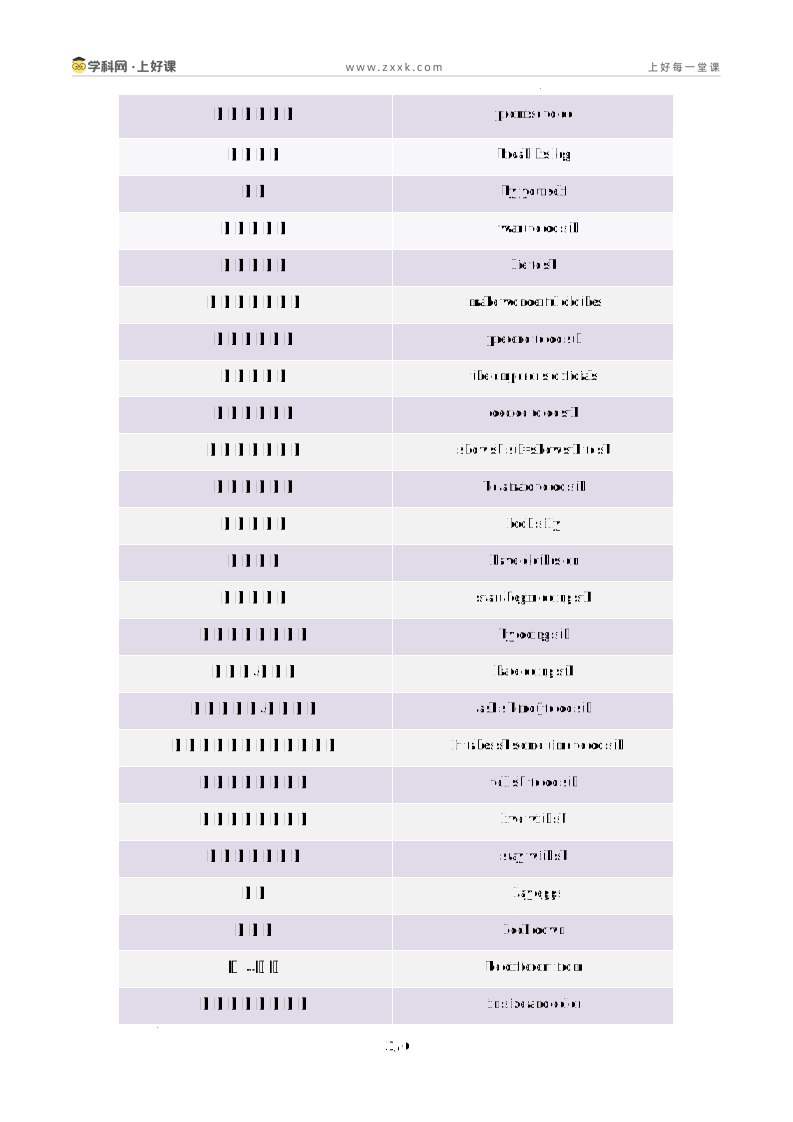
二、核心短语
中文
英文
从前;很久以前
once upon a time
咬穿
bite through
很久以前
long ago
起初;最初
at first
说实话
tell the truth
赚钱
make money
逃脱;离开
get out
到处;遍及
all over
走开
go away
嘲笑
laugh at
寻找
search for
出乎某人意料
to sb’s surprise
出现;盛开
come out
许下诺言
make a promise
而不是;代替
instead of
成功做成某事
succeed in doing sth
讲故事
tell stories
为一个故事编一个结尾
make up an ending for a story
从不同的文化中探索故事
explore stories from different cultures
在某方面帮助某人
help sb with sth
承诺去做某事
promise to do
摔断了腿
break his leg
独自
by yourself
想要做某事
want to do sth
对某人撒谎
lie to sb
制作极好的衣服
make wonderful clothes
假装去做某事
pretend to do sth
皇帝的官员
the emperor’s officials
决定去做某事
decide to do sth
展示给某人某物
show sb sth=show sth to sb
害怕去做某事
be afraid to do sth
看起来很傻
look silly
穿着衣服
have clothes on
开始做某事
start/begin doing sth
通过做某事的方式
by doing sth
不喜欢/讨厌做
hate doing sth
要求某人做/不做某事
ask s b(not)to do sth
花费某人多长时间去做某事
It takes sb some time to do sth
告诉某人去做某事
tell sb to do sth
和某人生活在一起
live with sb
和某人呆在一起
stay with sb
下蛋
lay eggs
往下看
look down
和…不同
be different from
在大小和颜色方面
in size and color
把某人释放出来
set…free
让某人变得富有且有权
make sb rich and powerful
拯救他自己
save oneself
发生
take place
三、重点句型
1. 两兄弟来了,对他撒了谎。
Two brothers came and lied to him.
2. 他们假装做衣服。
They pretended to make the clothes.
3. 老鼠承诺去帮助狮子。
The mouse promised to help the lion.
4. 没有人想看起来很傻。
No one wanted to look silly.
5. 皇帝决定向大家展示他的新衣。
The emperor decided to show everyone his new clothes.
6. 皇帝没穿衣服!
The emperor has no clothes on!
7. 你在英语课上读过《小妇人》吗?
Did you read Little Women for English class?
8. “老鼠是怎么帮助狮子的?”“它咬破了网,狮子跑了出来。”
—How did the mouse help the lion? —It bit through the net,and the lion got out.
9. 从前,一位国王请一位画家给他画一匹马。
Once upon a time, a king asked an artist to paint him a horse.
10. 你为什么让我等这么久?
Why did you make me wait so long?
11. 但其他小鸭子仍然嘲笑他,让他走开。
But the other ducklings still laughed at him and told him to go away.
12. 在那里,他看见了三只长着长脖子和白色羽毛的美丽天鹅。
There,he saw three beautiful swans with long necks and white feathers.
13. 小鸭低头一看,惊讶地发现自己也是一只美丽的白天鹅!
The duckling looked down, and to his surprise,he saw that he was a beautiful white swan too!
14. 如果有人放了我,我会让他们变得富有和强大 。
If someone set me free,I would make them rich and powerful.
15. 渔夫能成功自救吗?
Would the fisherman succeed in saving himself ?
16.我们可以通过欺骗皇帝去赚钱。
We can make a lot of money by lying to the emperor.
17.我花费了几个月的时间去学习如何画好一只马。
It took me months to learn how to paint a horse well.
18.国王等了几个月就生气了。
The king waited for a few months before he grew angry.
19.他看起来和我们不像!多么丑陋的小鸭子啊!
He doesn’t look like us! What an ugly duckling!
20.这使得小丑鸭非常伤心,所以他决定去寻找新的家。
It made the poor duckling very sad, so he decided to search for a new home.
4、 核心语法
语法点一:一般过去时(二)
1. 一般过去时的用法
(1)表示过去某时或某一段时间内发生的动作或存在的状态,常和表示过去的时间状与连用,如yesterday、the day before yesterday、 last day/month/ year等。
例:He ate an egg for breakfast yesterday. 他昨天早上吃了一个鸡蛋。
Tom lived in Shanghai last year. 去年汤姆居住在上海。
(2) 表示过去经常或反复发生的动作,常和often 、always等表示频率的副词连用。
例:Scientists often worked alone in the past.在过去的时候,科学家通常都是单打独斗。
He was always late for school last year.去年他上学总是迟到。
2. 一般过去时的特殊疑问句结构
(1)一般过去时中常见的特殊疑问词/短语
who
谁(主格)
问人
what
什么
问事物
where
在哪里,到哪里
问地点
when
什么时候
问时间
what time
几点钟
问钟点
why
为什么
问原因
how
怎么样,如何
问状况、方式等
how old
几岁
问年龄
how long
(时间或物体)多长
问时间长短或物体长度
how far
多远
问距离
how often
多久一次
问频率
(3) 一般过去时的特殊疑问句结构
句式
构成
含be动词的特殊疑问句
特殊疑问词+was/were+主语+其他?
特殊疑问词(主语)+was/were+主语+其他?
含实义动词的特殊疑问句
特殊疑问词+助动词did+主语+实义动词原形+其他?
特殊疑问词(主语)+实义动词的过去式+其他?
语法点二:一般过去时与一般现在时对比
1.一般过去时(Simple Past Tense)
构成:
▪规则动词:动词原形 + ed(如 play→played, visit→visited)
▪不规则动词:特殊形式(如 go→went, take→took, bite→bit)
用法:表示过去发生的动作或存在的状态
例:The lion caught the mouse. 狮子抓住了老鼠。
The emperor didn't see the clothes. 皇帝没有看到衣服。
2.一般现在时(Simple Present Tense)
构成:动词原形或第三人称单数形式
用法:表示客观事实、真理或习惯性动作
例:The story teaches us to be honest. 这个故事教我们要诚实。
She often tells stories to her friends. 她经常给朋友讲故事。
五、重点语音
th
ch
ph
sh
wh
/θ/
/ð/
/tʃ/
/f/
/ʃ/
/w/
/h/
throw
then
chair
physics
ship
why
who
maths
with
which
elephant
fashion
where
whose
thank
brother
rich
photo
dish
what
whole
$Unit 8 Once upon a Time 单元核心知识(默写版)
一、核心词汇(黑体部分为重点词汇)
1 / 4
学科网(北京)股份有限公司
prep. 在……上
从前;很久以前
v. 咬;咬伤
咬穿
n. 网;网状物
n. 猎人;搜寻者
v. 承诺;保证;n. 承诺;诺言
很久以前
n. 战争
n. 邻居
adj. 明智的;高明的
n. 皇帝
v. 撒谎;n. 谎言
v. 假装;伪装
n. 官员;高级职员
adj. 愚蠢的;傻的
v. 决定
v. & n. 赞美;表扬
adj. 害怕的;担心的
adv. 突然地;出乎意料地
起初;最初
n. 真相;事实
赚钱
adj. 符合事实的;真正的
v. 不喜欢;厌恶;讨厌
逃脱;离开
n. 君主;国王
n. 美术家;艺术家
adv. 快速地;很快
v. 微笑 n. 微笑;笑容
到处;遍及
adj. 丑陋的;难看的
n. 小鸭子
adj. 真的;真正的
嘲笑
走开
v. 寻找;搜寻
寻找
n. 母鸡
adv. 有希望地
v. (猫愉快时)发出呜呜声
v. 下(蛋);放置;搁
n. 天鹅
n. 羽毛
出乎某人的意料
n. 大小;尺寸
v. 相信;认为
只有
n. 渔夫
n. 钓鱼;捕鱼
出现;盛开
n. 妖怪;鬼
v. 死亡;消失
许下诺言
pron. 某人;有人
v. 使处于某种状况;使开始
释放
adj. 富有的;富含……的
adj. 强大的;有影响力的
pron. 任何人;某个人
而不是;代替
pron. 他自己;他本人
成功做成某事
最后;终究
二、核心短语
中文
英文
从前;很久以前
咬穿
很久以前
起初;最初
说实话
赚钱
逃脱;离开
到处;遍及
走开
嘲笑
寻找
出乎某人意料
出现;盛开
许下诺言
而不是;代替
成功做成某事
讲故事
为一个故事编一个结尾
从不同的文化中探索故事
在某方面帮助某人
承诺去做某事
摔断了腿
独自
想要做某事
对某人撒谎
制作极好的衣服
假装去做某事
皇帝的官员
决定去做某事
展示给某人某物
害怕去做某事
看起来很傻
穿着衣服
开始做某事
通过做某事的方式
不喜欢/讨厌做
要求某人做/不做某事
花费某人多长时间去做某事
告诉某人去做某事
和某人生活在一起
和某人呆在一起
下蛋
往下看
和…不同
在大小和颜色方面
把某人释放出来
让某人变得富有且有权
拯救他自己
发生
三、重点句型
1. 两兄弟来了,对他撒了谎。
Two brothers and to him.
2. 他们假装做衣服。
They to make the .
3. 老鼠承诺去帮助狮子。
The mouse to help the lion.
4. 没有人想看起来很傻。
No one to look .
5. 皇帝决定向大家展示他的新衣。
The emperor to show his new clothes.
6. 皇帝没穿衣服!
The emperor no clothes !
7. 你在英语课上读过《小妇人》吗?
you Little Women English class?
8. “老鼠是怎么帮助狮子的?”“它咬破了网,狮子跑了出来。”
— did the mouse help the lion? —It through the net,and the lion out.
9. 从前,一位国王请一位画家给他画一匹马。
Once a time, a king an artist to paint a horse.
10. 你为什么让我等这么久?
Why you make me so ?
11. 但其他小鸭子仍然嘲笑他,让他走开。
But the ducklings still laughed him and him to go away.
12. 在那里,他看见了三只长着长脖子和白色羽毛的美丽天鹅。
There,he three beautiful with long necks and white .
13. 小鸭低头一看,惊讶地发现自己也是一只美丽的白天鹅!
The duckling down, and his surprise,he saw that he a beautiful white swan too!
14. 如果有人放了我,我会让他们变得富有和强大 。
If someone me free,I would make rich and .
15. 渔夫能成功自救吗?
the fisherman in himself ?
16.我们可以通过欺骗皇帝去赚钱。
We can a lot of money by to the emperor.
17.我花费了几个月的时间去学习如何画好一只马。
It me months how to paint a horse .
18.国王等了几个月就生气了。
The king for a few months he angry.
19.他看起来和我们不像!多么丑陋的小鸭子啊!
He look us! What ugly duckling!
20.这使得小丑鸭非常伤心,所以他决定去寻找新的家。
It the poor duckling very sad, so he to search a new home.
4、 核心语法
语法点一:一般过去时(二)
1. 一般过去时的用法
(1)表示过去某时或某一段时间内发生的动作或存在的状态,常和表示过去的时间状与连用,如yesterday、the day before yesterday、 last day/month/ year等。
例:He an egg for breakfast yesterday. 他昨天早上吃了一个鸡蛋。
Tom in Shanghai last year. 去年汤姆居住在上海。
(2) 表示过去经常或反复发生的动作,常和often 、always等表示频率的副词连用。
例:Scientists often alone in the past.在过去的时候,科学家通常都是单打独斗。
He always late for school last year.去年他上学总是迟到。
2. 一般过去时的特殊疑问句结构
(1)一般过去时中常见的特殊疑问词/短语
who
谁(主格)
问人
what
什么
where
在哪里,到哪里
when
什么时候
what time
几点钟
why
为什么
how
怎么样,如何
how old
几岁
how long
(时间或物体)多长
how far
多远
how often
多久一次
(3) 一般过去时的特殊疑问句结构
句式
构成
含be动词的特殊疑问句
特殊疑问词+ +主语+其他?
特殊疑问词(主语)+ +主语+其他?
含实义动词的特殊疑问句
特殊疑问词+助动词 +主语+实义动词原形+其他?
特殊疑问词(主语)+实义动词的 +其他?
语法点二:一般过去时与一般现在时对比
1.一般过去时(Simple Past Tense)
构成:
▪规则动词:动词原形 + ed(如 play→played, visit→visited)
▪不规则动词:特殊形式(如 go→went, take→took, bite→bit)
用法:表示过去发生的动作或存在的状态
例:The lion caught the mouse. 狮子抓住了老鼠。
The emperor didn't see the clothes. 皇帝没有看到衣服。
2.一般现在时(Simple Present Tense)
构成:动词原形或第三人称单数形式
用法:表示客观事实、真理或习惯性动作
例:The story teaches us to be honest. 这个故事教我们要诚实。
She often tells stories to her friends. 她经常给朋友讲故事。
五、重点语音
th
ch
ph
sh
wh
/θ/
/ð/
/tʃ/
/f/
/ʃ/
/w/
/h/
throw
then
chair
physics
ship
why
who
maths
with
which
elephant
fashion
where
whose
thank
brother
rich
photo
dish
what
whole
$
资源预览图

1

2
3
所属专辑
相关资源
由于学科网是一个信息分享及获取的平台,不确保部分用户上传资料的 来源及知识产权归属。如您发现相关资料侵犯您的合法权益,请联系学科网,我们核实后将及时进行处理。