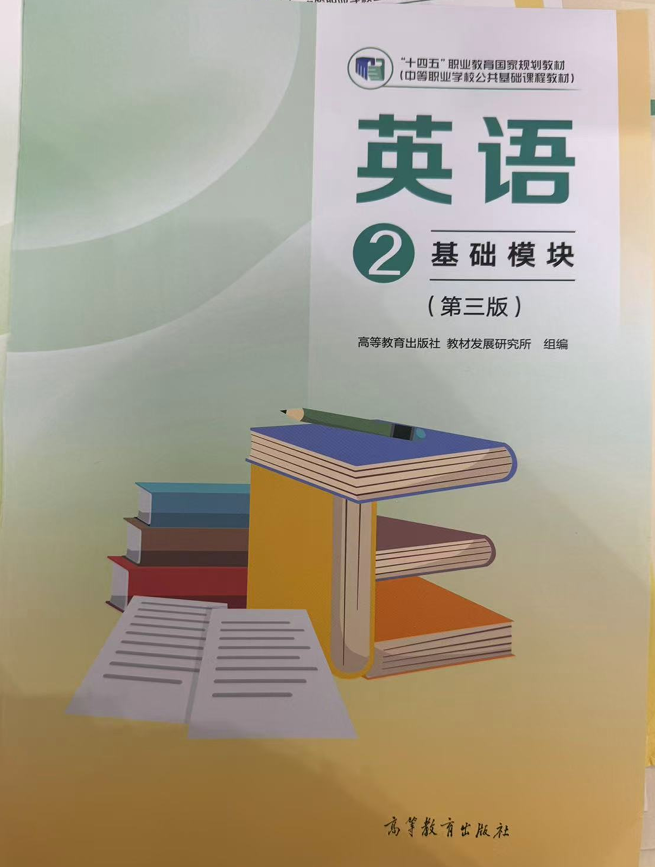
Unit 6 Craftsmanship(B卷·能力提升)《英语 基础模块2》(高教版第三版)单元过关卷(原卷版+解析版)
2026-04-02
|
2份
|
42页
|
51人阅读
|
0人下载
内容正文:
编写说明:本套试卷紧扣《英语 基础模块2》(高教版第三版)教材,以教材单元为基准精准覆盖核心考点。
每个单元设置AB卷,A卷为基础巩固卷,侧重基础考点训练,帮助学生扎实掌握知识要点;B卷为能力提升卷,注重知识整合与全面检测,引导学生构建知识网络。全书设计4份综合测试卷,模拟实战情境,聚焦解题能力突破,全面提升应试能力与知识应用水平。
《英语 基础模块2》(高教版第三版)《单元过关卷》
Unit 6 Craftsmanship
B卷·能力提升
考试时间:120分钟 满分:150分
班级 姓名 学号 成绩
第一部分:单项选择题(共25小题;每小题1分,满分25分)
从A、B、C、D四个选项中,选出可以填入空白处的最佳选项。
1.Many tourists come here every year because the old town is worth _________.
A.visit B.visiting C.to visit D.visited
2.—What do you think of the book?
—Oh, excellent. It’s worth _______ a second time.
A.to read B.read C.reading D.to be reading
3.—Jessica is not careful with her schoolwork. Could you help her?
—No problem! I think she _________ to think twice before starting.
A.should be told B.should tell C.can tell D.must tell
4.Whoever smokes in the gas station must ________. It’s too dangerous.
A.punish B.punished C.be punishing D.be punished
5.A lot of new roads and public facilities _________ in our city in the past five years to make our life more convenient.
A.are built B.were built C.have been built D.built
6.—Traditional Chinese medical books have been ________ into many languages over the past few years.
—It’s a good way to spread Chinese culture.
A.found B.translated C.hidden D.linked
7.The goods ________ when we arrived at the airport.
A.were just unloading B.had just unloaded
C.were just being unloaded D.were just been unloaded
8.-Mike, did you see Mr. Chapman in the office just now?
-Yes, he ________, and he looked a little bit nervous.
A.had interviewed B.was interviewed
C.was being interviewed D.is being interviewing
9.Because of the heavy rain, the performance on the playground would______.
A.be cancelled B.be held C.cancel D.hold
10.—The young scientist’s research ______ by several universities last year.
—That’s why he won the national prize.
A.supports B.supported C.is supported D.was supported
11.In order to solve the problem quickly and efficiently, the students ________ into four groups just now.
A.divided B.are divided C.were divided D.divide
12.Xinjiang is the largest cotton-producing area in China. About 90% of China’s cotton ________ there.
A.produces B.is producing C.is produced D.produced
13._______ the story _______ first?
A.Is; create B.Is; created C.Does; create D.Are; created
14.We all know the Anti-Japanese War ________ in 1937, and ______ for eight years.
A.was broken out; was lasted B.was broken out; lasted
C.broke out; was lasted D.broke out; lasted
15.It’s reported that another big shopping center ________ here next year.
A.will open B.opened C.opens D.is open
16.Sorry I’m late, Tony, but the bus ________, and there were no taxis.
A.broke down B.was broken down
C.has broken down D.has been broken down
17.The old man and the children ________ politely.
A.must speak to B.must be spoken to C.must be spoken D.be spoken
18.The express driver says the package ________ tomorrow, but he isn’t sure because the ________ service is heavily affected by the bad weather.
A.may be delivered; delivery B.maybe delivered; deliver
C.may be delivered; deliver D.maybe delivered; delivery
19.—Dad, could you promise me that I can _______ TV for a while?
—Sure. But as soon as your homework ________, you can do that.
A.watch; finishes B.watch; will be finished
C.watch; is finished D.to watch; will finish
20.The little boy _________ by his mother.
A.is taken care B.is taken care of C.takes care D.takes care of
能省21.This kind of T-shirt is very popular this year. It ________ well and ________ out in many stores.
A.sells; sells B.is sold; is sold C.sells; is sold D.is sold; sells
22.—Have you finished your work ________?
—Not yet. My work ________ if I ________ ten more minutes.
A.already; will be finished; give B.already; will finish; give
C.yet; will finish; am given D.yet; will be finished; am given
23.—______ the meeting ______ by Mr. Li tomorrow?
—Yes. He also wants us ______ some notes during the meeting.
A.Will; be held; to take
B.Is; held; to take
C.Will; be held; taking
D.Is; held; taking
24.—Peter got seriously ________ in the car accident last week.
—Yes, he did. And he is ________ in the hospital now.
A.hurt; being taken good care
B.was hurt; being taken good care of
C.hurt; being taken good care of
D.was hurt; being taken good care
25.—How do you like the film The Battle at Lake Changjin.
—________. I can’t think too highly of it.
A.It all depends B.It’s really wonderful
C.No one knows for certain D.It is not my cup of tea
第二部分:完形填空(共20小题;每小题1.5分,满分30分)
阅读下面短文,掌握其大意,然后从26-45各题所给的A、B、C、D四个选项中,选出最佳选项。
More than 70 years ago, a young man traveled far away to take an entrance examination 26 a famous music school. During the examination, he 27 his best, 28 the examiner didn’t enroll (录取) him.
The young man had no money, so he could only make a 29 by playing the 30 on the street. He played so well 31 a lot of people stopped to listen and put 32 into his violin case.
A hoodlum (流氓) dropped some money at the young man’s feet. The young man bent down to 33 the money, then handed it to the 34 and said, “Sir, your money dropped on the ground.”
The hoodlum 35 the money, threw it at the young man’s feet 36 and said, “This money is yours. Take it!”
The young man deeply bowed to him and said, “Sir, thank you for your 37 ! When you 38 your money, I picked it up for you. Now my money is on the ground, may I 39 you to pick it up for me?”
The hoodlum was 40 . Finally he picked up the money, put it into the young man’s violin case and 41 in disgrace (丢脸地).
The examiner, who had been 42 watching the young man among the onlookers decided to give him a second 43 . He brought the young man back to the 44 and eventually enrolled him.
The young man later became a famous 45 .
26.A.at B.to C.for D.with
27.A.tried B.found C.faced D.knew
28.A.and B.but C.or D.since
29.A.difference B.living C.hit D.wish
30.A.violin B.guitar C.piano D.drums
31.A.this B.when C.what D.that
32.A.books B.money C.flowers D.case
33.A.look up B.pick up C.keep up D.put up
34.A.examiner B.old man C.hoodlum D.young man
35.A.take B.took C.taking D.takes
36.A.once B.yet C.again D.still
37.A.time B.effort C.support D.service
38.A.dropped B.put C.brought D.got
39.A.help B.trouble C.allow D.tell
40.A.angry B.surprised C.happy D.rude
41.A.left B.sang C.laughed D.played
42.A.quickly B.normally C.correctly D.quietly
43.A.choice B.way C.chance D.call
44.A.street B.store C.house D.school
45.A.player B.dancer C.musician D.writer
三、阅读理解(共25小题;每小题2分,满分50分)
阅读下列短文,从每题所给的A、B、C、D四个选项中,选出最佳选项,并在答题卡上将该项涂黑。
A
As the largest art museum in the western United States, LACMA (the Los Angeles County Museum of Art) welcomes nearly a million visitors every year. It offers plenty of docent-led (讲解员带领的) tour choices to groups and each tour lasts for about 50 minutes. Visitors can also browse famous paintings, sculptures and photos in the museum. But it’s closed on Wednesdays, Thanksgiving Day and Christmas Day.
Family Tours: Enjoy and talk about art at Andell Family Sundays. This weekly family event provides activities based on special exhibitions and LACMA’s collection.
School Tours: School tours are led by LACMA’s trained art docents, who lead students to actively discuss the works of art in LACMA.
Visitors with Special Needs: LACMA not only provides learning experiences for kids, it also provides tours for visitors with special needs. And it offers wheelchairs for free.
Ticket information: Members of the museum and children under 18 are free to enter.
People aged 65 and above
$14
Adults
$18
Students aged 18 and above
$14
Opening hours:
Monday, Tuesday, Thursday
11 am—5 pm
Friday
11 am—8 pm
Saturday, Sunday
10 am—7 pm
Group dining: Ray’s and Stark Bar has been regarded as “one of the best museum restaurants around the world”.
Monday, Tuesday, Thursday
11:30 am—8 pm
Friday
11:30 am—10 pm
Saturday, Sunday
10 am—8 pm
46.What does the underlined word “browse” probably mean?
A.Look at. B.Deal with. C.Put away. D.Give up.
47.Which of the following is TRUE about LACMA’s opening hours?
A.It opens at 9 am on Fridays. B.It closes at 4 pm on Thursdays.
C.It is open for 9 hours on Sundays. D.It has the longest opening hours on Tuesdays.
48.How much should a 70-year-old man and a 19-year-old college student pay for tickets?
A.$14 B.$18. C.$28. D.$32.
49.What do we know about Ray’s and Stark Bar?
A.It’s the name of a museum. B.It’s a self-service restaurant.
C.It opens at 10 am on Monday. D.It’s open for ten hours on weekends.
50.What does the passage mainly tell us?
A.The history of LACMA. B.Basic information about LACMA.
C.The art collections in LACMA. D.How to book tickets for LACMA.
B
In China, paper cutting is more than just a hobby; it is a symbol of luck and happiness. During the Spring Festival, people paste red paper cuttings on windows and doors to wish for a better year.
Li Xia, a 35-year-old teacher from Xi’an, has loved paper cutting since she was a child. “When I hold the scissors and red paper, I forget all my worries,” she says. “It helps me find inner peace. Creating a complex pattern takes patience, but seeing the final work gives me great joy.”
Unlike modern digital art, paper cutting is done entirely by hand. “It’s not about speed or making money,” says Wang Lei, a master of this art. “It’s about the connection between your heart and your hands. Every cut carries emotion.” He believes that even in the age of computers, this traditional skill is valuable because it teaches us to slow down and focus.
For some young people, paper cutting is also a form of exercise for the brain. “It requires great concentration,” says a college student. “After cutting for an hour, I feel relaxed, just like after doing yoga.”
Today, paper cutting is not only popular in China but also known around the world. It shows the beauty of Chinese culture and brings peace to modern lives.
51.What do people usually do with paper cuttings during the Spring Festival?
A.Give them as gifts to friends.
B.Paste them on windows and doors.
C.Sell them to make money.
D.Use them to clean the house.
52.Why does Li Xia love paper cutting?
A.Because it makes her famous.
B.Because it helps her earn extra money.
C.Because it helps her forget worries and find peace.
D.Because it is easier than digital art.
53.What does Wang Lei think is the most important part of paper cutting?
A.The speed of cutting.
B.The price of the paper.
C.The connection between heart and hands.
D.The use of modern tools.
54.How does the college student feel after doing paper cutting?
A.Tired and bored.
B.Relaxed and focused.
C.Nervous and stressed.
D.Hungry and thirsty.
55.What is the main purpose of the passage?
A.To teach readers how to cut paper.
B.To show the history of the Spring Festival.
C.To introduce the value and charm of paper cutting.
D.To compare paper cutting with digital art.
C
Do you know where the colors of your clothes come from? The answer is dye (染料). The clothes we wear these days are mainly dyed by machine. But in the past, people did this by hand.
Tie-dye (扎染) is an old way of dyeing in China. It is a kind of art with a history of more than 1,000 years. The dyes often come from plants. People use the natural plants to make the colors. They put the clothes in the colors and take them out after some time. Then they put the clothes in the sun. After that, the clothes become beautiful.
Nowadays tie-dye is very popular even among many young people. They like to wear tie-dye clothes. And many foreign friends like to buy tie-dye clothes as souvenirs. In 2006, the tie-dye skills were added to China’s national intangible cultural heritage (非物质文化遗产) list.
Anning in Yunnan is well-known for tie-dye. Yang Chen, 52, is the inheritor (继承人) of tie-dye. He learned the skills from his mother in the 1980s. And he has passed it down to his daughter. He thought people should try their best to make tie-dye skills better. Yang Chen has learned all the old skills of tie-dye. At the same time, he also tries to make some creative designs. Yang likes telling people about the history of tie-dye in Chinese culture. And he thinks that the old skills are very important. “The old skills are the roots of our culture,” he says. So now he teaches tie-dye skills in schools and other places. He wants more young people to learn about the old skills, and he also hopes that one day tie-dye will be part of fashion everywhere. He thinks it’s important to keep this traditional Chinese art alive. Some might worry that tie-dye will be replaced by machinery dyeing. But Yang is confident. “Machines can’t do what we do,” he says. “They can’t replace our creative hands.”
56.How does the writer start the text?
A.By giving a fact. B.By telling a story.
C.By giving an example. D.By asking a question.
57.What are the dyes for tie-dye made from?
A.Silk . B.Animals. C.Plants. D.Sunshine.
58.Who is Yang Chen?
A.A famous fashion designer. B.An inventor of tie-dye skills.
C.The inheritor of tie-dye skills. D.An expert in machinery dyeing.
59.Why does Yang Chen teach tie-dye skills in schools and other places?
A.To make money from teaching. B.To keep the traditional art alive.
C.To compete with machinery dyeing. D.To show off his creative designs.
60.What is the main idea of the text?
A.The development plan of tie-dye in the future.
B.The history and popularity of tie-dye in China.
C.The introduction of traditional dyeing methods.
D.The importance of learning traditional art forms.
D
As an old saying in Xunpu, Fujian province goes, “Put flowers in your hair in this life and you’ll also be pretty in the afterlife.” In the past, all the women in the small fishing village had long hair, and then they put colorful flower headdresses (花饰) in their hair. The headdress is known as zanhua. In 2008, Zanhua was listed as a national intangible cultural heritage (国家级非物质文化遗产).
When he was a child, Huang Rongbing would watch his mother combed (梳) her long and thick hair. After forming a bun (圆髻) at the back of her head, she would put different kinds of flowers in her hair, the 34-year-old man recalled.
The headdress influenced Huang’s job choice. In 2016, he and his older sister opened a hair shop. There, tourists can get their hair styled in the Xunpu tradition and have their photos taken. “We have been fully booked and now there are over 200 businesses offering services to dress tourists with a zanhua,” said Huang.
Recently, the increase in tourist visits has made Huang happy. That is because it not only keeps the business busy but also helps spread the history and culture behind zanhua headdresses.
After going through the full zanhua experience, Hu Tingting, one of Huang’s customers, even brought zanhua culture to Paris last year. She dressed in traditional Chinese clothes with a dried flower in her hair. And under the Eiffel Tower, she took many photos and videos proudly and happily.
Huang said the women of Xunpu are hard-working, warm-hearted and brave. They are famous for catching the best seafood. “When they put a zanhua on their heads, they express their wish for happiness. The flowers are seen as a symbol of hope,” he added.
61.What does the Xunpu old saying mean?
A.Flowers are the most valuable things.
B.Wearing flowers can keep people healthy.
C.Only women in Xunpu wear flower headdresses.
D.Wearing flowers is a wish for beauty in the afterlife.
62.What can we infer from Huang Rongbing’s memory of his mother combing hair?
A.His mother disliked wearing zanhua.
B.Zanhua culture was a part of daily life in his family.
C.He learned to comb hair from his mother at a young age.
D.The women in Xunpu only wore zanhua for special days.
63.Why did Hu take photos with Zanhua in Paris?
A.To learn French. B.To record the trip.
C.To spread the culture. D.To show her clothes.
64.Which of the following statements is TRUE according to the passage?
A.Huang Rongbing runs the zanhua salon alone.
B.Xunpu women are famous for making zanhua.
C.Only young women in Xunpu wear zanhua headdresses.
D.Zanhua is regarded as a symbol of hope by Xunpu women.
65.Which sentence best expresses the main idea of the passage?
A.Zanhua is a national intangible cultural heritage in China.
B.Huang Rongbing runs a hair shop to spread zanhua culture.
C.Zanhua culture of Xunpu is being passed on and spread widely.
D.Tourists like to experience zanhua styling when visiting Xunpu.
E
On Xiaohongshu, a lifestyle-sharing platform (平台), over 550,000 posts are tagged (加上标签) with “intangible cultural heritage (非物质文化遗产)”, as young people express their love for traditional crafts.
“In the past two years, young people have shown increasing interest in intangible cultural heritage,” said Zhang Dingjuan, 28, who often shares her bamboo weaving (编织) creations on the platform.
Zhang comes from Sichuan province, known for its rich bamboo resource. She explained that bamboo weaving in the area dates back to the Neolithic era (新石器时代) when it was mainly used for making practical tools. It has since developed into a complex (复杂的) art form.
After graduating from Chengdu University in 2019, Zhang returned to her hometown to work as a bamboo crafts designer. As her interest in the art grew, she traveled to Daoming county in Chengdu, known as the “hometown of bamboo weaving”. There she learned after as killed master.
With a background in product design, Zhang loves trying new ideas in her work. She added a modern touch to traditional bamboo weaving by using new colors and patterns.
One of her excellent pieces, for example, adds blue to the bamboo, which makes the patterns appear more lifelike. Zhang also remembers working with an art student who suggested making metal look like bamboo. This led to new creative ideas, as traditional bamboo weavers have always used bamboo, but thinking outside the box offers more possibilities.
Today, Zhang works with different designers and brands to create different bamboo-woven products. One unexpected partnership was with a keyboard brand (品牌), which invited her to design for their panda-themed keyboard. Zhang created a fan with panda designs, with layered (分层的) colors that produced a surprising effect (效果), mixing a classic look with a modern tech feel." Traditional crafts may have gone away, but now they’re being revived (复活) with new energy and becoming part of our modern lives,” she said.
66.What does the number “over 550,000” in the first paragraph mainly show?
A.The long history of bamboo weaving in China.
B.The great popularity of intangible cultural heritage among young people.
C.The high profits (利润) of selling traditional crafts on social media.
D.The number of bamboo weaving artists in Sichuan province.
67.According to the passage, how has bamboo weaving changed over time?
A.It has become less popular among young people.
B.It has remained the same as in the Neolithic era.
C.It has developed from practical tools into a complex (复杂的) art form.
D.It is now only used for making panda-themed products.
68.What can be inferred from Zhang's partnership with a keyboard brand?
A.Traditional crafts are losing their original (原始的) value.
B.Bamboo weaving is mainly used for modern technology.
C.Young designers prefer to work with international brands.
D.Traditional crafts can be creatively mixed with modern products.
69.What does Zhang Dingjuan think about the future of traditional crafts?
A.Worried that they might disappear.
B.Hopeful that they can be revived (复兴) with new energy.
C.Unsure about their role in modern life.
D.Certain that they should remain unchanged.
70.What’s the structure of the passage?
A.①/②③④/⑤⑥/⑦ B.①②/③④/⑤⑥/⑦
C.①/②③/④⑤⑥/⑦ D.①②③/④⑤/⑥/⑦
第四部分:情景对话(共10小题;每小题2分,满分20分)
阅读A段对话,从对话后所给五个选项中选出可以填入空白处的最佳选项,并在答题卡上将该项涂黑。阅读B段短文,从对话后的七个选项中选出可以填入空白处的最佳选项,并在答题卡上将该项涂黑,选项中有两项为多余选项。
A
A: Hi! Welcome to Chengdu Art Museum. Do you have any questions, please?
B: 71
A: Five. Different works are on show on different floors. What’s your favorite art form?
B: 72 For example, the shadow puppetry play (皮影戏) tells us some historical stories.
A: Yeah. You can find them on the fifth floor.
B: 73 Are there any rules I should follow?
A: Sure. 74
B: I won’t. I know it’s not good for these works.
A: 75
B: Of course I will not. I don’t smoke at all.
A: OK. Let’s go.
A.Do remember not to smoke here.
B.I like Chinese traditional art best.
C.I can’t wait to see these work pieces.
D.How many floors are there in this museum?
E.You could use your camera but don’t use it with flash lights.
B
Li Yin: Hey, Kitty. Guess what? A gift from Xi’an.
Kitty: Wow! 76
Li Yin: It’s a shadow puppet (皮影). It is used in the shadow puppet play.
Kitty: Cool! I’ve never heard of it before. 77
Li Yin: Sure. It is an ancient Chinese art different from common plays.
Kitty: What’s the difference?
Li Yin: The performers (表演者) stand behind a white screen with lights behind it.
Kitty: Very special. 78
Li Yin: They move the puppets around and do the voices of the characters.
Kitty: It must be interesting. Can I watch it?
Li Yin: 79 There will be one next Friday.
Kitty: Where is it on?
Li Yin: At the Grand Theater. 80
Kitty: Great! I can’t wait.
A.What’s it?
B.Yes, you’re so lucky.
C.Let’s go together then.
D.Thanks for your advice.
E.How do the performers act?
F.Could you introduce it to me?
G.I want to make one by myself.
第五部分:书面表达(满分25分)
81.了解中国传统文化艺术之一,丝绒花,请以“My favorite Chinese traditional or folk art”写一篇英语作文谈谈你对中国传统文化艺术的看法。
作文必须包括以下几个内容:
1. How many Chinese traditional or folk art forms do you know? What are they?
2. Which one do you like best? Why?
3. How will you treat China's rich traditional arts?
要求:
1.70词左右。
2.可能用到的词汇:valuable(有价值的),cherish(珍惜),honor(感到荣幸),inherit(继承),spread(传播),culture(文化)
3.文中不得出现考生姓名、班名等个人信息,否则不予评分。
My favorite Chinese traditional or folk art
____________________________________________________________________________________________________________________________________________________________________________________________________________________________________________________________________________________________________________________________________________________________________________________________________________________________________________________________________________________________________________________________________________________________________________________________________________
学科网(北京)股份有限公司 (
1
)原创精品资源学科网独家享有版权,侵权必究!
学科网(北京)股份有限公司
$
编写说明:本套试卷紧扣《英语 基础模块2》(高教版第三版)教材,以教材单元为基准精准覆盖核心考点。
每个单元设置AB卷,A卷为基础巩固卷,侧重基础考点训练,帮助学生扎实掌握知识要点;B卷为能力提升卷,注重知识整合与全面检测,引导学生构建知识网络。全书设计4份综合测试卷,模拟实战情境,聚焦解题能力突破,全面提升应试能力与知识应用水平。
《英语 基础模块2》(高教版第三版)《单元过关卷》
Unit 6 Craftsmanship
B卷·能力提升
考试时间:120分钟 满分:150分
班级 姓名 学号 成绩
第一部分:单项选择题(共25小题;每小题1分,满分25分)
从A、B、C、D四个选项中,选出可以填入空白处的最佳选项。
1.Many tourists come here every year because the old town is worth _________.
A.visit B.visiting C.to visit D.visited
【答案】B
【详解】句意:许多游客每年都来这里,因为这个古镇值得参观。
固定短语be worth doing sth.意为“值得做某事”,worth后接动名词形式表示被动意义。应填visiting。
2.—What do you think of the book?
—Oh, excellent. It’s worth _______ a second time.
A.to read B.read C.reading D.to be reading
【答案】C
【详解】句意:——你觉得这本书怎么样?——哦,太棒了,值得再读一遍。
be worth doing sth.是固定搭配,表示“值得做某事”,此处主动形式表被动含义,应填reading。
3.—Jessica is not careful with her schoolwork. Could you help her?
—No problem! I think she _________ to think twice before starting.
A.should be told B.should tell C.can tell D.must tell
【答案】A
【详解】——杰西卡对她的功课不上心。你能帮帮她吗? ——没问题!我觉得应该告诉她在开始之前三思。
本句表达“她应该被告诉要三思”,主语she和tell之间是被动关系,表示“被告诉”,要用被动语态;should be told是“情态动词should+be+过去分词told”,意为“应该被告诉”,其他选项should tell/can tell/must tell均为主动形式,不符合语境。
4.Whoever smokes in the gas station must ________. It’s too dangerous.
A.punish B.punished C.be punishing D.be punished
【答案】D
【详解】句意:任何在加油站吸烟的人都必须被惩罚。太危险了。
主语“Whoever smokes in the gas station”是动作“punish”的承受者,需用被动语态,情态动词must后接be done结构。应填be punished。
5.A lot of new roads and public facilities _________ in our city in the past five years to make our life more convenient.
A.are built B.were built C.have been built D.built
【答案】C
【详解】句意:在过去五年里,为了使我们的生活更方便,我们城市建起了许多新的道路和公共设施。
根据时间状语“in the past five years”可知,句子应用现在完成时;主语“A lot of new roads and public facilities”是动作“build”的承受者,应用被动语态。现在完成时的被动语态结构为“have/has been + 过去分词”,主语是复数,助动词用have。故选C。
6.—Traditional Chinese medical books have been ________ into many languages over the past few years.
—It’s a good way to spread Chinese culture.
A.found B.translated C.hidden D.linked
【答案】B
【详解】句意:——在过去的几年里,传统中医书籍已经被翻译成多种语言。——这是传播中国文化的好方法。
found发现;translated翻译;hidden隐藏;linked连接。根据“into many languages”以及答语“spread Chinese culture”可知,书籍是被翻译成多种语言以便传播文化,应填translated。
7.The goods ________ when we arrived at the airport.
A.were just unloading B.had just unloaded
C.were just being unloaded D.were just been unloaded
【答案】C
【详解】句意:当我们到达机场时,货物正在卸货。
考查被动语态。主语The goods和谓语unload之间是被动关系,排除AB;根据“when we arrived at the airport”可知是到达机场时,货物正在被卸,用过去进行时的被动语态was/were being done。故选C。
8.-Mike, did you see Mr. Chapman in the office just now?
-Yes, he ________, and he looked a little bit nervous.
A.had interviewed B.was interviewed
C.was being interviewed D.is being interviewing
【答案】C
【详解】句意:——迈克,你刚才看到Mr. Chapman在办公室吗?——是的,他正在接受采访,他看起来有点紧张。
考查时态。根据“did you see Mr. Chapman in the office just now”可知,此处表示某人刚才正在做某事,因此用过去进行时,句中主语he和谓语interview之间是被动关系,所以此处用过去进行时的被动,故选C。
9.Because of the heavy rain, the performance on the playground would______.
A.be cancelled B.be held C.cancel D.hold
【答案】A
【详解】句意:因为大雨,操场上的演出将被取消。
本题考查动词及语态。A.cancel意为“取消”;B.hold意为“举行”。根据“Because of the heavy rain”可知应用cancel 一词。performance与cancel是被动关系,所以应该用被动语态,过去将来时的被动语态为would+be done,故答案为A。
10.—The young scientist’s research ______ by several universities last year.
—That’s why he won the national prize.
A.supports B.supported C.is supported D.was supported
【答案】D
【详解】句意:——这位年轻科学家的研究去年得到了好几所大学的支持。——这就是他获得国家奖项的原因。
主语The young scientist’s research和support之间是被动关系,即 “研究被支持”,因此需要使用被动语态,结构为be+过去分词。句中时间状语last year(去年)明确表示动作发生在过去,因此需要使用一般过去时的被动语态was supported。
11.In order to solve the problem quickly and efficiently, the students ________ into four groups just now.
A.divided B.are divided C.were divided D.divide
【答案】C
【详解】句意:为了快速高效地解决问题,学生们刚才被分成了四个小组。
divided(主动语态,过去式);are divided(被动语态,一般现在时);were divided(被动语态,一般过去时);divide(主动语态,一般现在时)。根据主语the students和动词divide的关系,学生是“被分组”,需要用被动语态;再根据时间状语just now,表示过去的时间,要用一般过去时的被动语态,主语students是复数,be动词用were,应填were divided。
12.Xinjiang is the largest cotton-producing area in China. About 90% of China’s cotton ________ there.
A.produces B.is producing C.is produced D.produced
【答案】C
【详解】句意:新疆是中国最大的棉花产区。中国约90%的棉花在那里生产。
根据语境可知,棉花是“被生产”,应用被动语态,且句子描述一般事实,用一般现在时,应填is produced。
13._______ the story _______ first?
A.Is; create B.Is; created C.Does; create D.Are; created
【答案】B
【详解】句意:这个故事是先创作出来的吗?
主语“the story”和动词“create”是被动关系,指“故事是被创作出来的”,用被动语态“be done”,主语是名词单数,第一空应是be动词“Is”,第二空应是过去分词created。应填Is; created。
14.We all know the Anti-Japanese War ________ in 1937, and ______ for eight years.
A.was broken out; was lasted B.was broken out; lasted
C.broke out; was lasted D.broke out; lasted
【答案】D
【详解】句意:我们都知道抗日战争于1937年爆发,并持续了八年。
考查动词的语态。was broken out表述错误;broke out爆发,不及物动词短语,无被动语态;was lasted表述错误;lasted持续,不及物动词短语,无被动语态。根据“in 1937”可知,该句为一般过去时,谓语用动词的过去式,且“break out”和“last”均为不及物动词短语,只能用主动语态,不能用被动语态。故选D。
15.It’s reported that another big shopping center ________ here next year.
A.will open B.opened C.opens D.is open
【答案】A
【详解】句意:报道,另一个大型购物中心明年将在这里开业。
考查时态和不及物动词。根据“next year”可知,空处指“大型购物中心将开业”,需一般将来时,其结构为will do,这里open为不及物动词,无宾语,不用被动语态;D项open为形容词,B、C项时态错误。故选A。
16.Sorry I’m late, Tony, but the bus ________, and there were no taxis.
A.broke down B.was broken down
C.has broken down D.has been broken down
【答案】A
【详解】句意:对不起,我迟到了,Tony,但是公交车抛锚了,而且没有出租车。
考查时态和语态。break down表示“抛锚”或“故障”,是不及物动词短语,不能用于被动语态。根据“there were no taxis”可知,事件发生在过去,需用一般过去时。故选A。
17.The old man and the children ________ politely.
A.must speak to B.must be spoken to C.must be spoken D.be spoken
【答案】B
【详解】句意:必须礼貌地和老人及孩子们说话。
考查被动语态。根据句意,主语“老人和孩子们”是“被交谈”的对象,需用被动语态,且“与某人交谈”应用“speak to sb.”的被动形式“be spoken to”,不能省略to。故选B。
18.The express driver says the package ________ tomorrow, but he isn’t sure because the ________ service is heavily affected by the bad weather.
A.may be delivered; delivery B.maybe delivered; deliver
C.may be delivered; deliver D.maybe delivered; delivery
【答案】A
【详解】句意:快递司机说明天包裹可能被送达,但他不确定,因为递送服务深受恶劣天气影响。
考查词汇和短语辨析。may be可能,在句中作谓语动词;maybe可能,副词;delivery投递,配送,名词;deliver投递,配送,动词。根据“The express driver says the package...tomorrow,”可知,says后为省略引导词that的宾语从句,从句缺谓语动词,结合选项可知,故第一个空表示“可能被送达”,需用情态动词may的被动语态may be delivered,故排除选项B和D;根据“because the...service is heavily affected by the bad weather.”可知,第二个空表示“递送服务”,需用名词delivery修饰名词service。故选A。
19.—Dad, could you promise me that I can _______ TV for a while?
—Sure. But as soon as your homework ________, you can do that.
A.watch; finishes B.watch; will be finished
C.watch; is finished D.to watch; will finish
【答案】C
【详解】句意:——爸爸,你能答应我让我看一会儿电视吗?——当然。但你的作业一完成,你就可以看。
考查非谓语动词和状语从句时态。第一空:can后跟动词原形,因此用watch。第二空:as soon as引导的时间状语从句中,主句用一般将来时(can do that),从句用一般现在时表示将来;且从句主语your homework与finish之间是被动关系,需用被动语态is finished。故选C。
20.The little boy _________ by his mother.
A.is taken care B.is taken care of C.takes care D.takes care of
【答案】B
【详解】句意:这个小男孩由他的母亲照顾。
考查被动语态及固定短语“take care of”的用法。is taken care(缺少介词,不完整);is taken care of(被照顾);takes care(主动形式,缺少介词);takes care of(主动形式)。本句主语“The little boy”与“照顾”之间是被动关系,需用被动语态,且“take care of”是固定短语,被动语态中不能省略介词“of”,故选B。
21.This kind of T-shirt is very popular this year. It ________ well and ________ out in many stores.
A.sells; sells B.is sold; is sold C.sells; is sold D.is sold; sells
【答案】C
【详解】句意:这种T恤今年很流行。它卖得很好,并且在许多商店都卖光了。
sells卖,三单形式;is sold被卖出。第一空,sell well是固定搭配,用主动形式表被动含义;第二空,sell out在此句中主语“It”是动作承受者,需用被动语态“is sold”。应填sells;is sold。
22.—Have you finished your work ________?
—Not yet. My work ________ if I ________ ten more minutes.
A.already; will be finished; give B.already; will finish; give
C.yet; will finish; am given D.yet; will be finished; am given
【答案】D
【详解】句意:——你已经完成你的工作了吗?——还没有。如果再给我十分钟,我的工作就能完成。
考查时态与语态。第一空:already已经,常用于肯定句;yet已经,常用于疑问句或否定句。问句为现在完成时的疑问句,应用yet。第二空:will be finished将被完成,一般将来时的被动语态;will finish将完成,主动语态。主语“My work”是动作“finish”的承受者,应用被动语态。第三空:give给,动词原形;am given被给,一般现在时的被动语态。if从句主语“I”是动作“give”的承受者,应用被动语态am given。故选D。
23.—______ the meeting ______ by Mr. Li tomorrow?
—Yes. He also wants us ______ some notes during the meeting.
A.Will; be held; to take
B.Is; held; to take
C.Will; be held; taking
D.Is; held; taking
【答案】A
【详解】句意:——明天李先生会主持会议吗?——是的。他还希望我们在会议期间做些笔记。
考查动词的时态、语态和非谓语动词。根据时间状语tomorrow可知,第一句需用一般将来时,主语the meeting与动词hold是被动关系(会议被主持),且将来时被动语态结构为“will be + 过去分词”,因此问句的空格用“Will; be held”;“want sb. to do sth.”是固定搭配,表示“想要某人做某事”,故答句的空格用“to take”。故选A。
24.—Peter got seriously ________ in the car accident last week.
—Yes, he did. And he is ________ in the hospital now.
A.hurt; being taken good care
B.was hurt; being taken good care of
C.hurt; being taken good care of
D.was hurt; being taken good care
【答案】C
【详解】句意:——彼得在上周的车祸中受了重伤。——是的。他现在在医院得到了很好的照顾。
考查词义辨析以及被动语态。get hurt“受伤”,固定用法,排除B;根据“now”可知此处用现在进行时,主语he和谓语take good care of之间是被动关系,故用现在进行时的被动语态am/is/are being taken good care of。故选C。
25.—How do you like the film The Battle at Lake Changjin.
—________. I can’t think too highly of it.
A.It all depends B.It’s really wonderful
C.No one knows for certain D.It is not my cup of tea
【答案】B
【详解】句意:——你觉得电影《长津湖》怎么样?——真是太精彩了。我对它评价再高也不为过。
考查情景交际。It all depends看情况再说;It’s really wonderful真是好极了;No one knows for certain谁也不敢肯定;It is not my cup of tea这不是我所喜欢的。根据答语的后一句“I can’t think too highly of it.”可知,我对电影的评价非常高,表明我非常喜欢这部电影,因此空格处应是赞美之词。故选B。
第二部分:完形填空(共20小题;每小题1.5分,满分30分)
阅读下面短文,掌握其大意,然后从26-45各题所给的A、B、C、D四个选项中,选出最佳选项。
More than 70 years ago, a young man traveled far away to take an entrance examination 26 a famous music school. During the examination, he 27 his best, 28 the examiner didn’t enroll (录取) him.
The young man had no money, so he could only make a 29 by playing the 30 on the street. He played so well 31 a lot of people stopped to listen and put 32 into his violin case.
A hoodlum (流氓) dropped some money at the young man’s feet. The young man bent down to 33 the money, then handed it to the 34 and said, “Sir, your money dropped on the ground.”
The hoodlum 35 the money, threw it at the young man’s feet 36 and said, “This money is yours. Take it!”
The young man deeply bowed to him and said, “Sir, thank you for your 37 ! When you 38 your money, I picked it up for you. Now my money is on the ground, may I 39 you to pick it up for me?”
The hoodlum was 40 . Finally he picked up the money, put it into the young man’s violin case and 41 in disgrace (丢脸地).
The examiner, who had been 42 watching the young man among the onlookers decided to give him a second 43 . He brought the young man back to the 44 and eventually enrolled him.
The young man later became a famous 45 .
26.A.at B.to C.for D.with
27.A.tried B.found C.faced D.knew
28.A.and B.but C.or D.since
29.A.difference B.living C.hit D.wish
30.A.violin B.guitar C.piano D.drums
31.A.this B.when C.what D.that
32.A.books B.money C.flowers D.case
33.A.look up B.pick up C.keep up D.put up
34.A.examiner B.old man C.hoodlum D.young man
35.A.take B.took C.taking D.takes
36.A.once B.yet C.again D.still
37.A.time B.effort C.support D.service
38.A.dropped B.put C.brought D.got
39.A.help B.trouble C.allow D.tell
40.A.angry B.surprised C.happy D.rude
41.A.left B.sang C.laughed D.played
42.A.quickly B.normally C.correctly D.quietly
43.A.choice B.way C.chance D.call
44.A.street B.store C.house D.school
45.A.player B.dancer C.musician D.writer
【答案】
26.C 27.A 28.B 29.B 30.A 31.D 32.B 33.B 34.C 35.B 36.C 37.C 38.A 39.B 40.B 41.A 42.D 43.C 44.D 45.C
【分析】本文主要讲述一个年轻人没有通过音乐学院的入学考试,只能靠在街上拉小提琴赚钱,有个流氓把钱扔在地上羞辱他,这个年轻人很巧妙地反击他,这被考官看在眼里,最后又给了年轻人一次机会,年轻人多年后成了著名的音乐家。
26.句意:70多年前,一个年轻人远道而来,参加一所著名音乐学校的入学考试。
at在;to朝;for为了;with和。根据“to take an entrance examination ... a famous music school”可知参加入学考试是为了进入一所著名音乐学校学习。故选C。
27.句意:考试时,他尽了最大的努力,但考官没有录取他。
tried尝试;found发现;faced面对;knew知道。try one’s best尽某人最大努力。故选A。
28.句意:考试时,他尽了最大的努力,但考官没有录取他。
and和;but但是;or否则;since自从。“他进了最大的努力”与“考官没有录取他”之间句意出现转折,用but表转折。故选B。
29.句意:这个年轻人没有钱,所以他只能在街上拉小提琴谋生。
difference区别;living生计,谋生;hit命中;wish愿望。根据“The young man had no money”可知没有钱,需要谋生,make a living“谋生”。故选B。
30.句意:这个年轻人没有钱,所以他只能在街上拉小提琴谋生。
violin小提琴;guitar吉他;piano钢琴;drums鼓。根据“his violin case”可知是拉小提琴谋生。故选A。
31.句意:他演奏得非常好,许多人都停下来听,并把钱放进他的小提琴盒里。
this这;when当……时;what什么;that那,或引出从句。so ... that“如此……以至于”,引导结果状语从句。故选D。
32.句意:他演奏得非常好,许多人都停下来听,并把钱放进他的小提琴盒里。
books书;money钱;flowers花;case盒子。根据“The young man had no money”可知拉小提琴是为了谋生,人们应是放钱在盒子里。故选B。
33.句意:年轻人弯下腰去捡钱,然后把钱递给了流氓,说:“先生,你的钱掉在地上了。”
look up查阅;pick up捡起;keep up保持;put up张贴。根据“then handed it to the ...”可知是捡起了钱。故选B。
34.句意:年轻人弯下腰去捡钱,然后把钱递给了流氓,说:“先生,你的钱掉在地上了。”
examiner考官;old man老人;hoodlum流氓;young man年轻人。根据“A hoodlum dropped some money at the young man’s feet.”可知捡起钱要递给流氓。故选C。
35.句意:那个流氓接过钱,又把它扔到年轻人的脚边,说:“这钱是你的。拿着!”
take动词原形;took动词过去式;taking动名词或现在分词;takes动词的第三人称单数形式。根据“threw it at the young man’s feet”可知用一般过去时,谓语用过去式took。故选B。
36.句意:那个流氓接过钱,又把它扔到年轻人的脚边,说:“这钱是你的。拿着!”
once曾经;yet还;again再,又;still仍然。根据“A hoodlum dropped some money at the young man’s feet.”可知此处是再一次扔钱在年轻人脚边。故选C。
37.句意:先生,谢谢您的支持!
time时间;effort努力;support支持;service服务。根据“This money is yours. Take it!”可知流氓给年轻人钱,年轻人要谢谢他的支持。故选C。
38.句意:你的钱掉在地上时,我帮你捡起来。
dropped掉;put放;brought带来;got得到。根据“A hoodlum dropped some money at the young man’s feet.”可知是把钱掉在地上。故选A。
39.句意:现在我的钱在地上,可以麻烦你帮我捡起来吗?
help帮助;trouble麻烦;allow允许;tell告诉。根据“to pick it up for me”可知要麻烦流氓为自己捡钱。故选B。
40.句意:流氓很惊讶。
angry生气的;surprised惊讶的;happy高兴的;rude粗鲁的。根据“Now my money is on the ground, may I ... you to pick it up for me?”可知原本流氓就是把钱扔给年轻人的,年轻人反过来请他把钱捡起来,流氓应该感到惊讶。故选B。
41.句意:最后,他捡起钱,把它放进年轻人的小提琴盒,然后不光彩地离开了。
left离开;sang唱歌;laughed笑;played玩耍。根据“in disgrace”可知觉得丢脸应赶快离开。故选A。
42.句意:一直在旁观者中静静地注视着这位年轻人的主考官决定再给他一次机会。
quickly快地;normally正常地;correctly正确地;quietly安静地。根据“watching the young man among the onlookers”可推出是没有发声静静地关注着年轻人。故选D。
43.句意:一直在旁观者中静静地注视着这位年轻人的主考官决定再给他一次机会。
choice选择;way路;chance机会;call打电话。根据“He brought the young man back to the ... and eventually enrolled him.”可知又给了年轻人一次机会。故选C。
44.句意:他把这个年轻人带回学校,并最终录取了他。
street街道;store商店;house房子;school学校。根据“eventually enrolled him”可知是把年轻人带回了学校。故选D。
45.句意:这个年轻人后来成了一位著名的音乐家。
player运动员;dancer舞蹈家;musician音乐家;writer作家。根据“a famous music school”及靠拉小提琴谋生,可推出会成为音乐家。故选C。
三、阅读理解(共25小题;每小题2分,满分50分)
阅读下列短文,从每题所给的A、B、C、D四个选项中,选出最佳选项,并在答题卡上将该项涂黑。
A
As the largest art museum in the western United States, LACMA (the Los Angeles County Museum of Art) welcomes nearly a million visitors every year. It offers plenty of docent-led (讲解员带领的) tour choices to groups and each tour lasts for about 50 minutes. Visitors can also browse famous paintings, sculptures and photos in the museum. But it’s closed on Wednesdays, Thanksgiving Day and Christmas Day.
Family Tours: Enjoy and talk about art at Andell Family Sundays. This weekly family event provides activities based on special exhibitions and LACMA’s collection.
School Tours: School tours are led by LACMA’s trained art docents, who lead students to actively discuss the works of art in LACMA.
Visitors with Special Needs: LACMA not only provides learning experiences for kids, it also provides tours for visitors with special needs. And it offers wheelchairs for free.
Ticket information: Members of the museum and children under 18 are free to enter.
People aged 65 and above
$14
Adults
$18
Students aged 18 and above
$14
Opening hours:
Monday, Tuesday, Thursday
11 am—5 pm
Friday
11 am—8 pm
Saturday, Sunday
10 am—7 pm
Group dining: Ray’s and Stark Bar has been regarded as “one of the best museum restaurants around the world”.
Monday, Tuesday, Thursday
11:30 am—8 pm
Friday
11:30 am—10 pm
Saturday, Sunday
10 am—8 pm
46.What does the underlined word “browse” probably mean?
A.Look at. B.Deal with. C.Put away. D.Give up.
47.Which of the following is TRUE about LACMA’s opening hours?
A.It opens at 9 am on Fridays. B.It closes at 4 pm on Thursdays.
C.It is open for 9 hours on Sundays. D.It has the longest opening hours on Tuesdays.
48.How much should a 70-year-old man and a 19-year-old college student pay for tickets?
A.$14 B.$18. C.$28. D.$32.
49.What do we know about Ray’s and Stark Bar?
A.It’s the name of a museum. B.It’s a self-service restaurant.
C.It opens at 10 am on Monday. D.It’s open for ten hours on weekends.
50.What does the passage mainly tell us?
A.The history of LACMA. B.Basic information about LACMA.
C.The art collections in LACMA. D.How to book tickets for LACMA.
【答案】46.A 47.C 48.C 49.D 50.B
【导语】本文主要介绍了洛杉矶县艺术博物馆的基本参观信息,包括其地位、导览服务、票价、开放时间及餐饮服务等。
46.词句猜测题。根据“Visitors can also browse famous paintings, sculptures and photos in the museum.”可知,游客可以在博物馆里“browse”名画、雕塑和照片,结合参观博物馆的语境,“browse”应意为“观看、浏览”。故选A。
47.细节理解题。根据“Opening hours”表格“Saturday, Sunday 10 am—7 pm”可知,开放时间为上午10点至下午7点,共9小时,C选项周日开放9小时正确。故选C。
48.推理判断题。根据“Ticket information”表格:70岁老人属于“People aged 65 and above”,票价为$14;19岁大学生属于“Students aged 18 and above”,票价为$14。因此两人总费用为$14+$14=$28。故选C。
49.细节理解题。根据文章对“Ray’s and Stark Bar”的描述“Saturday, Sunday 10 am—8 pm”可知,周末营业时间是10小时,故D选项正确。故选D。
50.主旨大意题。全文从LACMA的地位、导览服务、票价、开放时间、餐厅等多方面介绍了该博物馆的基本情况,旨在提供全面的参观信息。文章未深入涉及历史、具体艺术藏品或订票流程。故选B。
B
In China, paper cutting is more than just a hobby; it is a symbol of luck and happiness. During the Spring Festival, people paste red paper cuttings on windows and doors to wish for a better year.
Li Xia, a 35-year-old teacher from Xi’an, has loved paper cutting since she was a child. “When I hold the scissors and red paper, I forget all my worries,” she says. “It helps me find inner peace. Creating a complex pattern takes patience, but seeing the final work gives me great joy.”
Unlike modern digital art, paper cutting is done entirely by hand. “It’s not about speed or making money,” says Wang Lei, a master of this art. “It’s about the connection between your heart and your hands. Every cut carries emotion.” He believes that even in the age of computers, this traditional skill is valuable because it teaches us to slow down and focus.
For some young people, paper cutting is also a form of exercise for the brain. “It requires great concentration,” says a college student. “After cutting for an hour, I feel relaxed, just like after doing yoga.”
Today, paper cutting is not only popular in China but also known around the world. It shows the beauty of Chinese culture and brings peace to modern lives.
51.What do people usually do with paper cuttings during the Spring Festival?
A.Give them as gifts to friends.
B.Paste them on windows and doors.
C.Sell them to make money.
D.Use them to clean the house.
52.Why does Li Xia love paper cutting?
A.Because it makes her famous.
B.Because it helps her earn extra money.
C.Because it helps her forget worries and find peace.
D.Because it is easier than digital art.
53.What does Wang Lei think is the most important part of paper cutting?
A.The speed of cutting.
B.The price of the paper.
C.The connection between heart and hands.
D.The use of modern tools.
54.How does the college student feel after doing paper cutting?
A.Tired and bored.
B.Relaxed and focused.
C.Nervous and stressed.
D.Hungry and thirsty.
55.What is the main purpose of the passage?
A.To teach readers how to cut paper.
B.To show the history of the Spring Festival.
C.To introduce the value and charm of paper cutting.
D.To compare paper cutting with digital art.
【答案】51.B 52.C 53.C 54.B 55.C
【导语】本文主要讲了中国剪纸艺术的文化象征意义,以及不同人群对剪纸的热爱与感悟,展现其在现代生活中的精神价值。
51.细节理解题。根据“During the Spring Festival, people paste red paper cuttings on windows and doors to wish for a better year.”可知,春节期间人们将剪纸贴在门窗上。故选B。
52.细节理解题。根据李霞的话“When I hold the scissors and red paper, I forget all my worries... It helps me find inner peace.”可知,剪纸让她忘记烦恼、找到内心平静。故选C。
53.细节理解题。根据王磊的话“It’s about the connection between your heart and your hands. Every cut carries emotion.”可知,他认为剪纸最重要的是心与手的联结。故选C。
54.细节理解题。根据大学生的话“After cutting for an hour, I feel relaxed, just like after doing yoga.”可知,剪纸后他感到放松、专注。故选B。
55.主旨大意题。全文从剪纸的文化象征、个人感悟、艺术价值及国际影响等方面,介绍了剪纸的魅力和意义。故选C。
C
Do you know where the colors of your clothes come from? The answer is dye (染料). The clothes we wear these days are mainly dyed by machine. But in the past, people did this by hand.
Tie-dye (扎染) is an old way of dyeing in China. It is a kind of art with a history of more than 1,000 years. The dyes often come from plants. People use the natural plants to make the colors. They put the clothes in the colors and take them out after some time. Then they put the clothes in the sun. After that, the clothes become beautiful.
Nowadays tie-dye is very popular even among many young people. They like to wear tie-dye clothes. And many foreign friends like to buy tie-dye clothes as souvenirs. In 2006, the tie-dye skills were added to China’s national intangible cultural heritage (非物质文化遗产) list.
Anning in Yunnan is well-known for tie-dye. Yang Chen, 52, is the inheritor (继承人) of tie-dye. He learned the skills from his mother in the 1980s. And he has passed it down to his daughter. He thought people should try their best to make tie-dye skills better. Yang Chen has learned all the old skills of tie-dye. At the same time, he also tries to make some creative designs. Yang likes telling people about the history of tie-dye in Chinese culture. And he thinks that the old skills are very important. “The old skills are the roots of our culture,” he says. So now he teaches tie-dye skills in schools and other places. He wants more young people to learn about the old skills, and he also hopes that one day tie-dye will be part of fashion everywhere. He thinks it’s important to keep this traditional Chinese art alive. Some might worry that tie-dye will be replaced by machinery dyeing. But Yang is confident. “Machines can’t do what we do,” he says. “They can’t replace our creative hands.”
56.How does the writer start the text?
A.By giving a fact. B.By telling a story.
C.By giving an example. D.By asking a question.
57.What are the dyes for tie-dye made from?
A.Silk . B.Animals. C.Plants. D.Sunshine.
58.Who is Yang Chen?
A.A famous fashion designer. B.An inventor of tie-dye skills.
C.The inheritor of tie-dye skills. D.An expert in machinery dyeing.
59.Why does Yang Chen teach tie-dye skills in schools and other places?
A.To make money from teaching. B.To keep the traditional art alive.
C.To compete with machinery dyeing. D.To show off his creative designs.
60.What is the main idea of the text?
A.The development plan of tie-dye in the future.
B.The history and popularity of tie-dye in China.
C.The introduction of traditional dyeing methods.
D.The importance of learning traditional art forms.
【答案】56.D 57.C 58.C 59.B 60.B
【导语】本文是一篇说明文。主要介绍中国传统扎染工艺的历史、现状与传承。
56.根据第1段中的“Do you know where the colors of your clothes come from?”可知,作者以设问句开篇,引出“染料”这一话题,进而过渡到对扎染的介绍。
57.根据第2段中的“The dyes often come from plants.”可知,扎染的染料通常取自天然植物。
58.根据第4段中的“Yang Chen, 52, is the inheritor (继承人) of tie-dye.”可知,杨晨是扎染技艺的传承人。
59.根据第4段中的“So now he teaches tie-dye skills in schools and other places. He wants more young people to learn about the old skills, and he also hopes that one day tie-dye will be part of fashion everywhere.”可知,他想让传统艺术延续下去。
60.文章主要介绍了扎染的历史、天然原料、当下流行度,以及传承人杨晨守护技艺的努力,核心是介绍中国扎染的历史与现状。
D
As an old saying in Xunpu, Fujian province goes, “Put flowers in your hair in this life and you’ll also be pretty in the afterlife.” In the past, all the women in the small fishing village had long hair, and then they put colorful flower headdresses (花饰) in their hair. The headdress is known as zanhua. In 2008, Zanhua was listed as a national intangible cultural heritage (国家级非物质文化遗产).
When he was a child, Huang Rongbing would watch his mother combed (梳) her long and thick hair. After forming a bun (圆髻) at the back of her head, she would put different kinds of flowers in her hair, the 34-year-old man recalled.
The headdress influenced Huang’s job choice. In 2016, he and his older sister opened a hair shop. There, tourists can get their hair styled in the Xunpu tradition and have their photos taken. “We have been fully booked and now there are over 200 businesses offering services to dress tourists with a zanhua,” said Huang.
Recently, the increase in tourist visits has made Huang happy. That is because it not only keeps the business busy but also helps spread the history and culture behind zanhua headdresses.
After going through the full zanhua experience, Hu Tingting, one of Huang’s customers, even brought zanhua culture to Paris last year. She dressed in traditional Chinese clothes with a dried flower in her hair. And under the Eiffel Tower, she took many photos and videos proudly and happily.
Huang said the women of Xunpu are hard-working, warm-hearted and brave. They are famous for catching the best seafood. “When they put a zanhua on their heads, they express their wish for happiness. The flowers are seen as a symbol of hope,” he added.
61.What does the Xunpu old saying mean?
A.Flowers are the most valuable things.
B.Wearing flowers can keep people healthy.
C.Only women in Xunpu wear flower headdresses.
D.Wearing flowers is a wish for beauty in the afterlife.
62.What can we infer from Huang Rongbing’s memory of his mother combing hair?
A.His mother disliked wearing zanhua.
B.Zanhua culture was a part of daily life in his family.
C.He learned to comb hair from his mother at a young age.
D.The women in Xunpu only wore zanhua for special days.
63.Why did Hu take photos with Zanhua in Paris?
A.To learn French. B.To record the trip.
C.To spread the culture. D.To show her clothes.
64.Which of the following statements is TRUE according to the passage?
A.Huang Rongbing runs the zanhua salon alone.
B.Xunpu women are famous for making zanhua.
C.Only young women in Xunpu wear zanhua headdresses.
D.Zanhua is regarded as a symbol of hope by Xunpu women.
65.Which sentence best expresses the main idea of the passage?
A.Zanhua is a national intangible cultural heritage in China.
B.Huang Rongbing runs a hair shop to spread zanhua culture.
C.Zanhua culture of Xunpu is being passed on and spread widely.
D.Tourists like to experience zanhua styling when visiting Xunpu.
【答案】61.D 62.B 63.C 64.D 65.C
【导语】本文主要介绍了福建浔浦的簪花文化,包括其相关谚语、历史传承,以及黄荣兵、游客等人对簪花文化的传播,展现了簪花文化的生命力。
61.第一段指出谚语的含义:“As an old saying in Xunpu, Fujian province goes, ‘Put flowers in your hair in this life and you’ll also be pretty in the afterlife.’”,说明这句谚语的意思是戴花是对来世美丽的祝愿。
62.第二段体现黄荣兵对妈妈梳头的回忆:“When he was a child, Huang Rongbing would watch his mother comb her long and thick hair. After forming a bun at the back of her head, she would put different kinds of flowers in her hair”,表明簪花文化是他家日常生活的一部分。
63.第五段说明胡婷婷在巴黎戴簪花拍照的原因:“After going through the full zanhua experience, Hu Tingting, one of Huang’s customers, even brought zanhua culture to Paris last year. She dressed in traditional Chinese clothes with a dried flower in her hair. And under the Eiffel Tower, she took many photos and videos proudly and happily.”,说明她是为了传播簪花文化。
64.文章最后一段表明相关正确表述:“When they put a zanhua on their heads, they express their wish for happiness. The flowers are seen as a symbol of hope,”,说明簪花被浔浦女性视为希望的象征。
65.全文围绕浔浦簪花文化展开,讲述了簪花的历史、黄荣兵传播簪花文化以及游客助力传播的故事,核心是浔浦簪花文化正在被传承和广泛传播,这是文章的主旨。
E
On Xiaohongshu, a lifestyle-sharing platform (平台), over 550,000 posts are tagged (加上标签) with “intangible cultural heritage (非物质文化遗产)”, as young people express their love for traditional crafts.
“In the past two years, young people have shown increasing interest in intangible cultural heritage,” said Zhang Dingjuan, 28, who often shares her bamboo weaving (编织) creations on the platform.
Zhang comes from Sichuan province, known for its rich bamboo resource. She explained that bamboo weaving in the area dates back to the Neolithic era (新石器时代) when it was mainly used for making practical tools. It has since developed into a complex (复杂的) art form.
After graduating from Chengdu University in 2019, Zhang returned to her hometown to work as a bamboo crafts designer. As her interest in the art grew, she traveled to Daoming county in Chengdu, known as the “hometown of bamboo weaving”. There she learned after as killed master.
With a background in product design, Zhang loves trying new ideas in her work. She added a modern touch to traditional bamboo weaving by using new colors and patterns.
One of her excellent pieces, for example, adds blue to the bamboo, which makes the patterns appear more lifelike. Zhang also remembers working with an art student who suggested making metal look like bamboo. This led to new creative ideas, as traditional bamboo weavers have always used bamboo, but thinking outside the box offers more possibilities.
Today, Zhang works with different designers and brands to create different bamboo-woven products. One unexpected partnership was with a keyboard brand (品牌), which invited her to design for their panda-themed keyboard. Zhang created a fan with panda designs, with layered (分层的) colors that produced a surprising effect (效果), mixing a classic look with a modern tech feel." Traditional crafts may have gone away, but now they’re being revived (复活) with new energy and becoming part of our modern lives,” she said.
66.What does the number “over 550,000” in the first paragraph mainly show?
A.The long history of bamboo weaving in China.
B.The great popularity of intangible cultural heritage among young people.
C.The high profits (利润) of selling traditional crafts on social media.
D.The number of bamboo weaving artists in Sichuan province.
67.According to the passage, how has bamboo weaving changed over time?
A.It has become less popular among young people.
B.It has remained the same as in the Neolithic era.
C.It has developed from practical tools into a complex (复杂的) art form.
D.It is now only used for making panda-themed products.
68.What can be inferred from Zhang's partnership with a keyboard brand?
A.Traditional crafts are losing their original (原始的) value.
B.Bamboo weaving is mainly used for modern technology.
C.Young designers prefer to work with international brands.
D.Traditional crafts can be creatively mixed with modern products.
69.What does Zhang Dingjuan think about the future of traditional crafts?
A.Worried that they might disappear.
B.Hopeful that they can be revived (复兴) with new energy.
C.Unsure about their role in modern life.
D.Certain that they should remain unchanged.
70.What’s the structure of the passage?
A.①/②③④/⑤⑥/⑦ B.①②/③④/⑤⑥/⑦
C.①/②③/④⑤⑥/⑦ D.①②③/④⑤/⑥/⑦
【答案】66.B 67.C 68.D 69.B 70.C
【导语】本文是一篇记叙文,讲述了在小红书平台上,年轻人对非物质文化遗产尤其是竹编艺术的兴趣日益浓厚。文章以张丁娟为例,介绍了她如何将传统竹编与现代设计相结合,使其焕发新的活力,并融入现代生活。
66.细节理解题。根据文章第一段“On Xiaohongshu, a lifestyle-sharing platform, over 550,000 posts are tagged with ‘intangible cultural heritage’, as young people express their love for traditional crafts.”可知,这个数字主要表明了非物质文化遗产在年轻人中的受欢迎程度。故选B。
67.细节理解题。根据文章第三段“She explained that bamboo weaving in the area dates back to the Neolithic era when it was mainly used for making practical tools. It has since developed into a complex art form.”可知,竹编艺术已经从制作实用工具发展成为一种复杂的艺术形式。故选C。
68.推理判断题。根据文章倒数第二段“Zhang created a fan with panda designs, with layered colors that produced a surprising effect, mixing a classic look with a modern tech feel.”可知,张丁娟与键盘品牌的合作表明传统工艺可以与现代产品创造性地结合。故选D。
69.细节理解题。根据文章最后一段“Traditional crafts may have gone away, but now they're being revived with new energy and becoming part of our modern lives”可知,张丁娟对传统工艺的未来充满希望,认为它们可以以新的能量复兴并成为现代生活的一部分。故选B。
70.篇章结构题。文章第一段总述年轻人对非物质文化遗产的兴趣增加;第二、三段通过张丁娟的例子介绍竹编艺术的历史和发展;第四、五、六段详细描述张丁娟如何将传统竹编与现代设计结合;第七段总结张丁娟对传统工艺未来的看法。因此,文章结构为①/②③/④⑤⑥/⑦。故选C。
第四部分:情景对话(共10小题;每小题2分,满分20分)
阅读A段对话,从对话后所给五个选项中选出可以填入空白处的最佳选项,并在答题卡上将该项涂黑。阅读B段短文,从对话后的七个选项中选出可以填入空白处的最佳选项,并在答题卡上将该项涂黑,选项中有两项为多余选项。
A
A: Hi! Welcome to Chengdu Art Museum. Do you have any questions, please?
B: 71
A: Five. Different works are on show on different floors. What’s your favorite art form?
B: 72 For example, the shadow puppetry play (皮影戏) tells us some historical stories.
A: Yeah. You can find them on the fifth floor.
B: 73 Are there any rules I should follow?
A: Sure. 74
B: I won’t. I know it’s not good for these works.
A: 75
B: Of course I will not. I don’t smoke at all.
A: OK. Let’s go.
A.Do remember not to smoke here.
B.I like Chinese traditional art best.
C.I can’t wait to see these work pieces.
D.How many floors are there in this museum?
E.You could use your camera but don’t use it with flash lights.
【答案】71.D 72.B 73.C 74.E 75.A
【导语】本文是B在成都艺术博物馆参观时与A之间的对话。B询问了博物馆的楼层数、自己喜欢的艺术形式以及参观时需要遵守的规则。A详细解答了游客的问题,并提醒B不要吸烟和使用闪光灯拍照。
71.根据“Five. Different works are on show on different floors.”可知,空处应是询问博物馆有几层楼,选项D“这座博物馆有几层楼?”符合语境。故选D。
72.根据“What’s your favorite art form?”可知,空处应介绍喜欢的艺术形式,选项B“我最喜欢中国传统艺术。”符合语境。故选B。
73.根据“You can find them on the fifth floor.”和“Are there any rules I should follow?”可知,想要去观看这些艺术了。选项C“我迫不及待想看这些作品了。”符合语境。故选C。
74.根据“I won’t. I know it’s not good for these works.”可知,这是一个保护艺术作品的规则。选项E“你可以使用相机,但不要使用闪光灯。”符合语境。故选E。
75.根据“I don’t smoke at all.”可知,空处应是提醒不要在博物馆内吸烟,选项A“记住不要在这里吸烟。”符合语境。故选A。
B
Li Yin: Hey, Kitty. Guess what? A gift from Xi’an.
Kitty: Wow! 76
Li Yin: It’s a shadow puppet (皮影). It is used in the shadow puppet play.
Kitty: Cool! I’ve never heard of it before. 77
Li Yin: Sure. It is an ancient Chinese art different from common plays.
Kitty: What’s the difference?
Li Yin: The performers (表演者) stand behind a white screen with lights behind it.
Kitty: Very special. 78
Li Yin: They move the puppets around and do the voices of the characters.
Kitty: It must be interesting. Can I watch it?
Li Yin: 79 There will be one next Friday.
Kitty: Where is it on?
Li Yin: At the Grand Theater. 80
Kitty: Great! I can’t wait.
A.What’s it?
B.Yes, you’re so lucky.
C.Let’s go together then.
D.Thanks for your advice.
E.How do the performers act?
F.Could you introduce it to me?
G.I want to make one by myself.
【答案】76.A 77.F 78.E 79.B 80.C
【导语】本文是一段关于皮影戏的对话。
76.根据上文“A gift from Xi’an.”和下文“It’s a shadow puppet.”可知,Kitty问的是礼物是什么。A选项“它是什么”符合语境,故选A。
77.根据上文“I’ve never heard of it before.”可知,Kitty不了解皮影戏,所以接下来她会让Li Yin介绍一下皮影戏。F选项“你能给我介绍一下它吗”符合语境,故选F。
78.根据下文“They move the puppets around and do the voices of the characters.”可知,Kitty在问皮影戏表演者是怎么操作的。E选项“表演者是怎么操作的”符合语境,故选E。
79.根据上文“Can I watch it?”和下文“There will be one next Friday.”可知,Kitty问能否看到皮影戏,此处是Li Yin的肯定回答。B选项“是的,你真走运”符合语境,故选B。
80.根据下文“Great! I can’t wait”可知,此处是Li Yin和Kitty约定一起去看皮影戏。C选项“到时候我们一起去”符合语境,故选C。
第五部分:书面表达(满分25分)
81.了解中国传统文化艺术之一,丝绒花,请以“My favorite Chinese traditional or folk art”写一篇英语作文谈谈你对中国传统文化艺术的看法。
作文必须包括以下几个内容:
1. How many Chinese traditional or folk art forms do you know? What are they?
2. Which one do you like best? Why?
3. How will you treat China's rich traditional arts?
要求:
1.70词左右。
2.可能用到的词汇:valuable(有价值的),cherish(珍惜),honor(感到荣幸),inherit(继承),spread(传播),culture(文化)
3.文中不得出现考生姓名、班名等个人信息,否则不予评分。
My favorite Chinese traditional or folk art
____________________________________________________________________________________________________________________________________________________________________________________________________________________________________________________________________________________________________________________________________________________________________________________________________________________________________________________________________________________________________________________________________________________________________________________________________________
【答案】
例文:
My favorite Chinese traditional or folk art
I know three Chinese traditional art forms, such as paper-cutting, Peking Opera and velvet flowers. I like velvet flowers best because of their beautiful colors and special meaning. They are a valuable part of our culture. We should cherish and honor these traditional arts. I will take action to inherit and spread our valuable culture. I hope more people can learn about them in the future.
【详解】[总体分析]
①题材:本文是一篇材料作文;
②时态:时态主要为“一般现在时”;
③提示:写作要点已给出,需围绕“了解的传统艺术形式”、“最喜欢的艺术形式及原因”以及“如何对待传统艺术”三个要点展开,可适当添加细节。
[写作步骤]
第一步,先回答了解哪些中国传统艺术形式;
第二步,明确最喜欢的艺术形式并阐述原因;
第三步,表达个人将如何对待和传承丰富的传统艺术。
[亮点词汇]
①such as例如
②because of因为
③take action采取行动
[高分句型]
①I know three Chinese traditional art forms, such as paper-cutting, Peking Opera and velvet flowers. (使用such as列举事例)
②I will take action to inherit and spread our valuable culture. (动词不定式作目的状语)
学科网(北京)股份有限公司 (
1
)原创精品资源学科网独家享有版权,侵权必究!
学科网(北京)股份有限公司
$
资源预览图

1

2

3
由于学科网是一个信息分享及获取的平台,不确保部分用户上传资料的 来源及知识产权归属。如您发现相关资料侵犯您的合法权益,请联系学科网,我们核实后将及时进行处理。