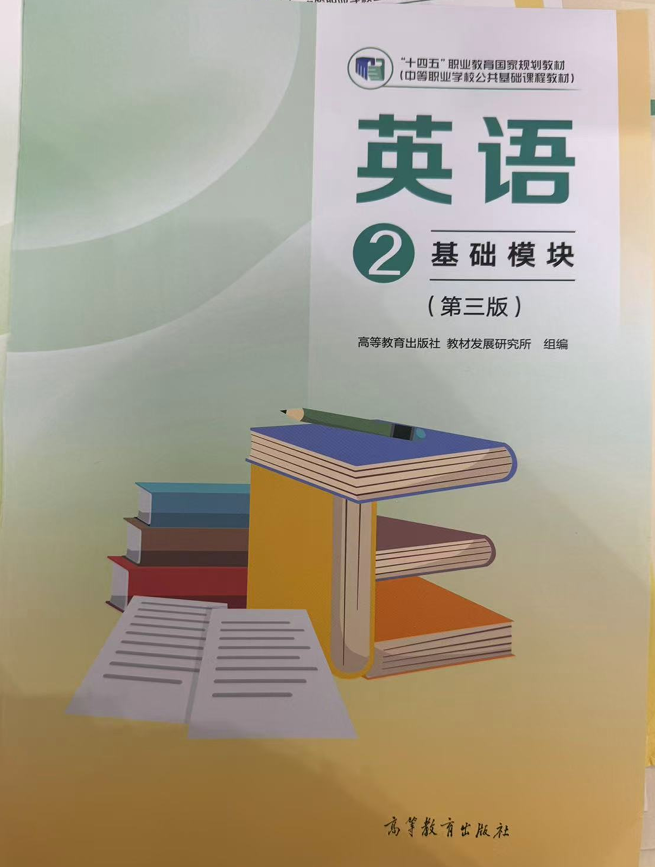
Unit 3 Internship(A卷·基础巩固)《英语 基础模块2》(高教版第三版)单元过关卷(原卷版+解析版)
2026-04-02
|
2份
|
40页
|
100人阅读
|
0人下载
内容正文:
编写说明:本套试卷紧扣《英语 基础模块2》(高教版第三版)教材,以教材单元为基准精准覆盖核心考点。
每个单元设置AB卷,A卷为基础巩固卷,侧重基础考点训练,帮助学生扎实掌握知识要点;B卷为能力提升卷,注重知识整合与全面检测,引导学生构建知识网络。全书设计4份综合测试卷,模拟实战情境,聚焦解题能力突破,全面提升应试能力与知识应用水平。
《英语 基础模块2》(高教版第三版)《单元过关卷》
Unit 3 Internship
A卷·基础巩固
考试时间:120分钟 满分:150分
班级 姓名 学号 成绩
第一部分:单项选择题(共25小题;每小题1分,满分25分)
从A、B、C、D四个选项中,选出可以填入空白处的最佳选项。
1.— Why didn’t you watch the football match last night, Eric?
— Well, I ________ on the phone with my friends at that time.
A.talked B.was talking C.am talking D.have talked
【答案】B
【详解】句意:——埃里克,昨晚你为什么没看足球赛?——嗯,我当时正在和朋友们通电话。
考查时态辨析。根据语境可知,此处是在描述埃里克昨晚没看足球赛的原因,即他当时正在和朋友们通电话,所以应该用过去进行时。故选B。
2.—I didn’t see you in the dining hall. But you said you would come!
—I am really sorry about that. I ________ Mr Zhang carry books then.
A.have helped B.am helping C.was helping D.will help
【答案】C
【详解】句意:——我没在餐厅看到你。可是你说过你会来的!——我真的很抱歉。那时我正在帮张老师搬书。
考查时态。have helped现在完成时;am helping现在进行时;was helping过去进行时;will help一般将来时。根据“I…Mr Zhang carry books then.”可知,此处指当时某刻正在做的事情,应用过去进行时。故选C。
3.When the astronaut gave the lecture from space, millions of students ________.
A.watch B.watched C.were watching D.have watched
【答案】C
【详解】句意:当宇航员从太空进行讲座时,数百万学生正在观看。
考查过去进行时。watch观看(动词原形);watched观看(一般过去时);were watching正在观看(过去进行时);have watched已经观看(现在完成时)。根据“When the astronaut gave the lecture”可知,此处表示“过去某个时间正在进行的动作”,用过去进行时were watching符合语境。故选C。
4.—Did you hear the loud noise outside the library a minute ago, Tony?
—No, I didn’t. I ________for a book about Chinese history at that moment.
A.am searching B.searched C.was searching D.have searched
【答案】C
【详解】句意:——托尼,你刚才听到图书馆外面的巨响了吗?——没有。我当时正在找一本关于中国历史的书。
考查过去进行时。根据问句“a minute ago”和答句“at that moment”可知,此处表示过去某一时刻正在进行的动作,需用过去进行时。过去进行时的结构是“was/were doing”。主语是“I”,be动词用“was”,故选C。
5.I’m sorry that I didn’t answer your phone just now. I______ at that time.
A.was driving B.drive C.drove D.am driving
【答案】A
【详解】句意:很抱歉我刚才没接你的电话。那时我正在开车。
考查过去进行时。was driving正在驾驶(过去进行时);drive驾驶(一般现在时);drove驾驶(一般过去时);am driving正在驾驶(现在进行时)。根据“at that time”可知,此处表示过去某个时间点正在进行的动作,用过去进行时was driving符合语境。故选A。
6.When I saw Wang Min in the sports center, she ________ playing tennis.
A.practices B.is practicing C.was practicing D.will practice
【答案】C
【详解】句意:当我在体育中心见到王敏时,她正在练习打网球。
考查过去进行时。根据“When I saw Wang Min in the sports center,”可知,需用过去进行时表示过去某一时刻正在进行的动作。故选C。
7.My mother ________ in the kitchen when my father came home.
A.is cooking B.was cooking C.has cooked D.will cook
【答案】B
【详解】句意:我父亲回家时,我母亲正在厨房做饭。
考查过去进行时。“when my father came home”是过去时间点,强调此时妈妈正在厨房做饭,用过去进行时“was/were+现在分词”,主语“my mother”是单数,用“was cooking”。故选B。
8.—Why didn’t you come to the party yesterday?
—Oh, I ________ for the speech competition.
A.prepare B.was preparing C.will prepare D.am preparing
【答案】B
【详解】句意:——你昨天为什么没来参加聚会?——哦,我当时在为演讲比赛做准备。
考查动词时态。根据问句“Why didn’t you come to the party yesterday?”可知,询问的是昨天没来参加聚会的原因,说明昨天在聚会这个时间点,“我”正在做另一件事,即准备演讲比赛,所以应该用过去进行时“was preparing”。故选B。
9.The students ________ so happily that they didn’t notice the teacher coming in.
A.were talking B.are talking C.will talk D.talk
【答案】A
【详解】句意:学生们当时正在如此开心地聊天,以至于他们没有注意到老师进来。
考查时态。根据“that they didn’t notice the teacher coming in”可知动作发生在过去,且“聊天”是当时持续进行的动作,因此应使用过去进行时“was/were doing”。故选A。
10.— Where were you at half past four yesterday afternoon, Tom?
—I ________ lessons in my bedroom.
A.reviewed B.am reviewing C.was reviewing D.have reviewed
【答案】C
【详解】句意:——昨天下午四点半你在哪里,汤姆?——我在我的卧室里复习功课。
考查时态辨析。reviewed复习,用于一般过去时;am reviewing正在复习,用于现在进行时;was reviewing正在复习,用于过去进行时;have reviewed已经复习,用于现在完成时。根据时间状语“at half past four yesterday afternoon”可知,“昨天下午四点半”这是一个具体的过去时间点,强调动作在当时正在进行,需用过去进行时。选项C符合此语境,表示在那个时刻Tom正在复习功课。故选C。
11.—I called you at half past eight last night but nobody answered.
—Oh, sorry. I ________ a movie with my cousin at the theatre then.
A.watched B.am watching C.was watching D.will watch
【答案】C
【详解】句意:——我昨晚八点半给你打电话,但没人接。——哦,对不起。我当时正在剧院和我表弟看电影。
考查过去进行时。watched观看,一般过去时;am watching正在观看,现在进行时;was watching正在观看,过去进行时;will watch将要观看,一般将来时。根据“then”指代“at half past eight last night”可知,强调过去某个具体时间点动作正在进行,需用过去进行时was/were+doing表示。故选C。
12.—Cindy, my sunglasses are broken. What happened?
—Sorry, dear. I have no idea. I ________ in the kitchen then.
A.cook B.will cook C.was cooking D.have cooked
【答案】C
【详解】句意:——辛迪,我的太阳镜坏了。发生了什么?——对不起,亲爱的。我不知道。那时我正在厨房做饭。
考查动词时态辨析。cook做饭,一般现在时;will cook做饭,一般将来时;was cooking正在做饭,过去进行时;have cooked已经做饭,现在完成时。根据“I…in the kitchen then.”可知,then表示过去某个时刻,此处强调过去某个时刻正在进行的动作,用过去进行时。故选C。
13.—May I speak to Mrs. Back?
—Sorry, Mom can’t come to the phone now. She ________a shower.
A.has B.had C.is having D.was having
【答案】C
【详解】句意:——我可以和贝克夫人讲话吗?——对不起,妈妈现在不能接电话。她正在洗澡。
根据“Sorry, Mom can’t come to the phone now.”可知,妈妈现在不能接电话,说明她正在洗澡,应使用现在进行时,应填is having。
14.—Why didn’t you answer my call last night?
—I_________ my homework and I didn’t hear it.
A.did B.was doing C.have done D.had done
【答案】B
【详解】句意:——昨晚你为什么没有接我的电话?——我正在做我的作业,没听到电话响。
根据问句“last night”可知时态为过去时,答句需要说明“没接电话”时正在做的事情,因此需要用到过去进行时(表示过去某一时刻正在进行的动作)。过去进行时的结构为:was/were+动词的ing形式。应填:was doing。
15.—When did the rainstorm come, Mr. Liu?
—While we ________ a chemistry lesson yesterday afternoon.
A.have B.have had C.are having D.were having
【答案】D
【详解】句意:——刘老师,暴风雨是什么时候来的?——昨天下午我们上化学课的时候。
考查动词时态。分析句子可知,while后用进行时态,由“yesterday afternoon”可知,用过去进行时,主语we为第一人称复数,因此be动词用were。故选D。
16.I ________ on the computer when Frank called me.
A.work B.will work C.was working D.am working
【答案】C
【详解】句意:当Frank给我打电话时,我正在电脑上工作。
考查when引导从句的时态。根据“when”和“Frank called me”可知when引导的时间状语从句用一般过去时,此时的主句应用过去进行时,其谓语结构为“was/were+doing”,故选C。
17.Rachel ________ the film Ping Pong: The Triumph (《中国乒乓之绝地反击》) when her grandma called her.
A.watches B.watched C.was watching D.has watched
【答案】C
【详解】句意:瑞秋正在看电影《中国乒乓之绝地反击》,这时,她奶奶打电话给她。
考查时态。根据“when her grandma called her”可知,奶奶打电话时,瑞秋正在看电影,需要过去进行时(was/were doing),故选C。
18.—________ did the bell ring?
—________ we were having dinner, the bell rang.
A.As; When B.When; While C.When; Or D.While; When
【答案】B
【详解】句意:——铃什么时候响的?——当我们正在吃晚饭的时候,铃响了。
考查特殊疑问词和连词辨析。As当……时;When当……时;While当……时;Or或者。根据语境可知,第一个空是在询问铃响的时间点,所以应该用when;第二个空是在描述吃晚饭这个时间段内铃响了,且从句时态为过去进行时,所以应该用while,表示两个动作同时发生。综合分析,第一个空填When,第二个空填While,故选B。
19.When the teacher arrived at the classroom, the children ________ quietly. It made the teacher surprised and happy.
A.was reading B.is reading C.are reading D.were reading
【答案】D
【详解】句意:当老师到达教室时,孩子们正在安静地阅读。这让老师既惊讶又高兴。
考查时态及主谓一致。根据“When the teacher arrived at the classroom”可知,此处表示过去某一时刻正在进行的动作,应用过去进行时,主语为“the children”,be动词用were。故选D。
20.— What were you doing during the rainstorm yesterday?
— I ________ on Gandong Avenue while it started raining heavily.
A.walk B.walked C.was walking D.am walking
【答案】C
【详解】句意:——昨天暴雨时你在做什么?——大雨开始下的时候,我正在赣东大道上走着。
考查动词时态。根据“What were you doing during the rainstorm yesterday?”可知,此句的时态是过去进行时,故选C。
21.The girl with two cats _________ in the yard when the storm hit the city.
A.plays B.is playing C.was playing D.has played
【答案】C
【详解】句意:当暴风雨袭击这座城市时,那个带着两只猫的女孩正在院子里玩耍。
考查过去进行时。根据“when the storm hit the city”可知,暴风雨袭击城市是过去的时间点,强调此时这个动作正在进行,应该用过去进行时,主语The girl是单数。故选C。
22.I was doing my homework ________ my friend called me.
A.when B.once C.while D.since
【答案】A
【详解】句意:当我的朋友给我打电话时,我正在做作业。
考查连词辨析。when当……时;once一旦;while当……时;since自从。句中“called”为非延续性动词,且主句“was doing”是过去进行时,从句是一般过去时,符合“when”的用法,表示主句动作与从句动作同时发生,故选A。
23.—Hi, Daniel. You didn't attend the chess class last night.
—Oh, I___________ my son's model plane.
A.am repairing B.repair C.have repaired D.was repairing
【答案】D
【详解】句意:——你好,丹尼尔,你昨天晚上没有上围棋课。——喔,我正在修理我的儿子的飞机模型。
考查动词的时态。am repairing动词的现在进行时;repair动词原形;have repaired动词的现在完成时;was repairing动词的过去进行时。根据“You didn't attend the chess class last night”可知此处表示上围棋课的时候正在发生的动作,用过去进行时was repairing。故选D。
24.—I didn’t see you at the party last night.
—Oh, I ________ my grandparents in the countryside. They were ill.
A.am visiting B.visit C.will visit D.was visiting
【答案】D
【详解】句意:——昨晚在派对上我没看到你。——哦,我正在乡下看望我的祖父母。他们病了。
考查时态。根据“last night”可知答句也用过去时态,此处强调过去某一时段正在进行的动作,故用过去进行时。故选D。
25.— Money is important to everyone so I usually save some in my bank account.
—________ . I am saving for a Huawei Mate 80 smart phone.
A.You’re welcome B.That’s OK
C.I agree D.I hope so
【答案】C
【详解】句意:——钱对每个人都很重要,所以我通常在银行账户里存一些钱。——我同意。我正在攒钱买华为Mate 80手机。
You’re welcome“不用谢”,通常用于回应感谢;That’s OK“没关系”,通常用于回应道歉;I agree“我同意”,表示赞同对方观点;I hope so“我希望是这样”,表示希望。上文提到存钱的重要性及做法,下文回答者也表示自己正在攒钱买手机,可知双方观点一致。
第二部分:完形填空(共20小题;每小题1.5分,满分30分)
阅读下面短文,掌握其大意,然后从26-45各题所给的A、B、C、D四个选项中,选出最佳选项。
When Mrs. Green asked us to discover our professions(职业), the whole class seemed to be greatly surprised. Our professions? We were only 13 and 14 years old! The teacher must be 26 . “Yes, you will all be searching for your future 27 . Each of you will have to 28 someone in your field and give an oral report.”
Each day in her class, Mrs. Green talked about this. Finally, I picked print journalism(新闻业). This 29 I had to go to interview a true newspaper reporter. I was nervous. I sat down in front of him 30 able to speak. He looked at me and said, “Did you bring a pencil or pen?”
I shook my head.
“How about some 31 ?”
I shook my head again.
Finally, I thought he 32 I was nervous, and I got my first big tip(建议) as a 33 :“Never, never go anywhere without a pen and paper. You never know what you’ll run into.” After a few days, I gave my oral report totally from 34 in class. I got an A on the project.
Years later, I was in college looking around for a new career(职业), but with no success. Then I 35 Mrs Green and my dream at 13 to be a journalist. And I called my parents. They didn’t 36 me. They just reminded me how competitive the field was and 37 all my life I had to run away from competition. This was true. But journalism did something to me; it was in my 38 . It gave me the freedom to go up to total strangers and ask what was 39 .
For the past 12 years, I’ve had the most satisfying reporting career, 40 stories from Olympic Games to car accidents and 41 choosing my strongest area. 42 I went to pick up my phone one day, an incredible(令人难以置信的)wave of memories hit me and I realized that 43 Mrs. Green I was able to be sitting at that desk.
I get 44 all the time:“How did you pick journalism?”
“Well, you see, there was a teacher…”I just wish I could 45 her.
26.A.embarrassing B.mad C.patient D.strange
27.A.universities B.families C.professions D.lives
28.A.interview B.describe C.admire D.face
29.A.considered B.ordered C.expected D.meant
30.A.hardly B.nearly C.naturally D.completely
31.A.preparations B.newspapers C.drink D.paper
32.A.realized B.imagined C.impressed D.admitted
33.A.student B.journalist C.teacher D.writer
34.A.notes B.books C.imagination D.memory
35.A.called B.remembered C.recognized D.visited
36.A.answer B.laugh C.stop D.promise
37.A.how B.whether C.when D.where
38.A.life B.body C.blood D.opinion
39.A.coming in B.coming out C.going up D.going on
40.A.creating B.finding C.covering D.writing
41.A.finally B.firstly C.of course D.in all
42.A.While B.When C.As long as D.Once
43.A.refer to B.thanks to C.up to D.thanks for
44.A.hurt B.examined C.tested D.asked
45.A.respect B.support C.thank D.favor
【答案】
26.B 27.C 28.A 29.D 30.A 31.D 32.A 33.B 34.D 35.B 36.C 37.A 38.C 39.D 40.C 41.A 42.B 43.B 44.D 45.C
【分析】本文讲述了小时候的一堂课上,格林夫人让我找到了自己将来的职业并在以后的职业生涯中取得了成功,我真希望能感谢她。
26.句意:当格林夫人要求我们找出自己的职业时,全班同学似乎都大为惊讶。我们的职业?我们只有十三四岁!老师一定是疯了
考查形容词词义辨析。embarrassing让人尴尬的;mad发疯的; patient耐心的;enthusiastic热情的。根据“We were only 13 and 14 years old!”我们认为自己只是十三四岁的孩子,而格林夫人却让我们找出自己的职业,可知我们认为她一定是疯了,故选B。
27.句意:是的,你们都在寻找未来的职业。
考查名词词义辨析。universities大学;families家庭;professions职业;lives生活。根据上文说格林夫人要求我们找出自己的职业,所以此处指职业,故选C。
28.句意:你们每个人都必须采访你所在领域的一个人,并做一份口头报告。
考查动词词义辨析。interview采访;describe描述;admire钦佩;face面对。根据空后的“I picked print journalism(新闻业).This __4__ I had to go to interview a true newspaper reporter.”可知,我选择了新闻业,这意味着我要去采访一个真正的新闻记者,由此可知,格林夫人让我们采访我们选择的职业领域的一个人,故选A。
29.句意:我选择了新闻业,这意味着我要去采访一个真正的新闻记者。
考查动词词义辨析。considered考虑;ordered命令;expected期望;meant意味着。根据空后的“I had to go to interview a true newspaper reporter.”可知,选择新闻业意味着我得去采访一个真正的记者,故选D。
30.句意:我坐在他面前,几乎说不出话来。
考查副词词义辨析。hardly几乎不;nearly将近;naturally自然地;completely完全地。根据空前说“我很紧张”,可知是“我几乎说不出话来”,故选A。
31.句意:那你带纸了吗?
考查名词词义辨析。preparations准备;newspapers报纸;drink饮料;paper纸。根据下文中的“never go anywhere without a pen and paper”可知,他问我带没带纸,故选D。
32.句意:最后,我想他意识到了我很紧张,于是给了我作为记者的第一个大建议——随时带着纸和笔,你永远不知道会遇到什么。
考查动词词义辨析。realized了解、意识到;imagined想象; impressed使……印象深刻;admitted承认。上文说“我很紧张”,他一定是意识到我很紧张,所以给了我一个建议,故选A。
33.句意:最后,我想他意识到了我很紧张,于是给了我作为记者的第一个大建议——随时带着纸和笔,你永远不知道会遇到什么。
考查名词词义辨析。student学生;journalist记者;teacher老师;writer作家。上文说我选择的是新闻业,所以我以后的职业是记者,此处是说这个真正的记者给我的作为记者的建议,故选B。
34.句意:几天后,我在课堂上凭记忆做了口头报告。
考查名词词义辨析。notes便条;books书;imagination想象;memory记忆。上文说我去采访时没有带笔和纸,也就没有把内容记录下来,可知我只能凭记忆做口头报告,故选D。
35.句意:然后我想起了格林夫人和我十三岁时当记者的梦想。
考查动词词义辨析。called打电话;remembered记得、记起;recognized认出;visited拜访。根据前文说“多年后,我在大学里四处寻找新的职业,但没有成功”,可知,这时我想起了格林夫人和我十三岁时当记者的梦想,故选B。
36.句意:他们并没有阻止我。
考查动词词义辨析。answer回答;laugh笑;stop阻止;promise答应。根据空后说父母只是提醒我这个领域的竞争有多激烈,可知他们并没有阻止我,故选C。
37.句意:他们提醒我这个领域的竞争有多么激烈以及我如何远离竞争。
考查连接副词词义辨析。how如何、怎样;whether是否;when何时;where哪里。根据前文说“他们提醒我这个领域的竞争有多么激烈”,可知是告诉我如何远离竞争,故选A。
38.句意:但是新闻工作对我有所特殊的意义,这是我的天性。
考查名词词义辨析。life生活;body身体;blood血液(天性);opinion观点。根据空前的“journalism did something to me;”可知,新闻工作对我有特殊的意义,这是我的天性,指我从骨子里喜欢新闻工作,故选C。
39.句意:这给了我自由,我可以走到完全陌生的人面前,问他们发生了什么事。
考查动词短语辨析。coming in进来;coming out出来;going up上升;going on继续、发生。根据记者是报道事实的,可知是问别人发生了什么,故D项正确。
40.句意:在过去的12年里,我的报道生涯是最令人满意的,报道内容从奥运会到车祸,最后选择了我最擅长的领域。
考查动词词义辨析。creating创造;finding发现;covering包括;writing写。根据空后的“stories from Olympic Games to car accidents”可知,我的报道涵盖了从奥运会到车祸等很多方面的内容,故选C。
41.句意:在过去的12年里,我的报道生涯是最令人满意的,报道内容从奥运会到车祸,最后选择了我最擅长的领域。
考查副词词义辨析。finally最后;firstly最初;of course当然;in all总共。根据前面“我的报道涵盖了从奥运会到车祸等很多方面”,可知,最后我选择了自己最擅长的领域,故选A。
42.句意:有一天,当我拿起电话时,一股不可思议的回忆涌上心头,我意识到,多亏了格林夫人,我才能从事记者这个职业。
考查连词词义辨析。While当……时(接延续性动词);When当……的时候;As long as只要;Once一旦。根据空后的“I went to pick up my phone one day”可知此处指当我拿起电话的时候,故选B。
43.句意:有一天,当我拿起电话时,一股不可思议的回忆涌上心头,我意识到,多亏了格林夫人,我才能从事记者这个职业。
考查介词短语辨析。refer to涉及;thanks to由于、多亏;up to多达;thanks for为……而感谢。根据上文情节可知,是格林夫人让我找到了自己的职业,多亏了她,我才选择了新闻业,故选B。
44.句意:我总是被问到:“你是如何选择新闻业的?”
考查动词词义辨析。hurt使疼痛;examined检查;tested测试;asked问。根据空后的问题“How did you pick journalism?”可知,我总是被人问到“你是如何选择新闻业的?”,故选D。
45.句意:是一位老师(让我选择了新闻业),我真希望能感谢她。
考查动词词义辨析。respect尊重;support支持;thank感谢;favor偏袒。根据文章所讲,是格林夫人让我选择了新闻业并取得了成功,可知,我自然是想感谢她,故选C。
【点睛】本篇第9空的难度较大,抓住上文我采访那个真正的记者的情节是关键,上文说我去采访那个记者事时没有带笔和纸,自然也就无法把内容记录下来,所以在课堂上我只能凭记忆做口头报告,故D项正确。
三、阅读理解(共25小题;每小题2分,满分50分)
阅读下列短文,从每题所给的A、B、C、D四个选项中,选出最佳选项,并在答题卡上将该项涂黑。
A
We Want You!
Hamodeh Services/Part-time
We need an English teacher. You should have the experience of teaching kids.
You should make plans before class and design activities to meet the kids’ needs.
Requirements:
good teaching skills
ability to work on your own & with your team member
Working hours: 10 a.m. to 6 p.m. at weekends
Email resume@hesedu.com for more information.
Li’s Bakery/Full-time
Two cashiers for our store are needed.We’re looking for friendly and energetic persons.You should serve the customers in the store.
Requirements:
cashier service experience
work over 32 hours a week
Working hours:
6 a.m. to 2 p.m.
Or 2 p.m. to 10 p.m.
Call 138-0610-3125
or 0741-6874 for more information.
Sapp Bros/Full-time
We’re looking for four cooks. You will offer customers the best food. You will also need to prepare all the dishes on the menu.
Requirements;
two years’ work experience
ability to learn
Working hours:
3 p.m. to 10 p.m.
(6 days a week)
Email duluth@sappbros.com
46.The part-time job is ________.
A.teacher B.cashier C.cook D.cashier and cook
47.________ needs the most people.
A.Li’s Bakery B.Sunshine Town C.Sapp Bros D.Hamodeh Services
48.If David wants to be a cook, he should contact ________.
A.0741-6874 B.138-0610-3125 C.resume@hesedu.com D.duluth@sappbros.com
49.If you prefer working in the morning.you can choose to be ________.
A.the English teacher B.the cashier (2 p.m. to10 p.m.) C.the cook D.the cashier (6 a.m. to 2 p.m.)
50.________ is a common requirement for the three jobs.
A.Ability to learn B.Work experience
C.Ability to work in a team D.Working over 32 hours a week
【答案】46.A 47.C 48.D 49.D 50.B
【导语】本文是一篇应用文,主要介绍了Hamodeh Services、Li’s Bakery、Sapp Bros三家单位的招聘岗位、要求、工作时间及联系方式等内容。
46.第一段指出兼职岗位:“We need an English teacher.”,说明这份兼职工作是英语老师。
47.第三段说明招聘人数:“We’re looking for four cooks.”,表明Sapp Bros需要的人数最多。
48.第三段说明联系方式:“Email duluth@sappbros.com”,说明想成为厨师应联系该邮箱。
49.第二段说明工作时间:“6 a.m. to 2 p.m.”,说明喜欢早上工作可以选择这个时段的收银员。
50.第一、二、三段分别说明要求:均提及工作经验相关要求,因此工作经验是三份工作的共同要求。
B
Many people think the best jobs are those that pay well or work in modern offices. But some of the most important jobs in our life are not famous or highly paid. These people keep our life normal and safe, though we seldom think about their hard work.
Street cleaners get up very early every morning, even on cold winter days. They clean the roads, collect rubbish and keep our cities tidy. Without them, our environment would be dirty and terrible. They work quietly and ask for little in return.
Another important job is a cook. Cooks prepare healthy and delicious food for us every day. They spend long hours in hot kitchens. Good cooks understand what people need and try their best to make meals enjoyable. Eating nice food makes people feel warm and happy.
Teachers are also important. They not only teach knowledge but also care about students’ growth. Good teachers listen to students patiently and encourage them to be better. They help teenagers build their dreams and become useful people in the future.
These jobs may not seem exciting, but they are necessary. Every job has its value. The world needs different kinds of hard-working people. We should learn to respect every job and every person who works hard.
51.What is the passage mainly about?
A.How to find a highly paid job. B.Some important but common jobs.
C.The most exciting jobs in the world. D.How to work in modern offices.
52.When do street cleaners usually start work?
A.Late at night. B.Early in the morning. C.At noon. D.In the afternoon.
53.What does the writer think of cooks?
A.They work in clean and cool places. B.They make our meals enjoyable.
C.They are more important than teachers. D.They seldom work long hours.
54.What do teachers NOT do according to the passage?
A.Teach students knowledge. B.Care about students’ growth.
C.Encourage students to improve. D.Clean the students’ homes.
55.What can we learn from the passage?
A.Only highly paid jobs are valuable. B.We should respect all hard-working people.
C.Common jobs are not necessary. D.Exciting jobs are always important.
【答案】51.B 52.B 53.B 54.D 55.B
【导语】本文是一篇说明文,主要讲述了一些看似普通却至关重要的职业,如街道清洁工、厨师和教师,强调了每一份工作都有其价值,我们应该尊重每一份职业和每一位辛勤工作的人。
51.文章开篇点明主旨:“But some of the most important jobs in our life are not famous or highly paid.”,并在下文分别介绍了街道清洁工、厨师、教师等重要的普通工作。
52.第二段直接说明:“Street cleaners get up very early every morning, even on cold winter days.”,这直接指出街道清洁工通常在清晨开始工作。
53.第三段描述:“Good cooks understand what people need and try their best to make meals enjoyable.”,这直接说明作者认为厨师努力让我们的用餐变得愉快。
54.第四段说明教师的职责:“They not only teach knowledge but also care about students’ growth. Good teachers listen to students patiently and encourage them to be better.”,文中未提及教师会打扫学生的家。
55.最后一段给出结论:“We should learn to respect every job and every person who works hard.”,这直接说明我们应该尊重所有辛勤工作的人。
C
Summer jobs have always been a great way for teenagers to earn money, learn important skills and become more independent. Young people in the UK can work part-time from the age of 13. They can then work full-time from 16. However, in England, young people must stay in part-time education or training until they are 18. There are many ways for them to work, such as washing the dishes in the restaurants, walking dogs, washing cars and watering plants. Some say that these jobs will teach valuable life lessons. However, others feel that young people should enjoy their summer break while they can. So what do you think? Should young people have jobs over the summer?
Group Yes
Group No
● Summer jobs benefits teenagers a lot. They teach them how to be responsible and the importance of being on time.
● Working helps children and young people develop soft skills—such as problem solving, communications and teamwork. These are important to success in jobs and also in life.
● Children and young people with jobs earn their own money and learn how to manage their hard-earned cash.
● Children and young people work hard during the school year. They need a break and recharge over the summer.
● Summer is a good time to take classes, improve at sports, take up a personal hobby such as music or drawing, learn new skills or visit relatives.
● Summer jobs are of great help. However, enjoying summer holidays is a big part of childhood. Children and young people have their whole lives ahead of them to work.
56.What can young people get from summer jobs?
①fame ② skills ③ wealth ④ independence
A.①②③ B.①②④ C.②③④ D.①③④
57.The underlined word “These” refers to ________.
A.teamwork spirits B.problem solutions C.soft skills D.communication abilities
58.What does the underlined word “recharge” probably mean in Chinese?
A.勤学苦练 B.养精蓄锐 C.一鼓作气 D.劳逸结合
59.What opinion do the two groups have in common?
A.Summer jobs are good for teenagers in a way. B.Jobs helps teenagers manage their money well.
C.Teenagers should enjoy their summer break. D.Enjoying summer holidays is more important.
60.What is the text mainly about?
A.Different ways to work in summer. B.The benefits of summer jobs.
C.Different valuable life skills. D.Different opinions on summer jobs.
【答案】56.C 57.C 58.B 59.A 60.D
【导语】本文主要讨论暑期工作对青少年的好处以及是否应该让年轻人在暑期工作。
56.细节理解题。根据“Summer jobs have always been a great way for teenagers to earn money, learn important skills and become more independent.”可知,暑期工作一直是青少年赚钱、学习重要技能和变得更加独立的好方法。故选C。
57.代词指代题。分析“Working helps children and young people develop soft skills—such as problem solving, communications and teamwork. These are important to success in jobs and also in life.”可知,工作可以帮助孩子和年轻人发展软技能,比如解决问题、沟通和团队合作。这些对工作和生活的成功都很重要。此处These指的是“软技能”,故选C。
58.词句猜测题。分析“Children and young people work hard during the school year. They need a break and recharge over the summer.”可知,孩子和年轻人在学年里努力学习。他们需要在夏天休息。所以此处recharge与“休息”语意相近,故选B。
59.推理判断题。根据“Summer jobs benefits teenagers a lot. They teach them how to be responsible and the importance of being on time.暑期工作对青少年很有好处。他们教他们如何负责任和准时的重要性。”和“Summer is a good time to take classes, improve at sports, take up a personal hobby such as music or drawing, learn new skills or visit relatives.夏天是上课、提高体育水平、培养个人爱好(如音乐或绘画)、学习新技能或拜访亲戚的好时机。”可知,相同的观点是暑期工作在某种程度上对青少年有好处。故选A。
60.主旨大意题。本文主要讨论暑期工作对青少年的好处以及是否应该让年轻人在暑期工作,选项D“对暑期工作有不同的看法”符合主题,故选D。
D
When Juan Sala was young, he lived near a beach. During his summer holidays, he would spend all day swimming in the sea. In the evenings, he loved watching programmes about underwater adventures. He even dreamed of filming and studying fish under the sea. But he didn’t start to do that until he was in his twenties. Juan described a normal workday on his 45-metre boat:
I got up before everyone else today. I had breakfast and jumped into the sea as soon as I could. I usually work underwater three or four times a day. I filmed anything that looked interesting. In the afternoon, I made notes about my work on my computer. After dinner, I was so tired that I went to bed. My friends sometimes invite me to go to a party, but I’m always asleep by the time the fun starts.
▲ I have so much fun every day! My friends often say that they would like to have a job like mine. They need to pay a lot of money to spend their holidays in interesting places, but they can’t see many unusual fish.
Juan is planning to do some underwater filming in the Queensmen Islands soon. “I’ve never visited those islands,” he said. “I’d like to study the plants and fish there.”
61.What does the underlined word “that” in Paragraph 1 refer to?
A.Living near a beach.
B.Swimming in the sea.
C.Filming and studying fish under the sea.
D.Watching programmes about underwater adventures.
62.Which of the following can be put in “▲” in Paragraph 3?
A.But my friends never get angry with me for it.
B.I work hard, but I don’t need holidays.
C.I need to spend a lot of money on my holidays.
D.I try to find a balance between my work and life.
63.We can see from the passage that Juan is _______.
A.polite B.lazy C.hard-working D.shy
64.According to this passage, what will Juan probably do next?
A.Go back to his hometown and have a good rest.
B.Film more fish and plants in the Queensmen Islands.
C.Have a great party with his friends in the Queensmen Islands.
D.Write a book about his activities and fun time in the Queensmen Islands.
65.The writer wrote the passage to _______.
A.tell us about Juan’s special job
B.describe the fish under the sea
C.advise us to take underwater adventures
D.show how to be an underwater scientist
【答案】61.C 62.B 63.C 64.B 65.A
【导语】本文主要介绍了Juan Sala从小的梦想是拍摄和研究海底鱼类,成年后他成为了一名水下摄影师,并描述了他的日常工作、感受以及未来的计划。
61.第一段提到:“He even dreamed of filming and studying fish under the sea. But he didn’t start to do that until he was in his twenties.”,这里的“that”指代前一句中的“filming and studying fish under the sea”。
62.空格需要衔接上下文:上文讲Juan工作很累,早早睡觉不去朋友聚会;下文讲Juan每天工作很开心,自己工作就能去有趣的地方、见到稀有鱼类,不需要像朋友一样花钱度假。B选项“我工作很努力,但我不需要假期”符合语境逻辑。
63.从第二段的描述可以看出,Juan每天工作很辛苦,早睡早起,多次下水拍摄,下午还要做笔记,说明他工作勤奋努力。
64.最后一段明确指出:“Juan is planning to do some underwater filming in the Queensmen Islands soon”,说明他接下来很可能会去那里拍摄更多的鱼类和植物。
65.文章主要围绕Juan的职业展开,介绍了他的日常工作内容、感受和未来计划,因此写作目的是介绍Juan这份特殊的工作。
E
Everyone needs help sometimes. People depend on one another. That’s why communities have special people ready to help people in need.
For example, what would we do without a community fire station? If a home catches fire, as the Jacksons’ place did last week, it might be burned down and people might get hurt … or worse. We’re so lucky to have firemen to come to save people and put out the fire safely.
And what about police officers? They protect our families, our homes and important things. The police have helped so many families this past year, especially saving people and pets and protecting our houses and other things after the heavy rain.
Think about all the other service workers in this community. There are cleaners to collect rubbish and keep our community sanitary. We have road workers and they put up and repair traffic signs and fix holes in the streets to protect not just us, but our cars! And what would this community be without the teachers in our school and the doctors and nurses in our community hospitals?
Think again about what we eat every day and what we wear every day. We cannot produce (生产) them, but we use them all the time. These tireless workers keep our community running. We get a lot from them and need them in the community. We depend on each other. Let’s help each other. Only in this way can we make our community a better place.
66.What happened to the Jacksons last week?
A.They couldn’t find their pets. B.Their car was badly burned.
C.Their house caught fire. D.They couldn’t find their keys.
67.Who offered to help after the heavy rain according to the passage?
A.Firemen. B.Doctors. C.Road workers. D.Police officers.
68.What does the underlined word “sanitary” mean?
A.Clean. B.Safe. C.Quiet. D.Busy.
69.Which question could best help us find out the writer’s purpose?
A.Did the writer make us laugh?
B.Did the writer want us to do something?
C.Did the writer tell us about how to become a teacher?
D.Did the writer teach us what to do when the house is on fire?
70.What is the best title for the passage?
A.Police Officers Save People’s Lives B.People Depend on Each Other
C.Service Workers Do Important Jobs D.Workers Keep Community Running
【答案】66.C 67.D 68.A 69.B 70.B
【导语】本文是一篇议论文,阐述了社区中各种服务人员(消防员、警察、清洁工、道路工人、教师、医生等)的重要性,强调人们相互依赖,呼吁大家互相帮助,共同建设美好社区。
66.细节理解题。根据“If a home catches fire, as the Jacksons’ place did last week”可知,杰克逊家上周发生了火灾。故选C。
67.细节理解题。根据“The police have helped so many families this past year, especially saving people and pets and protecting our houses and other things after the heavy rain.”可知,大雨过后,警察提供了帮助。故选D。
68.词句猜测题。根据“There are cleaners to collect rubbish and keep our community sanitary.”可知,清洁工收集垃圾是为了保持社区“清洁”。故选A。
69.推理判断题。文章列举了社区中各种服务人员的贡献,最后一段强调“我们依赖彼此”,并呼吁“让我们互相帮助”,目的是希望读者认识到相互依赖的重要性并采取行动(互相帮助)。因此,最能揭示作者意图的问题是“作者想让我们做些什么吗?”。故选B。
70.最佳标题题。文章第一段提出“人们相互依赖”,中间段落举例说明各种服务人员如何帮助社区运转,最后一段再次强调“我们依赖彼此”并呼吁互相帮助。因此,全文的核心论点是“人们相互依赖”。故选B。
第四部分:情景对话(共10小题;每小题2分,满分20分)
阅读A段对话,从对话后所给五个选项中选出可以填入空白处的最佳选项,并在答题卡上将该项涂黑。阅读B段短文,从对话后的七个选项中选出可以填入空白处的最佳选项,并在答题卡上将该项涂黑,选项中有两项为多余选项。
A
A: Hi, Dylan. Do you think you are an “E” person or an “I” person?
B: 71 I don’t enjoy talking with people I don’t know.
A: We’re different. I’m an “E” person. 72 I also like asking my new friends questions. But sometimes I wish I could be someone like you.
B: Why?
A: “I” people usually spend more time listening and thinking. 73 .
B: In fact, there are good points and bad points in both kinds of people. We should enjoy our differences and learn from each other.
A: 74 By the way, what do you want to be in the future?
B: 75 I can think carefully and deeply by myself, and I’m interested in science.
A: I think you can become a great scientist.
B: Thank you.
A.I agree with you.
B.I’d like to be a scientist.
C.Hmm, I’m an “I” person.
D.I enjoy meeting new people.
E.I’m sure your dream will come true.
F.This helps them know better about themselves.
G.I am a little shy and always talk to my close friends.
【答案】71.C 72.D 73.F 74.A 75.B
【导语】本文中A和Dylan讨论性格类型,认可彼此差异并相互学习,还提及Dylan未来想成为科学家的梦想。
71.前文A询问B是“E”还是“I”人,下文B回答不喜欢和陌生人说话,C项“Hmm, I’m an ‘I’ person”直接回应问题,符合语境。
72.前文A表明自己是“E”型人,后文提到喜欢问新朋友问题,D项“I enjoy meeting new people”承接“E”型人的外向特征,与下文逻辑一致。
73.前文A提到“I”型人花更多时间倾听和思考,F项“This helps them know better about themselves”是倾听思考带来的积极结果,衔接自然。
74.前文B提出享受差异并相互学习,A的回应应表示赞同,A项“I agree with you”符合对话逻辑。
75.前文A询问B未来想做什么,B回答对科学感兴趣,B项“I’d like to be a scientist”直接回应职业梦想,与下文“I think you can become a great scientist”呼应。
B
A: Hey, Zhang Min! What are you doing here? It’s so late.
B: 76 Look, that’s the Big Dipper and that bright one is the North Star.
A: You know a lot! 77
B:An astronomer (天文学家)—I love studying the universe. What about you?
A: 78 I want to help sick pets.
B: Cool! One day, I’ll discover a new star and you’ll treat (治疗) pets!
A: (Laughs) That’s the plan! 79
B: Great. Shall we still chat like this later?
A: 80 We will talk about stars and pets together.
B: Deal!
A.Sure!
B.A vet.
C.I’m watching the stars.
D.What’s your dream job?
E.Let’s make our dreams come true!
【答案】76.C 77.D 78.B 79.E 80.A
【导语】本文是A和Zhang Min深夜相遇时,交流当下行为、梦想职业及未来约定的对话。
76.根据“What are you doing here?”可知,此处回答正在做什么,选项C“我在看星星。”符合语境。故选C。
77.根据“An astronomer—I love studying the universe.”可知,此处是询问对方的梦想职业,选项D“你梦想的工作是什么?”符合语境。故选D。
78.根据“What about you?”和“I want to help sick pets.”可知,此处说明自己的梦想职业是兽医,选项B“一名兽医。”符合语境。故选B。
79.根据“One day, I’ll discover a new star and you’ll treat pets!”及“Let’s make our dreams come true!”的呼应,此处是提议一起实现梦想,选项E“让我们一起实现梦想吧!”符合语境。故选E。
80.根据“Shall we still chat like this later?”及“We will talk about stars and pets together.”可知,此处是回应“当然可以”,选项A“当然!”符合语境。故选A。
第五部分:书面表达(满分25分)
81.每一个人都对自己的未来有着美好的憧憬,有目标才会有动力。学校正在开展以“My Dream Job”为题的征文活动。请你用英语写一篇短文投稿,介绍一下你对自己未来职业的设想,词数80左右。
提示:
1. What’s your dream job?
2. Why do you want to be a/an...?
3. How are you going to do that?
注意事项:
1. 必须包含所有提示信息,可适当发挥;
2. 意思清楚,表达通顺,行文连贯,书写规范;
3. 请勿在文中使用真实的姓名、校名和地名。
My Dream Job
________________________________________________________________________________________________________________________________________________________________________________________________________________________________________________________________________________________________________________________________________________________________________________
【答案】例文:
My Dream Job
Everyone has a dream job. My dream job is to be a middle school English teacher.
I love English and I enjoy staying with students. I want to share my interest in English with them. My former English teacher influenced me deeply, so I hope to inspire students like her.
To make my dream come true, I will study English hard and practice speaking every day. I will also learn how to teach well. I believe I will be a good teacher in the future.
【详解】[第一步:审题立意]
确定文体:介绍性说明文,用一般现在时为主
明确要点:个人的梦想职业、喜欢该职业的原因、实现梦想的具体做法、对未来的期许
确定人称:第一人称(I/my)
注意事项:围绕“梦想职业”展开,表达真实想法,语言简洁连贯
[第二步:构思布局]
三段式结构:
开头段:点明每个人都有梦想职业,并引出自己的梦想职业是中学英语老师
主体段:阐述喜欢该职业的原因,以及为实现梦想将采取的具体行动
结尾段:表达自己对未来成为一名好老师的信心
[第三步:要点展开]
要点一:个人的梦想职业
梦想职业:My dream job is to be a middle school English teacher.
要点二:喜欢该职业的原因
核心原因1:I love English and I enjoy staying with students. I want to share my interest in English with them.
核心原因2:My former English teacher influenced me deeply, so I hope to inspire students like her.
要点三:实现梦想的具体做法
具体行动1:To make my dream come true, I will study English hard and practice speaking every day.
具体行动2:I will also learn how to teach well.
要点四:对未来的期许
内心期许:I believe I will be a good teacher in the future.
学科网(北京)股份有限公司 (
1
)原创精品资源学科网独家享有版权,侵权必究!
学科网(北京)股份有限公司
$
编写说明:本套试卷紧扣《英语 基础模块2》(高教版第三版)教材,以教材单元为基准精准覆盖核心考点。
每个单元设置AB卷,A卷为基础巩固卷,侧重基础考点训练,帮助学生扎实掌握知识要点;B卷为能力提升卷,注重知识整合与全面检测,引导学生构建知识网络。全书设计4份综合测试卷,模拟实战情境,聚焦解题能力突破,全面提升应试能力与知识应用水平。
《英语 基础模块2》(高教版第三版)《单元过关卷》
Unit 3 Internship
A卷·基础巩固
考试时间:120分钟 满分:150分
班级 姓名 学号 成绩
第一部分:单项选择题(共25小题;每小题1分,满分25分)
从A、B、C、D四个选项中,选出可以填入空白处的最佳选项。
1.— Why didn’t you watch the football match last night, Eric?
— Well, I ________ on the phone with my friends at that time.
A.talked B.was talking C.am talking D.have talked
2.—I didn’t see you in the dining hall. But you said you would come!
—I am really sorry about that. I ________ Mr Zhang carry books then.
A.have helped B.am helping C.was helping D.will help
3.When the astronaut gave the lecture from space, millions of students ________.
A.watch B.watched C.were watching D.have watched
4.—Did you hear the loud noise outside the library a minute ago, Tony?
—No, I didn’t. I ________for a book about Chinese history at that moment.
A.am searching B.searched C.was searching D.have searched
5.I’m sorry that I didn’t answer your phone just now. I______ at that time.
A.was driving B.drive C.drove D.am driving
6.When I saw Wang Min in the sports center, she ________ playing tennis.
A.practices B.is practicing C.was practicing D.will practice
7.My mother ________ in the kitchen when my father came home.
A.is cooking B.was cooking C.has cooked D.will cook
8.—Why didn’t you come to the party yesterday?
—Oh, I ________ for the speech competition.
A.prepare B.was preparing C.will prepare D.am preparing
9.The students ________ so happily that they didn’t notice the teacher coming in.
A.were talking B.are talking C.will talk D.talk
10.— Where were you at half past four yesterday afternoon, Tom?
—I ________ lessons in my bedroom.
A.reviewed B.am reviewing C.was reviewing D.have reviewed
11.—I called you at half past eight last night but nobody answered.
—Oh, sorry. I ________ a movie with my cousin at the theatre then.
A.watched B.am watching C.was watching D.will watch
12.—Cindy, my sunglasses are broken. What happened?
—Sorry, dear. I have no idea. I ________ in the kitchen then.
A.cook B.will cook C.was cooking D.have cooked
13.—May I speak to Mrs. Back?
—Sorry, Mom can’t come to the phone now. She ________a shower.
A.has B.had C.is having D.was having
14.—Why didn’t you answer my call last night?
—I_________ my homework and I didn’t hear it.
A.did B.was doing C.have done D.had done
15.—When did the rainstorm come, Mr. Liu?
—While we ________ a chemistry lesson yesterday afternoon.
A.have B.have had C.are having D.were having
16.I ________ on the computer when Frank called me.
A.work B.will work C.was working D.am working
17.Rachel ________ the film Ping Pong: The Triumph (《中国乒乓之绝地反击》) when her grandma called her.
A.watches B.watched C.was watching D.has watched
18.—________ did the bell ring?
—________ we were having dinner, the bell rang.
A.As; When B.When; While C.When; Or D.While; When
19.When the teacher arrived at the classroom, the children ________ quietly. It made the teacher surprised and happy.
A.was reading B.is reading C.are reading D.were reading
20.— What were you doing during the rainstorm yesterday?
— I ________ on Gandong Avenue while it started raining heavily.
A.walk B.walked C.was walking D.am walking
21.The girl with two cats _________ in the yard when the storm hit the city.
A.plays B.is playing C.was playing D.has played
22.I was doing my homework ________ my friend called me.
A.when B.once C.while D.since
23.—Hi, Daniel. You didn't attend the chess class last night.
—Oh, I___________ my son's model plane.
A.am repairing B.repair C.have repaired D.was repairing
24.—I didn’t see you at the party last night.
—Oh, I ________ my grandparents in the countryside. They were ill.
A.am visiting B.visit C.will visit D.was visiting
25.— Money is important to everyone so I usually save some in my bank account.
—________ . I am saving for a Huawei Mate 80 smart phone.
A.You’re welcome B.That’s OK
C.I agree D.I hope so
第二部分:完形填空(共20小题;每小题1.5分,满分30分)
阅读下面短文,掌握其大意,然后从26-45各题所给的A、B、C、D四个选项中,选出最佳选项。
When Mrs. Green asked us to discover our professions(职业), the whole class seemed to be greatly surprised. Our professions? We were only 13 and 14 years old! The teacher must be 26 . “Yes, you will all be searching for your future 27 . Each of you will have to 28 someone in your field and give an oral report.”
Each day in her class, Mrs. Green talked about this. Finally, I picked print journalism(新闻业). This 29 I had to go to interview a true newspaper reporter. I was nervous. I sat down in front of him 30 able to speak. He looked at me and said, “Did you bring a pencil or pen?”
I shook my head.
“How about some 31 ?”
I shook my head again.
Finally, I thought he 32 I was nervous, and I got my first big tip(建议) as a 33 :“Never, never go anywhere without a pen and paper. You never know what you’ll run into.” After a few days, I gave my oral report totally from 34 in class. I got an A on the project.
Years later, I was in college looking around for a new career(职业), but with no success. Then I 35 Mrs Green and my dream at 13 to be a journalist. And I called my parents. They didn’t 36 me. They just reminded me how competitive the field was and 37 all my life I had to run away from competition. This was true. But journalism did something to me; it was in my 38 . It gave me the freedom to go up to total strangers and ask what was 39 .
For the past 12 years, I’ve had the most satisfying reporting career, 40 stories from Olympic Games to car accidents and 41 choosing my strongest area. 42 I went to pick up my phone one day, an incredible(令人难以置信的)wave of memories hit me and I realized that 43 Mrs. Green I was able to be sitting at that desk.
I get 44 all the time:“How did you pick journalism?”
“Well, you see, there was a teacher…”I just wish I could 45 her.
26.A.embarrassing B.mad C.patient D.strange
27.A.universities B.families C.professions D.lives
28.A.interview B.describe C.admire D.face
29.A.considered B.ordered C.expected D.meant
30.A.hardly B.nearly C.naturally D.completely
31.A.preparations B.newspapers C.drink D.paper
32.A.realized B.imagined C.impressed D.admitted
33.A.student B.journalist C.teacher D.writer
34.A.notes B.books C.imagination D.memory
35.A.called B.remembered C.recognized D.visited
36.A.answer B.laugh C.stop D.promise
37.A.how B.whether C.when D.where
38.A.life B.body C.blood D.opinion
39.A.coming in B.coming out C.going up D.going on
40.A.creating B.finding C.covering D.writing
41.A.finally B.firstly C.of course D.in all
42.A.While B.When C.As long as D.Once
43.A.refer to B.thanks to C.up to D.thanks for
44.A.hurt B.examined C.tested D.asked
45.A.respect B.support C.thank D.favor
三、阅读理解(共25小题;每小题2分,满分50分)
阅读下列短文,从每题所给的A、B、C、D四个选项中,选出最佳选项,并在答题卡上将该项涂黑。
A
We Want You!
Hamodeh Services/Part-time
We need an English teacher. You should have the experience of teaching kids.
You should make plans before class and design activities to meet the kids’ needs.
Requirements:
good teaching skills
ability to work on your own & with your team member
Working hours: 10 a.m. to 6 p.m. at weekends
Email resume@hesedu.com for more information.
Li’s Bakery/Full-time
Two cashiers for our store are needed.We’re looking for friendly and energetic persons.You should serve the customers in the store.
Requirements:
cashier service experience
work over 32 hours a week
Working hours:
6 a.m. to 2 p.m.
Or 2 p.m. to 10 p.m.
Call 138-0610-3125
or 0741-6874 for more information.
Sapp Bros/Full-time
We’re looking for four cooks. You will offer customers the best food. You will also need to prepare all the dishes on the menu.
Requirements;
two years’ work experience
ability to learn
Working hours:
3 p.m. to 10 p.m.
(6 days a week)
Email duluth@sappbros.com
46.The part-time job is ________.
A.teacher B.cashier C.cook D.cashier and cook
47.________ needs the most people.
A.Li’s Bakery B.Sunshine Town C.Sapp Bros D.Hamodeh Services
48.If David wants to be a cook, he should contact ________.
A.0741-6874 B.138-0610-3125 C.resume@hesedu.com D.duluth@sappbros.com
49.If you prefer working in the morning.you can choose to be ________.
A.the English teacher B.the cashier (2 p.m. to10 p.m.) C.the cook D.the cashier (6 a.m. to 2 p.m.)
50.________ is a common requirement for the three jobs.
A.Ability to learn B.Work experience
C.Ability to work in a team D.Working over 32 hours a week
B
Many people think the best jobs are those that pay well or work in modern offices. But some of the most important jobs in our life are not famous or highly paid. These people keep our life normal and safe, though we seldom think about their hard work.
Street cleaners get up very early every morning, even on cold winter days. They clean the roads, collect rubbish and keep our cities tidy. Without them, our environment would be dirty and terrible. They work quietly and ask for little in return.
Another important job is a cook. Cooks prepare healthy and delicious food for us every day. They spend long hours in hot kitchens. Good cooks understand what people need and try their best to make meals enjoyable. Eating nice food makes people feel warm and happy.
Teachers are also important. They not only teach knowledge but also care about students’ growth. Good teachers listen to students patiently and encourage them to be better. They help teenagers build their dreams and become useful people in the future.
These jobs may not seem exciting, but they are necessary. Every job has its value. The world needs different kinds of hard-working people. We should learn to respect every job and every person who works hard.
51.What is the passage mainly about?
A.How to find a highly paid job. B.Some important but common jobs.
C.The most exciting jobs in the world. D.How to work in modern offices.
52.When do street cleaners usually start work?
A.Late at night. B.Early in the morning. C.At noon. D.In the afternoon.
53.What does the writer think of cooks?
A.They work in clean and cool places. B.They make our meals enjoyable.
C.They are more important than teachers. D.They seldom work long hours.
54.What do teachers NOT do according to the passage?
A.Teach students knowledge. B.Care about students’ growth.
C.Encourage students to improve. D.Clean the students’ homes.
55.What can we learn from the passage?
A.Only highly paid jobs are valuable. B.We should respect all hard-working people.
C.Common jobs are not necessary. D.Exciting jobs are always important.
C
Summer jobs have always been a great way for teenagers to earn money, learn important skills and become more independent. Young people in the UK can work part-time from the age of 13. They can then work full-time from 16. However, in England, young people must stay in part-time education or training until they are 18. There are many ways for them to work, such as washing the dishes in the restaurants, walking dogs, washing cars and watering plants. Some say that these jobs will teach valuable life lessons. However, others feel that young people should enjoy their summer break while they can. So what do you think? Should young people have jobs over the summer?
Group Yes
Group No
● Summer jobs benefits teenagers a lot. They teach them how to be responsible and the importance of being on time.
● Working helps children and young people develop soft skills—such as problem solving, communications and teamwork. These are important to success in jobs and also in life.
● Children and young people with jobs earn their own money and learn how to manage their hard-earned cash.
● Children and young people work hard during the school year. They need a break and recharge over the summer.
● Summer is a good time to take classes, improve at sports, take up a personal hobby such as music or drawing, learn new skills or visit relatives.
● Summer jobs are of great help. However, enjoying summer holidays is a big part of childhood. Children and young people have their whole lives ahead of them to work.
56.What can young people get from summer jobs?
①fame ② skills ③ wealth ④ independence
A.①②③ B.①②④ C.②③④ D.①③④
57.The underlined word “These” refers to ________.
A.teamwork spirits B.problem solutions C.soft skills D.communication abilities
58.What does the underlined word “recharge” probably mean in Chinese?
A.勤学苦练 B.养精蓄锐 C.一鼓作气 D.劳逸结合
59.What opinion do the two groups have in common?
A.Summer jobs are good for teenagers in a way. B.Jobs helps teenagers manage their money well.
C.Teenagers should enjoy their summer break. D.Enjoying summer holidays is more important.
60.What is the text mainly about?
A.Different ways to work in summer. B.The benefits of summer jobs.
C.Different valuable life skills. D.Different opinions on summer jobs.
D
When Juan Sala was young, he lived near a beach. During his summer holidays, he would spend all day swimming in the sea. In the evenings, he loved watching programmes about underwater adventures. He even dreamed of filming and studying fish under the sea. But he didn’t start to do that until he was in his twenties. Juan described a normal workday on his 45-metre boat:
I got up before everyone else today. I had breakfast and jumped into the sea as soon as I could. I usually work underwater three or four times a day. I filmed anything that looked interesting. In the afternoon, I made notes about my work on my computer. After dinner, I was so tired that I went to bed. My friends sometimes invite me to go to a party, but I’m always asleep by the time the fun starts.
▲ I have so much fun every day! My friends often say that they would like to have a job like mine. They need to pay a lot of money to spend their holidays in interesting places, but they can’t see many unusual fish.
Juan is planning to do some underwater filming in the Queensmen Islands soon. “I’ve never visited those islands,” he said. “I’d like to study the plants and fish there.”
61.What does the underlined word “that” in Paragraph 1 refer to?
A.Living near a beach.
B.Swimming in the sea.
C.Filming and studying fish under the sea.
D.Watching programmes about underwater adventures.
62.Which of the following can be put in “▲” in Paragraph 3?
A.But my friends never get angry with me for it.
B.I work hard, but I don’t need holidays.
C.I need to spend a lot of money on my holidays.
D.I try to find a balance between my work and life.
63.We can see from the passage that Juan is _______.
A.polite B.lazy C.hard-working D.shy
64.According to this passage, what will Juan probably do next?
A.Go back to his hometown and have a good rest.
B.Film more fish and plants in the Queensmen Islands.
C.Have a great party with his friends in the Queensmen Islands.
D.Write a book about his activities and fun time in the Queensmen Islands.
65.The writer wrote the passage to _______.
A.tell us about Juan’s special job
B.describe the fish under the sea
C.advise us to take underwater adventures
D.show how to be an underwater scientist
E
Everyone needs help sometimes. People depend on one another. That’s why communities have special people ready to help people in need.
For example, what would we do without a community fire station? If a home catches fire, as the Jacksons’ place did last week, it might be burned down and people might get hurt … or worse. We’re so lucky to have firemen to come to save people and put out the fire safely.
And what about police officers? They protect our families, our homes and important things. The police have helped so many families this past year, especially saving people and pets and protecting our houses and other things after the heavy rain.
Think about all the other service workers in this community. There are cleaners to collect rubbish and keep our community sanitary. We have road workers and they put up and repair traffic signs and fix holes in the streets to protect not just us, but our cars! And what would this community be without the teachers in our school and the doctors and nurses in our community hospitals?
Think again about what we eat every day and what we wear every day. We cannot produce (生产) them, but we use them all the time. These tireless workers keep our community running. We get a lot from them and need them in the community. We depend on each other. Let’s help each other. Only in this way can we make our community a better place.
66.What happened to the Jacksons last week?
A.They couldn’t find their pets. B.Their car was badly burned.
C.Their house caught fire. D.They couldn’t find their keys.
67.Who offered to help after the heavy rain according to the passage?
A.Firemen. B.Doctors. C.Road workers. D.Police officers.
68.What does the underlined word “sanitary” mean?
A.Clean. B.Safe. C.Quiet. D.Busy.
69.Which question could best help us find out the writer’s purpose?
A.Did the writer make us laugh?
B.Did the writer want us to do something?
C.Did the writer tell us about how to become a teacher?
D.Did the writer teach us what to do when the house is on fire?
70.What is the best title for the passage?
A.Police Officers Save People’s Lives B.People Depend on Each Other
C.Service Workers Do Important Jobs D.Workers Keep Community Running
第四部分:情景对话(共10小题;每小题2分,满分20分)
阅读A段对话,从对话后所给五个选项中选出可以填入空白处的最佳选项,并在答题卡上将该项涂黑。阅读B段短文,从对话后的七个选项中选出可以填入空白处的最佳选项,并在答题卡上将该项涂黑,选项中有两项为多余选项。
A
A: Hi, Dylan. Do you think you are an “E” person or an “I” person?
B: 71 I don’t enjoy talking with people I don’t know.
A: We’re different. I’m an “E” person. 72 I also like asking my new friends questions. But sometimes I wish I could be someone like you.
B: Why?
A: “I” people usually spend more time listening and thinking. 73 .
B: In fact, there are good points and bad points in both kinds of people. We should enjoy our differences and learn from each other.
A: 74 By the way, what do you want to be in the future?
B: 75 I can think carefully and deeply by myself, and I’m interested in science.
A: I think you can become a great scientist.
B: Thank you.
A.I agree with you.
B.I’d like to be a scientist.
C.Hmm, I’m an “I” person.
D.I enjoy meeting new people.
E.I’m sure your dream will come true.
F.This helps them know better about themselves.
G.I am a little shy and always talk to my close friends.
B
A: Hey, Zhang Min! What are you doing here? It’s so late.
B: 76 Look, that’s the Big Dipper and that bright one is the North Star.
A: You know a lot! 77
B:An astronomer (天文学家)—I love studying the universe. What about you?
A: 78 I want to help sick pets.
B: Cool! One day, I’ll discover a new star and you’ll treat (治疗) pets!
A: (Laughs) That’s the plan! 79
B: Great. Shall we still chat like this later?
A: 80 We will talk about stars and pets together.
B: Deal!
A.Sure!
B.A vet.
C.I’m watching the stars.
D.What’s your dream job?
E.Let’s make our dreams come true!
第五部分:书面表达(满分25分)
81.每一个人都对自己的未来有着美好的憧憬,有目标才会有动力。学校正在开展以“My Dream Job”为题的征文活动。请你用英语写一篇短文投稿,介绍一下你对自己未来职业的设想,词数80左右。
提示:
1. What’s your dream job?
2. Why do you want to be a/an...?
3. How are you going to do that?
注意事项:
1. 必须包含所有提示信息,可适当发挥;
2. 意思清楚,表达通顺,行文连贯,书写规范;
3. 请勿在文中使用真实的姓名、校名和地名。
My Dream Job
________________________________________________________________________________________________________________________________________________________________________________________________________________________________________________________________________________________________________________________________________________________________________________
学科网(北京)股份有限公司 (
1
)原创精品资源学科网独家享有版权,侵权必究!
学科网(北京)股份有限公司
$
资源预览图

1

2

3
由于学科网是一个信息分享及获取的平台,不确保部分用户上传资料的 来源及知识产权归属。如您发现相关资料侵犯您的合法权益,请联系学科网,我们核实后将及时进行处理。