Unit3 Animal Friends (知识清单)英语新教材鲁教版五四学制六年级下册
2026-04-01
|
2份
|
45页
|
327人阅读
|
9人下载
精品
资源信息
| 学段 | 初中 |
|---|---|
| 学科 | 英语 |
| 教材版本 | 初中英语鲁教版(五四学制)六年级下册 |
| 年级 | 六年级 |
| 章节 | Unit 3 Animal Friends |
| 类型 | 学案-知识清单 |
| 知识点 | - |
| 使用场景 | 同步教学-单元练习 |
| 学年 | 2026-2027 |
| 地区(省份) | 全国 |
| 地区(市) | - |
| 地区(区县) | - |
| 文件格式 | ZIP |
| 文件大小 | 298 KB |
| 发布时间 | 2026-04-01 |
| 更新时间 | 2026-04-07 |
| 作者 | Come-On |
| 品牌系列 | 上好课·上好课 |
| 审核时间 | 2026-04-01 |
| 下载链接 | https://m.zxxk.com/soft/57125627.html |
| 价格 | 3.00储值(1储值=1元) |
| 来源 | 学科网 |
摘要:
该初中英语Unit 3 "Animal Friends"知识清单系统整合了重点词汇、短语、句型及语言目标,涵盖动物名称、描述性词汇、核心语法点(如特殊疑问词、形容词用法)和写作指导,构建从基础积累到综合运用的递进式学习支架。
清单通过分类呈现(词汇按词性、短语按功能)、分级标注(核心句型标为重点)及关联解析(如because与because of辨析)构建知识体系,设计"典例练习+写作模板"实用模块,如写作提供"开头-正文-结尾"框架及佳句积累,培养学生语言能力和思维品质,助力学生自主复习,教师可据此优化教学环节。
内容正文:
Unit 3 Animal Friends
Unit 3
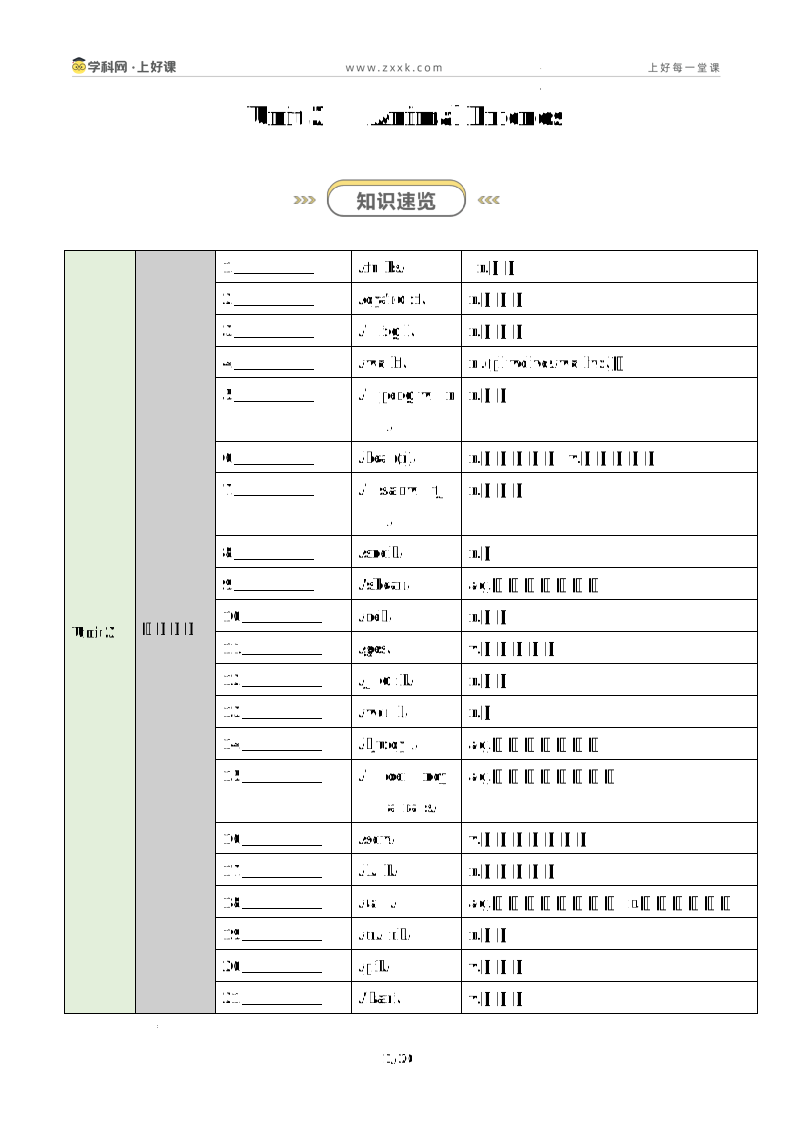
重点词汇
1.
/fɒks/
n.狐狸
2.
/dʒə'rɑ:f/
n.长颈鹿
3.
/ˈi:ɡl/
n.雕;鹰
4.
/wʊlf/
n .(pl wolves/wʊlvz/)狼
5.
/ˈpeŋɡwɪn/
n.企鹅
6.
/keə(r)/
n.照顾;护理 v.关心;在乎
7.
/ˈsænwɪtʃ/
n.三明治
8.
/sneɪk/
n.蛇
9.
/'skeərɪ/
adj.吓人的;恐怖的
10.
/nek/
n.脖子
11.
/ges/
v.猜测;估计
12.
/ʃɑ:k/
n.鲨鱼
13.
/weɪl/
n.鲸
14.
/hju:dʒ/
adj.巨大的;极多的
15.
/ˈdeɪndʒərəs/
adj.危险的;有危害的
16.
/seɪv/
v.救;储蓄;保存
17.
/lʌk/
n.幸运;运气
18.
/taɪ/
adj.泰国的;泰国人的 n.泰国人;泰语
19.
/trʌŋk/
n.象鼻
20.
/pik/
v.捡;摘
21.
/'kæri/
v.拿;提
22.
/ˈpleɪfl/
adj.爱嬉戏的;爱玩的
23.
/ˈswɪmə(r)/
n.游泳者
24.
/ˈkʌltʃə(r)/
n.文化;文明
25.
/haʊˈevə(r)/
adv.然而;不过
26.
/'deɪn(d)ʒə/
n.危险
27.
/ˈfɒrɪst/
n.森林
28.
/kɪl/
v.杀死;弄死
29.
/'aɪv(ə)rɪ/
n.象牙
30.
/'fren(d)lɪ/
adj.友好的
31.
/kwaɪt/
adv.相当;完全
32.
/fɜ:(r)/
n.(动物浓厚的)软毛
33.
/blaɪnd/
adj.瞎的;失明的
34.
/ˈhɪərɪŋ/
n.听力;听觉
35.
/æn'tɑ:ktɪkə/
n.南极洲
36.
/'æfrɪkə/
n.非洲
37.
/'taɪlænd/
n.泰国
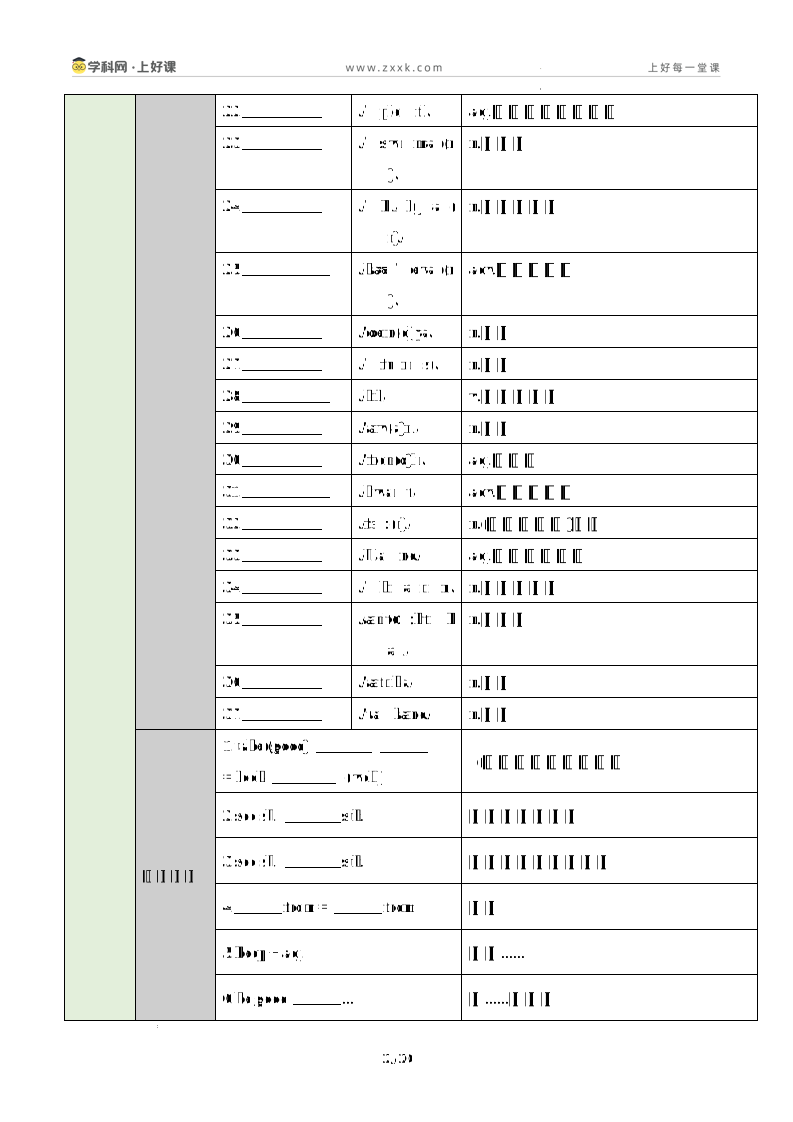
重点短语
1.take (good)
= look (well)
(很好地)照顾;处理
2.see sb. sth.
看见某人做某事
3.see sb. sth.
看见某人正在做某事
4. from = from
来自
5.keep + adj.
保持......
6.be good ...
对......有好处
7.look
看起来像
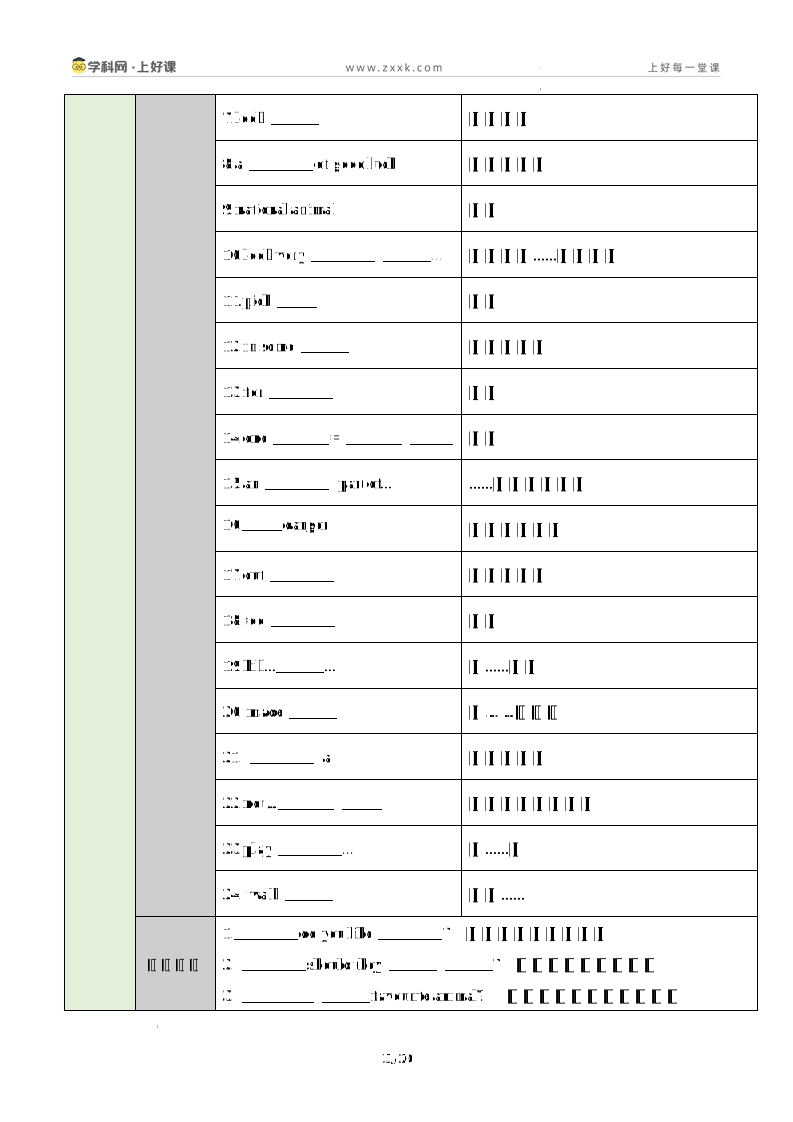
8.a of good luck
幸运的象征
9.national animal
国兽
10.look very ...
看起来和......非常不同
11.pick
捡起
12.in some
在某些方面
13.for
例如
14.one =
互相
15.an part of...
......重要的一部分
16. danger
处于危险之中
17.cut
砍伐;减少
18.too
太多
19.kill... ...
为......杀害
20. made
由……制成的
21. a
相当;非常
22.not…
一点也不;完全不
23.play ...
和......玩
24. walk
走去......
重点句型
1. do you like ? 为什么你喜欢动物?
2. should they ? 他们什么时候回来?
3. favourite animal? 你最喜欢的动物是什么?
4. Wolves their babies. 狼很好地照顾它们的幼崽。
5. they ? 他们来自哪里?
6. They often together. It helps them .
它们经常站得很近。这有助于它们保持温暖。
7. them your sandwich. 别把你的三明治给它们!
8.— you like snakes? — they’re really .
—你为什么不喜欢蛇? —因为它们真的很可怕。
9. are animals our lives? 动物是如何融入我们生活的?
10.They are also good luck here. 它们也是这里好运的象征。
11.They can and heavy things their trunks.
它们可以用象鼻捡起和搬运重物。
12.They are very and love in the water.
它们非常顽皮,喜欢在水里玩耍。
13.Elephants are an Thai life and culture.
大象是泰国生活和文化的重要组成部分。
14.Every elephant . 每头大象都很重要。
15.She me to school and safe.
它帮助我走路去学校,并且保证安全。
语言目标
1.掌握what,where,why 引导的特殊疑问词。
2.掌握形容词的基本用法。
【知识点1】—Why do you like monkeys? 你为什么喜欢猴子?
—Because they’re clever and funny. 因为它们聪明而且有趣。
【解析】
1.why为疑问副词,意为“为什么”,引导的特殊疑问句常用来询问原因,
其结构为“Why + 一般疑问句?”,常用because引导的句子来回答。
2. because为从属连词,意为“因为”,可引导原因状语从句,用来陈述原因、理由,常用来回答疑问词why引导的特殊疑问句。
例如:—Why do you like pandas? 你为什么喜欢熊猫?
—Because they are really cute. 因为它们很可爱。
【注意】汉语中常用“因为……所以……”表示因果关系,而英语中because和so不能同时使用在一个句子中,只能用其一。
例如: Because he studies hard, he get good grades each time. =He studies hard, so he get good grades each time. 因为他学习努力,所以他每次都取得好成绩。
【辨析】 because与because of
because
“因为”,连词,后面跟句子。
because of
“因为”,短语介词,后接名词、代词、动词-ing等
例如:Tom had to stay at home because of the rain.
=Tom had to stay at home because it rained. 汤姆因为下雨只能待在家里。
【典例】
( )1.________ I make mistakes again, ________ my teacher is very angry.
A.Because; / B.So; / C.Because; so D./; but
( )2.—________ do you like lions? —Because they are strong.
A. When B. Where C. How D. Why
( )3. I failed the exam ________ some careless mistakes.
A. because B. because of C. but D. so
4. Amy likes cats. Cats are kind of cute. (合并为一句话)
Amy likes cats are kind of cute.
【知识点2】 Wolves take good care of their babies. 狼很好地照顾它们的幼崽。
【解析】take care of 与 look after,care for同义,意为照顾,后面可以接名词、代词。
【拓展】
① take good care of...= look after...well 照顾好
② care about 关心,在意
③ take care = be careful 担心,小心
④ careful adj. 细心的 carefully adv. 细心地
反义词:careless adj. 粗心的
【典例】
( )1. Please help me my dog.
A. take off B. take care of C. look for D. look at
2. My neighbor often helps me to my cats. (照看)
【知识点3】Let’s go and see them. 让我们去看它们吧。
【解析】本句是一个表示建议的祈使句。
let’s 后接动词原形,意为“让我们做某事”
否定形式为let’s not do sth. 意为“让我们不做某事”。
其常用的肯定答语有 “OK./All right./Good idea.”。
否定答语可用 “Sorry, I...”。
例句:—It’s 8:00 now. Let’s go to class. 现在8:00了。我们去上课吧!
—OK. 好的。
【拓展】let’s 是let us 的缩写,一般情况下,let’s与let us表示的意思一样,意为“让我们”,但两者之间有细微的差别:
Let’s 强调包括说话者和对方在内,用来提出建议。
例句:Let’s go to school, Li Ming. 李明,咱们上学去吧。(提出建议,双方参与)
Let us 不包括对方,用来请求允许。
例句:Let us go home, Zhang Hua. 张华,让我们回家吧。(请求允许,不包括对方在内)
【典例】
( )1. Let’s _______ and join the music club.
A. go B. going C. to go D. goes
( )2. —Let’s play basketball after school, Jack.
—_______. I’d love to.
A.I don’t want to B.Good idea
C.No, I don’t D.Sorry, I can’t
【知识点4】I like how they walk. It’s funny/interesting.
我喜欢它们走路的样子,这很有趣。
【解析1】 like的用法
(1) v. 喜欢
① like+名词/代词 喜欢某人或某物
例句:Tom likes apples. 汤姆喜欢苹果。
② like to do sth. / like doing sth. 喜欢做某事
例句:Helen likes drawing. 海伦喜欢画画。
③ would like to do sth. ( = want to do sth.) 想要做某事
例句:I’d like to go shopping with you. 我想要和你一起去买东西。
④ would like sb. to do sth. 想要某人做某事
例句:I’d like you to meet my friends. 我想要你见见我的朋友。
(2) prep. 像
① be like, look like+名词或代词作宾语,像……;跟……一样
例句:Our maths teacher is like our father. 我们数学老师像父亲一样。
The stone looks like a monkey. 这块石头像一只猴子。
② feel like+doing /代词或名词,想要做某事
例句:Do you feel like talking with me? 你想和我谈谈吗?
【解析2】
1.interest. n. “兴趣;趣味”
v. “使(人)产生兴趣”。
2. interesting可作表语,指某人/事/物本身有趣;也可作定语修饰人或物。
例句:① The film is interesting. 这部电影很有趣。 (作表语)
②This is an interesting book. 这是一本有趣的书。(作定语)
3. interested用于be/get/become interested in sth. 意为“对某事感兴趣”
be/get/become interested in sth.doing sth. 意为“对做某事感兴趣”
例句:He is interested in fishing. 他钓鱼感兴趣。/来源:Z#xx#k.Com/
【注意】
具体用 interesting还是interested需要看形容词修饰什么词,修饰事物就用interesting;
修饰人用interested。这是中考常考的知识点。
【典例】
( )1.—What _____ Millie _____?
—She is _____ unusual girl. She is clever and helpful.
A. is, look like; an B. is, like; an
C. does, like; a D. does, look like; a
( )2.—Would you like ______ his sister ______ your party?
—Sure.
A. inviting; to B. invite; for C. to invite; to
( )3.More and more teenagers take an _______ in the soap opera.
A. interested B. interesting C. interest D. interests
( )4.It seems that your daughter shows an interest ________ playing the guitar.
A. from B. in C. for D. at
( )5.Danny saw many places of _____ in Xi'an.
A. interest B. interests C. interesting D. interested
( )6.The story is _________ and all of us are _______ in it.
A. interest; interesting B. interesting; interest
C. interested; interesting D. interesting; interested
( )7.He's always very ______when he talks about his travels.
A. interest B. interests C. interesting D. interested
【知识点5】 —Where are they from? 他们来自哪里?
—It says they’re from Antarctica. 上面说他们来自南极洲。
【解析】be from与come from 来自……
be from
be是连系动词,句式的变化是由be来完成的,be有人称和数的变化。
I am from Shanghai. 我来自上海。
He isn’t from England. 他不是来自英国。
Is he from England? 他来自英国吗?
come from
come是实义动词,句式的变化须借助助动词do/does来完成,谓语动词come受主语的影响。
She comes from Shandong.
They don’t come from China.
Do they come from China?
【典例】
1. The giraffe comes from South Africa. (对画线部分提问)
the giraffe ?
( ) 2. —Where pandas ?
— They’re from China.
A. does, from B. do, come from C. is, from D. are, come from
【知识点6】 Why don’t you like snakes? 你为什么不喜欢蛇?
【解析】Why don’t you ...? 意为“你为什么不……?”,表提建议。
有时相当于“Why not +动词原形...?”,意为“何不……呢?”
例句:Why don’t you join us? = Why not join us? 你何不加入我们呢?
【拓展】 表示提出建议的句型
建议句型
Why don’t you do sth?
Why not do sth.?
Let’s do sth.
How/What about doing sth.?
例句:Why don’t you buy a T-shirt for his birthday? 为什么不给他生日买一件T恤衫呢?
What / How about buying a T-shirt for his birthday? 给他生日买一件T恤衫怎么样?
【典例】
( )1.—It is clear today. Why not _______ a mountain?
—________ good.
A. climb; Sounds B. climbs;Sounds C. to climb;Sound D. climbing; Sounds
2.Why don’t you join the art club? (改为同义句)
join the art club?
【知识点7】 However, they are in great danger. 然而,大象正处于极大的危险中。
【解析1】 however 和but均可表示转折或对比,意为“但是”、“可是”、“然而”,但however后要用逗号隔开。
【解析2】 danger作名词,意为“危险”。
形容词是dangerous, 意为“危险的”,反义词是safe,意为“安全的”。
(be) in danger 表示“在危险中”。
【拓展】英语中,常用形容词big或great与danger搭配,表示“巨大的危险”。
(be) out of danger表示“脱离危险”。
例如:The doctors say he’s now out of danger.大夫们说现在他脱离了危险。
【典例】
1. Don't get close to the wild animals because they are very (danger).
2. 华南虎正处于极大的危险之中,我们应该尽力拯救它们。
The South China tigers are , and we should try to save them.
【知识点8】 People cut down too many trees. 人们大量砍伐树木。
【解析1】cut down意为“砍倒;砍伐;削减”。这是一个由“动词+副词”构成的短语动词,名词作宾语时,既可以放在动词和副词之间,又可以放在副词之后;代词作宾语时只能放在动词和副词之间。
例句: We shouldn’t cut down too many trees. 我们不应该砍太多的树。
【拓展】cut构成的其他短语:
cut
cut up 切碎
cut in 打断;插嘴
cut off 切断;切掉
【典例】
( )1.The trees are important and good for the environment. We shouldn't ______.
A. cut it down B. cut down it C. cut them down D. cut down them
( )2.It’s impolite (不礼貌的) to _______ other’s words.
A. cut down B. cut in C. cut up D. cut off
【解析2】 辨析too many, too much与much too
too many
太多
其后要接可数名词复数形式
too much
太多
后接不可数名词,还可修饰动词作状语
much too
太......
Much用来加强语气,后面常接形容词或副词
例如:There are too many cars on the street. 街上的汽车太多了。
He drinks too much water. 他喝太多水了。
This math problem is much too difficult. 这个数学题太难了。
【典例】
( )1. Lisa, I can't go to the party with you today. I have ______ things to do.
A. much too B. too much C. many too D. too many
( )2.—Would you like to go hiking with me this weekend?
—I'd love to. But I'll have ______ homework to do and ______ clothes to wash.
A. much too; too much B. too much; too many
C. too many; too much D. too many; much too
【知识点9】Let’s save the forests and not buy things made of ivory.
让我拯救森林,不要买牙制品。
【解析1】
1 v. “拯救,救助”,后接名词或者代词作宾语
例如:The doctor saved the old man’s life. 这个医生救了那个老人的命。
save ② v. “储蓄,储存”
例如:He saved a lot of money. 他存了很多钱。
③ v. “节约,节省”。
例如:It’s a good habit to save water. 节约用水是一个好习惯。
【拓展】常用短语
save the elephants救助大象 save one’s life 挽救某人的生命
save money攒钱 save water 节省用水
save sth. for sb.为某人节省某物
【解析2】made of意为“由......制成的”。过去分词短语made of ivory作后置定语, 修饰其前的名词thing。
例句:I like things made of wood. 我喜欢木制的东西.
I love the sweater made of wool. 我喜欢这件由羊毛制成的毛衣。
【辨析】be made of, be made from,be made in与be made by
结构
用法
be made of
意为“由……制成的”,指从成品上能看出原料,制成物没有改变原料的本质
be made from
意为“由……制成的”,指从成品上看不出原料,制成物改变了原料的本质
be made in
意为“产自……”,后跟地点名词,表示某物的产地
be made by
意为“被……制造”,后接制作人,强调由谁制造
例句:The kite is made of paper and bamboo. 这只风筝是用纸和竹子做的。
This kind of wine is made from grapes. 这种酒是由葡萄制成的。
These watches are made in Shenzhen. 这些手表产自于深圳。
The chocolate cake is made by my mother. 这个巧克力蛋糕是我妈妈做的。
【典例】
( )1. —Where is your computer ?
—In Beijing.
A. made of B. made from C. made in D. made by
( )2. —Your T-shirt looks nice. Is it ________ cotton(棉)?
—Yes.
A. made of B. made from C. made in D. made by
【知识点10】She is really friendly. 它非常友好。
【解析】friendly形容词,意为“友好的”,其反义词为unfriendly,意为“不友好的”。
make friends with sb. 和某人交朋友
例句: My grandma is very friendly. 我奶奶非常友好。
【拓展】
be friendly to sb.
意为“对某人友好”,指对别人的态度好、热情,
相当于be kind/nice to sb.
be friendly with sb.
意为“和某人关系好”或“与某人要好”
例句: I am friendly to my classmates. 我对我的同学很友好。
Tommy is friendly with Jason. They’re good friends. 汤米和杰森关系很好,他们是好朋友。
【典例】
( )1.Tom is a really ______ boy and everybody likes to make friends________ him in our class.
A. friendly; to B. friendly; with C. friend; to D. friends; with
(一)what, where, why 引导的特殊疑问词
1. what 疑问代词,意为“什么”,通常用来询问姓名、物品、数字运算结果、时间或做什么事等。
例如:What does Mary like doing ? She likes drawing .
2.疑问副词where 意为“在哪里;在什么地方”,用于询问地点。
例如: —Where are you from?(= Where do you come from?)
—I am from England./England.
3. 疑问副词why意为“为什么”, 它引导的特殊疑问句用来询问原因、理由。
其结构为:“Why + 一般疑问句(肯定 / 否定一般疑问句)?”,其答语一般用because引导。
例如: —Why are you late for class?
—Because the bus is late.
▲ 特殊用法:Why don’t you+动词原形+其他?常用来提出建议或劝告,表示"为什么不……?"相当于"Why not+动词原形+其他?"。
例如: —Why don’t you play basketball?=Why not play basketball? 为什么不打篮球呢?
—That sounds good. 那听起来不错。
【典例】
1.—_________ animals do you like?
—I like pandas.
A.When B.Where C.Why D.What
2.—________ is your English teacher from?
—He is from London.
A.When B.Where C.Why D.How
3.— _____ do you choose this color?
— Because it matches my room.
A.What B.Where C.Why D.How
4.— _____ do you want to be in the future?
— A doctor.
A.When B.What C.Why D.How
5.— _____ does your father work?
— In a big company.
A.When B.Where C.Why D.What
6.— _____ are you looking for?
— My keys.
A.When B.Where C.What D.Why
(二)形容词的基本用法
形容词(Adjective)用于修饰名词或代词,说明事物或人的性质或特征。形容词可以表示质量、大小新老、温度、形状、颜色、产地等。
一、形容词的作用
1、形容词作定语
形容词作定语时通常修饰名词或代词,并且要放在名词前面。
a long day; a cool drink; the big one
2、形容词作表语
形容词直接用在系动词be, sound, look, smell, taste, seem等后面时,我们就说这个形容词是表语。
The book is very interesting.
The apple tastes sweet.
二、形容词的用法
1、以“-ing”和“-ed”结尾的形容词
-ing结尾的形容词表示主语的特性,-ed 结尾的形容词表示人的感受。
verb
-ing
-ed
interest
interesting令人有趣的
interested感到有趣的
excite
exciting令人激动的
excited感到激动的
bore
bored令人无聊的
boring感到无聊的
tire
tiring令人疲惫的
tired感到疲惫的
surprise
surprising令人惊讶的
surprised感到惊讶的
relax
relaxing令人放松的
relaxed感到放松的
2、the+形容词泛指一类人
某些形容词与定冠词连用可以泛指一类人,如the old, the young, the rich, the poor等。
e.g.The young should be nice to the old.
3、复合形容词:有两个或两个以上单词组成,且每个单词之间要用连字符“-”连接。
(1) 数词+名词+形容词 three-year-old 三岁的
(2) 数词+名词(单数) two-day trip 两天的旅行
4、(1)It’s +形容词+for sb. to do sth. 做某事对某人来说怎么样
e.g.It’s easy for me to answer the question.
(2)It’s +形容词+of sb. to do sth. 某人做什么事怎么样
e.g.It’s very kind of you to give me a hand.
【典例】
1. The _____ news made everyone _____.
A. excited; exciting B. exciting; excited C. excited; excited D. exciting; exciting
2. My brother is a _____ boy.
A. ten-year-old B. ten-years-old C. ten year old D. ten years old
3. I was _____ in the _____ story.
A. interesting; interested B. interested; interesting
C. interesting; interesting D. interested; interested
4. The movie is very (bore). We all like it.
5. I feel very (tire) after running for 30 minutes.
6. There is something (interest) in today's newspaper.
1、 单元写作主题
本单元教材写作情境为“写一篇关于你最喜欢的动物的文章”,属于“人与自然”主题范畴中“自然生态”这一主题群,涉及子主题“热爱与敬畏自然,与自然和谐共生”。此类作文要求学生能够熟练运用形容词和可数名词介绍自己最喜欢的动物。
本单元话题常见写作角度涉及:①介绍一种自己喜欢的动物;②分享保护动物的方法。
2、 写作思路提示
开头:介绍自己最喜欢的动物
① Of/ Among all the animals , the … is my favourite animal.
② I like … best .
③ As for me , my favourite animal is …
正文:介绍喜欢这种动物的原因
①I like… best because… not only …, but also …
②They are so… that they can…
③And some… can help…, even…
④Their round faces make them look cute/ beautiful…
⑤I love their bright eyes…
结尾:总结全文
①In a word, I really like…
②… are really our good friends.
③Thatˈs why… are my favourite.
3、 佳句积累
教材原句
(1)They are also a symbol of good luck here. (Section B 1b)
(2) Elephants look very different from other animals. (Section B 1b)
(3) Elephants are like us in some ways. (Section B 1b)
(4) Let’s save the forests and not buy things made of ivory. (Section B 1b)
课外佳句
(5) I feel happy when I spend time with my lovely dog.
(6) I love keeping pets. Pets bring me a lot of fun.
(7) Keeping a pet is very useful for us because it can help us do more exercise.
(8) Lucky is a pet. She is also a friend of mine.
四、针对练习
(1) 牛是勤劳的象征。(用a symbol of翻译)
(2) 鸟与其他动物不同。它们可以在空中飞翔。(用be different from翻译)
(3)猴子在某些方面和我们很像。(用be like翻译)
(4) Let’s save the forests and not buy things made of ivory.用stop doing结构改写
(5) 当我的鹦鹉难过时,我也会不开心。(用主语+feel+ adj. + when句式翻译)
(6) I love keeping pets. Pets bring me a lot of fun. 用I love... because句式改写
(7) Keeping a pet is very useful for us because it can help us do more exercise. 用It is+ adj. + for sb to do sth句式改写
(8) Lucky is a pet. She is also a friend of mine. 用not only... but also... 句式改写
五、写作范文
某英文杂志向中学生 征稿 (语篇类型:应用文),请同学们以“My Favourite Animal”为题,根据以下提示,介绍一下自己最喜欢的动物。人称:第三人称为主
(1) What animal do you like best?
(2) Why do you like it?
(3) …
要求:
(1)词数60左右;
(2)短文意思连贯、符合逻辑。
My Favourite Animal
Of all the animals, the dog is my favourite animal.
I like dogs best because① they can not only help guard our houses, but also② be our good friends. They are so clever that③ they can understand you when you talk to them. And some dogs can help blind people in many ways , and even save their lives when they are in danger.
In a word④, dogs are my favourite animals, and they are our friends in my heart .
①because引导原因状语从句,贴合本单元所学新知,提升句子档次。
②“not only… but also…”用于连接两个并列成分, 可避免文章出现过多的简单句,使文章语言简洁流畅。
③“so… that…”结构的使用,凸显了文章高级句式的使用,增加了文章的亮点。
④In a word总结全文,使文章脉络清晰,结构完整。
本篇范文语言流畅、句式高级,多处使用状语从句,提高了文章的可读性。
六、实战演练
为激发同学们对动物的关爱之情,六年级 (一) 班计划下周一举办动物故事分享会。假定你是此次分享会上发言的同学之一,请结合以下要点为此次分享写一篇发言稿。
要点:(1)Which animal do you like best?
(2) What is it like?
(3) What should we do for it?
要求:(1) 参考以上提示内容,可适当发挥;
(2)语句通顺,意思连贯,书写工整;
(3) 文中不得出现任何你的真实信息;
(4)词数70词左右。
1 / 11
学科网(北京)股份有限公司
学科网(北京)股份有限公司
$
Unit 3 Animal Friends
Unit 3
重点词汇
1.fox
/fɒks/
n.狐狸
2.giraffe
/dʒə'rɑ:f/
n.长颈鹿
3.eagle
/ˈi:ɡl/
n.雕;鹰
4.wolf
/wʊlf/
n .(pl wolves/wʊlvz/)狼
5.penguin
/ˈpeŋɡwɪn/
n.企鹅
6.care
/keə(r)/
n.照顾;护理 v.关心;在乎
7.sandwich
/ˈsænwɪtʃ/
n.三明治
8.snake
/sneɪk/
n.蛇
9.scary
/'skeərɪ/
adj.吓人的;恐怖的
10.neck
/nek/
n.脖子
11.guess
/ges/
v.猜测;估计
12.shark
/ʃɑ:k/
n.鲨鱼
13.whale
/weɪl/
n.鲸
14.huge
/hju:dʒ/
adj.巨大的;极多的
15.dangerous
/ˈdeɪndʒərəs/
adj.危险的;有危害的
16.save
/seɪv/
v.救;储蓄;保存
17.luck
/lʌk/
n.幸运;运气
18.Thai
/taɪ/
adj.泰国的;泰国人的 n.泰国人;泰语
19.trunk
/trʌŋk/
n.象鼻
20.pick
/pik/
v.捡;摘
21.carry
/'kæri/
v.拿;提
22.playful
/ˈpleɪfl/
adj.爱嬉戏的;爱玩的
23.swimmer
/ˈswɪmə(r)/
n.游泳者
24.culture
/ˈkʌltʃə(r)/
n.文化;文明
25. however
/haʊˈevə(r)/
adv.然而;不过
26.danger
/'deɪn(d)ʒə/
n.危险
27.forest
/ˈfɒrɪst/
n.森林
28. kill
/kɪl/
v.杀死;弄死
29.ivory
/'aɪv(ə)rɪ/
n.象牙
30.friendly
/'fren(d)lɪ/
adj.友好的
31. quite
/kwaɪt/
adv.相当;完全
32.fur
/fɜ:(r)/
n.(动物浓厚的)软毛
33.blind
/blaɪnd/
adj.瞎的;失明的
34.hearing
/ˈhɪərɪŋ/
n.听力;听觉
35.Antarctica
/æn'tɑ:ktɪkə/
n.南极洲
36.Africa
/'æfrɪkə/
n.非洲
37.Thailand
/'taɪlænd/
n.泰国
重点短语
1.take (good) care of
= look after (well)
(很好地)照顾;处理
2.see sb. do sth.
看见某人做某事
3.see sb. doing sth.
看见某人正在做某事
4.be from = come from
来自
5.keep + adj.
保持......
6.be good for...
对......有好处
7.look like
看起来像
8.a symbol of good luck
幸运的象征
9.national animal
国兽
10.look very different from...
看起来和......非常不同
11.pick up
捡起
12.in some ways
在某些方面
13.for example
例如
14.one another = each other
互相
15.an important part of...
......重要的一部分
16.in danger
处于危险之中
17.cut down
砍伐;减少
18.too many
太多
19.kill...for...
为......杀害
20. made of
由……制成的
21. quite a
相当;非常
22.not…at all
一点也不;完全不
23.play with...
和......玩
24. walk to
走去......
重点句型
1.Why do you like animals? 为什么你喜欢动物?
2. When should they be back? 他们什么时候回来?
3. What’s your favourite animal? 你最喜欢的动物是什么?
4. Wolves take good care of their babies. 狼很好地照顾它们的幼崽。
5. Where are they from? 他们来自哪里?
6. They often stand close together. It helps them keep warm.
它们经常站得很近。这有助于它们保持温暖。
7.Don’t give them your sandwich. 别把你的三明治给它们!
8.—Why don’t you like snakes? —Because they’re really scary.
—你为什么不喜欢蛇? —因为它们真的很可怕。
9.How are animals part of our lives? 动物是如何融入我们生活的?
10.They are also a symbol of good luck here. 它们也是这里好运的象征。
11.They can pick up and carry heavy things with their trunks.
它们可以用象鼻捡起和搬运重物。
12.They are very playful and love to play in the water.
它们非常顽皮,喜欢在水里玩耍。
13.Elephants are an important part of Thai life and culture.
大象是泰国生活和文化的重要组成部分。
14.Every elephant counts. 每头大象都很重要。
15.She helps me walk to school and stay safe.
它帮助我走路去学校,并且保证安全。
语言目标
1.掌握what,where,why 引导的特殊疑问词。
2.掌握形容词的基本用法。
【知识点1】—Why do you like monkeys? 你为什么喜欢猴子?
—Because they’re clever and funny. 因为它们聪明而且有趣。
【解析】
1.why为疑问副词,意为“为什么”,引导的特殊疑问句常用来询问原因,
其结构为“Why + 一般疑问句?”,常用because引导的句子来回答。
2. because为从属连词,意为“因为”,可引导原因状语从句,用来陈述原因、理由,常用来回答疑问词why引导的特殊疑问句。
例如:—Why do you like pandas? 你为什么喜欢熊猫?
—Because they are really cute. 因为它们很可爱。
【注意】汉语中常用“因为……所以……”表示因果关系,而英语中because和so不能同时使用在一个句子中,只能用其一。
例如: Because he studies hard, he get good grades each time. =He studies hard, so he get good grades each time. 因为他学习努力,所以他每次都取得好成绩。
【辨析】 because与because of
because
“因为”,连词,后面跟句子。
because of
“因为”,短语介词,后接名词、代词、动词-ing等
例如:Tom had to stay at home because of the rain.
=Tom had to stay at home because it rained. 汤姆因为下雨只能待在家里。
【典例】
( )1.________ I make mistakes again, ________ my teacher is very angry.
A.Because; / B.So; / C.Because; so D./; but
【答案】A
【解析】句意:因为我又犯错了,所以我老师非常生气。
考查连词。Because因为;so所以;but但是。根据“…I make mistakes again, …my teacher is very angry”可知前句是原因,后句是结果,而且because和so不能连用。故选A。
( )2.—________ do you like lions? —Because they are strong.
A. When B. Where C. How D. Why
【答案】D
【解析】why引导的特殊疑问句,常用“Because…”来回答。故选D。
( )3. I failed the exam ________ some careless mistakes.
A. because B. because of C. but D. so
【答案】B
【解析】此题考查because和because of的区别。because of后接名词、代词、动词-ing等。故选B。
4. Amy likes cats. Cats are kind of cute. (合并为一句话)
Amy likes cats are kind of cute.
【答案】because; they
【解析】前后两句话存在因果关系。Cats are kind of fun. 为原因,因此用because引导原因状语从句。
【知识点2】 Wolves take good care of their babies. 狼很好地照顾它们的幼崽。
【解析】take care of 与 look after,care for同义,意为照顾,后面可以接名词、代词。
【拓展】
① take good care of...= look after...well 照顾好
② care about 关心,在意
③ take care = be careful 担心,小心
④ careful adj. 细心的 carefully adv. 细心地
反义词:careless adj. 粗心的
【典例】
( )1. Please help me my dog.
A. take off B. take care of C. look for D. look at
【答案】B
【解析】句意:请帮我照看一下我的狗。take off 起飞;take care of 照料;look for寻找; look at看。故选B。
2. My neighbor often helps me to my cats. (照看)
【答案】look after
【解析】句意:我的邻居经常帮助我照看我的猫。look after,照看。
【知识点3】Let’s go and see them. 让我们去看它们吧。
【解析】本句是一个表示建议的祈使句。
let’s 后接动词原形,意为“让我们做某事”
否定形式为let’s not do sth. 意为“让我们不做某事”。
其常用的肯定答语有 “OK./All right./Good idea.”。
否定答语可用 “Sorry, I...”。
例句:—It’s 8:00 now. Let’s go to class. 现在8:00了。我们去上课吧!
—OK. 好的。
【拓展】let’s 是let us 的缩写,一般情况下,let’s与let us表示的意思一样,意为“让我们”,但两者之间有细微的差别:
Let’s 强调包括说话者和对方在内,用来提出建议。
例句:Let’s go to school, Li Ming. 李明,咱们上学去吧。(提出建议,双方参与)
Let us 不包括对方,用来请求允许。
例句:Let us go home, Zhang Hua. 张华,让我们回家吧。(请求允许,不包括对方在内)
【典例】
( )1. Let’s _______ and join the music club.
A. go B. going C. to go D. goes
【答案】A
【解析】句意:让我们去加入音乐俱乐部吧。Let’s do sth. 让我们做某事。故选A。
( )2. —Let’s play basketball after school, Jack.
—_______. I’d love to.
A.I don’t want to B.Good idea
C.No, I don’t D.Sorry, I can’t
【答案】B
【解析】——让我们放学后去打篮球吧,杰克。——好主意。我愿意去。根据I’d love to.可知,他愿意去。是肯定回答。故选B。
【知识点4】I like how they walk. It’s funny/interesting.
我喜欢它们走路的样子,这很有趣。
【解析1】 like的用法
(1) v. 喜欢
① like+名词/代词 喜欢某人或某物
例句:Tom likes apples. 汤姆喜欢苹果。
② like to do sth. / like doing sth. 喜欢做某事
例句:Helen likes drawing. 海伦喜欢画画。
③ would like to do sth. ( = want to do sth.) 想要做某事
例句:I’d like to go shopping with you. 我想要和你一起去买东西。
④ would like sb. to do sth. 想要某人做某事
例句:I’d like you to meet my friends. 我想要你见见我的朋友。
(2) prep. 像
① be like, look like+名词或代词作宾语,像……;跟……一样
例句:Our maths teacher is like our father. 我们数学老师像父亲一样。
The stone looks like a monkey. 这块石头像一只猴子。
② feel like+doing /代词或名词,想要做某事
例句:Do you feel like talking with me? 你想和我谈谈吗?
【解析2】
1.interest. n. “兴趣;趣味”
v. “使(人)产生兴趣”。
2. interesting可作表语,指某人/事/物本身有趣;也可作定语修饰人或物。
例句:① The film is interesting. 这部电影很有趣。 (作表语)
②This is an interesting book. 这是一本有趣的书。(作定语)
3. interested用于be/get/become interested in sth. 意为“对某事感兴趣”
be/get/become interested in sth.doing sth. 意为“对做某事感兴趣”
例句:He is interested in fishing. 他钓鱼感兴趣。/来源:Z#xx#k.Com/
【注意】
具体用 interesting还是interested需要看形容词修饰什么词,修饰事物就用interesting;
修饰人用interested。这是中考常考的知识点。
【典例】
( )1.—What _____ Millie _____?
—She is _____ unusual girl. She is clever and helpful.
A. is, look like; an B. is, like; an
C. does, like; a D. does, look like; a
【答案】B
【解析】句意:——米莉是个什么样的女孩?——她是一位不寻常的女孩。她既聪明又乐于助人。What does sb. look like?用于提问人的长相、外貌,意为“某人长得什么样?”“ What's sb. like? ”用于提问人的性格、品质等,意为“某人是个什么样的人”unusual[ʌn'juːʒʊəl]是以元音音素开头,前面应该用不定冠词an。根据“她既聪明又乐于助人。”可知,上文应是询问她是什么样的人,故选B。
( )2.—Would you like ______ his sister ______ your party?
—Sure.
A. inviting; to B. invite; for C. to invite; to
【答案】C
【解析】句意:——你想邀请他妹妹来你的聚会吗?——当然。would like to do sth.想要做某事,固定搭配;invite sb. to sp.邀请某人去某地,故选C。
( )3.More and more teenagers take an _______ in the soap opera.
A. interested B. interesting C. interest D. interests
【答案】C
【解析】结合take an和in联想到take an interest in 对……感兴趣,固定用法,故答案是C。
越来越多的年轻人对肥皂剧感兴趣。take an interest in 相当于 be interested in。
( )4.It seems that your daughter shows an interest ________ playing the guitar.
A. from B. in C. for D. at
【答案】B
【解析】考查固定搭配。show an interest in sth.意为“对……感兴趣”故选B。
( )5.Danny saw many places of _____ in Xi'an.
A. interest B. interests C. interesting D. interested
【答案】A
【解析】句意:丹尼在西安参观了很多名胜古迹。interesting有趣的;interested感兴趣的,place of interest名胜古迹,固定搭配,故选A。
( )6.The story is _________ and all of us are _______ in it.
A. interest; interesting B. interesting; interest
C. interested; interesting D. interesting; interested
【答案】D
【解析】在英语中,以ing结尾的形容词修饰物,以ed结尾的形容词修饰人,根据句中的关键词The story应用interesting修饰,all of us应用interested修饰,故选D。
这个故事是有趣的并且我们所有人对它感兴趣。
( )7.He's always very ______when he talks about his travels.
A. interest B. interests C. interesting D. interested
【答案】D
【解析】考查形容词词义辨析,结合语境"当他谈论他的旅行时,他总是很感兴趣."根据is推断用形容词,排除A和B项的名词,interested感兴趣的,常指人,interesting令人感兴趣的,常指物,不符合句意,故选D。
当他谈论他的旅行时,他总是很感兴趣.
【知识点5】 —Where are they from? 他们来自哪里?
—It says they’re from Antarctica. 上面说他们来自南极洲。
【解析】be from与come from 来自……
be from
be是连系动词,句式的变化是由be来完成的,be有人称和数的变化。
I am from Shanghai. 我来自上海。
He isn’t from England. 他不是来自英国。
Is he from England? 他来自英国吗?
come from
come是实义动词,句式的变化须借助助动词do/does来完成,谓语动词come受主语的影响。
She comes from Shandong.
They don’t come from China.
Do they come from China?
【典例】
1. The giraffe comes from South Africa. (对画线部分提问)
the giraffe ?
【答案】Where;does;come;from
【解析】划线部分是“南非”,是地点名词,因此对地名进行提问。根据所给空格,应为Where do/does + 主语 + come from?
( ) 2. —Where pandas ?
— They’re from China.
A. does, from B. do, come from C. is, from D. are, come from
【答案】B
【解析】根据回答可知,是问熊猫来自于哪。可用Where be + 主语 + from? 或者Where do/does + 主语 + come from? 故选B。
【知识点6】 Why don’t you like snakes? 你为什么不喜欢蛇?
【解析】Why don’t you ...? 意为“你为什么不……?”,表提建议。
有时相当于“Why not +动词原形...?”,意为“何不……呢?”
例句:Why don’t you join us? = Why not join us? 你何不加入我们呢?
【拓展】 表示提出建议的句型
建议句型
Why don’t you do sth?
Why not do sth.?
Let’s do sth.
How/What about doing sth.?
例句:Why don’t you buy a T-shirt for his birthday? 为什么不给他生日买一件T恤衫呢?
What / How about buying a T-shirt for his birthday? 给他生日买一件T恤衫怎么样?
【典例】
( )1.—It is clear today. Why not _______ a mountain?
—________ good.
A. climb; Sounds B. climbs;Sounds C. to climb;Sound D. climbing; Sounds
【答案】A
【解析】Why not +do...? 为什么不做某事呢?用于提建议。肯定回答可用Sounds good.“听起来不错。”
2.Why don’t you join the art club? (改为同义句)
join the art club?
【答案】Why;not
【解析】Why don’t you do...? = Why not +do...? 为什么不做某事呢?用于提建议。
【知识点7】 However, they are in great danger. 然而,大象正处于极大的危险中。
【解析1】 however 和but均可表示转折或对比,意为“但是”、“可是”、“然而”,但however后要用逗号隔开。
【解析2】 danger作名词,意为“危险”。
形容词是dangerous, 意为“危险的”,反义词是safe,意为“安全的”。
(be) in danger 表示“在危险中”。
【拓展】英语中,常用形容词big或great与danger搭配,表示“巨大的危险”。
(be) out of danger表示“脱离危险”。
例如:The doctors say he’s now out of danger.大夫们说现在他脱离了危险。
【典例】
1. Don't get close to the wild animals because they are very (danger).
【答案】dangerous
【解析】句意:不要靠近野生动物,因为他们很危险。danger,名词,这里应填形容词作表语。故填dangerous。
2. 华南虎正处于极大的危险之中,我们应该尽力拯救它们。
The South China tigers are , and we should try to save them.
【答案】in;great;danger
【解析】根据语句翻译可知,应填“处于极大的危险之中”,故填in great danger。
【知识点8】 People cut down too many trees. 人们大量砍伐树木。
【解析1】cut down意为“砍倒;砍伐;削减”。这是一个由“动词+副词”构成的短语动词,名词作宾语时,既可以放在动词和副词之间,又可以放在副词之后;代词作宾语时只能放在动词和副词之间。
例句: We shouldn’t cut down too many trees. 我们不应该砍太多的树。
【拓展】cut构成的其他短语:
cut
cut up 切碎
cut in 打断;插嘴
cut off 切断;切掉
【典例】
( )1.The trees are important and good for the environment. We shouldn't ______.
A. cut it down B. cut down it C. cut them down D. cut down them
【答案】C
【解析】句意:树木很重要,对环境有好处。我们不应该砍掉它们。根据The trees可知,对应的代词是them,而且them要位于cut和down之间,故选C。
( )2.It’s impolite (不礼貌的) to _______ other’s words.
A. cut down B. cut in C. cut up D. cut off
【答案】B
【解析】句意:打断别人说话是不礼貌的。A. cut down砍倒;B. cut in打断;C. cut up切碎;D. cut off切断。故选B。
【解析2】 辨析too many, too much与much too
too many
太多
其后要接可数名词复数形式
too much
太多
后接不可数名词,还可修饰动词作状语
much too
太......
Much用来加强语气,后面常接形容词或副词
例如:There are too many cars on the street. 街上的汽车太多了。
He drinks too much water. 他喝太多水了。
This math problem is much too difficult. 这个数学题太难了。
【典例】
( )1. Lisa, I can't go to the party with you today. I have ______ things to do.
A. much too B. too much C. many too D. too many
【答案】D
【解析】句意:丽萨,今天我不能和你一起去参加聚会。我有许多事情要做。much too太,极其,后接形容词或副词;too much太多,后接不可数名词;many too错误表达;too many太多,后接可数名词的复数形式。根据Lisa, I can’t go to the party with you today. I have ________ things to do.可知,此处说的是:我有许多事情要做。things可数名词的复数形式,所以用too many,故选D。
( )2.—Would you like to go hiking with me this weekend?
—I'd love to. But I'll have ______ homework to do and ______ clothes to wash.
A. much too; too much B. too much; too many
C. too many; too much D. too many; much too
【答案】B
【解析】句意:——这个周末你想和我一起去徒步旅行吗?——我很想去。但我有太多的家庭作业要做,太多的衣服要洗。much too太,修饰形容词或副词;too much太多,修饰不可数名词;too many太多,修饰可数名词复数。根据“I'll have homework to do and clothes to wash”可知,第一个空后为不可数名词homework,应用too much修饰;第二个空后为复数名词clothes,应用too many修饰。故选B。
【知识点9】Let’s save the forests and not buy things made of ivory.
让我拯救森林,不要买牙制品。
【解析1】
1 v. “拯救,救助”,后接名词或者代词作宾语
例如:The doctor saved the old man’s life. 这个医生救了那个老人的命。
save ② v. “储蓄,储存”
例如:He saved a lot of money. 他存了很多钱。
③ v. “节约,节省”。
例如:It’s a good habit to save water. 节约用水是一个好习惯。
【拓展】常用短语
save the elephants救助大象 save one’s life 挽救某人的生命
save money攒钱 save water 节省用水
save sth. for sb.为某人节省某物
【解析2】made of意为“由......制成的”。过去分词短语made of ivory作后置定语, 修饰其前的名词thing。
例句:I like things made of wood. 我喜欢木制的东西.
I love the sweater made of wool. 我喜欢这件由羊毛制成的毛衣。
【辨析】be made of, be made from,be made in与be made by
结构
用法
be made of
意为“由……制成的”,指从成品上能看出原料,制成物没有改变原料的本质
be made from
意为“由……制成的”,指从成品上看不出原料,制成物改变了原料的本质
be made in
意为“产自……”,后跟地点名词,表示某物的产地
be made by
意为“被……制造”,后接制作人,强调由谁制造
例句:The kite is made of paper and bamboo. 这只风筝是用纸和竹子做的。
This kind of wine is made from grapes. 这种酒是由葡萄制成的。
These watches are made in Shenzhen. 这些手表产自于深圳。
The chocolate cake is made by my mother. 这个巧克力蛋糕是我妈妈做的。
【典例】
( )1. —Where is your computer ?
—In Beijing.
A. made of B. made from C. made in D. made by
【答案】C
【解析】句意:——你的电脑产自于哪里?——北京。根据回答“In Beijing”可知是问产地。be made in,产自于...故选C。
( )2. —Your T-shirt looks nice. Is it ________ cotton(棉)?
—Yes.
A. made of B. made from C. made in D. made by
【答案】A
【解析】句意:——你的体恤衫看起来很漂亮。它是棉花做的吗?——是的。be made of 由……制成的”,指从成品上能看出原料。故选A。
【知识点10】She is really friendly. 它非常友好。
【解析】friendly形容词,意为“友好的”,其反义词为unfriendly,意为“不友好的”。
make friends with sb. 和某人交朋友
例句: My grandma is very friendly. 我奶奶非常友好。
【拓展】
be friendly to sb.
意为“对某人友好”,指对别人的态度好、热情,
相当于be kind/nice to sb.
be friendly with sb.
意为“和某人关系好”或“与某人要好”
例句: I am friendly to my classmates. 我对我的同学很友好。
Tommy is friendly with Jason. They’re good friends. 汤米和杰森关系很好,他们是好朋友。
【典例】
( )1.Tom is a really ______ boy and everybody likes to make friends________ him in our class.
A. friendly; to B. friendly; with C. friend; to D. friends; with
【答案】B
【解析】句意:汤姆是一个非常友好的男生,我们班每个人都喜欢和他交朋友。friendly形容词,意为“友好的”修饰boy。make friends with sb. 和某人交朋友。故选B。
(一)what, where, why 引导的特殊疑问词
1. what 疑问代词,意为“什么”,通常用来询问姓名、物品、数字运算结果、时间或做什么事等。
例如:What does Mary like doing ? She likes drawing .
2.疑问副词where 意为“在哪里;在什么地方”,用于询问地点。
例如: —Where are you from?(= Where do you come from?)
—I am from England./England.
3. 疑问副词why意为“为什么”, 它引导的特殊疑问句用来询问原因、理由。
其结构为:“Why + 一般疑问句(肯定 / 否定一般疑问句)?”,其答语一般用because引导。
例如: —Why are you late for class?
—Because the bus is late.
▲ 特殊用法:Why don’t you+动词原形+其他?常用来提出建议或劝告,表示"为什么不……?"相当于"Why not+动词原形+其他?"。
例如: —Why don’t you play basketball?=Why not play basketball? 为什么不打篮球呢?
—That sounds good. 那听起来不错。
【典例】
1.—_________ animals do you like?
—I like pandas.
A.When B.Where C.Why D.What
【答案】D
【解析】句意:——你喜欢什么动物?——我喜欢熊猫。
考查特殊疑问句。When什么时候;Where哪里;Why为什么;What什么。根据“I like pandas.”可知,此处询问喜欢什么动物,故选D。
2.—________ is your English teacher from?
—He is from London.
A.When B.Where C.Why D.How
【答案】B
【解析】句意:——你的英语老师是哪里人? ——他来自伦敦。
考查特殊疑问句。When什么时候;Where哪里;Why为什么;How如何。根据“He is from Henan Province.”可知,此处是询问地点。故选B。
3.— _____ do you choose this color?
— Because it matches my room.
A.What B.Where C.Why D.How
【答案】C
【解析】句意:——你为什么选择这个颜色? ——因为它匹配我的房间。
答语“Because...”引导原因状语从句,所以问句在询问“为什么”,用 why 提问。
4.— _____ do you want to be in the future?
— A doctor.
A.When B.What C.Why D.How
【答案】B
【解析】句意:——你将来想成为什么? ——一名医生。
问职业理想,用 what 提问。
5.— _____ does your father work?
— In a big company.
A.When B.Where C.Why D.What
【答案】B
【解析】句意:——你爸爸在哪工作? ——在一个大公司。
根据答语"In a big company",是地点,用 where 提问。
6.— _____ are you looking for?
— My keys.
A.When B.Where C.What D.Why
【答案】C
【解析】句意:——你在寻找什么? ——我的钥匙。
根据答语"My keys",是事物,用 what 提问。
(二)形容词的基本用法
形容词(Adjective)用于修饰名词或代词,说明事物或人的性质或特征。形容词可以表示质量、大小新老、温度、形状、颜色、产地等。
一、形容词的作用
1、形容词作定语
形容词作定语时通常修饰名词或代词,并且要放在名词前面。
a long day; a cool drink; the big one
2、形容词作表语
形容词直接用在系动词be, sound, look, smell, taste, seem等后面时,我们就说这个形容词是表语。
The book is very interesting.
The apple tastes sweet.
二、形容词的用法
1、以“-ing”和“-ed”结尾的形容词
-ing结尾的形容词表示主语的特性,-ed 结尾的形容词表示人的感受。
verb
-ing
-ed
interest
interesting令人有趣的
interested感到有趣的
excite
exciting令人激动的
excited感到激动的
bore
bored令人无聊的
boring感到无聊的
tire
tiring令人疲惫的
tired感到疲惫的
surprise
surprising令人惊讶的
surprised感到惊讶的
relax
relaxing令人放松的
relaxed感到放松的
2、the+形容词泛指一类人
某些形容词与定冠词连用可以泛指一类人,如the old, the young, the rich, the poor等。
e.g.The young should be nice to the old.
3、复合形容词:有两个或两个以上单词组成,且每个单词之间要用连字符“-”连接。
(1) 数词+名词+形容词 three-year-old 三岁的
(2) 数词+名词(单数) two-day trip 两天的旅行
4、(1)It’s +形容词+for sb. to do sth. 做某事对某人来说怎么样
e.g.It’s easy for me to answer the question.
(2)It’s +形容词+of sb. to do sth. 某人做什么事怎么样
e.g.It’s very kind of you to give me a hand.
【典例】
1. The _____ news made everyone _____.
A. excited; exciting B. exciting; excited C. excited; excited D. exciting; exciting
【答案】B
【解析】exciting表示"令人兴奋的",修饰事物(news);excited表示"感到兴奋的",修饰人(everyone)。故选B。
2. My brother is a _____ boy.
A. ten-year-old B. ten-years-old C. ten year old D. ten years old
【答案】A
【解析】复合形容词"数词+名词+形容词"结构中,名词用单数形式,各部分用连字符连接,作定语修饰名词。
3. I was _____ in the _____ story.
A. interesting; interested B. interested; interesting
C. interesting; interesting D. interested; interested
【答案】B
【解析】句意:我对这个有趣的故事感兴趣。 -ed形容词通常描述人的感受,意为"感到...的"; -ing形容词通常描述事物或人带来的感受,意为"令人...的"。
4. The movie is very (bore). We all like it.
【答案】boring
【解析】修饰事物(movie)要用-ing结尾的形容词,表示"令人…的"。bore是动词,变形容词时加-ing。
5. I feel very (tire) after running for 30 minutes.
【答案】tired
【解析】修饰人(I)的感受要用-ed结尾的形容词,表示"感到…的"。tire是动词,变形容词时加-ed。
6. There is something (interest) in today's newspaper.
【答案】interesting
【解析】形容词修饰something, anything, nothing等不定代词时,要放在不定代词后面。interest是名词,变形容词时加-ing。
1、 单元写作主题
本单元教材写作情境为“写一篇关于你最喜欢的动物的文章”,属于“人与自然”主题范畴中“自然生态”这一主题群,涉及子主题“热爱与敬畏自然,与自然和谐共生”。此类作文要求学生能够熟练运用形容词和可数名词介绍自己最喜欢的动物。
本单元话题常见写作角度涉及:①介绍一种自己喜欢的动物;②分享保护动物的方法。
2、 写作思路提示
开头:介绍自己最喜欢的动物
① Of/ Among all the animals , the … is my favourite animal.
② I like … best .
③ As for me , my favourite animal is …
正文:介绍喜欢这种动物的原因
①I like… best because… not only …, but also …
②They are so… that they can…
③And some… can help…, even…
④Their round faces make them look cute/ beautiful…
⑤I love their bright eyes…
结尾:总结全文
①In a word, I really like…
②… are really our good friends.
③Thatˈs why… are my favourite.
3、 佳句积累
教材原句
(1)They are also a symbol of good luck here. (Section B 1b)
(2) Elephants look very different from other animals. (Section B 1b)
(3) Elephants are like us in some ways. (Section B 1b)
(4) Let’s save the forests and not buy things made of ivory. (Section B 1b)
课外佳句
(5) I feel happy when I spend time with my lovely dog.
(6) I love keeping pets. Pets bring me a lot of fun.
(7) Keeping a pet is very useful for us because it can help us do more exercise.
(8) Lucky is a pet. She is also a friend of mine.
四、针对练习
(1) 牛是勤劳的象征。(用a symbol of翻译)
(2) 鸟与其他动物不同。它们可以在空中飞翔。(用be different from翻译)
(3)猴子在某些方面和我们很像。(用be like翻译)
(4) Let’s save the forests and not buy things made of ivory.用stop doing结构改写
(5) 当我的鹦鹉难过时,我也会不开心。(用主语+feel+ adj. + when句式翻译)
(6) I love keeping pets. Pets bring me a lot of fun. 用I love... because句式改写
(7) Keeping a pet is very useful for us because it can help us do more exercise. 用It is+ adj. + for sb to do sth句式改写
(8) Lucky is a pet. She is also a friend of mine. 用not only... but also... 句式改写
【答案】(1)The cow is a symbol of hard work.
(2)Birds are different from other animals. They can fly in the sky.
(3)Monkeys are like us in some ways.
(4)Let’s stop buying things made of ivory and save the forests.
(5)I don’t feel happy either when my parrot is sad./I also feel unhappy when my parrot is sad.
(6)I love keeping pets because they bring me a lot of fun.
(7)It is useful for us to keep a pet because it can help us do more exercise.
(8)Lucky is not only a pet but also a friend of mine.
五、写作范文
某英文杂志向中学生 征稿 (语篇类型:应用文),请同学们以“My Favourite Animal”为题,根据以下提示,介绍一下自己最喜欢的动物。人称:第三人称为主
(1) What animal do you like best?
(2) Why do you like it?
(3) …
要求:
(1)词数60左右;
(2)短文意思连贯、符合逻辑。
My Favourite Animal
Of all the animals, the dog is my favourite animal.
I like dogs best because① they can not only help guard our houses, but also② be our good friends. They are so clever that③ they can understand you when you talk to them. And some dogs can help blind people in many ways , and even save their lives when they are in danger.
In a word④, dogs are my favourite animals, and they are our friends in my heart .
①because引导原因状语从句,贴合本单元所学新知,提升句子档次。
②“not only… but also…”用于连接两个并列成分, 可避免文章出现过多的简单句,使文章语言简洁流畅。
③“so… that…”结构的使用,凸显了文章高级句式的使用,增加了文章的亮点。
④In a word总结全文,使文章脉络清晰,结构完整。
本篇范文语言流畅、句式高级,多处使用状语从句,提高了文章的可读性。
六、实战演练
为激发同学们对动物的关爱之情,六年级 (一) 班计划下周一举办动物故事分享会。假定你是此次分享会上发言的同学之一,请结合以下要点为此次分享写一篇发言稿。
要点:(1)Which animal do you like best?
(2) What is it like?
(3) What should we do for it?
要求:(1) 参考以上提示内容,可适当发挥;
(2)语句通顺,意思连贯,书写工整;
(3) 文中不得出现任何你的真实信息;
(4)词数70词左右。
【答案】
1. 【基础版】
Today, I want to talk about my favourite animals. They are rabbits.
Rabbits are different from other animals. They have big eyes and long ears. They eat grass, vegetables and fruit. They can run fast and jump high. Rabbits are like us in some ways. They are playful and sometimes play with one another. I love rabbits because they are quiet and clean .
But rabbits are not safe now. Some people catch them for money. So , we need to stop buying wild rabbits because “No buying, no killing.”
2. 【提升版】
Today, Iˈd like to talk about my favourite animals. They are rabbits.
Rabbits are different from other animals. First, they have big eyes and long ears. Also , they love eating grass, vegetables and fruit. Last , they can run fast and jump high because of their strong legs. Rabbits are like us in some ways. They are playful and sometimes play with one another. I love rabbits because they are always quiet and keep themselves clean .
However , rabbits are not safe now. Some people catch them for money. To save them , we need to stop buying wild rabbits because “No buying, no killing.”
1 / 11
学科网(北京)股份有限公司
学科网(北京)股份有限公司
$
资源预览图
1
2
3
所属专辑


相关资源
由于学科网是一个信息分享及获取的平台,不确保部分用户上传资料的 来源及知识产权归属。如您发现相关资料侵犯您的合法权益,请联系学科网,我们核实后将及时进行处理。