Unit 9 Theme Reading 教学设计 2025-2026学年仁爱科普版八年级英语下册
2026-03-30
|
6页
|
350人阅读
|
1人下载
普通
内容正文:
Teaching Design
Name
Gordon
Grade
Grade 8
Period
B4U9 Forces of Nature Exploring the Topic
Time
Feb. 11
Theme Reading
Protecting ourselves in the earthquake
Type
新授课☑ 单元复习课□ 专题复习课□ 习题/试卷讲评课□ 其他□
Teaching Philosophy
依据《义务教育英语课程标准(2022年版)》,实施课程教学,具体如下:
1. 实践教–学–评一体化,关注课堂教学过程,实施过程性评价。
2. 践行指向核心素养发展的英语学习活动观,促进课程内容的学习和核心素养的协同发展。
3. 实施深度教学,引导学生体验完整的学习事件,在深度阅读中建构结构化知识。
4. 开展单元整体教学,促成学生对学习内容的深度理解,实现学习成果生活化。
5. 探索跨学科教学,寻找跨点,确立“大概念”目标,实现学科知识的有机融合。
6. 贯彻逆向教学设计,以终为始,以学定教。
Analysis of Teaching Contents
WHAT
语篇分析:文本类型为说明文,介绍自然灾害(地震),属于“人与自然”的主题,关于地震的灾害预防和自我保护,语篇结构分明(总分总结构),全文共三段,可划分为三部分,第一部分为 introduction (Para.1),引出地震安全指南;第二部分为 tips (Para.2),分点论述安全要点,关联避险地点、应急准备和安全演练三个核心策略;第三部分为 importance (Para.3),总结强调准备的必要性。
HOW
教材特点:该说明文结构清晰,分点说明,使用“discourse markers”(To begin with, Besides, Most importantly)来串联句段,既有逻辑衔接词,又凸显因果关系,围绕“为自然灾害制定安全提示清单”展开说明。在语篇研读中,创设一系列阅读活动,帮助运用所学的“Thinking Skills”(因果关系分析)和“Reading Strategies”(提问),此外,语篇当中涉及众多与地震防灾的科学知识和核心词汇,为后续的“Grammar in Use”学习“合成词”和“副词的比较级和最高级”打下语言基础,贴合阅读能力提升、语言知识积累和安全教育灌输,实现阅读策略和思维方法的迁移运用。
WHY
编写意图:文章以“Protecting ourselves in the earthquake”为题,明确对象(自救)和场景(地震),在自问自答中,向读者介绍“防灾知识”,帮助读者树立“危难意识”,增强自我保护的安全意识,同时启发人们敬畏自然。遵循英语学习活动观,阅读语篇和设计递进式活动,对单元主题进行探索,实现语言、思维、素养的同步提升。
Student Analysis
K: What I Know?
已知:认知基础
学生在“准备”板块已经学习了部分自然灾害的核心词汇,并且使用功能句来谈论自然灾害,在“探索”板块学习使用图表分析因果关系和运用提问式阅读策略,具备提取、整理文本中关于自然灾害的关键信息,辨识信息间的因果关系,用思维导图或流程图清晰概括灾害的发生与应对措施。
W: What I Want to Know?
欲知:知识建构
学生局限于自身的认知水平,对策略的运用往往停留在表面,阅读语篇时,问题多为事实性问题,未能深入挖掘文本,进行批判性思考;学生经过点拨,能够基于文本完成信息的处理和建构结构化知识,达成“学习理解”,在“应用实践”层面有待提升,在表达与练习过程中,连贯性、准确性和逻辑性均有不足。
L: What I Learned?
未知:总结反思
学生对知识有探索学习的热情,在教学过程中,应尽力对教学内容进行二次加工,避免“一言堂”“满堂灌”等机械教学,开发文本,创设多模态教学情景,增设可视化图片表格,努力提高学生对学习素材的接受度,让课堂富有趣味。课堂教学有针对性,在课前备课中,就学生的学情考虑分层教学,针对学习薄弱的学生、中层生和学有余力的学生各自的学习情况,设置基础性、拓展性和挑战性任务,调动学生的探索欲和表达意愿。
Teaching Objectives
Language Competence
Learning Ability
Thinking Quality
Cultural Awareness
Know
Know the main idea of the informative text;
Know some words and phrases related to earthquake;
Understand
Understand the structure of the reading text;
Understand some safety tips in different settings;
Do
Use a chart to analyze cause and effect;
Use the reading strategy of reading questions to practice reading comprehension;
Make a list of safety tips for disaster response;
Be
Be aware of the significance of safety tips;
Raise the awareness of self-protection in the face of natural disasters;
For High Achievers
For Low Achievers
For Underachievers
ALL
LARGE PART
OVER HALF
Key and Difficult Points
Key Points
Apply the “understanding cause and effect” and “asking questions” to the reading comprehension;
Have a good grasp of the content and logic of the text;
Solutions
1. Draw mind map;
2. Brainstorm;
Difficult Points
Add extra information and share ideas in regard to disaster response;
Solutions
1. Scan the text for detailed or factual information;
2. Group discussion;
Teaching Aids
PowerPoint, interactive whiteboard, colored chalks, etc.
Teaching Methods
Learning Methods
Communicative Teaching Method
Situational Teaching Method
Activity-based Approach to English Learning
KWL Teaching Method
Unit Integrative Teaching Method
Autonomous Learning
Cooperative Learning
Inquiry-based Learning
Teaching Procedures
Step
Teacher’s Activity
Students’ Activity
Intention
Assessment
Step 1
Before reading
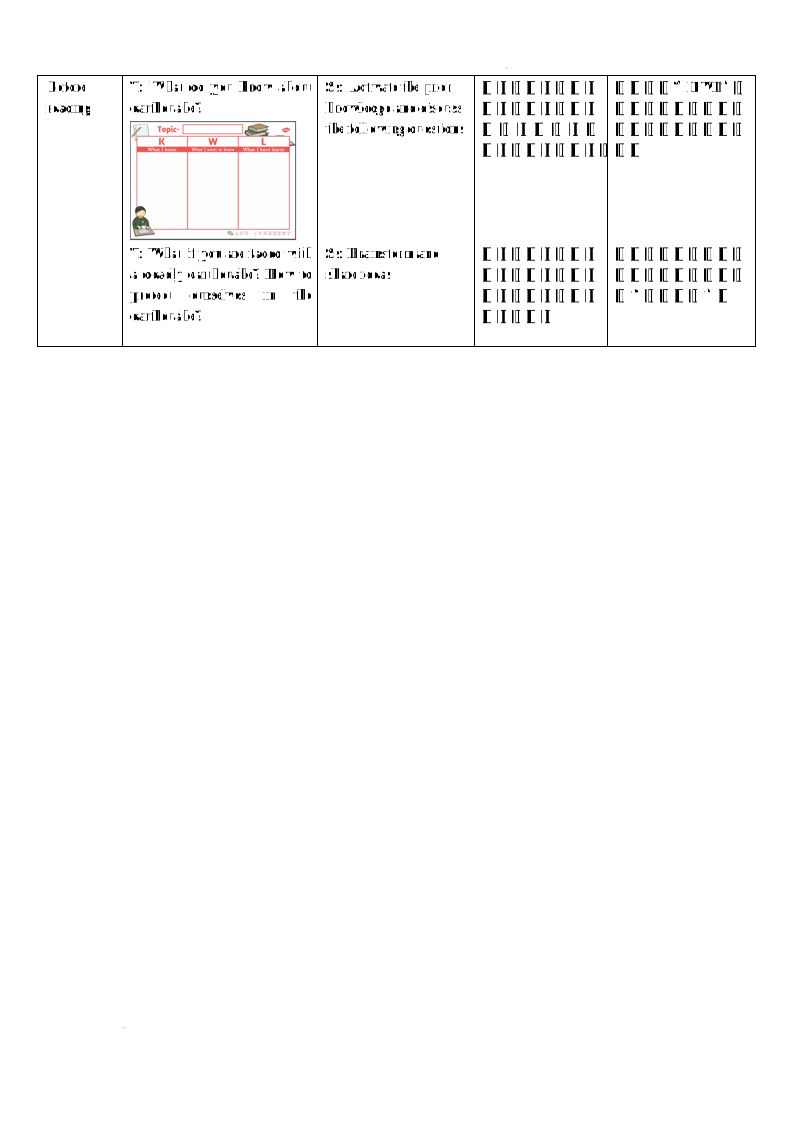
Lead-in: Q&A
T: What do you know about earthquake?
T: What if you are faced with a deadly earthquake? How to protect ourselves in the earthquake?
Ss: Activate the prior knowledge and discuss the following questions.
Ss: Brainstorm and share ideas.
学习理解:问卷导入,铺垫必要的语言和文化背景知识,引入话题学习。
学习理解:讨论话题相关问题,感知并理解话题意义,建构知识。
能够基于“KWL”表格组织语言,发言中体现出单元主题的理解。
学生分组讨论和个人发言,讨论并分享相关“安全贴士”。
Step 2
While reading
Activity One: Read for Structure
T: Summarize the main idea of each paragraph.
Note: Pay attention to topic sentence and keywords.
Introduction
Tips
Importance
Activity Two: In the Book
① Right There
T: Read the text and write down what impress you.
I read:
② Think and Search
T: Turn your statements into questions and try to answer them one your own.
I wonder:
I know:
T: Read Part Two again and draw a mind map of cause and effect.
Causes
Effects
Ss: Read the text quickly and find out the main idea of each paragraph.
Ss: Skim the whole text to acquire textual information.
Ss: Ask themselves questions based on the statements.
Ss: Scan the text and underline possible sentences for inferences.
应用实践:梳理文本内容,厘清文本的主旨大意和篇章结构。获取细节信息,梳理、概括、整合本文脉络,促进建构结构化知识,做到表层理解。
应用实践:运用略读策略研读语篇,形成对语篇的初步认识。
应用实践&迁移创新:整理细节信息,分析归纳,实现策略的迁移,将知识转化为能力。
应用实践&迁移创新:在思考当中寻找知识结构,分析判断“因果关系”,以思维导图等图形组织者的形式对语篇进行解析。
独立阅读并分析文本结构,找出相关关键词或主题句。
快速阅读完成文字理解和信息获取,迁移对应的阅读策略,准确获取关键信息。
自我监控,进行学习迁移,有效回答所问问题,完成“Problem and Solution”。
梳理细节信息,完成因果关系的提炼归纳,找出对应的防灾要点。
Step 3
After reading
Critical Thinking: Author and Me
T: Use one sentence to conclude the importance of the safety tips:
E.g.
hide 躲避
danger 危险
emergency 紧急情况
kit 成套工具
aftershock 余震
Q: Is it necessary for us to be prepared for the earthquake?
Group Discussion: On My Own
T: What else can we do to protect ourselves in an earthquake?
Ss: Conclude the safety tips before further thinking.
Ss: Use what they have already learned to leave a comment.
Ss: Share his/her ideas and support their statement through reasoning.
应用实践&迁移创新:基于前述设计的英语学习活动,学生归纳和提炼出基于主题的知识结构,读后环节的“得出结论”,要求学生综合运用语言技能,促进思维向高阶发展。
迁移创新:开展批判性思考,理性表达观点,深化的主题意义的探究,达成评价性理解。
有效利用文本线索,概括主旨大意。
发散思维,综合运用语言技能回答问题。
延展阅读,用英语进一步探索单元话题,有效传达信息。
Step 3
Summary
T: Let’s conclude what we have learned today:
Three things I learned in this lesson:…
Two interesting facts:…
One question I still have:…
Step 4
Homework
Need to Do (必做)
Basic
Extended
Try to Do (选做)
Challenging
Appendix
Blackboard Design
Checklist
Focus
Details
Yes/No
Unit Theme
I had an in-depth understanding of the topic.
Language & Cultural Knowledge
I put my safety knowledge into practice in natural disasters.
I enlarged my word bank after theme reading.
Skills & Competencies
I exchanged my ideas with other group members.
I read the text and understood the recording without any difficulties.
I discussed in detail how to protect myself in an earthquake.
Learning Strategies
I analyzed the causes and effects of natural disasters.
I asked questions in reading.
I was able to finish reading tasks on time.
Overall Performance
I could catch up with teacher’s teaching.
I engaged myself to the classroom learning.
I benefited from the class.
学科网(北京)股份有限公司
$
资源预览图

1

2
3
相关资源
示范课
由于学科网是一个信息分享及获取的平台,不确保部分用户上传资料的 来源及知识产权归属。如您发现相关资料侵犯您的合法权益,请联系学科网,我们核实后将及时进行处理。