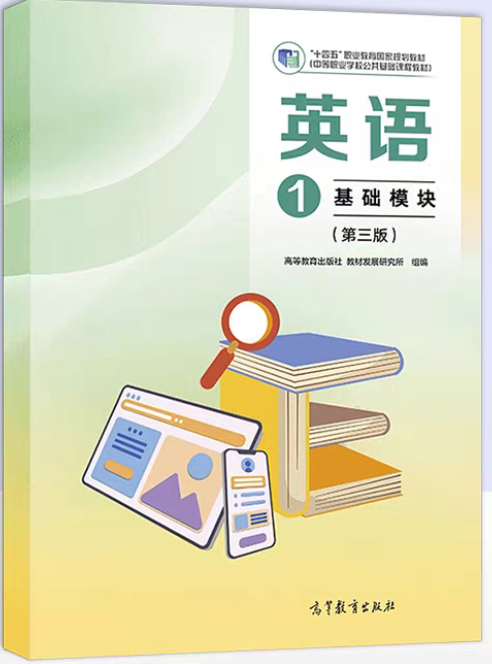
Unit 2 Transporation(A卷·基础巩固)《英语 基础模块1》(高教版第三版)单元过关卷(原卷版+解析版)
2026-03-30
|
2份
|
18页
|
125人阅读
|
1人下载
内容正文:
编写说明:本套试卷紧扣《英语 基础模块1》(高教版第三版)教材,以教材单元为基准精准覆盖核心考点。
每个单元设置AB卷,A卷为基础巩固卷,侧重基础考点训练,帮助学生扎实掌握知识要点;B卷为能力提升卷,注重知识整合与全面检测,引导学生构建知识网络。全书设计4份综合测试卷,模拟实战情境,聚焦解题能力突破,全面提升应试能力与知识应用水平。
《英语 基础模块1》(高教版第三版)《单元过关卷》
Unit 2 Transporation
A卷·基础巩固
考试时间:40分钟 满分:100分
班级 姓名 学号 成绩
一、英语知识运用:本题共25小题,每小题2分,共50分。在每小题给出的四个选项中,只有一项符合题目要求。
1.Please ________. It’s time for school.
A.wake up him B.wake him up C.wakes him up D.wakes up him
【答案】B
【详解】考查动词短语及祈使句。句意:请叫醒他。该上学了。在英语中,由“动词+副词”构成的动词短语,如果宾语是代词,则宾语要放在动词和副词之间,用于祈使句中动词要用原形,wake sb up意为“叫醒某人”,所以此处应用wake him up。故选B。
2.—________ late again , Zhang Ming.
—Sorry, sir, I won’t.
A.Not be B.Don’t be C.Not to be D.Don’t to be
【答案】B
【详解】考查祈使句。句意:—— 张明,别再迟到了。—— 抱歉,老师,我不会了。根据答语“Sorry, sir, I won’t.”可知,上句是祈使句否定形式(不要迟到),需用“Don’t + 动词原形”,“be late”意为“迟到”,是固定短语,因此“Don’t be ”符合语境,故选B。
3.—I’m really ________ about your health, David.
—Don’t________ , Mum. I’ll be better soon.
A.worrying; worry B.worrying; worried
C.worried; worry D.worried; worried
【答案】C
【详解】考查worry相关用法辨析。句意:——大卫,我真的很担心你的健康。——别担心,妈妈。我很快就会好起来的。worrying令人担心的;worried担心的;worry担心,动词。第一空,根据be动词am可知,要用形容词worried构成“be worried about”结构,意为“担心……”;第二空,“Don’t”后接动词原形,构成否定祈使句,所以用worry。故选C。
4.—Jack, don’t always copy what others do. ________ your head, please.
—Thanks for telling me.
A.Using B.Used C.Uses D.Use
【答案】D
【详解】考查祈使句。句意:—杰克,不要总是模仿别人。动动脑筋吧。— 谢谢你告诉我。分析句子可知,这是一个祈使句,祈使句通常用来表示请求、命令、建议等,省略主语you,以动词原形开头。故选D。
5.______ along this street, and you can find the hotel on your right, next to the market.
A.Walk B.To walk C.Walks D.Walking
【答案】A
【详解】考查祈使句。句意:沿着这条街走,你会看到酒店在你的右边,市场的隔壁。分析句子结构可知,此题考查固定句型“祈使句+ and/or +陈述句”,祈使句常用于表达请求、命令、建议或给出指示等,肯定形式的祈使句直接以动词原形开头。故选A。
6.________ the teacher when listening in class, and you will find some information on computer.
A.Paying attention to B.Paid attention to
C.Pay attention to D.To pay attention to
【答案】C
【详解】考查“祈使句+ and +简单句”结构。句意:上课认真听讲,你就会在电脑上找到一些信息。分析句子结构可知,此处为“祈使句+ and +简单句”结构,祈使句以动词原形开头,所以此处使用动词原形pay,位于句首,首字母需大写。故选C。
7.—Pardon me, is the History Museum far from here?
—No. ________straight for 5 minutes, then turn right at the bookstore—you’ll see it.
A.Walk B.Walks C.Walking D.To walk
【答案】A
【详解】考查祈使句。句意:———不好意思,请问历史博物馆离这儿远吗?——不。沿着这条路直走 5 分钟,然后在书店处右转,你就会看到它了。分析句子的结构可知,设空处为祈使句,设空处为动词原形的形式。故选A。
8.________ worried about me Mom. I’ve grown up
A.Don’t B.Don’t be C.Not D. Not be
【答案】B
【详解】考查祈使句的否定形式。句意:妈妈,别担心我。我已经长大了。根据句子表达“不要担心”的祈使语气,祈使句的否定形式需用“Don’t + 动词原形”;“担心”的表达是“be worried about”,所以否定形式为“Don’t be”。故选B。
9.________ quiet! The children are sleeping.
A.Keeping B.Keeps C.Keep D.To keep
【答案】C
【详解】考查肯定祈使句。句意:保持安静!孩子们正在睡觉。分析句子可知,第一个是肯定祈使句,动词原形开头。故选C。
10.________ worried about me, mom. I’ve grown up.
A.Don’t do B.Don’t be
C.Not D.Not be
【答案】B
【详解】考查祈使句。句意:不要担心我,妈妈。我已经长大了。结合选项和句意可知,句子是一个否定祈使句,其构成是:Don’t+动词原形+其他;题干里的worried是形容词,be worried about sb.意为“担心某人”,固定短语。故选B。
11.________ hard and you will succeed in the exam.
A.Study B.To study C.Studying D.Studied
【答案】A
【详解】考查祈使句。句意:努力学习,你会考试成功的。祈使句表示条件时构成句型“祈使句+ and +陈述句 (一般将来时)”,分析句子可知,该句符合此句型结构,祈使句是动词原形开头的句子,所以此处应填动词原形“Study”。故选A。
12.— _________ me for help if you can’t work out the problems, Jill.
—OK, Miss White. Thank you.
A.Ask B.Asks C.Asking D.To ask
【答案】A
【详解】考查祈使句。句意:—吉尔,如果你无法解决那些难题,向我求助。—好,怀特小姐。谢谢你。分析句子可知,这是一个祈使句,祈使句通常用来表示请求、命令、建议等,其主语通常是第二人称you,但常常省略,祈使句以动词原形开头。故选A。
13.The sign“________” means that people can’t talk here.
A.Don’t Talking B.No Talk C.No Talking D.Not Talk
【答案】C
【详解】考查祈使句。句意:“禁止交谈”的标志意味着人们不能在这里交谈。通常“禁止做某事”可以用“No + 动名词”的形式来表达。故选C。
14.— Mike, ________ me search for some information about The Belt and Road.
— No, problem.
A.help B.helping C.helped D.helps
【答案】A
【详解】考查祈使句。句意:—— 迈克,帮我查找一些关于一带一路的信息。—— 没问题。分析句子结构可知,这是一个祈使句,通常以动词原形开头,省略主语you,用于向对方提出请求或命令。故选A。
15.Don’t ________ anything behind when getting off the car.
A.leave B.forget C.left D.forgot
【答案】A
【详解】考查祈使句及动词辨析。句意:下车时不要留下任何东西。A. leave遗忘,把某东西忘在某地,可接 behind;B. forget忘记,直接接名词,不能接behind;C. left遗忘,留下(过去式);D. forgot忘记(过去式)。分析句子可知,此句是否定祈使句,其结构是“Don’t +动词原形”,横线上应是动词原形,“leave sth behind”意为“留下某物”,是固定短语。故选A。
16.—Cindy, ________ read in the bed. It’s bad for your eyes.
—OK, Mom.
A.don’t B.doesn’t C.didn’t D.won’t
【答案】A
【详解】考查祈使句。句意:—辛迪,别在床上看书。这对你的眼睛不好。—好的,妈妈。根据“Cindy, ... read in the bed. It’s bad for your eyes.”并结合选项可知,此处为祈使句的否定形式,表示禁止或劝阻对方做某事,其结构为“Don’t + 动词原形”。故选A。
17.________ this kind of peach, and you will like it.
A.To try B.Trying C.Try D.Tried
【答案】C
【详解】考查祈使句。句意:尝尝这种桃子,你会喜欢它的。分析句子结构可知,此处为“祈使句+and+简单句”结构,祈使句通常以动词原形开头,用于提出建议、命令或请求。故选C。
18.—______ late for school again, Tom!
—Sorry, I promise that I ______.
A.Don’t; won’t B.Don’t be; won’t C.Don’t be; don’t D.Don’t; will
【答案】B
【详解】考查祈使句和动词的时态。句意:—别再上学迟到了,汤姆!—对不起,我保证我不会了。固定短语be late for迟到,根据“late for school again”可知,本句为祈使句,表示“不要”,借助于助动词的否定形式Don’t,后加动词原形,故填Don’t be;根据“Sorry, I promise that I”可知,对不起,我保证将不会,表示“将不会”,应用won’t。故选B。
19._______ polite to others, and you will find it easy to get along well with them.
A.Being B.Doing C.Be D.Do
【答案】C
【详解】考查祈使句。句意:对别人要有礼貌,你会发现很容易和他们相处融洽。根据“...polite to others, and you will find it easy to get along well with them.”可知,此处是“祈使句 + and/or + 陈述句”句型,祈使句以动词原形开头,be polite to“对……有礼貌”,固定搭配。故用be。故选C。
20.Don’t ________ about it. We still have enough time.
A.worry B.worried C.get worry D.to worry
【答案】A
【详解】考查动词搭配。句意:别担心,我们还有足够的时间。A. worry担心,动词原形;B. worried担心的,形容词;D. get worry错误搭配;D. to worry动词不定式。分析句子可知,这是一个祈使句的否定形式,其结构为“Don’t +动词原形”,worry是动词原形,符合要求,worry about意为“担心,担忧”,是固定短语。故选A项。
21.________ smoke, dad. It is not allowed here.
A.Don’t be B.Don’t C.Not to be D.Be
【答案】B
【详解】考查祈使句。 句意:不要在这里抽烟,爸爸。在这不允许吸烟。祈使句的否定形式是:Don’t+动词原形,smoke为实义动词。故选B项。
22.________ here on time tomorrow, or you will miss the bus.
A.Come B.Comes C.Came D.Will come
【答案】A
【详解】考查祈使句。句意:明天准时到这里来,否则你就赶不上公共汽车了。分析句子结构可知,句子结构为“祈使句+ or +陈述句”,祈使句通常以动词原形开头,所以此处应用动词原形Come。故选A。
23.________ me the truth, or I’ll be angry.
A.Telling B.Tells C.Tell D.To tell
【答案】C
【详解】考查祈使句。句意:告诉我实话,不然我会生气。分析句子可知,这是一个祈使句,要用动词原形开头,故用“tell”。故选C。
24.________ wake up your sister, Ben. She needs a good sleep.
A.Not B.Don’t C.Don’t be D.Aren’t
【答案】B
【详解】考查祈使句。句意:别吵醒你妹妹,本。她需要好好睡一觉。根据“She needs a good sleep.”可知,此处是要求本“不要”吵醒妹妹睡觉,这是一种告诫、命令或建议,本句为否定祈使句,要在动词原形短语wake up前加Don’t。故选B。
25.___________, and you’ll pass the English exam.
A.Study hard B.Studied hard
C.To study hard D.Studying hard
【答案】A
【详解】考查祈使句。句意:努力学习,你就会通过英语考试。本句为“祈使句+and+陈述句”的句型结构,其中祈使句表示条件,陈述句表示结果,祈使句要用动词原形开头。故选A。二、阅读理解:本题共10小题,每小题5分,共50分。在每小题给出的四个选项中,只有一项符合题目要求。
A
Being outgoing is good for your life. Those who are more outgoing like to meet lots of people and have more fun in life. In fact, being outgoing is not so hard as you think. Even (甚至) shy people can be outgoing.
You can start becoming outgoing with your best friend or a group of friends. But the real challenge (挑战) comes when you meet strange people or new friends. Smile more, and usually they will return smiles to you. In this way, you may have some talks.
Start a talk. Just a simple “Hello” or “How is it going?” is a good start. If you want to make interesting talks, you should read news in newspapers and prepare (准备) your views, or surf the Internet for new information and then keep that in mind.
The easiest way to become more outgoing is to go out. This is also the most important step. Go to a park, beach, club, party or any other place that you think can be fun, and you may make new friends there.
26.You should start to be outgoing with ________.
A.your parents B.your teachers C.your best friend D.your new friends
27.When you start a talk with a stranger, you should say “________”.
A.What’s the matter? B.What’s your name? C.How is it going? D.Are you healthy?
28.The easiest way to be outgoing is to ________.
A.talk B.smile C.play D.go out
29.Making new friends can make us ________.
A.more outgoing B.healthier C.more athletic D.wilder
30.Which is NOT the writer’s view?
A.Being outgoing is really difficult. B.Being outgoing is good for our life.
C.Being outgoing helps people have more fun. D.Being outgoing with strangers is not easy.
【答案】26.C 27.C 28.D 29.A 30.A
【导语】本文主要介绍了如何变得外向。
26.细节理解题。根据“You can start becoming outgoing with your best friend or a group of friends”可知,你可以与你最好的朋友或一群朋友开始变得外向。故选C。
27.细节理解题。根据“Start a talk. Just a simple ‘Hello’ or ‘How is it going?’ is a good start”可知,一个简单的 “你好” 或 “进展如何” 是一个好的开始。故选C。
28.细节理解题。根据“The easiest way to become more outgoing is to go out”可知,最容易的方法是出去走走。故选D。
29.细节理解题。根据“Go to a park, beach, club, party or any other place that you think can be fun, and you may make new friends there.”可知,出去多交新朋友会让人变得更外向。故选A。
30.细节理解题。根据“In fact, being outgoing is not so hard as you think”可知,变得外向不像你想象的那么难。故选A。
B
Dear Ms Helen Brown,
We are glad to welcome Mr William Taylor and you to visit our offices in Beijing and Shanghai this May. We suggest the following schedule for your stay in Beijing for your consideration.
Monday, May 18th
• 05:00 pm Arrive in Beijing (I will meet and welcome you at the airport.)
• 07:30 pm Dinner at the hotel
Tuesday, May 19th
• 09:30 am – 11:30 am Meeting with Mr Chen Hui, CEO of Asia Trading Co.
• 11:30 am – 01:30 pm Lunch break
• 01:30 pm – 05:00 pm Discussion
• 07:00 pm Welcome banquet
Wednesday, May 20th
• 09:00 am – 11:00 pm Discussion
• 11:30 am – 01:00 pm Lunch (Taste the Beijing Roast Duck)
• 01:30 pm – 05:00 pm Visit the Summer Palace
• 06:00 pm – 07:00 pm Dinner at the hotel
• 07:40 pm Leave for the airport to go to Shanghai
Please let me know if anything needs to be changed.
Sincerely yours,
Li Jingjing
Marketing Director
Asia Trading Co.
31.How will Mr Taylor come to Beijing?
A.By train. B.By plane.
C.By car. D.By high-speed train.
32.How long will the discussion be on Tuesday?
A.5 hours. B.3.5 hours.
C.2.5 hours. D.1 hour.
33.What will they do at 7:00 pm on May 19th?
A.They will have a dinner at the hotel.
B.They will enjoy the Beijing Roast Duck.
C.They will have a discussion.
D.They will have a banquet.
34.When will Mr Taylor leave for Shanghai?
A.On Thursday. B.On Wednesday.
C.On May 21st. D.On May 19th.
35.What is the letter about?
A.Inviting a business partner to visit China.
B.Discussing the plans for a business trip.
C.Discussing business cooperation.
D.Inviting a foreign friend to visit China.
【答案】31.B 32.B 33.D 34.B 35.B
【导语】本文是一篇应用文。主要内容是一封商务信函,告知客户来访期间的行程安排。
31.细节理解题。根据第二段“Arrive in Beijing (I will meet and welcome you at the airport.) (下午5:00 抵达北京(我将前往机场迎接。))”可知,泰勒先生是坐飞机来北京的。故选B。
32.细节理解题。根据第二段“01:30 pm – 05:00 pm Discussion (下午1:30-5:00 讨论活动)”可知,讨论活动的时长约3.5小时。故选B。
33.细节理解题。根据第二段“Tuesday, May 19th...07:00 pm Welcome banquet (5月12日星期二,晚7点:欢迎宴会)”可知,5月12日星期二晚7点他们将参加欢迎宴会。故选D。
34.细节理解题。根据第二段“Wednesday, May 20th...07:40 pm Leave for the airport to go to Shanghai (5月20日周三,晚7:40:前往机场出发去上海)”可知,泰勒先生周三去上海。故选B。
35.主旨大意题。根据第一段“We are glad to welcome Mr William Taylor and you to visit our offices in Beijing and Shanghai this May. We suggest the following schedule for your stay in Beijing for your consideration. (我们很高兴地欢迎威廉泰勒先生与您于今年五月访问我们在北京和上海的办事处。现就北京行程安排提出如下建议供您参考。)”可知,本文主要讨论了商务行程的计划。故选B。
学科网(北京)股份有限公司 (
1
)原创精品资源学科网独家享有版权,侵权必究!
学科网(北京)股份有限公司
$
编写说明:本套试卷紧扣《英语 基础模块1》(高教版第三版)教材,以教材单元为基准精准覆盖核心考点。
每个单元设置AB卷,A卷为基础巩固卷,侧重基础考点训练,帮助学生扎实掌握知识要点;B卷为能力提升卷,注重知识整合与全面检测,引导学生构建知识网络。全书设计4份综合测试卷,模拟实战情境,聚焦解题能力突破,全面提升应试能力与知识应用水平。
《英语 基础模块1》(高教版第三版)《单元过关卷》
Unit 2 Transporation
A卷·基础巩固
考试时间:40分钟 满分:100分
班级 姓名 学号 成绩
一、英语知识运用:本题共25小题,每小题2分,共50分。在每小题给出的四个选项中,只有一项符合题目要求。
1.Please ________. It’s time for school.
A.wake up him B.wake him up C.wakes him up D.wakes up him
2.—________ late again , Zhang Ming.
—Sorry, sir, I won’t.
A.Not be B.Don’t be C.Not to be D.Don’t to be
3.—I’m really ________ about your health, David.
—Don’t________ , Mum. I’ll be better soon.
A.worrying; worry B.worrying; worried
C.worried; worry D.worried; worried
4.—Jack, don’t always copy what others do. ________ your head, please.
—Thanks for telling me.
A.Using B.Used C.Uses D.Use
5.______ along this street, and you can find the hotel on your right, next to the market.
A.Walk B.To walk C.Walks D.Walking
6.________ the teacher when listening in class, and you will find some information on computer.
A.Paying attention to B.Paid attention to
C.Pay attention to D.To pay attention to
7.—Pardon me, is the History Museum far from here?
—No. ________straight for 5 minutes, then turn right at the bookstore—you’ll see it.
A.Walk B.Walks C.Walking D.To walk
8.________ worried about me Mom. I’ve grown up
A.Don’t B.Don’t be C.Not D. Not be
9.________ quiet! The children are sleeping.
A.Keeping B.Keeps C.Keep D.To keep
10.________ worried about me, mom. I’ve grown up.
A.Don’t do B.Don’t be
C.Not D.Not be
11.________ hard and you will succeed in the exam.
A.Study B.To study C.Studying D.Studied
12.— _________ me for help if you can’t work out the problems, Jill.
—OK, Miss White. Thank you.
A.Ask B.Asks C.Asking D.To ask
13.The sign“________” means that people can’t talk here.
A.Don’t Talking B.No Talk C.No Talking D.Not Talk
14.— Mike, ________ me search for some information about The Belt and Road.
— No, problem.
A.help B.helping C.helped D.helps
15.Don’t ________ anything behind when getting off the car.
A.leave B.forget C.left D.forgot
16.—Cindy, ________ read in the bed. It’s bad for your eyes.
—OK, Mom.
A.don’t B.doesn’t C.didn’t D.won’t
17.________ this kind of peach, and you will like it.
A.To try B.Trying C.Try D.Tried
18.—______ late for school again, Tom!
—Sorry, I promise that I ______.
A.Don’t; won’t B.Don’t be; won’t C.Don’t be; don’t D.Don’t; will
19._______ polite to others, and you will find it easy to get along well with them.
A.Being B.Doing C.Be D.Do
20.Don’t ________ about it. We still have enough time.
A.worry B.worried C.get worry D.to worry
21.________ smoke, dad. It is not allowed here.
A.Don’t be B.Don’t C.Not to be D.Be
22.________ here on time tomorrow, or you will miss the bus.
A.Come B.Comes C.Came D.Will come
23.________ me the truth, or I’ll be angry.
A.Telling B.Tells C.Tell D.To tell
24.________ wake up your sister, Ben. She needs a good sleep.
A.Not B.Don’t C.Don’t be D.Aren’t
25.___________, and you’ll pass the English exam.
A.Study hard B.Studied hard
C.To study hard D.Studying hard
二、阅读理解:本题共10小题,每小题5分,共50分。在每小题给出的四个选项中,只有一项符合题目要求。
A
Being outgoing is good for your life. Those who are more outgoing like to meet lots of people and have more fun in life. In fact, being outgoing is not so hard as you think. Even (甚至) shy people can be outgoing.
You can start becoming outgoing with your best friend or a group of friends. But the real challenge (挑战) comes when you meet strange people or new friends. Smile more, and usually they will return smiles to you. In this way, you may have some talks.
Start a talk. Just a simple “Hello” or “How is it going?” is a good start. If you want to make interesting talks, you should read news in newspapers and prepare (准备) your views, or surf the Internet for new information and then keep that in mind.
The easiest way to become more outgoing is to go out. This is also the most important step. Go to a park, beach, club, party or any other place that you think can be fun, and you may make new friends there.
26.You should start to be outgoing with ________.
A.your parents B.your teachers C.your best friend D.your new friends
27.When you start a talk with a stranger, you should say “________”.
A.What’s the matter? B.What’s your name? C.How is it going? D.Are you healthy?
28.The easiest way to be outgoing is to ________.
A.talk B.smile C.play D.go out
29.Making new friends can make us ________.
A.more outgoing B.healthier C.more athletic D.wilder
30.Which is NOT the writer’s view?
A.Being outgoing is really difficult. B.Being outgoing is good for our life.
C.Being outgoing helps people have more fun. D.Being outgoing with strangers is not easy.
B
Dear Ms Helen Brown,
We are glad to welcome Mr William Taylor and you to visit our offices in Beijing and Shanghai this May. We suggest the following schedule for your stay in Beijing for your consideration.
Monday, May 18th
• 05:00 pm Arrive in Beijing (I will meet and welcome you at the airport.)
• 07:30 pm Dinner at the hotel
Tuesday, May 19th
• 09:30 am – 11:30 am Meeting with Mr Chen Hui, CEO of Asia Trading Co.
• 11:30 am – 01:30 pm Lunch break
• 01:30 pm – 05:00 pm Discussion
• 07:00 pm Welcome banquet
Wednesday, May 20th
• 09:00 am – 11:00 pm Discussion
• 11:30 am – 01:00 pm Lunch (Taste the Beijing Roast Duck)
• 01:30 pm – 05:00 pm Visit the Summer Palace
• 06:00 pm – 07:00 pm Dinner at the hotel
• 07:40 pm Leave for the airport to go to Shanghai
Please let me know if anything needs to be changed.
Sincerely yours,
Li Jingjing
Marketing Director
Asia Trading Co.
31.How will Mr Taylor come to Beijing?
A.By train. B.By plane.
C.By car. D.By high-speed train.
32.How long will the discussion be on Tuesday?
A.5 hours. B.3.5 hours.
C.2.5 hours. D.1 hour.
33.What will they do at 7:00 pm on May 19th?
A.They will have a dinner at the hotel.
B.They will enjoy the Beijing Roast Duck.
C.They will have a discussion.
D.They will have a banquet.
34.When will Mr Taylor leave for Shanghai?
A.On Thursday. B.On Wednesday.
C.On May 21st. D.On May 19th.
35.What is the letter about?
A.Inviting a business partner to visit China.
B.Discussing the plans for a business trip.
C.Discussing business cooperation.
D.Inviting a foreign friend to visit China.
学科网(北京)股份有限公司 (
1
)原创精品资源学科网独家享有版权,侵权必究!
学科网(北京)股份有限公司
$
资源预览图

1

2

3
由于学科网是一个信息分享及获取的平台,不确保部分用户上传资料的 来源及知识产权归属。如您发现相关资料侵犯您的合法权益,请联系学科网,我们核实后将及时进行处理。