Unit9 Period1TopicTalk &Lesson1 To Clone or Not to Clone(课件)英语北师大版选择性必修第三册
2026-03-30
|
35页
|
945人阅读
|
2人下载
资源信息
| 学段 | 高中 |
|---|---|
| 学科 | 英语 |
| 教材版本 | 高中英语北师大版选择性必修第三册 |
| 年级 | 高二 |
| 章节 | Topic talk: Human Biology,Lesson 1 To Clone or Not to Clone |
| 类型 | 作业-同步练 |
| 知识点 | - |
| 使用场景 | 同步教学-新授课 |
| 学年 | 2026-2027 |
| 地区(省份) | 全国 |
| 地区(市) | - |
| 地区(区县) | - |
| 文件格式 | PPTX |
| 文件大小 | 82.05 MB |
| 发布时间 | 2026-03-30 |
| 更新时间 | 2026-03-30 |
| 作者 | September1997 |
| 品牌系列 | 上好课·上好课 |
| 审核时间 | 2026-03-30 |
| 下载链接 | https://m.zxxk.com/soft/57081231.html |
| 价格 | 3.00储值(1储值=1元) |
| 来源 | 学科网 |
内容正文:
1
北师大选修第三册
Topic Talk & Lesson 1:
To Clone or Not to Clone
Unit 9 Human Biology
2
教学目标
Understand what cloning is and its main debates
01.
02.
03.
Master key vocabulary related to the topic
Analyze the pros and cons of cloning
Express your own opinion on cloning
After this lesson, you will be able to:
04.
3
第一课时
4
目录
CONTENTS
Lead-in
01.
Pre-reading
02.
While-reading
03.
Post-reading
04.
Summary
05.
Assessment
06.
Homework
07.
5
Lead-in
01.
6
Lead-in
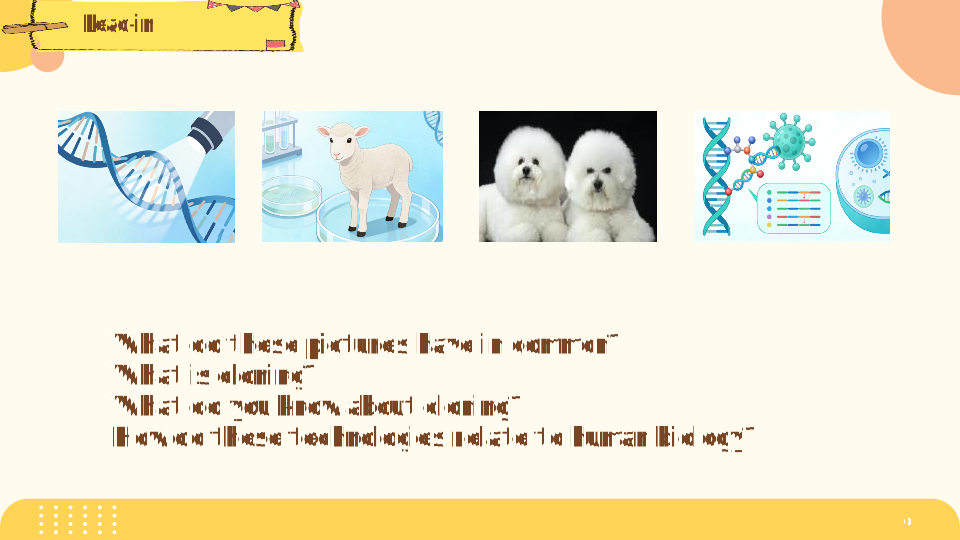
What do these pictures have in common?
What is cloning?
What do you know about cloning?
How do these technologies relate to human biology?
7
Pre-reading
02.
8
Pre-reading
Activity 1:What are the possible benefits and risks of cloning?
medical research treat diseases save endangered species
ethical concerns identity issues potential risks
cell to edit genes to develop artificially
to break the technical barrier to make an exact copy of
Example
One of the main benefits of cloning is that it can __________.
The biggest concern about cloning is __________.
Pre-reading
definition & natural cloning
artificial cloning: cloned mammals
artificial cloning: cloned primates
the significance of cloning of primates
moral concerns
conclusion
Para 1
Para 2
Para 3
Para 4
Para 5
Para 6
Activity 2: Match the headings with the paragraphs
10
Pre-reading
Activity 3: Based on the paragraph-main idea matching above, choose the best summary of the article:
What is the main idea of the article?
A. Cloning technology is perfect and should be used without restrictions.
B. Cloning has both potential benefits and ethical risks; we need to balance scientific progress with moral considerations.
C. Human cloning is completely unethical and should be banned worldwide.
D. Cloning technology has no practical value in medical research.
11
While-reading
03.
12
While-reading
Activity 1: Read paragraphs 1-2. Complete the information table.
Understanding of Clone
Definition of Cloning
examples of natural cloning are given
First cloned mammal
Cloning is the process of making an exact copy of a plant or animal anddeveloping it either naturally or artificially.
Gardeners have been using a form of cloning when they take a cutting from a plant and place it in a suitable medium. Another example of natural cloning is identicaltwins, who are produced from the same egg.
Dolly the sheep (1996, Scotland)
13
While-reading
Activity 2: Read paragraphs 3
Answer the questions.
1.What development in cloning was
announced in 2018?
2.What was special about it?
3. For how long did Dr. Sun Qiang's
team work?
4.Why did they work so hard?
14
While-reading
Activity3: List the potential benefits of, and moral concerns about cloning primates.
Potential benefits
Moral concerns
will lead to cures forvarious diseases
has refreshed the technicalpossibility of cloning of other species
offer clues on how to prevent the aging process
could help save research time, reduce the number of animals required for tesing, produce more acurate results,and lead to more effective treatments
be treated as objects or as individuals with their own identity
may be viewed as mere copies of originals thus being seen as inferion
some organisations may abuse the technology for unethical purposes
15
While-reading
Activity4 :Read part 2 to compare the information.
first successful cloned animal
first-ever cloned primates
name:____________
time:____________
problems:_________________
influence:____________________
name:_____________________
time:_______________________
special part:______________________
reasons of doing this:___________________________
VS
Dolly
in 1996
developed an illness;
lived only half the life of the sheep she was cloned.
Scientists have cloned more than 20 mammal species.
Zhong Zhong & Hua Hua
In Jan.2018
much harder/ more complicated
Get animals with edited genes and produce animal models that are helpful for medical research and human health.
16
While-reading
Activity: Read the last paragraph and answer the questions.
What does Einstein's quote mean?
Einstein’s quote means that science itself cannot be judged as good or bad, because it can only function when it is used by humans. He also indicates that humans need to be careful with the information they learn through science and to remember to use science for good.
17
Post-reading
04.
18
Post-reading
Pair Work Explain Cloning to Your Partner
1. What is cloning?
2. Why clone?
Potential benefits
3. Why not clone?
Ethical concerns
4. Your opinion
Personal stance
19
Post-reading
Group Work Debate - Do you support human cloning?
👍 Support 支持方
Can cure diseases and save lives
Advances scientific knowledge
Can save endangered species
Creates organs for transplant
......
👎 Oppose 反对方
Identity and uniqueness issues
Risk of abuse
High failure rates, unsafe
"Playing God" ethically wrong
......
Useful Expressions 有用表达:
• I believe that... / In my opinion...
• On the one hand... On the other hand...
• The benefits outweigh the risks because...
20
Post-reading
How does the writer present arguments?
Technique Example from Text Function
事实陈述
Fact "Dolly the sheep was cloned in 1996 in Scotland" Adds credibility and establishes background
举例说明
ExampleS Using Dolly as an example of successful cloning Makes abstract concepts concrete
对比分析
Comparison Reproductive vs. Therapeutic cloning Clarifies differences and helps understanding
引用观点
Expert opinions Scientists' views on cloning potential Adds authority to the argument
正反论证
Pros & Cons Benefits vs. Ethical concerns Presents balanced view for critical thinking
21
Summary
05.
22
Summary
✓Key Concepts:
✓Benefits:
✓Ethical Concerns:
✓Key Vocabulary:
核心观点:
Cloning definition,
Medical research, saving species, helping infertile couples
Identity, dignity, safety risks, abuse potential
clone, genetic, ethical, controversial, benefit, risk, ban, reproduce
科技发展必须与伦理道德相平衡。我们需要理性看待克隆技术,既要看到其潜在价值,也要警惕其风险,建立严格的监管机制。
23
Assessment
06.
24
Assessment
Learning Objectives Score(1-5)
After learning, I am able to read and talk about cloning technology and its ethical issues.
After learning, I am able to analyze the benefits and risks of cloning technology.
After learning, I am able to express my opinion on controversial scientific issues in English.
5-完全能;4-基本能;3-不确定;2不太能;1-完全不能
25
Homework
07.
26
Homework
Writing Task:
Write a short essay (150-200 words) on the topic: "Should cloning be allowed?"
27
第二课时
28
1.comparison n.比较,对比
(1)in/by comparison with... 与……相比
by comparison 相比而言
(2)compare v.& n. 将……比作……;比较
compare...with... 把……和……相比较
compare...to... 把……比作……;把……和……相比
compared to/with... 与……相比(通常作状语)
beyond/without compare 无与伦比,举世无双
重点单词
29
2.treatment n.诊疗,治疗,疗法;对待方式
(1)under treatment 正在接受治疗
(2)treat vt. 治疗;对待;款待
n. 乐趣;乐事;款待
treat...as... 把……看作……
treat sb.to... 用……招待某人,以……款待某人
treat sb.with... 以……方式对待某人
重点单词
30
3.accurate adj. 准确的;精确的
(1) accuracy n. 准确(性);精确(程度)
accurately adv. 准确地;精确地
(2)be accurate in 在……方面准确
accurate at doing sth 擅长准确做某事
重点单词
31
4.emotion n. 情绪,情感
(1) emotional adj. 情绪激动的;情感的
emotionally adv. 情绪上;情感上
(2)with emotion 激动地;带着感情
hide/show one’s emotions 隐藏/表露某人的情感
be overcome with emotion 激动得不能自已
重点单词
32
5.bound adj.很有可能,肯定会;受约束;有义务(做某事) v.跳跃着跑
(1)be bound to do... 肯定会做……;有责任或义务做……
be bound for... 准备前往……
(2)bound into 跳跃着进入
重点单词
33
拓展单词
1.edit vi. & vt.编辑,编校→____________n.编辑;主编;编者→_____________ n.总编
2.gene n.基因→____________n.一代
3.artificial adj.人造的,非自然形成的→__________adv.人为地,虚假地
4.compare v.比较→____________ n.比较
5.produce v.生产→__________ n.产品(农)→____________n.生产→____________ n.生产商/者→____________ adj.生产的→____________ vt.复制,繁殖→____________ adj.可繁殖的,可复制的
editor
Editor-in-chief
generation
artificially
comparison
product
production
producer
productive
reproduce
reproducible
6.whole adj.全部的,整个的→____________ adv.完全地
7.accurate adj.准确的,精确的→____________ adv.精确地,准确地
→____________ n.精确,准确
8.treat vt.治疗→____________ n.治疗,疗法,对待方式
9.mere adj.仅仅,只不过;极力的,极不重要的
→____________ adv.仅仅,只不过,只是
10.emotion n.强烈的感情→____________adj.感情的
→____________ adv. 情绪激动地
wholly
accurately
accuracy
treatment
merely
emotional
emotionally
拓展单词
35
Thank You
$
资源预览图

1
2

3

4

5
6

相关资源
由于学科网是一个信息分享及获取的平台,不确保部分用户上传资料的 来源及知识产权归属。如您发现相关资料侵犯您的合法权益,请联系学科网,我们核实后将及时进行处理。