Unit 3 Money 课时1 A Viewing and listening & B Speaking(分层作业)英语新教材沪教版五四制八年级下册
2026-03-28
|
2份
|
17页
|
354人阅读
|
9人下载
内容正文:
Unit3 Money
课时1 A Viewing and listening & B Speaking分层作业
核心知识速记
03拓展培优
01基础达标
04思维进阶
02能力提升
(
核心词汇
pocket money 零花钱
discount 折扣
membership card 会员卡
cash 现金
credit card 信用卡
debit card 借记卡
pay 付款
save 节省;储蓄
spend 花费
waste 浪费
donate 捐赠
earn 赚钱
budget 做预算
responsible 有责任心的
independent 独立的
二、核心
句型
1.
—How do you pay for the things you buy?
—I pay by cash / credit card / mobile phone.
2.
—Should parents give us pocket money regularly?
—Yes, I think so. / No, I don’t think so.
3.
We need to learn how to manage our pocket money wisely.
4.
It’s a good idea to save money for a rainy day.
三、
功能表达
询问付款方式:How would you like to pay? / What’s your way of payment?
表达观点:In my opinion… / From my point of view… / I believe…
总结观点:In short… / In a word… / To sum up…
谈论消费:It’s a good deal. / Don’t waste money on useless things.
)
一、根据句意及首字母提示补全单词
1.You can get a 10% d______ if you have our store’s membership card.
2.My parents give me 50 yuan as p______ money every month.
3.We can pay in c______ or by card in this restaurant.
4.Don’t w______ money on too many toys. You won’t play with them for long.
5.It’s important to s______ some money for your future needs.
二、英汉互译
1.会员卡 ____________
2.零花钱 ____________
3.信用卡 ____________
4.存钱 ____________
5.理智花钱 ____________
6.pay by mobile phone ____________
7.donate money to charity ____________
8.save money for a rainy day ____________
三、单项选择
1.—How do you usually pay for your snacks?
—I usually pay ______ credit card.
A. with B. by C. in D. on
2.Parents should teach their children ______ pocket money.
A. how to manage B. manage C. managing D. managed
3.—Should parents tell us how to spend our pocket money?
—No, I don’t think so. We need to be ______.
A. dependent B. independent C. important D. difficult
4.It’s a good idea to ______ some money to help poor children.
A. waste B. spend C. donate D. cost
5.—Is there any discount for members?
—Yes, you can get a special discount ______ your membership card.
A. in B. with C. on D. for
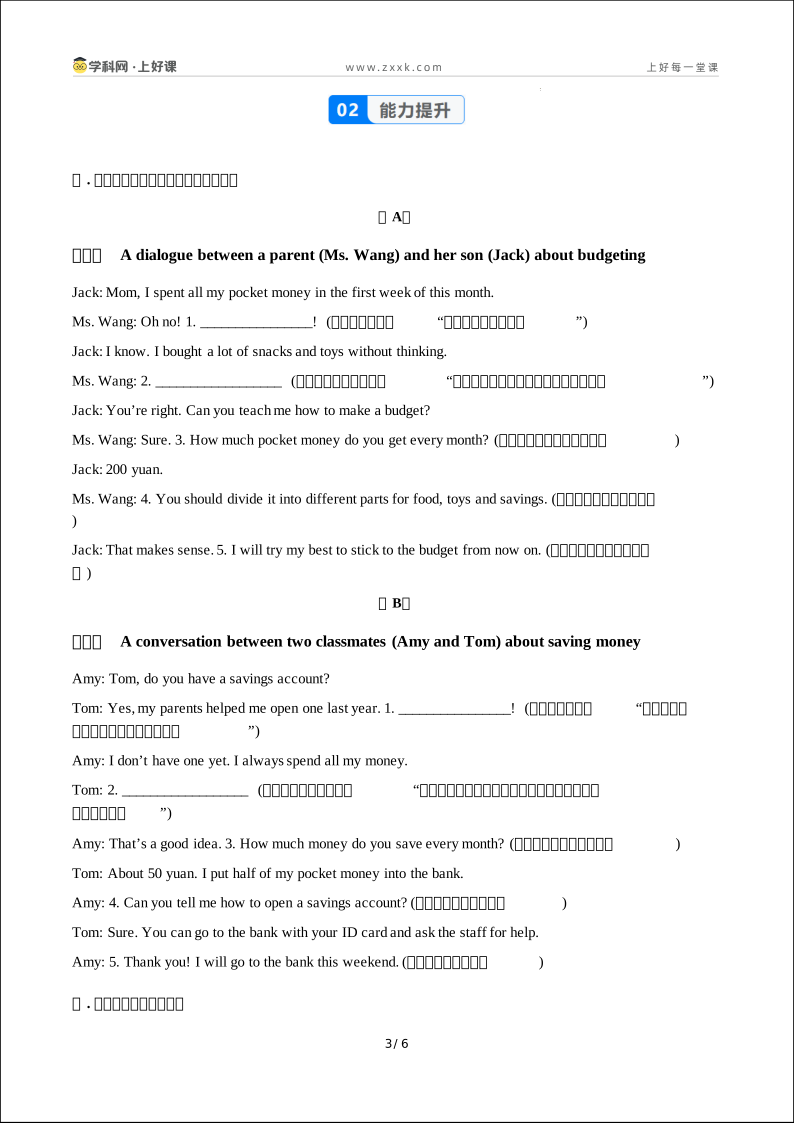
一. 根据情景,在语篇中填入适当的内容
(A)
情景:A dialogue between a parent (Ms. Wang) and her son (Jack) about budgeting
Jack: Mom, I spent all my pocket money in the first week of this month.
Ms. Wang: Oh no! 1. ________________! (用感叹句,表达 “你花钱真是太冲动了”)
Jack: I know. I bought a lot of snacks and toys without thinking.
Ms. Wang: 2. __________________ (用原因状语从句,表达 “因为你没有制定预算,所以才会乱花钱”)
Jack: You’re right. Can you teach me how to make a budget?
Ms. Wang: Sure. 3. How much pocket money do you get every month? (询问对方每月的零花钱数额)
Jack: 200 yuan.
Ms. Wang: 4. You should divide it into different parts for food, toys and savings. (给出制定预算的具体建议)
Jack: That makes sense. 5. I will try my best to stick to the budget from now on. (表达会努力遵守预算的决心)
(B)
情景:A conversation between two classmates (Amy and Tom) about saving money
Amy: Tom, do you have a savings account?
Tom: Yes, my parents helped me open one last year. 1. ________________! (用感叹句,表达 “养成存钱的习惯对我们的未来太重要了”)
Amy: I don’t have one yet. I always spend all my money.
Tom: 2. __________________ (用条件状语从句,表达 “如果你现在开始存钱,将来遇到困难时你会有足够的钱应对”)
Amy: That’s a good idea. 3. How much money do you save every month? (询问对方每月的存钱数额)
Tom: About 50 yuan. I put half of my pocket money into the bank.
Amy: 4. Can you tell me how to open a savings account? (请求对方告知开户方法)
Tom: Sure. You can go to the bank with your ID card and ask the staff for help.
Amy: 5. Thank you! I will go to the bank this weekend. (表达感谢并说明计划)
二. 用单词的适当形式填空
1.This handmade bag is _________ (cheap) than the branded one, but it’s more durable.
2.My uncle is the _________ (wise) man I know when it comes to managing personal money.
3.We can get a 15% discount with this _________ (member) card in all the chain stores.
4.The central bank _________ (issue) a new set of coins to mark the special festival last year.
5.The ________ (statistic) show that most students spend half of their pocket money on entertainment.
6.People now pay for things ________ (electronic) with QR codes and mobile phones most of the time.
7.It’s ________ (possible) for our society to run well without the trade of goods and services for money.
8.We can ________ (raise) a lot of money for poor kids by holding a charity sale in our school.
9.The ________ (analyse) of the survey report tells us students need to form better saving habits.
10.This is the ________ (value) lesson I’ve learnt: there’s no such thing as a free lunch.
11.The ________ (develop) of new payment ways makes our daily shopping much more convenient.
12.After living alone for a year, she became much more _________ (depend) than before.
13.She is the ________ (responsible) student in our class, for she manages her money very well.
14.He ________ (appreciate) the hard work of farmers after he learnt about the economy of food.
15.We made a ________ (decide) to use the charity sale money to buy books for village schools.
一、语法选择
Money plays an important role in our daily lives, so it’s necessary for us 1 how to manage it. Many students get pocket money from their parents, 2 can be a good chance to practise financial management.
First, you should make a plan before 3 your money. Write down what you need and what you want. The things that are necessary 4 study, such as textbooks and stationery (文具), are needs; toys and snacks are wants. Try to spend money on needs first.
Second, saving money is a good habit. You can put some of your pocket money into a savings account. By the time you 5 money for something important in the future, you will have it. Even a small amount of money can add up 6 a lot over time if you keep saving.
Third, don’t compare your spending with 7 . It’s important to remember 8 everyone’s family situation is different. What’s more, you 9 spend money on things that are not useful, as it’s a waste of money.
Finally, you can also learn to earn pocket money by 10 small jobs, like helping your parents with housework. This teaches you the value of hard work. Remember, managing money well helps you have a better life in the future.
1.A.learn B.to learn C.learning
2.A.who B.which C.whose
3.A.spend B.spent C.spending
4.A.for B.with C.to
5.A.need B.needed C.will need
6.A.in B.on C.to
7.A.others B.others’ C.other
8.A.that B.if C.whether
9.A.needn’t B.shouldn’t C.couldn’t
10.A.do B.doing C.to do
二、短文填空
Complete the passage with the given words in their proper forms. (用所给单词的适当形式完成短文,使其内容通顺。)
Money is something we use every day, but have you ever thought about its history? Long ago, there was no money. People used a system called “barter”. This meant the direct 1 (change) of goods. For example, a farmer might give wheat to a hunter for meat.
However, this system had problems. It was difficult to agree on the cost of things. Also, carrying heavy bags of wheat was not 2 (convenience). So, 3 (social) started using shells, salt, and metals as money. Eventually, coins and paper notes appeared. These were easier to carry and count.
Today,money affects every part of our lives. That is why 4 (economic) is such an important subject. Many famous 5 (economy) study how people spend and save. They look at the trade between countries. Global 6 (trade) allows us to buy products from all over the world.
In recent years, technology has changed money again. Digital payments are becoming more and more common. We can transfer money 7 (quick) with a tap on our phones. Some people even say that physical cash might 8 (appear) completely in the future.
Despite these changes, an old saying remains true: “Money talks.” It means money has 9 (influencer). However, we must remember that money is just a tool. It can buy a house, but not a home. It can buy medicine, but not health. We should treat it 10 (proper) and use it to do good things.
一、任务型阅读
The real treasure
During the summer holiday, 14-year-old Emma visited her grandparents in the countryside. One afternoon, she helped them clean the attic (阁楼). In an old wooden box, she found a simple, handmade clay cup. It looked a little rough and wasn’t beautiful at all. “This old thing is probably worthless,” she thought, almost throwing it away.
Her grandfather saw it and his eyes lit up. “Ah, my treasure,” he said with a warm smile. He told Emma the story behind the cup. His father, Emma’s great-grandfather, had made it with his own hands when he was a young man. The family was poor then, and it was the only cup they had for a long time. It had been used for many happy family meals. Emma was confused. “But it doesn’t look special. How much is it worth?” she asked.
Grandfather gently held the cup. “Its price might be zero in a shop,” he explained. “But its value to our family is great. It holds our family’s memories and love. That is something money cannot buy. ”
Emma finally understood. Price is the number on a tag, but value is the real importance something has in your heart. A new, shiny cup from a store has a price, but this old clay cup has a story. It represented hard work, family history, and love. That was its true value.
She carefully placed the cup back in the box, now seeing it not as an old object, but as a priceless piece of her family’s story.
Task 1:
1.Where did Emma find the clay cup?
2.Why did Emma think the cup was “worthless” at first?
3.Who made the clay cup and when?
4.What is the difference between “price” and “value”?
Task 2:
5.Imagine that several years later, Emma becomes a mother. She takes out the clay cup again to show her own child. Complete the paragraph below to describe this scene and what she might say. (Use your own words at least 30 words. )
Emma gently placed the old clay cup in her daughter’s hands. “This cup is special because
(
1
/
6
)
学科网(北京)股份有限公司
$
Unit3 Money
课时1 A Viewing and listening & B Speaking分层作业
核心知识速记
03拓展培优
01基础达标
04思维进阶
02能力提升
(
核心词汇
pocket money 零花钱
discount 折扣
membership card 会员卡
cash 现金
credit card 信用卡
debit card 借记卡
pay 付款
save 节省;储蓄
spend 花费
waste 浪费
donate 捐赠
earn 赚钱
budget 做预算
responsible 有责任心的
independent 独立的
二、核心
句型
1.
—How do you pay for the things you buy?
—I pay by cash / credit card / mobile phone.
2.
—Should parents give us pocket money regularly?
—Yes, I think so. / No, I don’t think so.
3.
We need to learn how to manage our pocket money wisely.
4.
It’s a good idea to save money for a rainy day.
三、
功能表达
询问付款方式:How would you like to pay? / What’s your way of payment?
表达观点:In my opinion… / From my point of view… / I believe…
总结观点:In short… / In a word… / To sum up…
谈论消费:It’s a good deal. / Don’t waste money on useless things.
)
一、根据句意及首字母提示补全单词
1.You can get a 10% d______ if you have our store’s membership card.
2.My parents give me 50 yuan as p______ money every month.
3.We can pay in c______ or by card in this restaurant.
4.Don’t w______ money on too many toys. You won’t play with them for long.
5.It’s important to s______ some money for your future needs.
答案:1. discount 2. pocket 3. cash 4. waste 5. save
二、英汉互译
1.会员卡 ____________
2.零花钱 ____________
3.信用卡 ____________
4.存钱 ____________
5.理智花钱 ____________
6.pay by mobile phone ____________
7.donate money to charity ____________
8.save money for a rainy day ____________
答案:
1.membership card 2. pocket money 3. credit card
2.save money 5. spend money wisely 6. 用手机付款
3.向慈善机构捐款 8. 存钱以备不时之需
三、单项选择
1.—How do you usually pay for your snacks?
—I usually pay ______ credit card.
A. with B. by C. in D. on
2.Parents should teach their children ______ pocket money.
A. how to manage B. manage C. managing D. managed
3.—Should parents tell us how to spend our pocket money?
—No, I don’t think so. We need to be ______.
A. dependent B. independent C. important D. difficult
4.It’s a good idea to ______ some money to help poor children.
A. waste B. spend C. donate D. cost
5.—Is there any discount for members?
—Yes, you can get a special discount ______ your membership card.
A. in B. with C. on D. for
答案:1.B 2.A 3.B 4.C 5.B
一. 根据情景,在语篇中填入适当的内容
(A)
情景:A dialogue between a parent (Ms. Wang) and her son (Jack) about budgeting
Jack: Mom, I spent all my pocket money in the first week of this month.
Ms. Wang: Oh no! 1. ________________! (用感叹句,表达 “你花钱真是太冲动了”)
Jack: I know. I bought a lot of snacks and toys without thinking.
Ms. Wang: 2. __________________ (用原因状语从句,表达 “因为你没有制定预算,所以才会乱花钱”)
Jack: You’re right. Can you teach me how to make a budget?
Ms. Wang: Sure. 3. How much pocket money do you get every month? (询问对方每月的零花钱数额)
Jack: 200 yuan.
Ms. Wang: 4. You should divide it into different parts for food, toys and savings. (给出制定预算的具体建议)
Jack: That makes sense. 5. I will try my best to stick to the budget from now on. (表达会努力遵守预算的决心)
【答案】
1.How impulsive you are when spending money! / What an impulsive way of spending money it is!
2.Because you didn’t make a budget, you spent money randomly.
3.How much pocket money do you get every month?
4.You should divide it into different parts for food, toys and savings.
5.I will try my best to stick to the budget from now on.
【解析】
1.考查感叹句。用 “impulsive” 描述乱花钱的特点,两种句式分别聚焦 “人” 和 “花钱方式”,贴合 U3 “预算管理” 主题,“spending money” 为现在分词短语作状语,符合语法要求,强化单元感叹句考点。
2.考查原因状语从句(because 引导)。从句说明 “没制定预算” 是 “乱花钱” 的原因,时态为一般过去时,匹配 “本月第一周花光钱” 的过去场景,“make a budget”“spend money randomly” 为 U3 核心短语,契合单元 “金钱管理” 语法应用。
3.考查特殊疑问句(询问金额)。“pocket money” 为单元核心词汇,是制定预算的基础信息,符合对话逻辑,体现单元 “金钱相关信息询问” 的交际目标。
4.考查建议句型(you should)。“divide...into...” 为单元重点短语,具体说明预算分配方式,符合 “问题 + 建议” 的交流逻辑,贴合家庭理财教育场景。
5.考查陈述句(表达决心)。“stick to the budget” 为单元高频短语,“from now on” 体现时间上的转变,传递合理理财的价值观,呼应单元 Big Question“What can we do with money?”。
(B)
情景:A conversation between two classmates (Amy and Tom) about saving money
Amy: Tom, do you have a savings account?
Tom: Yes, my parents helped me open one last year. 1. ________________! (用感叹句,表达 “养成存钱的习惯对我们的未来太重要了”)
Amy: I don’t have one yet. I always spend all my money.
Tom: 2. __________________ (用条件状语从句,表达 “如果你现在开始存钱,将来遇到困难时你会有足够的钱应对”)
Amy: That’s a good idea. 3. How much money do you save every month? (询问对方每月的存钱数额)
Tom: About 50 yuan. I put half of my pocket money into the bank.
Amy: 4. Can you tell me how to open a savings account? (请求对方告知开户方法)
Tom: Sure. You can go to the bank with your ID card and ask the staff for help.
Amy: 5. Thank you! I will go to the bank this weekend. (表达感谢并说明计划)
【答案】
1.How important it is to develop a saving habit for our future! / What an important habit saving money is for our future!
2.If you start saving money now, you will have enough money to deal with difficulties in the future.
3.How much money do you save every month?
4.Can you tell me how to open a savings account?
5.Thank you! I will go to the bank this weekend.
【解析】
1.考查感叹句。用 “important” 强调存钱习惯的意义,两种句式分别聚焦 “习惯的重要性” 和 “存钱本身”,“develop a saving habit” 为 U3 核心短语,贴合 “理财” 主题,强化感叹句应用。
2.考查条件状语从句(if 引导)。从句用一般现在时,主句用一般将来时,“deal with difficulties” 为单元重点短语,说明存钱的实际用途,符合单元状语从句语法要求,逻辑清晰。
3.考查特殊疑问句(询问金额)。“save money” 为单元核心词汇,是对话的核心话题之一,体现单元 “金钱储蓄” 的主题。
4.考查一般疑问句(请求帮助)。“open a savings account” 为主题相关短语,语气礼貌,符合同学间互相帮助的场景,契合单元交际功能。
5.考查交际用语(感谢与计划)。“this weekend” 明确时间安排,呼应前文的开户咨询,衔接自然,符合日常交流逻辑。
二. 用单词的适当形式填空
1.This handmade bag is _________ (cheap) than the branded one, but it’s more durable.
【答案】cheaper
【详解】句意:这个手工制作的包比名牌包便宜,但更耐用。句中“than”为比较级的标志词,提示应用比较级形式。cheap的比较级为cheaper,意为“更便宜的”,符合句意。
2.My uncle is the _________ (wise) man I know when it comes to managing personal money.
【答案】wisest
【详解】句意:在管理个人财产方面,我叔叔是我认识的最明智的人。wise“聪明的;有智慧的”,是形容词,根据空后的“I know”和空前的“the”可知,此处用wise的最高级为wisest,意为“最聪明的;最明智的”。
3.We can get a 15% discount with this _________ (member) card in all the chain stores.
【答案】membership
【详解】句意:这张会员卡在所有连锁店都可以享受15%的折扣。此处用名词作定语,修饰名词“card”,结合语境,有会员卡才能享受折扣,membership card为固定搭配,意为“会员卡”。
4.The central bank _________ (issue) a new set of coins to mark the special festival last year.
【答案】issued
【详解】句意:去年,中央银行为纪念这个特殊的节日发行了一套新硬币。时间状语last year提示动作发生在过去,应用一般过去时,所给词issue的过去式为issued。
5.The ________ (statistic) show that most students spend half of their pocket money on entertainment.
【答案】statistics
【详解】句意:统计数据表明,大多数学生将一半的零花钱花在娱乐上。谓语动词show为原形,主语为复数名词,statistic作名词,表示“统计数据”,其复数形式为statistics。
6.People now pay for things ________ (electronic) with QR codes and mobile phones most of the time.
【答案】electronically
【详解】句意:现在人们大多数时候用二维码和手机进行电子支付。electronic“电子的”,句中“pay for”为动词短语,需要用副词修饰,electronic的副词形式是electronically,意为“以电子方式;电子地”。
7.It’s ________ (possible) for our society to run well without the trade of goods and services for money.
【答案】impossible
【详解】句意:没有商品和服务的货币交易,我们的社会就不可能良好运行。句中“It’s”后接形容词作表语,根据后文“without the trade of goods and services for money”这一语境可以推断出,此处需要表达否定含义,possible意为“可能的”,是形容词,impossible意为“不可能的”。
8.We can ________ (raise) a lot of money for poor kids by holding a charity sale in our school.
【答案】raise
【详解】句意:我们可以通过在学校举办一场慈善义卖为贫困儿童筹集很多钱。情态动词can后接动词原形,raise作动词,表示“筹集”。
9.The ________ (analyse) of the survey report tells us students need to form better saving habits.
【答案】analysis
【详解】句意:这份调查报告的分析告诉我们,学生需要养成更好的节约习惯。句中“The”和“of”之间需要填名词,analyse“分析”是动词,其名词变化规则是去e加-is,变为analysis,意为“分析”。
10.This is the ________ (value) lesson I’ve learnt: there’s no such thing as a free lunch.
【答案】most valuable
【详解】此处作定语,修饰名词lesson,应用value的形容词形式valuable“有价值的”;lesson被定语从句“I’ve learnt”限定,范围是“我所有学过的课”,属于三者及以上的比较,要用最高级形式most valuable,刚好匹配空前已经给出的定冠词the。
11.The ________ (develop) of new payment ways makes our daily shopping much more convenient.
【答案】development
【详解】句意:新型支付方式的发展使我们的日常购物变得更加便捷。定冠词the后接名词,develop的名词形式为development,表示“发展”,不可数名词。
12.After living alone for a year, she became much more _________ (depend) than before.
【答案】independent
【详解】句意:独自生活一年后,她变得比以前独立得多。句中“became”为系动词,意为“变得”,后面需要接形容词作表语。因此,空格处应将动词depend转换为形容词形式。depend的形容词形式为dependent,意为“依赖的”,但根据句意,此处表示“独立的”,应用其反义词independent,意为“独立的”,符合句意。
13.She is the ________ (responsible) student in our class, for she manages her money very well.
【答案】most responsible
【详解】句意:她是我们班最有责任心的学生,因为她把自己的钱管理得非常好。in our class意为“在我们班”,是三者及以上的比较范围,且空格前已经有定冠词the,要用形容词最高级修饰后面的名词;responsible是多音节形容词,变最高级需要在词前加most
14.He ________ (appreciate) the hard work of farmers after he learnt about the economy of food.
【答案】appreciated
【详解】句意:在了解了食品经济后,他很感激农民的辛勤劳动。结合句意,动作已发生,用一般过去时,谓语动词用过去式,appreciate是动词,表示“欣赏,感激”,其过去式为appreciated。
15.We made a ________ (decide) to use the charity sale money to buy books for village schools.
【答案】decision
【详解】句意:我们做了一个决定,用慈善义卖的钱为乡村学校购买书籍。不定冠词a后需要接可数名词单数,给出的提示词decide是动词,意为“决定”,它对应的名词形式是decision,make a decision to do sth,意思是“决定做某事”。
一、语法选择
Money plays an important role in our daily lives, so it’s necessary for us 1 how to manage it. Many students get pocket money from their parents, 2 can be a good chance to practise financial management.
First, you should make a plan before 3 your money. Write down what you need and what you want. The things that are necessary 4 study, such as textbooks and stationery (文具), are needs; toys and snacks are wants. Try to spend money on needs first.
Second, saving money is a good habit. You can put some of your pocket money into a savings account. By the time you 5 money for something important in the future, you will have it. Even a small amount of money can add up 6 a lot over time if you keep saving.
Third, don’t compare your spending with 7 . It’s important to remember 8 everyone’s family situation is different. What’s more, you 9 spend money on things that are not useful, as it’s a waste of money.
Finally, you can also learn to earn pocket money by 10 small jobs, like helping your parents with housework. This teaches you the value of hard work. Remember, managing money well helps you have a better life in the future.
1.A.learn B.to learn C.learning
2.A.who B.which C.whose
3.A.spend B.spent C.spending
4.A.for B.with C.to
5.A.need B.needed C.will need
6.A.in B.on C.to
7.A.others B.others’ C.other
8.A.that B.if C.whether
9.A.needn’t B.shouldn’t C.couldn’t
10.A.do B.doing C.to do
【答案】
1.B 2.B 3.C 4.A 5.A 6.C 7.B 8.A 9.B 10.B
【导语】本文主要讲了如何管理零花钱,包括制定计划、优先满足需求、养成储蓄习惯、不盲目攀比以及通过劳动赚钱,帮助青少年为未来更好的生活打下基础。
1.句意:钱在我们的日常生活中扮演重要角色,所以我们有必要学习如何管理它。
It’s necessary for sb to do sth是固定句型,表示“对于某人来说做某事是有必要的”,此处应用动词不定式to learn。learn为动词原形,learning为动名词或现在分词,均不符合句型要求。
2.句意:许多学生从父母那里得到零花钱,这可以是一个练习理财的好机会。
逗号后面的句子是一个非限制性定语从句,用来修饰前面的整个主句“Many students get pocket money from their parents”这件事,关系代词which可以指代前面整个句子。who指人,whose表所属关系,均不能指代整个主句内容。
3.句意:首先,你应该在花钱之前制定一个计划。
介词before后应接动名词作宾语,应用spending。spend为动词原形,spent为过去式或过去分词,均不能作介词宾语。
4.句意:那些为了学习而必需的物品,比如教科书和文具,是“需要”;而玩具和零食则是“想要”。试着先把钱花在“需要”上。
表示“用于学习”应用介词for,引出目的或对象。with表示“和……一起”,to表示方向或目的,均不符合语境。
5.句意:等到将来你需要钱买重要东西的时候,你就会有了。
By the time引导的时间状语从句,用一般现在时表示将来,主语you,应用need。needed为过去式,will need为将来时,均不符合时态要求。
6.句意:如果你坚持存钱,即使是一小笔钱,随着时间的推移也能积少成多。
add up to是固定短语,表示“总计达到”。in和on均不适用于此搭配。
7.句意:第三,不要拿你的花销和别人攀比。
这里表示“与别人的花销相比”,others’是所有格形式,相当于other people’s spending。others是复数名词,other是形容词,均不能直接表示“别人的”。
8.句意:记住每个人的家庭情况都不同,这很重要。
动词remember后接that引导的宾语从句,that在句中无实义,只起连接作用。if和whether表示“是否”,与句意不符。
9.句意:而且,你不应该把钱花在没用的东西上,因为那是浪费钱。
根据上下文,这是给青少年的建议,应用shouldn’t表示“不应该”。needn’t“不必”,couldn’t“不能”,均不符合建议的语气和语义。
10.句意:最后,你也可以通过做一些小活儿来赚零花钱,比如帮父母做家务。
介词by后应接动名词,应用doing。do为动词原形,to do为动词不定式,均不能作介词宾语。
二、短文填空
Complete the passage with the given words in their proper forms. (用所给单词的适当形式完成短文,使其内容通顺。)
Money is something we use every day, but have you ever thought about its history? Long ago, there was no money. People used a system called “barter”. This meant the direct 1 (change) of goods. For example, a farmer might give wheat to a hunter for meat.
However, this system had problems. It was difficult to agree on the cost of things. Also, carrying heavy bags of wheat was not 2 (convenience). So, 3 (social) started using shells, salt, and metals as money. Eventually, coins and paper notes appeared. These were easier to carry and count.
Today,money affects every part of our lives. That is why 4 (economic) is such an important subject. Many famous 5 (economy) study how people spend and save. They look at the trade between countries. Global 6 (trade) allows us to buy products from all over the world.
In recent years, technology has changed money again. Digital payments are becoming more and more common. We can transfer money 7 (quick) with a tap on our phones. Some people even say that physical cash might 8 (appear) completely in the future.
Despite these changes, an old saying remains true: “Money talks.” It means money has 9 (influencer). However, we must remember that money is just a tool. It can buy a house, but not a home. It can buy medicine, but not health. We should treat it 10 (proper) and use it to do good things.
【答案】
1.exchange 2.convenient 3.society 4.economics 5.economists 6.trade 7.quickly 8.disappear 9.influence 10.properly
【导语】本文通过描述货币的历史演变、现代影响以及科技对货币形式的改变,强调了货币的重要性及其局限性,并提醒人们应正确对待和使用货币。
1.句意:这意味着货物的直接交换。“the direct…(change) of goods”中,the direct修饰名词,表示“直接的……”,change作为名词时意为“交换”,此处用单数形式,表示“货物的直接交换”。
2.句意:此外,携带沉重的小麦袋也不方便。“carrying heavy bags of wheat was not…(convenience)”中,was是系动词,后接形容词作表语,convenience的形容词形式是convenient,表示“方便的”。
3.句意:因此,社会开始使用贝壳、盐和金属作为货币。“…(social) started using shells, salt, and metals as money”中,started是谓语动词,前面缺少主语,social的名词形式是society,表示“社会”,作主语。
4.句意:这就是为什么经济学是一门如此重要的学科。“That is why…(economic) is such an important subject.”中,why引导表语从句,从句中缺少主语,economic的名词形式是economics,表示“经济学”,作主语。
5.句意:许多著名的经济学家研究人们如何消费和储蓄。“Many famous…(economy) study how people spend and save.”中,many修饰可数名词复数,economy的名词形式economist表示“经济学家”,是可数名词,其复数形式是economists。
6.句意:全球贸易使我们能够购买来自世界各地的产品。“Global…(trade) allows us to buy products from all over the world.”中,global是形容词,修饰名词,trade作为名词时意为“贸易”,此处用单数形式,表示“全球贸易”。
7.句意:我们可以通过轻点手机快速转账。“We can transfer money…(quick) with a tap on our phones.”中,transfer是动词,修饰动词用副词,quick的副词形式是quickly,表示“快速地”。
8.句意:有些人甚至说,未来实体现金可能会完全消失。“Some people even say that physical cash might…(appear) completely in the future.”中,might是情态动词,后接动词原形,根据句意和常识可知,此处指“实体现金可能会完全消失”,appear的反义词是disappear,表示“消失”。
9.句意:这意味着钱有影响。
“It means money has…(influencer).”中,has是谓语动词,后接名词作宾语,influencer表示“有影响力的人”,此处指“钱有影响”,应用influence,表示“影响”,是不可数名词。
10.句意:我们应该正确对待它,用它做好事。“We should treat it…(proper) and use it to do good things.”中,treat是动词,修饰动词用副词,proper的副词形式是properly,表示“正确地”。
一、任务型阅读
The real treasure
During the summer holiday, 14-year-old Emma visited her grandparents in the countryside. One afternoon, she helped them clean the attic (阁楼). In an old wooden box, she found a simple, handmade clay cup. It looked a little rough and wasn’t beautiful at all. “This old thing is probably worthless,” she thought, almost throwing it away.
Her grandfather saw it and his eyes lit up. “Ah, my treasure,” he said with a warm smile. He told Emma the story behind the cup. His father, Emma’s great-grandfather, had made it with his own hands when he was a young man. The family was poor then, and it was the only cup they had for a long time. It had been used for many happy family meals. Emma was confused. “But it doesn’t look special. How much is it worth?” she asked.
Grandfather gently held the cup. “Its price might be zero in a shop,” he explained. “But its value to our family is great. It holds our family’s memories and love. That is something money cannot buy. ”
Emma finally understood. Price is the number on a tag, but value is the real importance something has in your heart. A new, shiny cup from a store has a price, but this old clay cup has a story. It represented hard work, family history, and love. That was its true value.
She carefully placed the cup back in the box, now seeing it not as an old object, but as a priceless piece of her family’s story.
Task 1:
1.Where did Emma find the clay cup?
2.Why did Emma think the cup was “worthless” at first?
3.Who made the clay cup and when?
4.What is the difference between “price” and “value”?
Task 2:
5.Imagine that several years later, Emma becomes a mother. She takes out the clay cup again to show her own child. Complete the paragraph below to describe this scene and what she might say. (Use your own words at least 30 words. )
Emma gently placed the old clay cup in her daughter’s hands. “This cup is special because
【答案】1.In an old wooden box. 2.Because it looked a little rough and wasn’t beautiful at all. 3.Emma’s great-grandfather made it when he was a young man. 4.Price is the number on a tag, but value is the real importance something has in your heart. 5.Emma gently placed the old clay cup in her daughter’s hands. “This cup is special because it was made by our great-grandfather with his own hands when he was young. Our family was poor then and it was the only cup we had for a long time. It holds our family’s memories and love, which is something money cannot buy.”
【导语】本文主要讲述了14岁的艾玛在乡下祖父母家阁楼发现一个手工陶杯,祖父讲述其背后的家庭故事,让艾玛明白了价格和价值的区别,最后艾玛将陶杯视为家族故事中无价之宝的故事。
1.首段明确提到“In an old wooden box, she found a simple, handmade clay cup”,表明艾玛是在一个旧木箱里发现了陶杯。
2.首段提到“It looked a little rough and wasn’t beautiful at all”以及“This old thing is probably worthless”,说明艾玛一开始觉得陶杯粗糙不美观,所以认为它毫无价值。
3.第二段提到“His father, Emma’s great-grandfather, had made it with his own hands when he was a young man”,直接说明了制作陶杯的人是艾玛的曾祖父,制作时间是曾祖父年轻的时候。
4.第四段指出:“Price is the number on a tag, but value is the real importance something has in your heart”,这明确阐述了价格和价值的区别,价格是标签上的数字,价值是某物在你心中的真正重要性。
5.本题是开放性试题,答案不唯一。需结合文章内容,围绕艾玛向孩子展示陶杯并讲述其意义这一主题,合理组织语言,表达出陶杯承载的家庭记忆和爱等要点,且字数不少于30词。
(
1
/
6
)
学科网(北京)股份有限公司
$
资源预览图

1

2
3
相关资源
示范课
由于学科网是一个信息分享及获取的平台,不确保部分用户上传资料的 来源及知识产权归属。如您发现相关资料侵犯您的合法权益,请联系学科网,我们核实后将及时进行处理。