Unit 4 Eat Well 单元重点单词,词性转换,短语,语法,句型练习-2025-2026学年七年级英语下册单元练习(人教版)
2026-03-27
|
2份
|
14页
|
606人阅读
|
15人下载

资源信息
| 学段 | 初中 |
|---|---|
| 学科 | 英语 |
| 教材版本 | 初中英语人教版七年级下册 |
| 年级 | 七年级 |
| 章节 | Unit 3 Keep Fit |
| 类型 | 作业-单元卷 |
| 知识点 | - |
| 使用场景 | 同步教学-单元练习 |
| 学年 | 2026-2027 |
| 地区(省份) | 全国 |
| 地区(市) | - |
| 地区(区县) | - |
| 文件格式 | ZIP |
| 文件大小 | 79 KB |
| 发布时间 | 2026-03-27 |
| 更新时间 | 2026-03-27 |
| 作者 | 初高中英语资料大全 |
| 品牌系列 | - |
| 审核时间 | 2026-03-27 |
| 下载链接 | https://m.zxxk.com/soft/57032241.html |
| 价格 | 3.00储值(1储值=1元) |
| 来源 | 学科网 |
内容正文:
班级 姓名 学号 分数
Unit 4 Eat Well
单元重点单词变形短语语法句型精练
(时间:60分钟,满分:100分)
单元知识点默写
一、词性转换
试卷第1页,共3页
试卷第1页,共3页
学科网(北京)股份有限公司
1. taste v. 尝 → n. taste 味道
2. choice n. 选择 → v. choose 选择
3. serve v. 服务 → n. service 服务
4. improve v. 改进 → n. improvement 改进
5. balanced adj. 均衡的 → v. balance 使平衡
6. sleepy adj. 困倦的 → v. sleep 睡觉
7. result n. 结果 → v. result 导致
8. soft adj. 柔软的 → adv. softly 柔软地
二、单词默写
1. watermelon n. 西瓜
2. cabbage n. 卷心菜
3. mutton n. 羊肉
4. cookie n. 曲奇饼
5. onion n. 洋葱;葱头
6. dumpling n. 饺子
7. coffee n. 咖啡
8. bean n. 豆
9. chip n. 炸薯条
10. salad n. 沙拉;色拉
11. porridge n. 粥;麦片粥
12. waiter n. (男) 服务员
13. anything pron. 某事物;任何事物
14. dish n. 一道菜;盘子
15. meal n. 一餐所吃的食物;一餐
16. pork n. 猪肉
17. strawberry n. 草莓
18. menu n. 菜单
19. customer n. 顾客
20. waitress n. 女服务员
21. sir n. 先生
22. instead adv. 反而;代替
23. pear n. 梨
24. sugar n. 糖
25. habit n. 习惯
26. salt n. 盐
27. fat n. / adj. 脂肪 / 肥胖的
28. weight n. 体重;重量
29. hamburger n. 汉堡包
30. cause v. 造成;导致
31. heart n. 心脏;中心
32. too … to adj. 太……以至于不能
33. away adv. 离开;在别处
34. poor adj. 不好的;贫穷的;可怜的
35. article n. 文章;冠词
36. among prep. 在……中;……之一
37. soft adj. 柔和的;柔软的
38. enough adj. / adv. / pron. 足够的;充足的 / 足够地;充分地 / 足够;充分
39. thirsty adj. 渴的
三、短语默写
1. fish and chips 炸鱼薯条
2. What about …? ……怎么样?
3. Gongbao chicken 宫保鸡丁
4. America 美国;美洲
5. Dongpo pork 东坡肉
6. go with 搭配;相配
7. too much 太多
8. fast food 快餐
9. put on 增加;穿上
10. after all 毕竟;终归
11. soft drink 软饮料(不含酒精)
单元知识点习题训练
1、 用括号内所给单词的适当形式填空(本大题共20小题,每小题1分,共20分)
1.The soup smells good, but it tastes a little ________ (salt).
【答案】salty
【详解】句意:这汤闻起来很香,但尝起来有点咸。句中“tastes”是系动词,后需接形容词作表语,“salt”的形容词形式是“salty”,意为“咸的”。故填salty。
2.To keep fit, you need to have a ________ (balance) diet.
【答案】balanced
【详解】句意:为了保持健康,你需要有均衡的饮食。根据“diet”可知,此处需用形容词修饰名词,balance的形容词是balanced,意为“均衡的”。故填balanced。
3.Here are the ________ of the survey (调查). (result)
【答案】results
【详解】句意:这是调查的结果。句中Here are提示主语为复数形式,result意为“结果”,其复数形式为results,可知此处应填results,故填results。
4.My brother often has ________ (hamburger) for lunch.
【答案】hamburgers
【详解】句意:我哥哥经常午餐吃汉堡包。hamburger“汉堡包”,可数名词,此处表示泛指,应使用复数形式。故填hamburgers。
5.We find it useful for students ________ (do) new eye exercises.
【答案】to do
【详解】句意:我们发现让学生们做新的眼保健操是有帮助的。根据“it useful for students… (do) new eye exercises.”可知,固定句型,find it+形容词+for sb.+to do sth.“发现做某事对某人来说是怎样的”,it作形式宾语,真正的宾语是后面的“to do sth.”;do“做”,因此填不定式。故填to do。
6.I like ________ (tomato) a lot and I think they are good for my health.
【答案】tomatoes
【详解】句意:我非常喜欢西红柿,而且我认为它们对我的健康有益。tomato“西红柿”,名词,根据“they are good for my health”可知,此处应用复数,tomato的复数为tomatoes。故填tomatoes。
7.We want to buy two ________ (box) of milk.
【答案】boxes
【详解】句意:我们想要买两盒牛奶。box“盒子”,名词,根据“two”可知,此处应用名词复数,box的复数为boxes。故填boxes。
8.Eating ________ (many) vegetables is good for your health.
【答案】more
【详解】句意:多吃蔬菜对你的健康有好处。many“许多”,此处隐含“相比之前吃更多”的含义,结合语法要求,many的比较级形式more可表示“更多的”,用来修饰可数名词复数vegetables,符合“多吃蔬菜有益健康”的语境。故填more。
9.The classroom was so ________ (noise) that I couldn’t hear the teacher clearly (清楚地).
【答案】noisy
【详解】句意:教室太吵了,我听不清老师的话。根据“The classroom was so”可知,空格处需填入形容词作表语,描述教室的状态。“noise”为名词,其形容词形式为noisy“吵闹的”。故填noisy。
10.There are two ________ (glass) of orange juice on the table.
【答案】glasses
【详解】句意:桌子上有两杯橙汁。glass意为“杯”,可数名词,前面有“two”修饰,可数名词须用复数形式glasses。故填glasses。
11.We’d like ________ (work) out by using an exercise app.
【答案】to work
【详解】句意:我们想要通过运动类应用来锻炼。work out意为“锻炼”,would like to do sth.意为“想要做某事”,因此此处填动词不定式“to work”。故填to work。
12.You should ________ (try) to eat less junk food.
【答案】try
【详解】句意:你应该尽量少吃垃圾食品。try意为“尝试”,should后跟动词原形。故填try。
13.Do you want ________ (drink) some juice?
【答案】to drink
【详解】句意:你想喝一些果汁吗?want to do sth.想要做某事,动词不定式作宾语,drink喝,动词,故填to drink。
14.If you want to be healthy, you need ________ (exercise) every day.
【答案】to exercise
【详解】句意:如果你想要健康,你需要每天锻炼。need to do sth.“需要做某事”,应用不定式作宾语。故填to exercise。
15.Anna is always too busy to eat ________ (something).
【答案】anything
【详解】句意:安娜总是太忙了,没时间吃任何东西。根据“Anna is always too busy to eat...”以及英语语法规则可知,此处是否定句(too...to...结构表示否定含义,意为“太……而不能……”)。在否定句中,通常用anything代替something,something一般用于肯定句。故填anything。
16.You’d better practise more ________ (improve) your English.
【答案】to improve
【详解】句意:你最好多练习以提高你的英语水平。空格处用动词不定式to improve,表目的。故填to improve。
17.________ (eat) three meals a day is a good habit.
【答案】Eating
【详解】句意:一天吃三顿饭是好习惯。分析句子可知空处作句子的主语,动名词作主语,eat吃,动词,对应的动名词形式为eating,故填Eating。
18.She always ________ (cook) healthy meals for her family.
【答案】cooks
【详解】句意:她总是为家人做健康的饭菜。cook“做饭”,根据“always”可知,此处用一般现在时,主语she是第三人称单数形式,谓语用第三人称单数形式,故填cooks。
19.Eating too much fast food ________ (cause) health problems in the long run.
【答案】causes
【详解】句意:从长远来看,吃太多快餐会导致健康问题。此处表示事实,句子时态为一般现在时,主语为动名词,此处应用cause的三单形式causes。故填causes。
20.The number of the apples __________ (be) twenty-four.
【答案】is
【详解】句意:苹果的数量是24个。The number of表示“……的数量”,作主语时,表示单数概念,谓语动词需用第三人称单数形式,be动词用is。故填is。
二、根据汉语提示完成单词(本大题共10小题,每小题1分,共10分)
21.Eating too much ________ (糖) can lead to health problems like diabetes.
【答案】sugar
【详解】句意:吃太多的糖会导致像糖尿病这样的健康问题。根据汉语提示可知,sugar“糖”,名词,不可数名词;too much后接不可数名词,此处接不可数名词sugar。故填sugar。
22.Whether you can learn English well depends on your study ________ (习惯).
【答案】habits
【详解】句意:你是否能把英语学好取决于你的学习习惯。habit“习惯”,根据语境可知,此处不仅仅指一个习惯,而是指多个学习习惯,所以用复数形式habits。故填habits。
23.I often have some ________ (饺子) for breakfast.
【答案】dumplings
【详解】句意:我早餐经常吃一些饺子。“饺子”其英文翻译是“dumpling”,可数名词。结合语句“I often have some...for breakfast.”可知,some后接可数名词复数表示泛指,dumpling的复数为dumplings,故填dumplings。
24.Eating too much is ________ (坏的、糟糕的) for our health.
【答案】bad
【详解】句意:吃太多对我们的健康有害。根据汉语提示及“is…for…”可知,空处需形容词bad,作表语。be bad for“对……有坏处”,固定搭配。故填bad。
25.Don’t drink too much coffee. It may ________ (造成) sleep problems.
【答案】cause
【详解】句意:别喝太多咖啡。它可能会造成睡眠问题。根据汉语提示可知,cause“造成”,情态动词may之后要用其动词原形。故填cause。
26.Walking is a good way to exercise your legs and ________ (心脏).
【答案】heart
【详解】句意:散步是锻炼腿部和心脏的好方法。根据汉语提示和“exercise your legs and”可知,此处需要表示“心脏”的名词,heart为可数名词,此处表示单数概念,用原形。故填heart。
27.I’m thirsty now. I’d like some ______ drinks (软的).
【答案】soft
【详解】句意:我现在很渴。我想要一些软饮料。soft drink“软饮料”,soft“软的”,是形容词作定语,故填soft。
28.The little house stands ______ (在……之中) the trees.
【答案】among
【详解】句意:这座小房子矗立在树林之中。among用于表示在三者或三者以上的事物之中,trees是复数名词且数量多于两个,故填among。
29.Dad, if you want to know ______ (某事;某物) about our sports meeting, you can go to our school website.
【答案】something
【详解】句意:爸爸,如果你想了解我们的运动会,你可以去我们学校的网站。根据汉语提示可知,空处应填something“某事;某物”,用于肯定句中。故填something。
30.My parents advise me to exercise to lose ________ (体重).
【答案】weight
【详解】句意:我父母建议我通过锻炼来减肥。根据汉语提示可知,weight“体重”,lose weight是固定短语,意为“减肥”,weight是不可数名词。故填weight。
三、完成句子(本大题共10小题,每小题3分,共30分)
31.保持均衡饮食很重要。
It’s important to ________ a ________ diet.
【答案】 keep balanced
【详解】根据中英文对照可知,此处缺少“保持”和“均衡”。keep“保持”,动词,根据“It’s+adj.+to do sth.”可知,此处使用动词原形;balanced“均衡的”,形容词,修饰后面的名词diet;keep a balanced diet是固定动词短语,意为“保持均衡饮食”。故填keep;balanced。
32.尽管下雨但我们还是决定去远足。毕竟,我们需要锻炼。
We decided to go for a hike despite the rain; ________, we needed the exercise.
【答案】after all
【详解】根据中英文对比可知,此处缺“毕竟”。“毕竟”对应的英文短语是after all,用于补充说明原因,符合句子语境,故填after all。
33.为我们的老师制作一些卡片怎么样?
________ ________ making some cards for our teachers?
【答案】 What/How about
【详解】根据中英文对照可知,填空处为“……怎么样”,What/How about doing sth.?意为“做某事怎么样?”,用于提出建议或征求意见。故填What/How;about。
34.你应该每天喝八杯水。
You should drink ________ ________ of water every day.
【答案】 eight glasses
【详解】根据中英文对照可知,此处缺“八杯水”,eight“八”,glass“杯”,eight修饰复数名词glasses。故填eight;glasses。
35.为什么你不多吃蔬菜呢?
________ ________ you eat more vegetables?
【答案】 Why don’t
【详解】根据中英文对照可知,此处缺少“为什么不”。“Why don’t+主语+动词原形+其他?”是一个固定句型,用来提出建议或者委婉地询问原因,意为“为什么不……?”。故填Why;don’t。
36.你有带豆腐的菜品吗?
Do you have ________ ________ tofu?
【答案】 anything with
【详解】根据中英文对照可知,此处缺“带……菜品”,anything在此处泛指“任何 (菜品)”,口语化,适合朋友之间或随意的点餐场景;with作为介词,意为“含有、带有”,with tofu作后置定语,明确带有豆腐的属性。故填anything;with。
37.你想吃中餐还是西餐?
Would you like to eat ________ ________ or ________ ________?
【答案】 Chinese food Western food
【详解】根据中英文对照可知,此处缺“中餐”和“西餐”,“中餐”翻译为Chinese food,“西餐”翻译为Western food。故填Chinese;food;Western;food。
38.年轻人总是精力充沛。
Young people ________ ________ ________ ________ all the time.
【答案】 are full of energy
【详解】根据中英文对照可知,此处缺少“精力充沛”。在英文中常用短语“be full of ...”表达,意为“充满”,energy作名词,意为“精力”。主语为Young people,后需接系动词“are”构成主系表结构。故填are;full;of;energy。
39.这副太阳镜能让我的眼睛避开阳光。
This pair of sunglasses can ________ my eyes ________ ________ the sun.
【答案】 keep away from
【详解】根据中英文对照可知,此处缺少“使……避开”。keep sth. away from“使……远离,避开”,符合语境,且情态动词can之后,动词keep须用原形。故填keep;away;from。
40.我想吃臭豆腐——湖南的一种小吃。
I ________ ________ to eat stinky tofu—a snack in Hunan.
【答案】 would like
【详解】根据中英文对照可知,此处缺少“想” 。“would like”是固定搭配,意为“想要”,后接动词不定式“to eat”,符合语境。故填would;like。
四、短文填空(本大题共20小题,每小题2分,共40分)
阅读下面短文,根据上下文或括号内单词等提示,在空白 处填入适当的单词或括号内单词的适当形式。
What is the common xiaoye in your city?
Xiaoye, or night snack, is the 41 (four) meal of the day in China. It usually starts from 8 p.m.and 42 (last) until 2 a.m.It is different in the north and the south of the country.
In the north part of China, people like barbecue 43 (good),especially in summer, while in the south there are many 44 (choose) for xiaoye. Spicy crayfish in Hunan and tasty desserts in Guangdong have a lot of fans. Xiaoye is a time for people 45 (enjoy) delicious food and have fun. People can get 46 (relax) from a day’s study and work.
47 do people have xiaoye?
“Some say that in southern China we have longer days, 48 we are likely to stay up (熬夜) late and have more meals,” Janice, a food 49 (write), told the BBC.
But Xiaoye is not just 50 food. People eat with friends, talk and hang out. All these things make xiaoye a way of life.
【答案】
41.fourth 42.lasts 43.best 44.choices 45.to enjoy 46.relaxed 47.Why 48.so 49.writer 50.about/for
【导语】本文主要介绍了中国的小吃夜宵,包括其在中国作为一日第四餐的情况、南北差异、人们吃夜宵的原因以及夜宵所承载的意义。
41.句意:夜宵,在中国是一天中的第四顿饭。根据“the…(four) meal of the day”可知,此处表示第四顿饭,用序数词fourth表示顺序。故填fourth。
42.句意:它通常从晚上8点开始,持续到凌晨2点。根据“It usually starts from 8 p.m. and…(last) until 2 a.m.”可知,and连接并列的谓语动词,starts用第三人称单数形式,last也应用第三人称单数形式lasts。故填lasts。
43.句意:在中国北方,人们最喜欢烧烤,尤其是在夏天。根据“people like barbecue…(good), especially in summer”可知,此处表示最喜欢烧烤,用副词well的最高级best修饰动词like。故填best。
44.句意:而在南方,吃夜宵有很多选择。根据“there are many…(choose) for ziaose”可知,many后接可数名词复数,chose的名词形式是choice,其复数形式是choices。故填choices。
45.句意:夜宵是人们享受美食和娱乐的时间。根据“Xiaoye is a time for people…(enjoy) delicious food and have fun.”可知,此处用动词不定式to enjoy作后置定语,修饰名词time。故填to enjoy。
46.句意:人们可以从一天的学习和工作中得到放松。根据“People can get…(relax) from a day’s study and work.”可知,get是系动词,后接形容词作表语,relax的形容词形式有relaxed (修饰人) 和relaxing (修饰物),此处修饰People,用relaxed。故填relaxed。
47.句意:人们为什么吃夜宵?根据“… do people have xiaoye?”及下文的回答可知,此处询问原因,用疑问词why,句首首字母大写。故填Why。
48.句意:一些人说,在中国南方,我们的白天更长,所以我们可能会熬夜,吃更多的饭。根据“Some say that in southern China we have longer days,…we are likely to stay up (熬夜) late and have more meals”可知,前后是因果关系,用so连接。故填so。
49.句意:一位美食作家Janice告诉BBC。根据“a food…(write)”可知,此处表示一位美食作家,write的名词形式是writer,表示“作家”。故填writer。
50.句意:但是夜宵不仅仅是关于食物。根据“But Xiaoye is not just…food.”可知,此处表示夜宵不仅仅是关于食物,用介词about或for表示“关于”。故填about/for。
阅读下面短文,在空白处填入一个适当的词,或填入括号中所给单词的正确形式(每空不多于3个单词)。
My friend Tom is very healthy because he eats 51 (good) every day. He always has a good breakfast. He eats an egg, some bread, and 52 (drink) a glass of milk. He says breakfast is very important. It 53 (give) us energy for the morning.
For lunch, Tom usually has rice, vegetables, and some meat. He likes carrots and tomatoes very much because they 54 (be) healthy. He also drinks a lot of water. He thinks water 55 (be) good for our health. He hardly ever drinks sugary drinks because they 56 (be) not healthy.
In the evening, Tom has a light dinner. He usually eats some soup and fruit. He 57 (do) not eat too much at night because he wants to stay healthy. He also tries to eat slowly and chew his food well. This helps him 58 (digest消化) the food better.
Tom never eats junk food. He says it 59 (be) bad for our health. Instead, he eats healthy snacks like nuts and yogurt. He thinks these snacks are delicious and good for him.
Tom says eating well is very important. It helps us stay healthy and strong. He believes that healthy eating 60 (be) the key to a happy life.
【答案】
51.well 52.drinks 53.gives 54.are 55.is 56.are 57.does 58.digest 59.is 60.is
【导语】本文是一篇记叙文,主要介绍了朋友Tom健康的饮食习惯,包括规律三餐、细嚼慢咽、不吃垃圾食品等,并强调了健康饮食的重要性。
51.句意:我的朋友Tom非常健康,因为他每天都吃得很好。根据“because he eats...every day”可知,空处需要副词修饰动词“eats”,good的副词形式是well,表示“很好地”。故填well。
52.句意:他吃一个鸡蛋、一些面包,并且喝一杯牛奶。根据“He always has a good breakfast”可知,句子时态为一般现在时,主语是He,动词drink需使用第三人称单数形式,与eats并列。故填drinks。
53.句意:它为我们上午提供能量。句子主语是It,时态为一般现在时,动词give需使用第三人称单数形式。故填gives。
54.句意:他非常喜欢胡萝卜和西红柿,因为它们很健康。根据“He likes carrots and tomatoes very much because they...”可知,句子主语是they,指代carrots and tomatoes,时态为一般现在时,be动词用are。故填are。
55.句意:他认为水对我们的健康有益。根据“He thinks water...”可知,从句的主语water是不可数名词,时态为一般现在时,be动词用is。故填is。
56.句意:他几乎不喝含糖饮料,因为它们不健康。根据“He hardly ever drinks sugary drinks because they...”可知,句子主语是they,指代sugary drinks,时态为一般现在时,be动词用are。故填are。
57.句意:他晚上不吃太多,因为他想保持健康。句子主语是He,时态为一般现在时,否定句需借助助动词does,构成does not eat。故填does。
58.句意:这有助于他更好地消化食物。help sb. (to) do sth.意为“帮助某人做某事”,此处用动词原形digest。故填digest。
59.句意:他说垃圾食品对我们的健康有害。从句主语是it,指代junk food,时态为一般现在时,be动词用is。故填is。
60.句意:他相信健康饮食是幸福生活的关键。根据“He believes that healthy eating...”可知,从句的主语是healthy eating,动名词短语作主语,视为单数,时态为一般现在时,be动词用 is。故填is。
$
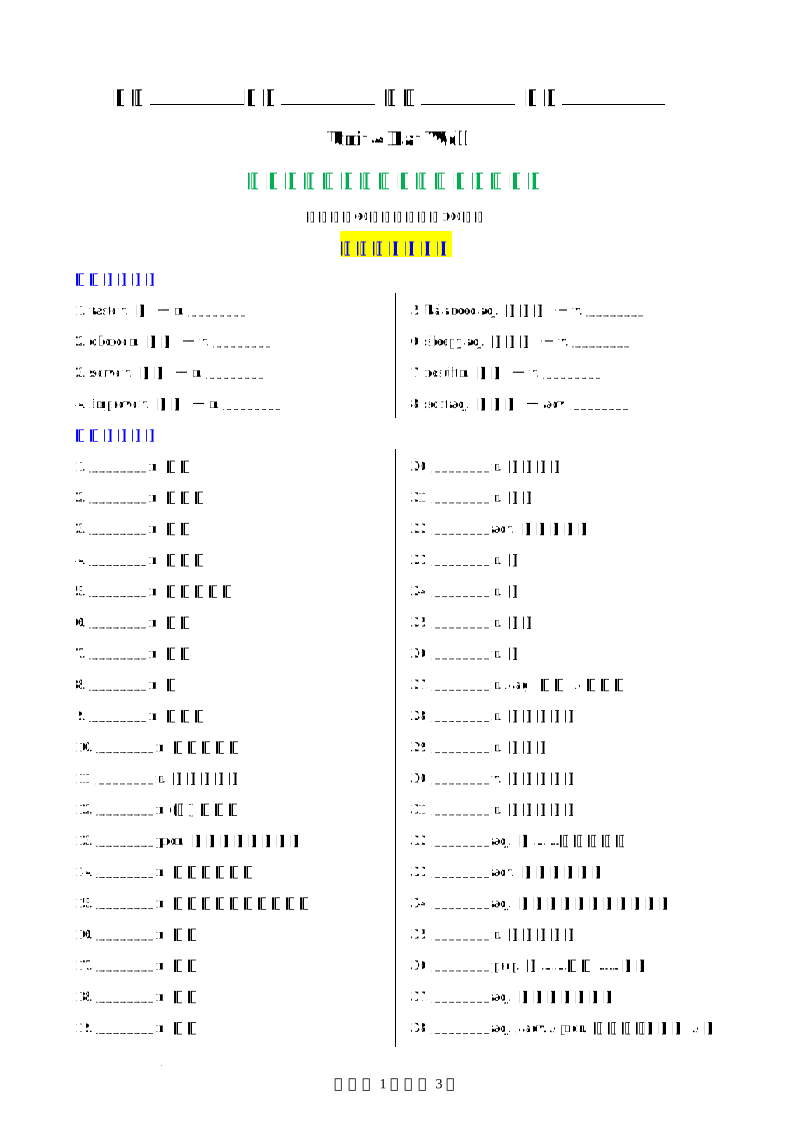
班级 姓名 学号 分数
Unit 4 Eat Well
单元重点单词变形短语语法句型精练
(时间:60分钟,满分:100分)
单元知识点默写
一、词性转换
试卷第1页,共3页
试卷第1页,共3页
学科网(北京)股份有限公司
1. taste v. 尝 → n. ________
2. choice n. 选择 → v. ________
3. serve v. 服务 → n. ________
4. improve v. 改进 → n. ________
5. balanced adj. 均衡的 → v. ________
6. sleepy adj. 困倦的 → v. ________
7. result n. 结果 → v. ________
8. soft adj. 柔软的 → adv. ________
二、单词默写
1. ________ n. 西瓜
2. ________ n. 卷心菜
3. ________ n. 羊肉
4. ________ n. 曲奇饼
5. ________ n. 洋葱;葱头
6. ________ n. 饺子
7. ________ n. 咖啡
8. ________ n. 豆
9. ________ n. 炸薯条
10. ________ n. 沙拉;色拉
11. ________ n. 粥;麦片粥
12. ________ n. (男) 服务员
13. ________ pron. 某事物;任何事物
14. ________ n. 一道菜;盘子
15. ________ n. 一餐所吃的食物;一餐
16. ________ n. 猪肉
17. ________ n. 草莓
18. ________ n. 菜单
19. ________ n. 顾客
20. ________ n. 女服务员
21. ________ n. 先生
22. ________ adv. 反而;代替
23. ________ n. 梨
24. ________ n. 糖
25. ________ n. 习惯
26. ________ n. 盐
27. ________ n. / adj. 脂肪 / 肥胖的
28. ________ n. 体重;重量
29. ________ n. 汉堡包
30. ________ v. 造成;导致
31. ________ n. 心脏;中心
32. ________ adj. 太……以至于不能
33. ________ adv. 离开;在别处
34. ________ adj. 不好的;贫穷的;可怜的
35. ________ n. 文章;冠词
36. ________ prep. 在……中;……之一
37. ________ adj. 柔和的;柔软的
38. ________ adj. / adv. / pron. 足够的;充足的 / 足够地;充分地 / 足够;充分
39. ________ adj. 渴的
三、短语默写
1. ________ 炸鱼薯条
2. ________ ……怎么样?
3. ________ 宫保鸡丁
4. ________ 美国;美洲
5. ________ 东坡肉
6. ________ 搭配;相配
7. ________ 太多
8. ________ 快餐
9. ________ 增加;穿上
10. ________ 毕竟;终归
11. ________ 软饮料(不含酒精)
单元知识点习题训练
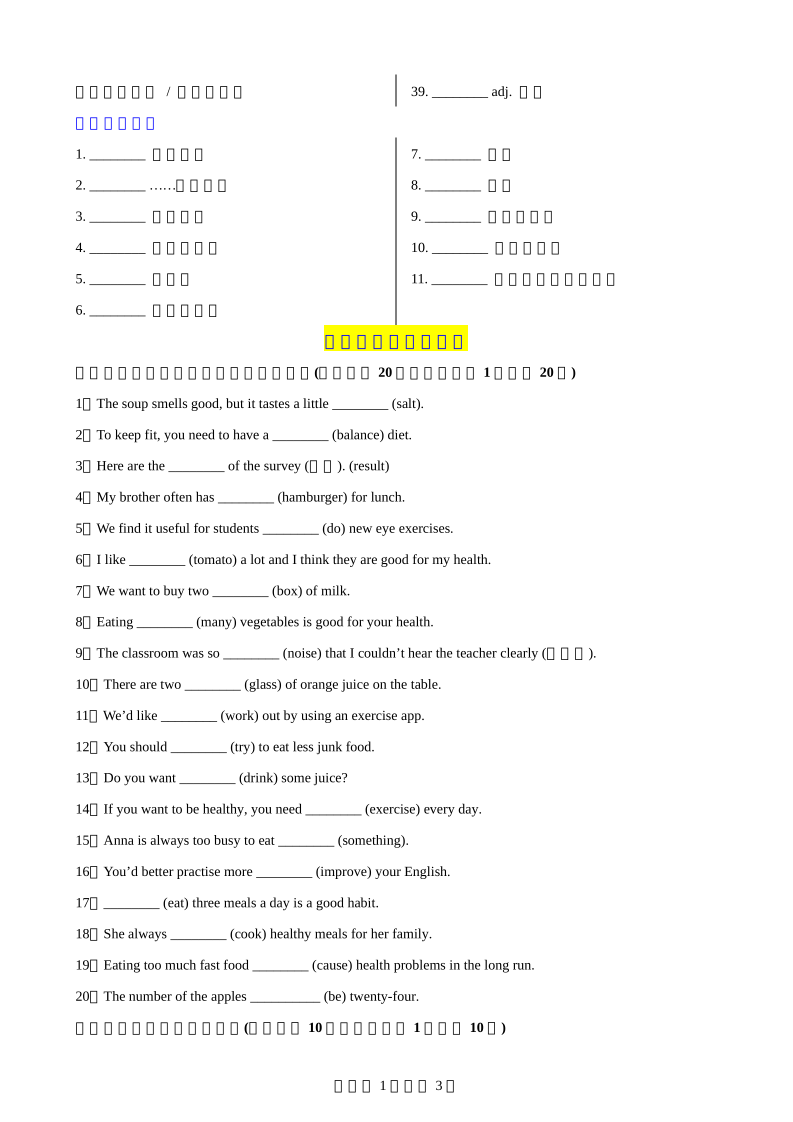
1、 用括号内所给单词的适当形式填空(本大题共20小题,每小题1分,共20分)
1.The soup smells good, but it tastes a little ________ (salt).
2.To keep fit, you need to have a ________ (balance) diet.
3.Here are the ________ of the survey (调查). (result)
4.My brother often has ________ (hamburger) for lunch.
5.We find it useful for students ________ (do) new eye exercises.
6.I like ________ (tomato) a lot and I think they are good for my health.
7.We want to buy two ________ (box) of milk.
8.Eating ________ (many) vegetables is good for your health.
9.The classroom was so ________ (noise) that I couldn’t hear the teacher clearly (清楚地).
10.There are two ________ (glass) of orange juice on the table.
11.We’d like ________ (work) out by using an exercise app.
12.You should ________ (try) to eat less junk food.
13.Do you want ________ (drink) some juice?
14.If you want to be healthy, you need ________ (exercise) every day.
15.Anna is always too busy to eat ________ (something).
16.You’d better practise more ________ (improve) your English.
17.________ (eat) three meals a day is a good habit.
18.She always ________ (cook) healthy meals for her family.
19.Eating too much fast food ________ (cause) health problems in the long run.
20.The number of the apples __________ (be) twenty-four.
二、根据汉语提示完成单词(本大题共10小题,每小题1分,共10分)
21.Eating too much ________ (糖) can lead to health problems like diabetes.
22.Whether you can learn English well depends on your study ________ (习惯).
23.I often have some ________ (饺子) for breakfast.
24.Eating too much is ________ (坏的、糟糕的) for our health.
25.Don’t drink too much coffee. It may ________ (造成) sleep problems.
26.Walking is a good way to exercise your legs and ________ (心脏).
27.I’m thirsty now. I’d like some ______ drinks (软的).
28.The little house stands ______ (在……之中) the trees.
29.Dad, if you want to know ______ (某事;某物) about our sports meeting, you can go to our school website.
30.My parents advise me to exercise to lose ________ (体重).
三、完成句子(本大题共10小题,每小题3分,共30分)
31.保持均衡饮食很重要。
It’s important to ________ a ________ diet.
32.尽管下雨但我们还是决定去远足。毕竟,我们需要锻炼。
We decided to go for a hike despite the rain; ________, we needed the exercise.
33.为我们的老师制作一些卡片怎么样?
________ ________ making some cards for our teachers?
34.你应该每天喝八杯水。
You should drink ________ ________ of water every day.
35.为什么你不多吃蔬菜呢?
________ ________ you eat more vegetables?
36.你有带豆腐的菜品吗?
Do you have ________ ________ tofu?
37.你想吃中餐还是西餐?
Would you like to eat ________ ________ or ________ ________?
38.年轻人总是精力充沛。
Young people ________ ________ ________ ________ all the time.
39.这副太阳镜能让我的眼睛避开阳光。
This pair of sunglasses can ________ my eyes ________ ________ the sun.
40.我想吃臭豆腐——湖南的一种小吃。
I ________ ________ to eat stinky tofu—a snack in Hunan.
四、短文填空(本大题共20小题,每小题2分,共40分)
阅读下面短文,根据上下文或括号内单词等提示,在空白 处填入适当的单词或括号内单词的适当形式。
What is the common xiaoye in your city?
Xiaoye, or night snack, is the 41 (four) meal of the day in China. It usually starts from 8 p.m.and 42 (last) until 2 a.m.It is different in the north and the south of the country.
In the north part of China, people like barbecue 43 (good),especially in summer, while in the south there are many 44 (choose) for xiaoye. Spicy crayfish in Hunan and tasty desserts in Guangdong have a lot of fans. Xiaoye is a time for people 45 (enjoy) delicious food and have fun. People can get 46 (relax) from a day’s study and work.
47 do people have xiaoye?
“Some say that in southern China we have longer days, 48 we are likely to stay up (熬夜) late and have more meals,” Janice, a food 49 (write), told the BBC.
But Xiaoye is not just 50 food. People eat with friends, talk and hang out. All these things make xiaoye a way of life.
阅读下面短文,在空白处填入一个适当的词,或填入括号中所给单词的正确形式(每空不多于3个单词)。
My friend Tom is very healthy because he eats 51 (good) every day. He always has a good breakfast. He eats an egg, some bread, and 52 (drink) a glass of milk. He says breakfast is very important. It 53 (give) us energy for the morning.
For lunch, Tom usually has rice, vegetables, and some meat. He likes carrots and tomatoes very much because they 54 (be) healthy. He also drinks a lot of water. He thinks water 55 (be) good for our health. He hardly ever drinks sugary drinks because they 56 (be) not healthy.
In the evening, Tom has a light dinner. He usually eats some soup and fruit. He 57 (do) not eat too much at night because he wants to stay healthy. He also tries to eat slowly and chew his food well. This helps him 58 (digest消化) the food better.
Tom never eats junk food. He says it 59 (be) bad for our health. Instead, he eats healthy snacks like nuts and yogurt. He thinks these snacks are delicious and good for him.
Tom says eating well is very important. It helps us stay healthy and strong. He believes that healthy eating 60 (be) the key to a happy life.
$
资源预览图
1
2

相关资源
由于学科网是一个信息分享及获取的平台,不确保部分用户上传资料的 来源及知识产权归属。如您发现相关资料侵犯您的合法权益,请联系学科网,我们核实后将及时进行处理。