Unit 1 Art Using language Reading for writing 课件-2025-2026学年高中英语人教版(2019)选择性必修第三册
2026-03-26
|
30页
|
2919人阅读
|
5人下载
普通
资源信息
| 学段 | 高中 |
|---|---|
| 学科 | 英语 |
| 教材版本 | 高中英语人教版选择性必修第三册 |
| 年级 | 高二 |
| 章节 | Using Language |
| 类型 | 课件 |
| 知识点 | - |
| 使用场景 | 同步教学-新授课 |
| 学年 | 2026-2027 |
| 地区(省份) | 全国 |
| 地区(市) | - |
| 地区(区县) | - |
| 文件格式 | PPTX |
| 文件大小 | 65.77 MB |
| 发布时间 | 2026-03-26 |
| 更新时间 | 2026-03-26 |
| 作者 | 匿名 |
| 品牌系列 | - |
| 审核时间 | 2026-03-26 |
| 下载链接 | https://m.zxxk.com/soft/57025233.html |
| 价格 | 1.50储值(1储值=1元) |
| 来源 | 学科网 |
内容正文:
Unit 1 Art
Reading for writing
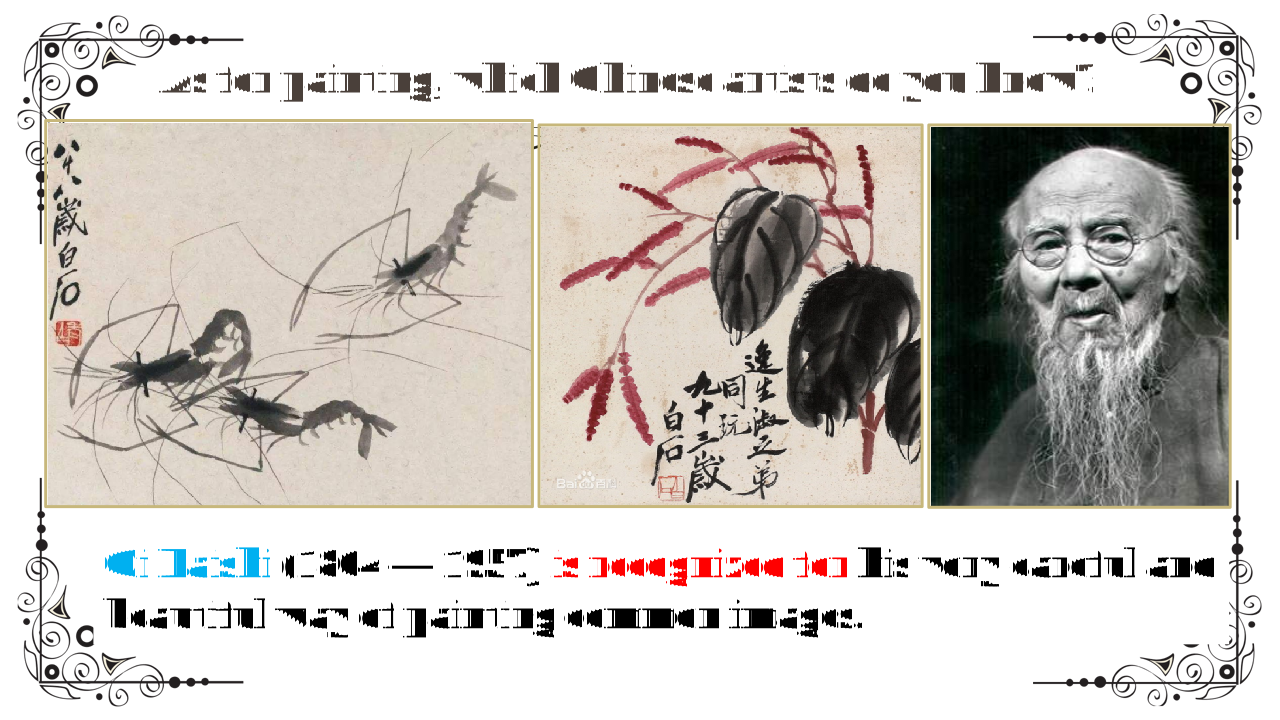
As for painting, which Chinese artists do you know?
Qi Baishi (1864 — 1957) is recognized for his very careful and beautiful way of painting common images.
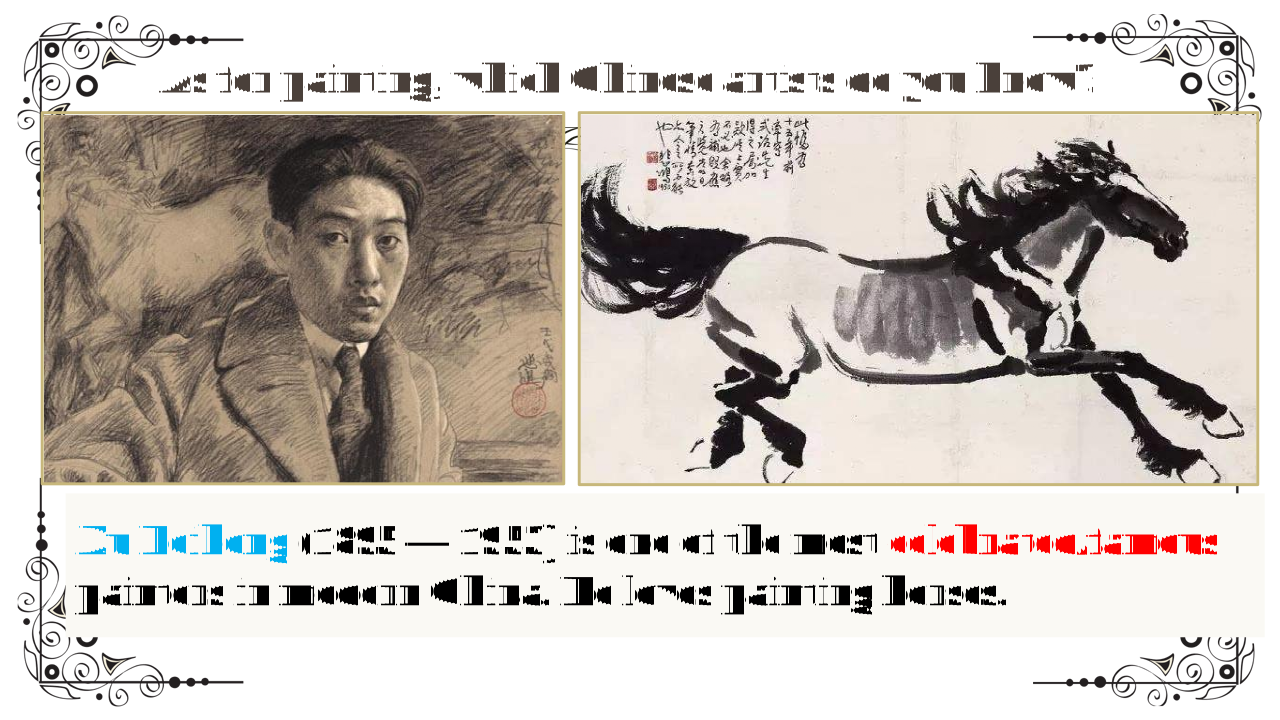
Xu Beihong (1895 — 1953) is one of the most celebrated/famous painters in modern China. He loves painting horses.
As for painting, which Chinese artists do you know?
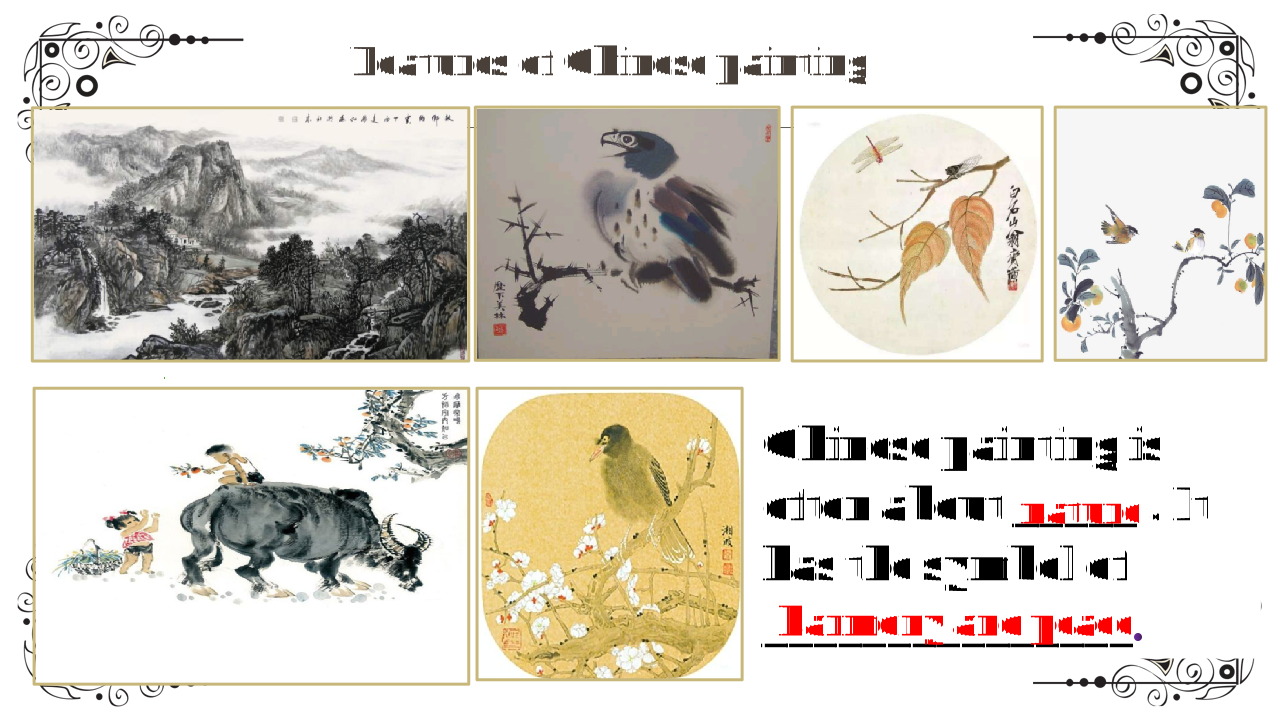
Chinese painting is often about _____ . It has the symbol of _______________.
Features of Chinese painting
nature
harmony and peace
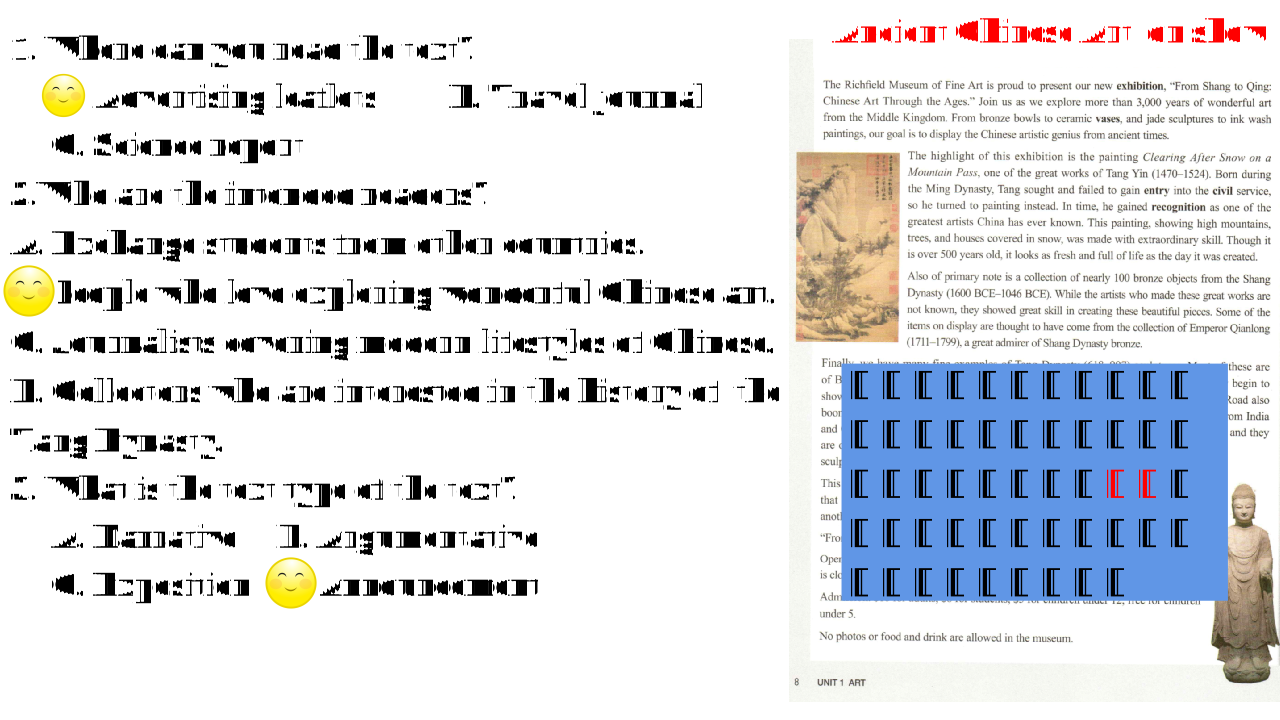
Lead-in
1. Where can you read the text?
A. Advertising leaflets B. Travel journal
C. Science report
2.Who are the intended readers?
A. Exchange students from other countries.
B. People who love exploring wonderful Chinese art.
C. Journalists covering modern lifestyles of Chinese.
D. Collectors who are interested in the history of the Tang Dynasty.
3. What is the text type of the text?
A. Narrative B. Argumentative
C. Exposition D. Announcement
应用文是高中英语常考的文体之一,命题形式多为文字提示。书信、通知、日记、发言稿、报道等都是常见的应用文体。
Ancient Chinese Art on show
?
What’s the structure of the introduction to the exhibition?
Summarize the main idea of each part.
_________________ of the exhibition
__________________ to the art exhibition
General introduction
__________________ of the exhibition
The highlights
A brief summary
_________________ of the exhibition
Points for attention
(location/theme/goal/purpose/exhibits...)
(highlights, significance...)
(other information: opening hours/ admission/ requirements...)
Para 1
The Richfield Museum of Fine Art is proud to present our new exhibition, "from Shang to Qing: Chinese Art Through the Ages." Join us as we explore more than 3,000 years of wonderful art from the Middle Kingdom. From bronze bowls to ceramic vases, and jade sculptures to ink wash paintings, our goal is to display the Chinese artistic genius from ancient times.
Para 2
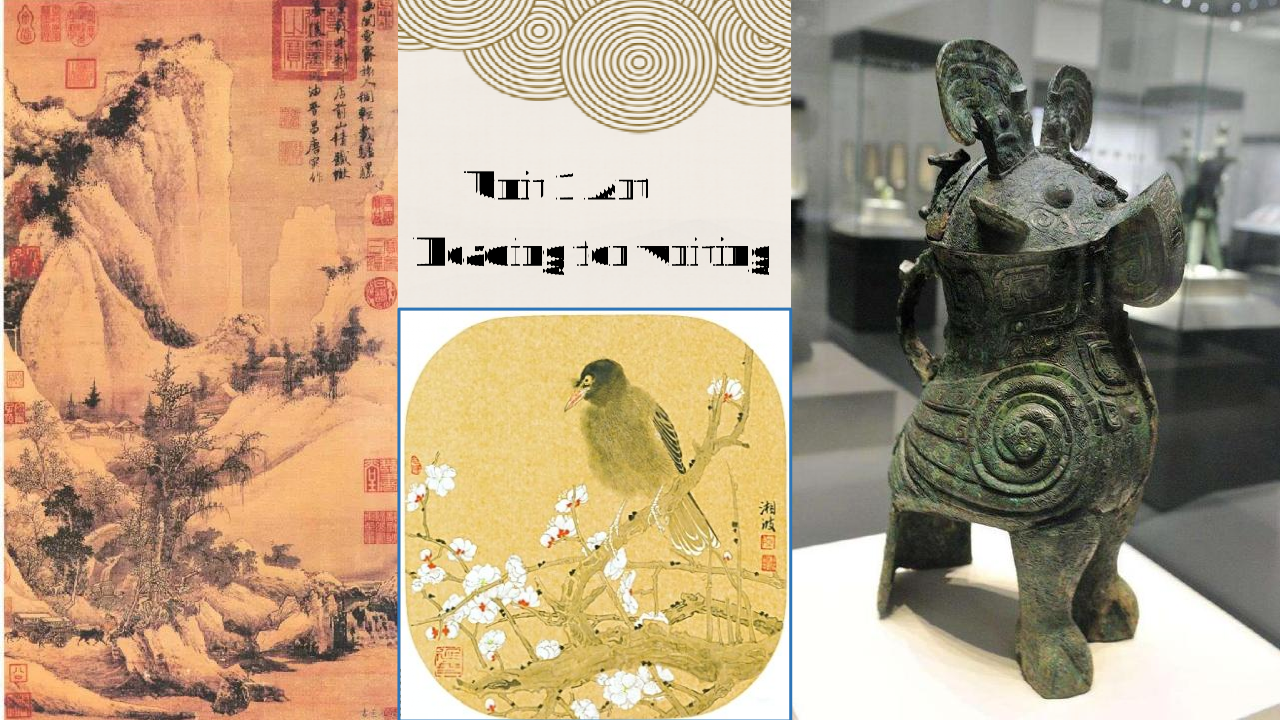
The highlight of this exhibition is the painting Clearing After Snow on a Mountain Pass, one of the great works of TangYin (1470-1524). Born during the Ming Dynasty, Tang sought and failed to gain entry into the civil service, so he turned to painting instead. In time, he gained recognition as one of the greatest artists China has ever known. This painting, showing high mountains, trees, and houses covered in snow, was made with extraordinary skill. Though it is over 500 years old, it looks as fresh and full of life as the day it was created.
Para 3
Also of primary note is a collection of nearly 100 bronze objects from the Shang Dynasty (1600 BCE-1046 BCE). While the artists who made these great works are not known, they showed great skill in creating these beautiful pieces. Some of the items on display are thought to have come from the collection of Emperor or Qianlong (1711- 1799), a great admirer of Shang Dynasty bronze.
Para 4
Finally, we have many fine examples of Tang Dynasty (618-907) sculptures. Most of these are of Buddhist origin. Even though Buddhism entered China much earlier, it did not really begin to show expansion until the seventh century. During this same period, trade along the Silk Road also boomed. Chinese sculpture thus found itself highly influenced by Buddhist art brought from India and Central Asia through the Silk Road. These works were intended to spread Buddhism and they are of exceptional beauty and quality. Looking at the faces of the figures in these sculptures, one sees the faces of the past. History is brought to life.
Para 5
This is just a small taste of what is instore for you in this exhibition. We guarantee that "From Shang to Qing: Chinese Art Through the Ages" will transport you to another time with its amazing collection of works.
Para 6
"From Shang to Qing: Chinese Art Through the Ages" will run until November 25th.
Para 7
Opening hours are from 9:00 a.m. to 5:00 p.m., from Tuesday to Sunday (the museum is closed on Mondays). No one will be admitted into the exhibition after 4:30 p.m.
Admission: $10 for adults; $8 for students; $5 for children under 12; free for children under 5.
No photos or food and drink are allowed in the museum.
Para 8
Para 9
“_______________________________________________”
NEW EXHIBITION
From Shang to Qing: Chinese Art Through the Ages
More than of wonderful art from China on display.
Highlights:
The painting Clearing After Snow on a Mountain Pass, by .
A collection of nearly 100 .
Many fine examples of .
You will .
Date: Now until .
Opening hours: a.m. to p.m.
Museum is closed on .
Tickets: Adults $ , Students $ ,
Children under 12 $5, Children under 5 free.
No photos or food and drink allowed in museum.
3,000 years
Tang Yin
bronze objects from Shang Dynasty
Tang Dynasty sculptures
be transported to another time with its amazing collection of
works
November 25
9:00
5:00
Mondays
10
8
While-reading: Reading for details (Finish Activity 2 on Page 9)
?
应用文分类
书信
通知
报道
倡议
应用文分类
邀请函 道歉信
感谢信 申请信
投诉信 询问信
建议信 推荐信
书面通知
口头通知
通知要求言简意赅、措辞得当、时间及时。
通知是上级对下级、组织对成员或平行单位之间部署工作、传达事情或召开会议等所使用的应用文。
常考的话题有活动、展览、比赛、讲座等事项通知。
活动报道
Notice,Announcement, Notification
Writing
通知
书面通知
口头通知
Notice
......
......
the Student Union
Boys and girls, attention, please!
......
......
All are welcome!
假如你是李华,你校将组织校内留学生参观中国艺术展,请写一则通知发布在校园网上。内容包括:
1.展览基本信息;
2.展览内容和具体要求;
3.呼吁参加。
注意:1.词数80左右;2.可以适当增加细节,以使行文连贯。
Notice/Announcement/Notification
Para 1 基本信息
Para 2 具体内容+要求
Para 3 呼吁参与
组织单位
(时间、地点 + 主题 + 目的)
1. 无需称呼语,无需使用Dear schoolmates, Attention, please,Hello everyone, I’m Li Hua等开头。
2. 落款署名。通知是学生会发出,李华只是代写, 落款不能是李华而应是学生会这个单位或者其他组织。
3. 段首缩进适中,结构层次明显,通知用语需注意简洁。
The Students’ Union/ the English Club
将来时!
第三人称
Writing
句式1:In an effort to do…/Aiming to do…/Aimed at doing …./Intended to do..., the activity/lecture/exhibition(活动) will be organized by the students’ Union(主办方), which is scheduled to be held in…地点 from… to… (时间).
Para1.介绍活动主题、目的、时间和地点
翻译:为弘扬中国优秀传统文化,我们学校将于下周二下午两点到五点组织学生去博物馆参观中国艺术展。
Aiming to promote the excellent traditional Chinese culture, a visit to Chinese Art Exhibition will be organized by our school, which is scheduled to be held in the museum from 2:00 to 5:00 pm next Tuesday.
Sentence Patterns
目的拓展
丰富课外生活
弘扬中国传统文化
促进文化交流
培养/激发对中国文化的兴趣
enrich after-class activities
promote traditional Chinese culture
promote cultural communication/ exchange
develop/ cultivate the interest in Chinese culture
探索中国文化 explore Chinese art
句式2:The exhibition/activity includes/displays …,ranging from A to B这个展览/活动包括/展出了A,有……和……(举例)。
Para 2.介绍展览/活动内容
翻译:这个展览展出了一批书法作品和经典画作,有水墨画、风景画等。
The exhibition displays a collection of calligraphy works and some classic paintings, ranging from ink wash paintings to landscape paintings.
A variety of activities will be presented, ranging from... to.. I bet there is bound to be one that can appeal to you.
多种活动将会呈现,从...到...,我相信一定会有一个能够吸引你。
Sentence Patterns
翻译:这次展览的亮点是齐白石创作的一副水墨画,这幅画非常鲜活,栩栩如生。
The highlight of the exhibition is the ink wash paintings created by Qi Baishi, which is fresh and full of life.
2.介绍活动/展览内容+亮点
句式3:The highlight of... is ...…, which …活动/展览的亮点是…, 它……。
Sentence Patterns
1.教材原句:
①Also of primary note is a collection of nearly 100 bronze objects from the Shang Dynasty.
仿写:同样值得关注的还是有王羲之的书法作品
Also of primary note is the calligraphy works of Wang Xizhi.
2.介绍活动/展览内容+亮点
句式4:Also of primary note is…。同样值得关注的还有……
Sentence Patterns
3.提供实用信息(具体要求等)
翻译:按照计划,所有学生需要下午一点半在学校门口准时集合。
翻译:注意馆内不准拍照、不准携带食物和饮料。
As planned/scheduled, students are expected to gather at school gate at 1:30 pm on time.
Keep in mind that no photos or food and drink are allowed in the museum.
句式5: All the participants are expected/required to ….(具体要求)
句式6:Keep in mind that…
变形:注意,所有的参赛作品须在下周五之前发送到邮箱 StudentUnion@163.com
Please keep in mind that all the entries should be sent to StudentUnion@163.com by next Friday.
Sentence Patterns
Para 3:呼吁参加
翻译:欢迎所有留学生参加。
仿写:你可以获得从书本上学不到的知识,并且感受到中国艺术的魅力。
All the international students are welcome to take part in.
You can gain knowledge that can't be acquired from books as well as enjoy the charm of Chinese art.
句式7: …活动对象 are welcome to take part in. ……欢迎……参加!
句式7:You can gain knowledge that can't be acquired from books as well as do sth.
你可以获得从书本上学不到的知识,并且能……
句式升级:不管谁对这个展览感兴趣,都欢迎参加。(whoever 引导的主从)
Whoever is interested in the exhibition is welcome to take part.
Sentence Patterns
Announcement
Aiming to promote the excellent traditional Chinese culture, our school will organize a visit to Chinese Art Exhibition, which is scheduled to be held in the museum from 2:00 to 5:00 pm next Tuesday.
The exhibition displays a collection of calligraphy works and some classical paintings, ranging from ink wash paintings to landscape paintings. The highlight of the exhibition is the ink wash paintings created by Tang Yin, which is fresh and full of life. Also of primary note is the calligraphy works by Wang Xizhi. As planned, students are expected to gather at school gate at 1:30 pm on time. Note that no photos, food and drink are allowed in the museum.
All the international students are welcome to take part in. You can gain knowledge that can't be acquired from books as well as enjoy the charm of Chinese art. Looking forward to your active participation
The Students’ Union
Sample
你校将要组织美国交换生参观中国美术馆(National Art Museum of China).请你根据下面提供的信息,口头通知活动安排。通知的开头已为你写好,字数不少于100词。
集合的时间和地点:周六早上8:30,学校门口
交通方式:校车
活动内容:了解中国画家,欣赏著名画作
Hi! Everyone. Attention, please.
你校将要组织美国交换生参观中国美术馆(National Art Museum of China).请你根据下面提供的信息,口头通知活动安排。通知的开头已为你写好,字数不少于50。
集合的时间和地点:周六早上8:30,学校门口
交通方式: 校车
活动内容: 了解中国画家,欣赏著名画作
Hi! Everyone. Attention, please.
审题
1.美国交换生
2.中国美术馆
3.时间和地点
4.交通方式
5.活动内容
Hi! Everyone. Attention, please.
We are arranging for all the American exchange students to visit the National Art Museum of China this Saturday. All participants please gather at the school gate at 8:30 this Saturday morning. The school bus will pick you up and take you there.
As one of the most popular museums in China, the NAMOC has collected and are displaying many famous paintings. I’m sure you will have a good time admiring the exhibits and get a general idea about the Chinese artists. Hope you’ll enjoy the visit.
That’s all. Thank you! (92)
Possible Version
1.美国交换生
2.中国美术馆
3.时间和地点
4.交通方式
5.活动内容
人称
All participants
you
you
you
时态
will pick
will have
合理的细节补充
口头通知的功能句
$
资源预览图
1
2
3
4
5
6
相关资源
由于学科网是一个信息分享及获取的平台,不确保部分用户上传资料的 来源及知识产权归属。如您发现相关资料侵犯您的合法权益,请联系学科网,我们核实后将及时进行处理。